
Quick answer
For water damage inside your house, call a water damage restoration company once you have stopped the water at the valve: they extract it, dry the structure to a measured standard and record the readings your claim needs. If a pressurized leak will not stop, a plumber comes first. Open the insurance claim the same day; you do not need an adjuster's visit before drying starts. Call (888) 840-6512 to reach a certified water damage restoration company in your area; the line is answered 24/7.
Written & reviewed by Marcus ReedIICRC WRT
Reviewed June 30, 2026· Next review Dec 2026
For water damage inside your house, the call is a water damage restoration company: they pump out the water, dry the walls and floors to a measured standard, and record the readings your insurance claim is built on. Before that call, stop the water yourself at the valve. After it, a plumber or other tradesperson fixes whatever failed, and your insurer gets a call the same day to open the claim.
Is Water Damage an Emergency?
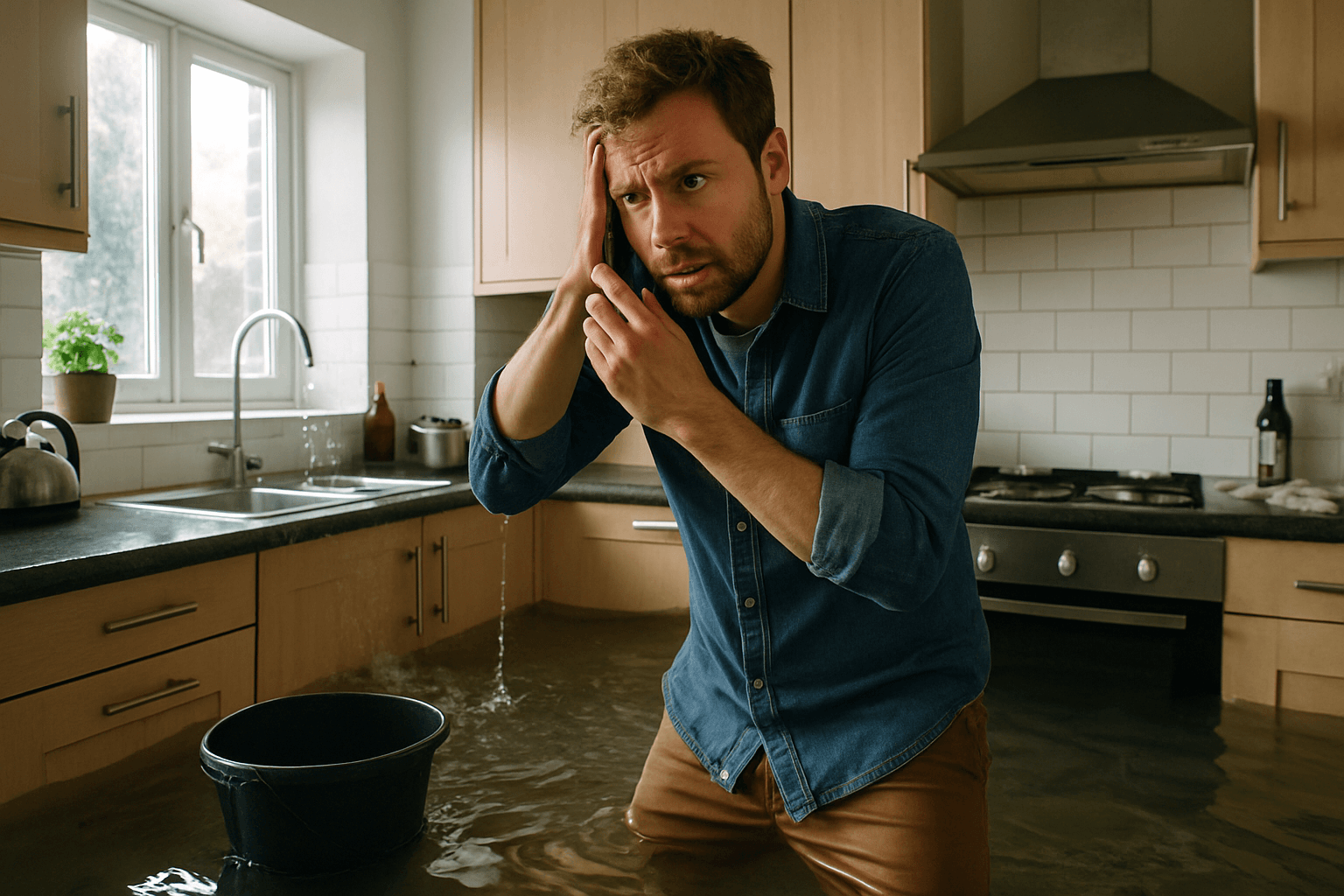
Yes, when any of these is true: water is still arriving, it is spreading across floors or coming through a ceiling, it is near outlets, cords or the electrical panel, it came from a toilet, drain or sewer, or it has soaked carpet, drywall or insulation. The EPA's guidance is to dry wet building materials within 24 to 48 hours to prevent mold, and the IICRC S500 standard puts mold onset on wet material in the same 24–48 hours window. That clock starts when the material gets wet, not when you find it.
It can wait until business hours only when it is small and already stopped: a spill you have wiped up, a slow drip into a bucket under a sink with the valve closed and nothing around it wet.
Is a water leak an emergency?
A leak is an emergency when it is under pressure or you cannot stop it. A supply line, a burst pipe or a water heater keeps flowing until someone closes a valve, so close the fixture valve or the main water shutoff now. A leak that only runs when a drain is used stops when you stop using that fixture. A leak you have stopped is no longer an emergency for plumbing, but anything it soaked still is.
Who to Call First: The Order of Calls
- 1Stop the water and cut the power. Close the fixture valve or the main. If water is near outlets or the panel, switch off that room's breaker from a dry spot; if you would have to stand in water to reach the panel, stay out and call the electric utility. If a pressurized leak will not stop and you cannot find the main, a plumber is your first call.
- 2Photograph before you move anything. Wide shots of each room, close-ups of the source, the waterline on walls, and anything damaged. Photos taken before cleanup are the evidence a claim rests on.
- 3Call a water damage restoration company. This is the call that limits the damage. A certified crew extracts standing water, finds the wet areas you cannot see with moisture meters and a thermal camera, sets drying equipment and logs readings until the structure is dry.
- 4Open the insurance claim the same day. Call the claims line, get a claim number, and ask what your deductible is. You do not need an adjuster's visit before drying starts: policies require you to prevent further damage, and prompt, documented drying is how you meet that duty.
The plumber, roofer or appliance technician who repairs the failed part fits in whenever they can come. A repair can often wait until morning; wet drywall cannot.
Should I Call a Plumber or a Restoration Company First?
It depends on whether the water has stopped. If you cannot stop it, the plumber comes first, because nothing else matters while it runs. If you have closed a valve, the restoration company comes first, because the plumber fixes the pipe but does not dry the house. Water that has wicked into drywall, subfloor and insulation needs extraction equipment, dehumidifiers and a meter to say when it is done.
Do I Call Insurance or a Restoration Company First?
Start drying first, and open the claim the same day. Waiting for the insurer to approve mitigation is how a covered leak becomes a mold problem, and mold that grew because drying was delayed is often excluded or capped.
Be clear about who does what. A restoration company can share its moisture logs, photos and invoice with your adjuster, and many are used to working with insurers. The claim is still yours: you file it, you speak with the adjuster, and you decide what to accept. Read anything you are asked to sign. A work authorization lets drying start; a form that assigns your insurance benefits to the company is a different document, and you are entitled to ask which one it is before signing. The insurance claim checklist has the order of operations.
Talk to a water damage pro now
Answered 24/7 · Toll-free · answered 24/7 · no obligation
(888) 840-6512Mold can establish within 24–48 hours of water exposure — drying started today stays a drying job.
- Describe the damage & give your ZIP
- You're routed to the on-call local crew
- They quote — you decide, no obligation
Who to Call for Water Damage in Your House, by Situation
Each situation below has its own guide with the full call order. Start with the row that matches what you see.
| What you are seeing | Stop it first | Full guide |
|---|---|---|
| Water in the basement from a pipe, appliance, sump pump or drain | Power off, then the source | Basement flooding |
| A drip, stain or bulge in the ceiling | Breaker for the room, bucket under it | Ceiling leak |
| A pipe that has split or burst | Main water shutoff | Burst pipe |
| Dirty water or sewage from floor drains, tubs or toilets | Stop using all plumbing | Sewage backup |
| Water around the water heater | Cold-water valve on the heater, then its power or gas | Water heater leak |
| A toilet that overflowed | Valve behind the toilet | Toilet overflow |
| Stains, bubbling paint or soft spots on a wall | The fixture on the other side, if there is one | Water in walls |
| Cupping, soft or squishy flooring | The nearest fixture or appliance supply | Water under flooring |
| Water from the washing machine | Washer supply valves, then unplug it | Washing machine overflow |
| Visible mold or a musty smell after a leak | Find the moisture source | Who to call for mold |
Two cases are not restoration calls. If the water came from outside and rose from the ground up, such as a river, storm surge or flooded yard pouring in, that is a flood event: it is covered by flood insurance through the NFIP or a private flood policy, not by homeowners insurance, and it is not what our line is for. Water damage vs. flood damage explains the difference. And if you rent, the landlord hires the restoration company: tell them in writing, with photos, the same day.
Who to Call for Water Damage at Night or on a Weekend
The same company you would call on a Tuesday afternoon. Emergency restoration companies take calls around the clock because pipes and water heaters fail at any hour, and the drying clock does not stop for the weekend. Some price after-hours work differently, so ask on the call. What 24-hour water damage service actually means covers what to ask before agreeing to anything at 3 a.m. The insurer can wait until morning if its claims line is closed; the extraction should not.
If you have the water stopped and you are ready to make the restoration call, (888) 840-6512 is answered 24/7 and connects you to an IICRC-certified water damage company taking calls in your ZIP. There is no charge for the referral.
What Happens When You Call
The line opens with a short automated menu. Press 1 for water damage or 2 for mold, then enter the 5-digit ZIP of the property. The line then goes quiet for about half a minute while it connects you to a company covering that ZIP. That silence is normal: stay on. When someone answers, describe what is wet and where the water came from.
Have these ready so the call goes quickly:
- The property address, including the ZIP
- When the water started, as near as you know
- What is wet now: rooms, floors, ceilings, and whether it is still running
- Whether you have opened an insurance claim yet
The company gives you an arrival window for your address on that call. The scope of work and the price are between you and them; ask how they will measure dryness and whether they will share the moisture logs with your adjuster. How to choose a restoration company lists the other questions worth asking.
What Water Damage Usually Costs
Most residential incidents land around $2,000–$6,000, with the full national range running $1,200–$25,000+ once large areas, contaminated water or reconstruction are involved. The category of water moves the number most: clean, gray and black water are handled differently, and contaminated material is removed rather than dried. The water damage restoration cost guide breaks it down by room and category.
Mistakes That Make It Worse
- Waiting to see if it dries. Drywall and subfloor can read dry on the surface and saturated inside for weeks.
- Calling only the plumber. The pipe gets fixed and the wet cavity behind it gets closed up.
- Cleaning before photographing. The adjuster sees only what you recorded.
Reading to confirm what you already suspect?
Confirm it in two minutes instead — the pro on this line answers questions about YOUR situation all day: what it is, what it should cost, whether you even need service. If you want, they'll set the appointment on the same call.
Toll-free · no obligation · asking costs nothing
Frequently Asked Questions
Who do I call for water damage?
Call a water damage restoration company. They extract standing water, find hidden moisture in walls and floors with meters and thermal cameras, dry the structure and log the readings until it is dry.
Stop the water at the fixture valve or the main first. A plumber or other tradesperson repairs whatever failed, and your insurer gets a call the same day to open the claim.
Is water damage an emergency?
YesWhen water is still arriving, spreading, near outlets or the electrical panel, coming from a toilet, drain or sewer, or has soaked carpet, drywall or insulation.
The EPA advises drying wet building materials within 24 to 48 hours to prevent mold. It can wait for business hours only when the leak is small, already stopped, and nothing porous around it is wet.
Is a water leak an emergency?
A leak is an emergency when it is under pressure or you cannot stop it: a supply line, a burst pipe or a leaking water heater keeps flowing until a valve is closed.
A drain leak, by contrast, runs only while the sink, tub or washer is in use, so leaving that fixture alone stops it. Once the leak is stopped, the plumbing can wait, but anything it soaked still needs drying promptly.
Should I call a plumber or a restoration company first?
If the water will not stop, call the plumber first, because nothing else matters while it runs. If you have closed a valve and the water has stopped, call the restoration company first.
The plumber fixes the pipe but does not dry the house, and water that has wicked into drywall, subfloor and insulation needs extraction, dehumidifiers and moisture readings to confirm it is dry.
Do I call insurance or a restoration company first?
Start drying first and open the claim the same day. Policies require you to prevent further damage, and you do not need an adjuster to visit before mitigation starts.
The restoration company can share moisture logs, photos and invoices with your adjuster, but the claim is yours: you file it and decide what to accept. Read anything you sign, especially a form assigning your insurance benefits to the company.
Who can help me with a water damage emergency in my home?
A water damage restoration company, ideally one with IICRC-certified technicians. They handle extraction, structural drying and the moisture documentation a claim needs.
Before calling, shut off the water, turn off power to wet rooms if you can reach the breaker from a dry spot, and photograph the damage. If you rent, notify your landlord in writing, because the landlord hires the restoration company.
Who do I call for water damage at night or on a weekend?
The same restoration company you would call on a weekday. Emergency restoration companies take calls around the clock because pipes and water heaters fail at any hour, and wet materials keep absorbing water overnight.
Ask on the call whether after-hours work is priced differently. The insurance claim can wait until morning if the claims line is closed; extraction should not.
Who do I call if water from outside floods my house?
Water that rises from outside, such as a river, storm surge or a flooded yard pouring in, is a flood event. It is covered by flood insurance through the NFIP or a private flood policy, not by a standard homeowners policy, so contact your flood insurer first.
Water from inside the house, including a failed sump pump, a burst pipe or rain coming through a damaged roof, is a restoration call.
Who do I call right now for water damage?
Call (888) 840-6512. The line is answered 24 hours a day, seven days a week, and connects you with an IICRC-certified water damage restoration company that serves your area. Describe what you can see — where the water is coming from, how long it has been there, and whether it smells — the more specific you are, the faster the right company is on the line.
If the source is a pipe or an appliance, shut the main water valve first. Have four things ready and the call goes quickly: the address, when the water started, what is wet now, and whether you have filed an insurance claim.
Need it handled now?
Water Damage Restoration — 24/7 Certified Crews
Skip the phone tree — one call reaches an IICRC-certified crew that handles the whole job.
Sources
- IICRC S500 — Water Damage Restoration(retrieved 2026-07-02)
- EPA — Mold and Water Cleanup Guidance(retrieved 2026-07-02)
Methodology: How we source and verify data · Report an error
Disclaimer: HearthDry is an independent educational resource. This article is for informational purposes only and does not constitute professional, legal, or insurance advice. Consult licensed professionals before making decisions about your property or insurance claims.
Video

Video: FEMA — US Federal Emergency Management Agency, public domain license
Watch: FEMA: Calling 211 and Finding Disaster Resources — 1 min 20 sec
Free 2-day shipping
Amazon Prime members pay no shipping on restoration equipment
Dehumidifiers, air movers, and moisture meters qualify for free Prime delivery — bulk items that otherwise cost $15–$40 to ship.
Affiliate link — HearthDry earns a bounty if you sign up; costs you nothing extra.
Equipment
What each machine actually does
Removes the moisture the structure is still giving off — the machine that decides how long drying takes
See the picks →Moves air across wet surfaces so the dehumidifier has something to take out of the air
See the picks →Finds water behind walls and under floors, and tells you when a material is actually dry
See the picks →Alerts you the moment a leak starts — the cheapest thing on this list and the only preventive one
See the picks →Those pages carry affiliate links. As an Amazon Associate, HearthDry earns from qualifying purchases; it costs you nothing extra.
Our Amazon storefront →Advertisement
