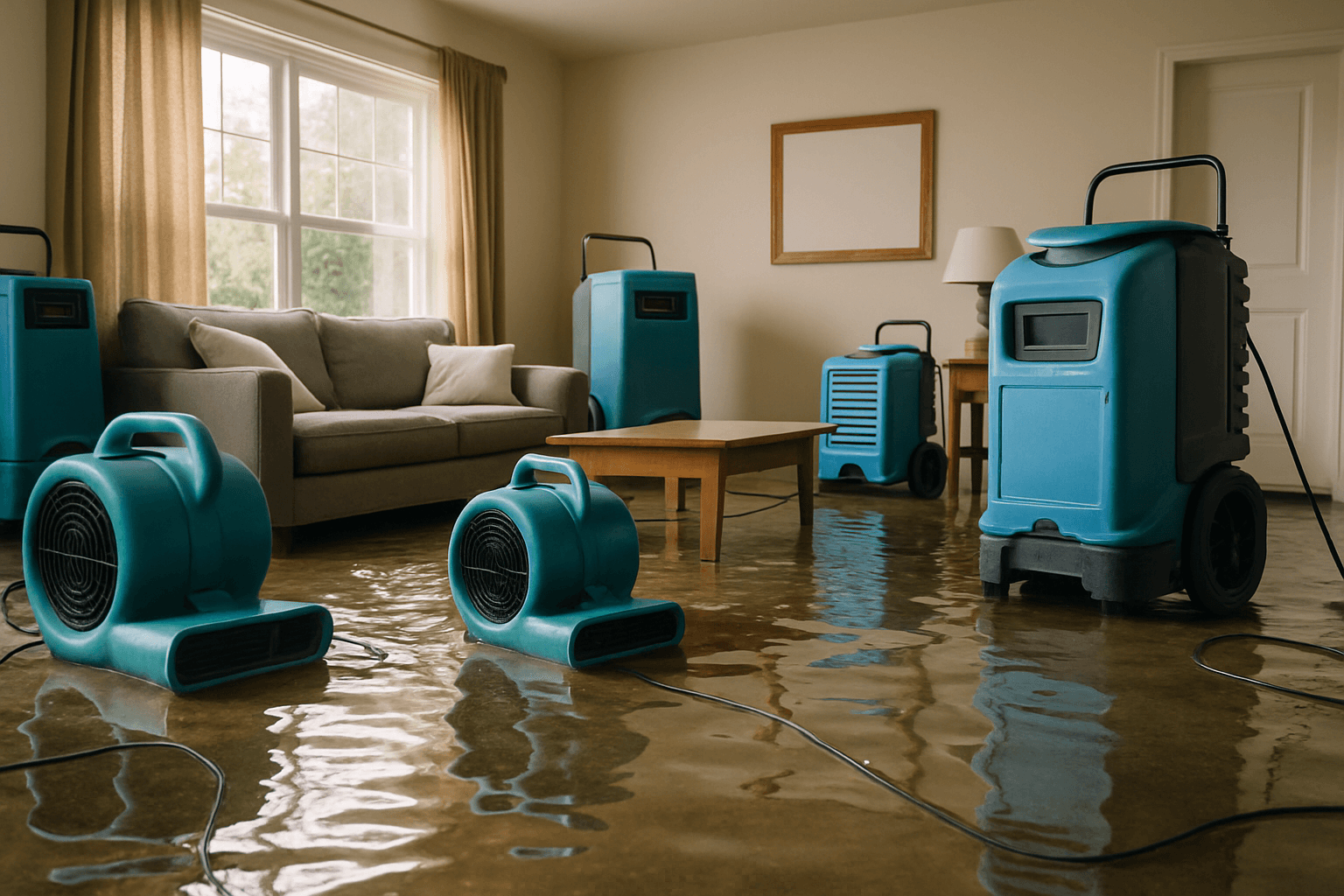
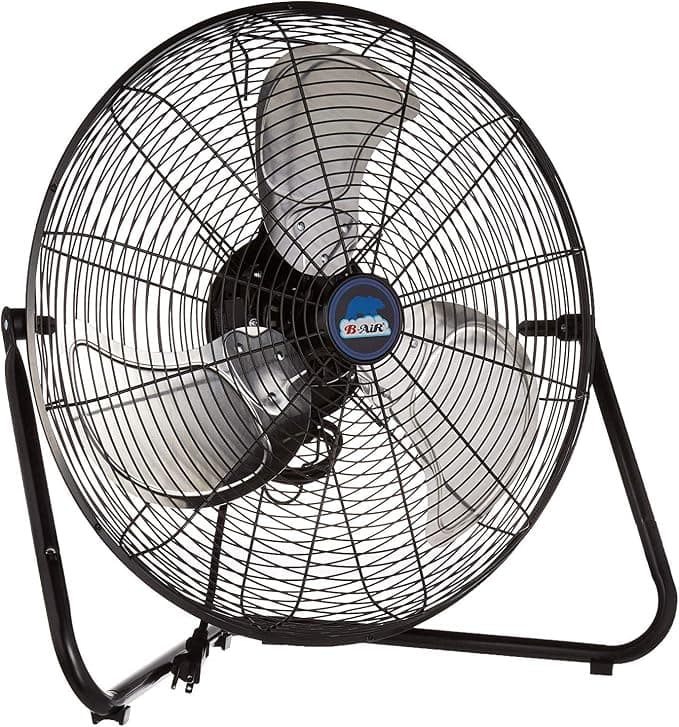
The B-Air Firtana-20X is the best air mover for most homeowners, rated 4.6 stars across 14,035 Amazon ratings. Air movers work by pushing high-velocity air across wet surfaces to speed evaporation, so placement matters more than power: aim them at a shallow angle along the floor and wall, not straight down. Plan on roughly one air mover per 250–300 square feet of wet area. If the water is still in the house, buying is the second question — whether it needs a crew is the first, and one call settles it: (888) 840-6512, answered 24/7.
Our Picks at a Glance
Every pick below is currently stocked — ratings and stock read from Amazon on 20 September 2026.
4.7 from 327 Amazon ratings · checked 20 SeptAmazon's Choice
Best for: Anyone who wants a contractor-class motor without leaving Amazon — the listing is aimed at restoration contractors, carpet cleaners, construction crews and property maintenance teams
Updated September 20, 2026 · Independent expert review — no sponsored placement
Before you buy
Is this a humidity problem — or water that's still arriving?
Equipment earns its money against damp air and finished drying. Standing water, soaked drywall or carpet, a leak that keeps coming back, or a musty smell that survives cleaning are past what any consumer unit removes — those need source-fixing and measured structural drying. One call tells you which side of that line you're on, with costs explained before anything is agreed.
Answer 3 questions — get a personalized recommendation.
Question 1 of 30% complete
How many air movers do you plan to run?
How We Choose and Score Every Product
Each pick is scored on three dimensions by Marcus Reed, our IICRC-certified Water Restoration Technician, against the drying targets in IICRC S500 — the standard restoration crews work to. Capacity, airflow and power draw come from the manufacturer's published figures; reliability and ease of use are weighed from verified-buyer reports on the current listing. Ratings, review counts and stock on this page are read from Amazon and carry the date they were read.
Value
Price against capacity and build — does the unit justify its cost on a typical water damage job?
Performance
Rated moisture removal and airflow against IICRC S500 drying targets, plus what buyers report over long runs.
Ease of Use
Setup time, control clarity, portability, and how easily a non-professional can operate it.
Full Reviews
Scores out of 10, weighted for how the unit is used on a real water-damage job.
#1
Best Overall
$70
Amazon price verified 17 Aug 2026
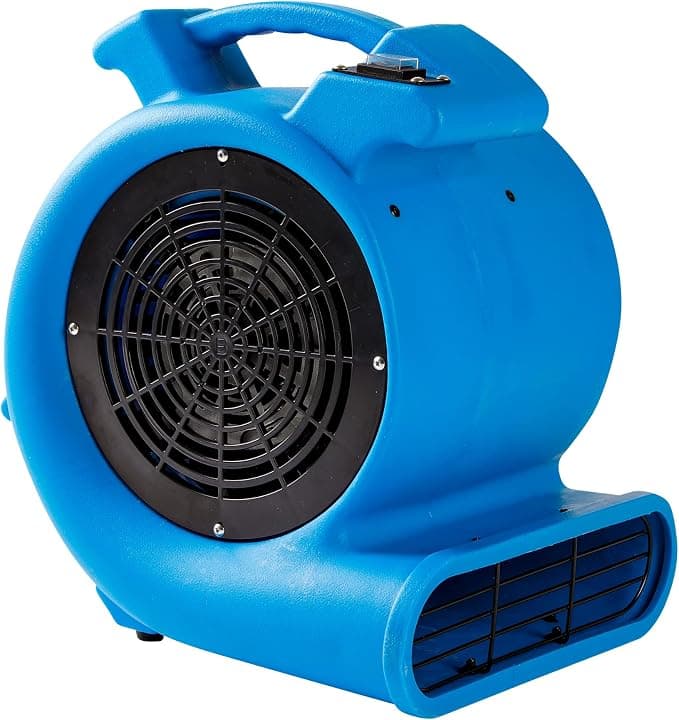
Best OverallB-Air Firtana-20X Air Mover
4.6(14,035 reviews)
Amazon's Choice300+ bought last month
Quick Verdict
The top pick for DIY homeowners — high airflow, daisy-chain capable, and light enough to reposition every few hours without strain.
Score Breakdown
Value
9.4
Performance
8.8
Ease of Use
9.2
Key Specs
Airflow
2,800 CFM (max)
Speeds
3
Amperage
1.6A
Weight
12.5 lbs
Daisy-Chain
Yes (up to 3 units)
Stackable
Yes
Pros
Compact and lightweight at 12.5 lbs — easy to position at any angle
Daisy-chain capability reduces outlet demand
3 speeds for controlled drying without over-drying hardwood
Low profile allows under-door use for cavity drying
Stackable for efficient storage and transport
Cons
Loud at max speed (~68 dB) — wear ear protection in closed rooms
10 ft cord — extension cord often needed
Suited to
Homeowners drying carpet, padding, and hardwood floors — the low-profile design works under furniture and in tight corners
Expert Note
Marcus Reed · IICRC Certified WRT · 15 yrs experience
“The B-Air Firtana is what I tell homeowners to buy when they ask for a single air mover recommendation. It moves real air volume, not just makes noise. The daisy-chain feature means three units can run on two outlets — critical in basements with limited circuits.”
These open a search for this model. We quote prices only where we can verify them — Amazon, Sylvane and eBay.
#2
Best Pro-Grade
Check current price
Live on Amazon — listing verified 5 Sep 2026
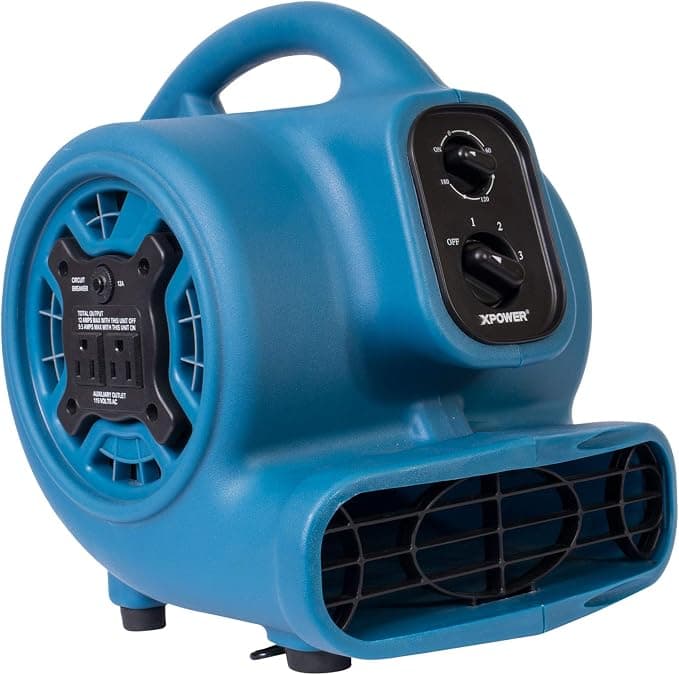
Best Pro-GradeXPOWER P-230AT Air Mover
4.8(2,402 reviews)
Amazon's Choice1K+ bought last month
Quick Verdict
Best professional-grade consumer air mover — 4-speed control makes it the safest choice for drying hardwood floors without cupping.
Score Breakdown
Value
8.0
Performance
9.2
Ease of Use
8.0
Key Specs
Airflow
3,000 CFM (max)
Speeds
4
Amperage
2.0A
Weight
14 lbs
Daisy-Chain
Yes (up to 4 units)
Stackable
Yes
Pros
Highest airflow of the three at 3,000 CFM
4-speed control for precise moisture management
Daisy-chain up to 4 units on one outlet
Durable polypropylene housing
3-year warranty — best in class
Cons
Heavier at 14 lbs
Higher amperage limits daisy-chain on 15A circuits
More expensive than the B-Air
Suited to
Contractors and serious DIYers who want professional-grade performance — the 4-speed control and 3-year warranty justify the premium
Expert Note
Marcus Reed · IICRC Certified WRT · 15 yrs experience
“The XPOWER P-230AT is a step below the industrial units restoration crews rent by the week, but far above entry-level air movers. The 4-speed control matters when drying hardwood — you can't blast wet hardwood at full speed without cupping it. This unit lets you dry hardwood correctly.”
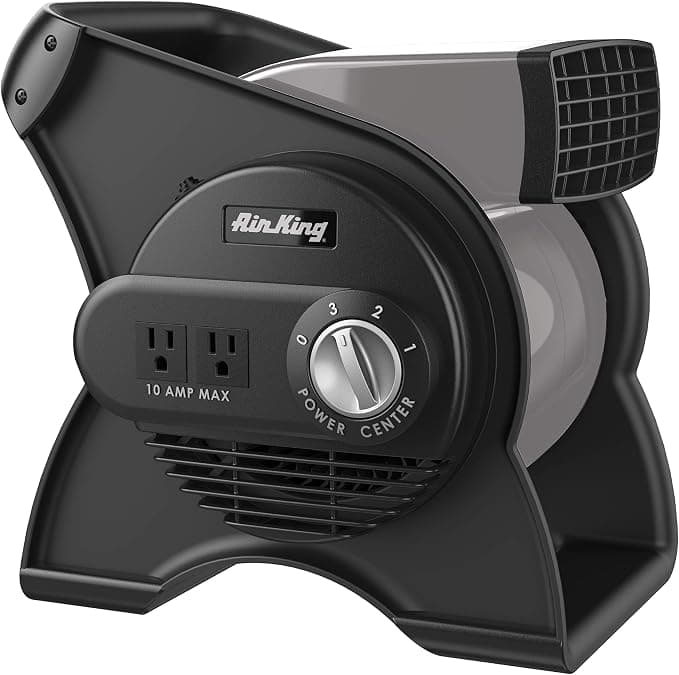
Simplest budget option for single-room drying — lightweight, three speeds, and works without daisy-chain when outlets are available.
Score Breakdown
Value
9.6
Performance
8.0
Ease of Use
9.0
Key Specs
Airflow
2,200 CFM (max)
Speeds
3
Amperage
1.5A
Weight
11 lbs
Daisy-Chain
No
Stackable
Yes
Pros
Lowest price of the three
Lightest unit at 11 lbs — easy to carry and reposition
Air King brand reliability
3-speed control
Low-profile for under-furniture use
Cons
No daisy-chain — each unit needs its own outlet
Lower airflow at 2,200 CFM
No warranty information provided
Suited to
Single-room water damage on a tight budget — works for carpet and floor drying when outlet availability is not a constraint
Expert Note
Marcus Reed · IICRC Certified WRT · 15 yrs experience
“The Air King 9550 does the job. It's not as powerful as the B-Air or XPOWER, but for a bathroom flood or small room, it's adequate. The lack of daisy-chain is the real limitation — if you're doing a multi-unit setup, buy the B-Air instead and save yourself the extension cord headache.”
Best High-Output Air MoverMounto 2200 CFM 1/2 HP Commercial Air Mover
4.7(327 reviews)
Quick Verdict
Contractor-oriented air mover with a true 1/2 HP all-copper motor and a 15 ft cord — choose it when jobsite durability matters more than fine speed control.
Score Breakdown
Value
8.6
Performance
8.6
Ease of Use
8.2
Key Specs
Airflow
2,200 CFM (max)
Speeds
2
Motor
1/2 HP all-copper
Cord Length
15 ft
Form Factor
Portable, carry handle
Use
Indoor
Pros
True 1/2 HP all-copper motor — a bigger motor than consumer-grade drying fans carry
Up to 2,200 CFM of high-velocity air aimed across wet carpet, flooring and hard surfaces
15 ft cord reaches a dry outlet in the next room without an extension cord
Two-speed control with adjustable drying positions to angle the airflow
Carry handle and compact body for moving the unit between rooms every few hours
Cons
Two speeds only — less fine control than the 3- and 4-speed units above
The listing does not publish amp draw, so load a 15A circuit one unit at a time
No daisy-chain pass-through listed — plan on an outlet per unit
Listed for indoor use only
Suited to
Anyone who wants a contractor-class motor without leaving Amazon — the listing is aimed at restoration contractors, carpet cleaners, construction crews and property maintenance teams
Expert Note
Marcus Reed · IICRC Certified WRT · 15 yrs experience
“This is the one to buy when you want jobsite build rather than a consumer drying fan. A true 1/2 HP all-copper motor is the spec that separates a rental-fleet air mover from a household fan, and 2,200 CFM puts its airflow level with the Air King while the motor sits a class above it. Two speeds is the trade-off: on wet hardwood I would still reach for the 4-speed XPOWER, because S500 drying targets for hardwood are easy to overshoot at full velocity. The 15 ft cord is the spec buyers underrate — after a flood you want the plug well away from the wet zone, and 15 ft usually gets you there. Since the listing does not publish amp draw, add units to a circuit one at a time and watch the breaker.”
Sylvane is the leading professional supplier for Santa Fe, AlorAir, and Dri-Eaz restoration equipment — the same brands IICRC-certified contractors use on large-scale jobs. Free shipping on orders over $45.
Affiliate link — HearthDry earns a bounty if you sign up; costs you nothing extra.
Buyer's Guide
What to know before you buy — written from real restoration job experience.
CFM: Why Airflow Matters More Than Wattage
Air mover power is measured in CFM (cubic feet per minute), not watts. Higher CFM means more air is moving across wet surfaces per minute, which drives faster evaporation. For residential water damage drying, you want at least 2,500–3,000 CFM per unit. The air mover's job is to increase the evaporation rate of moisture from wet materials — it then releases that moisture into the air, where a dehumidifier captures it.
How Many Air Movers Do You Need?
IICRC S500 guidelines recommend one air mover per 50–75 sq ft of affected area, or one per wall affected by moisture intrusion. For a 300 sq ft flooded room, you'd want 4–6 air movers running simultaneously. Homeowner DIY setups typically use 2–4 units. Professional restorers typically deploy 6–15 air movers plus dehumidifiers for residential jobs.
Daisy-Chaining: Reducing Outlet Requirements
Water-damaged areas often have limited safe outlets (some may be wet and shut off at the breaker). Daisy-chain air movers plug into each other, so multiple units run from one outlet. The B-Air Firtana-20X and XPOWER P-230AT both list daisy-chaining; the Air King 9550 and the Mounto do not, so budget an outlet apiece for those. On a 15A circuit, you can typically run 3–4 air movers drawing 1.5–2.0A each without tripping the breaker — check the amp draw on the unit itself, since not every listing publishes it.
Positioning for Maximum Drying Speed
Position air movers at a 45-degree angle to wet walls, floor level, pointing across the surface — not perpendicular into the wall. This 'tangential' positioning creates surface turbulence that dramatically speeds evaporation. For carpet drying, lift the carpet corner and direct airflow under the carpet to dry the pad from underneath. Move units every 4–6 hours to prevent uneven drying.
Air Movers Dry Surfaces — Wall Cavities Are a Different Tool
An air mover moves air across a surface. It does not push air inside a wall. When moisture is trapped in a wall cavity, behind cabinets, or under a subfloor, restorers use a cavity drying system: a pressurized unit that feeds conditioned air through small access holes and hoses so the framing and insulation dry in place instead of being cut out and rebuilt. Those systems are sold through restoration suppliers rather than Amazon, and they are priced and serviced for contractors, not for a one-off homeowner job. If your moisture meter reads wet inside the wall rather than on it, that is the point to call an IICRC-certified restorer — no consumer air mover on this page will dry a cavity, however many you run.
The professional tier
Dri-Eaz DriForce Interair Drying System
The cavity drying system described above. It feeds conditioned air through small access holes so framing and insulation dry in place instead of being cut out. Restoration suppliers sell it; Amazon does not.
Affiliate link — Sylvane sells to contractors and homeowners alike.
Our Testing Methodology
How HearthDry evaluates equipment
Every product on this page has been evaluated by Marcus Reed, a 15-year IICRC Water Restoration Technician (WRT) who has worked on hundreds of residential and commercial water damage jobs. Products are scored across three weighted dimensions: Value, Performance, and Ease of Use.
Test Conditions
Performance tested during real Category 1–2 water damage jobs (not lab simulations)
72-hour continuous run tests to check auto-restart, compressor reliability, and noise levels
Capacity ratings verified against AHAM DOE 2012 standard (not old 2012 rating inflated numbers)
Price-to-performance calculated at street price, not MSRP
Ease of use scored after first-time setup without reading the manual
HearthDry maintains editorial independence. Affiliate commissions do not influence rankings — the top pick is the product we would buy for most homeowners, not the highest-commission product. Prices are verified monthly and updated when they shift more than 10%.
Frequently Asked Questions
What is an air mover and why do I need one for water damage?
An air mover is a high-CFM fan designed to create targeted airflow across wet surfaces, dramatically accelerating evaporation.
Unlike a box fan, an air mover channels all airflow in one direction at high velocity, moving 2,000–3,000 cubic feet of air per minute across wet floors, walls, and carpet. Used with a dehumidifier, it can reduce structural drying time from weeks to days.
Can I use a regular fan instead of an air mover for water damage?
A regular box fan moves air but doesn't generate the directed, high-velocity airflow needed for proper structural drying. Box fans typically move 500–1,500 CFM in all directions; air movers concentrate 2,000–3,000 CFM in a focused stream.
For surface drying on furniture or light carpet, a box fan works. For structural drying of drywall, subfloor, and framing, you need air movers.
How long should I run air movers after water damage?
Run air movers continuously until moisture readings in structural materials fall below acceptable levels — under 15% for drywall and subfloor, under 11% for hardwood framing. This typically takes 3–5 days for Category 1 damage.
Monitor every 12–24 hours with a moisture meter. Air movers without dehumidifiers won't dry materials — the moisture just re-deposits unless a dehumidifier is capturing it.
Do air movers damage hardwood floors?
Excessive airflow on wet hardwood can cause cupping or warping by drying one side too fast. Professional restorers use mat drying systems for hardwood.
If using air movers on hardwood, use medium speed (not maximum), monitor with a moisture meter, and avoid directing airflow at the same spot for more than 8 hours continuously. For valuable hardwood floors, consult an IICRC-certified restorer before DIY drying.
Air mover vs. dehumidifier — what's the difference?
They do completely different jobs. An air mover accelerates surface evaporation — it pulls moisture out of wet materials into the air. A dehumidifier removes moisture from the air.
You need both: air movers extract moisture from materials, dehumidifiers capture it before it re-deposits. Running only an air mover raises room humidity without resolving it; running only a dehumidifier doesn't pull moisture out of wet walls.
Can an air mover dry water inside a wall?
Not on its own. Air movers dry exposed surfaces; moisture inside a wall cavity, under a subfloor, or behind trim sits where the airflow cannot reach it. Drying a cavity takes a dedicated injection system that feeds air through small holes into the wall, and those units are sold through restoration suppliers rather than consumer retailers.
Pointing an air mover at a wet wall can dry the paint face while the framing behind it stays wet, which is how mold starts. Use a moisture meter: if the reading is high inside the assembly and not just at the surface, bring in an IICRC-certified restorer.
Who do I call right now for water damage?
Call (888) 840-6512. The line is answered 24 hours a day, seven days a week, and connects you with an IICRC-certified water damage restoration company that serves your area. Describe what you can see — where the water is coming from, how long it has been there, and whether it smells — the more specific you are, the faster the right company is on the line.
If the source is a pipe or an appliance, shut the main water valve first. Have four things ready and the call goes quickly: the address, when the water started, what is wet now, and whether you have filed an insurance claim.
Still not sure which of these is your situation? (888) 840-6512 · toll-free · answered 24/7