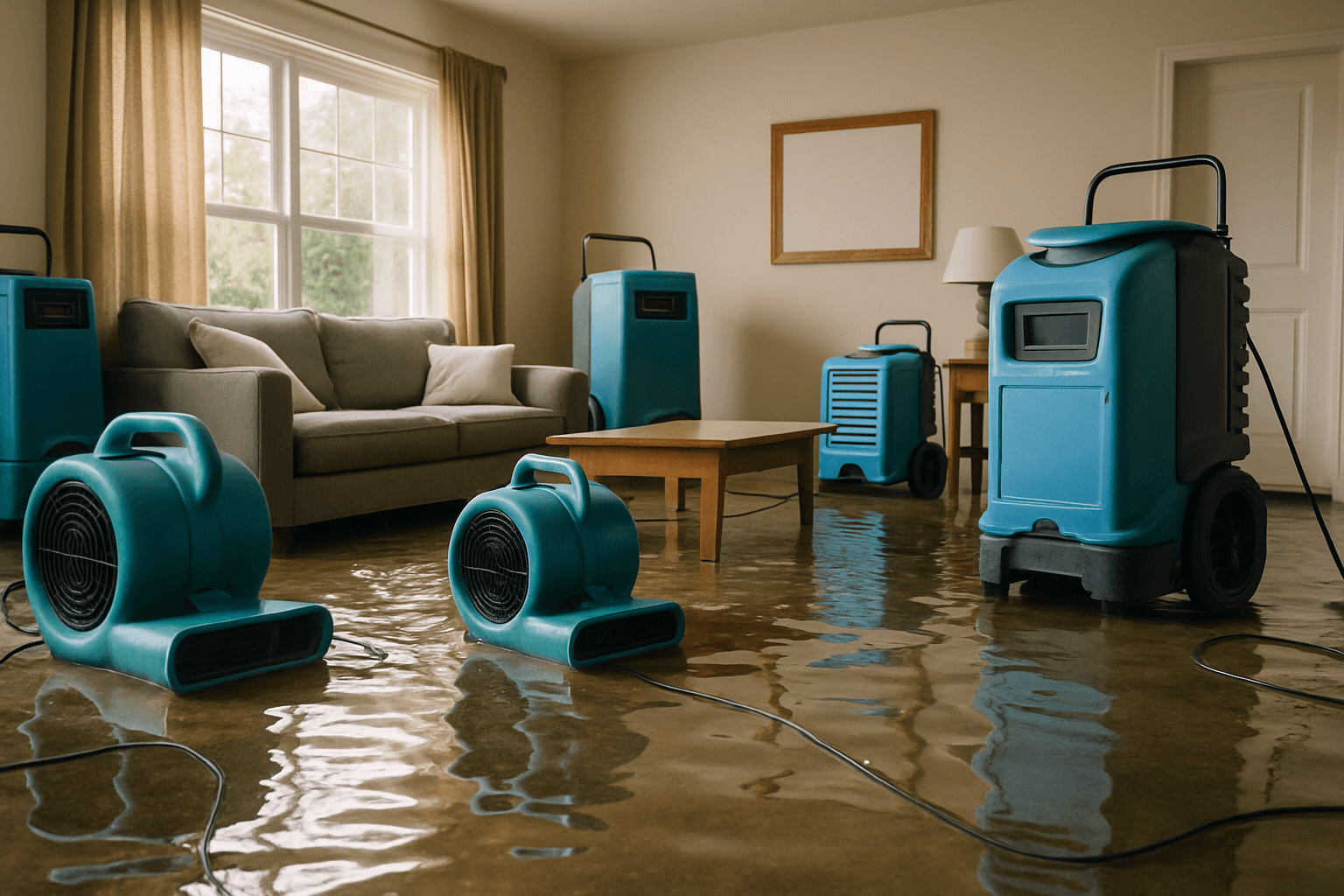
Air Mover vs Fan in 2026 — Why Crews Dry Wet Floors With Air Movers, What a Floor Fan Is Still Good For, and Which to Buy

Air Mover vs Fan in 2026

Why Crews Dry Wet Floors With Air Movers, What a Floor Fan Is Still Good For, and Which to Buy

5 picks compared · prices, ratings and stock checked October 13, 2026

Our Top Pick

Wet carpet, pad, subfloor or drywall: the XPOWER P-230AT centrifugal air mover, 925 CFM at 2.3 amps, stackable and daisy-chainable. A damp patch, a mopped floor, or air to push around a basement while a dehumidifier runs: the Lasko U12104 12-inch pivoting utility fan.

4.8 on Amazon · 2,413 ratings

Quick answer

An air mover dries wet floors and walls faster than a fan because it pushes a flat, high-velocity stream along the surface, where evaporation happens, while a fan stirs the room. If carpet, pad, subfloor or drywall is wet, buy the air mover; the XPOWER P-230AT is the pick, rated 4.8 stars across 2,413 Amazon ratings, with 925 CFM at 2.3 amps. If the job is a damp patch, a mopped floor or moving dehumidified air around a room, a floor fan is enough, and the Lasko U12104 pivoting utility fan is the one to get. Neither removes water from the air; that is the dehumidifier's job.

Our Picks at a Glance

Every pick below is currently stocked — ratings and stock read from Amazon on 13 October 2026.

How this page was made: we compare the current Amazon listings, the makers' published specs and what verified buyers report, then rank by fit for the job. Ratings, review counts and stock are read from Amazon and dated. We earn a commission on purchases through our links; it does not change the order. Reviewed by Marcus Reed, IICRC-certified Water Restoration Technician.

Full Reviews

Each pick in detail: what the listing states, what buyers report, and where it falls short.

#1
Best Air Mover

Check price

on Amazon ↗

Listing verified 5 Nov 2026

XPOWER P-230AT Centrifugal Air Mover (925 CFM, 1/4 HP, 2.3 A, Stackable)See it on Amazon ↗

Quick Verdict

XPOWER P-230AT: the air mover to buy first, with the one number the others leave out, its 2.3-amp draw.

Key Specs

Airflow (stated)

Up to 925 CFM

Motor and draw (stated)

1/4 HP; 2.3 amps at the highest setting

Speeds and positions

3 speeds; 0°, 20°, 45° and 90° operating positions

Size and weight

10.7 x 12.4 x 13.3 in; 10.2 lb

Cord and chaining

10 ft cord with wrap-around storage; daisy-chain option

Timer

Built-in timer

Pros

  • States its current draw, 2.3 amps on high, which is the number you need to work out how many fit on one circuit
  • Four positions, so the same unit lies flat along a floor, tilts 20° or 45° at a wall, or stands at 90° to blow up a stairwell
  • Stacks and daisy-chains, so three or four of them run off one outlet and store in a closet
  • Light enough at 10.2 lb to carry two at once

Cons

  • 925 CFM is the small end of the air mover range; a soaked 400 sq ft basement wants several of these or a larger unit
  • The listing does not state the noise level or the maximum load its daisy-chain outlet can pass
  • No wheels, so moving a chained row means unplugging and carrying

Suited to

A wet carpet, pad or subfloor in one or two rooms, where two to four units will be set around the walls

Our take

This is the unit that shows what an air mover is in one line of its listing: 925 CFM from a 1/4 HP motor at 2.3 amps. The Tornado floor fan below quotes five times that CFM, but it spreads the air across a 20-inch circle; the P-230AT pushes it out of a narrow outlet so it stays fast and flat along the floor. The 2.3-amp figure is the one to keep. On a 15-amp circuit worked to the 80 percent rule, that leaves room for four or five chained units before the dehumidifier comes into the sum, so put the dehumidifier on a separate circuit. Use the 20° or 45° position against a wet wall, flat against carpet, and the timer to stop it overnight if you are drying a bedroom.

Check today's price on Amazon →

Affiliate link — commission at no extra cost to you

Compare elsewhere

These open a search for this model. We quote prices only where we can verify them — Amazon, Sylvane and eBay.

#2
Most Airflow per Unit

Check price

on Amazon ↗

Listing verified 5 Nov 2026

MOUNTO 2200 CFM 1/2 HP Commercial Air Mover (Two Speeds)See it on Amazon ↗

Quick Verdict

MOUNTO 2200 CFM 1/2 HP Commercial Air Mover: the most air from one plug on this page, on a listing that leaves out the amps.

Key Specs

Airflow (stated)

Up to 2,200 CFM

Motor (stated)

1/2 HP all-copper motor

Speeds

Two

Positions

Adjustable drying positions; the angles are not stated on the listing

Current draw

Not stated on the listing

Cord

Described as long; the length is not stated

Pros

  • More than twice the stated airflow of the XPOWER from one plug, which matters when a whole basement floor is wet
  • A 1/2 HP motor described as all-copper, the construction detail commercial units are sold on
  • Sold for the jobs crews use it on: restoration, carpet cleaning and construction drying

Cons

  • The listing gives no current draw, so you cannot work out how many fit on one circuit without reading the plate on the unit
  • Two speeds instead of three, and the listing does not name the tilt angles
  • Neither weight nor cord length is stated, and nothing says it stacks

Suited to

A wet basement or open-plan floor where one strong unit per wall beats a crowd of small ones

Our take

Airflow is the whole case for this one: 2,200 CFM from a 1/2 HP motor, by the listing, against 925 from the XPOWER's quarter-horse. On a large wet floor that is the difference between four small units and two of these, and fewer units means fewer cords across a wet room. What the listing withholds is the arithmetic. No amps, no weight, no cord length, no word on stacking, so plan to read the data plate when it arrives and count the circuit from that; a 1/2 HP motor draws more than a 1/4 HP one, and two of these plus a dehumidifier can crowd a 15-amp circuit. Two speeds are enough for drying, where you run it on high and step down only when a loose carpet edge starts to lift.

Check today's price on Amazon →

Affiliate link — commission at no extra cost to you

#3
Budget Air Mover, Longest Cord

Check price

on Amazon ↗

Listing verified 5 Nov 2026

BSMTEK 1/3 HP 1200 CFM Air Mover (3 Speeds, 4 Angles, 15 ft Cord, Stackable)See it on Amazon ↗

Quick Verdict

BSMTEK 1/3 HP 1200 CFM Air Mover: the 15 ft cord and stated 12-amp trip make it the sensible second unit.

Key Specs

Airflow (stated)

Up to 1,200 CFM

Motor (stated)

1/3 HP

Speeds (stated)

Three, listed as 1,200, 1,400 and 1,600 RPM

Angles

Four adjustable airflow angles; the degrees are not stated

Cord

15 ft

Chaining and protection

Can be connected in series with other units; dual overheat protection; trips above 12 amps

Pros

  • A 15 ft cord, the longest of the air movers here, reaches a dry outlet in the next room without an extension cord
  • States a 12-amp trip point and dual overheat protection, the two safety figures that matter on a wet job
  • Anti-slip pads and carpet fasteners keep it from walking across a hard floor on high
  • Stackable, with four angles and three speeds, so it matches the XPOWER's feature set with a bigger motor

Cons

  • Shorter buyer history than the XPOWER, and the listing is labeled a 2026 upgrade, so the record is for a newer version
  • The listing names a GFCI interface without explaining it; plug it into a GFCI outlet anyway
  • Its own current draw is not stated, only the 12-amp trip

Suited to

A second or third unit to chain beside the XPOWER, or the one to buy when the nearest safe outlet is in another room

Our take

The cord is the reason to look at this one. Outlets near a wet floor should stay off until the floor is dry and an electrician has looked at anything that got wet, so the plug often ends up in the next room, and 15 ft covers that where 10 ft does not. The listing states the protective side clearly, dual overheat protection and a trip above 12 amps, but not what the unit itself draws, so treat the 12-amp figure as the ceiling for whatever is chained through it rather than as its consumption. Three speeds at 1,200 to 1,600 RPM and four angles give the same control as the XPOWER, from a 1/3 HP motor rated at 1,200 CFM. The carpet fasteners are a small thing that stops a unit on high from creeping.

Check today's price on Amazon →

Affiliate link — commission at no extra cost to you

#4
Best Small Fan for a Damp Spot

Check price

on Amazon ↗

Listing verified 5 Nov 2026

Lasko U12104 12-inch Pivoting High Velocity Utility Fan (289 CFM, Two Outlets)See it on Amazon ↗

Quick Verdict

Lasko U12104 12-inch Pivoting Utility Fan: the right size for a mopped floor or a cabinet, not for anything soaked.

Key Specs

Airflow (stated)

Up to 289 CFM

Speeds

Three

Pivot

270-degree pivot to aim up, down or at an angle

Outlets

Two built-in grounded outlets

Cord

10 ft

Safety

ETL listed; 3-prong grounded plug; circuit breaker with reset button

Pros

  • Pivots through 270 degrees, so it can be aimed low along a floor or up at a damp ceiling corner, which a 20-inch floor fan cannot
  • Two grounded outlets on the fan itself, a feature borrowed from air movers
  • Small enough to sit in a cabinet under a sink or on a closet floor
  • A circuit breaker with a reset button, stated on the listing

Cons

  • 289 CFM is less than a third of the XPOWER's airflow, and it is an axial fan, so the stream spreads instead of hugging the floor
  • Not an air mover: a soaked carpet pad or wet drywall will outlast it
  • The load limit of its two outlets is not stated

Suited to

A damp patch under a sink, a mopped floor, a closet or a bathroom after a small overflow

Our take

Lasko's own listing names the job this fan is for: drying freshly mopped floors. That is the honest scale of it. At 289 CFM it moves less than a third of the air of the XPOWER, and it moves it as a cone rather than a sheet, so the surface speed drops within a few feet. For a glass of water on carpet, a cabinet floor after a drip, or a bathroom after a tub overflow that was mopped within the hour, that is plenty, and the pivot lets you aim it into the cabinet or at the ceiling corner. Do not ask it to dry a pad or a subfloor; the carpet face will feel dry long before the layers under it are, and that is how mold starts under a carpet that looks fine.

Check today's price on Amazon →

Affiliate link — commission at no extra cost to you

#5
Best Floor Fan for Moving Room Air

Check price

on Amazon ↗

Listing verified 13 Oct 2026

Tornado 20-inch High Velocity Metal Floor Fan (4,750 CFM Stated, 66 dB, UL Listed)See it on Amazon ↗

Quick Verdict

Tornado 20-inch High Velocity Floor Fan: five times the stated CFM of the air mover and still the wrong tool for a wet floor; right for moving air through the room.

Key Specs

Airflow (stated)

4,750, 4,200 and 3,800 CFM across three speeds

Noise (stated)

66 dB on high

Tilt

120° vertical tilt

Build

Aluminum blades, powder-coated steel, rust-resistant grille; ball-bearing motor

Cord

6 ft

Safety

UL listed

Pros

  • One of the few fan listings that states a CFM for each speed and a noise figure, so you know what you are comparing
  • Moves a room's worth of air, which is the job a floor fan does well while air movers work the surfaces
  • Metal build with a rust-resistant grille, sensible in a damp basement
  • UL listed

Cons

  • A 6 ft cord is short for a basement, and the listing gives no amps or watts
  • Its 4,750 CFM spreads over a 20-inch circle; at a wet wall across the room the air is moving far slower than an air mover's stream
  • Tilts 120°, but cannot be laid flat to blow along a floor or pointed under a lifted carpet

Suited to

Keeping dehumidified air circulating across a large basement, or venting a room when the air outside is drier than inside

Our take

This is the fan that makes the CFM point. Its listing states 4,750 CFM on high, about five times the XPOWER's 925, yet crews do not dry floors with it, because a CFM figure says how much air leaves the fan and nothing about how fast that air is moving when it reaches a wet surface. A 20-inch axial fan sends its air out as a wide, slowing cone; an air mover sends a narrow stream that is still fast at the far wall. Where the Tornado earns its place is moving air through the room: across a basement to keep dehumidified air reaching the far corners, or at an open window on a day when the air outside is drier than the air inside. The 66 dB on the listing is a real number to weigh if the room is a bedroom.

Check today's price on Amazon →

Affiliate link — commission at no extra cost to you

Buyer's Guide

What to know before you buy.

What an Air Mover Does That a Fan Cannot

Water leaves a wet carpet or wall by evaporating into the air touching it. The thin layer of air sitting on the surface fills with moisture quickly, and until that layer is pushed away and replaced with drier air, evaporation slows to a crawl. An air mover is a centrifugal blower: it pulls air in through a side intake and pushes it out of a narrow outlet in a fast, flat sheet that runs along the floor or up a wall, so the saturated layer is stripped off continuously across the whole surface the stream touches. A fan is an axial design, blades spinning in a ring. It throws air forward in a widening cone that slows with every foot, so by the time it reaches a wall across the room the surface air is barely disturbed. The fan cools you; the air mover dries the floor.

Why a 4,750 CFM Fan Loses to a 925 CFM Air Mover

Read the two numbers on this page side by side and the fan looks like the stronger machine: the Tornado states 4,750 CFM, the XPOWER 925. CFM counts the volume of air leaving the machine each minute. It does not say how fast that air is moving, how wide it spreads, or how much is left at the surface you want dry. A 20-inch fan pushes its volume out of a disc of about 300 square inches; the air mover's whole housing is 10.7 by 12.4 inches, so its outlet is a fraction of that disc, and the air leaves faster and stays together. On a wet floor, speed at the surface is what strips the damp layer, and the smaller number wins. Makers also measure CFM at their own test points, and a centrifugal unit and an axial fan are not measured the same way. Compare CFM between two air movers, or between two fans, never across the two kinds.

Amps, Circuits and Daisy Chains

Drying takes several machines running for days, and they all plug into a house that may already have wet outlets. Work from the amps, not the horsepower. A 15-amp household circuit gives you about 12 amps for a load that runs for hours, the 80 percent margin electricians apply to continuous loads. The XPOWER states 2.3 amps on high, so four chained units draw about 9.2 amps and five about 11.5, which is the limit for that circuit with nothing else on it. A compressor dehumidifier draws several amps of its own, so give it a different circuit. The MOUNTO and BSMTEK do not state their draw; read the plate on the unit before chaining them. Daisy-chain outlets pass current through the first unit's cord, so the chain's total, not each unit, is what the breaker sees. Plug the first unit into a GFCI outlet, keep every cord out of standing water, and leave outlets that got wet switched off until an electrician has checked them.

How Crews Place Them, and How Many

Crews trained to IICRC S500, the standard for professional water damage restoration, extract first: a wet-dry vacuum or carpet extractor removes the bulk of the water, and every gallon pulled out is one the fans never have to evaporate. Then the air movers go around the edge of the wet area, each one angled 15 to 45 degrees off the wall and all pointing the same way, so the streams chase each other around the room and every wall gets swept. The rule of thumb is one unit for every 10 to 16 feet of wet wall and one for every 50 to 70 square feet of wet floor, so a 12 by 15 foot room with two wet walls takes about four or five small units. A wet carpet is often lifted at one edge and an air mover's stream pushed under it to dry the pad. A dehumidifier runs in the same closed room, because the air movers only move water into the air; something has to take it out.

What a Floor Fan Is Still Good For

A floor fan is not useless on a drying job; it is just not the tool for the wet surface. Its strength is moving a room's worth of air. In a large basement it keeps the dehumidifier's drier air circulating to the far corners instead of pooling around the machine, which matters once the air movers have the surfaces covered. In summer, with outdoor air drier than the room, it can push damp air out of a window; when the air outside is more humid, as it is on most storm days, keep the windows shut and let the dehumidifier work. A small pivoting fan like the Lasko earns its place on damp spots: a cabinet floor after a drip, a mopped bathroom, a closet. EPA's advice is to dry water-damaged areas within 24 to 48 hours to prevent mold growth, and on a small damp patch a fan can meet that clock. On a soaked pad or wet drywall it cannot.

Who Should Not Buy Either, and When to Call a Pro

Do not buy an air mover for damp air. A musty room with nothing visibly wet needs a dehumidifier and a hygrometer, not airflow; EPA's target is indoor humidity below 60 percent, ideally 30 to 50. A fan is the wrong buy for a wet pad or subfloor. Neither machine dries a wall cavity: water that ran inside a wall or under a laminate floor needs the baseboard or the floor opened, or a crew with equipment to dry behind it, and calling early is cheaper than replacing swollen drywall. Keep every fan and air mover off water from a sewer backup or an outside flood; moving air across contaminated water spreads it through the house, and that cleanup is a restoration company's job. If water reached outlets, the panel or a gas appliance, nothing gets plugged in until an electrician has looked. When the wet area is more than a room, rent or hire; a house full of soaked carpet is not a two-unit job.

Frequently Asked Questions

Is an air mover better than a fan for drying?

YesFor anything wet rather than damp.

An air mover pushes a fast, flat stream along the floor or wall, which keeps stripping the moist layer of air off the surface, so carpet, pad, subfloor and drywall give up water far faster than under a fan's wide, slowing cone. A fan is better for moving air through a room, for comfort, and for a small damp patch. The XPOWER P-230AT is the air mover to start with.

Can I use a regular fan instead of an air mover?

For a small spill or a mopped floor, yes; for a soaked carpet, no. A box or floor fan aimed low at a damp patch from a few feet away will finish it, and a pivoting fan like the Lasko U12104 can be pointed into a cabinet or at a ceiling corner.

On a carpet that squelched underfoot, a fan dries the face while the pad and subfloor stay wet for days, and mold gets its start under the dry-looking surface. Rent or buy an air mover for that, extract the water first, and run a dehumidifier in the closed room.

What is the difference between an air mover and a blower?

Mostly the name. Sellers use air mover, blower, carpet dryer and floor fan for the same machine: a centrifugal unit with a side intake and a narrow outlet that pushes a flat stream along a surface. The XPOWER P-230AT listing uses all four terms for one product.

The one real distinction is the axial air mover, a large fan in a drum that moves more air in a wider pattern; it suits open areas and ceilings, while the centrifugal type suits floors, walls and the gap under a lifted carpet. Small pivoting utility fans sold as blowers, such as the Lasko U12104, are fans, not air movers.

How many air movers can you run on one outlet?

Add up the amps and stay under about 12 on a 15-amp circuit. The XPOWER P-230AT states 2.3 amps on high, so five chained units come to 11.5 amps, the practical ceiling with nothing else on that circuit; four leaves a little margin.

Units that do not state their draw, like the MOUNTO and BSMTEK here, need the data plate read first. A chain passes all of that current through the first unit's cord and outlet, so the first unit's pass-through limit, where a listing states one, caps the chain too. Keep the dehumidifier on a separate circuit.

How long does it take an air mover to dry a carpet?

Three to five days is the usual run for carpet and pad that were extracted first, longer if the subfloor is wet, and no fixed time if water keeps coming in. Air movers run around the clock in a closed room with a dehumidifier until a moisture meter reads the same on the wet area as on a dry part of the same floor; touch is not a test, because the face dries first.

EPA's advice is to get wet materials dry within 24 to 48 hours to prevent mold growth, which is why extraction and the first night of airflow matter more than anything you do on day three.

Can an air mover be used as a regular fan?

YesWith two cautions. Stood at the 90-degree position, the XPOWER P-230AT blows straight up, the way crews use it on a stairwell or ceiling, and will ventilate a garage or clear paint fumes from a room; its timer and three speeds help there.

Air movers are generally louder than comfort fans, and this listing gives no noise figure; the stream is also narrow, so it cools one person rather than a room. The Tornado floor fan states 66 dB on high and sweeps a far wider area for comfort use. Buy the air mover for drying and use it as a fan on the side, not the other way around.

Who do I call right now for water damage?

Call (888) 840-6512. The line is answered 24 hours a day, seven days a week, and connects you with an IICRC-certified water damage restoration company that serves your area. A recorded menu picks up first: choose water damage or mold, key in your 5-digit ZIP code, and hold through the short silence while the call is passed to the company.

Describe what you can see — where the water is coming from, how long it has been there, and whether it smells — the more specific you are, the faster the right company is on the line. If the source is a pipe or an appliance, shut the main water valve first. Have four things ready and the call goes quickly: the address, when the water started, what is wet now, and whether you have filed an insurance claim.

Still not sure which of these is your situation? (888) 840-6512 · toll-free · answered 24/7

Sources

  1. IICRC — ANSI/IICRC S500 Standard for Professional Water Damage Restoration
  2. EPA — A Brief Guide to Mold, Moisture, and Your Home

Methodology: How we source and verify data · Report an error

How we chose these picks

  • Every pick is a current listing. Stock, star ratings and rating counts are read from Amazon by script and carry the date they were read.
  • Nothing under 4.0 stars makes the list, and the top pick needs a large rating count, so one good week of reviews cannot put it there.
  • Specs are quoted from the listing or the maker, with the test condition behind the number where there is one, and sized against the job rather than the room on the box.
  • Each comparison is reviewed by Marcus Reed, an IICRC-certified Water Restoration Technician, against the IICRC drying standards and public guidance listed under Sources.

Free 2-day shipping

Amazon Prime members pay no shipping on restoration equipment

Dehumidifiers, air movers, and moisture meters qualify for free Prime delivery — bulk items that otherwise cost $15–$40 to ship.

Try Prime free →

Affiliate link — HearthDry earns a bounty if you sign up; costs you nothing extra.

Also Worth Comparing