Best Desiccant Dehumidifier in 2026 — Units That Keep Drying a Cold Garage, Crawl Space or Boat, Judged by the Conditions Behind the Pints

Best Desiccant Dehumidifier in 2026

Units That Keep Drying a Cold Garage, Crawl Space or Boat, Judged by the Conditions Behind the Pints

5 picks compared · prices, ratings and stock checked October 13, 2026

Our Top Pick

For an unheated garage, crawl space or boat cabin that sits below 65°F, the Ivation 13-Pint Small-Area Desiccant Dehumidifier. For a crawl space you reach through a hatch, the lighter Eva-Dry EDV-4000H at a stated 13 lb. For a closed car, safe or cabinet, skip the machine and use wisedry rechargeable silica gel bags.

4.2 on Amazon · 612 ratings

Quick answer

A desiccant dehumidifier is the right buy for a space that drops below about 65°F, because ENERGY STAR says frost can form on a compressor unit's coils below that temperature while a desiccant wheel keeps pulling water. For cold garages, crawl spaces and boats, buy the Ivation 13-Pint Small-Area Desiccant Dehumidifier, rated 4.2 stars across 612 Amazon ratings: it states 13 pints a day at 68°F and 60% RH, runs from 33°F to 104°F, and ships with a drain hose. If the space is warm and damp in summer, a compressor unit removes more water per watt, so this is a cold-season tool, not a replacement for a basement dehumidifier.

Our Picks at a Glance

Every pick below is currently stocked — ratings and stock read from Amazon on 13 October 2026.

Best for Crawl Spaces
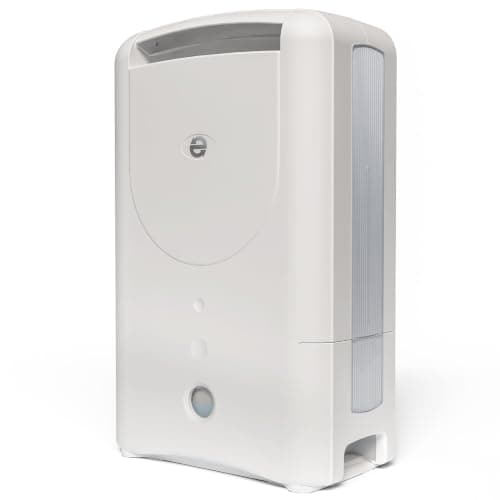
Eva-Dry EDV-4000H Rotary Desiccant Dehumidifier (Up to 14.81 Pints/Day, Rated to 34°F, 444 Sq Ft, 13 lb)
4.3 from 50 Amazon ratings · checked 13 Oct

Best for: A crawl space or unheated garage up to 444 sq ft where the unit has to pass through an access hatch and run unattended on a drain

Capacity (stated):
Up to 14.81 pints per day; test temperature and humidity not stated on the listing
Coverage (stated):
Up to 444 sq ft, or 4,000 cubic feet

Listing verified 13 Oct 2026

Best for Larger Cold Rooms
Ivation 19 Pint Small-Area Desiccant Dehumidifier (Up to 410 Sq Ft, 33°F to 104°F, Half-Gallon Tank)
4 from 216 Amazon ratings · checked 13 Oct

Best for: A cold basement room, boat cabin or workshop between 270 and 410 sq ft where a single desiccant unit has to cover the whole space

Capacity (stated):
19 pints per day; test temperature and humidity not stated on the listing
Coverage (stated):
Up to 410 sq ft

Listing verified 13 Oct 2026

Best for a Car or Safe, Not a Room
wisedry 2 x 500 g Rechargeable Silica Gel Desiccant Bags (150 g of Water per Bag, Microwave Reactivated)
4.6 from 18,385 Amazon ratings · checked 13 Oct

Best for: A parked car, gun safe, tool chest, camera bag or boat locker, where the air is sealed and a plug-in unit is impossible

Type:
Passive silica gel desiccant; no power, no fan, no tank
Capacity (stated):
Each 500 g bag adsorbs 150 g of water, 180 g at most

Listing verified 13 Oct 2026

How this page was made: we compare the current Amazon listings, the makers' published specs and what verified buyers report, then rank by fit for the job. Ratings, review counts and stock are read from Amazon and dated. We earn a commission on purchases through our links; it does not change the order. Reviewed by Marcus Reed, IICRC-certified Water Restoration Technician.

Full Reviews

Each pick in detail: what the listing states, what buyers report, and where it falls short.

#1
Best Overall

Check price

on Amazon ↗

Listing verified 13 Oct 2026

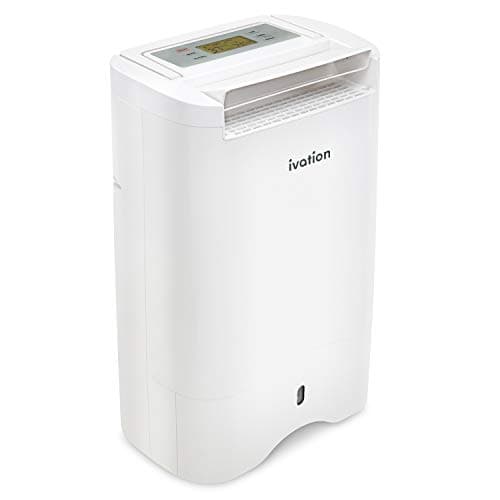
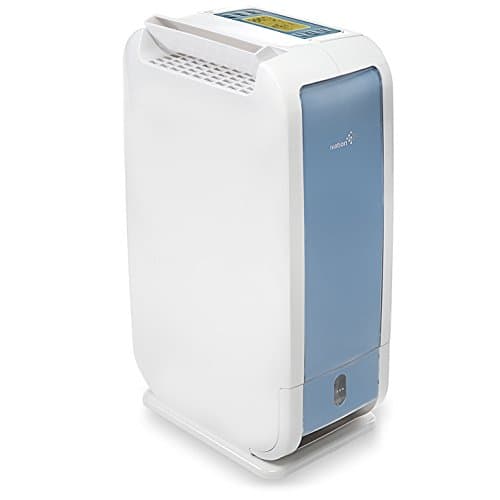
Ivation 13-Pint Small-Area Desiccant Dehumidifier (13 Pints/Day at 68°F and 60% RH, Rated to 33°F, 270 Sq Ft)See it on Amazon ↗

Quick Verdict

Ivation 13-Pint Small-Area Desiccant Dehumidifier: the clearest stated spec of any desiccant unit we read, built for a cold space under 270 sq ft.

Key Specs

Capacity (stated)

Up to 13 pints per day at 68°F and 60% RH

Coverage (stated)

Rooms up to 270 sq ft

Operating range (stated)

33°F to 104°F

Power draw (stated)

470 W on high, 280 W on low, at 120 V 60 Hz

Tank

3.8-pint removable reservoir with level indicator and carry handle

Drain

Continuous drain hose included; gravity flow, no pump

Pros

  • States its pint figure with the temperature and humidity behind it, which most desiccant listings skip
  • Rated to run at 33°F, well below the point where compressor coils frost
  • Two power levels, so you can hold a dry space on 280 W instead of 470 W
  • Drain hose in the box, with a tilt and overflow auto-stop

Cons

  • 270 sq ft of coverage rules out a two-car garage
  • Pulls 470 W on high, more than a small compressor unit moving the same pints in warm air
  • No noise figure on the listing

Suited to

A one-car garage, crawl space, boat cabin or cold workshop up to about 270 sq ft that sits below 65°F from fall to spring

Our take

The useful number on this listing is not 13 pints, it is the condition attached to it: 68°F and 60% RH. That is a cool, damp room, close to what a garage feels like in October, which makes the figure more honest than a rating taken at 95°F. Expect less than 13 pints in a 45°F garage, because colder air holds less water to begin with. The 470 W draw is the trade for working in the cold; a desiccant wheel is dried by a heater, and that heater is where the watts go. Drop to low once the humidity target is reached and the draw falls to 280 W. The 3.8-pint tank fills in about seven hours at the rated rate, so route the included hose to a floor drain and forget the tank.

Check today's price on Amazon →

Affiliate link — commission at no extra cost to you

Compare elsewhere

These open a search for this model. We quote prices only where we can verify them — Amazon, Sylvane and eBay.

#2
Best for Crawl Spaces

Check price

on Amazon ↗

Listing verified 13 Oct 2026

Eva-Dry EDV-4000H Rotary Desiccant Dehumidifier (Up to 14.81 Pints/Day, Rated to 34°F, 444 Sq Ft, 13 lb)See it on Amazon ↗

Quick Verdict

Eva-Dry EDV-4000H Rotary Desiccant Dehumidifier: the crawl space pick for its size and 34°F rating, with a pint figure that lacks test conditions.

Key Specs

Capacity (stated)

Up to 14.81 pints per day; test temperature and humidity not stated on the listing

Coverage (stated)

Up to 444 sq ft, or 4,000 cubic feet

Minimum temperature (stated)

34°F

Weight and depth (stated)

13 lb, 7 in deep

Tank

2-liter tank with auto shut-off

Drain

Continuous drain option; connect a hose to a floor drain

Pros

  • Built narrow and light for crawl space hatches, at a stated 13 lb and 7 in deep
  • Rated to 34°F, so it keeps running in a crawl space that never warms up in winter
  • No compressor or refrigerant, which per the listing means no cycling noise and nothing to service
  • Covers up to 444 sq ft, the largest stated area of the rotary units here

Cons

  • The 14.81-pint figure has no temperature or humidity attached, so it cannot be compared with Ivation's
  • Three preset humidity levels rather than a number you set
  • Stock showed as limited on the date we read the listing, and power draw is not stated

Suited to

A crawl space or unheated garage up to 444 sq ft where the unit has to pass through an access hatch and run unattended on a drain

Our take

Eva-Dry built this one for the crawl space, and the dimensions matter more than the pints. A 13 lb unit that is 7 in deep fits through a hatch and sits on a vapor barrier where a 35 lb compressor machine will not go. The 34°F floor covers nearly every US crawl space in winter. What the listing leaves out is the condition behind the 14.81 pints per day; without a temperature and humidity you should assume the figure comes from warm, wet air and plan on less in the cold. The ionizer is optional and you can leave it off. Connect the hose to a floor drain or a condensate pump before you close the hatch, because a 2-liter tank fills in roughly seven hours at the rated rate and nobody checks a crawl space daily.

Check today's price on Amazon →

Affiliate link — commission at no extra cost to you

#3
Quietest Stated

Check price

on Amazon ↗

Listing verified 13 Oct 2026

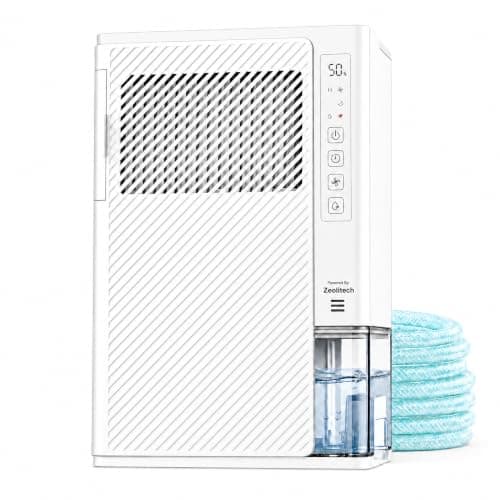
AEOCKY X1-Pro Rotary Desiccant Dehumidifier (340 W, Peak 10 Pints/Day at 95°F and 90% RH, 39 dB Stated)See it on Amazon ↗

Quick Verdict

AEOCKY X1-Pro Rotary Desiccant Dehumidifier: quiet, compact and settable, but its pint figure comes from a 95°F test, not a garage.

Key Specs

Capacity (stated)

Peak 10 pints per day at 95°F and 90% RH

Drying material (stated)

Zeolite molecular sieve rotor

Power draw (stated)

340 W

Noise (seller's figure)

39 dB at 3 ft on maximum output; 25 dB in sleep mode

Humidity setting (stated)

40% to 80% target, with a 24-hour auto-off timer

Tank

85 oz, about 5.3 pints, with auto shut-off

Pros

  • The only unit here that puts a noise number on the listing, 39 dB at 3 ft
  • Humidistat with a number you set, from 40% to 80%, plus a timer
  • Largest tank of the group at 85 oz, and a hose in the box
  • 340 W is the lowest stated draw of the rotary units on this page

Cons

  • The 10-pint figure is taken at 95°F and 90% RH, nothing like a cold garage, so expect far less there
  • The title claims 2,000 sq ft while the bullets limit it to small spaces; trust the bullets
  • The listing itself warns of noticeable warmth and a slight scent on first use
  • A newer listing with a shorter buyer record than the Ivation

Suited to

A small cold room, closet-sized workshop or boat cabin where noise matters and you want a humidity number you can set

Our take

Read this listing twice. The headline numbers are engineering claims, 340 W, a zeolite rotor, 39 dB at 3 ft, but the 10 pints per day is measured at 95°F and 90% RH, a tropical test room. Capacity falls fast as air cools, so in a 50°F garage the same unit will collect a fraction of that. The title's 2,000 sq ft is contradicted by the seller's own bullet, which names compact spaces and small basements, and the bullet is the one to believe. In its favor, it is the only desiccant unit among the listings we read that states a noise level, and the 40% to 80% humidistat gives you a target instead of three presets. The seller admits the unit gives off heat and a faint smell when new; give it a day with a window open.

Check today's price on Amazon →

Affiliate link — commission at no extra cost to you

#4
Best for Larger Cold Rooms

Check price

on Amazon ↗

Listing verified 13 Oct 2026

Ivation 19 Pint Small-Area Desiccant Dehumidifier (Up to 410 Sq Ft, 33°F to 104°F, Half-Gallon Tank)See it on Amazon ↗

Quick Verdict

Ivation 19 Pint Small-Area Desiccant Dehumidifier: more coverage with the same cold rating, on a listing that skips the test conditions.

Key Specs

Capacity (stated)

19 pints per day; test temperature and humidity not stated on the listing

Coverage (stated)

Up to 410 sq ft

Operating range (stated)

33°F to 104°F

Tank

Half-gallon reservoir, about 4 pints

Drain

Connection hose included for continuous gravity drain

Controls

LCD with humidity setting, fan speed, timer and sleep mode, vent swing, screen brightness

Pros

  • Same 33°F floor as the 13-pint Ivation with more stated capacity and coverage
  • Washable filter, which the 13-pint listing does not mention
  • Half-gallon tank plus a hose, with auto-shutoff and alerts

Cons

  • The 19-pint figure carries no test conditions, unlike its smaller sibling
  • Power draw is not stated, so the running-cost arithmetic below cannot be done for it
  • A half-gallon tank fills in about five hours at the rated rate, so the hose is not optional

Suited to

A cold basement room, boat cabin or workshop between 270 and 410 sq ft where a single desiccant unit has to cover the whole space

Our take

This is the step up from the 13-pint Ivation for a bigger cold room, and the two share a 33°F to 104°F operating range, a drain hose and the same control layout. The difference worth noticing is what the listing omits: Ivation attached 68°F and 60% RH to the 13-pint figure but gives the 19-pint figure bare. Assume it was taken at warmer conditions and treat the two as closer in cold air than the numbers suggest. The washable filter is a practical plus in a dusty garage, since ENERGY STAR advises keeping any dehumidifier away from woodworking dust that clogs grills and coils. At 19 pints a day the half-gallon tank is full before lunch, so set the hose up on day one.

Check today's price on Amazon →

Affiliate link — commission at no extra cost to you

#5
Best for a Car or Safe, Not a Room

Check price

on Amazon ↗

Listing verified 13 Oct 2026

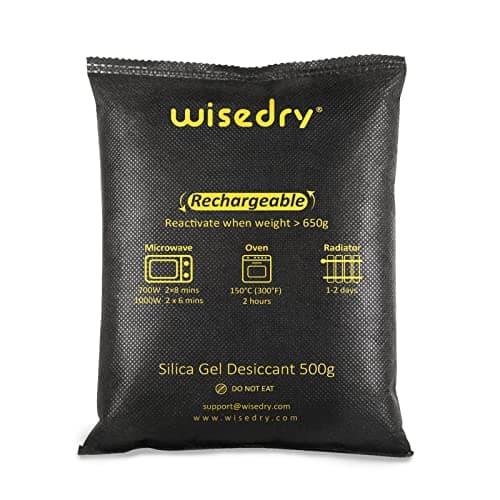
wisedry 2 x 500 g Rechargeable Silica Gel Desiccant Bags (150 g of Water per Bag, Microwave Reactivated)See it on Amazon ↗

Quick Verdict

wisedry 2 x 500 g Rechargeable Silica Gel Desiccant Bags: the right desiccant for a closed car or safe, and no substitute for a machine in a room.

Key Specs

Type

Passive silica gel desiccant; no power, no fan, no tank

Capacity (stated)

Each 500 g bag adsorbs 150 g of water, 180 g at most

Reactivation (stated)

Microwave or oven, 10 to 16 minutes depending on power; weigh first and do not recharge under 650 g

Reuse (stated)

More than 10 cycles

Packaging (stated)

Double packed so the gel stays dry until opened

Stated uses

Car windows, gun safe, closet, RV, boat, tool shop, garage storage

Pros

  • Holds about a third of a pint per bag, enough to keep a closed car or safe dry between recharges
  • No cord, so it works in a parked car, a cabinet or a boat locker where a machine cannot
  • Reactivates in a microwave rather than being thrown away like a calcium chloride tub
  • Weighing the bag tells you exactly how full it is

Cons

  • Two bags hold 300 g of water in total, about one-twentieth of what the Ivation removes in a day
  • Does nothing for an open room; it only works inside a closed box of air
  • Needs a kitchen scale and a microwave to maintain properly

Suited to

A parked car, gun safe, tool chest, camera bag or boat locker, where the air is sealed and a plug-in unit is impossible

Our take

This is the other thing people mean by desiccant dehumidifier, and it belongs on the page so you can see the gap. Silica gel adsorbs water onto its surface until it is full, and wisedry states the number: 150 g per 500 g bag. That is roughly 5 oz, a third of a pint, and once reached the bag does nothing until you dry it out again in a microwave. The Ivation above removes up to 13 pints in a day, around 6,150 g, so these two bags hold about one-twentieth of that before they need recharging. Put them in a closed car, a safe or a sealed tote and they earn their keep; put them in a garage and the air they dry is replaced the moment the door opens.

Check today's price on Amazon →

Affiliate link — commission at no extra cost to you

Buyer's Guide

What to know before you buy.

Why Compressor Units Quit in the Cold, and Desiccant Units Do Not

A compressor dehumidifier works like a small air conditioner: a fan pulls room air over a cold coil, water condenses on the coil and drips into a tank. ENERGY STAR's dehumidifier guidance says frost can form on those coils if the air temperature drops below 65°F, and that the frost may hurt performance by making the compressor cycle on and off repeatedly. A garage in Ohio spends half the year under that line. A desiccant unit has no cold coil. Air passes through a slowly turning wheel coated with silica gel or zeolite, which pulls water vapor out of it; a heater then dries a slice of the wheel, and the water driven off is condensed and sent to the tank. Nothing in that loop needs to be colder than the room, which is why the Ivation and Eva-Dry units are rated down to 33°F and 34°F. The cost is the heater, and the heater is why these machines draw 280 W to 470 W for 10 to 19 pints.

Read the Conditions Behind the Pints

Two numbers on this page look comparable and are not. Ivation states 13 pints a day at 68°F and 60% RH; AEOCKY states a peak of 10 pints a day at 95°F and 90% RH. Hot, saturated air carries several times more water than cool air, so the AEOCKY figure comes from an easier room and will fall further once the garage is at 50°F. Eva-Dry and the 19-pint Ivation give no conditions at all. When a listing omits them, assume the figure was taken warm. The honest way to size is to start from the stated coverage, 270 sq ft for the 13-pint Ivation, 410 for the 19-pint, 444 for the Eva-Dry, then take ENERGY STAR's advice that it is better to oversize than undersize. A two-car garage of 400 to 600 sq ft with the door opening daily is beyond any single unit here; close the door, keep the car's snowmelt off the slab where you can, and consider two units.

Watts, Heat and What It Costs to Run

The heater that makes a desiccant unit work in the cold is also what you pay for. Multiply the stated watts by hours: the Ivation 13-pint on high draws 470 W, about 11.3 kWh a day, or 6.7 kWh on its 280 W low setting; the AEOCKY's stated 340 W comes to about 8.2 kWh a day. The humidistat switches the unit off once the target is reached, so real use is lower, and most of that energy ends up as heat in the room. ENERGY STAR notes that any dehumidifier slightly warms the space around it, and the Ivation listing says the unit warms the air it returns. In a cold garage that is a benefit: warmer air holds more water and the tools stop sweating. In a summer basement it is the reason to buy a compressor unit instead. There is a heating element inside, so keep the intake and outlet clear and keep gas cans and solvent rags as far from it as from any heater.

Tank, Hose and Where the Water Goes

Every rotary unit here fills its tank in well under a day. The Ivation 13-pint holds 3.8 pints and removes up to 13 a day, so it stops after about seven hours on a full tank; the 19-pint's half-gallon tank lasts about five; Eva-Dry's 2-liter tank, about seven; the AEOCKY's 85 oz tank, roughly thirteen. All four stop when full, which protects the floor and also means a unit you check weekly spends most of the week switched off. The fix is the hose. These are gravity drains with no pump, so the hose has to run downhill the whole way to a floor drain, a utility sink or a condensate pump, with no loops that trap water. Keep the run short, and in a garage that freezes, drain the hose after each cycle or run it indoors so ice does not block it. The Ivation and AEOCKY units include the hose; Eva-Dry lists a drain option but does not say a hose is in the box.

Desiccant Machine or Desiccant Tub: Not the Same Thing

Amazon returns three kinds of product for this search, and only one dries a room. Rotary desiccant dehumidifiers, the Ivation, Eva-Dry and AEOCKY units, move pints of water a day and need a plug. Rechargeable silica gel bags such as wisedry hold a stated 150 g of water per 500 g bag, about a third of a pint, and then stop until you dry them in a microwave; they work in a closed car, safe or tote and nowhere else. Calcium chloride tubs, the DampRid and Vacplus type, are not reusable at all: the crystals dissolve into brine over several weeks and the tub is thrown out. A tub in a 400 sq ft garage changes nothing you could measure on a hygrometer. If you are shopping for a cabinet or a car, our moisture absorber review covers the tubs and bags in more depth. If you are shopping for a room, buy a machine.

Who Should Not Buy a Desiccant Unit, and When to Call a Pro

Skip a desiccant unit for a basement that is warm and damp in summer; a compressor dehumidifier sized for the space removes more water per watt above 65°F, and our basement dehumidifier review covers those. Skip it for a space over about 450 sq ft, beyond the stated coverage of every unit here. Skip it for a room that is already too warm, since it adds heat. And no dehumidifier dries a wet floor, soaked drywall or a crawl space with standing water. EPA advises drying water-damaged areas within 24 to 48 hours to prevent mold growth, and that is extraction and air-mover work, not a 13-pint machine. Water that keeps coming back, humidity that will not drop below 60% with the unit running, or a musty smell with no visible source all point to a leak or ground water, and the fix is finding the source. An IICRC-certified restoration company can measure the moisture inside the walls and tell you what the dehumidifier is up against.

Frequently Asked Questions

Do desiccant dehumidifiers work in cold garages?

YesAnd that is their main reason to exist. The Ivation units are rated to run from 33°F and the Eva-Dry EDV-4000H from 34°F, because a desiccant wheel does not depend on a cold coil.

ENERGY STAR says frost can form on a compressor unit's coils below 65°F, which is where most unheated garages sit from fall to spring. Expect fewer pints per day in cold air than the listing states, since cold air carries less water, and keep the door closed while it runs.

Are desiccant dehumidifiers better than compressor dehumidifiers?

Below about 65°F, yes; above it, usually no. A desiccant unit keeps working in a cold garage, crawl space or boat where a compressor's coils frost, and it runs without the start-stop of a compressor.

In a warm, humid basement a compressor unit removes more water for the same electricity and is sold in far larger capacities, 50 pints a day and up, against 10 to 19 pints for the desiccant units here. Match the machine to the temperature of the room, not the other way round.

What are the disadvantages of a desiccant dehumidifier?

Power use, heat and capacity. The heater that dries the wheel means the Ivation 13-pint draws 470 W on high for 13 pints a day, where a compressor unit moves more water per watt in warm air. That heat raises the room temperature a little, which is unwelcome in summer.

Capacities stop at about 19 pints a day on this page, so a large wet basement is out of reach. And the pint figures are often quoted without test conditions, so comparing listings takes care.

Does a desiccant dehumidifier heat the room?

A little, yes. The wheel is regenerated by a heater and that energy leaves the unit as warm air, which the Ivation listing describes as gently warming the ambient air; AEOCKY's listing says the warmth can be noticeable when the unit is new.

ENERGY STAR notes that any dehumidifier slightly warms the space around it. In a cold garage the extra warmth helps, since tools and car bodies stop sweating. In a room you are trying to keep cool, choose a compressor unit.

How much electricity does a desiccant dehumidifier use?

Take the stated watts and multiply by the hours it runs. The Ivation 13-pint states 470 W on high and 280 W on low, so a full day on high is about 11.3 kWh and on low about 6.7 kWh; the AEOCKY X1-Pro states 340 W, about 8.2 kWh a day.

Eva-Dry does not state a figure. A humidistat cuts real use well below those maximums once the space is dry, so set a target near 50% RH rather than running it flat out.

Is a desiccant dehumidifier the same as DampRid?

NoDampRid and similar tubs hold calcium chloride crystals that dissolve into brine as they take in moisture, work only in a closed cabinet or closet, and are thrown away after a few weeks.

A desiccant dehumidifier is a plug-in machine with a rotating silica gel or zeolite wheel that removes 10 to 19 pints of water a day and drains it away. Rechargeable silica gel bags sit between the two: reusable, but still only for a closed space such as a car or a safe.

Who do I call right now for water damage?

Call (888) 840-6512. The line is answered 24 hours a day, seven days a week, and connects you with an IICRC-certified water damage restoration company that serves your area. A recorded menu picks up first: choose water damage or mold, key in your 5-digit ZIP code, and hold through the short silence while the call is passed to the company.

Describe what you can see — where the water is coming from, how long it has been there, and whether it smells — the more specific you are, the faster the right company is on the line. If the source is a pipe or an appliance, shut the main water valve first. Have four things ready and the call goes quickly: the address, when the water started, what is wet now, and whether you have filed an insurance claim.

Still not sure which of these is your situation? (888) 840-6512 · toll-free · answered 24/7

Sources

  1. ENERGY STAR — Dehumidifiers
  2. EPA — A Brief Guide to Mold, Moisture, and Your Home

Methodology: How we source and verify data · Report an error

How we chose these picks

  • Every pick is a current listing. Stock, star ratings and rating counts are read from Amazon by script and carry the date they were read.
  • Nothing under 4.0 stars makes the list, and the top pick needs a large rating count, so one good week of reviews cannot put it there.
  • Specs are quoted from the listing or the maker, with the test condition behind the number where there is one, and sized against the job rather than the room on the box.
  • We do not run lab or field tests. Where a spec matters, we say what it is measured under and what it cannot tell you.

Free 2-day shipping

Amazon Prime members pay no shipping on restoration equipment

Dehumidifiers, air movers, and moisture meters qualify for free Prime delivery — bulk items that otherwise cost $15–$40 to ship.

Try Prime free →

Affiliate link — HearthDry earns a bounty if you sign up; costs you nothing extra.

Also Worth Comparing

Best Dehumidifiers for a Garage in 2026 — Judged on Cold-Weather Specs and Drainage

A garage is the hardest space in a house to dehumidify: it runs cold, it leaks air and it rarely has a drain. These four picks are judged on the specifications that decide whether a unit keeps working there, from a capacity stated at cool conditions and auto defrost to a desiccant option for winter and a hose that reaches a drain.

Read the comparison

Best Dehumidifier for Basement Use in 2026 — Drain Hose, Built-In Pump and Honest Pint Ratings

Most basement dehumidifier disappointment comes from two numbers nobody reads properly: the pint rating, measured at warm test conditions a 60°F basement never reaches, and the drainage method. Five units are compared here on those two points first, from a garden-hose drain to a built-in pump with a stated 15 ft lift.

Read the comparison

Best Crawl Space Dehumidifiers in 2026 — Compared at Crawl-Space Temperatures

A damp crawl space feeds mold and wood rot in the framing above it. These four crawl space dehumidifiers are ranked on published specifications, buyer records and how honestly each states its capacity for the cool, damp conditions under a house.

Read the comparison

Best Moisture Absorbers in 2026 — For Cabinets, Storage Rooms, Cars and Bathrooms, and Where a Dehumidifier Wins

A moisture absorber is a no-power container of crystals or gel that draws water out of the air in a small, closed space. It is the right tool for a cabinet, a car or a boat and the wrong one for a basement or a room after a leak, so these picks are sorted by where they will sit.

Read the comparison

Best Dehumidifiers for Gun Safes in 2026 — Heating Rods vs Rechargeable Desiccant

A gun safe dehumidifier comes in two kinds: a heating rod that needs a cord into the safe and keeps the air warm enough that relative humidity stays low, and a rechargeable desiccant that soaks up water with no cord at all. Which one is right depends on whether you can get power inside, how big the safe is and how damp the room around it gets.

Read the comparison

Best Dehumidifiers With a Built-In Pump in 2026 — Compared on Lift Height

A built-in pump is the answer when the only drain is above the dehumidifier: a laundry sink, a standpipe or a window. It is only an answer if it can lift water that high, and two of the four listings here state a lift height while two do not.

Read the comparison