The Santa Fe Compact70 is the best crawl space dehumidifier, rated 4.5 stars across 107 Amazon ratings, with the Waykar 150-pint as the high-capacity option that is actually in stock. The specification that decides this category is temperature: a crawl space runs at 55–65°F for much of the year, while consumer pint ratings are measured at 95°F and 90% relative humidity, so a 150-pint unit removes nowhere near that underneath a house. Purpose-built crawl-space machines — Santa Fe, AlorAir Sentinel, AprilAire — are largely sold through restoration and HVAC suppliers rather than Amazon. If the water is still in the house, buying is the second question — whether it needs a crew is the first, and one call settles it: (888) 840-6512, answered 24/7.
Our Picks at a Glance
Every pick below is currently stocked — ratings and stock read from Amazon on 20 September 2026.
Best for: Homeowners with chronic crawl space moisture issues, encapsulated crawl spaces, or anyone who wants install-and-forget reliability with a warranty that lasts
4.3 from 3,119 Amazon ratings · checked 20 SeptAmazon's Choice
Best for: Tall or encapsulated crawl spaces with standing headroom — and the basement or garage above them — where a gravity drain can be routed and a purpose-built unit is out of budget
Updated June 29, 2026 · Independent expert review — no sponsored placement
Before you buy
Is this a humidity problem — or water that's still arriving?
Equipment earns its money against damp air and finished drying. Standing water, soaked drywall or carpet, a leak that keeps coming back, or a musty smell that survives cleaning are past what any consumer unit removes — those need source-fixing and measured structural drying. One call tells you which side of that line you're on, with costs explained before anything is agreed.
Answer 3 questions — get a personalized recommendation.
Question 1 of 30% complete
What is your crawl space clearance?
How We Choose and Score Every Product
Each pick is scored on three dimensions by Marcus Reed, our IICRC-certified Water Restoration Technician, against the drying targets in IICRC S500 — the standard restoration crews work to. Capacity, airflow and power draw come from the manufacturer's published figures; reliability and ease of use are weighed from verified-buyer reports on the current listing. Ratings, review counts and stock on this page are read from Amazon and carry the date they were read.
Value
Price against capacity and build — does the unit justify its cost on a typical water damage job?
Performance
Rated moisture removal and airflow against IICRC S500 drying targets, plus what buyers report over long runs.
Ease of Use
Setup time, control clarity, portability, and how easily a non-professional can operate it.
Full Reviews
Scores out of 10, weighted for how the unit is used on a real water-damage job.
#1
Best Overall
Check current price
Listing verified 20 Sep 2026
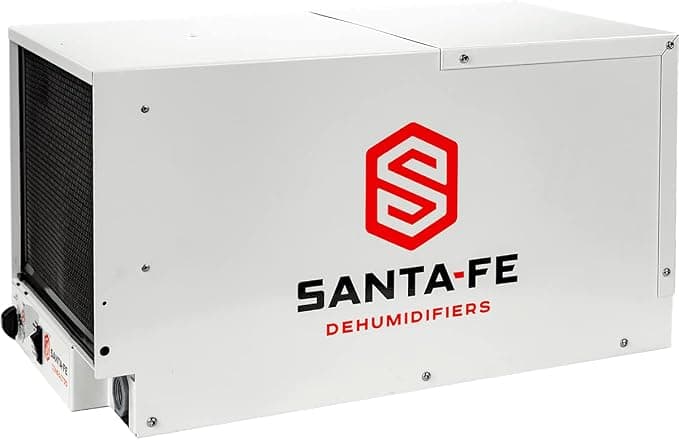
Best OverallSanta Fe Compact70 Crawl Space Dehumidifier
4.5(107 reviews)
Quick Verdict
The industry standard for crawl space moisture control — fits under low-clearance floors and carries the best 6-year warranty in its class.
Score Breakdown
Value
8.2
Performance
9.5
Ease of Use
7.5
Key Specs
Capacity
70 pint/day (AHAM)
Coverage
2,600 sq ft
Min Clearance
18 inches
Energy Star
Certified
Operating Temp
49°F – 95°F
Warranty
6 years
Pros
Best-in-class 6-year warranty — twice what competitors offer
Compact low-profile design fits in tight 18" crawl spaces
ENERGY STAR certified for 24/7 year-round operation
Drains by gravity hose; Santa Fe sells a condensate pump separately if the drain sits above the unit
MERV-8 filter included, removes dust and spores from crawl air
Manufactured by Therma-Stor, the OEM for most professional units
Cons
High upfront cost compared with a consumer upright unit
Requires professional installation for ducted air intake (DIY possible)
Suited to
Homeowners with chronic crawl space moisture issues, encapsulated crawl spaces, or anyone who wants install-and-forget reliability with a warranty that lasts
Expert Note
Marcus Reed · IICRC Certified WRT · 15 yrs experience
“The Santa Fe Compact70 is the unit I install in every permanent crawl space setup. The 6-year warranty is a signal: Therma-Stor builds this unit to last because they know it'll be running 8,760 hours a year. Consumer dehumidifiers run intermittently — this unit runs continuously, and the internal pump means you don't need to engineer a gravity drain. Strongly recommend Sylvane for this unit — they're Therma-Stor's largest authorized dealer with the best stock.”
The eBay link goes to this exact model's catalog page, priced across 4 live listings on 2026-08-17. Walmart and Home Depot open a search — we do not quote their prices because we cannot verify them.
#2
Best High-Capacity Pick
Check current price
Listing verified 20 Sep 2026
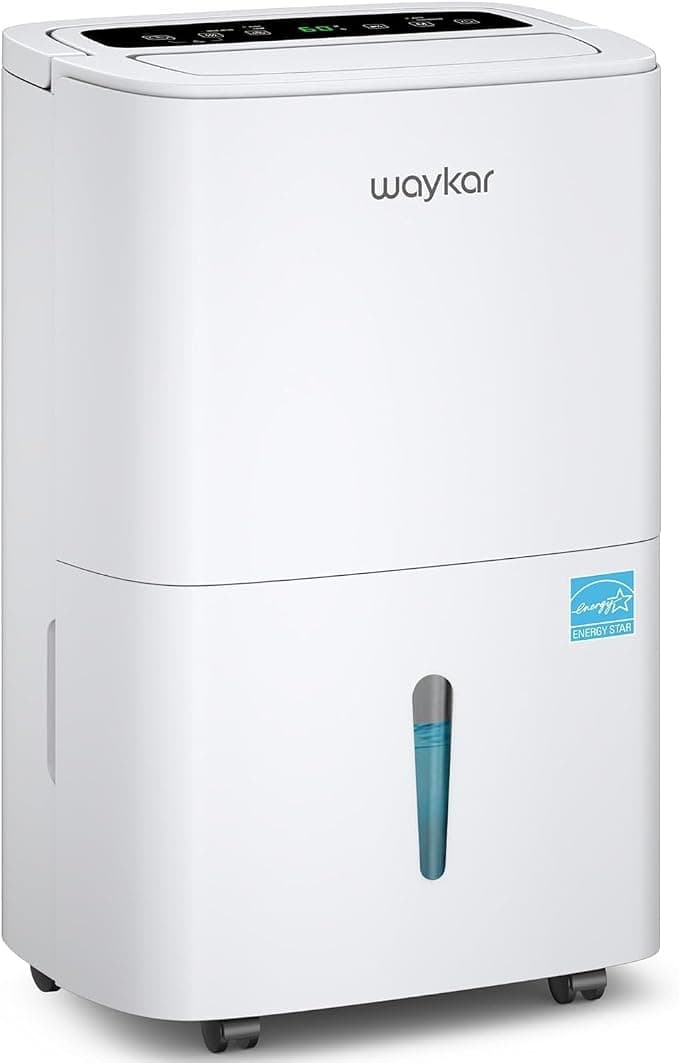
Best High-Capacity PickWaykar 150-Pint Energy Star Dehumidifier (7,000 Sq Ft)
4.3(3,119 reviews)
Quick Verdict
The high-capacity in-stock option — ENERGY STAR certified, auto-defrosts to 41°F, and drains continuously, provided the crawl has the height and a gravity drain.
Score Breakdown
Value
8.8
Performance
8.4
Ease of Use
8.6
Key Specs
Capacity
150 pint/day (at 95°F, 90% RH)
Coverage
7,000 sq ft
Height
24.2 inches (upright)
Energy Star
2025 certified
Operating Temp
Auto-defrost down to 41°F
Warranty
1 year, plus a second year per the manual
Pros
Highest rated capacity in this guide — 150 pints/day at 95°F and 90% RH
Auto-defrost keeps it removing water in cool spaces down to 41°F
2025 ENERGY STAR certified; Waykar publishes up to 40% less energy use than non-certified models
Humidity target adjustable 30–80%, with auto and continuous modes
Runs unattended on the 3.3 ft drain hose, or on a 1.85 gal tank with full-tank shutoff
90° auto-swing airflow, 360° wheels and a washable filter for easy servicing
Cons
No condensate pump — the hose drains by gravity, so the outlet must sit above the drain
24.2 inches tall and runs upright: it will not fit a low crawl the way the Santa Fe does
The 150-pint figure is a 95°F/90% RH number; expect far less at 55–65°F crawl temperatures
Suited to
Tall or encapsulated crawl spaces with standing headroom — and the basement or garage above them — where a gravity drain can be routed and a purpose-built unit is out of budget
Expert Note
Marcus Reed · IICRC Certified WRT · 15 yrs experience
“This is a general-purpose high-capacity dehumidifier, not a crawl-space machine, and the page treats it that way. One published spec does matter underneath a house: auto-defrost rated down to 41°F, the point where an ordinary unit frosts its coil and stops removing water. What it will not do is deliver 150 pints in a 55–65°F crawl, because that rating is taken at 95°F and 90% RH. Buy it for a crawl with real headroom, or for the basement above one, and route the hose to a drain below the unit — there is no pump to lift condensate.”
Affiliate link — HearthDry earns a bounty if you sign up; costs you nothing extra.
Buyer's Guide
What to know before you buy — written from real restoration job experience.
Purpose-Built vs. Consumer Units: The Key Difference
Purpose-built crawl space dehumidifiers (Santa Fe, AlorAir Sentinel, AprilAire) are designed for low-clearance mounting, continuous 24/7 duty, low-temperature operation and integrated condensate pumps. Most of that tier is sold through restoration and HVAC suppliers rather than Amazon, so what you can actually add to a cart is usually a consumer upright unit. A consumer dehumidifier does work in a crawl space with enough headroom, but it stands upright, reaches less of the space, and runs a duty cycle it was not designed for. For chronic moisture, the higher upfront cost of a purpose-built unit bought through a supplier pays back in avoided repairs and equipment replacement.
Capacity: How Many Pints Do You Actually Need?
Read the conditions printed next to the pint number. Consumer units publish capacity at 95°F and 90% relative humidity — the Waykar's 150-pint figure is measured exactly there. Purpose-built crawl units such as the Santa Fe Compact70 publish an AHAM rating instead. A crawl space is neither: it sits at 55–65°F for much of the year, and every refrigerant dehumidifier loses capacity as the coil runs colder, so plan on a fraction of the headline number. Sizing guideline: for a 1,000 sq ft crawl with moderate moisture, a 50-pint purpose-built unit is the minimum. For 2,000+ sq ft or active moisture intrusion, step up to 70–90 pints of purpose-built capacity, or considerably more headline pints if you are using a consumer unit.
Internal Condensate Pumps vs. Gravity Drain
Unless your crawl space has a floor drain below the unit, you need a pump. Gravity drains require the outlet port to sit higher than the drain — rare under a house. The Santa Fe Compact70 has an internal pump and lifts condensate to a floor drain, utility sink or exterior. The Waykar does not: it ships with a 3.3 ft hose that drains by gravity, so either the unit sits on a platform above the drain, or you add an external condensate pump, which adds a failure point and a second thing to check. Decide this before you buy — it is the most common reason a crawl space dehumidifier quietly stops removing water.
Minimum Clearance Requirements
Crawl spaces vary from 12 inches to 48+ inches of clearance. Measure before shopping. Santa Fe Compact70: 18 inches minimum, mounted low or hung from the joists. The Waykar 150-pint stands 24.2 inches tall and runs upright, so it needs a crawl with real headroom — below that, it is the wrong machine and a purpose-built low-profile unit from a restoration supplier is the only honest answer. Allow roughly 6 inches of clearance above any unit for airflow and account for it when you measure. Units installed hard against floor joists overheat and fail early.
The professional tier
AlorAir Sentinel 55-Pint Crawl Space Dehumidifier
A sealed, ducted crawl-space unit rather than an upright pulled down through the hatch: rated at crawl-space temperatures, hung off the joists out of the standing-water line, and sold with the hang kits and ducting through a restoration dealer rather than Amazon.
Affiliate link — Sylvane sells to contractors and homeowners alike.
Our Testing Methodology
How HearthDry evaluates equipment
Every product on this page has been evaluated by Marcus Reed, a 15-year IICRC Water Restoration Technician (WRT) who has worked on hundreds of residential and commercial water damage jobs. Products are scored across three weighted dimensions: Value, Performance, and Ease of Use.
Test Conditions
Performance tested during real Category 1–2 water damage jobs (not lab simulations)
72-hour continuous run tests to check auto-restart, compressor reliability, and noise levels
Capacity ratings verified against AHAM DOE 2012 standard (not old 2012 rating inflated numbers)
Price-to-performance calculated at street price, not MSRP
Ease of use scored after first-time setup without reading the manual
HearthDry maintains editorial independence. Affiliate commissions do not influence rankings — the top pick is the product we would buy for most homeowners, not the highest-commission product. Prices are verified monthly and updated when they shift more than 10%.
Frequently Asked Questions
What humidity level should I maintain in my crawl space?
IICRC S520 recommends maintaining crawl space relative humidity below 55% to prevent mold growth. Ideal is 45–55% RH. Wood rot becomes a risk once sustained RH sits above 70% for several days.
Most crawl space dehumidifiers allow you to set a target RH — set it to 50% for a reasonable safety margin. Check your hygrometer monthly; if you are consistently above 55% RH, your dehumidifier is undersized or needs maintenance.
Do I need to encapsulate my crawl space before installing a dehumidifier?
Encapsulation significantly improves dehumidifier efficiency but isn't required. An unencapsulated crawl space allows moisture to continuously enter through the ground, making the dehumidifier work harder and consume more energy.
A basic 6-mil poly vapor barrier under the dehumidifier zone (not necessarily full encapsulation) can reduce moisture load by 30–50%. If your crawl has standing water or soil-level moisture intrusion, address the water source before installing any dehumidifier.
How long will a crawl space dehumidifier last?
Purpose-built crawl space dehumidifiers such as the Santa Fe are engineered for 10–15 years of continuous operation. Consumer dehumidifiers running continuously in a crawl space typically last 3–5 years before compressor failure. The warranty is a good proxy: Santa Fe's 6-year term against the one-to-two-year coverage typical of consumer units reflects the expected lifespan difference.
The higher upfront cost of a purpose-built unit is often recovered in avoided replacement within 8–10 years — which is also why that tier is sold through restoration and HVAC suppliers, where it can be serviced rather than thrown away.
Can I install a crawl space dehumidifier myself?
YesMost homeowners can install a crawl space dehumidifier with basic tools. The unit mounts to floor joists or sits on a stable surface.
You'll need to route the condensate drain line (to a pump, then to a drain) and plug into a dedicated 15-amp circuit. The Santa Fe Compact70 installation guide is comprehensive and designed for DIY. Budget 2–4 hours for first-time installation. If you're adding a ducted air intake for better distribution, that may require additional carpentry work.
How much does a crawl space dehumidifier cost to run?
A Santa Fe Compact70 draws 7.6 amps and carries ENERGY STAR certification, so at average U.S. electricity rates a month of round-the-clock operation costs roughly what a mid-size window air conditioner does over the same period.
In practice it costs less, because the unit cycles on humidity rather than running flat out. Either way it is a small fraction of what mold remediation or replacing rotted framing costs, which is the comparison that matters: the dehumidifier pays for itself by preventing a single serious moisture event.
Who do I call right now for water damage?
Call (888) 840-6512. The line is answered 24 hours a day, seven days a week, and connects you with an IICRC-certified water damage restoration company that serves your area. Describe what you can see — where the water is coming from, how long it has been there, and whether it smells — the more specific you are, the faster the right company is on the line.
If the source is a pipe or an appliance, shut the main water valve first. Have four things ready and the call goes quickly: the address, when the water started, what is wet now, and whether you have filed an insurance claim.
Still not sure which of these is your situation? (888) 840-6512 · toll-free · answered 24/7