What to know before you buy.
01Sensor-Triggered vs Flow-Monitoring Shutoff
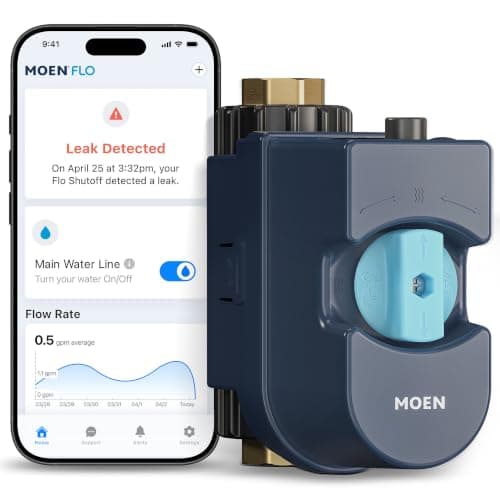
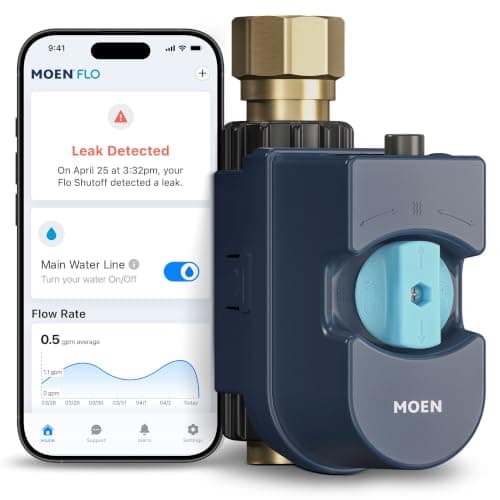
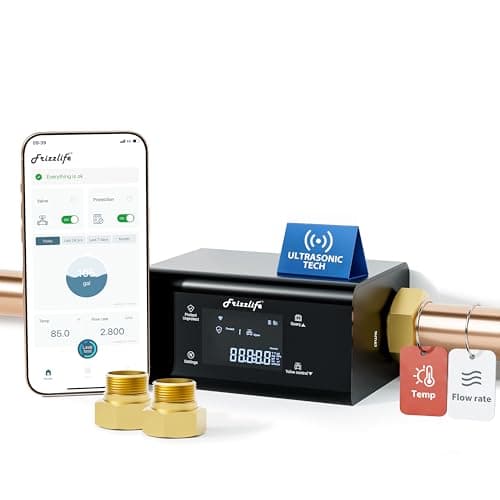
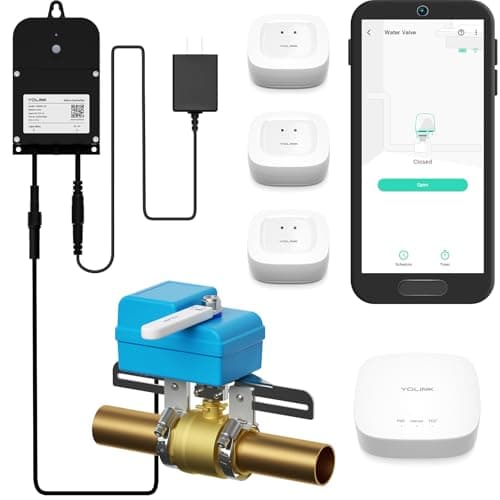
Every product here closes the water automatically, but they decide when in two different ways. A sensor-triggered system, such as the YoLink kit, waits for a leak sensor on the floor to get wet and then closes the valve. It is simple and reliable, but it only knows about leaks that reach a sensor. A flow-monitoring valve, such as Moen Flo or the Frizzlife LP365, sits in the main line and watches the water moving through it. It can catch a burst pipe inside a wall or ceiling where no sensor would ever get wet, and it can flag a running toilet. The strongest setup combines both: a main-line monitor for hidden leaks, and floor sensors at the appliances that fail most often.
02Installation: Existing Valve vs Main Line
The YoLink kit fits over the valve you already have; its EVO operator turns the handle, so no pipe is cut. That makes it the realistic choice for most owners who want automatic shutoff this month. Moen Flo and the Frizzlife go into the main supply line after the meter, which means shutting off the street supply, cutting the pipe and fitting the valve with the right connections. Most homeowners should hand that to a licensed plumber, and some insurers ask for proof of professional installation before they will credit the device. The Frizzlife also needs a power outlet nearby and a Wi-Fi signal where the main enters the house, often a basement corner or a garage wall, since its listing says it must be plugged in to be networked. The Moen Flo listings do not state power or network requirements, so check the manual before choosing a spot.
03Pipe Size and Valve Condition
Measure before you buy. Many houses have a 3/4-inch main and many larger homes have a 1-inch main; the Moen Flo listings come in separate 3/4-inch and 1-inch versions, while the Frizzlife LP365 fits either. For the YoLink kit, size matters less than condition. The operator can only turn a valve that turns, so try your main valve by hand first. If it is stiff, drips at the stem when moved, or does not stop the water fully when closed, have it replaced before you automate it. An old gate valve that has not been operated in years is the usual weak point, so check YoLink's compatibility notes for your valve type before ordering.
04What Happens in a Power or Internet Outage
Outages and burst pipes often arrive together in winter storms, so check what each system does without power or Wi-Fi. YoLink's listing says its leak sensors and valve controller talk to each other directly, so the valve still closes with the internet or power down, and the controller runs on batteries as backup. The Frizzlife listing says it must be plugged in to be networked and mentions no battery, so treat its remote alerts as unavailable in a power cut. The Moen Flo listings do not say how the valve behaves offline, so check the manual before relying on it through an outage. If the house will sit empty through a storm season, a battery-backed system that acts locally is the safer choice, or add standalone water alarms as a second layer.
05Insurance Discounts: Ask Before You Buy
Some home insurers offer a premium credit for an automatic water shutoff device, and a few require one on high-value homes. The terms vary by carrier, state and policy, so call your insurer before you buy and ask three questions: which device types qualify, whether a sensor-triggered system counts or only a main-line flow monitor, and what proof they need, such as a plumber's invoice or a monitoring certificate. Get the answer in writing. A discount is a welcome bonus, but the reason to fit one of these is the claim it prevents: a supply line that fails while nobody is home can run for hours, and an automatic shutoff limits it to a small spill.