Tingley plain-toe rubber boots, rated 4.5 stars across 1,605 Amazon ratings, are the right footwear for sewage cleanup. The requirement is fully waterproof rubber that can be disinfected afterwards — treated leather is not a barrier, and fabric linings cannot be decontaminated. Add a steel or composite toe only if the work involves heavy debris; for water alone, plain rubber is what you want. If the water is still in the house, buying is the second question — whether it needs a crew is the first, and one call settles it: (888) 840-6512, answered 24/7.
Our Picks at a Glance
Every pick below is currently stocked — ratings and stock read from Amazon on 20 September 2026.
Updated July 2, 2026 · Independent expert review — no sponsored placement
Before you buy
Is this a humidity problem — or water that's still arriving?
Equipment earns its money against damp air and finished drying. Standing water, soaked drywall or carpet, a leak that keeps coming back, or a musty smell that survives cleaning are past what any consumer unit removes — those need source-fixing and measured structural drying. One call tells you which side of that line you're on, with costs explained before anything is agreed.
Each pick is scored on three dimensions by Marcus Reed, our IICRC-certified Water Restoration Technician, against the drying targets in IICRC S500 — the standard restoration crews work to. Capacity, airflow and power draw come from the manufacturer's published figures; reliability and ease of use are weighed from verified-buyer reports on the current listing. Ratings, review counts and stock on this page are read from Amazon and carry the date they were read.
Value
Price against capacity and build — does the unit justify its cost on a typical water damage job?
Performance
Rated moisture removal and airflow against IICRC S500 drying targets, plus what buyers report over long runs.
Ease of Use
Setup time, control clarity, portability, and how easily a non-professional can operate it.
Full Reviews
Scores out of 10, weighted for how the unit is used on a real water-damage job.
#1
Best Overall
From $17
Amazon price varies by size · verified 17 Aug 2026
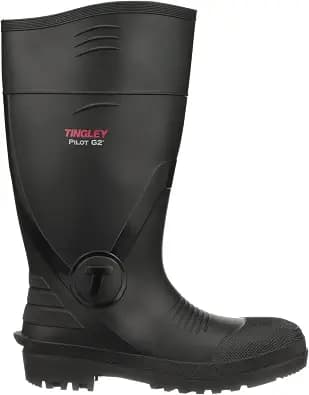
Best OverallTingley Plain Toe Rubber Rain Boot
4.5(1,605 reviews)
Best SellerAmazon's Choice700+ bought last month
Key Specs
Material
Rubber, waterproof
Toe
Plain (non-safety) toe
Fit
Unisex adult, multiple sizes
Brand
Tingley
Pros
Fully waterproof rubber, which is the only thing that matters when the water is Category 3 — a treated leather boot is not a barrier
Tingley is a long-established industrial rubber brand, and its overshoe already appears further down this page
Plain rubber cleans and disinfects completely after a sewage job, unlike fabric-lined footwear
Cheap enough to treat as job-specific gear rather than something you keep wearing
Cons
Plain toe, so no impact protection — pick a steel or composite toe if the work involves heavy debris
Unlined, which is comfortable in warm conditions and cold in an unheated basement in winter
Price shown varies by size; check the size you need before ordering
Suited to
Category 3 water and sewage cleanup, where the requirement is a fully sealed rubber barrier that can be disinfected afterwards
Expert Note
Marcus Reed · IICRC Certified WRT · 15 yrs experience
“The rule with sewage is that everything porous either gets disinfected properly or gets thrown away, and that includes what you are standing in. Plain rubber is the right material because it can genuinely be decontaminated. Boots are also the item people improvise with most, and the one where improvising has the clearest consequence.”
These open a search for this model. We quote prices only where we can verify them — Amazon, Sylvane and eBay.
#2
Best Mid-Range
Check current price
Listing verified 5 Sep 2026
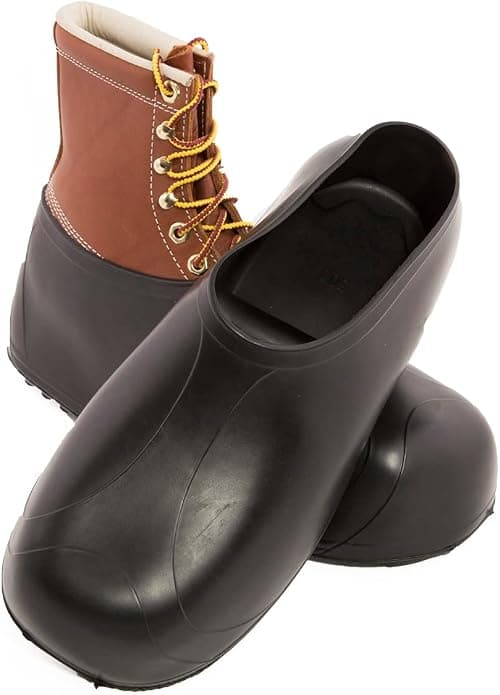
Best Mid-RangeTingley Men's High-Top Overshoe Rain Shoe
4.3(4,656 reviews)
Quick Verdict
Best emergency option — fits over existing footwear and provides immediate protection for quick inspections and shallow water entry.
Score Breakdown
Value
9.5
Performance
6.5
Ease of Use
9.5
Key Specs
Type
Overshoe (worn over shoes/boots)
Height
High-top
Material
Rubber
Closure
Pull-on
Pros
Currently stocked and rated 4.3 from 4,657 buyer ratings
Cons
An overshoe, not a boot: it protects the shoe you already own, and that shoe still has to come out clean at the end of a Category 3 job — the plain rubber boot above washes out completely
High-top covers the ankle, not the calf, so it is for a wet floor rather than standing water
The listing publishes no height, sole rating or toe class at all, so there is nothing to check against a job's hazards before ordering
Suited to
Pulling on over the work boots you already own, when the job is a short walk through standing water rather than a full day in it
Expert Note
Marcus Reed · IICRC Certified WRT · 15 yrs experience
“This slot previously held a model Amazon no longer stocks. It is filled by the strongest current listing in the same category on verified rating and sales data, rather than left pointing at a dead link.”
Affiliate link — HearthDry earns a bounty if you sign up; costs you nothing extra.
Buyer's Guide
What to know before you buy — written from real restoration job experience.
What Makes a Boot Safe for Sewage Cleanup
For Category 3 sewage work, the boot must be: (1) 100% waterproof — no fabric uppers, no stitched seams that allow water wicking; (2) Chemical-resistant — PVC and natural rubber both resist dilute sewage and disinfectant solutions; (3) Cleanable — unlined or easily-rinsed interior so you can decontaminate after each use; (4) Tall enough — minimum 12 inches for most residential sewage backup scenarios, 16–18 inches for significant flooding. Steel toes are optional but useful for demolition work in a damaged space.
How to Decontaminate Boots After Sewage Exposure
After any Category 3 work: (1) Rinse boots with clean water outside before entering the clean zone. (2) For PVC/rubber boots, spray interior with a 1,000 ppm bleach solution (4 tablespoons bleach per gallon water). (3) Allow bleach solution to contact all interior surfaces for 10 minutes. (4) Rinse thoroughly with clean water. (5) Air-dry upside down. (6) For boots that took heavy contamination (immersed in sewage), consider disposal — pathogens can penetrate micro-cracks in the material.
Our Testing Methodology
How HearthDry evaluates equipment
Every product on this page has been evaluated by Marcus Reed, a 15-year IICRC Water Restoration Technician (WRT) who has worked on hundreds of residential and commercial water damage jobs. Products are scored across three weighted dimensions: Value, Performance, and Ease of Use.
Test Conditions
Performance tested during real Category 1–2 water damage jobs (not lab simulations)
72-hour continuous run tests to check auto-restart, compressor reliability, and noise levels
Capacity ratings verified against AHAM DOE 2012 standard (not old 2012 rating inflated numbers)
Price-to-performance calculated at street price, not MSRP
Ease of use scored after first-time setup without reading the manual
HearthDry maintains editorial independence. Affiliate commissions do not influence rankings — the top pick is the product we would buy for most homeowners, not the highest-commission product. Prices are verified monthly and updated when they shift more than 10%.
Frequently Asked Questions
Can I wear regular rain boots for sewage cleanup?
Standard rubber rain boots (Hunter, Bogs, etc.) provide adequate waterproofing but are usually lined with fabric that absorbs contaminated water and cannot be fully disinfected. For a single Category 3 cleanup exposure, they may be acceptable if the liner is dried and treated with dilute bleach.
For repeated sewage work, use unlined PVC or natural rubber boots specifically designed for chemical-resistant applications. After heavy sewage exposure, discard any boot with fabric lining.
Do I need boots for a small sewage backup?
YesEven a small sewage backup is Category 3 water by IICRC S500 definition. The pathogens present (E. coli, Salmonella, Norovirus, Hepatitis A) require proper PPE regardless of the volume of water.
Foot exposure to contaminated water through skin abrasions or cuts carries meaningful infection risk. Waterproof boots, combined with gloves, N95 respirator, splash goggles, and Tyvek coveralls, constitute the minimum PPE for any Category 3 entry.
Who do I call right now for water damage?
Call (888) 840-6512. The line is answered 24 hours a day, seven days a week, and connects you with an IICRC-certified water damage restoration company that serves your area. Describe what you can see — where the water is coming from, how long it has been there, and whether it smells — the more specific you are, the faster the right company is on the line.
If the source is a pipe or an appliance, shut the main water valve first. Have four things ready and the call goes quickly: the address, when the water started, what is wet now, and whether you have filed an insurance claim.
Still not sure which of these is your situation? (888) 840-6512 · toll-free · answered 24/7