Best Backwater Valves in 2026 — In-Line Sewer Valves, Floor-Drain Floats, and What the Install Really Takes

Best Backwater Valves in 2026

In-Line Sewer Valves, Floor-Drain Floats, and What the Install Really Takes

5 picks compared · prices, ratings and stock checked October 12, 2026

Our Top Pick

For basement drains that run through 3 in PVC, the Cinsda 3 in PVC Backwater Valve, fitted by a plumber under a permit. For a single 4 in floor drain you can fix yourself with a screwdriver, the Minimprover 4-F Float Flood-Guard, which guards that one drain only.

4.6 on Amazon · 105 ratings

Quick answer

The best backwater valve for most basements is an in-line valve that matches the size of the drain pipe it goes into: if your basement fixtures drain through 3 in PVC, buy the Cinsda 3 in PVC Backwater Valve, rated 4.6 stars across 105 Amazon ratings, with solvent-weld ends and an access cover sealed with EPDM rubber, per the listing. A floor-drain float protects only the drain it sits in. Fitting an in-line valve means cutting the drain pipe, usually under the slab, so plan on a plumber and a permit. While the valve is shut during a backup, do not run water anywhere in the house.

Our Picks at a Glance

Every pick below is currently stocked — ratings and stock read from Amazon on 12 October 2026.

How this page was made: we compare the current Amazon listings, the makers' published specs and what verified buyers report, then rank by fit for the job. Ratings, review counts and stock are read from Amazon and dated. We earn a commission on purchases through our links; it does not change the order. Reviewed by Marcus Reed, IICRC-certified Water Restoration Technician.

Full Reviews

Each pick in detail: what the listing states, what buyers report, and where it falls short.

#1
Best Overall

Check price

on Amazon ↗

Listing verified 13 Oct 2026

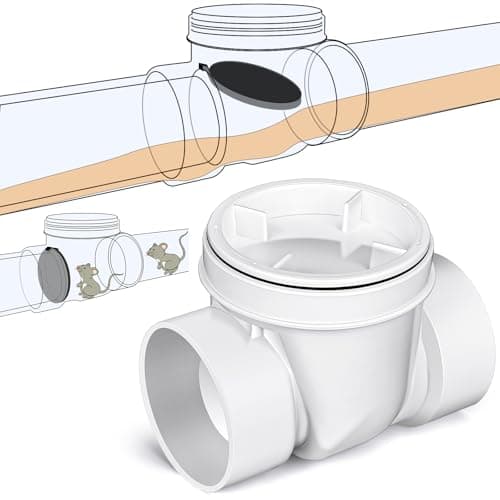
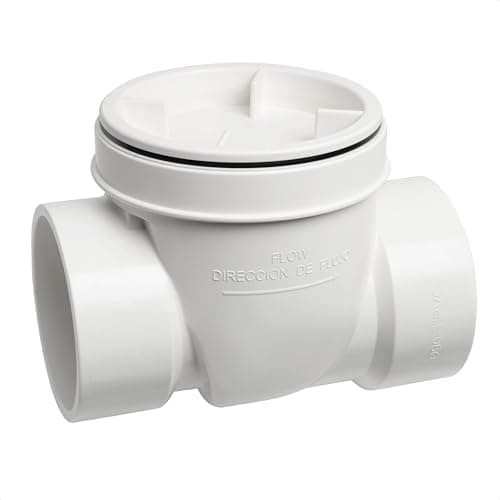
Cinsda 3 in PVC Backwater Valve (Solvent-Weld, EPDM-Sealed Access Cover)See it on Amazon ↗

Quick Verdict

Cinsda 3 in PVC Backwater Valve: a clearly described 3 in solvent-weld valve with a sealed access cover, though no code standard is named.

Key Specs

Pipe size (stated)

3 in PVC drains

Connection (stated)

Solvent-weld

Body (stated)

PVC

Seals (stated)

Thickened rubber ring in the flap; access cover sealed with EPDM rubber

Use (stated)

Part of a DWV (drain, waste and vent) system for PVC sewers and drains

Code standard (ASME A112.14.1 or CSA B181)

Not stated on this listing

Pros

  • States the pipe size, the solvent-weld connection and DWV use, the three facts a plumber needs first
  • Has an access cover sealed with EPDM rubber, so the flap can be reached for cleaning
  • A rubber ring set into the flap makes the seal against reverse flow, per the listing

Cons

  • Names no plumbing-code standard such as ASME A112.14.1, so ask your inspector before buying
  • Made for 3 in pipe only; a 4 in building drain needs a 4 in valve
  • Joining it to ABS or cast iron pipe needs a proper transition fitting, which is plumber work

Suited to

A 3 in PVC drain serving basement fixtures, fitted by a plumber under permit

Our take

Cinsda's listing gives the details that matter on install day. It is a 3 in PVC valve with solvent-weld ends, so it glues into PVC drain pipe like any other fitting, and the listing places it in a DWV system rather than an irrigation line. The flap carries a thick rubber ring for its seal, and the access cover on top is sealed with EPDM rubber. That cover is not a small detail. Plumbing codes want a backwater valve's working parts reachable for service, because a flap held open by a wipe or a lump of grease protects nothing. The listing does not name a code standard, and many codes call for ASME A112.14.1 or CSA B181 compliance, so have your plumber confirm it with the inspector before the pipe is cut.

Check today's price on Amazon →

Affiliate link — commission at no extra cost to you

Compare elsewhere

These open a search for this model. We quote prices only where we can verify them — Amazon, Sylvane and eBay.

#2
Runner-Up 3 in Valve

Check price

on Amazon ↗

Listing verified 13 Oct 2026

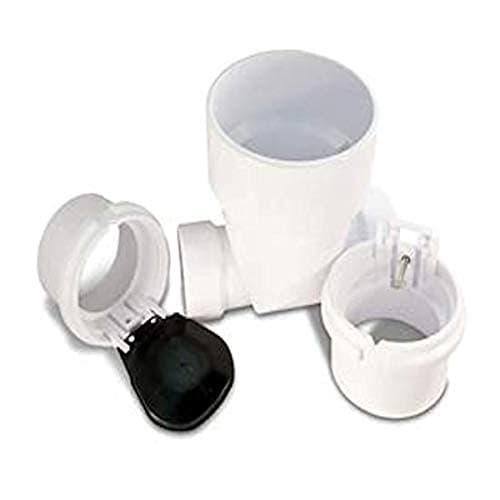
Tondiamo 3 in PVC Backwater Valve (White PVC, 1-Pack)See it on Amazon ↗

Runner-Up 3 in Valve

Tondiamo 3 in PVC Backwater Valve (White PVC, 1-Pack)

4.7(147 reviews)

Quick Verdict

Tondiamo 3 in PVC Backwater Valve: the right size and type on a muddled listing, so confirm the connection before you buy.

Key Specs

Pipe size (stated)

3 in

Body (stated)

PVC

Operation (stated)

Closes when flow reverses or stops, with no power or switch

Connection type

Not stated on this listing

Access cover

Not described in the listing text; check the photos

Code standard

Not stated on this listing

Pros

  • Same 3 in PVC size as the top pick, so it works as a second choice if that listing is out of stock
  • Shuts on reverse flow by itself, with no power, sensor or switch, per the listing
  • A PVC body will not rust in a damp trench or under a slab

Cons

  • The listing says the valve needs no further maintenance, which is not true of any backwater valve
  • The listing text is muddled, mentioning three ports and uses from irrigation to swimming pools
  • No connection type or code standard is stated

Suited to

A second 3 in PVC option once you or your plumber have confirmed the fit from the photos

Our take

Tondiamo sells a 3 in PVC backwater valve that, per the listing, shuts when flow reverses or stops and opens again for normal drainage. That is the core job, and a PVC body suits a fitting that will sit in wet ground or under concrete for years. The listing itself is weak, though. It claims the valve needs no further maintenance once installed, and no backwater valve can promise that: wipes, grease and grit can hold a flap open, which is why codes require access for service. It also lists uses from irrigation to swimming pools and never says how the pipe connects. Treat it as the backup choice, and check the access cap and the ends in the photos before anyone cuts pipe.

Check today's price on Amazon →

Affiliate link — commission at no extra cost to you

#3
Best Floor-Drain Plug

Check price

on Amazon ↗

Listing verified 13 Oct 2026

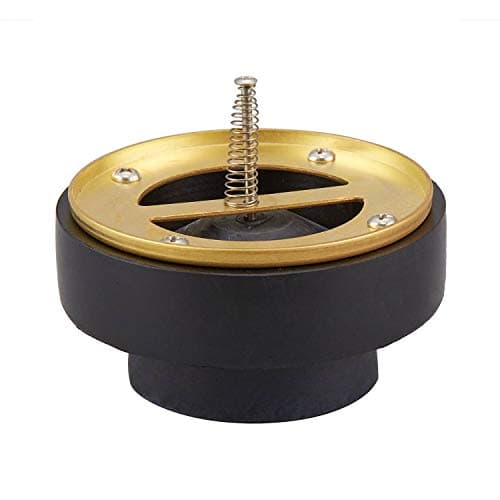
Minimprover 4-F Float Flood-Guard (4 in Floor-Drain Backwater Valve, Brass)See it on Amazon ↗

Quick Verdict

Minimprover 4-F Float Flood-Guard: a screwdriver-install float for one 4 in floor drain, with no protection for the other low drains.

Key Specs

Fits (stated)

4 in floor drains; the listing asks you to check the drain tube size first

Type (stated)

Float valve that sits inside the floor drain

Materials (stated)

Solid brass main parts, molded rubber gaskets

How it works (stated)

The float rises and seals the drain opening when the sewer backs up, then drops as the water recedes

Install (stated)

A screwdriver and a couple of minutes

Protects

The one floor drain it is fitted in

Pros

  • No pipe cutting: it fits an existing 4 in floor drain with a screwdriver, per the listing
  • Brass main parts and rubber gaskets suit a drain that stays damp
  • Floor water still drains past the float until the sewer backs up

Cons

  • Guards only the drain it sits in; a basement toilet, shower or laundry tub stays open to a backup
  • A float can be held up by hair or grit, so lift the grate and check that it moves freely
  • Made in a 4 in size only

Suited to

A basement whose only low opening is a single 4 in floor drain, or a renter who cannot cut pipe

Our take

This is the floor-drain type, not an in-line valve. Per the listing, it fits a 4 in floor drain, uses brass main parts and molded rubber gaskets, and goes in with a screwdriver. Water on the floor drains past the float as usual. When the sewer backs up, the float rises and seals the opening until the water drops again. That makes it a quick fix for a basement with one floor drain and nothing else below street level, or for a renter. Its limit is plain: sewage that cannot rise through the floor drain will look for the next low opening, such as a basement toilet, shower or laundry tub. Measure the inside of your drain pipe, not the grate, before you order.

Check today's price on Amazon →

Affiliate link — commission at no extra cost to you

#4
Best for a Small Fixture Branch

Check price

on Amazon ↗

Listing verified 13 Oct 2026

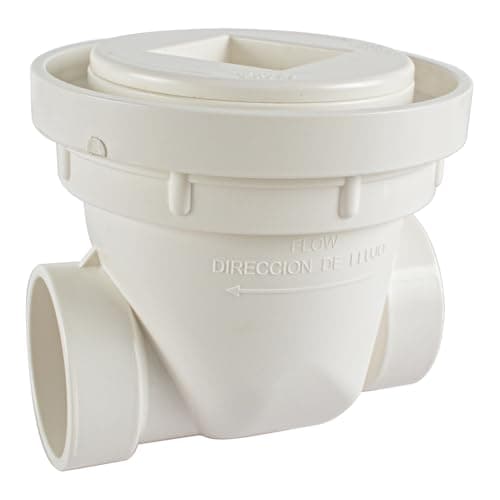
HYDRO MASTER 1-1/2 in PVC Backwater Valve (Slip Connection)See it on Amazon ↗

Best for a Small Fixture Branch

HYDRO MASTER 1-1/2 in PVC Backwater Valve (Slip Connection)

4.7(83 reviews)

Quick Verdict

HYDRO MASTER 1-1/2 in PVC Backwater Valve: a small branch valve for one low fixture, not for a toilet or the main drain.

Key Specs

Pipe size (stated)

1-1/2 in

Connection (stated)

Slip connection into existing PVC piping

Body (stated)

PVC

Flow marking (stated)

Flow Direction indicator on the body

Access cover

Not described in the listing text

Code standard

Not stated on this listing

Pros

  • Sized for a 1-1/2 in branch, such as the line from a basement laundry tub or bar sink
  • A marked flow arrow makes it hard to fit the wrong way round
  • Compact enough for a tight spot, per the listing

Cons

  • Far too small for a toilet line or the main building drain
  • Protects only the fixture or fixtures on that one branch
  • No access details or code standard in the listing text

Suited to

One 1-1/2 in basement fixture branch, such as a laundry tub, rather than the whole drain

Our take

Valves for a house's main drain are usually 3 or 4 in, because that is the pipe they sit in. HYDRO MASTER's is 1-1/2 in, the size of a typical laundry tub or bar sink drain line. The plumbing code allows a backwater valve on a horizontal branch that serves the at-risk fixtures, so a small valve can make sense when one low fixture is the only exposure. Per the listing, it has a PVC slip connection and a marked flow direction, and that arrow matters: a valve glued in backwards blocks normal drainage. It does not describe access to the flap or name a code standard. Keep it off toilet lines entirely, since a toilet drains through 3 in pipe.

Check today's price on Amazon →

Affiliate link — commission at no extra cost to you

#5
Best Outdoor Install

Check price

on Amazon ↗

Listing verified 13 Oct 2026

RectorSeal Clean Check 97024 4 in Extendable Backwater Valve (Outdoor, In-Ground)See it on Amazon ↗

Quick Verdict

RectorSeal Clean Check 97024 4 in Extendable Backwater Valve: an outdoor valve serviced from the yard, at the cost of digging to the sewer line.

Key Specs

Pipe size (stated)

4 in

Location (stated)

Outside, in the ground, up to 12 ft below grade

Access (stated)

Serviced from above ground; no manhole required

Flapper (stated)

In-ground flapper included

Body (stated)

Extendable PVC

Code standard

Not stated on this listing

Pros

  • Goes on the 4 in sewer line outside, so no basement slab is broken
  • Serviced from the yard, which keeps cleaning and its smell out of the house
  • The extendable body reaches a line buried as deep as 12 ft, per the listing

Cons

  • Reaching a buried sewer line is excavation work, usually with a permit and utility lines marked first
  • The listing says it helps with groundwater flooding; a backwater valve does not stop groundwater coming through walls or the floor
  • Stock was listed as limited on 12 Oct 2026

Suited to

A 4 in sewer line you want protected outside the house, fitted by a plumber or excavator

Our take

RectorSeal's Clean Check takes a different route from the indoor valves. It goes on the 4 in sewer line outside the house, buried as deep as 12 ft, with an extendable body that brings the access point up to the surface. Maintenance happens from the yard, so nobody opens a valve full of sewage in the basement, and no slab is cut. The trade-off is digging: reaching a buried sewer line means excavation, utility lines marked before anyone digs, and usually a permit. One line in the listing needs correcting. It says the valve helps against groundwater flooding, but a backwater valve only stops water flowing back through the sewer pipe. Groundwater pushing through walls is a drainage and sump pump problem.

Check today's price on Amazon →

Affiliate link — commission at no extra cost to you

Buyer's Guide

What to know before you buy.

What a Backwater Valve Does

A backwater valve sits in the pipe that carries waste out of your house. Inside is a flap that hangs open while water flows out toward the street. When the city sewer fills up, often in a heavy storm, sewage starts to move the other way, and the flap swings shut against it. That keeps the backup out of the lowest openings in the house: a basement floor drain, shower, toilet or laundry tub. It needs no power, so a storm that cuts the electricity does not stop it. It has one job, though. It stops water coming back up the sewer pipe, and nothing else. It cannot clear a blockage, pump water out, or keep groundwater from seeping through a wall.

Do You Need One? The Manhole Test

The International Plumbing Code, which many US cities and counties adopt, gives a simple test. Find the manhole cover on the public sewer just upstream of where your line connects. If a floor with plumbing fixtures sits lower than that cover, those fixtures need a backwater valve, because a backed-up sewer spills out at its lowest openings and your basement drain may be lower than the street. The same section says fixtures on floors above that cover should not drain through the valve, with an exception for existing buildings. That way, when the valve shuts, the kitchen and upstairs bathrooms still drain to the street and only the basement fixtures are blocked. Your local building department can tell you which code edition applies and whether your city requires a valve or offers a rebate for one.

In-Line Valve or Floor-Drain Plug

An in-line valve, like the Cinsda, Tondiamo and RectorSeal picks, is cut into the drain pipe itself. Every fixture that drains through that pipe is protected, which is why it is the type codes describe. A floor-drain plug, like the Minimprover float, drops into one floor drain and seals that opening when sewage rises. It costs far less effort, since there is no pipe to cut, but it only guards the drain it sits in. If your basement also has a toilet, a shower or a laundry tub, a backup blocked at the floor drain will come up through one of those instead. Use a floor-drain plug when that drain is the only low opening in the house, or when you rent and cannot alter the plumbing. Otherwise, the in-line valve is the real fix.

Size, Material and the Code Standard

A backwater valve has to match the pipe it goes into, and codes say it must not shrink the flow when fully open. Main house drains are usually 3 or 4 in; a 1-1/2 in valve like the HYDRO MASTER suits a small branch to a laundry tub or bar sink, never a toilet line. Match the material too. The picks here are PVC, and joining PVC to an older ABS or cast iron drain takes a proper transition fitting. Then check the standard. Codes based on the International Plumbing Code call for valves that meet ASME A112.14.1 or CSA B181.1 or B181.2, with corrosion-resistant working parts and access for service. None of the listings on this page names a standard, so ask your plumber or inspector which valve they will accept before you buy one.

The Install, and the Rule for Backup Days

Fitting an in-line valve means cutting into your main drain. Indoors, that usually means breaking up a patch of the basement slab, cutting the pipe, setting the valve level with its flow arrow pointing toward the street, and leaving an access box at floor level. Outside, it means digging down to the sewer line. Most places require a permit and an inspection, so this is a licensed plumber's job. Once it is in, open the access cover at least once a year and after any backup, and clear anything holding the flap open. The rule that matters most comes during a backup. While the flap is shut, water you use inside has nowhere to go. A flush, a shower or a load of laundry can back up into your own basement, so stop using water until the sewer drains.

Who Should Not Buy One, and What to Do After a Backup

Skip a backwater valve if water comes through your walls or up through the slab; that is groundwater, and it needs drainage and a sump pump. Skip it if the backup is a clog in your own line, which a plumber clears with a cable machine and a camera. A valve would simply hold your own waste in. If every fixture sits above the upstream manhole cover, codes do not call for one at all. A home on a septic tank does not face a backed-up city sewer either. After a backup, treat the water as Category 3, which IICRC S500 defines as grossly contaminated. EPA advises calling in a professional with experience in contaminated water when sewage caused the damage. Wear waterproof boots and proper PPE for any first steps, and check your policy for a water backup endorsement.

Frequently Asked Questions

What does a backwater valve do?

It lets wastewater leave your house and shuts when sewage tries to flow back in. A flap inside the valve hangs open for normal drainage.

When the city sewer backs up, the reverse flow pushes the flap closed, which keeps sewage out of your basement drains. On an in-line valve, a cover on top gives access to the flap for cleaning.

Do I need a backwater valve?

You likely do if any floor with plumbing sits lower than the manhole cover on the public sewer just upstream of your connection. That is the test in the International Plumbing Code, which many US jurisdictions adopt.

Basements with a toilet, shower or floor drain are the usual case. Some cities require a valve, and some offer rebates, so ask your building department.

Is a sewer backflow preventer the same as a backwater valve?

On a drain line, yes: listings use "sewer backflow preventer" for the same one-way valve. Plumbers usually save "backflow preventer" for a different device on your water supply, which keeps tap water from flowing back into the public water system.

Before buying, check that the product fits a drain or sewer pipe, sized in inches to match it, and is not a water-supply valve.

Can I install a backwater valve myself?

A floor-drain plug, yes; an in-line valve, usually not. The Minimprover float goes into a 4 in floor drain with a screwdriver, per its listing.

An in-line valve means cutting the main drain, often under the slab or in a trench outside, and most jurisdictions require a permit and an inspection. A licensed plumber also knows which fixtures the code wants routed through the valve.

How often should a backwater valve be cleaned?

Look at it at least once a year, and again after any backup or heavy storm. None of the listings on this page states an interval, so follow the maker's or your city's advice where one exists.

Open the access cover, check that the flap swings freely and seals, and remove wipes, grease or grit. A flap held open by debris gives no protection.

Can I flush the toilet when the backwater valve is closed?

NoNot if the toilet drains through the valve.

While the flap is shut, the water you send down has nowhere to go and will rise out of the lowest drain on your side of the valve, usually in the basement. Hold off on flushing, showers, laundry and the dishwasher until the sewer drains and the flap opens again.

Who do I call right now for water damage?

Call (888) 840-6512. The line is answered 24 hours a day, seven days a week, and connects you with an IICRC-certified water damage restoration company that serves your area. A recorded menu picks up first: choose water damage or mold, key in your 5-digit ZIP code, and hold through the short silence while the call is passed to the company.

Describe what you can see — where the water is coming from, how long it has been there, and whether it smells — the more specific you are, the faster the right company is on the line. If the source is a pipe or an appliance, shut the main water valve first. Have four things ready and the call goes quickly: the address, when the water started, what is wet now, and whether you have filed an insurance claim.

Still not sure which of these is your situation? (888) 840-6512 · toll-free · answered 24/7

Sources

  1. EPA — Mold Cleanup in Your Home
  2. EPA — A Brief Guide to Mold, Moisture, and Your Home

Methodology: How we source and verify data · Report an error

How we chose these picks

  • Every pick is a current listing. Stock, star ratings and rating counts are read from Amazon by script and carry the date they were read.
  • Nothing under 4.0 stars makes the list, and the top pick needs a large rating count, so one good week of reviews cannot put it there.
  • Specs are quoted from the listing or the maker, with the test condition behind the number where there is one, and sized against the job rather than the room on the box.
  • We do not run lab or field tests. Where a spec matters, we say what it is measured under and what it cannot tell you.

Free 2-day shipping

Amazon Prime members pay no shipping on restoration equipment

Dehumidifiers, air movers, and moisture meters qualify for free Prime delivery — bulk items that otherwise cost $15–$40 to ship.

Try Prime free →

Affiliate link — HearthDry earns a bounty if you sign up; costs you nothing extra.

Also Worth Comparing

Sump Pump vs Sewage Ejector Pump (2026) — What Each One Moves, and the Best Ejector Pumps to Buy

A sump pump and a sewage ejector pump look alike sitting in a pit, but one moves groundwater and the other lifts toilet waste from a sealed, vented basin up to the sewer line. This page explains which one you need, why swapping them fails, and compares four sewage pumps with a sump pump for contrast.

Read the comparison

Best Sewage, Wastewater & Stormwater Boots in 2026 — Category 3 Protective Footwear

Sewage can carry E. coli, hepatitis A and norovirus, which can enter through cuts and scrapes on unprotected feet. Fully waterproof rubber or PVC boots are essential for Category 3 work, and the details that separate them are seams, height, toe protection and how well they clean.

Read the comparison

Best PPE for Sewage Cleanup in 2026 — Category 3 Safety Gear

Sewage water (Category 3) contains E. coli, hepatitis A, Norovirus, and dozens of other pathogens. The right PPE is not optional — it's the difference between a cleanup job and a biohazard exposure.

Read the comparison

Best Sump Pumps for Basements in 2026 — Sized by Lift, Not Horsepower

The right sump pump prevents basement flooding before it starts — and handles it fast when it happens. These are the 3 best sump pumps for basement flooding in 2026, tested and ranked by an IICRC-certified water damage restoration technician.

Read the comparison

Best Sump Pump Check Valves in 2026 — Quiet Spring Valves Matched to Your Pipe Size, Plus the Lid and Backup a Valve Cannot Replace

A sump pump check valve keeps the water in the discharge pipe from falling back into the pit each time the pump stops, so the pump does not move the same water twice. These picks are matched to the three common discharge pipe sizes and compared on what each listing states about quiet closing, pressure rating and the gap it needs in the pipe.

Read the comparison

Best Drain Snakes in 2026 — Hair Tools, Hand Augers and a Cordless Auger for Sink, Tub and Shower Clogs, Plus What a Toilet Needs Instead

The right drain snake depends on where the clog sits: hair near a bathroom drain, a soft clog past the trap, or a toilet, which needs a tool of its own. These picks are hair tools and 25 ft cable augers compared on reach, cable size and what each listing states, with the signs that the clog is in the sewer line and a snake is the wrong tool.

Read the comparison

Best Sewage Ejector Pumps in 2026 — Pumps and Basin Kits for a Basement Bathroom Below the Sewer Line

A toilet or shower below your sewer line needs a sealed basin and a pump that can lift 2-inch solids up to the house drain. These picks compare replacement pumps and complete basin kits on what each listing states, with the sizing arithmetic, the vent and check valve, and the cases where an ejector is the wrong fix.

Read the comparison

Best Sewer Cameras in 2026 — 100 ft Push Cameras for Finding Roots, Bellies and Breaks in Your Line Before a Backup Reaches the Basement

A sewer camera is a waterproof camera head on a stiff push cable that you feed into the drain line from a cleanout to see what is growing, sagging or breaking between the house and the street. These picks are compared from their listings on cable length, head size, screen, recording, self-leveling and locator features, with the backup-prevention angle that a borescope for walls does not cover.

Read the comparison