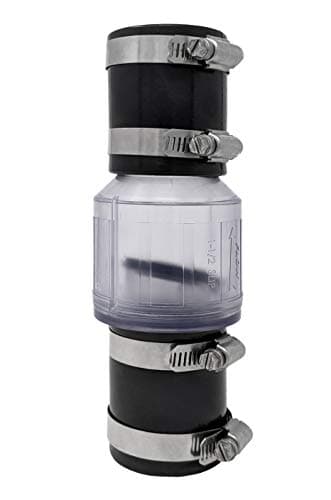
Best for: A 1-1/2 in discharge line in a finished or lived-in basement, where the shut-off thud carries
- Pipe size (stated):
- 1-1/2 in Schedule 40
- Closing (stated):
- Spring-loaded flapper, sold to cut water hammer noise
Listing verified 13 Oct 2026

Quiet Spring Valves Matched to Your Pipe Size, Plus the Lid and Backup a Valve Cannot Replace
5 picks compared · prices, ratings and stock checked October 11, 2026
Our Top Pick
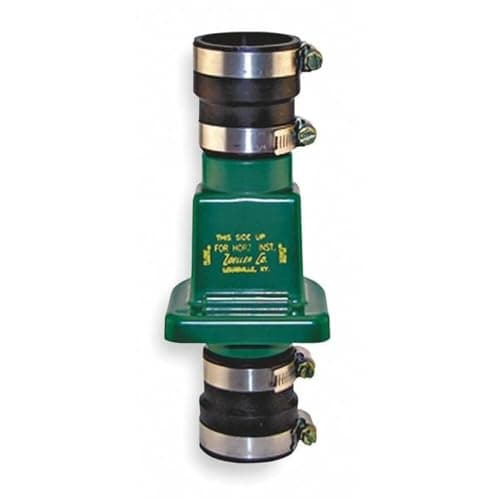
For 1-1/2 in discharge pipe, the PumpSpy CV-150 1-1/2 in Silent Check Valve (Spring-Loaded, Clear Body, Rubber Couplings), which closes on a spring to cut the shut-off thud. For a glued-in valve with a documented rating, the Zoeller 30-0040 1-1/2 in Quiet Check Valve (Spring-Loaded, 50 PSI / 115 ft of Head).
4.7 on Amazon · 2,025 ratings
Quick answer
The best sump pump check valve for most basements is a spring-loaded quiet valve that matches the discharge pipe, which is often 1-1/2 in: if your pump discharges into 1-1/2 in Schedule 40 pipe, buy the PumpSpy CV-150 1-1/2 in Silent Check Valve, rated 4.7 stars across 2,025 Amazon ratings. It clamps into a 5-1/8 in gap with rubber couplings, per the listing. For 1-1/4 in pipe, choose the Hydro Master; for 2 in pipe, the Ceoighe. Fit any valve with its flow arrow pointing away from the pump, and add a high-water alarm, because a valve does nothing for a pump that has failed.
Every pick below is currently stocked — ratings and stock read from Amazon on 11 October 2026.
Best for: A 1-1/2 in discharge line in a finished or lived-in basement, where the shut-off thud carries
Listing verified 13 Oct 2026
Best for: Replacing a standard valve on a typical basement line where shut-off noise is not a concern
Listing verified 13 Oct 2026
Best for: A deep pit, a long vertical rise, or anyone who wants a glued-in quiet valve with a stated rating
Listing verified 13 Oct 2026
Best for: A sump pump whose discharge pipe is 1-1/4 in rather than the more common 1-1/2 in
Listing verified 13 Oct 2026
Best for: A sump pump that discharges into 2 in Schedule 40 pipe
Listing verified 13 Oct 2026
How this page was made: we compare the current Amazon listings, the makers' published specs and what verified buyers report, then rank by fit for the job. Ratings, review counts and stock are read from Amazon and dated. We earn a commission on purchases through our links; it does not change the order. Reviewed by Marcus Reed, IICRC-certified Water Restoration Technician.
Full Reviews
Each pick in detail: what the listing states, what buyers report, and where it falls short.
Check price
on Amazon ↗
Listing verified 13 Oct 2026
See it on Amazon ↗Best Overall
Quick Verdict
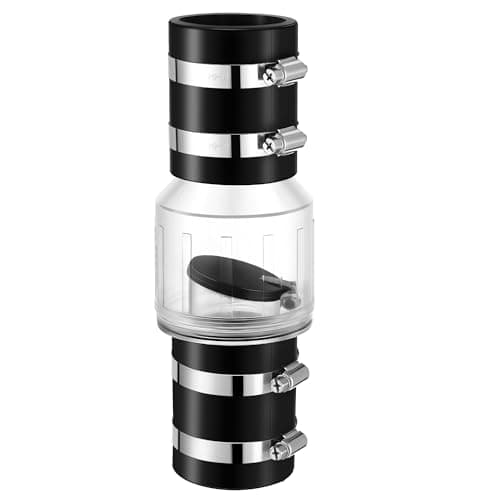
PumpSpy CV-150 1-1/2 in Silent Check Valve: quiet spring closing, a clear body and clamp-on couplings for 1-1/2 in pipe.
Key Specs
Pipe size (stated)
1-1/2 in Schedule 40
Closing (stated)
Spring-loaded flapper, sold to cut water hammer noise
Body (stated)
Clear, so water movement can be seen
Connections (stated)
Buna-N rubber couplings with stainless steel clamps
Gap needed (stated)
Fits within a 5-1/8 in gap in the pipe
Pressure / head rating
Not stated on the listing
Pros
Cons
Suited to
A 1-1/2 in discharge line in a finished or lived-in basement, where the shut-off thud carries
Our take
This valve covers the three things most buyers are after. Its spring-loaded flapper closes as the flow stops instead of waiting for the column of water in the pipe to slam it shut, which is where the thud from a standard valve comes from. The clear body works as a diagnostic window: water moving while the pump runs shows the impeller and line are clear. The rubber couplings and stainless clamps let you take the pump out by loosening two clamps. What the listing leaves out is a pressure or head rating. For an unusually tall lift, the Zoeller 30-0040, rated for 115 ft of head, is the documented choice.
Affiliate link — commission at no extra cost to you
Compare elsewhere
These open a search for this model. We quote prices only where we can verify them — Amazon, Sylvane and eBay.
Check price
on Amazon ↗
Listing verified 13 Oct 2026
See it on Amazon ↗Best Standard Flapper Valve
Quick Verdict
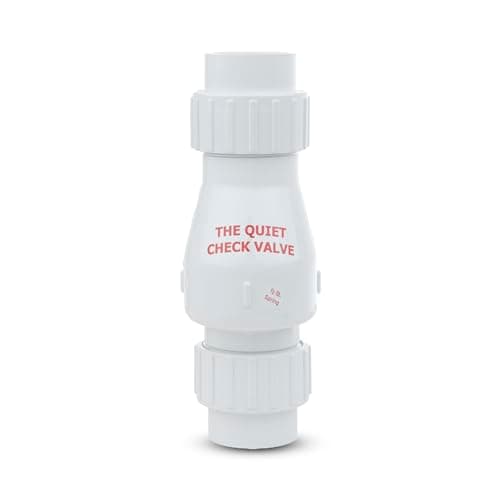
Zoeller 30-0181 1-1/2 in PVC Check Valve: a serviceable union valve for standard lines, rated to 10 ft of head, with no spring.
Key Specs
Pipe size (stated)
1-1/2 in
Connections (stated)
Slip x slip unions
Flapper (stated)
Bends over a radius to avoid sharp 90-degree edges
Rating (stated)
4.3 PSI (10 ft of head) at 130°F for the slip x slip version
Orientation (stated)
Vertical or horizontal
Noise (stated)
Designed to reduce water hammer; no spring is listed
Pros
Cons
Suited to
Replacing a standard valve on a typical basement line where shut-off noise is not a concern
Our take
This is the plain, long-serving design found on many sump lines: a PVC body with a flexible flapper and union nuts at each end. The unions are the practical feature, because they let you unscrew the valve and lift the pump without cutting pipe. The number to note is the stated rating, 4.3 PSI or 10 ft of head at 130°F for the slip connections. Head here is the height of the water column the closed valve holds back, so measure from the valve to the highest point of the line. A typical basement line sits within it, but a deep pit under a tall basement may not. With no spring listed, expect some noise at shut-off.
Affiliate link — commission at no extra cost to you
Compare elsewhere
Check price
on Amazon ↗
Listing verified 13 Oct 2026
See it on Amazon ↗Best for Tall Lifts
Quick Verdict
Zoeller 30-0040 1-1/2 in Quiet Check Valve: spring-loaded, unions for service and a stated 115 ft of head.
Key Specs
Pipe size (stated)
1-1/2 in PVC
Connections (stated)
Slip x slip solvent-weld ends with unions
Closing (stated)
Spring-loaded flapper with a 1/2 lb spring
Rating (stated)
50 PSI (115 ft of head)
Orientation (stated)
Vertical or horizontal
Flow path (stated)
Full-flow, non-clog design
Pros
Cons
Suited to
A deep pit, a long vertical rise, or anyone who wants a glued-in quiet valve with a stated rating
Our take
Where the PumpSpy leaves its rating unstated, this Zoeller puts a number on it: 50 PSI, or 115 ft of head, well beyond what a basement line asks of a valve. That matters for a deep pit, a discharge that climbs to an upper floor before leaving the house, or a buyer who wants the paperwork. The 1/2 lb spring closes the flapper fast enough to stop water hammer, per the listing, and the union nuts let the valve come apart for cleaning. The trade is installation. The slip ends are solvent-welded into the PVC line, so measure the cut, dry-fit the parts, and let the cement cure before the pump runs.
Affiliate link — commission at no extra cost to you
Compare elsewhere
Check price
on Amazon ↗
Listing verified 13 Oct 2026
See it on Amazon ↗Best for 1-1/4 in Pipe
Quick Verdict
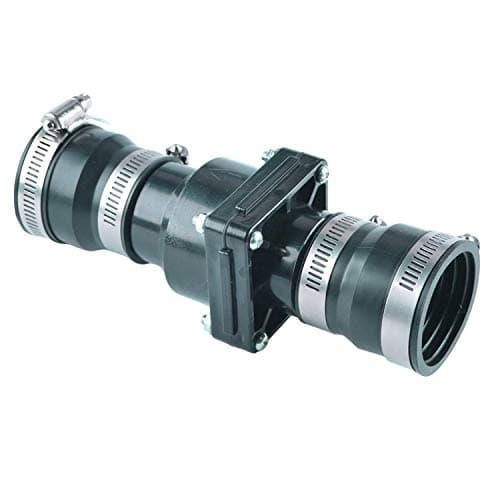
Hydro Master Sump Pump Check Valve: a clamp-on valve for 1-1/4 or 1-1/2 in pipe, with no spring or rating listed.
Key Specs
Pipe size (stated)
1-1/2 or 1-1/4 in, slip-on
Body (stated)
ABS
Ends (stated)
EPDM rubber on both ends
Clamps (stated)
301 stainless steel clamps and fasteners
Orientation (stated)
Vertical or horizontal; vertical recommended
Noise (stated)
Described as reducing water noise; no spring is listed
Pros
Cons
Suited to
A sump pump whose discharge pipe is 1-1/4 in rather than the more common 1-1/2 in
Our take
Some smaller sump pumps and older installs run 1-1/4 in discharge pipe, and a 1-1/2 in valve will not seal on it. This Hydro Master valve is sold for either size, with EPDM rubber ends, an ABS body and 301 stainless clamps, so it slides on and clamps rather than being glued. Read the size printed on the pipe and the pump's outlet before ordering, because narrowing the line anywhere adds friction and cuts the pump's output. The listing gives no spring, no pressure rating and no installed length, and it recommends a vertical position, so measure the valve once it arrives and cut the pipe to suit.
Affiliate link — commission at no extra cost to you
Compare elsewhere
Check price
on Amazon ↗
Listing verified 13 Oct 2026
See it on Amazon ↗Best for 2 in Pipe
Quick Verdict
Ceoighe 2 in Quiet Sump Pump Check Valve: a spring-loaded, clear valve for 2 in discharge pipe.
Key Specs
Pipe size (stated)
2 in Schedule 40
Closing (stated)
Spring-loaded flapper
Body (stated)
Clear ABS
Clamps (stated)
Stainless steel hose clamps
Gap needed (stated)
7-1/4 in
Pressure / head rating
Not stated as a figure on the listing
Pros
Cons
Suited to
A sump pump that discharges into 2 in Schedule 40 pipe
Our take
Larger sump pumps and some high-flow installs use 2 in discharge pipe, and a valve that matches avoids the reducer that would otherwise narrow the line. Ceoighe sells a spring-loaded, clear-bodied valve in that size, with clamps for 2 in Schedule 40 pipe, and states the gap it needs, 7-1/4 in. Its buyer record is much shorter than the 1-1/2 in picks, which is why it ranks last, though it is solid for a less common size. One caution: the listing mentions sewage pumps in passing but gives no solids rating, and a sewage ejector should use the valve its maker specifies.
Affiliate link — commission at no extra cost to you
Compare elsewhere
What to know before you buy.
Each time a sump pump shuts off, the water standing in the discharge pipe wants to fall back into the pit. Without a check valve it does, refilling the pit part of the way so the pump starts again sooner. That is short-cycling: the pump moves the same water twice and switches on more often, and frequent starts are what wear a motor and its float switch. The amount is not trivial, since each 8 ft of 1-1/2 in Schedule 40 pipe holds about 0.85 gallon, and it returns on every cycle through a wet spring. A check valve is a one-way flapper in the line that opens when the pump pushes and closes when it stops, holding that column in the pipe. PumpSpy's listing puts it simply: the valve keeps pumped water from being pumped twice.
A standard flapper or swing valve stays open while the pump runs and closes only once the water in the pipe stops and starts back down. By then the column is moving, and it slams the flapper shut: the thud many people hear a second after the pump stops, sometimes with a shudder through the pipe. That is water hammer, and over time it can loosen pipe straps and rattle joints. A spring-loaded valve, sold as quiet or silent, pushes the flapper closed as the flow slows, before the column reverses, so there is far less to slam. The PumpSpy, the Zoeller 30-0040 and the Ceoighe list a spring; the Zoeller 30-0181 and the Hydro Master do not. In a finished basement or under a bedroom, the quiet type is worth having. In an unfinished utility space, a standard valve does the core job.
Read the size printed on the discharge pipe and check the pump's outlet. Many residential sump pumps use 1-1/2 in pipe, some smaller pumps use 1-1/4 in and larger ones use 2 in, and the valve should match the pipe rather than force a reducer into the line. Then check how it connects. Clamp-on valves with rubber couplings, such as the PumpSpy, Hydro Master and Ceoighe, slip over plain pipe ends and come apart with a nut driver. Slip valves with unions, such as both Zoellers, are glued into the line and unscrew at the union nuts for service. Cut the pipe to the gap the maker states, 5-1/8 in for the PumpSpy and 7-1/4 in for the Ceoighe. Finally, find the flow arrow on the body and point it away from the pump, toward the outlet, since a valve fitted backward blocks the discharge.
Fit the valve in the vertical discharge pipe a short way above the pump, where you can reach it without emptying the pit. Mounting it low keeps the amount of water that drains back each cycle small. Many pump makers also call for a small relief hole, often 3/16 in, drilled in the discharge pipe between the pump and the check valve, inside the pit. Without it, air can be trapped under the closed valve and the pump may run without moving water, a fault called air lock. Some pumps have a vent built in, so follow your pump's manual rather than drilling by habit. If a battery backup pump shares the same discharge line, each pump needs its own check valve before the pipes join; otherwise the running pump pushes water back down through the idle one instead of out of the house.
An open sump pit is a hole through the basement floor into the soil. It lets soil gases, radon among them, into the house, adds moisture as the pit water evaporates, carries a musty smell, and collects debris that can jam a float switch. An airtight lid with a gasket and sealed grommets for the discharge pipe and power cord closes it off, and a radon mitigation system that draws from the pit needs one, since an open pit lets the fan pull basement air instead of soil gas. Two cautions apply. If floor water reaches the pit through the lid rather than through drain tile under the slab, a sealed lid needs a trapped or one-way floor drain fitting. And a check valve inside a sealed pit is hard to service, so place it above the lid when you can. No sealed lid had the buyer record to earn a pick here, so buy one sized to your basin's diameter and rim.
A check valve saves the pump extra work; it does not keep the basement dry if the pump stops. It cannot help when the power fails, the float switch sticks, the motor burns out or the discharge line freezes or clogs outside, so pair it with a high-water alarm and a battery backup pump. It is also not a backwater valve: it sits on the sump discharge and does nothing to stop a city sewer backing up through a floor drain. A sewage ejector pit needs the valve its pump maker specifies for solids, not a clear-water sump valve. If the pit has already overflowed, cleanup depends on the water's source and how long it sat. IICRC S500 classifies water by contamination, treats sewage as Category 3, and notes that clean water can degrade to a worse category over time.
In most installations, yes. Without one, the water left in the discharge pipe falls back into the pit each time the pump stops, so the pump re-pumps it and starts more often, which shortens its life.
Some pumps and backup kits come with a valve, so check what yours includes. A pit with a very short discharge run may manage without one, but a check valve is standard practice.
The flow arrow on the valve body points away from the pump, in the direction the water travels toward the outlet. A valve fitted backward blocks the discharge, and the pump runs without emptying the pit.
Most check valves are marked; if yours is not, look through the ends to see which way the flapper swings open, and confirm it opens toward the outlet before gluing or clamping it.
The thud is water hammer: when the pump stops, the column of water in the pipe falls back and slams a standard flapper shut. A spring-loaded quiet valve closes the flapper as the flow slows, before the water reverses, which removes most of the bang.
The PumpSpy CV-150 and Zoeller 30-0040 list that spring design. Strapping a loose discharge pipe to the joists also stops it rattling.
In the vertical discharge pipe, a short distance above the pump, where you can reach it without emptying the pit. Low placement reduces the water that drains back each cycle.
Many valves, including both Zoellers here, can also go horizontal, and the Hydro Master listing recommends vertical. Check whether your pump's manual calls for a small relief hole below the valve to prevent air lock.
The usual sign is a pit that refills right after the pump stops, with no rain, as water rushes back down the pipe. The pump then short-cycles, switching on and off far more often than inflow explains.
A clear-bodied valve lets you see the flapper; with other valves, take the unions or couplings apart and look for a cracked, warped or debris-jammed flapper. A leak at the couplings is a separate fix.
If the basement is lived in, or you are in a radon-prone area, a sealed lid is worth having. An open pit lets soil gases such as radon into the house, adds moisture as the water evaporates and collects debris that can jam the float.
A radon system that draws from the pit needs an airtight lid. If floor water drains into the pit through the lid, choose a lid with a trapped or one-way drain fitting.
Call (888) 840-6512. The line is answered 24 hours a day, seven days a week, and connects you with an IICRC-certified water damage restoration company that serves your area. A recorded menu picks up first: choose water damage or mold, key in your 5-digit ZIP code, and hold through the short silence while the call is passed to the company.
Describe what you can see — where the water is coming from, how long it has been there, and whether it smells — the more specific you are, the faster the right company is on the line. If the source is a pipe or an appliance, shut the main water valve first. Have four things ready and the call goes quickly: the address, when the water started, what is wet now, and whether you have filed an insurance claim.
Still not sure which of these is your situation? (888) 840-6512 · toll-free · answered 24/7
Methodology: How we source and verify data · Report an error
Free 2-day shipping
Amazon Prime members pay no shipping on restoration equipment
Dehumidifiers, air movers, and moisture meters qualify for free Prime delivery — bulk items that otherwise cost $15–$40 to ship.
Affiliate link — HearthDry earns a bounty if you sign up; costs you nothing extra.

The right sump pump prevents basement flooding before it starts — and handles it fast when it happens. These are the 3 best sump pumps for basement flooding in 2026, tested and ranked by an IICRC-certified water damage restoration technician.
Read the comparisonThe power goes out during the storm that fills your basement — that is the whole reason this category exists. Here is what each system actually costs once you add the battery nobody includes.
Read the comparisonA sump pump and a sewage ejector pump look alike sitting in a pit, but one moves groundwater and the other lifts toilet waste from a sealed, vented basin up to the sewer line. This page explains which one you need, why swapping them fails, and compares four sewage pumps with a sump pump for contrast.
Read the comparisonA water leak detector catches a leak while it is still a puddle rather than an insurance claim. These four flood sensors and water alarms range from a standalone 110 dB alarm with no Wi-Fi to a LoRa kit that sounds on the spot and texts your phone.
Read the comparisonWhen a sump pump fails, the switch is often the part that quit: a float pinned against the pit wall never tells the pump to start. These picks are vertical, tethered and electronic switches compared on pit fit, amp rating, pumping range and what each listing states, with the bucket test and the alarm a new switch still needs.
Read the comparison