
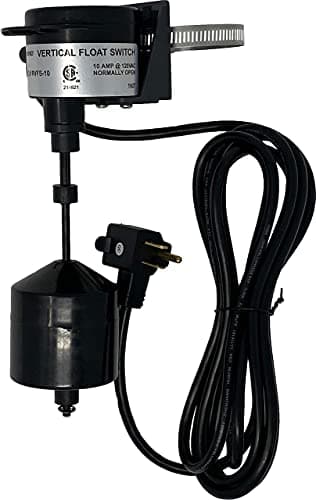
Best for: A standard or narrow sump pit with a pump that draws 10 A or less
- Type:
- Vertical mechanical float on a rod
- Electrical rating (stated):
- 10 A at 120 VAC, normally open
Listing verified 13 Oct 2026

Vertical, Tethered and Electronic Switches Matched to Your Pit Width and Your Pump's Amps
5 picks compared · prices, ratings and stock checked October 12, 2026
Our Top Pick
For most pits, the PumpSpy 10 ft Vertical Replacement Float Switch, if your pump draws 10 A or less. For a wide, deep pit, the PumpSpy 10 ft Piggyback Tethered Float Switch; for a pump up to 0.5 HP that needs a 13 A switch, the Little Giant RFSN-6.
4.7 on Amazon · 363 ratings
Quick answer
The best sump pump float switch for most pits is a vertical piggyback switch rated above your pump's running amps: if your pump draws 10 A or less, buy the PumpSpy 10 ft Vertical Replacement Float Switch, rated 4.7 stars across 363 Amazon ratings. Its float rides straight up a rod, so it cannot swing into the pit wall, and the listing states 10 A at 120 VAC and up to 1 million cycles. In a wide, clear pit, a tethered float gives a longer run per cycle. Whichever you fit, test it by filling the pit with water, and add a high-water alarm.
Every pick below is currently stocked — ratings and stock read from Amazon on 12 October 2026.
Best for: A standard or narrow sump pit with a pump that draws 10 A or less
Listing verified 13 Oct 2026
Best for: A wide, deep pit with open space on the side where the float hangs
Listing verified 13 Oct 2026
Best for: A crowded or debris-prone pit where floats keep catching, once the amp rating is confirmed
Listing verified 13 Oct 2026
Best for: A pump up to 0.5 HP that draws more than 10 A, in a pit deep and wide enough for a tethered float
Listing verified 13 Oct 2026
Best for: A narrow pit whose pump draws more than 10 A, when a tethered float will not fit
Listing verified 13 Oct 2026
How this page was made: we compare the current Amazon listings, the makers' published specs and what verified buyers report, then rank by fit for the job. Ratings, review counts and stock are read from Amazon and dated. We earn a commission on purchases through our links; it does not change the order. Reviewed by Marcus Reed, IICRC-certified Water Restoration Technician.
Full Reviews
Each pick in detail: what the listing states, what buyers report, and where it falls short.
Check price
on Amazon ↗
Listing verified 13 Oct 2026
See it on Amazon ↗Best Overall
Quick Verdict
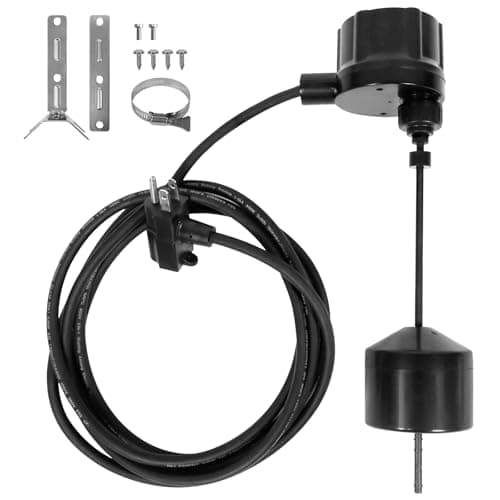
PumpSpy 10 ft Vertical Replacement Float Switch: a ready-assembled vertical switch for narrow pits, for pumps that draw 10 A or less.
Key Specs
Type
Vertical mechanical float on a rod
Electrical rating (stated)
10 A at 120 VAC, normally open
Plug and cord (stated)
Piggyback plug on a 10 ft cord
Cycle rating (stated)
Up to 1 million cycles
Contacts (stated)
Gold-plated
Mounting (stated)
Arrives assembled, with a mounting bracket and stainless steel hose clamp for the discharge pipe
Pros
Cons
Suited to
A standard or narrow sump pit with a pump that draws 10 A or less
Our take
Vertical switches are the safer default for a typical home pit because the float travels a straight line up a rod instead of swinging on a cord. It cannot drift into the pit wall, the pump's cord or the discharge pipe, the snags that hold a tethered float down. PumpSpy ships it assembled with a bracket and clamp, plus a 10 ft piggyback cord: the switch plugs into the outlet and the pump plugs into the back of the switch plug. The limit is electrical, at 10 A and 120 VAC, so read the amps on your pump's nameplate before ordering. If the pump also has a built-in switch, check its manual for running it from an external one.
Affiliate link — commission at no extra cost to you
Compare elsewhere
These open a search for this model. We quote prices only where we can verify them — Amazon, Sylvane and eBay.
Check price
on Amazon ↗
Listing verified 13 Oct 2026
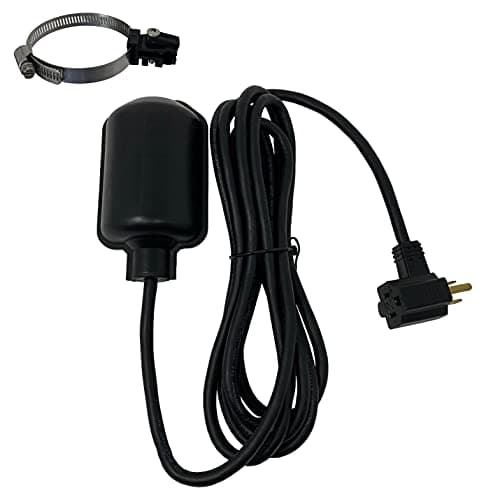
See it on Amazon ↗Best for Wide Pits
Quick Verdict
PumpSpy 10 ft Piggyback Tethered Float Switch: longer runs per cycle in a wide pit, with the same 10 A limit.
Key Specs
Type
Tethered mechanical float on a cord
Electrical rating (stated)
10 A at 120 VAC, normally open
Plug and cord (stated)
Piggyback plug on a 10 ft cord
Contacts (stated)
Gold-plated
Mounting (stated)
Hose clamp and cable grip for the discharge pipe, with an adjustable tether
Uses (stated)
Sump, sewage and effluent pumps
Pros
Cons
Suited to
A wide, deep pit with open space on the side where the float hangs
Our take
Choose the tethered PumpSpy for a wide, uncluttered pit. As water rises, the float lifts on its cord and tips past level, which closes the switch inside; the length of free cord between the clamp and the float decides how high the water gets before that happens. More free cord means the pump moves more water per run and starts fewer times, which is easier on the motor and the contacts. The cost is room. The float sweeps an arc, and anything in that arc can trap it. Clamp it so it hangs toward open water, tie the pump cord out of the way, and fill the pit to watch one full cycle.
Affiliate link — commission at no extra cost to you
Compare elsewhere
Check price
on Amazon ↗
Listing verified 13 Oct 2026
See it on Amazon ↗Best Electronic Switch
Quick Verdict
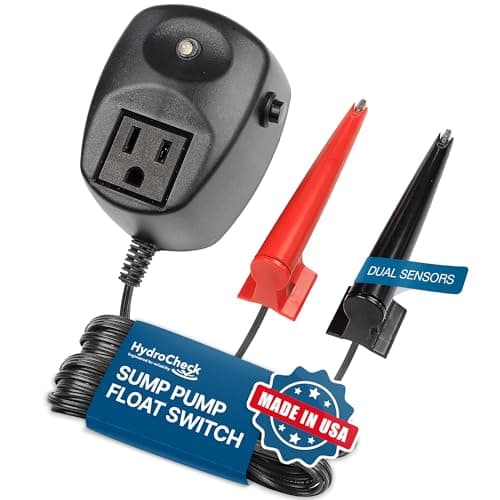
HydroCheck HC6000v2 Sump Pump Switch: no moving parts and a built-in alarm, but confirm the amp rating first.
Key Specs
Type (stated)
Electronic, Hi-Lo dual sensors, no moving parts
Alarm (stated)
Built-in alarms for high water or pump malfunction
Cycle rating (stated)
Tested for over 1 million cycles
Fit (stated)
Compact; replaces standard switches
Made in (stated)
USA
Amp rating
Not stated in the listing's bullets
Pros
Cons
Suited to
A crowded or debris-prone pit where floats keep catching, once the amp rating is confirmed
Our take
HydroCheck swaps the float for two electronic sensors, a high and a low, that set where the pump starts and stops, so there is nothing to swing, slide or jam. That removes the most common switch fault in a crowded pit. The built-in alarm adds a warning for high water or a pump malfunction, though the listing does not say how loud it is or whether it runs without mains power. The bigger gap is electrical: the bullets name no amp rating and no plug type. Get those figures from the maker before you buy and compare them with the amps on your pump's nameplate. Keep a separate battery alarm in the pit as well.
Affiliate link — commission at no extra cost to you
Compare elsewhere
Check price
on Amazon ↗
Listing verified 13 Oct 2026
See it on Amazon ↗Most Fully Specified
Quick Verdict
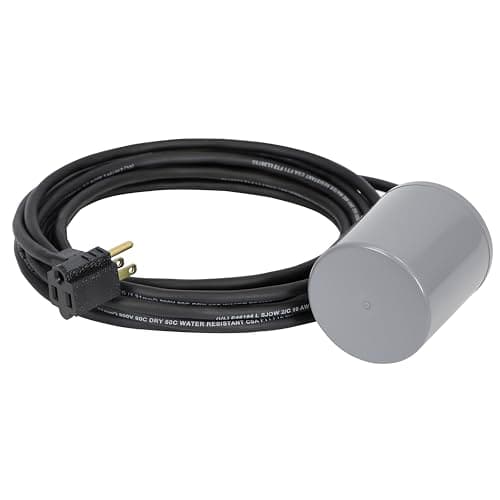
Little Giant RFSN-6 Piggyback Tethered Float Switch: full electrical limits and a 7 in to 36 in range, for pumps up to 0.5 HP.
Key Specs
Type
Tethered piggyback float, pump-down
Pump limits (stated)
Up to 0.5 HP; 13 A maximum running current; 85 A maximum starting current
Pumping range (stated)
7 in to 36 in
Cord (stated)
10 ft, 16/2 SJOW, piggyback plug
Liquid temperature (stated)
140°F maximum
Housing (stated)
PVC
Pros
Cons
Suited to
A pump up to 0.5 HP that draws more than 10 A, in a pit deep and wide enough for a tethered float
Our take
Little Giant lists every figure you need to match a switch to a pump. The 13 A running and 85 A starting limits both matter, because a motor draws several times its running current for a moment as it starts, and that surge passes through the switch contacts every cycle. The 0.5 HP cap and the rule that the pump must have built-in thermal overload protection are on the listing too. The stated 7 in to 36 in pumping range shows what a tethered float offers: a deep pit can empty in one long run. The pit has to be deep and wide enough for the float to travel that far without touching anything.
Affiliate link — commission at no extra cost to you
Compare elsewhere
Check price
on Amazon ↗
Listing verified 13 Oct 2026
See it on Amazon ↗Best Vertical for Pumps Over 10 A
Quick Verdict
WASSERMANN Vertical Float Switch: a 16 A vertical option for bigger pumps in narrow pits, on a thin listing.
Key Specs
Type
Vertical mechanical float
Electrical rating (stated)
16 A maximum allowable current; AC 115 V in the title, 125 V rated in the bullets
Plug and cord (stated)
Piggyback plug on a 10 ft cord
Mounting (stated)
On the discharge pipe or on the pump, with accessories included
HP limit and starting current
Not stated on this listing
Pumping range
Not stated on this listing
Pros
Cons
Suited to
A narrow pit whose pump draws more than 10 A, when a tethered float will not fit
Our take
This is the pick for a narrow pit with a pump that draws more than the 10 A the PumpSpy switches allow. WASSERMANN states a 16 A maximum on a vertical piggyback switch that fits on the discharge pipe or on the pump itself. The listing is thinner than Little Giant's, with no horsepower limit, no starting-current figure, no pumping range and no safety certification named. Treat 16 A as a ceiling rather than a target, and leave headroom above your pump's nameplate amps. After fitting it, fill the pit and confirm the pump starts and stops at the levels your pump's manual calls for.
Affiliate link — commission at no extra cost to you
Compare elsewhere
What to know before you buy.
A sump pump switch has one job: start the pump when the pit fills and stop it before it runs dry. A tethered switch is a sealed float on a short length of cord clamped to the discharge pipe; as water lifts the float past level, a switch inside closes and the pump starts. A vertical switch has a float that slides up a rod and trips a switch near the top, then drops back down to cut the pump off. An electronic switch, such as the HydroCheck, senses the water level with no moving parts at all. Mechanical floats are simple and easy to check by eye, since you can watch them move. Electronic sensors avoid the snag and stick problems of a float, but you are trusting circuitry in a damp pit, so the maker's figures matter more.
Pit width decides most of this. A tethered float sweeps an arc as it rises, so it needs a wide pit with clear water on the side where it hangs. In a narrow basin, or one that also holds a battery backup pump, the float can rest against the wall, the second pump, a cord or the check valve, and a float that is pinned down never starts the pump. The vertical type travels straight up its rod and needs only a slot of clear water beside the pipe. Measure the inside diameter of the basin and its depth below the pipe that brings water in. The pump should start before water backs up into that inlet, so the on level belongs below it. Then compare your numbers with any minimum basin size the switch maker gives.
The pumping range is the gap between the water level that starts the pump and the level that stops it. Tethered floats usually have the longer range, set by the length of free cord: Little Giant lists 7 in to 36 in. Vertical switches move a few inches along their rod, with stops you slide to set the on and off points. A short range means the pump empties a little water, stops, and starts again soon after, and each start heats the motor and wears the switch contacts. That pattern is called short-cycling. In a pit that fills fast in a storm, a wider range and a working check valve both cut the number of starts. Set the off point no lower than your pump's manual allows.
Every pick here except the HydroCheck, whose bullets do not say, uses a piggyback plug: the switch plugs into the outlet, and the pump's own plug goes into a socket on the back of the switch plug. The switch then decides when the pump gets power, with no wiring. Two checks come first. Read the amps on your pump's nameplate or in its manual, and buy a switch rated above that number: the PumpSpy switches state 10 A at 120 VAC, Little Giant 13 A up to 0.5 HP, and WASSERMANN 16 A. Then check if your pump has its own built-in switch. A pump with one runs only when both switches call for it, so its manual should explain how to run it from an external switch. Pump manuals commonly warn against extension cords, so plug straight into the outlet.
A stuck float is a common reason a sump pump fails, and the only test that proves a switch works is water. Pour a bucket or two into the pit, slowly, until the switch starts the pump, then watch it pull the level down and stop. Do it before the wet season and again every few months. If the float hangs on anything, move the pump or the switch until it travels freely. Keep your hands out of the pit while the pump is plugged in. Then add a high-water alarm with its own sensor set above the pump's on level, so it sounds if the switch sticks, the pump fails or the breaker trips. Pick a battery-powered alarm, since storms that knock out power are often the same ones that fill the pit.
A new switch fixes a switch. It will not save a pump that hums without moving water, trips the breaker or stays silent when plugged straight into the outlet; that pump needs replacing. To tell the two apart, unplug the pump from the piggyback socket and plug it directly into the outlet for a few seconds with water in the pit. If it runs, the switch is at fault. A sealed sewage ejector basin has its own switch requirements, so call a plumber rather than opening it. Pumps that are hardwired, run on 230 V or draw more than these switches allow need a matched switch or control panel, which is work for an electrician or plumber. If the pit has already overflowed, EPA advises drying water-damaged areas and items within 24 to 48 hours to prevent mold growth.
The usual sign is a pump that stays off when the pit is full, or one that keeps running after the pit is empty. Add water and watch: if the float rises freely and the pump still does nothing, unplug the pump from the piggyback socket and plug it straight into the outlet.
A pump that runs that way points to the switch. A float that is cracked, waterlogged or hung up on something also needs fixing or replacing.
A vertical switch is better for narrow pits and pits shared with a backup pump, and a tethered switch suits wide, deep pits. Vertical floats ride straight up a rod, so they cannot drift into a wall or another pump, but they travel only a few inches, so the pump starts more often.
Tethered floats give a longer run per cycle, such as the 7 in to 36 in range Little Giant lists, when there is room for the swing.
YesAs long as the pump itself still runs. A piggyback switch clamps to the discharge pipe and plugs in between the pump and the outlet, so most swaps need no wiring and no pump removal.
Compare the pump's amps with the switch's rating first, and read the pump's manual, because a pump with its own built-in switch may need converting or may call for the maker's own replacement part.
Fill the pit with water until the switch turns the pump on. Pour slowly from a bucket so you can see the level where it starts, then let it pump down and confirm it shuts off by itself.
If nothing happens, check the outlet and the breaker before blaming the switch. Repeat the test every few months and before the rainy season, and look for anything the float could catch on as it moves.
Usually because something in the pit is in its way. Tethered floats catch on the pit wall, the pump cord, a backup pump or the discharge pipe, often after the pump shifts on the pit floor.
Vertical floats can bind when silt or film builds up on the rod. Clear the debris, tie loose cords out of the float's path, and if the pit is too narrow for a tethered float, change to a vertical or electronic switch.
YesThe float switch is the part that fails, so it cannot warn you about itself.
A separate high-water alarm with its own sensor, set a little above the pump's on level, sounds when the water passes the point where the pump should already have started. Choose one with a battery so it works in a power cut. HydroCheck builds an alarm into its switch, but a separate alarm is still a useful second check.
Call (888) 840-6512. The line is answered 24 hours a day, seven days a week, and connects you with an IICRC-certified water damage restoration company that serves your area. A recorded menu picks up first: choose water damage or mold, key in your 5-digit ZIP code, and hold through the short silence while the call is passed to the company.
Describe what you can see — where the water is coming from, how long it has been there, and whether it smells — the more specific you are, the faster the right company is on the line. If the source is a pipe or an appliance, shut the main water valve first. Have four things ready and the call goes quickly: the address, when the water started, what is wet now, and whether you have filed an insurance claim.
Still not sure which of these is your situation? (888) 840-6512 · toll-free · answered 24/7
Methodology: How we source and verify data · Report an error
Free 2-day shipping
Amazon Prime members pay no shipping on restoration equipment
Dehumidifiers, air movers, and moisture meters qualify for free Prime delivery — bulk items that otherwise cost $15–$40 to ship.
Affiliate link — HearthDry earns a bounty if you sign up; costs you nothing extra.
The right sump pump prevents basement flooding before it starts — and handles it fast when it happens. These are the 3 best sump pumps for basement flooding in 2026, tested and ranked by an IICRC-certified water damage restoration technician.
Read the comparisonA sump pump check valve keeps the water in the discharge pipe from falling back into the pit each time the pump stops, so the pump does not move the same water twice. These picks are matched to the three common discharge pipe sizes and compared on what each listing states about quiet closing, pressure rating and the gap it needs in the pipe.
Read the comparisonThe power goes out during the storm that fills your basement — that is the whole reason this category exists. Here is what each system actually costs once you add the battery nobody includes.
Read the comparisonA water leak detector catches a leak while it is still a puddle rather than an insurance claim. These four flood sensors and water alarms range from a standalone 110 dB alarm with no Wi-Fi to a LoRa kit that sounds on the spot and texts your phone.
Read the comparisonA sump pump alarm is a float switch hung in the pit just above the pump's turn-on level and wired to a siren or a phone alert, so a stuck float, a tripped breaker or a dead motor gets noticed while the water is still below the rim. These picks are compared on what each listing states about the float, the battery that keeps it working when the power fails, and how the warning reaches you.
Read the comparisonA pedestal sump pump stands in the pit on a column, with the motor up in the air where it stays dry and easy to reach. These picks are compared on what their listings state about pit size, flow at a stated lift and switch levels, with the sizing arithmetic and the cases where a submersible pump is the better buy.
Read the comparison