
Best Pedestal Sump Pumps in 2026 — Narrow Pits, Flow at Your Real Lift, and When a Submersible Is the Better Buy

Best Pedestal Sump Pumps in 2026

Narrow Pits, Flow at Your Real Lift, and When a Submersible Is the Better Buy

4 picks compared · prices, ratings and stock checked October 12, 2026

Our Top Pick

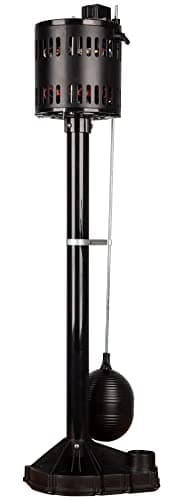
For most narrow or shallow pits, the Superior Pump 92551 1/2 HP Cast Iron Pedestal Pump, with a cast iron and stainless build and a 1-1/2 in discharge. For the clearest spec sheet, the Red Lion RL-SP33PED 1/3 HP Pedestal Pump states its minimum basin size, shut-off height and switch levels.

4.5 on Amazon · 546 ratings

Quick answer

A pedestal sump pump is the right buy when your pit is too narrow or shallow for a submersible pump and its float; for most of those pits, choose the Superior Pump 92551 1/2 HP Cast Iron Pedestal Pump, rated 4.5 stars across 546 Amazon ratings. Its listing states up to 3,600 GPH, a cast iron and stainless steel build and a 1-1/2 in NPT discharge. Compare pumps by flow at your own lift, not the 0 ft figure: K2 states 2,400 GPH at 10 ft for its 1/3 HP model. In a wide pit under a finished room, a quieter submersible usually fits better.

Our Picks at a Glance

Every pick below is currently stocked — ratings and stock read from Amazon on 12 October 2026.

How this page was made: we compare the current Amazon listings, the makers' published specs and what verified buyers report, then rank by fit for the job. Ratings, review counts and stock are read from Amazon and dated. We earn a commission on purchases through our links; it does not change the order. Reviewed by Marcus Reed, IICRC-certified Water Restoration Technician.

Full Reviews

Each pick in detail: what the listing states, what buyers report, and where it falls short.

#1
Best Overall

Check price

on Amazon ↗

Listing verified 13 Oct 2026

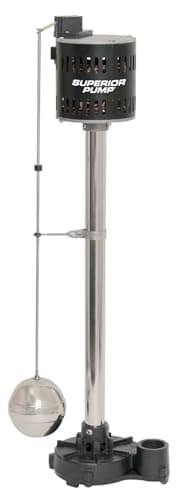
Superior Pump 92551 1/2 HP Cast Iron Pedestal Pump (Up to 3,600 GPH, 1-1/2 in NPT Discharge)See it on Amazon ↗

Quick Verdict

Superior Pump 92551 1/2 HP Cast Iron Pedestal Pump: the sturdiest build and most power here, though the listing gives no flow at lift.

Key Specs

Motor

1/2 HP

Flow (stated)

Up to 3,600 GPH; the lift for this figure is not stated

Build (stated)

Cast iron and stainless steel; solid steel drive shaft, float ball and impeller

Discharge

1-1/2 in NPT

Switch (stated)

Fully adjustable automatic switch with a metal switch arm

Power cord

10 ft

Pros

  • The most motor on this page at 1/2 HP, for pits that fill fast in heavy rain
  • Cast iron and stainless steel, with a metal switch arm rather than a plastic one
  • A 1-1/2 in discharge matches the pipe size many basement discharge lines already use
  • A 10 ft cord reaches an outlet set back from the pit without an extension cord

Cons

  • The 3,600 GPH figure has no lift height attached, and no shut-off height is given
  • No minimum pit diameter on the listing, so measure your pit and check the base before ordering
  • In a small, slow-filling pit, 1/2 HP can empty the water in seconds and cycle often

Suited to

A narrow or shallow pit that takes in a lot of water during storms and needs a sturdy, serviceable pump

Our take

Superior's 92551 is the strongest pump on this page, and the build backs it up: a cast iron base, a stainless column, and a drive shaft, float ball and impeller in solid steel. The metal switch arm matters on a pedestal pump, because that arm is what the float rod moves every cycle. What the listing leaves out is the lift behind its 3,600 GPH figure and the pump's shut-off height, so you cannot compare its flow at 10 ft with K2's stated number. Measure your pit before ordering, since no minimum diameter is given. If your pit fills slowly, a 1/3 HP pump may cycle less and suit it better.

Check today's price on Amazon →

Affiliate link — commission at no extra cost to you

Compare elsewhere

These open a search for this model. We quote prices only where we can verify them — Amazon, Sylvane and eBay.

#2
Most Complete Spec Sheet

Check price

on Amazon ↗

Listing verified 13 Oct 2026

Red Lion RL-SP33PED 1/3 HP Pedestal Pump (3,300 GPH at 0 ft, 16 ft Shut-Off, 13 in Minimum Basin)See it on Amazon ↗

Quick Verdict

Red Lion RL-SP33PED 1/3 HP Pedestal Pump: the listing to buy from when you want the fit and switch levels stated before you order.

Key Specs

Motor (stated)

1/3 HP, 115 V, 4 A

Flow (stated)

Maximum 3,300 GPH at 0 ft of lift

Shut-off height (stated)

16 ft

Switch levels (stated)

Turns on at 8 to 10 in of water, off at 3 to 5 in; adjustable snap-action float switch

Basin fit (stated)

Minimum basin diameter 13 in; maximum basin height 24 in

Discharge

1-1/4 in FNPT

Pros

  • States the minimum basin diameter and maximum basin height, the two numbers that decide fit
  • Gives its on and off water levels, so you know how deep the pit runs before it starts
  • A stated 16 ft shut-off height lets you judge how much lift headroom you have
  • Draws 4 A, a light load on a shared basement circuit

Cons

  • A 13 in minimum basin rules out the narrowest 12 in pits
  • The 8 ft cord is the shortest stated on this page
  • Polypropylene body rather than cast iron

Suited to

A pit at least 13 in across and no more than 24 in deep, where you want to check the fit on paper first

Our take

Red Lion's listing answers the questions that decide whether a pedestal pump fits your pit. It needs a basin at least 13 in across and no deeper than 24 in, it starts at 8 to 10 in of water and stops at 3 to 5 in, and it stops moving water at 16 ft of lift. That shut-off height is useful: if your discharge pipe climbs 10 ft, you are well inside the pump's range, though flow falls as lift rises and the listing gives a figure only at 0 ft. At 4 A it is easy on a circuit. The body is polypropylene, which does not rust, but measure your pit, because a 12 in basin is too small.

Check today's price on Amazon →

Affiliate link — commission at no extra cost to you

#3
Best Stated Flow at 10 ft

Check price

on Amazon ↗

Listing verified 13 Oct 2026

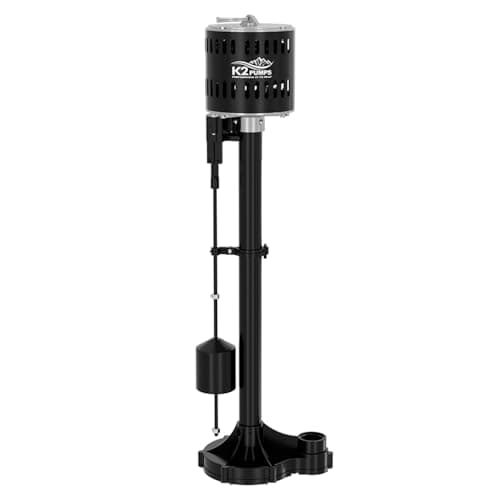
K2 Pumps SPP03301K 1/3 HP Thermoplastic Pedestal Sump Pump (2,400 GPH at 10 ft, Vertical Float)See it on Amazon ↗

Quick Verdict

K2 Pumps SPP03301K 1/3 HP Thermoplastic Pedestal Sump Pump: the one listing that states flow at 10 ft of lift, so you can size it properly.

Key Specs

Motor (stated)

1/3 HP, draws 3.7 A

Flow (stated)

3,550 GPH at 0 ft of lift; 2,400 GPH at 10 ft of lift

Switch (stated)

Adjustable vertical float switch

Discharge

1-1/4 in female NPT

Build (stated)

Corrosion-resistant thermoplastic

Minimum pit size, cord length, shut-off height

Not stated on the listing

Pros

  • The only listing here with a flow figure at a real-world lift, 2,400 GPH at 10 ft
  • Draws 3.7 A, per the listing
  • Thermoplastic body will not rust in a damp pit

Cons

  • No minimum pit diameter, cord length or shut-off height on the listing
  • A shorter buyer record than the top two picks
  • Plastic build rather than cast iron

Suited to

A homeowner who wants to size the pump against a known lift, in a pit wide enough for its base

Our take

Most pump listings quote flow at 0 ft, which is a number no installed pump ever sees, because the water always has to climb out of the pit. K2 gives a second figure: 2,400 GPH at 10 ft of lift, a common height for a basement discharge line that exits through the rim joist. That lets you check the pump against your pit's inflow with real arithmetic. A 1/3 HP motor drawing 3.7 A is modest on power, and the vertical float switch suits a narrow pit. The gaps are the minimum pit size and the cord length, so measure the pit and the distance to the outlet before you buy.

Check today's price on Amazon →

Affiliate link — commission at no extra cost to you

#4
Best for 12 in Pits

Check price

on Amazon ↗

Listing verified 13 Oct 2026

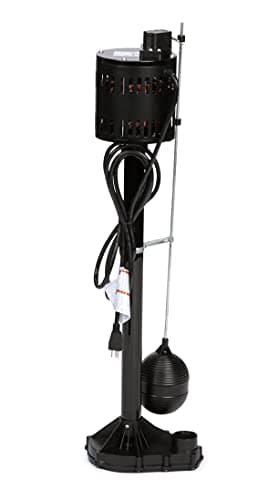
Star 3CEH 1/3 HP Thermoplastic Pedestal Sump Pump (Fits 12 in Pits, 58 GPM, 3.5 A)See it on Amazon ↗

Quick Verdict

Star 3CEH 1/3 HP Thermoplastic Pedestal Sump Pump: built for 12 in pits, with a top strainer, but no flow at lift on the listing.

Key Specs

Motor (stated)

1/3 HP, 115 V, 3.5 A, 1725 RPM, thermal overload protected

Flow (stated)

58 GPM, about 3,480 GPH; the lift for this figure is not stated

Pit fit (stated)

Low-profile footprint that fits 12 in diameter pits

Switch (stated)

Adjustable on/off float and rod switch

Intake (stated)

Top suction strainer; open, non-clogging multi-vane impeller

Discharge

1-1/4 in

Pros

  • States that it fits a 12 in pit, the narrowest stated fit on this page
  • The lowest stated current draw here at 3.5 A
  • A top suction strainer keeps grit on the pit floor away from the impeller
  • Thermal overload protection shuts the motor off before it overheats

Cons

  • Flow is given in GPM with no lift height and no shut-off height
  • No cord length on the listing
  • Thermoplastic base rather than cast iron

Suited to

An older or tight 12 in pit where wider pedestal bases and swinging floats will not fit

Our take

Star's 3CEH is the pump for the tightest pits. Its listing says the low-profile base fits a 12 in diameter pit, which rules in many older basements where a standard basin was never fitted. The top suction strainer pulls water from above the pit floor, so sand and grit that settle at the bottom are less likely to reach the impeller. Its 58 GPM figure works out to about 3,480 GPH, but with no lift stated, treat it as a 0 ft ceiling and expect less at your discharge height. At 3.5 A it draws the least current here. Check the cord length and your outlet position before ordering.

Check today's price on Amazon →

Affiliate link — commission at no extra cost to you

Buyer's Guide

What to know before you buy.

How a Pedestal Pump Works, and Why the Motor Stays Dry

A pedestal sump pump stands in the pit on a long column. The intake and impeller sit at the bottom, under water, and the motor sits at the top of the column, above the pit and out of the water. A float slides up and down a rod beside the column. When rising water lifts it far enough, it pushes a stop on the rod and flips the switch on the motor. Because the motor never sits in water, it does not need the sealed housing a submersible pump uses, and it runs in open air. That is why pedestal pumps are often described as long-lived and easy to service: you can see the switch, reach the motor and replace parts without pulling a wet pump out of the pit. The trade-off is that the motor sits out in the room, where you hear it run.

Pit Size: The Reason Most People Choose One

Pedestal pumps exist for pits that are too narrow or too shallow for a submersible pump with a swinging float. Measure the inside diameter of your pit and its depth from the pit floor to the slab before you shop. In a narrow pit, a tethered float can catch on the wall and stick in the on or off position, while a pedestal float rides straight up its rod. Then match the pit to the listing. Red Lion states a 13 in minimum basin and a 24 in maximum basin height; Star says its 3CEH fits a 12 in pit; Superior and K2 give no minimum. The motor also needs headroom above the floor for its cord and rod. If your pit is a standard wide basin, the narrow-pit argument goes away.

Reading HP and GPH: Flow at Your Lift, Not at Zero

Horsepower says little on its own. What matters is gallons per hour (GPH) at the height your pump must push water. Every pump moves its most water at 0 ft of lift and less as the lift rises, until it reaches its shut-off height and moves nothing. To find your lift, measure from the pit floor to the highest point of the discharge pipe, usually where it turns sideways through the wall. A pump in a 2 ft deep pit whose pipe climbs 8 ft above the slab works against about 10 ft, plus a little extra for elbows, the check valve and the run outside. K2 states 2,400 GPH at 10 ft and 3,550 GPH at 0 ft, which shows how much flow a climb costs. Red Lion states a 16 ft shut-off. Where a listing gives one flow figure with no lift, treat it as a ceiling.

Size It From How Fast Your Pit Fills

A tape measure and a watch tell you how much pump you need. During heavy rain, unplug the pump for a minute and time how fast the water rises. A round 12 in pit holds about half a gallon per inch of depth, and an 18 in pit about 1.1 gallons per inch. If a 12 in pit rises 6 in in one minute, roughly 3 gallons a minute are coming in, about 180 GPH. Your pump needs to beat that comfortably at your lift, with room for the worst storm you have seen. Plug the pump back in as soon as you have the reading. A pump that barely keeps up runs nonstop. One far larger than the inflow empties a narrow pit in seconds and cycles on and off all day, which wears the switch faster.

Who Should Not Buy a Pedestal Pump

Skip the pedestal type if the pit sits in a finished basement next to a bedroom or office, because the motor runs in open air and none of these listings states a noise figure. Skip it if your pit is a standard wide basin with room to spare, if it takes in a lot of sand and grit, or if young children or pets can reach an exposed motor and float rod. In those cases a submersible pump is usually the better fit; our sump pump review compares them by lift. No pump of either type fixes the two classic failures, a power cut during a storm and a stuck switch. Those need a battery backup pump and a high-water alarm. Water seeping through walls or up through slab cracks may need drainage work rather than a different pump.

Install, Test, and When to Call a Plumber

Fit a check valve in the discharge line so the water in the pipe does not fall back into the pit every time the pump stops. Plug the pump straight into a grounded outlet rather than an extension cord, and keep the cord clear of the float rod. Set the float stops so the pump starts below the pit's inlet pipe and stops before the intake can draw air. Every few months, pour a bucket of water into the pit and watch the pump start and stop, and check that the float slides freely. Call a plumber if the pit must be dug deeper or wider, the discharge line needs rerouting, or water keeps rising faster than the pump clears it. If the basement does get wet, EPA advises drying water-damaged areas and items within 24 to 48 hours to prevent mold growth.

Frequently Asked Questions

Is a pedestal sump pump better than a submersible?

Not in general: a pedestal pump is better for a narrow or shallow pit, and a submersible is better almost everywhere else. The pedestal's motor sits in open air above the pit, so it stays dry and is easy to reach, but you hear it run and it takes up room above the floor.

A submersible works under water, which muffles it, and suits the wide basin most basements have. Choose by the pit first, then by flow at your lift.

How long does a pedestal sump pump last?

NoListing on this page states a service life, so treat any year figure you read online as a rough estimate.

Pedestal pumps are often described as long-lived because the motor stays out of the water, but the switch is a common failure point on any sump pump. Test the pump every few months with a bucket of water, and plan a replacement when it hums without pumping, runs longer than it used to, or the float sticks on its rod.

Are pedestal sump pumps louder than submersible pumps?

YesIn most basements, because the motor runs in open air rather than under water that muffles it.

None of the listings on this page gives a decibel figure, so you cannot compare them on noise from the specs. If the pump sits beside a bedroom or office, a submersible is the quieter choice. A quiet spring-loaded check valve also cuts the thud some discharge lines make when the pump shuts off.

Can a pedestal sump pump be submerged?

NoOnly the base and impeller belong under water; the motor at the top of the column must stay dry.

If water rises over the motor, it can short out and be ruined. That is why column height matters: the motor has to sit above the highest level the pit can reach. A high-water alarm warns you when the pit is rising toward the motor, before the damage is done.

What size pedestal sump pump do I need?

Buy the pump that beats your pit's worst inflow at your lift, not the one with the biggest horsepower. Time the pit filling in heavy rain: a 12 in pit holds about half a gallon per inch, so a 6 in rise in one minute is about 3 gallons a minute, or 180 GPH.

That is far below the 2,400 GPH at 10 ft that K2 states for a 1/3 HP pump. Step up to 1/2 HP only when the pit fills much faster or the lift is higher.

How do you adjust the float on a pedestal sump pump?

Move the stops on the float rod: the upper stop sets where the pump turns on, and the lower stop sets where it turns off. Red Lion's listing gives its factory points as 8 to 10 in of water on and 3 to 5 in off.

Set the on point below the pipe that feeds the pit and the off point above the intake, so the pump never runs dry. Then test it with a bucket of water.

Who do I call right now for water damage?

Call (888) 840-6512. The line is answered 24 hours a day, seven days a week, and connects you with an IICRC-certified water damage restoration company that serves your area. A recorded menu picks up first: choose water damage or mold, key in your 5-digit ZIP code, and hold through the short silence while the call is passed to the company.

Describe what you can see — where the water is coming from, how long it has been there, and whether it smells — the more specific you are, the faster the right company is on the line. If the source is a pipe or an appliance, shut the main water valve first. Have four things ready and the call goes quickly: the address, when the water started, what is wet now, and whether you have filed an insurance claim.

Still not sure which of these is your situation? (888) 840-6512 · toll-free · answered 24/7

Sources

  1. EPA — A Brief Guide to Mold, Moisture, and Your Home

Methodology: How we source and verify data · Report an error

How we chose these picks

  • Every pick is a current listing. Stock, star ratings and rating counts are read from Amazon by script and carry the date they were read.
  • Nothing under 4.0 stars makes the list, and the top pick needs a large rating count, so one good week of reviews cannot put it there.
  • Specs are quoted from the listing or the maker, with the test condition behind the number where there is one, and sized against the job rather than the room on the box.
  • We do not run lab or field tests. Where a spec matters, we say what it is measured under and what it cannot tell you.

Free 2-day shipping

Amazon Prime members pay no shipping on restoration equipment

Dehumidifiers, air movers, and moisture meters qualify for free Prime delivery — bulk items that otherwise cost $15–$40 to ship.

Try Prime free →

Affiliate link — HearthDry earns a bounty if you sign up; costs you nothing extra.

Also Worth Comparing

Best Sump Pumps for Basements in 2026 — Sized by Lift, Not Horsepower

The right sump pump prevents basement flooding before it starts — and handles it fast when it happens. These are the 3 best sump pumps for basement flooding in 2026, tested and ranked by an IICRC-certified water damage restoration technician.

Read the comparison

Best Sump Pump Float Switch in 2026 — Vertical, Tethered and Electronic Switches Matched to Your Pit Width and Your Pump's Amps

When a sump pump fails, the switch is often the part that quit: a float pinned against the pit wall never tells the pump to start. These picks are vertical, tethered and electronic switches compared on pit fit, amp rating, pumping range and what each listing states, with the bucket test and the alarm a new switch still needs.

Read the comparison

Best Sump Pump Check Valves in 2026 — Quiet Spring Valves Matched to Your Pipe Size, Plus the Lid and Backup a Valve Cannot Replace

A sump pump check valve keeps the water in the discharge pipe from falling back into the pit each time the pump stops, so the pump does not move the same water twice. These picks are matched to the three common discharge pipe sizes and compared on what each listing states about quiet closing, pressure rating and the gap it needs in the pipe.

Read the comparison

Best Sump Pump Alarm in 2026 — Float-Switch Sirens, Phone Alerts, and the Battery That Keeps One Sounding in a Power Cut

A sump pump alarm is a float switch hung in the pit just above the pump's turn-on level and wired to a siren or a phone alert, so a stuck float, a tripped breaker or a dead motor gets noticed while the water is still below the rim. These picks are compared on what each listing states about the float, the battery that keeps it working when the power fails, and how the warning reaches you.

Read the comparison

Best Sump Pump Battery Backup Systems in 2026 — Pro Picks & Real Costs

The power goes out during the storm that fills your basement — that is the whole reason this category exists. Here is what each system actually costs once you add the battery nobody includes.

Read the comparison

Best Sump Pump Basins in 2026 — Pit Size, Perforated vs Solid Walls, and the Sealed Lid That Keeps Soil Gas Out

A sump basin is the part nobody shops for until the pump short-cycles, the pit smells, or a radon test comes back high, and its diameter decides how much water the pump moves every time it starts. These picks compare two perforated basins, two sealed covers and a deep two-pump basin on what each listing states, with the sizing arithmetic that decides between them.

Read the comparison