Best Sump Pump Basins in 2026 — Pit Size, Perforated vs Solid Walls, and the Sealed Lid That Keeps Soil Gas Out

Best Sump Pump Basins in 2026

Pit Size, Perforated vs Solid Walls, and the Sealed Lid That Keeps Soil Gas Out

5 picks compared · prices, ratings and stock checked October 13, 2026

Our Top Pick

For a new groundwater pit in a basement or crawl space, the Mindoub 18.5 in Large Perforated Sump Pump Basin and Lid Combo. For a pit that already works but smells, sweats or sits in a radon area, keep the basin and add the Jackel SF16314-CV Sump Basin Cover, or the Jackel SMR16101-B Radon/Sump Dome if the rim is damaged.

4.4 on Amazon · 36 ratings

Quick answer

For most basement and crawl space pits, the best sump pump basin is the Mindoub 18.5 in Large Perforated Sump Pump Basin and Lid Combo, rated 4.4 stars across 36 Amazon ratings: its 48 perforations let groundwater in, and an 18.5 in diameter holds about 1.1 gallons per inch of depth, so the pump starts about half as often as it would in a 13 in pit. Buy the PetPhilia 6.5 Gal Sump Pump Basin only where a vertical-float pump must fit a tight crawl space. If radon, odor or damp air is the problem, keep your basin and buy a Jackel sealed cover instead.

Our Picks at a Glance

Available picks first — 4 of 5 in stock at our last check — ratings and stock read from Amazon on 13 October 2026.

Best Overall
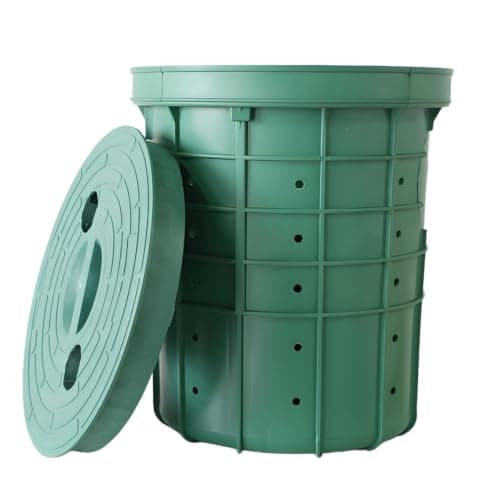
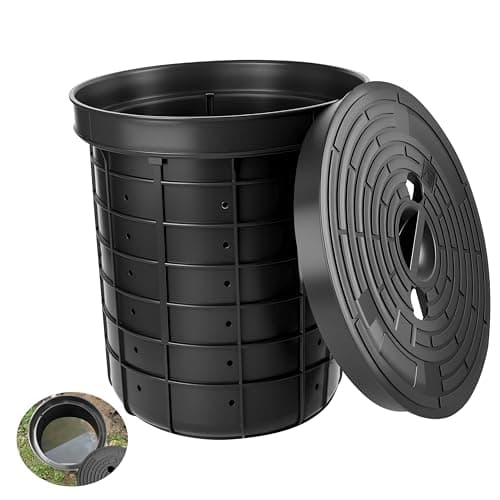
Mindoub 18.5 in Large Perforated Sump Pump Basin and Lid Combo (48 Perforations, Two 1.7 in Lid Openings)
4.4 from 36 Amazon ratings · checked 13 Oct

Best for: A new groundwater pit in a basement or crawl space with no drain tile, where one submersible pump will run

Dimensions (stated):
18.5 in top diameter x 16.9 in bottom diameter; the bullets give 15.7 in tall and the title 14.9 in, so expect roughly 15 in of depth
Perforations (stated):
48 holes, 5/16 in each

Listing verified 13 Oct 2026

Best Retrofit Radon Cover
Jackel SMR16101-B Original Radon/Sump Dome (Fits Over Installed Basins, Side Discharge and Vent)
4.5 from 31 Amazon ratings · checked 13 Oct

Out of stock at our last check — the link still works if it returns.

Best for: An older pit with a broken rim or a cover that cannot be made to seal, in a home that tested high for radon

Purpose (stated):
Passive radon mitigation; retrofit or repair of old sump or sewage basin covers
Fit (stated):
Sits over all installed basins, per the listing

Listing verified 12 Oct 2026

Best for Two Pumps
Little Giant BC2030CS-LG WCR Series Basin and Cover (22 in x 30 in, Solid Wall, 2 in Flanges, Gasket Tape)
4 from 9 Amazon ratings · checked 13 Oct

Best for: A new pit fed by drain tile that will hold a primary and a battery backup pump, or a sealed sewage ejector pit

Basin (stated):
22 in diameter x 30 in deep, high-density polyethylene with radial ribs
Cover (stated):
20.63 in structural foam cover, 8 bolts and washers, one roll of gasket tape

Listing verified 13 Oct 2026

How this page was made: we compare the current Amazon listings, the makers' published specs and what verified buyers report, then rank by fit for the job. Ratings, review counts and stock are read from Amazon and dated. We earn a commission on purchases through our links; it does not change the order. Reviewed by Marcus Reed, IICRC-certified Water Restoration Technician.

Full Reviews

Each pick in detail: what the listing states, what buyers report, and where it falls short.

#1
Best Overall

Check price

on Amazon ↗

Listing verified 13 Oct 2026

Mindoub 18.5 in Large Perforated Sump Pump Basin and Lid Combo (48 Perforations, Two 1.7 in Lid Openings)See it on Amazon ↗

Quick Verdict

Mindoub 18.5 in Large Perforated Sump Pump Basin and Lid Combo: the right diameter and perforations for a groundwater pit, in a shallow 15 in class basin with an unsealed lid.

Key Specs

Dimensions (stated)

18.5 in top diameter x 16.9 in bottom diameter; the bullets give 15.7 in tall and the title 14.9 in, so expect roughly 15 in of depth

Perforations (stated)

48 holes, 5/16 in each

Material (stated)

Corrosion-resistant high-density plastic with molded structural ribs

Lid (stated)

Precision-fit lid with two 1.7 in pre-cut openings for discharge pipe and cord; textured top

Capacity

Not stated on the listing; about 16 gallons by the arithmetic from the stated dimensions

Gallons per inch of depth (arithmetic)

About 1.0 to 1.2 gallons per inch between the bottom and top diameters

Pros

  • States the diameter and the hole count, which is what sizing a pit needs
  • An 18.5 in top diameter gives roughly twice the gallons per inch of a 13 in basin
  • Ribbed walls meant to hold their shape against soil pressure, per the listing
  • Lid ships with the basin, with openings already cut for pipe and cord

Cons

  • The title and bullets disagree on depth, and neither states the capacity
  • About 15 in deep, shallower than the 22 to 30 in pits installers commonly set
  • No gasket or bolt-down described, so the lid keeps debris out but does not seal soil gas

Suited to

A new groundwater pit in a basement or crawl space with no drain tile, where one submersible pump will run

Our take

Mindoub's listing gives the two things a basin decision needs: a diameter and a hole count. At 18.5 in across the top, each inch of water is about 1.1 gallons, so a pump whose float travels 5 in moves roughly 5.5 gallons per cycle instead of the 3 gallons a 13 in pit gives. Its 48 perforations at 5/16 in let groundwater enter from the gravel around the basin, which is what eases pressure under the slab. Two things are missing. The listing never states the capacity, and its title and bullets disagree on depth, so treat this as a 15 in class basin. Nothing on the listing describes a gasket for the lid, which has two 1.7 in openings; if radon or odor matters, budget for a sealing cover as well.

Check today's price on Amazon →

Affiliate link — commission at no extra cost to you

Compare elsewhere

These open a search for this model. We quote prices only where we can verify them — Amazon, Sylvane and eBay.

#2
Best Compact Basin

Check price

on Amazon ↗

Listing verified 13 Oct 2026

PetPhilia 6.5 Gal Sump Pump Basin with Lid (13 in Top Diameter, 40 Drainage Holes, Vertical-Float Pumps Only)See it on Amazon ↗

Quick Verdict

PetPhilia 6.5 Gal Sump Pump Basin with Lid: fully specified and honest about its limits, for narrow crawl space pits with a vertical-float pump.

Key Specs

Capacity (stated)

6.5 gallons

Dimensions (stated)

13 in top diameter x 11 in bottom diameter x 15 in tall

Usable floor (stated)

About 8.6 in across once the roughly 1 in ribs are counted

Pump base (stated)

Under 7 in recommended

Float type (stated)

Vertical float or electronic sensor pumps; not recommended for tethered or swing floats

Perforations (stated)

40 holes, 0.4 in each

Pros

  • Prints every dimension, the capacity and the usable floor width
  • Tells you which pumps will not fit instead of claiming a universal fit
  • Tapered shape is easier to dig for and set in a crawl space, per the listing
  • Forty 0.4 in holes for groundwater entry in a small footprint

Cons

  • About half a gallon per inch of depth, so the pump will start often when the water table is high
  • No room for a second pump, and tethered-float pumps are ruled out by the seller
  • No gasket or bolt-down described for the lid

Suited to

A crawl space or slab cut where a 13 in hole is all there is room for, with a vertical-float pump sized for frequent starts

Our take

This is the honest small basin. PetPhilia prints the numbers most sellers skip: 13 in across the top, 11 in at the bottom, 15 in tall, 6.5 gallons, and an inside floor about 8.6 in wide once the ribs are counted. The listing then rules out tethered-float pumps because the float cannot swing in a pit this narrow, and asks for a pump base under 7 in. Take that seriously. A 13 in pit holds about half a gallon per inch, so a pump with a 5 in float travel moves under 3 gallons a cycle and will cycle often during a wet week. Use it where a crawl space hatch or an existing slab cut limits what you can dig, and pick a pump whose maker rates it for frequent starts.

Check today's price on Amazon →

Affiliate link — commission at no extra cost to you

#3
Best Sealed Lid

Check price

on Amazon ↗

Listing verified 13 Oct 2026

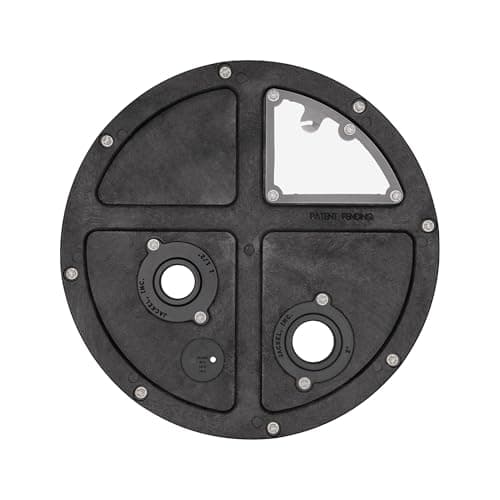
Jackel SF16314-CV Sump Basin Cover (20.5 in OD, Discharge and Vent Flanges, Reusable Seal, Stainless Bolts)See it on Amazon ↗

Quick Verdict

Jackel SF16314-CV Sump Basin Cover: a bolt-down, flanged lid for closing a sound pit, once you have confirmed it fits your rim.

Key Specs

Outside diameter (stated)

20.5 in

Basin it fits

Not stated on the listing; measure your basin rim and bolt pattern before ordering

Construction (stated)

Molded as one piece

Fittings (stated)

Discharge flange, vent flange, access cover and cord grommet included

Seal and hardware (stated)

Reusable seal with stainless steel bolts and washers

Origin (stated)

Made in the USA

Pros

  • Every pipe and wire enters through a flange or grommet rather than a cut slot
  • A vent flange gives a radon mitigation pipe a place to connect
  • Reusable seal, so the lid can come off for pump service and go back on
  • One-piece molding with stainless hardware for a damp pit

Cons

  • The listing never names the basin diameter or bolt pattern it is made for
  • No basin is included; this replaces the lid on a pit you already have
  • How tight the seal ends up depends on the rim it meets, so a chipped rim needs the dome instead

Suited to

A working pit with a sound, level rim that needs to be closed against odor, damp air or soil gas

Our take

A lid that bolts down over a reusable seal is a different product from a lid that drops on. Jackel's SF16314-CV is molded as one piece, 20.5 in across the outside, with a discharge flange, a vent flange, a cord grommet and a small access cover, so nothing enters the pit through a hand-cut gap. That is the layout a radon contractor wants when a sump has to be closed, and the vent flange is where a mitigation pipe connects. The listing does not name the basin diameter or bolt pattern it matches, so measure your rim and compare before ordering. It also never uses the word airtight; it describes a seal and stainless bolts, and the result is only as tight as the rim it sits on.

Check today's price on Amazon →

Affiliate link — commission at no extra cost to you

#4
Best Retrofit Radon Cover

Check price

on Amazon ↗

Listing verified 12 Oct 2026

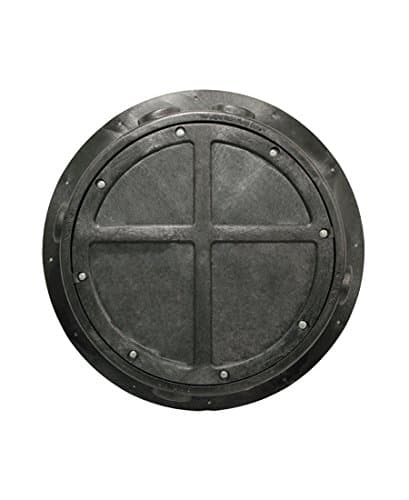
Jackel SMR16101-B Original Radon/Sump Dome (Fits Over Installed Basins, Side Discharge and Vent)See it on Amazon ↗

Quick Verdict

Jackel SMR16101-B Original Radon/Sump Dome: the cover for a pit whose rim cannot take a flat lid, with few stated dimensions.

Key Specs

Purpose (stated)

Passive radon mitigation; retrofit or repair of old sump or sewage basin covers

Fit (stated)

Sits over all installed basins, per the listing

Material (stated)

Black polyethylene structural foam

Connections (stated)

Side discharge and side vent

Dimensions

Not stated on the listing

Seal method

Not stated on the listing

Pros

  • Covers the whole pit, so a chipped or uneven rim does not stop it sealing
  • Side discharge and vent, so the pipe and the mitigation line leave low and out of the way
  • Listed for property transfers and rentals, where a sealed sump is often on the inspection list

Cons

  • No diameter, height or seal description on the listing
  • A dome closes one radon entry point; it does not lower the level on its own
  • Taller than a flat lid, which matters under a low crawl space or a finished floor

Suited to

An older pit with a broken rim or a cover that cannot be made to seal, in a home that tested high for radon

Our take

The dome solves a retrofit problem: a pit whose rim is chipped, out of round or set below the slab, where a flat bolt-down cover has nothing level to seal against. Jackel's listing says it fits over all installed basins and is meant to retrofit or repair old sump and sewage covers, with the discharge and vent leaving through the side. It is sold for passive radon mitigation, which means closing the sump as one entry route; EPA recommends fixing a home when the radon level is 4 pCi/L or more, and a dome is one part of that fix, not the fix. The listing gives no diameter, height or seal description, so you are relying on the structural-foam shell and your own sealant at the floor.

Check today's price on Amazon →

Affiliate link — commission at no extra cost to you

#5
Best for Two Pumps

Check price

on Amazon ↗

Listing verified 13 Oct 2026

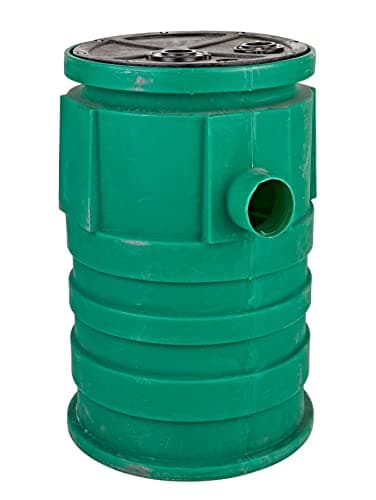
Little Giant BC2030CS-LG WCR Series Basin and Cover (22 in x 30 in, Solid Wall, 2 in Flanges, Gasket Tape)See it on Amazon ↗

Quick Verdict

Little Giant BC2030CS-LG WCR Series Basin and Cover: the deep, sealed, two-pump basin, for drain-tile pits and ejector duty rather than seepage through holes.

Key Specs

Basin (stated)

22 in diameter x 30 in deep, high-density polyethylene with radial ribs

Cover (stated)

20.63 in structural foam cover, 8 bolts and washers, one roll of gasket tape

Flanges (stated)

2 in NPT flange with seal, 2 in slip flange with seal, cord grommet

Walls

No perforations are listed; a molded inlet hub takes a drain line

Use (stated)

Collection of sewage, effluent, drainage or seepage liquid

Extras (stated)

Anti-torque stops, integrated anti-flotation collar, 360-degree molded handle

Pros

  • The only basin here deep enough for a wide float travel and wide enough for two pumps
  • Solid walls keep silt out and let the pit be sealed for sewage or seepage duty
  • Gasketed, bolted cover with sealed 2 in flanges and a cord grommet in the box
  • Anti-flotation collar and anti-torque stops molded in, per the listing

Cons

  • A short buyer record on Amazon so far
  • No perforations, so groundwater enters only through drain tile piped to the inlet hub
  • A 30 in deep hole through a slab is a demolition job, not an afternoon

Suited to

A new pit fed by drain tile that will hold a primary and a battery backup pump, or a sealed sewage ejector pit

Our take

Little Giant's WCR basin is the one listing here with real depth: 22 in across and 30 in deep, which works out to about 1.65 gallons per inch and close to 49 gallons full. That width is what two pumps need, a primary and a battery backup side by side with room for both floats, and the depth lets the on and off levels sit far apart so each cycle moves several gallons. The walls are solid; the listing names a molded inlet hub and describes the basin for sewage, effluent, drainage or seepage, so pair it with perimeter drain tile rather than counting on water seeping through holes. The cover bolts down over gasket tape with 2 in NPT and slip flanges, and an anti-flotation collar keeps the empty basin from lifting in wet ground.

Check today's price on Amazon →

Affiliate link — commission at no extra cost to you

Buyer's Guide

What to know before you buy.

Pit Size Sets How Often the Pump Starts

Every sump pump turns on at one water level and off at a lower one, and the basin's diameter decides how many gallons sit between those two levels. The arithmetic is short: square the diameter in inches and multiply by 0.0034 to get gallons per inch of depth. A 13 in basin gives about 0.6 gallons per inch, an 18 in basin about 1.1, a 22 in basin about 1.65 and a 24 in basin about 2. With a float that travels 5 in, that is roughly 3, 5.5, 8 and 10 gallons per cycle. A narrow pit refills that gap in seconds during a storm, so the motor starts and stops constantly, and starts are what wear out a switch and a motor. Depth matters for the same reason. Most basins in this roundup are about 15 in deep; installers commonly set pits 22 to 30 in deep so the off level still leaves water over the pump intake.

Perforated or Solid Walls

A perforated basin is open to the ground around it. Set in washed gravel, it lets water that would otherwise push up on the slab drain into the pit, which is why sellers describe it as relieving hydrostatic pressure. Choose it for a crawl space or basement with no perimeter drain tile, a high water table, or water that rises through floor cracks. A solid basin takes water only through an inlet, usually the end of a drain tile loop, and keeps silt and sand away from the pump. Choose it where drain tile already feeds the pit, and always for a sewage ejector, which must be sealed and vented. Mindoub and PetPhilia are perforated; Little Giant's WCR basin is solid with a molded inlet hub. Holes also admit soil gas, so a perforated basin needs a sealing lid more than a solid one does.

Drop-On Lid, Bolted Lid, or Airtight Cover

A lid does four jobs, and the cheap ones do only the first. Slotted drop-on covers keep toys, lint and a foot out of the pit. Bolting a gasketed cover to the rim also holds back the humid air that rises from standing water, which works against EPA's advice to keep indoor humidity below 60 percent, and the odor a stagnant pit develops. Sealed pipe and cord penetrations go further and close the pit as a radon entry route, because soil gas follows the same path in that water does. EPA recommends homes be fixed when the radon level is 4 pCi/L or more and says to consider fixing between 2 and 4 pCi/L, so test first. If the result is high, a sealed sump lid is one part of a mitigation system, and the vent flange on a cover like the Jackel SF16314-CV is where the contractor's pipe connects. None of these listings uses the word airtight, so expect to add sealant where the lid meets the rim.

Leave Room for a Backup Pump

A single pump in a pit is a single point of failure, and the hours it fails are the hours it rains. If a battery backup is in your plan, choose the basin for two pumps now, because a 13 in or 18 in basin rarely has floor space for both. Two pump bases, two floats that must not touch each other or the wall, two discharge pipes and a check valve on each take a 22 in or wider pit, and Little Giant's 22 in x 30 in basin is the only candidate here with that room. A tethered float needs still more clearance to swing, which is why PetPhilia's listing refuses tethered pumps outright and why vertical-float pumps suit narrow basins. Set the backup's float a few inches above the primary's so it runs only when the primary falls behind, and give each pump its own outlet.

Setting the Basin So It Stays Put

An empty plastic basin in wet ground is a boat. Dig the hole a few inches wider and deeper than the basin, bed it on washed gravel, and backfill around a perforated basin with more gravel so water reaches the holes without carrying silt. Set the rim flush with the slab or a hair above, never below, or the lid cannot seal. Little Giant molds an anti-flotation collar into its basin for this reason; the lighter basins rely on the backfill and the concrete patch to hold them down. Route the discharge up through the lid's flange or pre-cut opening, fit a check valve above the pump so the column does not drain back and restart it, and pass the cord through a grommet. Before you fill the pit, drop the pump in and lift the float by hand to confirm it rises or swings freely.

Who Does Not Need a New Basin, and When to Call a Pro

If your pit already works, do not buy a basin. A pump that short-cycles in a sound pit usually needs a check valve or a float adjustment, and a pit that smells or sweats needs a sealing lid, which costs less and takes an hour. A basin is the right purchase when the old liner is cracked, when there is no pit at all, or when the existing one is too narrow for the pump you want. Call a licensed plumber for a sewage ejector pit, since its basin, vent and check valve fall under plumbing code in most places and the work is permitted. Call a basement waterproofing contractor to cut a slab, tie in drain tile or set a pit below a finished floor. If a radon test reads 4 pCi/L or more, a certified radon mitigation contractor sizes the fan and vent; a lid alone is not a fix.

Frequently Asked Questions

How big should a sump pump basin be?

At least 18 in across and deeper than the pump plus its float travel, which in practice means the 22 to 30 in deep pits installers set rather than the 15 in basins common online.

Diameter sets gallons per cycle: square the diameter and multiply by 0.0034 for gallons per inch, so an 18 in basin holds about 1.1 gallons per inch and a 24 in basin about 2. Go to 22 in or wider if a backup pump will share the pit.

Should a sump pump basin have holes in it?

YesIf the pit collects groundwater from the soil around it and no drain tile feeds it; no, if drain tile does feed it or the pit serves a sewage ejector.

Perforations let water seep in from the gravel bed and ease pressure under the slab, but they also let in silt and soil gas. A solid basin stays cleaner and seals better, and takes water only through its inlet.

Does a sump pit need a sealed lid?

YesIn most homes, and some local codes require a gas-tight, removable cover, so check yours.

An open pit releases humid air, odor and soil gas, including radon, into the basement, and lets debris fall onto the pump and its float. A sealing lid with a gasket, bolts and sealed pipe and cord openings handles all four. Keep it removable, because the pump and float need a yearly look.

Can you put two sump pumps in one pit?

YesAnd a primary plus a battery backup in one pit is the common layout, but the basin has to be wide enough.

Each pump needs floor space, a float that moves without touching the other pump or the wall, its own discharge with a check valve, and ideally its own electrical outlet. That takes a 22 in or wider basin. Set the backup's float higher so it runs only when the primary cannot keep up.

What size sump pump cover do I need?

Measure the outside of your basin's rim, or the opening in the slab, and buy a cover whose stated outside diameter is larger than that and whose bolt pattern matches if it bolts down.

Jackel's SF16314-CV is 20.5 in across the outside, for example, while a 13 in basin ships with its own lid. Where the rim is broken or uneven, a dome such as Jackel's SMR16101-B sits over the whole pit and seals to the floor instead.

Why does my sump pump turn on and off so often?

Usually because the pit is too narrow or the float's on and off levels sit too close together, so each cycle moves only a gallon or two. A failed check valve makes it worse: the water in the discharge pipe falls back into the pit and restarts the pump.

Fix the valve first, then widen the float travel if the switch allows, and if the pit is 13 in or smaller, a larger basin is the lasting fix.

Who do I call right now for water damage?

Call (888) 840-6512. The line is answered 24 hours a day, seven days a week, and connects you with an IICRC-certified water damage restoration company that serves your area. A recorded menu picks up first: choose water damage or mold, key in your 5-digit ZIP code, and hold through the short silence while the call is passed to the company.

Describe what you can see — where the water is coming from, how long it has been there, and whether it smells — the more specific you are, the faster the right company is on the line. If the source is a pipe or an appliance, shut the main water valve first. Have four things ready and the call goes quickly: the address, when the water started, what is wet now, and whether you have filed an insurance claim.

Still not sure which of these is your situation? (888) 840-6512 · toll-free · answered 24/7

Sources

  1. EPA — Health Risk of Radon
  2. EPA — Radon Frequently Asked Questions
  3. EPA — A Brief Guide to Mold, Moisture, and Your Home

Methodology: How we source and verify data · Report an error

How we chose these picks

  • Every pick is a current listing. Stock, star ratings and rating counts are read from Amazon by script and carry the date they were read.
  • Nothing under 4.0 stars makes the list, and the top pick needs a large rating count, so one good week of reviews cannot put it there.
  • Specs are quoted from the listing or the maker, with the test condition behind the number where there is one, and sized against the job rather than the room on the box.
  • Each comparison is reviewed by Marcus Reed, an IICRC-certified Water Restoration Technician, against the IICRC drying standards and public guidance listed under Sources.

Free 2-day shipping

Amazon Prime members pay no shipping on restoration equipment

Dehumidifiers, air movers, and moisture meters qualify for free Prime delivery — bulk items that otherwise cost $15–$40 to ship.

Try Prime free →

Affiliate link — HearthDry earns a bounty if you sign up; costs you nothing extra.

Also Worth Comparing

Best Sump Pumps for Basements in 2026 — Sized by Lift, Not Horsepower

The right sump pump prevents basement flooding before it starts — and handles it fast when it happens. These are the 3 best sump pumps for basement flooding in 2026, tested and ranked by an IICRC-certified water damage restoration technician.

Read the comparison

Best Sump Pump Battery Backup Systems in 2026 — Pro Picks & Real Costs

The power goes out during the storm that fills your basement — that is the whole reason this category exists. Here is what each system actually costs once you add the battery nobody includes.

Read the comparison

Best Pedestal Sump Pumps in 2026 — Narrow Pits, Flow at Your Real Lift, and When a Submersible Is the Better Buy

A pedestal sump pump stands in the pit on a column, with the motor up in the air where it stays dry and easy to reach. These picks are compared on what their listings state about pit size, flow at a stated lift and switch levels, with the sizing arithmetic and the cases where a submersible pump is the better buy.

Read the comparison

Best Sump Pump Check Valves in 2026 — Quiet Spring Valves Matched to Your Pipe Size, Plus the Lid and Backup a Valve Cannot Replace

A sump pump check valve keeps the water in the discharge pipe from falling back into the pit each time the pump stops, so the pump does not move the same water twice. These picks are matched to the three common discharge pipe sizes and compared on what each listing states about quiet closing, pressure rating and the gap it needs in the pipe.

Read the comparison

Best Sump Pump Float Switch in 2026 — Vertical, Tethered and Electronic Switches Matched to Your Pit Width and Your Pump's Amps

When a sump pump fails, the switch is often the part that quit: a float pinned against the pit wall never tells the pump to start. These picks are vertical, tethered and electronic switches compared on pit fit, amp rating, pumping range and what each listing states, with the bucket test and the alarm a new switch still needs.

Read the comparison

Sump Pump vs Sewage Ejector Pump (2026) — What Each One Moves, and the Best Ejector Pumps to Buy

A sump pump and a sewage ejector pump look alike sitting in a pit, but one moves groundwater and the other lifts toilet waste from a sealed, vented basin up to the sewer line. This page explains which one you need, why swapping them fails, and compares four sewage pumps with a sump pump for contrast.

Read the comparison

Best Radon Test Kits in 2026 — Mail-In Kits Compared on Lab Fees and Test Length, and the Follow-Up Test Before Mitigation

A mail-in radon kit tells you whether your home needs a closer look, and what you actually pay depends on whether the lab fee and return postage are in the box. These kits are compared on what each listing states about the lab, test length and turnaround, with EPA's action level and the follow-up test that should come before any mitigation decision.

Read the comparison

Best Sump Pump Alarm in 2026 — Float-Switch Sirens, Phone Alerts, and the Battery That Keeps One Sounding in a Power Cut

A sump pump alarm is a float switch hung in the pit just above the pump's turn-on level and wired to a siren or a phone alert, so a stuck float, a tripped breaker or a dead motor gets noticed while the water is still below the rim. These picks are compared on what each listing states about the float, the battery that keeps it working when the power fails, and how the warning reaches you.

Read the comparison