
Quick answer
A residential radon mitigation system costs $800–$2,500 installed, with most homeowners paying about $1,200–$1,500 for standard sub-slab depressurisation. Complex homes with multiple foundations, a crawl space needing a sealed membrane, or long interior pipe runs reach $2,500–$4,000. Ongoing costs are the part usually omitted: $60–$180 a year in electricity for a fan that runs continuously, plus a $500–$1,100 fan replacement every 5–10 years. Call (888) 840-6512 to reach a certified water damage restoration company in your area; the line is answered 24/7.
Written & reviewed by Marcus ReedIICRC WRT
Reviewed August 17, 2026· Next review Feb 2027
What a Radon System Costs Installed
A residential radon mitigation system costs $800–$2,500 installed, and most homeowners land around $1,200–$1,500. That buys standard active sub-slab depressurisation: a suction point cored through the slab, sealed PVC routed up to above the roofline, an inline fan, a manometer gauge, and a retest to confirm it worked.
The quote, though, is the smaller half of the total. Electricity, a heating and cooling penalty, and a fan replacement every 5–10 years mean the running cost over fifteen years can approach or exceed what you paid to install it. Very few quotes mention this, so it is worth planning for from the start.
Radon Mitigation Cost by Foundation Type (2026)
| Foundation | Typical Installed Cost | Why |
|---|---|---|
| Basement, single suction point | $800–$1,800 | Simplest case — core the slab, draw from the gravel |
| Slab-on-grade | $900–$2,000 | Similar work, sometimes harder pipe routing |
| Crawl space (sealed membrane) | $1,500–$3,000 | No slab to draw through; needs a sealed liner first |
| Multiple foundations or an addition | $2,000–$4,000 | Often two or more suction points |
| Finished basement, interior pipe run | $2,000–$3,500 | Concealing pipe through finished space adds labor |
Passive system (no fan): $350–$800. Cheaper, and much less reliable. Worth understanding before you accept a low quote — see below.

What Drives the Price
1. Active or passive — the biggest single difference
An active system uses a fan to continuously depressurise the soil beneath the foundation. This is the standard approach and it reliably brings levels below 2 pCi/L.
A passive system is the same pipework relying on natural stack effect, with no fan. It costs a fraction as much and reduces radon far less predictably. Passive stacks are commonly roughed in during new construction so a fan can be added later.
If a quote comes in under about $700, ask directly whether a fan is included. A passive system is not equivalent work at a discount; it is different work.
2. Number of suction points
One suction point serves most homes. You need more when the slab is divided by interior footings, when an addition sits on its own foundation, or when diagnostic testing shows suction is not communicating across the whole footprint. Each additional point typically adds $300–$700.
A good installer takes pressure-field diagnostic readings before deciding. An installer who quotes multiple points without measuring is guessing, in a direction that happens to favor them.
3. Crawl spaces cost more, and do double duty
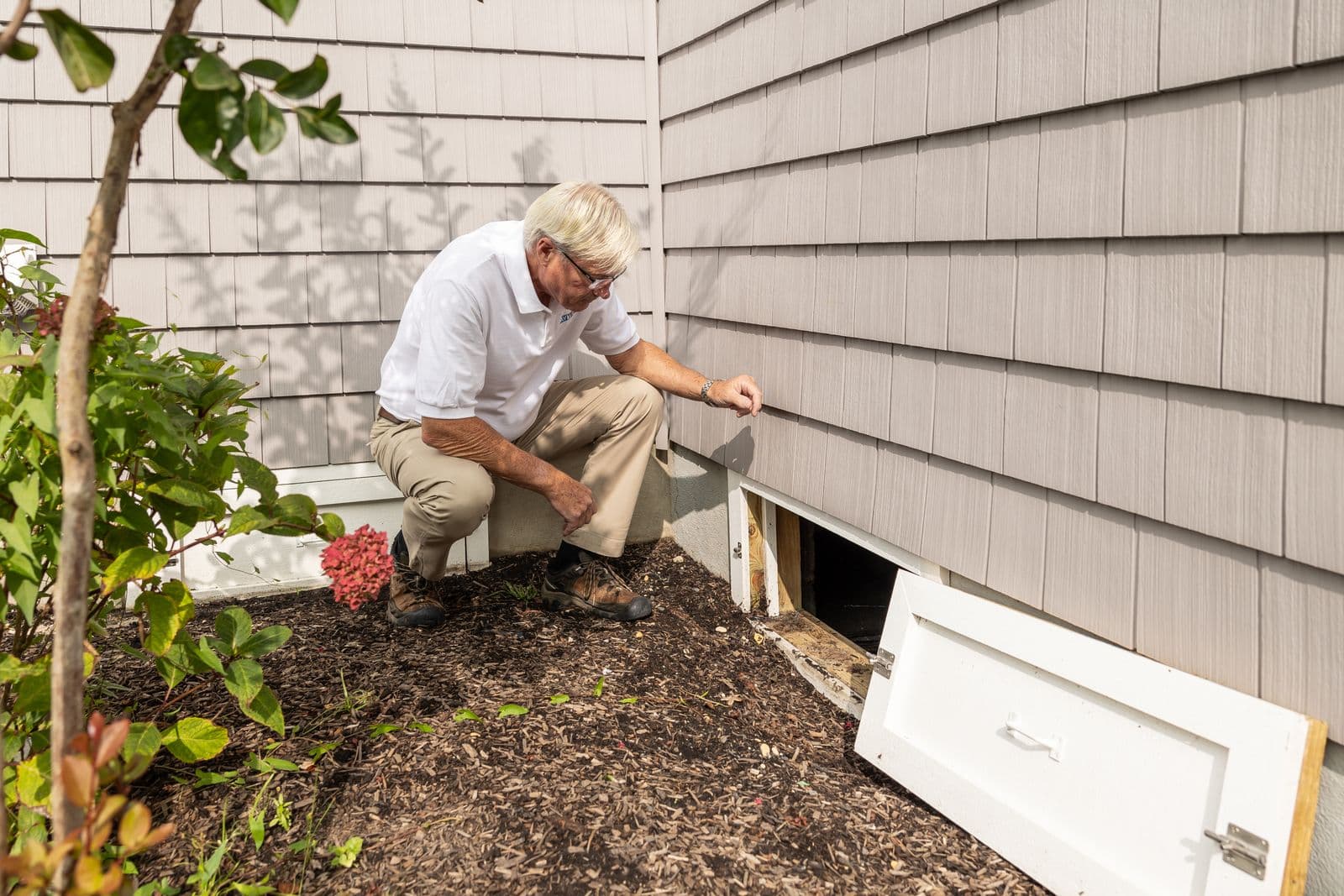
There is nothing to draw through in a crawl space, so the installer lays and seals a heavy membrane across the soil and up the walls, then depressurises beneath it. That is real added labor and material — usually $500–$1,500 on top.
The consolation is genuine: that membrane is the same intervention that stops ground moisture evaporating into your floor joists. If you were already weighing up a vapour barrier or encapsulation, doing both at once is markedly cheaper than doing them separately.
4. Where the pipe has to run
Routing pipe up an exterior wall is cheap. Concealing it through closets, a finished basement or a garage to keep it out of sight costs more in labor and drywall repair. Some homeowners pay $500–$1,000 purely for the pipe to be invisible, which is a legitimate choice as long as you know that is what you are buying.
5. Your market
Labour rates move this by 30% or more between rural and metro markets, the same as any trade.
The Ongoing Costs Nobody Itemises
| Cost | Amount | Notes |
|---|---|---|
| Electricity | $60–$180/year | Fan runs 24/7; roughly 876 kWh/year on average |
| Heating and cooling penalty | Modest, climate dependent | The system exhausts conditioned air from under the house |
| Fan replacement | $500–$1,100 every 5–10 years | The only wear part in the system |
| Retesting | $15–$40 per test, every 2 years | EPA recommendation regardless of gauge reading |
Over fifteen years that is realistically $1,500–$3,500 on top of installation. Not a reason to skip mitigation at elevated levels — but a reason to size the fan correctly, because an oversized fan costs more to run every single day for a decade.
Is It Worth It?
The decision follows the number, and EPA's thresholds are clear:
- At or above 4 pCi/L — fix it. This is the EPA action level.
- 2 to 4 pCi/L — consider fixing. There is no level at which radon is known to be harmless.
- Below 2 pCi/L — no action generally recommended; retest in a couple of years.
Radon is the second leading cause of lung cancer in the United States after smoking. Against that, a one-time $1,200–$1,500 to move a home from 8 pCi/L to under 2 is one of the better-value health interventions available to a homeowner.
Below 2 pCi/L the case largely disappears, and a contractor pushing mitigation on a 1.4 pCi/L result is selling, not advising.
What Insurance and the Market Cover
Homeowners insurance: nothing. Radon mitigation is an improvement, not sudden accidental damage. No standard policy contributes.

Property transactions: frequently. When a transaction test comes back above 4 pCi/L, buyers routinely ask the seller to install a system or credit the cost, and sellers commonly agree rather than lose the sale. If you are buying, this is a legitimate negotiating point. If you are selling a home in a Zone 1 county, testing early and mitigating on your own schedule is usually cheaper than doing it under deadline pressure.
State programmes: sometimes. A number of state radon offices run subsidised test kits, and some offer mitigation assistance or rebates. Check your state radon programme before paying full price.
Choosing an Installer
- Certification. NRPP or NRSB, plus whatever your state requires. This is what ties the installer to the EPA design standards everything above assumes.
- Diagnostics before design. Ask whether they take pressure-field measurements before deciding on suction points. The answer tells you a lot.
- Discharge location in writing. Above the roofline, away from windows and air intakes. A discharge that terminates at ground level or under an eave feeds the gas back into the house.
- Manometer fitted. Non-negotiable. It is how you know the system is running.
- Post-installation retest included. The gauge proves airflow. Only a retest proves the radon level dropped.
- Guaranteed result. Many reputable installers will warrant that they will get you below 4 pCi/L, and return to add suction points at their cost if the first attempt does not. Ask for that in writing.
Reading to confirm what you already suspect?
Confirm it in two minutes instead — the pro on this line answers questions about YOUR situation all day: what it is, what it should cost, whether you even need service. If you want, they'll set the appointment on the same call.
Toll-free · no obligation · asking costs nothing
Frequently Asked Questions
How much does a radon mitigation system cost?
Expect $800–$2,500 installed, with the national average around $1,200–$1,500. That covers a standard active sub-slab depressurisation system: a suction point cut through the slab, sealed pipe routed to above the roofline, an inline fan, a manometer, and a post-installation retest.
Homes that need more than one suction point, have a crawl space requiring a sealed membrane, or need pipe routed through finished interior space run $2,500–$4,000. Anything quoted under about $700 is worth questioning — it usually means a passive system with no fan, which reduces radon far less reliably.
Why is radon mitigation more expensive in a crawl space?
Because there is no slab to draw through. In a basement or slab-on-grade home the contractor cores a hole and depressurises the gravel beneath, which is straightforward. A crawl space has exposed soil, so the installer must first lay and seal a heavy membrane across the entire floor and up the walls, then draw suction from beneath it.
That is materially more labor and material, and it typically adds $500–$1,500. The upside is that the membrane also solves the ground-moisture problem that causes joist mold, so the work often does double duty.
What does it cost to run a radon mitigation system?
The fan runs continuously, 24 hours a day, and uses roughly 876 kWh a year on average. That works out to about $5–$15 a month, or $60–$180 a year, depending on fan size and your electricity rate.
There is a second, less visible cost: the system exhausts conditioned air from beneath the house, and in cold or very hot climates that adds a modest heating and cooling penalty. Neither number is large, but over a fifteen-year life the running costs can approach or exceed the original installation price.
How long does a radon mitigation system last?
The pipework, sealing and roof penetration typically last the life of the house. The fan is the wear item: most last 5–10 years, carry a 5-year manufacturer warranty, and a well-sized fan running continuously at low load can exceed 20 years.
Budget $500–$1,100 for a fan replacement including labor when it comes. The system also needs periodic verification — the manometer on the pipe should always show a pressure difference, and EPA recommends retesting radon levels every two years regardless of what the gauge says.
Is radon mitigation worth the cost?
At elevated levels, yes, and the arithmetic is unusually clear. EPA sets the action level at 4 pCi/L and suggests considering action between 2 and 4. A properly designed active system typically brings levels below 2 pCi/L.
Against a one-time $1,200–$1,500 and modest running costs, that is a direct reduction in long-term lung cancer risk, which is why radon is the second leading cause of lung cancer in the United States after smoking. Below 2 pCi/L the case is much weaker and testing again in a couple of years is the reasonable response.
Does homeowners insurance cover radon mitigation?
NoRadon mitigation is a home improvement, not sudden accidental damage, so no standard homeowners policy covers it.
Where the cost sometimes shifts is in a property sale — when a test during the transaction comes back above 4 pCi/L, buyers routinely ask the seller to install a system or credit the cost, and many sellers agree rather than lose the deal. Some states and utilities also run radon assistance or rebate programmes, so it is worth checking your state radon office before paying in full.
Who do I call right now for water damage?
Call (888) 840-6512. The line is answered 24 hours a day, seven days a week, and connects you with an IICRC-certified water damage restoration company that serves your area. Describe what you can see — where the water is coming from, how long it has been there, and whether it smells — the more specific you are, the faster the right company is on the line.
If the source is a pipe or an appliance, shut the main water valve first. Have four things ready and the call goes quickly: the address, when the water started, what is wet now, and whether you have filed an insurance claim.
Still not sure which of these is your situation? (888) 840-6512 · toll-free · answered 24/7
Sources
- EPA — A Citizen's Guide to Radon
- EPA — Map of Radon Zones
- EPA — Consumer's Guide to Radon Reduction
- Minnesota Dept. of Health — Calculating Energy Costs for Mitigation Systems
- HomeGuide — Radon Mitigation Cost
Methodology: How we source and verify data · Report an error
Disclaimer: HearthDry is an independent educational resource. This article is for informational purposes only and does not constitute professional, legal, or insurance advice. Consult licensed professionals before making decisions about your property or insurance claims.
Professional Equipment
If the Radon System Is Going in a Crawl Space
The sealed membrane a radon installer lays is the same intervention that stops ground moisture reaching your joists. Doing both at once costs far less than doing them separately.
Affiliate link — HearthDry earns a commission from Sylvane via CJ at no extra cost to you
Free 2-day shipping
Amazon Prime members pay no shipping on restoration equipment
Dehumidifiers, air movers, and moisture meters qualify for free Prime delivery — bulk items that otherwise cost $15–$40 to ship.
Affiliate link — HearthDry earns a bounty if you sign up; costs you nothing extra.
Equipment
What each machine actually does
Removes the moisture the structure is still giving off — the machine that decides how long drying takes
See the picks →Moves air across wet surfaces so the dehumidifier has something to take out of the air
See the picks →Finds water behind walls and under floors, and tells you when a material is actually dry
See the picks →Alerts you the moment a leak starts — the cheapest thing on this list and the only preventive one
See the picks →Those pages carry affiliate links. As an Amazon Associate, HearthDry earns from qualifying purchases; it costs you nothing extra.
Our Amazon storefront →Advertisement
