Sump Pump vs Sewage Ejector Pump (2026) — What Each One Moves, and the Best Ejector Pumps to Buy

Sump Pump vs Sewage Ejector Pump (2026)

What Each One Moves, and the Best Ejector Pumps to Buy

5 picks compared · prices, ratings and stock checked October 11, 2026

Our Top Pick

For a basement bathroom, the Superior Pump 93015-U: a cast iron 1/2 HP sewage pump that states the 2-inch solids rating the job needs. If there is no basin yet, the Superior Pump 93020 system adds the sealed basin, bolted cover and check valve.

4.6 on Amazon · 231 ratings

Quick answer

A sump pump moves groundwater out of an open pit, while a sewage ejector pump lifts waste from a below-grade toilet, shower or laundry up to the sewer line from a sealed, vented basin, and it has to pass solids, commonly 2 inches across. They are not interchangeable. For the ejector job, the Superior Pump 93015-U is the pick, rated 4.6 stars across 231 Amazon ratings, with a stated 2-inch solids rating, a 2-inch discharge and a tethered float switch. Installing an ejector is plumber work and usually needs a permit.

Our Picks at a Glance

Every pick below is currently stocked — ratings and stock read from Amazon on 11 October 2026.

How this page was made: we compare the current Amazon listings, the makers' published specs and what verified buyers report, then rank by fit for the job. Ratings, review counts and stock are read from Amazon and dated. We earn a commission on purchases through our links; it does not change the order. Reviewed by Marcus Reed, IICRC-certified Water Restoration Technician.

Full Reviews

Each pick in detail: what the listing states, what buyers report, and where it falls short.

#1
Best Overall

Check price

on Amazon ↗

Listing verified 13 Oct 2026

Superior Pump 93015-U Cast Iron Sewage Pump (1/2 HP, 2-Inch Solids, Tethered Float)See it on Amazon ↗

Quick Verdict

A cast iron 1/2 HP sewage pump with stated 2-inch solids handling and a tethered float, the specs a basement bathroom needs.

Key Specs

Motor

1/2 HP

Solids handling (stated)

2-inch spherical solids

Discharge

2 inch

Switch

Tethered float switch with piggyback plug

Impeller

Non-clogging vortex

Construction

Cast iron

Pros

  • States the two numbers an ejector pump is judged on: 2-inch solids and a 2-inch discharge
  • Cast iron construction, the usual choice for a pump that lives submerged in a sewage basin
  • A vortex impeller is recessed out of the flow path, so solids pass with less contact with the vanes
  • The piggyback plug lets you run the pump manually to test it without opening the basin

Cons

  • The listing does not state flow or maximum lift, so get the pump curve before relying on it for a long or high discharge run
  • The title mentions a basin kit while the bullets describe only the pump; check what ships before planning the install
  • Stock was listed as limited when checked

Suited to

Replacing or installing the pump in a basement bathroom basin, where a 2-inch solids rating is the requirement

Our take

This ranks first because it pairs one of the strongest buyer records among sewage pumps with a listing that states what the job requires. A pump serving a toilet has to pass solids, and 2 inches is the common residential figure; this one states 2-inch spherical solids and a 2-inch discharge. The tethered float swings through a wide arc, so each cycle empties a good share of the basin, which suits a basin that fills in surges every time a toilet is flushed. What the listing leaves out is the flow at your lift. Measure the vertical distance from the basin to where the discharge pipe meets the sewer line, and check it against Superior's published curve.

Check today's price on Amazon →

Affiliate link — commission at no extra cost to you

Compare elsewhere

These open a search for this model. We quote prices only where we can verify them — Amazon, Sylvane and eBay.

#2
Best Motor Build

Check price

on Amazon ↗

Listing verified 13 Oct 2026

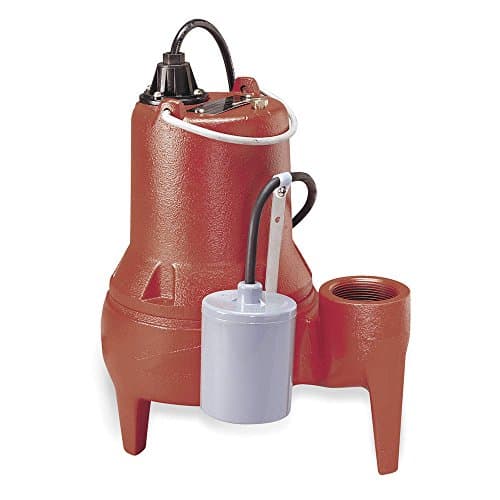
Liberty Pumps LE51A Sewage Pump (1/2 HP, 2-Inch Discharge, Cast Iron)See it on Amazon ↗

Quick Verdict

The best-described motor here, oil-filled with ball bearings and a stainless rotor shaft; confirm the solids rating on the spec sheet.

Key Specs

Motor

1/2 HP, oil-filled, thermally protected

Discharge

2 inch

Bearings

Permanently lubricated ball bearings

Construction

Heavy cast iron; stainless steel fasteners and rotor shaft

Cord

Quick-connect, 10 ft

Operation

Automatic (switch type not stated on the listing)

Pros

  • An oil-filled, thermally protected motor: the oil draws heat away from the windings and the protector cuts power before the motor overheats
  • Permanently lubricated ball bearings and a stainless steel rotor shaft, the parts that wear in a pump that starts many times a day
  • Heavy cast iron body held together with stainless steel fasteners
  • A quick-connect 10 ft power cord

Cons

  • The listing does not state the solids size or the switch type, so confirm both on Liberty's spec sheet before buying
  • No flow or lift figures are given
  • Limited stock at the time of checking

Suited to

A buyer who wants the most fully described motor build and will confirm the solids rating against the spec sheet

Our take

On buyer evidence this is level with the Superior 93015-U, and its listing describes the motor more thoroughly than any other here: oil-filled, thermally protected, with permanently lubricated ball bearings and a stainless steel rotor shaft. Those details decide how long a sewage pump lasts, because it starts and stops several times a day for years. It ranks second only because the listing skips the two specifications this page is about, the solids it passes and the type of float switch. It is sold as an automatic sewage pump with a 2-inch discharge; check Liberty's published data for the solids figure rather than assuming it.

Check today's price on Amazon →

Affiliate link — commission at no extra cost to you

#3
Best Complete System

Check price

on Amazon ↗

Listing verified 13 Oct 2026

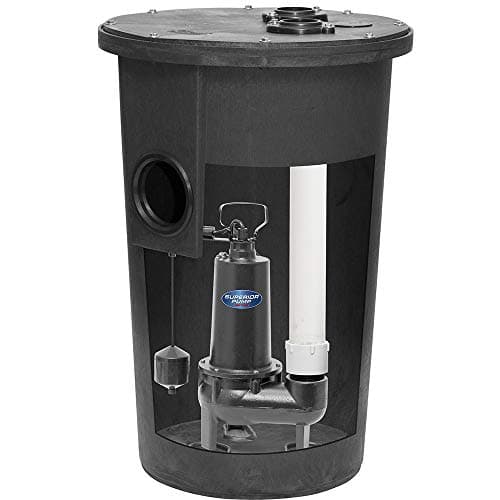
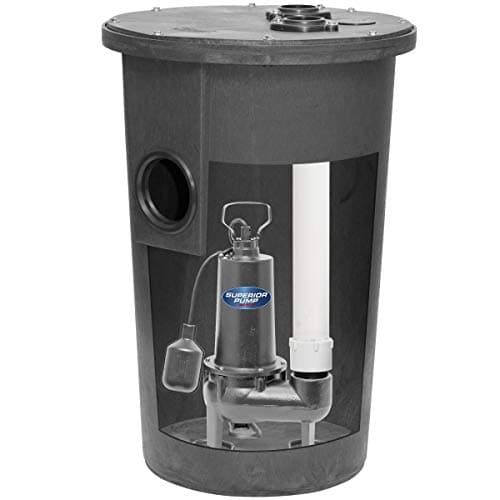
Superior Pump 93020 Sewage Pump System (1/2 HP, 30-Gallon Sealed Basin, Check Valve)See it on Amazon ↗

Quick Verdict

Pump, sealed 30-gallon basin, bolted cover and check valve in one listing, with a stated 4,800 GPH and 25 ft lift.

Key Specs

Pump

1/2 HP cast iron, 2 in. discharge, 2 in. solids handling, non-clogging vortex impeller

Flow and lift (stated)

Up to 4,800 GPH; up to 25 vertical ft

Switch

Tethered float in the bullets; the title says vertical float

Basin

18 x 30 in., 30 gallon structural foam, built-in torque stops

Inlet

4 in. rubber inlet hub for DWV schedule 40/80 pipe

Cover

8-bolt structural foam cover, airtight reusable PVC seal, 2 in. discharge and vent connections

Pros

  • Everything a new basement bathroom needs in one box: pump, 30-gallon basin, sealed cover and check valve
  • A bolted, airtight cover with a vent connection, the gas-tight setup most plumbing codes call for on a sewage basin
  • One of only two sewage listings here that states both flow and lift, up to 4,800 GPH and 25 vertical feet
  • States 2-inch solids handling through a 2-inch discharge

Cons

  • The title says vertical float switch but the bullets say tethered; confirm which ships, because a tethered float needs more room to swing in the basin
  • A shorter buyer record than the two pumps ranked above it
  • Setting a new basin still means breaking the slab and tying into drain lines, which is plumber work

Suited to

A new basement bathroom or laundry with no basin yet, where you want the parts matched to each other

Our take

If you are adding a bathroom below the sewer line rather than replacing a pump, the basin, cover, vent and check valve matter as much as the pump itself. This listing includes all of them: an 18 by 30 inch, 30-gallon basin, a 4-inch inlet hub for standard drain pipe, an 8-bolt cover with an airtight seal, discharge and vent connections, and a check valve. The sealed cover and vent are what keep sewer gas out of the basement, and they are the part most often skipped when someone improvises with an open sump pit. The one inconsistency to clear up before ordering is the float switch, listed as vertical in the title and tethered in the bullets.

Check today's price on Amazon →

Affiliate link — commission at no extra cost to you

#4
Highest Stated Lift

Check price

on Amazon ↗

Listing verified 13 Oct 2026

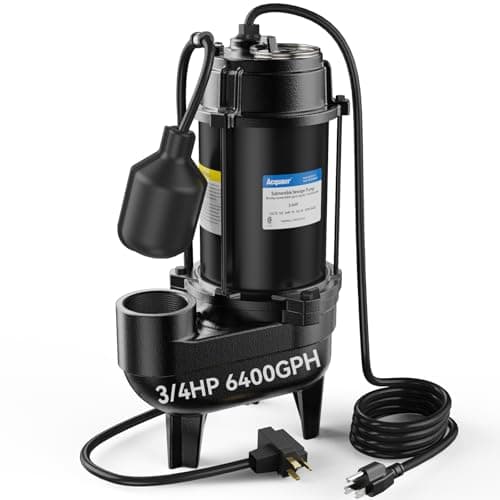
Acquaer 3/4 HP Cast Iron Sewage Pump (6,400 GPH, 29 Ft Lift, 2-Inch Solids)See it on Amazon ↗

Quick Verdict

The most lift stated here, 29 ft, with 2-inch solids and dry-run protection, for long or high discharge runs.

Key Specs

Motor

3/4 HP, oil-filled split capacitor

Flow and lift (stated)

Up to 6,400 GPH; up to 29 ft vertical

Solids handling (stated)

2-inch diameter

Discharge

2 in. NPT

Switch

Adjustable mechanical float; 10 ft cords with piggyback plug

Protection

Thermal overload; shuts off when running dry

Pros

  • States the highest lift on this page, up to 29 feet, for a basin well below the sewer connection or a long discharge run
  • Both 2-inch solids handling and a 2-inch NPT discharge are stated
  • Thermal overload protection plus a dry-run shut-off
  • An adjustable float, so the on and off levels can be set to suit the basin

Cons

  • A newer brand with a shorter track record than Liberty or Superior
  • At 3/4 HP it is more pump than a short lift needs, and oversizing shortens each pumping cycle
  • The listing rules out septic tank use

Suited to

A basin that sits well below the sewer connection or feeds a long discharge run, where lift is the limit

Our take

Lift is the specification that rules a pump in or out when the basin sits far below the sewer connection, and this listing gives the highest figure here, up to 29 feet vertically, from an oil-filled 3/4 HP motor. It also states 2-inch solids, a 2-inch NPT discharge, thermal protection and a dry-run shut-off. Read the 6,400 GPH the way every pump flow figure should be read: as output near zero lift that falls as the height rises. Where the sewer line is only a few feet above the basin, the extra horsepower buys little. The brand's history is shorter than Liberty's or Superior's, and the two-year warranty is the term to weigh.

Check today's price on Amazon →

Affiliate link — commission at no extra cost to you

#5
Best Sump Pump (Groundwater Only)

Check price

on Amazon ↗

Listing verified 13 Oct 2026

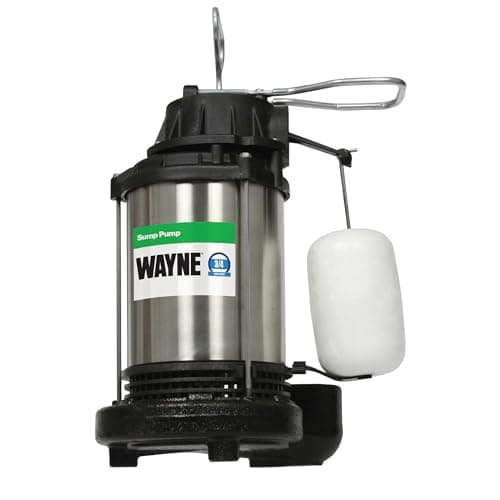
Wayne CDU980E 3/4 HP Submersible Sump Pump (5,490 GPH, Vertical Float)See it on Amazon ↗

Best Sump Pump (Groundwater Only)

Wayne CDU980E 3/4 HP Submersible Sump Pump (5,490 GPH, Vertical Float)

4.6(3,483 reviews)

Quick Verdict

A well-built 3/4 HP sump pump for groundwater, included for contrast: right for a sump pit, wrong for sewage.

Key Specs

Use

Groundwater in a sump pit; not a sewage pump

Motor

3/4 HP

Flow (stated)

Up to 5,490 GPH

Switch

Integrated vertical float

Intake

Top suction, anti-airlock; no weep hole needed

Construction

Cast iron and stainless steel

Pros

  • Built for the other half of this comparison: moving groundwater out of an open sump pit during heavy storms
  • Top suction intake stays clear of silt at the bottom of the pit and avoids air lock without a weep hole
  • A vertical float switch that fits narrow pits
  • A five-year warranty, the longest stated on this page

Cons

  • Not for sewage: no solids rating is stated, and it is meant for an open pit, not a sealed basin
  • The listing gives no maximum lift

Suited to

The separate sump pit that keeps groundwater out of the basement, and a reference point for the comparison

Our take

This is the sump pump half of the comparison, chosen because it carries the largest buyer record of any pump here and a clear statement of what a sump pump is for: removing groundwater from a pit during storms. Everything about it suits that job and not the other one. It draws water in from the top so pit silt stays put, uses a vertical float made for a narrow open pit, and states no solids rating at all. Put it in a sealed sewage basin and it would face waste it is not built to pass. If your basement has both a sump pit and a bathroom below the sewer line, you need both pumps.

Check today's price on Amazon →

Affiliate link — commission at no extra cost to you

Buyer's Guide

What to know before you buy.

Three Pumps, Three Kinds of Water

A sump pump sits in an open pit in the basement floor and removes groundwater that collects there, usually through drain tile around the foundation. That water is relatively clean, and it is discharged outside, away from the house; many cities prohibit sending it into the sanitary sewer. A sewage ejector pump serves fixtures below the sewer line, such as a basement toilet, shower or washer, and lifts their waste up to the main drain. It must pass solids, commonly 2 inches across. An effluent pump sits between the two: it handles gray water, from a laundry or a septic system's treated effluent, with small solids, typically up to about 3/4 inch. A grinder pump goes further than an ejector by cutting solids up before pumping, which suits long runs and pressurized sewer mains.

Why Swapping Them Fails

A sump pump in a sewage basin will clog. Its impeller and intake are built for water with grit in it, not toilet waste, and a wad of paper or a wipe can stop it, which sends sewage back up into the basement fixtures. It is also against plumbing code in most places, because a sewage basin must be a sealed, gas-tight tank with a vent, and the pump in it must be rated for sewage. The reverse mistake is less dangerous but still wrong. A sewage pump can move clear groundwater, but it is a costly way to do it, and a sump pit should never be tied into the sewer line without local approval. Each pit gets its own pump.

Solids and Discharge Size: the 2-Inch Rule

For a basin that takes a toilet, the specification that matters most is the size of solid the pump can pass. Residential sewage ejector pumps commonly pass 2-inch spherical solids through a 2-inch discharge, and local plumbing code sets the minimum where you live. Three listings on this page state 2-inch solids: the Superior 93015-U, the Superior 93020 system and the Acquaer. Liberty's listing gives a 2-inch discharge but not a solids size. Do not mistake a discharge size for a solids rating; the outlet is the pipe, not what the impeller can pass. Pumps sold as sewage and effluent pumps sometimes cover both uses, so check the stated solids figure, not the product category, before buying for a toilet.

Horsepower, Flow and Lift

Horsepower tells you little on its own. What matters is how much the pump can move at your lift: the vertical distance from the basin to where the discharge pipe enters the sewer line, plus an allowance for the horizontal run and fittings. Every flow figure is highest near zero lift and falls as the height rises, until the pump reaches its maximum and moves nothing. Only two sewage listings here state lift, the Superior 93020 at up to 25 feet and the Acquaer at up to 29 feet. For the others, check the manufacturer's pump curve. A 1/2 HP sewage pump is the most common size for a single basement bathroom; larger pumps are for longer or higher runs, or several fixtures.

The Basin, Vent, Check Valve and Alarm

The pump is one part of a system. The basin must be sealed with a gas-tight cover, usually bolted, and vented to the outside through the plumbing vent system, so sewer gas does not escape into the basement. A check valve on the discharge line stops the pumped waste from running back into the basin every time the pump shuts off. A shutoff valve above it lets the pump be removed for service without draining the line. A high-water alarm is an inexpensive safeguard that sounds before the basin overflows if the pump or float fails. The Superior 93020 includes the basin, sealed cover, discharge and vent connections and a check valve; the other pumps here need those parts bought separately.

Installation and Permits

Replacing a failed sewage pump with a like-for-like model in an existing, code-compliant basin is a job some handy homeowners do, with the power off, the basin pumped down, and gloves and eye protection on. Installing a new ejector system is different. It means breaking the slab for the basin, tying into the drain, vent and sewer lines, and providing an electrical circuit for the pump, and in most jurisdictions that work needs a plumbing permit and an inspection. A licensed plumber also knows the local rules on basin size, venting and pump rating. A sump pump install is simpler, but its discharge still has to go where the city allows.

Frequently Asked Questions

What is the difference between a sump pump and a sewage ejector pump?

A sump pump removes groundwater from an open pit in the basement floor and sends it outside. A sewage ejector pump sits in a sealed, vented basin and lifts waste from a basement toilet, shower, sink or washer up to the sewer line, passing solids commonly up to 2 inches.

The sump pump protects against seepage; the ejector makes below-grade plumbing possible. They are built differently and are not interchangeable.

Can I use a sump pump as a sewage pump?

NoA sump pump is not designed to pass toilet solids and will clog, backing sewage up into the basement fixtures.

Plumbing codes also require a sewage basin to be sealed and vented, with a pump rated for sewage, so a sump pump in that role fails inspection. A sewage pump can technically move clear water, but it belongs in its own sealed basin, not the sump pit.

Sump pump vs effluent pump: what is the difference?

An effluent pump moves gray water, from a laundry tray or the treated liquid in a septic system, and passes small solids, typically up to about 3/4 inch. A sump pump moves groundwater with little in it beyond grit.

Neither is built for toilet waste, which needs a sewage ejector pump rated for 2-inch solids. Some pumps are sold for both sewage and effluent; the stated solids figure tells you which job they suit.

What size sewage pump do I need?

For a single basement bathroom, a 1/2 HP pump with 2-inch solids handling is the usual choice, and three of the four sewage pumps here are 1/2 HP.

Size it on lift rather than horsepower: measure from the basin to where the discharge meets the sewer line, add an allowance for the horizontal run, and check the pump's curve at that height. Several fixtures or a long, high run may call for more.

Do I need a plumber to install a sewage ejector pump?

For a new installation, in practice yes. It involves cutting the slab, setting a sealed basin, tying into the drain, vent and sewer lines and wiring the pump, and most jurisdictions require a permit and inspection.

Swapping a failed pump for an equivalent one in an existing basin is simpler, but it means working in sewage, so wear protective gear and treat the area as contaminated afterward.

Sump pump vs grinder pump: which do I need?

They do different jobs. A grinder pump cuts sewage solids into a slurry so they can be pushed through a small pipe over a long distance or into a pressurized sewer main.

Most basement bathrooms that drain to a nearby gravity sewer line use a standard sewage ejector instead, and a sump pump handles only groundwater. Ask a plumber if the run to the sewer is long or the city sewer is pressurized.

Who do I call right now for water damage?

Call (888) 840-6512. The line is answered 24 hours a day, seven days a week, and connects you with an IICRC-certified water damage restoration company that serves your area. A recorded menu picks up first: choose water damage or mold, key in your 5-digit ZIP code, and hold through the short silence while the call is passed to the company.

Describe what you can see — where the water is coming from, how long it has been there, and whether it smells — the more specific you are, the faster the right company is on the line. If the source is a pipe or an appliance, shut the main water valve first. Have four things ready and the call goes quickly: the address, when the water started, what is wet now, and whether you have filed an insurance claim.

Still not sure which of these is your situation? (888) 840-6512 · toll-free · answered 24/7

Sources

  1. IICRC S500 — Standard for Professional Water Damage Restoration

Methodology: How we source and verify data · Report an error

How we chose these picks

  • Every pick is a current listing. Stock, star ratings and rating counts are read from Amazon by script and carry the date they were read.
  • Nothing under 4.0 stars makes the list, and the top pick needs a large rating count, so one good week of reviews cannot put it there.
  • Specs are quoted from the listing or the maker, with the test condition behind the number where there is one, and sized against the job rather than the room on the box.
  • We do not run lab or field tests. Where a spec matters, we say what it is measured under and what it cannot tell you.

Free 2-day shipping

Amazon Prime members pay no shipping on restoration equipment

Dehumidifiers, air movers, and moisture meters qualify for free Prime delivery — bulk items that otherwise cost $15–$40 to ship.

Try Prime free →

Affiliate link — HearthDry earns a bounty if you sign up; costs you nothing extra.

Also Worth Comparing

Best Sump Pumps for Basements in 2026 — Sized by Lift, Not Horsepower

The right sump pump prevents basement flooding before it starts — and handles it fast when it happens. These are the 3 best sump pumps for basement flooding in 2026, tested and ranked by an IICRC-certified water damage restoration technician.

Read the comparison

Best Sump Pump Battery Backup Systems in 2026 — Pro Picks & Real Costs

The power goes out during the storm that fills your basement — that is the whole reason this category exists. Here is what each system actually costs once you add the battery nobody includes.

Read the comparison

Best Submersible Pump for Water Removal 2026 — Emergency Flood Picks

When a basement floods, a submersible utility pump gets standing water out fast — before a sump pump can handle the residual moisture. These are the 3 best submersible pumps for water removal in 2026.

Read the comparison

Best PPE for Sewage Cleanup in 2026 — Category 3 Safety Gear

Sewage water (Category 3) contains E. coli, hepatitis A, Norovirus, and dozens of other pathogens. The right PPE is not optional — it's the difference between a cleanup job and a biohazard exposure.

Read the comparison

Best Sump Pump Check Valves in 2026 — Quiet Spring Valves Matched to Your Pipe Size, Plus the Lid and Backup a Valve Cannot Replace

A sump pump check valve keeps the water in the discharge pipe from falling back into the pit each time the pump stops, so the pump does not move the same water twice. These picks are matched to the three common discharge pipe sizes and compared on what each listing states about quiet closing, pressure rating and the gap it needs in the pipe.

Read the comparison

Best Backwater Valves in 2026 — In-Line Sewer Valves, Floor-Drain Floats, and What the Install Really Takes

A backwater valve is a one-way flap in your drain line that swings shut when the city sewer backs up toward your house. These picks are in-line valves and a floor-drain float compared on pipe size, access and what each listing actually states, with the plumbing-code test, the install, and the rule for the hours the valve is closed.

Read the comparison

Best Sewage Ejector Pumps in 2026 — Pumps and Basin Kits for a Basement Bathroom Below the Sewer Line

A toilet or shower below your sewer line needs a sealed basin and a pump that can lift 2-inch solids up to the house drain. These picks compare replacement pumps and complete basin kits on what each listing states, with the sizing arithmetic, the vent and check valve, and the cases where an ejector is the wrong fix.

Read the comparison