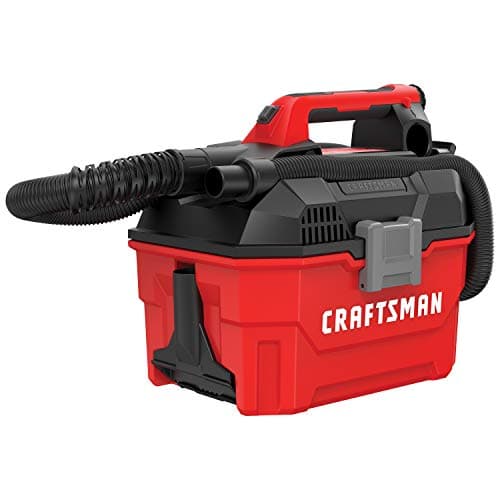
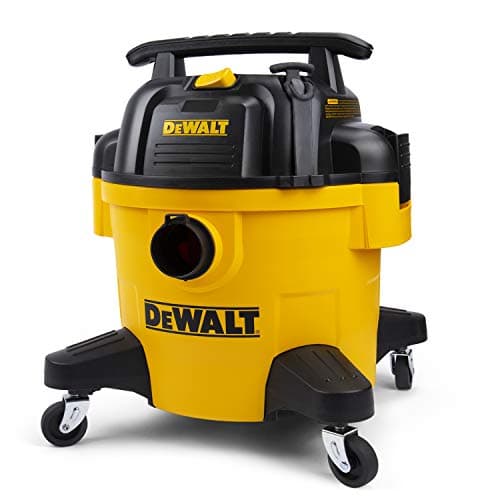
Best for: Spills, a garage floor, workshop dust and the occasional wet basement corner, in a vac you can still carry when it is full
- Tank:
- 6 gal poly drum
- Water weight at capacity (calculated):
- About 50 lb
Listing verified 13 Oct 2026

Sized by the Weight You Can Lift
5 picks compared · prices, ratings and stock checked October 11, 2026
Our Top Pick
For most homes and garages, the DEWALT DXV06P 6 gallon: one of the strongest buyer records in the category, a 10 ft cord and a blower port in a drum you can still lift full. For big garage jobs, the CRAFTSMAN 16 gallon with its oversized drain; for the car and quick spills, the CRAFTSMAN 2.5 gallon.
4.7 on Amazon · 5,734 ratings
Quick answer
The best wet/dry vac for most homes is a corded model of 5 to 6 gallons, and the DEWALT DXV06P is the pick here: a 6-gallon poly drum with a 4 HP motor, a 10 ft cord and a blower port, rated 4.7 stars across 5,734 Amazon ratings. Full of water it weighs about 50 lb, close to the limit most people can tip into a drain. Choose the 16-gallon CRAFTSMAN only if you want its drain port and garage-size capacity, and for any water pickup, fit a foam sleeve in place of a paper filter.
Every pick below is currently stocked — ratings and stock read from Amazon on 11 October 2026.
Best for: Spills, a garage floor, workshop dust and the occasional wet basement corner, in a vac you can still carry when it is full
Listing verified 13 Oct 2026
Best for: Garages, workshops, yard debris and basements that take on water, where the drain port does the emptying
Listing verified 13 Oct 2026
Best for: Cars, kitchen spills, a leaking appliance and small cleanups where a big drum would stay in the garage
Listing verified 13 Oct 2026
Best for: Anyone who expects to vacuum water often and wants the right filter in the box
Listing verified 13 Oct 2026
Best for: Car interiors, sheds and spot spills away from an outlet, for anyone already on the CRAFTSMAN V20 battery platform
Listing verified 13 Oct 2026
How this page was made: we compare the current Amazon listings, the makers' published specs and what verified buyers report, then rank by fit for the job. Ratings, review counts and stock are read from Amazon and dated. We earn a commission on purchases through our links; it does not change the order. Reviewed by Marcus Reed, IICRC-certified Water Restoration Technician.
Full Reviews
Each pick in detail: what the listing states, what buyers report, and where it falls short.
Check price
on Amazon ↗
Listing verified 13 Oct 2026
See it on Amazon ↗Quick Verdict
The 6-gallon vac most homes should buy: a liftable drum, a 10 ft cord and a blower port — the listing is thin on suction and filter details.
Key Specs
Tank
6 gal poly drum
Water weight at capacity (calculated)
About 50 lb
Motor (stated)
4 HP; airflow and sealed suction not stated on the listing
Cord
10 ft, with cord wrap
Blower
Built-in blower port
Mobility
Rubberized swivel casters
Pros
Cons
Suited to
Spills, a garage floor, workshop dust and the occasional wet basement corner, in a vac you can still carry when it is full
Our take
Six gallons is the sweet spot for a household vac, and the reason is weight. Water runs about 8.3 lb a gallon, so this drum full of water is roughly 50 lb, which most adults can still carry to a floor drain or tip into a utility sink. Bigger drums hold more than you can comfortably lift. The DEWALT pairs that size with a 10 ft cord, a blower port, rubberized casters and a long, strong buyer record. Its weakness is the listing, which says almost nothing about airflow, hose diameter or the filter in the box, and warns only that the filter must be fitted before it runs. Before the first wet job, check which filter is installed and swap any paper cartridge for a foam sleeve.
Affiliate link — commission at no extra cost to you
Compare elsewhere
These open a search for this model. We quote prices only where we can verify them — Amazon, Sylvane and eBay.
Check price
on Amazon ↗
Listing verified 13 Oct 2026
See it on Amazon ↗Best for Garage and Big Jobs
Quick Verdict
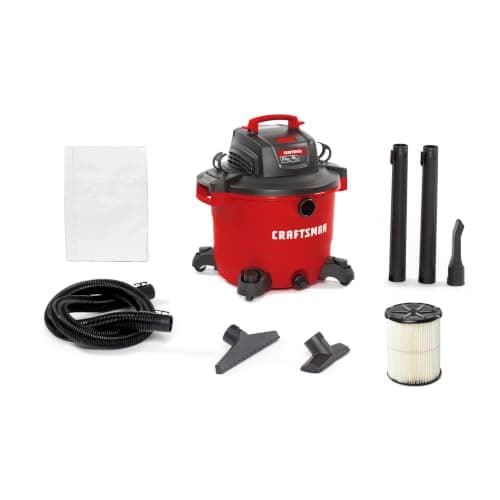
The garage and workshop vac: 16 gallons, a 2-1/2 inch hose and an oversized drain so you never lift it full.
Key Specs
Tank
16 gal
Water weight at capacity (calculated)
About 133 lb
Motor (stated)
6.5 peak HP; airflow not stated on the listing
Drain
Built-in oversized drain for emptying liquids
Hose
2-1/2 in x 7 ft POS-I-LOCK Dual-Flex, swivels at each end
Accessories
2 extension wands; utility, car and wet nozzles; Qwik Lock filter; dust collection bag
Pros
Cons
Suited to
Garages, workshops, yard debris and basements that take on water, where the drain port does the emptying
Our take
At 16 gallons the question is not whether you can lift it full, because nobody should: that much water is around 133 lb. The oversized drain is what makes a drum this size practical, letting you wheel it to a floor drain or out the garage door and let it run out. The 2-1/2 inch hose is the other reason to go big. It moves leaves, sawdust and wood chips that jam a 1-1/4 inch hose, and the Dual-Flex ends swivel to resist kinking. For a two-car garage, a workshop or a basement that takes on water every spring, this is the size to own. For a kitchen spill it is far more machine than the job needs.
Affiliate link — commission at no extra cost to you
Compare elsewhere
Check price
on Amazon ↗
Listing verified 13 Oct 2026
See it on Amazon ↗Best Small Vac for Cars and Spills
Quick Verdict
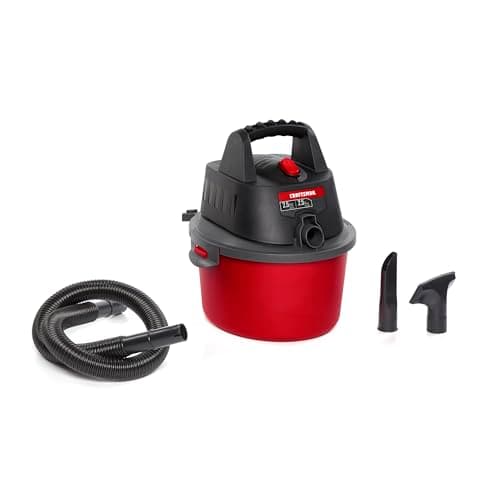
The grab-and-go vac for cars and kitchen spills: 2.5 gallons and about 21 lb full — remove the filter bag before vacuuming water.
Key Specs
Tank
2.5 gal
Water weight at capacity (calculated)
About 21 lb
Motor (stated)
2.5 peak HP; airflow not stated on the listing
Hose
1-1/4 in x 5 ft, friction fit
Accessories
Crevice tool, utility nozzle, filter bag
Blower
Converts to a blower
Pros
Cons
Suited to
Cars, kitchen spills, a leaking appliance and small cleanups where a big drum would stay in the garage
Our take
Most household messes are small: a tipped water bowl, a leaking dishwasher, crumbs under a car seat, a split bag of potting soil in the trunk. For those, a 2.5-gallon vac you can grab with one hand gets used, while a 16-gallon drum stays in the garage. This CRAFTSMAN is that grab-and-go size, with accessories cut for tight spaces and a blower mode for dusting off a workbench. Its limits come from the same compact size. The 5 ft hose is short, the 1-1/4 inch diameter clogs on chunky debris, and it ships with a filter bag. Remove the bag before vacuuming water, and check the manual for the filter it recommends for wet use.
Affiliate link — commission at no extra cost to you
Compare elsewhere
Check price
on Amazon ↗
Listing verified 13 Oct 2026
See it on Amazon ↗Foam Wet Filter Included
Quick Verdict
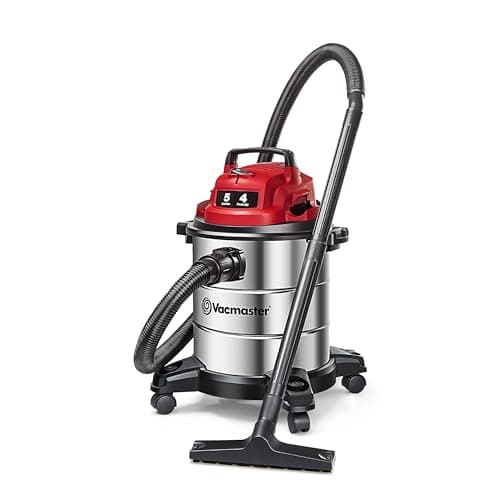
The water-ready kit: a foam wet filter in the box, suction stated as 135 air watts and a stainless tank — hose length not given.
Key Specs
Tank
5 gal stainless steel
Water weight at capacity (calculated)
About 42 lb
Suction (stated)
135 air watts
Motor (stated)
4 peak HP
Reach
16 ft of hose and power cord combined
Filters
Cartridge filter for dry pickup and foam filter for wet pickup, both included
Pros
Cons
Suited to
Anyone who expects to vacuum water often and wants the right filter in the box
Our take
Two things on this listing answer questions the others leave open. It quotes suction as 135 air watts, a measure that combines airflow and sealed suction, so it says more about pickup at the nozzle than a peak horsepower figure does. And it ships with two filters: a cartridge for dry debris and a foam filter for liquids. That is the right setup. A paper cartridge used on water soaks through, clogs and can tear, letting fine debris past it, while a foam sleeve lets air through and keeps grit out of the motor's path. The stainless tank is a durable choice. What the listing omits is the hose length on its own and whether there is a drain port.
Affiliate link — commission at no extra cost to you
Compare elsewhere
Check price
on Amazon ↗
Listing verified 13 Oct 2026
See it on Amazon ↗Quick Verdict
The cordless pick for V20 battery owners: 35 CFM, a 2-gallon tank and a 7 ft 8 in hose — battery sold separately, run time not stated.
Key Specs
Power
CRAFTSMAN V20 battery; battery and charger sold separately
Airflow (stated)
35 CFM
Tank
2 gal
Water weight at capacity (calculated)
About 17 lb
Hose
7 ft 8 in
Storage
On-board hose and accessory storage
Pros
Cons
Suited to
Car interiors, sheds and spot spills away from an outlet, for anyone already on the CRAFTSMAN V20 battery platform
Our take
A cordless vac earns its place where an outlet is out of reach: a car on the driveway, a shed, a leak at the far end of a basement. This CRAFTSMAN runs on the V20 battery platform and is sold as a bare tool, which suits people who already own V20 batteries and makes less sense for anyone who does not. It states its airflow, 35 CFM, an honest and modest figure; corded vacs of a similar size in this category list 60 to 65 CFM. The listing gives no run time, which depends on the battery you fit. Use it for spot jobs and car interiors, and keep a corded vac for anything that has to be pulled off a floor.
Affiliate link — commission at no extra cost to you
Compare elsewhere
What to know before you buy.
Gallons on a shop vac describe the drum, and the drum is what you carry to the drain. Water weighs about 8.3 lb a gallon, so a full 2-gallon tank is around 17 lb, a 6-gallon drum about 50 lb and a 16-gallon drum roughly 133 lb before the weight of the vac itself. Usable liquid capacity is usually less than the drum size, because most wet/dry vacs have a float that cuts suction before the drum is full. For most homes, 5 to 6 gallons is the practical ceiling for a vac you empty by tipping. Above that, buy only a model with a drain port, like the 16-gallon CRAFTSMAN. For cars and kitchen spills, 2 to 2.5 gallons is easier to grab, store and actually use.
Most listings lead with peak horsepower, and it is the least useful number on the box. It describes the motor's maximum output under test, not what reaches the end of the hose, and three of the four picks that quote it give no other power figure. Two other numbers matter more. Airflow, in cubic feet per minute, carries dust and light debris; sealed suction, sometimes called water lift and measured in inches, is what pulls water and heavy debris up the hose. Air watts combine the two. On this page, only the Vacmaster states suction in air watts and only the CRAFTSMAN V20 states its airflow. When a listing gives neither, judge it on hose diameter, buyer reports and the size of the job instead.
The filter decides what a wet/dry vac can safely pick up. For water, take out any pleated paper cartridge and any dust bag, and fit a foam sleeve over the filter cage. A paper cartridge used wet soaks through, clogs and can tear, and a soaked bag simply fails. The Vacmaster ships with both a cartridge and a foam wet filter; check what the others include before the first wet job, since the listings for the DEWALT and the 16-gallon CRAFTSMAN do not say. For fine dust such as drywall sanding or concrete dust, the reverse applies: use a fine-dust cartridge and a bag, or the dust passes through the vac and back into the room. Let a wet filter dry fully before going back to dust.
Three details decide how pleasant a vac is to use. A drain port near the base lets you empty water without lifting the drum; on this page, only the 16-gallon CRAFTSMAN lists one. Hose diameter decides what fits through it: a 1-1/4 inch hose suits car interiors and tight corners but clogs on wood chips and leaves, while a 2-1/2 inch hose takes garage and yard debris without jamming. Reach is the hose plus the cord. The DEWALT lists a 10 ft cord, the Vacmaster gives 16 ft of hose and cord combined, and the 2.5-gallon CRAFTSMAN has a 5 ft hose, which means moving the vac often. A longer reach keeps the drum still while you work around a car or along a basement wall.
Cordless wet/dry vacs trade power and run time for freedom from the outlet. The CRAFTSMAN V20 lists 35 CFM, roughly half the airflow that small corded vacs in this category state, and its run time depends on the battery you already own, since the vac is sold without one. That makes cordless the right choice for a specific job: a car on the driveway, a shed, a boat dock or a spill where no outlet is close. It is the wrong choice for pulling standing water off a floor, where a corded vac runs as long as you need it to. If you already own batteries for one tool platform, buy the vac that uses them; buying into a new battery system just for a vac rarely makes sense.
Water and electricity set the rules. Plug a corded vac into a GFCI-protected outlet, keep the cord and plug out of standing water, and never vacuum where an outlet, extension cord or appliance is submerged; shut off power to that area first. Once the water is up, the job is not finished. The IICRC S500 restoration standard treats extraction as the first drying step because removing water as liquid is far faster than evaporating it, but carpet, pad and drywall still hold moisture afterward, and the EPA advises drying water-damaged materials within 24 to 48 hours to prevent mold. For water deeper than an inch or two, a submersible pump moves it faster than any shop vac, and for real water damage, the dedicated water-damage vac guide goes further.
For most homes, a corded 5- to 6-gallon wet/dry vac such as the DEWALT DXV06P. It handles spills, garage sweeping, workshop dust and the odd wet corner of a basement, and it is still light enough to carry and tip out when full of water, about 50 lb.
Add a small 2- to 2.5-gallon vac or a cordless model only if you often clean cars or deal with spills far from an outlet.
Size it by the biggest job you do often and by what you can lift. A 2- to 2.5-gallon vac suits cars, kitchen spills and small cleanups. A 5- to 6-gallon vac covers most household and garage use.
A 12- to 16-gallon vac belongs in a workshop or a basement that regularly takes on water, and only with a drain port, because 16 gallons of water weighs about 133 lb. Bigger drums mean bigger storage space and a heavier lift.
A corded vac with a foam wet filter and, ideally, a drain port. The Vacmaster VOC508S ships with a foam filter for wet pickup, and the 16-gallon CRAFTSMAN has an oversized drain so you never lift a full drum.
Whichever you use, remove any paper cartridge or dust bag before the first wet job. For water deeper than an inch or two across a floor, a submersible pump clears it faster, and the vac picks up what the pump leaves behind.
Not much. Peak horsepower describes the motor's maximum output under test, not the suction or airflow at the end of the hose, and two vacs with the same peak rating can pick up very differently.
Airflow in CFM and sealed suction in inches of water lift are the useful numbers, and air watts combine them. Few listings state them; on this page the Vacmaster gives 135 air watts and the CRAFTSMAN V20 gives 35 CFM.
YesFor the right jobs, and only if the battery fits a platform you already use.
A cordless vac like the CRAFTSMAN V20 goes where an outlet does not reach, such as a car on the driveway, a shed or a far corner of a basement. It moves less air than a corded vac of similar size, 35 CFM against the 60 to 65 CFM small corded vacs list, so it suits spot cleanups rather than pulling water off a floor.
There is no single best brand; the model and its size for your job matter more. On this page DEWALT, CRAFTSMAN and Vacmaster all have strong buyer records, and the difference between them comes down to drum size, hose width, the filters in the box and whether there is a drain port.
CRAFTSMAN lists a 3-year limited warranty on both of its corded picks here, and Vacmaster is the only one that states suction in air watts.
Call (888) 840-6512. The line is answered 24 hours a day, seven days a week, and connects you with an IICRC-certified water damage restoration company that serves your area. A recorded menu picks up first: choose water damage or mold, key in your 5-digit ZIP code, and hold through the short silence while the call is passed to the company.
Describe what you can see — where the water is coming from, how long it has been there, and whether it smells — the more specific you are, the faster the right company is on the line. If the source is a pipe or an appliance, shut the main water valve first. Have four things ready and the call goes quickly: the address, when the water started, what is wet now, and whether you have filed an insurance claim.
Still not sure which of these is your situation? (888) 840-6512 · toll-free · answered 24/7
Methodology: How we source and verify data · Report an error
Free 2-day shipping
Amazon Prime members pay no shipping on restoration equipment
Dehumidifiers, air movers, and moisture meters qualify for free Prime delivery — bulk items that otherwise cost $15–$40 to ship.
Affiliate link — HearthDry earns a bounty if you sign up; costs you nothing extra.

Before you run a dehumidifier, you need to remove standing water. These are the best wet/dry vacuums for water damage — compared on capacity, suction, and filtration.
Read the comparisonWhen a basement floods, a submersible utility pump gets standing water out fast — before a sump pump can handle the residual moisture. These are the 3 best submersible pumps for water removal in 2026.
Read the comparisonNot all fans dry water damage equally: an air mover lays a fast, focused stream along the wet floor, while a box fan scatters its air across the room. Here are three picks, from a centrifugal air mover to a high-velocity floor fan and a 20-inch box fan.
Read the comparisonA water leak detector catches a leak while it is still a puddle rather than an insurance claim. These four flood sensors and water alarms range from a standalone 110 dB alarm with no Wi-Fi to a LoRa kit that sounds on the spot and texts your phone.
Read the comparisonA moisture meter tells you what your eyes can't see — wet drywall, soggy subfloor, and moisture in framing. These are the four best moisture meters for homeowners dealing with water damage.
Read the comparisonThe right drain snake depends on where the clog sits: hair near a bathroom drain, a soft clog past the trap, or a toilet, which needs a tool of its own. These picks are hair tools and 25 ft cable augers compared on reach, cable size and what each listing states, with the signs that the clog is in the sewer line and a snake is the wrong tool.
Read the comparisonA floor squeegee is the quickest way to push standing water across a garage or basement slab to a floor drain, a sump or the door, but it only moves water, it does not dry anything. These five squeegees are compared on blade width, blade material and handle from what each listing states, with the wet vac and drying steps that have to follow.
Read the comparison