
Quick answer
Wet carpet must be dry within 24–48 hours, because that is when mold establishes. The order that works is extract, then airflow, then dehumidify: pull water out with a wet/dry vacuum, aim air movers across the surface rather than down at it, and run a dehumidifier with the room closed. If the pad got wet, replace it — it holds several times its weight in water and rarely dries reliably in place. Call (888) 840-6512 to reach a certified water damage restoration company in your area; the line is answered 24/7.
Written & reviewed by Marcus ReedIICRC WRT
Reviewed August 13, 2026· Next review Feb 2027
The Race You're Actually In
Mold establishes in wet materials within 24–48 hours. Towels and open windows dry a soaked carpet in 3–5 days. That mismatch is the whole story — winning requires the professional sequence, scaled to whatever equipment you have: extract, then airflow, then dehumidify. In that order.
Step Zero: Read the Water
Clean water from a supply line or rain: proceed. Water from a washing machine drain, dishwasher, or anything with sewage involvement is Category 2–3 — the pad is a discard, usually the carpet too, and gloves-and-disinfection rules apply. Water that has already stood for 48+ hours has made the mold decision for you regardless of source. This guide is for the clean-and-fresh case.
Extraction Beats Evaporation
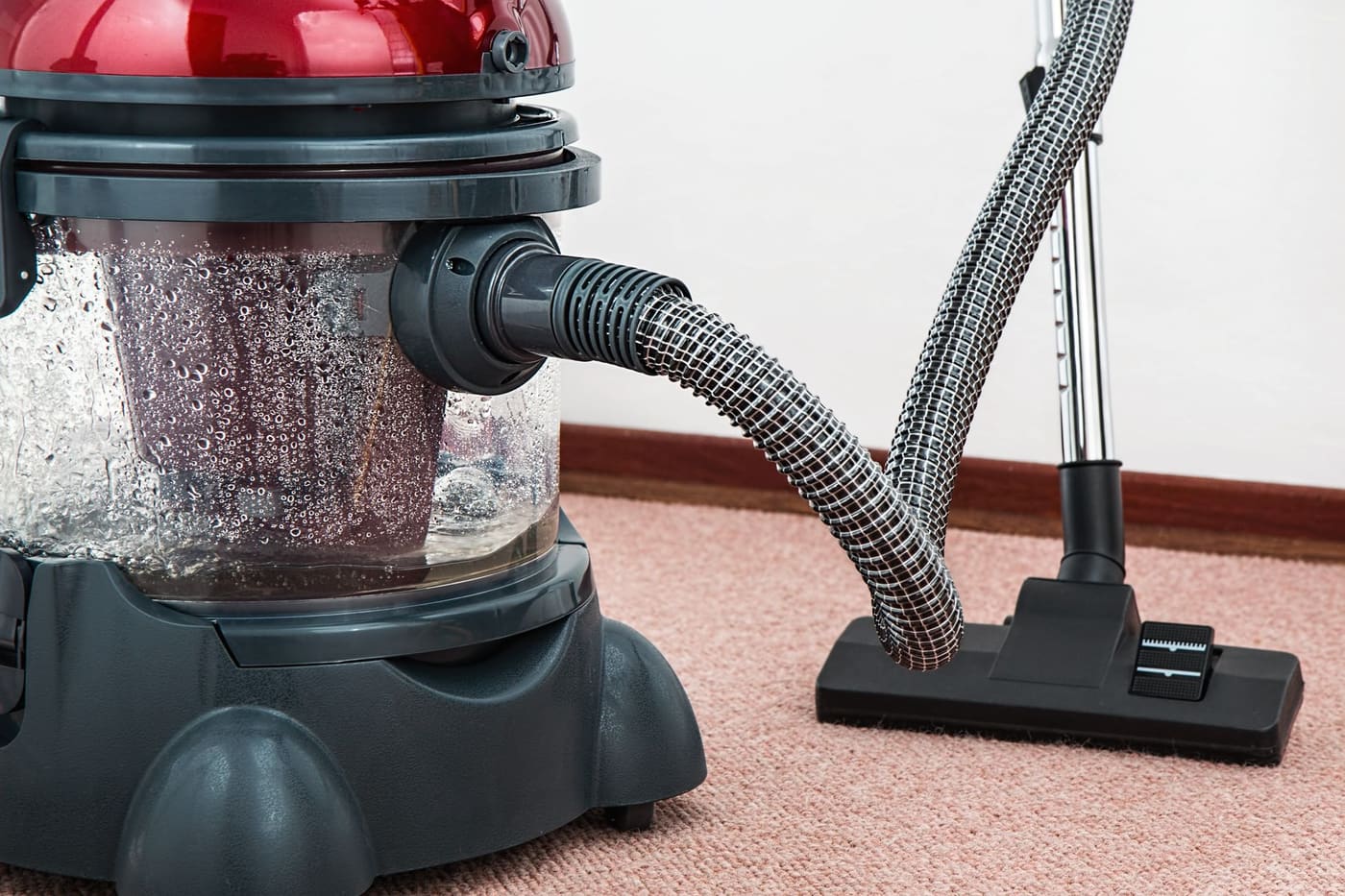
A wet/dry vacuum on slow, overlapping passes removes more water in an hour than evaporation manages in a day. Empty the tank often and keep passing until pulls come up nearly dry. Every liter extracted is a liter your fans and dehumidifier never have to move through the air.
The Pad Decision
Carpet pad is open-cell foam — it holds several times its weight in water and releases it grudgingly. If water reached the pad, standard practice is to pull the carpet back from a corner, cut out the wet pad, bag it, and replace it after everything dries. Pad costs less per square foot than the labor of drying it reliably; drying it badly costs a mold colony under your feet. The one exception: a small clean spill extracted within minutes.
Airflow + Dehumidifier, Closed Room
Aim air movers or your strongest fans across the carpet surface, not down at it — the goal is to strip the moist boundary layer so deeper water keeps wicking up. Close the windows and run a dehumidifier in the same room; without it, the water you evaporate re-condenses into walls and furniture. Carpet over concrete adds a twist: the slab re-wets the carpet from below for days, so lift and tent the carpet with airflow underneath, and keep drying until the concrete itself stops reading wet.
Talk to a water damage pro now
Answered 24/7 · Toll-free · answered 24/7 · no obligation
(888) 840-6512- Describe the damage & give your ZIP
- You're routed to the on-call local crew
- They quote — you decide, no obligation
Done Means Dry Underneath
Dry-to-the-touch on top is not the finish line. Check the carpet backing, the subfloor, and the tack strips; a musty odor is a failing grade anywhere in the room. Expect 12–24 hours for surface-wet carpet and 24–48 when the pad was involved — and if things aren't clearly drier every 12 hours, escalate to more airflow, a bigger dehumidifier, or a professional with meters before the clock runs out.
Timeline by Method
| Method | Carpet dry | Pad and subfloor dry | Mold risk |
|---|---|---|---|
| Towels, open windows, a box fan | 3–5 days | Often never — pad stays wet under a dry-feeling carpet | High |
| Wet-vac extraction, fans across the surface, a dehumidifier in a closed room | 1–2 days | 2–4 days if the pad was extracted or removed | Moderate |
| Professional weighted extraction, air movers, LGR dehumidifier | Same day | 1–3 days, verified with a meter | Low |
The pad is the whole story. Carpet dries from the top; pad dries from nowhere. Whatever method you use, the decision on the pad — extract it thoroughly, or pull it out — is what decides whether the room is dry in three days or moldy in a week. The carpet, pad and subfloor decision walks through it by water category and time wet.
What It Costs to Dry vs. Replace
| Typical | |
|---|---|
| Wet-vac rental, 2 days | $30 – $60 |
| Dehumidifier rental, 3 days | $40 – $90 |
| Professional extraction and drying, one room | $400 – $1,500 |
| New pad, installed | $0.50 – $1.50 per sq ft |
| New carpet and pad, installed | $3 – $8 per sq ft |
| Mold remediation if the room went moldy | $1,500 – $6,000 |
A clean-water loss handled the same day usually ends at the top rows. The bottom row is what a wet pad left under a dry carpet costs. What a water extraction service does explains the equipment gap between a shop vac and a crew.
Hardwood or Laminate Under the Carpet
If the carpet sits on hardwood, the wood is now wet too and will cup if it dries slowly; get the carpet and pad up, extract, and run fans across the wood with a dehumidifier in the room — hardwood after water covers the cupping window. Laminate under carpet is rare; laminate beside a wet carpet is common, and water that reached its seams usually means the laminate comes up.
The Smell After Drying
A musty smell from a carpet that feels dry means one of three things: the pad is still wet, the backing grew mold before it dried, or the tack strips and the edge of the subfloor are wet. Lift a corner and smell the pad and the backing. A clean, dry carpet has no smell; a smell is a failing grade, and at that point mold in carpet is the page you need — the answer is usually the pad out and the backing inspected, not another day of fans.
When to Stop and Call
Grey or black water (any appliance drain, sump water, sewage); carpet that was wet for more than a day before you found it; water that reached drywall, a wall cavity or a room below; a room larger than a bedroom; or a claim you intend to file, where the crew's moisture log is the evidence. A same-day extraction call on a clean-water loss is routinely the least expensive outcome the room can have.
Reading to confirm what you already suspect?
Confirm it in two minutes instead — the pro on this line answers questions about YOUR situation all day: what it is, what it should cost, whether you even need service. If you want, they'll set the appointment on the same call.
Toll-free · no obligation · asking costs nothing
Frequently Asked Questions
How long does wet carpet take to dry?
With real airflow and dehumidification: 12–24 hours for surface-wet carpet, 24–48 when the pad got wet. Ambient drying — windows open, hoping — takes 3–5 days, which is past the mold window. If carpet isn't clearly drier every 12 hours, the method isn't working.
Will wet carpet mold if it dries within 24 hours?
Mold needs roughly 24–48 hours of sustained moisture to establish, so carpet genuinely dry inside a day rarely molds.
The catch is the pad: it holds several times its weight in water and dries far slower than the fibers above it, so carpet that feels dry on top can be feeding growth underneath. Dry-to-the-touch is not the finish line — dry underneath is.
Do I have to replace carpet pad after it gets wet?
Usually yesPad is open-cell foam — a sponge that costs less per square foot than the labor of drying it reliably.
Standard restoration practice: lift the carpet, discard the pad, dry the carpet and subfloor properly, install new pad. Exception: a small clean-water spill extracted immediately.
How do you dry carpet on concrete?
Concrete complicates things: it releases moisture back into the carpet for days, so the carpet re-wets from below.
Lift the carpet, remove the pad, run air movers under and above the carpet (tented drying), and keep a dehumidifier running until the concrete itself reads dry — surface-dry concrete can still be wet inside.
When should I not dry wet carpet myself?
Three deal-breakers: the water was gray or black (washing machine drain, dishwasher, any sewage involvement — Category 3 water means the carpet and pad are discards, not drying projects), the wet area exceeds a room, or the water stood longer than 48 hours. Each of those is a health call, not a drying-technique call.
Who do I call right now for water damage?
Call (888) 840-6512. The line is answered 24 hours a day, seven days a week, and connects you with an IICRC-certified water damage restoration company that serves your area. Describe what you can see — where the water is coming from, how long it has been there, and whether it smells — the more specific you are, the faster the right company is on the line.
If the source is a pipe or an appliance, shut the main water valve first. Have four things ready and the call goes quickly: the address, when the water started, what is wet now, and whether you have filed an insurance claim.
Need it handled now?
Water Extraction — 24/7 Certified Crews
More than one room wet, or past the 48-hour mark? Truck-mounted extraction beats any shop vac.
Sources
- EPA — Mold Cleanup in Your Home(retrieved 2026-08-13)
- IICRC S500 — Water Damage Restoration(retrieved 2026-08-13)
Methodology: How we source and verify data · Report an error
Disclaimer: HearthDry is an independent educational resource. This article is for informational purposes only and does not constitute professional, legal, or insurance advice. Consult licensed professionals before making decisions about your property or insurance claims.
Professional Equipment
The Two Machines That Win the 48-Hour Race
Extraction and airflow are the whole game: a wet/dry vac pulls the standing water out, and an air mover strips moisture off the surface faster than any household fan.
Affiliate link — HearthDry earns a commission from Sylvane via CJ at no extra cost to you
Free 2-day shipping
Amazon Prime members pay no shipping on restoration equipment
Dehumidifiers, air movers, and moisture meters qualify for free Prime delivery — bulk items that otherwise cost $15–$40 to ship.
Affiliate link — HearthDry earns a bounty if you sign up; costs you nothing extra.
Equipment
What each machine actually does
Removes the moisture the structure is still giving off — the machine that decides how long drying takes
See the picks →Moves air across wet surfaces so the dehumidifier has something to take out of the air
See the picks →Finds water behind walls and under floors, and tells you when a material is actually dry
See the picks →Alerts you the moment a leak starts — the cheapest thing on this list and the only preventive one
See the picks →Those pages carry affiliate links. As an Amazon Associate, HearthDry earns from qualifying purchases; it costs you nothing extra.
Our Amazon storefront →Advertisement
