
Quick answer
IICRC S500 sorts water damage by contamination, not severity. Category 1 is clean supply water from a broken pipe or overflowing tub. Category 2 is grey water carrying some contamination — washing machine or dishwasher discharge, toilet bowl water without solids. Category 3 is black water: sewage, groundwater, or any water standing more than 48–72 hours. Categories escalate with time and never downgrade. Call (888) 840-6512 to reach a certified water damage restoration company in your area; the line is answered 24/7.
Written & reviewed by Marcus ReedIICRC WRT
Reviewed June 10, 2026· Next review Dec 2026
Water Damage Categories 1, 2, and 3: What Each Means for Your Home
The IICRC (Institute of Inspection Cleaning and Restoration Certification) S500 Standard classifies water damage into three categories based on contamination level. This classification drives everything: the cleanup approach, who can safely enter the space, what materials can be saved vs. must be removed, and what your insurance will cover.
Category 1: Clean Water
Source: Broken supply lines, malfunctioning appliances (washing machines, dishwashers), toilet tank overflow, rainwater through a clean roof area, or a cracked water main.
Health risk: Low — water does not contain substantial contamination at the time of intrusion. However, Category 1 water can degrade to Category 2 within 24–48 hours as it contacts building materials, microorganisms, and dirt.
What can be saved: Most porous materials (drywall, carpet, insulation) can potentially be dried in place if treated quickly. Hardwood flooring can often be dried and refinished. Contents are usually restorable.
IICRC Class: Combined with Category, restoration pros also assess "class" (1–4) based on the amount of water and evaporation potential. A Category 1 / Class 4 event (water in dense materials like plaster or hardwood) takes longer than Category 1 / Class 1 (minimal absorption).
What to expect: Professional extraction, air mover and dehumidifier placement, 3–5 days of drying, moisture meter verification of dryness. Drywall replacement may still be required if moisture readings remain elevated after structural drying.
Category 2: Gray Water
Source: Dishwasher or washing machine overflow, toilet bowl overflow (urine, no feces), sump pump failure, seepage through foundation, aquarium leaks, or broken waterbed.
Health risk: Moderate — contains biological or chemical contaminants that can cause illness if ingested or inhaled. Contact with skin should be minimized. Protective equipment required for restoration workers.
What can be saved: Porous materials (drywall below the contamination line, carpet) typically must be removed. Hard surfaces can be cleaned and disinfected. Contents that absorbed Category 2 water are evaluated case by case — upholstered furniture is often non-restorable.
Your role: Avoid entering the space without rubber boots and gloves. Do not use HVAC during remediation — contaminated air can spread through ductwork.
Time pressure: Category 2 degrades to Category 3 within 24–72 hours depending on temperature and humidity. Hot, humid conditions (summer in Florida or Texas) accelerate degradation significantly.
Category 3: Black Water
Source: Sewage backup, toilet bowl overflow with feces, rising floodwater from outside (storm surge, river overflow), seawater, ground surface water after rain events. This category always includes water from beyond the building envelope.
Health risk: High — contains pathogenic agents, toxigenic substances, and other harmful agents. This is a biohazard category. Occupants should vacate affected areas immediately. Children, elderly, and immunocompromised individuals should leave the building until remediation is complete.
What must be removed: All porous materials below the contamination line — drywall, carpet, insulation, wood framing in some cases. This is non-negotiable under IICRC S500. Anything that cannot be effectively disinfected must be removed and disposed of as regulated waste.
What this means for cost: Category 3 remediation is significantly more expensive than Category 1. Labor costs increase due to required PPE, disposal costs increase due to regulated waste, and restoration often involves more extensive reconstruction. Typical Category 3 events run 1.8–2.5× the cost of equivalent Category 1 damage.
Why Category Matters for Insurance
Standard HO-3 policies cover sudden and accidental water damage regardless of category — but:
- Sewage backup (Category 3 from sanitary lines) is excluded from most standard policies. It requires a specific sewage backup rider.
- Rising floodwater (Category 3 from external sources) is excluded and requires separate NFIP or private flood insurance.
- Gray water degradation: If Category 1 damage is not reported promptly and degrades to Category 2+, insurers may argue the additional damage resulted from failure to mitigate — which is excluded.
Document category evidence (photos, restoration company written assessment) as part of your claim file.
Category at a Glance, by Source
| Water came from | Category | Note |
|---|---|---|
| Supply line, pipe, water heater tank, toilet tank | 1 | Clean at the source |
| Rain through a storm-opened roof | 1 | Becomes 2 if it ran through insulation or sat |
| Tub, sink or shower overflow | 1 | 2 if it carried soap, dirt or waste water |
| Dishwasher, washing machine drain | 2 | Detergent, food, soil |
| Toilet bowl overflow, urine only | 2 | Feces makes it 3 |
| Sump pit water, ground seepage | 2 | 3 if it carried sewage or sat |
| Aquarium, waterbed | 2 | Biological load |
| Sewer or drain backup | 3 | Always |
| Rising outside water — river, surge, street | 3 | Soil, chemicals, sewage; also a flood-insurance question |
| Any water that sat 48–72 hours or more | Upgraded | Time reclassifies clean water |
Talk to a water damage pro now
Answered 24/7 · Toll-free · answered 24/7 · no obligation
(888) 840-6512- Describe the damage & give your ZIP
- You're routed to the on-call local crew
- They quote — you decide, no obligation
Why Time Changes the Category
Clean water is only clean when it arrives. Standing in carpet pad at room temperature it picks up dust, dirt, the bacteria already in the house and, within a couple of days, its own growth; the S500 standard therefore treats Category 1 water that has been left for 48 hours or more as Category 2, and Category 2 that has sat as Category 3. A restoration crew that arrives on day three treats a "clean" burst-pipe loss as contaminated — more removal, antimicrobial, and a higher bill — which is the plainest argument for the same-day call.
What Category Does to the Cost
| Category 1 | Category 2 | Category 3 | |
|---|---|---|---|
| Carpet and pad | Pad usually out; carpet often saved | Pad out; carpet often out | Both out |
| Drywall wetted from the floor | Often dried in place | Flood cut | Flood cut, cavity treated |
| Antimicrobial | Rarely | Yes | Yes, plus disinfection contact times |
| PPE and disposal | Standard | Gloves, boots | Respirators, sealed disposal |
| Typical cost vs. Category 1 | 1× | 1.3–1.8× | 2–3× |
The restoration cost guide puts numbers on each column, and the class of water damage — how much of the room is wet — is the other multiplier.
Arguing Category on a Claim
Category is a line on the adjuster's estimate, and it is sometimes written lower than the loss deserves: a washing-machine drain loss estimated as Category 1 is missing the antimicrobial and the pad-removal lines. The restoration company's written assessment — source, category, and the reason — is the document that settles it; ask for it on day one and keep it with the claim file.
Reading to confirm what you already suspect?
Confirm it in two minutes instead — the pro on this line answers questions about YOUR situation all day: what it is, what it should cost, whether you even need service. If you want, they'll set the appointment on the same call.
Toll-free · no obligation · asking costs nothing
Frequently Asked Questions
What is the difference between Category 1, 2, and 3 water damage?
Category 1 (clean water) comes from sanitary sources like broken supply lines or overflowing sinks -- lowest health risk. Category 2 (gray water) contains chemical or biological contaminants: washing machine overflow, toilet overflow (urine only), dishwasher discharge -- moderate risk.
Category 3 (black water) is grossly contaminated: sewage backup, river flooding, ocean water, toilet overflow with feces -- highest health risk. Category determines PPE requirements, cleanup procedures, and whether materials must be discarded or can be dried.
Can Category 1 water damage become Category 2 or 3?
YesWater category is not static. Category 1 water that sits for more than 24-48 hours becomes Category 2 as bacteria proliferate.
Category 2 that contacts porous materials (drywall, carpet, insulation) or sits in warm conditions can degrade to Category 3. This is one of the most important reasons to begin professional drying immediately: water that starts clean can become a serious contamination hazard if left untreated.
Does water damage category affect my insurance claim?
YesCategory 3 (sewage, flood) water damage typically requires more extensive demolition and disposal, driving up restoration costs by 2-4x compared to Category 1.
Insurance covers sudden, accidental internal water damage of any category. However, flood water from rivers or storm surge requires separate NFIP or private flood insurance regardless of category.
What does IICRC say about Category 2 vs Category 3 drywall?
Per IICRC S500 (4th Edition), Category 2 drywall that has not been wet for more than 24-48 hours can sometimes be dried in place if the paper facing is intact.
Category 3 drywall must be removed -- it cannot be adequately cleaned and disinfected. The same rule applies to insulation: all insulation contacted by Category 2 or 3 water must be discarded.
Can Category 1 water damage become Category 3?
YesAnd this is one of the most costly misunderstandings in water damage restoration. A Category 1 clean water event (burst supply line, appliance hose failure) that is not extracted and dried within 24–48 hours degrades to Category 2 as bacterial growth begins in wet porous materials.
After 72 hours of standing or wet conditions, the contamination level typically reaches Category 3 — requiring full biohazard protocols, HEPA air scrubbing, and demolition of all affected porous materials. This category escalation is irreversible. A $2,000 Category 1 cleanup that is delayed 3 days can become a $12,000 Category 3 remediation. IICRC S500 Section 6 defines this escalation pathway and requires restoration companies to re-categorize if time or conditions change during the project.
Who do I call right now for water damage?
Call (888) 840-6512. The line is answered 24 hours a day, seven days a week, and connects you with an IICRC-certified water damage restoration company that serves your area. Describe what you can see — where the water is coming from, how long it has been there, and whether it smells — the more specific you are, the faster the right company is on the line.
If the source is a pipe or an appliance, shut the main water valve first. Have four things ready and the call goes quickly: the address, when the water started, what is wet now, and whether you have filed an insurance claim.
Still not sure which of these is your situation? (888) 840-6512 · toll-free · answered 24/7
Sources
- IICRC S500 — Water Damage Restoration(retrieved 2026-07-02)
- EPA — Mold and Water Cleanup Guidance(retrieved 2026-07-02)
Methodology: How we source and verify data · Report an error
Disclaimer: HearthDry is an independent educational resource. This article is for informational purposes only and does not constitute professional, legal, or insurance advice. Consult licensed professionals before making decisions about your property or insurance claims.
Professional Equipment
Equipment Requirements Change by Water Category
Category 1 jobs use standard LGR dehumidifiers and air movers. Category 3 (sewage/flood) add HEPA air scrubbers and negative pressure machines. Sylvane carries equipment for all three categories.
Affiliate link — HearthDry earns a commission from Sylvane via CJ at no extra cost to you
Video
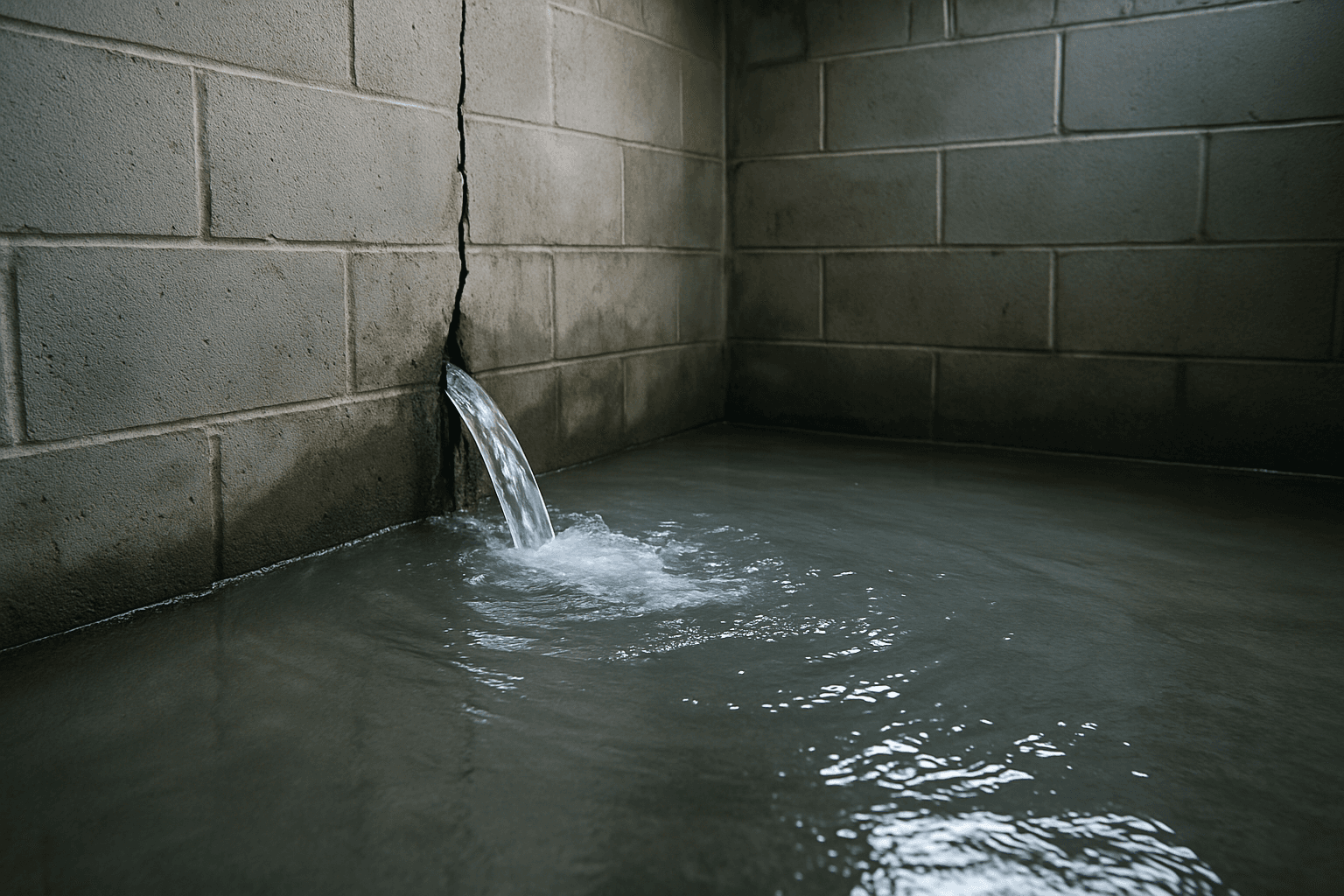
Video: FEMA — US Federal Emergency Management Agency, public domain license
Watch: FEMA: Understanding Your Home's Flood Risk — 4 min 30 sec
Free 2-day shipping
Amazon Prime members pay no shipping on restoration equipment
Dehumidifiers, air movers, and moisture meters qualify for free Prime delivery — bulk items that otherwise cost $15–$40 to ship.
Affiliate link — HearthDry earns a bounty if you sign up; costs you nothing extra.
Equipment
What each machine actually does
Removes the moisture the structure is still giving off — the machine that decides how long drying takes
See the picks →Moves air across wet surfaces so the dehumidifier has something to take out of the air
See the picks →Finds water behind walls and under floors, and tells you when a material is actually dry
See the picks →Alerts you the moment a leak starts — the cheapest thing on this list and the only preventive one
See the picks →Those pages carry affiliate links. As an Amazon Associate, HearthDry earns from qualifying purchases; it costs you nothing extra.
Our Amazon storefront →Advertisement
