Best Sump Pump Alarm in 2026 — Float-Switch Sirens, Phone Alerts, and the Battery That Keeps One Sounding in a Power Cut

Best Sump Pump Alarm in 2026

Float-Switch Sirens, Phone Alerts, and the Battery That Keeps One Sounding in a Power Cut

5 picks compared · prices, ratings and stock checked October 12, 2026

Our Top Pick

For most basements, the Level Sense Sump Pump Alarm with 15-Foot Float Switch, which pairs its siren with a self-charging battery so it keeps working through an outage. If you want the warning on your phone while you are away, the YoLink YS7904F Water Level Sensor with Float Switch sends app, email and text alerts once you add a YoLink hub.

4.4 on Amazon · 142 ratings

Quick answer

The best sump pump alarm is a float-switch alarm clipped just above the level where your pump switches on, with its own battery so it still sounds when the power fails; for most basements, that is the Level Sense Sump Pump Alarm with 15-Foot Float Switch, rated 4.4 stars across 142 Amazon ratings. Its listing states a 120 dB siren and a rechargeable battery that lasts up to 1 week on backup power. If nobody is home to hear a siren, choose an alarm that sends phone alerts, and put your router on a small battery backup so those alerts can still get out.

Our Picks at a Glance

Every pick below is currently stocked — ratings and stock read from Amazon on 12 October 2026.

How this page was made: we compare the current Amazon listings, the makers' published specs and what verified buyers report, then rank by fit for the job. Ratings, review counts and stock are read from Amazon and dated. We earn a commission on purchases through our links; it does not change the order. Reviewed by Marcus Reed, IICRC-certified Water Restoration Technician.

Full Reviews

Each pick in detail: what the listing states, what buyers report, and where it falls short.

#1
Best Overall

Check price

on Amazon ↗

Listing verified 13 Oct 2026

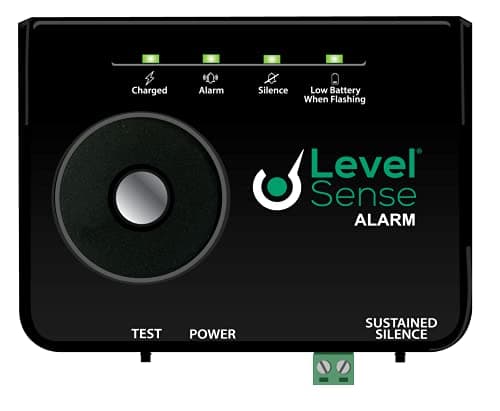
Level Sense Sump Pump Alarm with 15-Foot Float Switch (120 dB Siren, Rechargeable LiPo Battery Backup)See it on Amazon ↗

Quick Verdict

Level Sense Sump Pump Alarm with 15-Foot Float Switch: a 120 dB float alarm with a rechargeable battery stated to last up to 1 week, but no phone alerts.

Key Specs

Type

Plug-in high-water alarm with a float switch

Float switch (stated)

15 ft cord

Siren (stated)

120 dB

Backup power (stated)

Built-in rechargeable LiPo battery: up to 1 week on backup, and 40 hours of siren time

Phone alerts

None on this model; the Wi-Fi version is the Level Sense Pro

Made in (stated)

Made and supported in the USA

Pros

  • A rechargeable battery means no 9-volt to remember, and the listing says it covers up to 1 week without power
  • The 15 ft float cord leaves room to clip the float at the right height and still reach a wall outlet
  • 120 dB is the highest stated siren figure on this page, which helps when the pit is far from the bedrooms
  • Made and supported in the USA, per the listing

Cons

  • No phone alerts, so it only helps when someone is home to hear it
  • No warranty term on this listing
  • The listing does not say how far the float has to rise before the siren sounds, so test it with a bucket of water after mounting

Suited to

A basement pit in a home where someone is usually in to hear a siren, including during storms that cut the power

Our take

Many sump alarms share one weak point with the pump they watch: wall power. When a storm cuts the power, the pump stops, the pit fills, and a plug-in alarm with no battery stays silent. Level Sense builds in a rechargeable LiPo battery and states it lasts up to 1 week on backup, with 40 hours of siren time. That removes the yearly 9-volt swap older designs depend on. The 15 ft float cord gives you room to clip the float to the discharge pipe just above the pump's turn-on point and still reach an outlet. Its limit is reach, not volume. A siren protects the house only when someone is inside to hear it, so if you travel often, pair it with a phone alert.

Check today's price on Amazon →

Affiliate link — commission at no extra cost to you

Compare elsewhere

These open a search for this model. We quote prices only where we can verify them — Amazon, Sylvane and eBay.

#2
Best From a Pump Maker

Check price

on Amazon ↗

Listing verified 13 Oct 2026

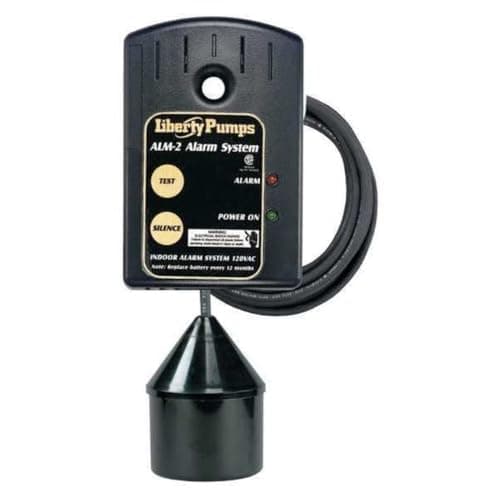
Liberty Pumps ALM-2-1 High Water Alarm (115V, 9V Battery Backup, Float Switch Panel)See it on Amazon ↗

Quick Verdict

Liberty Pumps ALM-2-1 High Water Alarm: a plain float alarm with 9-volt backup and a low-battery chirp, though quieter than the sirens here.

Key Specs

Type

Plug-in alarm panel with a float switch

Power (stated)

115V outlet, with a 9-volt battery backup

Horn (stated)

The listing gives both 86 dB and 88 dB

Visual alert (stated)

Warning light for a high-water condition

Low battery (stated)

Chirps when the backup battery runs low

Float cord length

Not stated on this listing

Pros

  • Comes from a pump maker rather than a general gadget brand
  • A 9-volt battery keeps the horn working when the outlet loses power
  • A low-battery chirp warns you before the backup goes flat
  • A warning light shows the alarm state in a noisy utility room

Cons

  • The listing gives two horn figures, 86 dB and 88 dB, and both sit well below the 110 dB and 120 dB sirens elsewhere here
  • Float cord length and warranty are not stated on this listing
  • No phone alerts

Suited to

A pit close to the living space, where a simple panel with a battery backup is enough

Our take

Liberty Pumps makes sump and sewage pumps, and the ALM-2-1 is the plain kind of panel often fitted beside a pit: a float switch, a horn, a warning light, a 115V plug and a 9-volt battery for outages. The horn figure on the listing is muddled, 86 dB in one bullet and 88 dB in another. Either way it is quieter than the 110 dB and 120 dB sirens on this page, which matters when the pit sits in a far corner of the basement and the bedrooms are two floors up. The feature to value is the low-battery chirp. A dead 9-volt quietly cancels the backup, and the chirp tells you before a storm finds out for you.

Check today's price on Amazon →

Affiliate link — commission at no extra cost to you

#3
Best for Phone Alerts

Check price

on Amazon ↗

Listing verified 12 Oct 2026

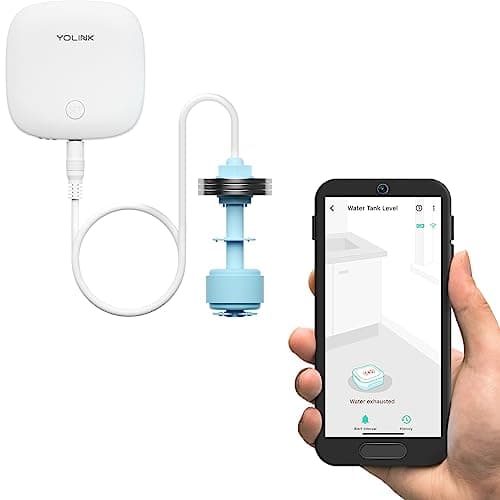
YoLink YS7904F Water Level Sensor with Float Switch (105 dB, LoRa, Hub Required)See it on Amazon ↗

Quick Verdict

YoLink YS7904F Water Level Sensor with Float Switch: app, email and text alerts from a battery-powered float, once you add a YoLink hub.

Key Specs

Type

Battery-powered wireless sensor with a hanging float switch

Alerts (stated)

App push, email and text, plus a built-in 105 dB sounder

Text alerts (stated)

A monthly text allowance per device

Range (stated)

LoRa radio, up to 2,034 ft in open air

Hub

Required and sold separately; the sensor will not work without one

Sensor battery

Battery-powered; battery type and life not stated on this listing

Pros

  • App, email and text alerts tell you about a rising pit while you are away from home
  • Long-range LoRa radio reaches a basement pit far from the hub
  • The sensor runs on battery, so a power cut does not silence it at the pit
  • Can switch on a YoLink siren or other YoLink device when the water rises, per the listing

Cons

  • A YoLink hub is required and sold separately
  • No battery for the hub is mentioned on the listing, so alerts stop if the hub loses power
  • Text alerts are capped by a monthly allowance, so rely on the app and email

Suited to

A home that sits empty for long stretches, or an owner who wants the warning on a phone

Our take

YoLink's float sensor answers the question a siren cannot: what happens when the pit rises while you are at work or away for a week. The float hangs in the pit, the battery-powered sensor reports over LoRa radio to a YoLink hub, and the hub pushes an app, email or text alert. LoRa is why it reaches a basement corner that Wi-Fi may not, with a stated open-air range of 2,034 ft. The catch sits upstream. The hub and your router need wall power and internet to get the alert out, and a storm that stops the pump often cuts power to both. Put the hub and router on a small battery backup (a UPS), and this becomes a phone alarm that works in the situation you bought it for.

Check today's price on Amazon →

Affiliate link — commission at no extra cost to you

#4
Best Wi-Fi Alarm With Power-Failure Alert

Check price

on Amazon ↗

Listing verified 13 Oct 2026

Level Sense Pro Wi-Fi Sump Pump Alarm (Float Switch, Power-Failure Alert, Temperature and Humidity)See it on Amazon ↗

Quick Verdict

Level Sense Pro Wi-Fi Sump Pump Alarm: high-water and power-failure alerts over Wi-Fi with a self-charging battery, on a thinner buyer record.

Key Specs

Type

Wi-Fi alarm with a float switch

Alerts (stated)

High water, water leak, power failure, temperature and humidity

Backup power (stated)

Auto-recharging internal battery

Hub

None; it joins your home Wi-Fi

Monitoring (stated)

Basic web portal at no charge, on a phone, tablet or computer

Warranty (stated)

2 years

Pros

  • Reports a power failure as well as high water, two problems that often arrive together in a storm
  • No separate hub to buy; it connects straight to your Wi-Fi
  • A temperature reading can warn you when a basement gets cold enough to put pipes at risk
  • A stated 2-year warranty and US-based support

Cons

  • Wi-Fi alerts need your router powered and online, which a whole-house outage takes away
  • Siren volume and float cord length are not stated on this listing
  • A weaker buyer record than the other alarms on this page

Suited to

A homeowner who wants high-water and power-failure alerts on a phone without buying a hub

Our take

The Level Sense Pro covers a gap the plain sirens leave open. It joins your Wi-Fi directly, with no hub, and its listing covers more than the water level, including a power-failure alert. That one matters because lost power is one of the usual reasons a pump stops, whether from a storm or a tripped breaker. An internal battery that recharges itself keeps the unit running when the outlet dies. Its weak link is shared by every Wi-Fi alarm: when the whole house loses power, the router goes down too, and the alert has no way out until it returns. A small battery backup on the router fixes that. The siren volume is not stated, so treat this as your phone channel rather than your noisemaker.

Check today's price on Amazon →

Affiliate link — commission at no extra cost to you

#5
Best for Outdoor and Septic Pits

Check price

on Amazon ↗

Listing verified 13 Oct 2026

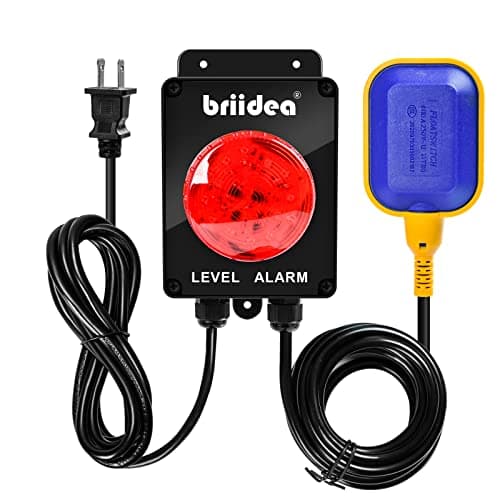
Briidea High Water Alarm with 10 ft Float Switch (110 dB, IP67 Enclosure, Indoor/Outdoor)See it on Amazon ↗

Quick Verdict

Briidea High Water Alarm with 10 ft Float Switch: a weatherproof 110 dB float alarm for outdoor pits, with no battery backup stated.

Key Specs

Type

Plug-in alarm with a float switch

Siren (stated)

110 dB, with a large LED warning light

Float cord (stated)

10 ft

Power cord (stated)

6 ft

Enclosure (stated)

IP67-rated weatherproof, for indoor or outdoor use

Battery backup

Not stated on this listing

Pros

  • A weatherproof IP67 box suits an outdoor sump, a septic tank or a pond pit
  • A 110 dB siren paired with a large LED light
  • A 10 ft float cord lets you set the trigger depth for a shallow or a deep pit

Cons

  • No battery backup on the listing, so it goes quiet in a power cut, the moment a sump pit is most likely to overflow
  • No phone alerts
  • No warranty term on this listing

Suited to

An outdoor sump, septic tank or pond pit on a circuit that rarely loses power

Our take

Briidea's alarm is built for spots the others are not. Its IP67 weatherproof box can sit outdoors beside a sump or septic tank, with a 110 dB siren, a large LED light and a 10 ft float cord. Indoors it works like any float alarm. The listing never mentions a battery, though, and that is the trade-off to weigh. A plug-in alarm without backup falls silent the moment the power fails, which is exactly when a pump with no backup stops and the pit starts to rise. Use it where outages are rare, beside a pump that already has a battery backup system, or alongside a battery-powered sensor. In a basement where storms knock the power out, the Level Sense or Liberty alarms cover that gap.

Check today's price on Amazon →

Affiliate link — commission at no extra cost to you

Buyer's Guide

What to know before you buy.

What a Sump Pump Alarm Does, and What It Cannot

A sump pump alarm watches the water, not the pump. Its float or probe sits above the level where the pump normally switches on, so when water reaches it, the pump has already failed to keep up. The usual reasons are a tripped breaker or power cut, a float switch stuck against the pit wall, a clogged or frozen discharge line, a worn-out motor, or more inflow than the pump can move. The alarm cannot pump a drop. What it buys you is the time between the alarm and the pit rim, enough to reset a breaker, unstick a float, start a backup pump or carry boxes upstairs. A floor leak sensor set beside the pit warns later, because it only gets wet once water has already left the pit.

Float Sirens, Phone Alerts and Backup Pump Systems

Three kinds of product answer this search. Float sirens, such as the Level Sense, Liberty and Briidea units, are loud, simple and local: they help only if someone hears them. Phone-alert alarms, such as the YoLink sensor and the Level Sense Pro, send the warning to your app, email or text, which is what a house left empty needs. Battery backup pump systems are a third route, because they add a second pump that takes over when the first fails, and they typically carry an alarm of their own for when the backup runs or its battery gets low. If your area loses power often, the backup pump is the bigger fix, and an alarm on its own adds warning time without adding pumping.

Mounting Height in the Pit

Clip the float or sensor to the discharge pipe a little above the level where your primary pump switches on, and well below the pit rim. Set it too low and normal cycling, or water splashing in from the drain tile inlet, sets it off for nothing. Set it too high and the warning comes with little time left. To find the turn-on level, pour water slowly into the pit from a bucket until the pump starts, then mark the water line on the discharge pipe with tape. Mount the alarm float just above that mark, where it cannot tangle with the pump's own float, the power cords or the pit wall. Then test it by pouring in more water with the pump unplugged, and plug the pump back in straight after.

Battery or Plug-In: The Power-Cut Problem

A pit is most likely to overflow during the kind of storm that also cuts the power, which is when a plug-in alarm with no battery goes silent. Check how each alarm keeps working. The Liberty panel uses a 9-volt battery that needs replacing on a schedule; its low-battery chirp helps. The Level Sense units use rechargeable batteries that top themselves up from the outlet. The YoLink sensor runs on battery at the pit, but its hub needs power to send anything. Any alarm that sends phone alerts also depends on your router, so a small battery backup (UPS) for the router and hub keeps alerts flowing through a short outage. Where you can, plug the alarm into a different circuit from the pump, so a tripped pump breaker does not take the alarm down with it.

Who Does Not Need One, and When an Alarm Is Not Enough

Skip a sump alarm if your basement has no sump pit: what you want there is a floor leak sensor near the water heater, washer and the lowest corner. A sewage ejector pit is a different job too, because its alarm and pump are part of a sewage system that a plumber should set up and service. An alarm alone is not enough for a finished basement in an area with frequent outages, or for a house that sits empty for weeks. That setup calls for a battery backup pump plus an alarm that reaches your phone. If your alarm goes off every heavy rain even though the pump runs, the pump may be too small for the inflow or the discharge may be restricted, which is a plumber's call to size properly.

If the Water Has Already Come Over the Rim

Stay out of standing water that may be in contact with outlets, extension cords or the pump's power cord until the power to that area is off. Then deal with the drying, because time matters more than anything else at this point. The EPA advises that water-damaged areas and items be dried within 24 to 48 hours to prevent mold growth. Its mold cleanup guidance also says that if the water came from sewage or other contaminated water, you should call in a professional with experience in that kind of cleanup. Wet carpet pad, drywall and insulation in a finished basement often do not dry fast enough with household fans alone, so a restoration company with drying equipment is usually the faster route.

Frequently Asked Questions

Why is my sump pump alarm going off?

Your sump pump alarm is going off because the water in the pit has risen past its float, which means the pump is not running or cannot keep up. Look first for the simple causes: no power to the pump, a pump float jammed in the wrong position, or an outdoor discharge pipe blocked by ice or debris.

A burned-out motor, or rain bringing in more water than the pump can move, sets it off as well. An alarm float set too low can also trip from normal cycling or splashing.

What should I do when my sump pump alarm goes off?

Go and look at the pit first, then work from power to pump to pipe. Check that the pump is plugged in and its breaker or GFCI outlet has not tripped. Unplug the pump before reaching near it, then make sure its float moves freely.

Listen for a pump that hums without moving water, and check the outdoor end of the discharge line for ice or a blockage. If the water keeps rising, start a backup pump or call a plumber.

Where should a sump pump alarm be placed?

Clip the alarm's float to the discharge pipe a short way above the pump's start point and well below the top of the pit. That height catches a failed pump early without tripping on every normal cycle.

Find the turn-on level by pouring water into the pit until the pump starts, mark it, and mount the float just above, clear of the pump's own float and cords.

Do sump pump alarms work when the power goes out?

Only the ones with a battery. A plug-in alarm with no backup goes silent in a power cut, which is when a pump without backup stops too. The Liberty ALM-2-1 uses a 9-volt backup, and the Level Sense alarms use rechargeable batteries.

Phone alerts also need your router and any hub powered, so a small battery backup for them keeps the warning reaching you during an outage.

Can a sump pump alarm send alerts to my phone?

YesWi-Fi and hub-based sump alarms send phone alerts, while basic float sirens only sound in the house.

The YoLink YS7904F sends app, email and text alerts through a YoLink hub sold separately. The Level Sense Pro joins your Wi-Fi directly and adds power-failure, temperature and humidity alerts. Both depend on your internet connection, so check that your Wi-Fi or hub signal reaches the basement before you mount them.

How do I test a sump pump alarm?

Raise the water level and listen: pour a bucket of water into the pit with the pump unplugged until the float lifts, or lift the float by hand if the maker allows it. The siren or phone alert should follow.

Plug the pump back in straight away and watch it empty the pit. Test the battery backup too, by unplugging the alarm before lifting the float, and repeat the check before each storm season.

Who do I call right now for water damage?

Call (888) 840-6512. The line is answered 24 hours a day, seven days a week, and connects you with an IICRC-certified water damage restoration company that serves your area. A recorded menu picks up first: choose water damage or mold, key in your 5-digit ZIP code, and hold through the short silence while the call is passed to the company.

Describe what you can see — where the water is coming from, how long it has been there, and whether it smells — the more specific you are, the faster the right company is on the line. If the source is a pipe or an appliance, shut the main water valve first. Have four things ready and the call goes quickly: the address, when the water started, what is wet now, and whether you have filed an insurance claim.

Still not sure which of these is your situation? (888) 840-6512 · toll-free · answered 24/7

Sources

  1. EPA — A Brief Guide to Mold, Moisture, and Your Home
  2. EPA — Mold Cleanup in Your Home

Methodology: How we source and verify data · Report an error

How we chose these picks

  • Every pick is a current listing. Stock, star ratings and rating counts are read from Amazon by script and carry the date they were read.
  • Nothing under 4.0 stars makes the list, and the top pick needs a large rating count, so one good week of reviews cannot put it there.
  • Specs are quoted from the listing or the maker, with the test condition behind the number where there is one, and sized against the job rather than the room on the box.
  • We do not run lab or field tests. Where a spec matters, we say what it is measured under and what it cannot tell you.

Free 2-day shipping

Amazon Prime members pay no shipping on restoration equipment

Dehumidifiers, air movers, and moisture meters qualify for free Prime delivery — bulk items that otherwise cost $15–$40 to ship.

Try Prime free →

Affiliate link — HearthDry earns a bounty if you sign up; costs you nothing extra.

Also Worth Comparing

Best Sump Pump Battery Backup Systems in 2026 — Pro Picks & Real Costs

The power goes out during the storm that fills your basement — that is the whole reason this category exists. Here is what each system actually costs once you add the battery nobody includes.

Read the comparison

Best Sump Pumps for Basements in 2026 — Sized by Lift, Not Horsepower

The right sump pump prevents basement flooding before it starts — and handles it fast when it happens. These are the 3 best sump pumps for basement flooding in 2026, tested and ranked by an IICRC-certified water damage restoration technician.

Read the comparison

Best Water Alarm & Flood Sensor 2026 — Smart Leak Detectors Reviewed

A water leak detector catches a leak while it is still a puddle rather than an insurance claim. These four flood sensors and water alarms range from a standalone 110 dB alarm with no Wi-Fi to a LoRa kit that sounds on the spot and texts your phone.

Read the comparison

Best Sump Pump Check Valves in 2026 — Quiet Spring Valves Matched to Your Pipe Size, Plus the Lid and Backup a Valve Cannot Replace

A sump pump check valve keeps the water in the discharge pipe from falling back into the pit each time the pump stops, so the pump does not move the same water twice. These picks are matched to the three common discharge pipe sizes and compared on what each listing states about quiet closing, pressure rating and the gap it needs in the pipe.

Read the comparison

Best Sump Pump Float Switch in 2026 — Vertical, Tethered and Electronic Switches Matched to Your Pit Width and Your Pump's Amps

When a sump pump fails, the switch is often the part that quit: a float pinned against the pit wall never tells the pump to start. These picks are vertical, tethered and electronic switches compared on pit fit, amp rating, pumping range and what each listing states, with the bucket test and the alarm a new switch still needs.

Read the comparison

Best Generator for a Sump Pump in 2026 — Inverter and Portable Generators Sized From Your Pump's Label, With the Cord, Fuel and CO Rules That Keep It Safe

A sump pump only protects the basement while it has power, and the storms that fill the pit are the same storms that cut the power. These generators are compared on rated and surge watts, stated run time, CO shutoff and transfer-switch outlets, with the sizing arithmetic taken from your pump's own label.

Read the comparison

Best Water Powered Backup Sump Pumps in 2026 — No Battery to Die in a Long Outage, but Only on City Water With the Pressure and the Backflow Preventer to Match

A water powered backup sump pump uses the pressure in your city water line to pull water out of the pit, so it keeps working through an outage that would empty any battery. These five picks are compared on the inlet pressure each listing states, the gallons of metered water used per gallon removed, the backflow device your plumbing code will ask for, and the one case where a battery backup is the right buy instead.

Read the comparison