Quick answer
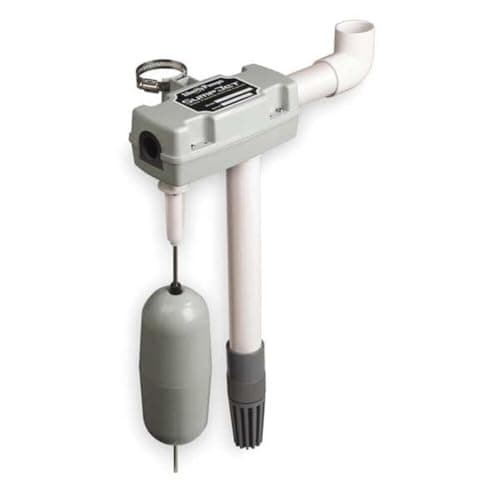
If your home is on city water with at least 20 psi at the pit, the best water powered backup sump pump is the Liberty Pumps SumpJet Water Powered Backup Sump Pump, rated 4.5 stars across 1,362 Amazon ratings; it runs on municipal water pressure for as long as the supply holds, so there is no battery to die in a long outage. Its listing accepts 20 to 100 psi of inlet pressure. Add the backflow preventer your local code requires, often a reduced-pressure type, and expect a plumber in many areas. On a well, buy a battery backup instead, because the well pump stops when the power does.
Buyer's Guide
What to know before you buy.
How a Water-Powered Backup Works, and What It Asks of Your House
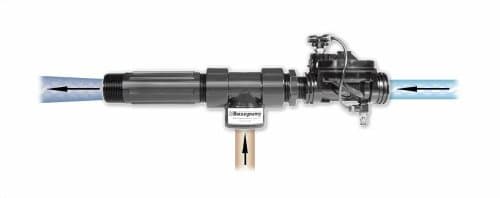
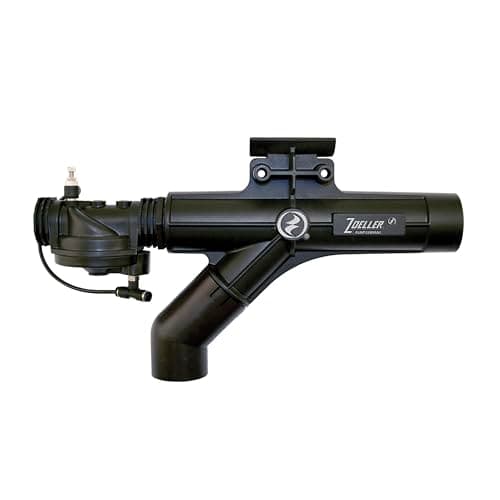
A water-powered backup is a venturi, not a motor. City water enters the unit under pressure, speeds up through a narrow throat, and the drop in pressure behind the throat pulls water up from the pit; both streams leave together through the discharge line. Nothing spins, so there is no motor to burn out and no battery to charge. Its float hangs above the primary pump's float, so it only opens the supply valve once the primary has failed or fallen behind. Per the listings, Basepump mounts at the ceiling and Zoeller mounts overhead or in the joists, horizontal or vertical. Each needs a cold supply line to the pit area with a shutoff, a backflow device, and a discharge that leaves the house without passing through the primary's check valve; Basepump's listing recommends a dedicated discharge line. The unit spends treated drinking water to move pit water, and that one fact is the root of every rule in the sections below.
Check Your Water Pressure Before You Buy
The stated inlet range is the first thing to compare, because a unit outside it runs weakly or not at all. Liberty's SumpJet listing accepts 20 psi to 100 psi; Zoeller's 540 FLEX states 40 to 80 psi; Basepump's listings say to verify adequate municipal pressure without naming a floor. Measure yours rather than guessing. Screw a hose-bib pressure gauge onto an outside spigot, open it with nothing else running, and read the static pressure; then read it again with a shower running, since a storm night when every backup on the street opens at once looks more like the second reading than the first. A reading in the 40s leaves little margin for Zoeller's range. If your house has a pressure-reducing valve at the main, the gauge shows pressure after it, which is the number the backup will see. Pressure in the 30s or lower points you to a battery backup instead.
The Gallons-Per-Gallon Arithmetic
Every gallon a venturi pump removes costs you a share of a gallon of metered water. Zoeller states up to 2 gallons removed per 1 gallon used within its 40 to 80 psi range; Liberty and Basepump do not state a ratio on their listings, so ask before you size. Time how long the primary runs and how often during a hard rain, or pour in a measured bucket and watch the rise, to estimate the inflow in gallons per minute. If 4 gallons a minute arrive, a 2:1 unit uses about 2 gallons of city water a minute to keep up, which is 120 gallons an hour and close to 2,900 gallons over a 24-hour outage, billed as water and, in many towns, as sewer too. That is the cost of unlimited runtime, and it is still small next to a wet basement. It also shows why a unit stated at 15 GPM is plenty for most pits and too little for a few.
The Backflow Preventer Your Code Requires
A water-powered backup joins the drinking-water pipe to a pit of groundwater, which plumbing codes call a cross-connection. If street pressure collapses mid-cycle, during a main break or a hydrant draw, pit water can siphon back toward the supply. Most local codes therefore require an approved backflow preventer on the line feeding the pump, and many name a reduced-pressure principle assembly, often called an RPZ, which the utility may require a certified tester to check on a schedule. A simple check valve does not satisfy that rule. Basepump sells an RB750-AVB variant with an atmospheric vacuum breaker built in; an AVB is a lesser device than an RPZ, and whether it is accepted depends on your inspector, so ask before ordering. Expect a permit in many areas, and the listings themselves say local codes may require a licensed plumber. Some utilities restrict water-powered backups outright, which is a question for the water department, not the store.
Water-Powered vs Battery Backup, Honestly
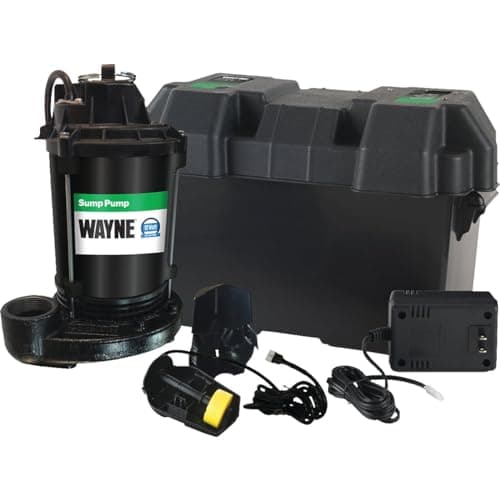
Neither type wins everywhere, and sellers on each side tend to skip the other's strength. A battery backup moves more water per hour: Wayne's ESP25n lists 1,680 GPH at 10 ft of lift, about 28 GPM, where the Basepump listings top out at 15 and 22 GPM under rated conditions. A battery backup also works on a well. Its limit is runtime; one deep-cycle battery gives hours of intermittent pumping, the battery ages, and a three-day outage after an ice storm can outlast it. A water-powered backup has no battery to age or charge and runs for as long as the mains hold pressure, which is the case that ice storms and long outages create. Its limits are the water bill, the pressure, the code work and the lower flow. Decide by your water source and your usual outage length rather than by brand. Some owners install both, with the water-powered unit's float set highest as the last line.
Who Should Not Buy One, and When to Call a Plumber
Skip a water-powered backup if your water comes from a private well, because the well pump stops in the same outage and the venturi has nothing to run on; a battery backup or a generator is the answer there. Skip it if your static pressure measures below the listing's floor, if the utility will not permit the cross-connection, or if your pit takes in more water than the stated flow at your pressure can remove, since a backup that falls behind only delays the overflow. A home on a metered, drought-restricted supply should weigh the water use worked out above. For the job itself, tapping the cold line, fitting the RPZ and running a discharge through a wall is plumber territory in most of the country, and it usually needs a permit; the listings say as much. Once a pit has overflowed, the drying comes first: the EPA advises drying water-damaged areas and items within 24 to 48 hours to prevent mold growth.
Free 2-day shipping
Amazon Prime members pay no shipping on restoration equipment
Dehumidifiers, air movers, and moisture meters qualify for free Prime delivery — bulk items that otherwise cost $15–$40 to ship.
Affiliate link — HearthDry earns a bounty if you sign up; costs you nothing extra.