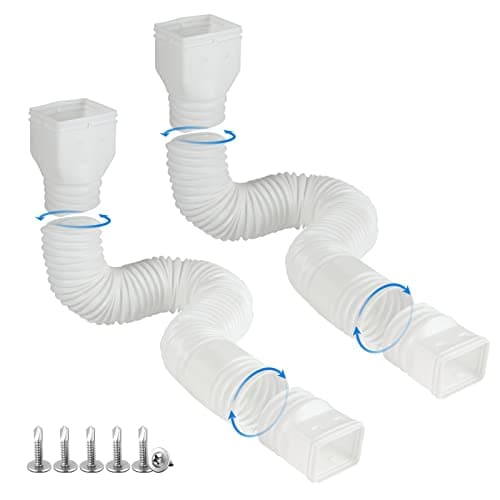
Best for: Downspouts that empty within a few feet of the foundation onto ground that falls away
- Length (stated):
- Each pipe stretches from 21 to 68 in
- In the box (stated):
- 2 drain pipes, 4 adapters, 8 screws
Listing verified 13 Oct 2026

Flexible Pipes Measured Against the 4 to 10 ft Rule, for a Drier Basement
4 picks compared · prices, ratings and stock checked October 11, 2026
Our Top Pick
For most downspouts, the plusgutter Flexible Downspout Extension 2-Pack (21 to 68 in Each), whose listing names 2 x 3, 3 x 3 and 3 x 4 in downspouts. Where the water has to travel closer to 10 ft, the FEILAYDUN Flexible Downspout Extension 2-Pack (20 to 66 in Each, Joins to 127 in).
4.3 on Amazon · 6,859 ratings
Quick answer
The best downspout extension for most homes is a flexible pipe that carries roof water at least 4 to 6 ft from the wall and onto ground that slopes away: if your downspout is a standard 2 x 3 or 3 x 4 in size, buy the plusgutter Flexible Downspout Extension 2-Pack, rated 4.3 stars across 6,859 Amazon ratings. Each pipe stretches to 68 in, about 5.7 ft, per the listing. For a run near 10 ft, join the two FEILAYDUN pipes, which its listing says reach 127 in together. No extension fixes a high water table or a yard that slopes toward the house.
Every pick below is currently stocked — ratings and stock read from Amazon on 11 October 2026.
Best for: Downspouts that empty within a few feet of the foundation onto ground that falls away
Listing verified 13 Oct 2026
Best for: A downspout on flat ground or clay soil where the water needs to land close to 10 ft out
Listing verified 13 Oct 2026
Best for: A downspout above a flower bed, or a spot where a pipe across the lawn would be in the way
Listing verified 13 Oct 2026
Best for: One downspout that empties beside a window well, a stoop or the corner that leaks
Listing verified 13 Oct 2026
How this page was made: we compare the current Amazon listings, the makers' published specs and what verified buyers report, then rank by fit for the job. Ratings, review counts and stock are read from Amazon and dated. We earn a commission on purchases through our links; it does not change the order. Reviewed by Marcus Reed, IICRC-certified Water Restoration Technician.
Full Reviews
Each pick in detail: what the listing states, what buyers report, and where it falls short.
Check price
on Amazon ↗
Listing verified 13 Oct 2026
See it on Amazon ↗Quick Verdict
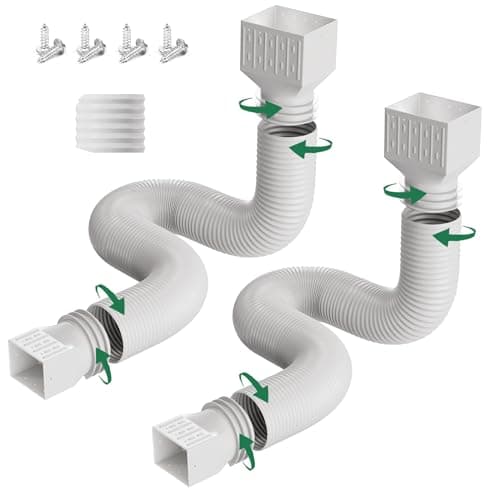
plusgutter Flexible Downspout Extension 2-Pack: two 68 in pipes with adapters and screws for standard downspouts.
Key Specs
Length (stated)
Each pipe stretches from 21 to 68 in
In the box (stated)
2 drain pipes, 4 adapters, 8 screws
Downspout fit (stated)
2 x 3, 3 x 3 and 3 x 4 in; the brown version's listing adds 3.5 x 4 in
Material
Thickened PE plastic, per the listing
Load (stated)
At least 10 lb without deforming, per the maker
Burial
The listing says it can be buried
Pros
Cons
Suited to
Downspouts that empty within a few feet of the foundation onto ground that falls away
Our take
This is the extension most homes need: a corrugated PE pipe that stretches from 21 to 68 in and bends around beds and paths, with adapters for the two rectangular downspout sizes found on most houses. At full stretch it releases water about 5.7 ft from the downspout, which clears the commonly cited 4 to 6 ft minimum but not 10 ft. Before ordering, stand at the downspout and pace out to the point where the ground clearly drops away. If that point is farther than 68 in, the FEILAYDUN or NAACOO picks fit better. Use the screws, which the maker includes so that rain does not wash the pipe off the downspout.
Affiliate link — commission at no extra cost to you
Compare elsewhere
These open a search for this model. We quote prices only where we can verify them — Amazon, Sylvane and eBay.
Check price
on Amazon ↗
Listing verified 13 Oct 2026
See it on Amazon ↗Best for a 10 ft Run
Quick Verdict
FEILAYDUN Flexible Downspout Extension 2-Pack: two 66 in pipes that join into a 127 in run for flat or clay-soil yards.
Key Specs
Length (stated)
Each pipe stretches from 20 to 66 in
Joined length (stated)
Up to 127 in when the two pipes are joined with the mini connector
Downspout fit (stated)
2 x 3, 3 x 3 and 3 x 4 in
Material (stated)
ABS adapter, PE pipe
Burial
The listing says it can be buried
Warranty (stated)
One year
Pros
Cons
Suited to
A downspout on flat ground or clay soil where the water needs to land close to 10 ft out
Our take
Reach is the reason to choose this one. Each pipe stretches from 20 to 66 in, and the listing says the two join with a mini connector into a single run of up to 127 in, roughly 10.6 ft. That meets the 10 ft figure many guides give for flat lots and clay soils, which hold water against a basement wall longer than sand does. The catch is that a long corrugated pipe follows every hollow in the yard. Lay it so it falls along its whole length, with no low spot, because water left standing in a sag collects grit and freezes in winter. The adapter has pre-made screw holes, so fix it to the downspout.
Affiliate link — commission at no extra cost to you
Compare elsewhere
Check price
on Amazon ↗
Listing verified 13 Oct 2026
See it on Amazon ↗Best Low-Profile Option
Quick Verdict
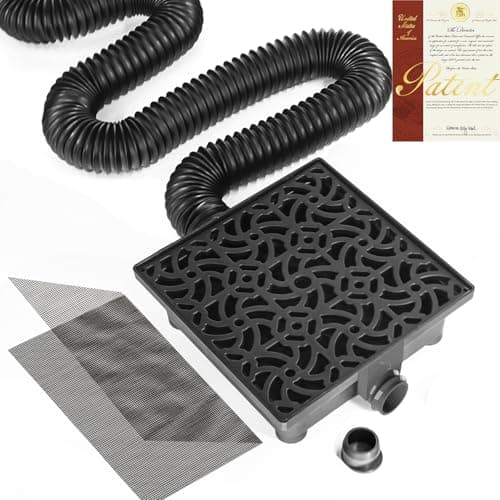
NAACOO Downspout Catch Basin with 8 ft Flexible Pipe: the longest single reach here, and low enough to hide in a bed.
Key Specs
Basin (stated)
12 x 12 in catch basin with a grate and a filter screen
Pipe length (stated)
Stretches from 2.5 to 8 ft; can be cut in two to drain both sides
Outlets
Two drain holes; a supplied plug closes the one not in use
Downspout fit (stated)
2 x 3, 3 x 4 and 3 x 3 in
Material (stated)
PP plastic, described as UV resistant
Install (stated)
Sits on the ground with no digging; low enough to cover with mulch
Pros
Cons
Suited to
A downspout above a flower bed, or a spot where a pipe across the lawn would be in the way
Our take
This one works differently from the other picks. The downspout empties into a 12 x 12 in basin on the ground, and an 8 ft flexible pipe carries water away from the basin's outlet, so nothing has to be fitted to the downspout itself. The listing says the basin needs no digging and sits low enough to cover with mulch, which suits a downspout above a planting bed. Eight feet is the longest single reach on this page. The pipe can be cut in two to use both outlets, but each half then reaches only about 4 ft, so keep it whole if one direction has the better fall. Clear the grate after the leaves drop.
Affiliate link — commission at no extra cost to you
Compare elsewhere
Check price
on Amazon ↗
Listing verified 13 Oct 2026
See it on Amazon ↗Quick Verdict
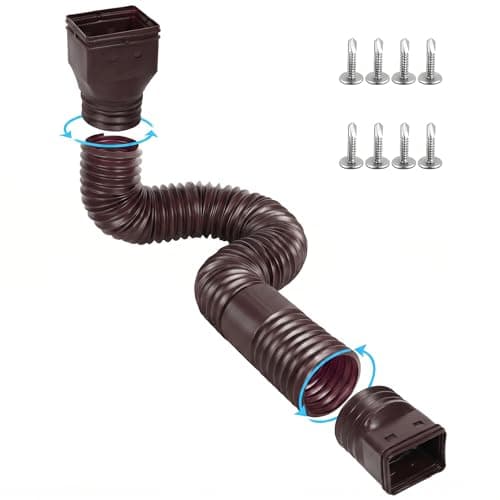
Ogutter Flexible Downspout Extension: a single 66 in pipe for the one downspout that causes the trouble.
Key Specs
Length (stated)
21 to 66 in
In the box (stated)
1 pipe, 2 adapters, 8 screws, instructions
Downspout fit (stated)
2 x 3, 3 x 3 and 4 x 3 in
Load (stated)
Up to 10 lb without deforming
Joining pipes (stated)
Several pipes connect by rotating them together; no joined length is given
Burial
The listing says it can be buried
Pros
Cons
Suited to
One downspout that empties beside a window well, a stoop or the corner that leaks
Our take
Most houses have one downspout that does the damage: the one beside the basement window well, the corner where the backfill has settled, or the one fed by a roof valley. A single extension is the targeted fix for it. This one stretches from 21 to 66 in, ships with two adapter sizes and eight screws, and the listing says more pipes can be twisted on for extra length, though it gives no figure for a joined run. Use it as a test: extend the worst downspout, check the basement through the next heavy rain, and extend the others too if the wet patch moves rather than disappears.
Affiliate link — commission at no extra cost to you
Compare elsewhere
What to know before you buy.
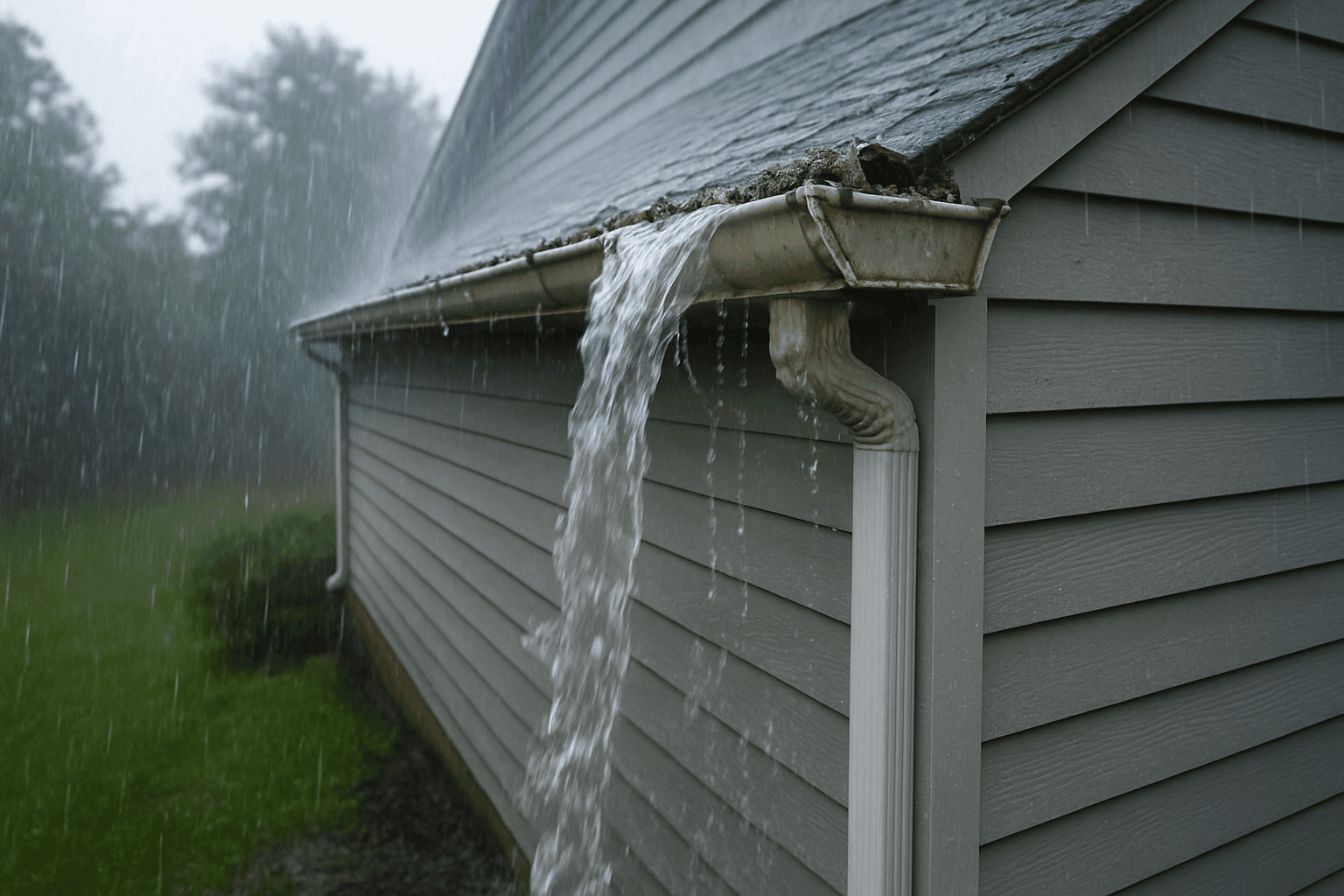
An inch of rain on 1,000 sq ft of roof is about 623 gallons, and the gutters gather all of it into a handful of downspouts. When a downspout ends at the wall, that water soaks the backfill beside the foundation, which is the loosest soil around the house. From there it presses against the wall and finds cracks, pipe openings and the joint where the wall meets the floor. EPA's mold guidance says to make sure the ground slopes away from the building foundation so that water does not enter or collect around it, and to clean and repair roof gutters regularly. An extension does the moving part of that job: it carries the water past the backfill and releases it where the ground can take it away. Walk around the house in a heavy rain and note where each downspout empties, because the wet patch inside often lines up with one of them.
Commonly cited guidance puts the discharge at least 4 to 6 ft from the foundation, and nearer 10 ft on flat lots or in clay soil. These are rules of thumb rather than a code figure. Then do the arithmetic against the listings: the flexible pipes here reach 66 to 68 in at full stretch, roughly 5.5 to 5.7 ft, so one piece clears only the 4 ft end of the range. Two FEILAYDUN pipes joined reach 127 in, about 10.6 ft, and the NAACOO pipe reaches 8 ft. A pipe that curves around a shrub loses straight-line distance, so measure the route it will take rather than the gap. The real target is the first point where the ground clearly falls away from the house and keeps falling, and on some lots that is well past 10 ft.
An extension that empties onto ground sloping back toward the house only moves the puddle. The International Residential Code calls for the ground to fall at least 6 in within the first 10 ft from a foundation, and soil settles over the years, especially backfill and the patch a downspout has been eroding. Lay a straight board out from the wall with a level on it to check. If the ground runs flat or backward, add and compact soil so it drains away before buying anything else. The pipe itself also needs to fall along its whole length. A flexible extension laid on a lawn follows every dip, and water sitting in a low spot collects grit and, in winter, freezes into a plug that blocks the next flow.
Flexible corrugated extensions, all four picks here, stretch, bend around obstacles and fit most rectangular downspouts with an adapter; their weak points are mowing and sags. Hinged flip-up extensions fold up against the house for mowing and drop back down for rain, which suits a downspout that empties onto lawn. Roll-out sleeves are flat plastic tubes that unroll as water fills them and coil back when dry. Because a sleeve relies on the flow to unroll, a light rain may leave it partly coiled near the wall, and none of the roll-out sleeves considered for this page met the buyer-rating floor used for picks. Underground drains, solid smooth-wall pipe buried with steady fall to a pop-up emitter or an open outlet, are the permanent answer and usually a contractor job, since a buried line that dips or clogs is hard to reach.
Measure the downspout's outlet before ordering. Most homes have rectangular 2 x 3 or 3 x 4 in downspouts, and all four picks name those sizes; none of these listings names round downspouts, so a house with round ones needs a different adapter. Fix the adapter with the supplied screws. Clogged gutters overflow at the edge and skip the downspout entirely, so an extension helps only when the gutters are clear, and a leaf jam inside a corrugated pipe backs water up to the elbow. Check each extension after the leaves fall and after the first hard freeze, since ice in the pipe does the same. Point the outlet onto your own lawn or bed, not at a neighbor's lot, a driveway or a sidewalk, where runoff can freeze into a slip hazard, and check whether your town has rules on where runoff may go.
An extension handles roof water and nothing else. If water rises through the floor or the cove joint days after the rain has stopped, or the basement is wet in dry weather during spring, the water table is high, and the answer is interior drain tile with a sump pump rather than longer downspouts. If the yard slopes toward the house, regrading or a swale comes first. A wall crack that seeps in every rain, wherever the downspouts point, needs a repair. A downspout that feeds a buried drain should be tested with a garden hose; if the line backs up, have it cleared, or disconnect the downspout and extend it above ground. And if the basement is already wet, start drying it now: EPA advises drying water-damaged areas and items within 24 to 48 hours to prevent mold growth.
At least 4 to 6 ft is the common guidance, and closer to 10 ft on flat ground or in clay soil. These are rules of thumb, not code, and the better measure is where the ground starts to fall away from the house.
The flexible picks here reach about 5.5 to 5.7 ft per piece, so a 10 ft target usually means joining two pipes, such as the FEILAYDUN pair, or using a longer pipe like the 8 ft NAACOO.
YesAs long as they end on ground that slopes away and fall along their whole length without sags.
A flexible pipe moves the water out of the backfill beside the foundation, which is often enough to stop a rain-only basement leak. They fail when they sag and hold water, when leaves or ice block them, or when they are knocked off the downspout, so screw the adapter on and check them after storms.
Some listings say you can, including plusgutter, FEILAYDUN and Ogutter, but corrugated pipe is a weak long-term buried drain. Its ridges hold grit and leaves, and a buried clog is hard to find.
For a permanent underground run, smooth-wall pipe laid with steady fall to a pop-up emitter or an open outlet is the usual choice, ideally with a cleanout, and it is often a contractor job.
They can, in steady rain, but they depend on enough flow to unroll, so a light shower may leave the sleeve partly coiled near the wall. They also tear and clog over time.
None of the roll-out sleeves considered for this page had the buyer record to earn a pick, so a flexible pipe or a hinged flip-up extension is the more dependable choice for a downspout that empties onto lawn.
Match the extension to the downspout's outlet, which on most houses is a 2 x 3 or 3 x 4 in rectangle. Measure the outside of the bottom elbow before ordering.
All four picks here list adapters for those sizes, and the plusgutter brown version adds 3.5 x 4 in. None of these listings names round downspouts, so a round one needs an adapter sold for that shape.
Often, when roof water is the cause, which shows up as a wet patch during or just after rain near where a downspout empties. It will not help when groundwater is high, when the yard slopes toward the house or when a crack leaks regardless of where the water lands.
Extend the worst downspout first and watch the next heavy rain; if the leak continues, look at the grading and the foundation next.
Call (888) 840-6512. The line is answered 24 hours a day, seven days a week, and connects you with an IICRC-certified water damage restoration company that serves your area. A recorded menu picks up first: choose water damage or mold, key in your 5-digit ZIP code, and hold through the short silence while the call is passed to the company.
Describe what you can see — where the water is coming from, how long it has been there, and whether it smells — the more specific you are, the faster the right company is on the line. If the source is a pipe or an appliance, shut the main water valve first. Have four things ready and the call goes quickly: the address, when the water started, what is wet now, and whether you have filed an insurance claim.
Still not sure which of these is your situation? (888) 840-6512 · toll-free · answered 24/7
Methodology: How we source and verify data · Report an error
Free 2-day shipping
Amazon Prime members pay no shipping on restoration equipment
Dehumidifiers, air movers, and moisture meters qualify for free Prime delivery — bulk items that otherwise cost $15–$40 to ship.
Affiliate link — HearthDry earns a bounty if you sign up; costs you nothing extra.

The right sump pump prevents basement flooding before it starts — and handles it fast when it happens. These are the 3 best sump pumps for basement flooding in 2026, tested and ranked by an IICRC-certified water damage restoration technician.
Read the comparisonMost basement dehumidifier disappointment comes from two numbers nobody reads properly: the pint rating, measured at warm test conditions a 60°F basement never reaches, and the drainage method. Five units are compared here on those two points first, from a garden-hose drain to a built-in pump with a stated 15 ft lift.
Read the comparisonA water leak detector catches a leak while it is still a puddle rather than an insurance claim. These four flood sensors and water alarms range from a standalone 110 dB alarm with no Wi-Fi to a LoRa kit that sounds on the spot and texts your phone.
Read the comparisonA can, tube or roll from this page can stop a small roof leak at a seam, a flashing edge or a vent boot. It cannot replace missing shingles or rotted decking, and the place water gets in is often several feet uphill from the stain on your ceiling.
Read the comparisonA clear window well cover keeps rain, snow and leaves out of the well, which closes one of the usual routes for water to reach a basement window. It has to match the well's width, projection and shape, and over a bedroom egress well it must open from inside, so each pick here is checked against all three.
Read the comparisonA clogged gutter spills roof water over its front edge and onto the soil right beside the foundation, which is where many basement leaks begin. These DIY guards are compared on the debris each type stops, the gutter width each listing states, how each one meets the roof edge, and the cleaning that no guard removes.
Read the comparisonA rain barrel saves roof water for the garden, but a barrel that overflows at the wall puts that water right where a wet basement starts. These barrels and one diverter kit are compared on stated gallons, lids and screens, spigots and overflow fittings, with the arithmetic on how fast a barrel fills and the winter routine it needs.
Read the comparisonA door threshold seal closes the gap between the door and the sill, which stops drafts and rain blown under the door; it cannot hold back water pooling against the house. These picks cover stick-on sweeps, a slide-on door bottom, a replacement threshold insert and a garage door threshold, compared on the gap each listing says it fills and how it attaches.
Read the comparisonA clogged gutter spills roof water along the whole length of the house, right where the basement wall meets the soil. These picks are telescoping wands you use from the ground, compared on pole length, the reach each listing claims, and what a jet of water can and cannot clear.
Read the comparison