Best Moisture Absorbers in 2026 — For Cabinets, Storage Rooms, Cars and Bathrooms, and Where a Dehumidifier Wins

Best Moisture Absorbers in 2026

For Cabinets, Storage Rooms, Cars and Bathrooms, and Where a Dehumidifier Wins

5 picks compared · prices, ratings and stock checked October 11, 2026

Our Top Pick

For cabinets, pantries and laundry rooms, Vacplus Fragrance Free boxes; for a storage room or an RV that needs more capacity, the DampRid Hi-Capacity bucket. For a car, the Zarpax rechargeable silica bag, which keeps its water in the gel instead of a pool of brine.

4.4 on Amazon · 14,470 ratings

Quick answer

The best moisture absorber for most homes is a fragrance-free calcium chloride box set in a closed space such as a cabinet, pantry or laundry room. The Vacplus 10.5 oz Fragrance Free absorber is the pick, rated 4.4 stars across 14,470 Amazon ratings, with a separate chamber that keeps the collected water below the crystals. For a car, choose a rechargeable silica gel bag instead, since DampRid's own listing says not to use its cups in moving vehicles. No absorber can dry a basement: an electric dehumidifier removes pints of water a day, while an absorber takes in ounces over several weeks.

Our Picks at a Glance

Every pick below is currently stocked — ratings and stock read from Amazon on 11 October 2026.

How this page was made: we compare the current Amazon listings, the makers' published specs and what verified buyers report, then rank by fit for the job. Ratings, review counts and stock are read from Amazon and dated. We earn a commission on purchases through our links; it does not change the order. Reviewed by Marcus Reed, IICRC-certified Water Restoration Technician.

Full Reviews

Each pick in detail: what the listing states, what buyers report, and where it falls short.

#1
Best Overall

Check price

on Amazon ↗

Listing verified 13 Oct 2026

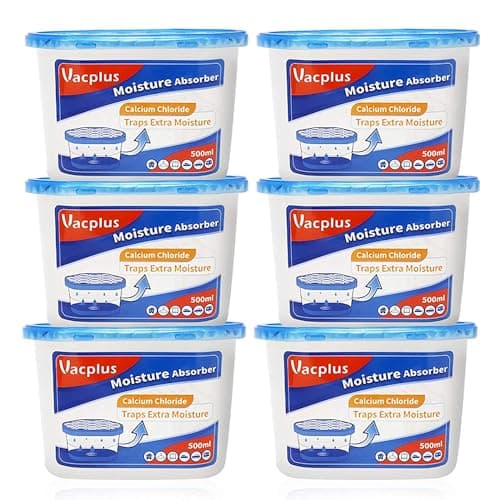
Vacplus Fragrance Free Moisture Absorber Boxes (10.5 oz, Calcium Chloride)See it on Amazon ↗

Quick Verdict

Fragrance-free boxes with a sealed water chamber — the default for cabinets, pantries and laundry rooms.

Key Specs

Type

Spherical calcium chloride granules over a separate water-collecting layer

Size (each)

10.5 oz

Leak protection (stated)

Moisture-locking paper over the collecting layer

Pack count

Not stated in the listing title; check the option selected

Life and coverage

Not stated on this listing

Power and scent

No power needed; fragrance free

Pros

  • Fragrance free, so it adds no perfume to a cabinet of food, towels or clothes
  • The collected water sits in its own chamber under a locking paper layer that the listing says is there to stop leaks
  • The water level shows through the box, so you can see how fast a space is producing moisture
  • Round granules are listed as speeding absorption by exposing more surface to the air

Cons

  • This listing states no duration and no coverage area, so judge replacement by the water level
  • The locking paper is meant to resist spills, but the box still fills with brine; keep it off leather, metal and finished wood and away from pets

Suited to

Kitchen and bathroom cabinets, pantries, closets and laundry rooms

Our take

Calcium chloride is a salt that pulls water vapor from the air until it dissolves into a brine, which is why these boxes fill with liquid rather than just growing heavier. The Vacplus design puts the granules on top and the liquid underneath, behind a paper layer meant to hold it in place if the box is bumped. That matters most in the places absorbers are genuinely useful: the cabinet under a bathroom sink, a pantry shelf, a closet shelf. Use one box per closed space, not one per room, and look at it after two weeks. A box that is half full by then points to a drip or a damp wall, which is worth finding before buying more boxes.

Check today's price on Amazon →

Affiliate link — commission at no extra cost to you

Compare elsewhere

These open a search for this model. We quote prices only where we can verify them — Amazon, Sylvane and eBay.

#2
Best for Storage Rooms and RVs

Check price

on Amazon ↗

Listing verified 13 Oct 2026

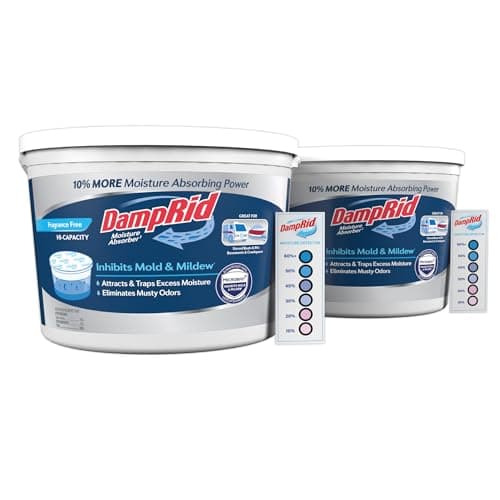
DampRid Hi-Capacity Fragrance Free Moisture Absorber Bucket (2 lb 15.5 oz, 2 Pack)See it on Amazon ↗

Quick Verdict

The most capacity here, for storage rooms, RVs and boats — not a stand-in for a basement dehumidifier.

Key Specs

Type

Bucket of fragrance-free moisture-absorbing granules

Size (listed)

2 lb 15.5 oz, two-pack

Included

Moisture detection strip

Placement (stated)

Shelves or floors; closets, basements, bathrooms, RVs

Life and coverage

Not stated on the listing

Power

None required

Pros

  • The largest container on this page, so it lasts longer between replacements in a storage room or an RV
  • Unscented granules, with nothing added to hide a musty smell
  • Two buckets can treat two spaces, or double up in one larger storage room
  • Comes with a moisture detection strip

Cons

  • The listing gives no running time, no coverage figure and no instructions for the detection strip
  • It can steady the air in a closed storage room or RV but cannot dry a basement, which takes an electric dehumidifier
  • A full bucket holds a lot of brine; set it on a tray rather than straight on carpet or wood

Suited to

A closed storage room, laundry room, RV or boat cabin during the off-season

Our take

A bigger container lasts longer in the same space; it does not let an absorber handle a bigger space. That distinction decides where a bucket like this belongs. In an RV parked for the winter, a boat cabin or a storage room kept shut, a small box would be spent in a few weeks and this one keeps going. In an open, damp basement, where even a dehumidifier removing many pints a day can struggle, an absorber measured in pounds of granules will not make a dent. Because the listing states no running time, write the start date on the lid and note how long it takes to fill; that number tells you whether the space is dry enough for an absorber at all.

Check today's price on Amazon →

Affiliate link — commission at no extra cost to you

#3
Best Refillable

Check price

on Amazon ↗

Listing verified 13 Oct 2026

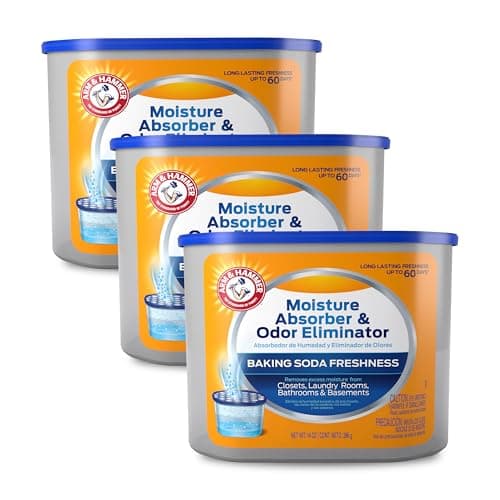
Arm & Hammer Fragrance Free Refillable Moisture Absorber (14 oz Tub)See it on Amazon ↗

Quick Verdict

A tub you keep and refill for the same damp spot each season, at the cost of handling the brine.

Key Specs

Type

Refillable tub of moisture-absorbing crystals

Size

14 oz tub

Life (claimed)

Up to 60 days, depending on temperature and humidity

Refilling (stated)

Once the crystals have dissolved, discard the remaining water and refill

Placement (stated)

Closets, laundry rooms, mud rooms

Pack contents

One tub; refill crystals are not described on the listing

Pros

  • The tub is kept and only the crystals are replaced, which cuts down on plastic over a year
  • Up to 60 days per fill by the listing's count
  • Fragrance free
  • Setup is a lid and a foil seal, with nothing to assemble

Cons

  • Emptying it means pouring off brine, which is messier than throwing away a sealed cup
  • One tub treats one closed space; a house with several damp spots needs several

Suited to

A mud room, laundry room or coat closet that you plan to treat every year

Our take

Refillable absorbers make sense where the damp is seasonal but permanent: the laundry room that is humid every summer, the coat closet that takes in wet boots each winter. You keep the tub and replace only the crystals. The work is the pour-off. Once the crystals have dissolved, what is left is a salty brine, and the listing's instruction is to discard it and refill; do that over a sink or toilet, rinse the tub, and wipe up drips before they dry into a crust on the floor. Sixty days is the listing's upper figure, so a tub that runs out of crystals in two weeks is telling you the space needs more than an absorber.

Check today's price on Amazon →

Affiliate link — commission at no extra cost to you

#4
Best for Cars

Check price

on Amazon ↗

Listing verified 13 Oct 2026

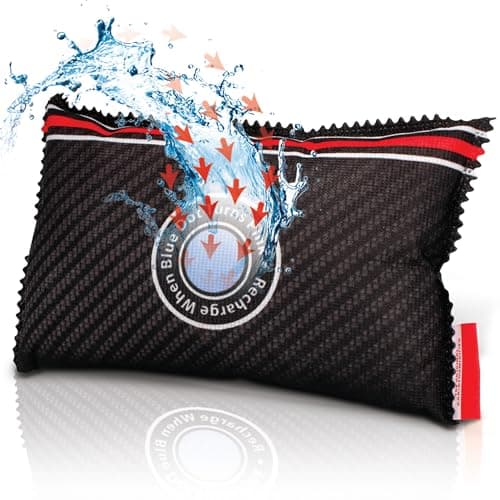
Zarpax Reusable Silica Gel Car Dehumidifier Bag (Microwave Recharge, Color Indicator)See it on Amazon ↗

Quick Verdict

Leak-free and reusable for a car — it helps with fog and stale air, not with a leak.

Key Specs

Type

Rechargeable silica gel bag

Recharge (stated)

6 minutes in a microwave, or on a radiator or in direct sun until the indicator turns bright blue

Indicator (stated)

Turns pink when it needs recharging

Leaks (stated)

Will not leak or stain

Pack

1 bag

Capacity

Not stated in the listing bullets

Pros

  • Holds water inside the gel, so there is no brine to spill on carpet or upholstery when the car corners or brakes
  • Reusable, recharged in a microwave in six minutes by the listing's instructions
  • A color indicator shows when it is spent
  • The listing also names gun safes, drawers and fridges as uses

Cons

  • Its capacity is not stated, and one bag will not dry a car with a leaking seal or soaked carpet
  • Follow the six-minute microwave time on the listing rather than guessing at longer heating

Suited to

A car, truck or RV cab with foggy windows and a faint musty smell

Our take

A car is a poor place for calcium chloride. Containers slide and tip, the brine they collect harms carpet and metal, and DampRid's own listing for its disposable cups says not to use them in moving vehicles. A silica gel bag avoids all of that: the water stays bound in the beads, and when the indicator turns pink you dry it out and use it again. Keep it somewhere it cannot slide under the pedals. It will help with window fog and stale air in a car that sits closed. It will not dry a car after a leak, where wet carpet and padding have to come out and dry, and the seal or drain that let the water in has to be found.

Check today's price on Amazon →

Affiliate link — commission at no extra cost to you

#5
Best for Bathroom Cabinets

Check price

on Amazon ↗

Listing verified 13 Oct 2026

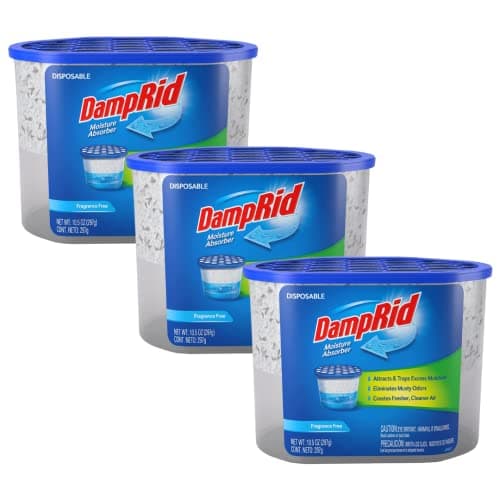
DampRid Fragrance Free Disposable Moisture Absorber Cups (10.5 oz, 3 Pack)See it on Amazon ↗

Quick Verdict

Small fragrance-free cups for the enclosed corners of a bathroom or kitchen; the fan still handles the shower.

Key Specs

Type

Disposable cup of moisture-absorbing crystals

Pack

Three 10.5 oz cups

Life (claimed)

Up to 45 days, depending on temperature and humidity

Replace when

Full of liquid with all the white crystals dissolved

Label cautions (stated)

Keep out of reach of children; do not allow contact with leather or metal; do not use in moving vehicles

Placement (stated)

Bathrooms, laundry rooms, kitchens, closets, pantries, storage rooms, basements, garages

Pros

  • A 10.5 oz cup is small enough for a vanity cabinet or a linen closet shelf
  • The listing spells out its cautions plainly, including keeping it away from leather and metal
  • Fragrance free
  • Disposable: once the crystals are gone the whole cup goes in the trash, with no pouring

Cons

  • Up to 45 days, shorter than the 60 days some larger containers claim
  • It cannot clear shower steam; a bathroom still needs its exhaust fan running during and after showers

Suited to

The cabinet under a bathroom or kitchen sink, a linen closet, or a small powder room with no window

Our take

In a bathroom, an absorber has a narrow job. A single shower puts far more water vapor into the air than a cup like this can take in over a day, so the exhaust fan has to do the heavy lifting. Where a cup earns its place is in the enclosed spots the fan never reaches: the vanity cabinet, the linen closet, the space under the kitchen sink. Before setting one under a sink, look for drips at the trap and the supply lines; a cabinet that smells musty usually has a slow leak, and an absorber would only hide the symptom. Keep the cup upright and clear of metal pipes and fittings, as the label asks.

Check today's price on Amazon →

Affiliate link — commission at no extra cost to you

Buyer's Guide

What to know before you buy.

How a Moisture Absorber Works

Most crystal absorbers use calcium chloride, a salt that pulls water vapor out of the air; Vacplus names it on its listing, and DampRid-type cups work the same way. As the crystals take on water they clump, then dissolve into a liquid brine that collects at the bottom of the container, which is why a working absorber visibly fills. Silica gel works differently. The beads hold water on their surface and stay dry to the touch, and heating them drives the water back out so they can be reused. Neither type has a fan, and each acts only on the still air close to it. That is why absorbers do well in a shut cabinet or closet and do little in an open room, where air and moisture keep moving in.

Dehumidifier vs DampRid

The difference is scale. An electric dehumidifier pulls air across a cold coil and removes pints of water a day; even a small 22-pint compressor unit is rated to take out up to about 10 liters in 24 hours under its test conditions. A DampRid cup holds 10.5 oz of crystals and lasts up to 45 days, so it collects ounces over weeks. That makes the choice straightforward. For a cabinet, a closet, a car, a boat or a small room that stays closed, an absorber is enough and needs no outlet. For a basement, a bedroom with a damp wall, or any space where a hygrometer reads above 60%, it takes an electric dehumidifier, and an ENERGY STAR certified model does the same job on less electricity.

Where Absorbers Work, and Where They Don't

Absorbers suit enclosed, low-traffic spaces with a steady, modest amount of damp: closets, pantries, the cabinet under a sink, a gun safe, a storage tote, an RV or boat laid up for the season, a car parked for weeks. They are the wrong tool after water damage. The EPA advises drying water-damaged materials within 24 to 48 hours to prevent mold growth, which takes fans and a dehumidifier moving many pints a day; an absorber set in a wet room only fills quickly and changes nothing. The same goes for a basement that smells musty all summer. If an absorber in a closed space fills within a week or two, treat that as a measurement: the space is producing more water than it should, and the source deserves a look.

Handle the Brine With Care

The liquid in a calcium chloride absorber is a strong salt solution, and it does damage where it lands. It corrodes metal, stains and stiffens leather, can mark finished wood, and irritates skin and eyes. DampRid's own listing tells buyers to keep its cups out of reach of children, away from leather and metal, and out of moving vehicles. Set absorbers on a tray or a plastic lid rather than directly on carpet, a wood floor or a metal shelf, and put them where pets cannot knock them over or drink from them. When one is spent, carry it upright to a sink or toilet; DampRid's reusable model says to pour the liquid into a toilet or drain and rinse the container. Disposable cups and bags go in the trash once the crystals are gone.

Calcium Chloride or Silica Gel

Choose by the space. Calcium chloride takes up more water for its size and is sold as cups, buckets, hanging bags and refillable tubs, so it suits cabinets, closets, laundry rooms and storage rooms where the container stays put. Silica gel collects less, but it never turns to liquid, which makes it the safer choice anywhere a container could tip or slide: a car, a boat, a gun safe, a drawer of electronics, a packed suitcase. Silica units such as the Zarpax bag are recharged rather than replaced, by heat from a microwave, a radiator or sunlight according to its listing, and a color indicator shows when that is due. Calcium chloride is used up; disposable versions are thrown away and refillable ones take new crystals.

Fragrance and the Musty Smell

Many absorbers come scented, and for a problem space that is a mistake. A musty smell is the odor of mold or mildew growing on something damp, and it is the best early warning you have; a fresh-scent cup can mask it while the growth continues. Every crystal absorber on this page is fragrance free for that reason. Watch two things instead. The first is the fill rate: an absorber that fills far faster than its listed life is reporting a damp space. The second is humidity, which the EPA advises keeping below 60% and ideally between 30% and 50%. A hygrometer next to the absorber shows whether it is holding the space in that range or simply collecting water while the air stays damp.

Frequently Asked Questions

Are moisture absorbers any good?

YesFor small closed spaces. In a cabinet, pantry, safe or parked car, a calcium chloride or silica gel absorber can take enough water from still air to stop a musty smell and keep fabric, paper and leather dry.

They are not effective in open rooms or basements, where moisture keeps arriving faster than a few ounces of crystals can take it in. If an absorber fills within days, that space needs a dehumidifier or a repair.

Dehumidifier vs DampRid: which do I need?

Use DampRid or a similar absorber for a single closed space that needs only a few ounces of water removed: a cabinet, a closet, an RV in storage.

Use an electric dehumidifier for a room, a basement, or anywhere humidity sits above 60% or mold has appeared, because it removes pints a day rather than ounces over weeks. Many homes use both, with a dehumidifier running in the basement and absorbers in cabinets and closets upstairs.

What is the best moisture absorber for a car?

A rechargeable silica gel bag such as the Zarpax, because it holds water in the gel and cannot spill brine onto carpet, seats or metal when the car brakes or turns. DampRid's cup listing says not to use its product in moving vehicles.

Place the bag where it cannot slide under the pedals and recharge it when the indicator changes color. If the car smells musty after rain, check the door, trunk and sunroof seals for a leak.

What is the best moisture absorber for a bathroom?

A small fragrance-free cup, such as the DampRid 10.5 oz Fragrance Free, placed in the vanity cabinet or linen closet rather than out in the room.

No absorber can keep up with the steam from a shower; an exhaust fan run during each shower and for a while afterward does that job. If the cabinet under the sink smells musty, look for a drip at the trap or the supply lines before relying on an absorber.

Where is the best place to put a moisture absorber?

Inside the closed space where the dampness shows, on a level surface: the back of a cabinet, a pantry shelf, the corner of a storage room, or the rod of a closet for a hanging bag. Keep calcium chloride absorbers off carpet and wood, away from metal, and out of reach of pets and children.

One absorber in each enclosed space works better than several in one open room, because absorbers act only on the air close to them. For closets in particular, our closet dehumidifier guide compares hanging bags with mini electric units.

Is the liquid in DampRid dangerous?

It is a concentrated calcium chloride brine, so treat it with care. It irritates skin and eyes, corrodes metal, and damages leather and wood finishes. Keep containers away from children and pets, who may knock them over or drink from them, and wipe up any spill promptly with plenty of water.

To empty a refillable or reusable container, pour the liquid into a toilet or drain and rinse it; disposable cups go in the trash once the crystals are used up.

Who do I call right now for water damage?

Call (888) 840-6512. The line is answered 24 hours a day, seven days a week, and connects you with an IICRC-certified water damage restoration company that serves your area. A recorded menu picks up first: choose water damage or mold, key in your 5-digit ZIP code, and hold through the short silence while the call is passed to the company.

Describe what you can see — where the water is coming from, how long it has been there, and whether it smells — the more specific you are, the faster the right company is on the line. If the source is a pipe or an appliance, shut the main water valve first. Have four things ready and the call goes quickly: the address, when the water started, what is wet now, and whether you have filed an insurance claim.

Still not sure which of these is your situation? (888) 840-6512 · toll-free · answered 24/7

Sources

  1. EPA — A Brief Guide to Mold, Moisture, and Your Home
  2. ENERGY STAR — Dehumidifiers

Methodology: How we source and verify data · Report an error

How we chose these picks

  • Every pick is a current listing. Stock, star ratings and rating counts are read from Amazon by script and carry the date they were read.
  • Nothing under 4.0 stars makes the list, and the top pick needs a large rating count, so one good week of reviews cannot put it there.
  • Specs are quoted from the listing or the maker, with the test condition behind the number where there is one, and sized against the job rather than the room on the box.
  • We do not run lab or field tests. Where a spec matters, we say what it is measured under and what it cannot tell you.

Free 2-day shipping

Amazon Prime members pay no shipping on restoration equipment

Dehumidifiers, air movers, and moisture meters qualify for free Prime delivery — bulk items that otherwise cost $15–$40 to ship.

Try Prime free →

Affiliate link — HearthDry earns a bounty if you sign up; costs you nothing extra.

Also Worth Comparing

Best Dehumidifier for a Closet in 2026 — Hanging Absorbers, Mini Units and a Compressor for Damp Walk-Ins

A closed closet trades very little air with the rest of the house, so a hanging absorber or a mini dehumidifier can keep up with it where it could never dry a room. The picks here are sorted by the closet you have: no outlet, an outlet, or a walk-in beside a damp wall or a bathroom.

Read the comparison

Best Dehumidifier for Home in 2026 — Sized by Room, Dampness and Drain

The right dehumidifier for a home depends on the size of the space and how damp it is, and the pint number on the box depends on which test produced it. These five picks run from a 22-pint single-room unit to an 80-pint machine for a whole basement, compared on the figures their listings actually state.

Read the comparison

Best Dehumidifier for Basement Use in 2026 — Drain Hose, Built-In Pump and Honest Pint Ratings

Most basement dehumidifier disappointment comes from two numbers nobody reads properly: the pint rating, measured at warm test conditions a 60°F basement never reaches, and the drainage method. Five units are compared here on those two points first, from a garden-hose drain to a built-in pump with a stated 15 ft lift.

Read the comparison

Best Dehumidifier for a Bathroom in 2026 — For Rooms With No Exhaust Fan or a Weak One

An exhaust fan ducted outdoors is the real fix for a steamy bathroom, and a plug-in dehumidifier is what you add when there is no fan or the one you have barely pulls. The units small enough for a bathroom remove ounces of water a day, so their job is drying the walls, ceiling and grout sooner after the steam clears, not clearing the steam.

Read the comparison

Best Dehumidifiers for Gun Safes in 2026 — Heating Rods vs Rechargeable Desiccant

A gun safe dehumidifier comes in two kinds: a heating rod that needs a cord into the safe and keeps the air warm enough that relative humidity stays low, and a rechargeable desiccant that soaks up water with no cord at all. Which one is right depends on whether you can get power inside, how big the safe is and how damp the room around it gets.

Read the comparison

DampRid Review 2026 — Which DampRid Suits a Closet, a Cabinet or a Storage Room, and When You Need a Dehumidifier Instead

DampRid sells the same idea in five shapes: crystals that pull water from still air and turn it into a salty liquid you can see. This review compares the hanging bags, buckets, refillable cups, tablet tubs and charcoal canisters from their listings and buyer ratings, with the arithmetic that shows where an absorber stops and a dehumidifier has to take over.

Read the comparison