

Best Dehumidifier for Home in 2026 — Sized by Room, Dampness and Drain

Best Dehumidifier for Home in 2026

Sized by Room, Dampness and Drain

5 picks compared · prices, ratings and stock checked October 11, 2026

Our Top Pick

For most rooms and apartments, the Kesnos 30 Pint: the strongest buyer record among the mid-size units, a 36 dB noise claim and memory restart after a power cut. For a whole basement or a very damp space, the AEOCKY RHEA-001; for the most efficient mid-size unit, the Waykar 34 Pint.

4.5 on Amazon · 4,217 ratings

Quick answer

For most homes, the right dehumidifier is a mid-size ENERGY STAR compressor unit of about 30 to 35 pints on its label, with a hose outlet so it can drain without a tank to empty. The Kesnos 30 Pint is the default pick, rated 4.5 stars across 4,217 Amazon ratings, quoted at 36 dB and built to restart itself after a power cut. Step up to an 80-pint unit such as the AEOCKY RHEA-001 for a whole basement or a space with wet walls, and down to a 22-pint unit for one damp room. Set any of them to hold 30–50% humidity.

Our Picks at a Glance

Every pick below is currently stocked — ratings and stock read from Amazon on 11 October 2026.

Best for a Single Room
BLACK+DECKER BD22MWSA 22 Pint Dehumidifier (Drain Hose Included)
4.4 from 356 Amazon ratings · checked 11 Oct

Best for: One damp room of a few hundred square feet, such as a bedroom, laundry room or small basement den

Capacity (stated):
Up to 22.27 pints per 24 hours (test conditions not stated on the listing)
Coverage (stated):
Up to 1,500 sq ft under the 2012 DOE standard; 280 sq ft under the 2019 DOE standard

Listing verified 13 Oct 2026

How this page was made: we compare the current Amazon listings, the makers' published specs and what verified buyers report, then rank by fit for the job. Ratings, review counts and stock are read from Amazon and dated. We earn a commission on purchases through our links; it does not change the order. Reviewed by Marcus Reed, IICRC-certified Water Restoration Technician.

Full Reviews

Each pick in detail: what the listing states, what buyers report, and where it falls short.

#1
Best Overall

Check price

on Amazon ↗

Listing verified 13 Oct 2026

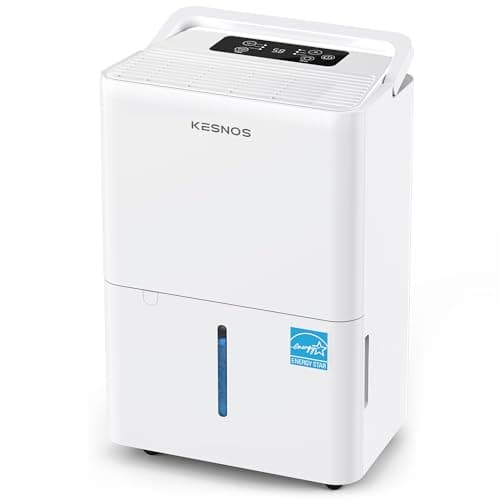
Kesnos 30 Pint ENERGY STAR Dehumidifier (2,500 Sq Ft, Drain Hose Included)See it on Amazon ↗

Quick Verdict

The default mid-size home dehumidifier: 36 dB claimed, memory restart and a hose in the box — run it on the hose, because the tank is tiny.

Key Specs

Capacity (stated)

30 pints/day at 95°F, 90% RH

Coverage (claimed)

Up to 2,500 sq ft

Efficiency

2025 ENERGY STAR certified; ETL, CEC and DOE listed

Drainage

0.39 gal tank with auto shut-off and full indicator, or the included 3.3 ft hose (extends with a 1/2 in garden hose, not included)

Humidity and modes

Built to bring a room down to 30% RH; Comfort, Dry, Continuous and Turbo modes

Noise (claimed)

36 dB (mode and distance not stated)

Pros

  • The strongest buyer record among the mid-size units on this page, with an Amazon's Choice badge
  • Quoted at 36 dB, the lowest noise figure among these five
  • Memory restart and automatic defrost, so it comes back on after an outage and keeps working in a cool room
  • A 3.3 ft drain hose comes in the box for continuous drainage

Cons

  • The 0.39 gallon tank holds about 3 pints, so in a damp room it fills within hours unless the hose is connected
  • The 30-pint figure is measured at 95°F and 90% RH, and the listing gives no capacity at the cooler DOE test point
  • The 2,500 sq ft coverage claim is the maker's ceiling, not a sizing guide

Suited to

A living area, home office, apartment or mildly damp basement room with a drain within reach of the hose

Our take

This is the size most homes need: a compact compressor unit for a living area, a home office, an apartment or a mildly damp basement room. Read its numbers with care. The 30 pints is measured at 95°F and 90% relative humidity, far warmer and wetter than any living room, so it will pull less than that from your house, and the listing gives no figure at the cooler DOE test point. The tank is the other catch: 0.39 gallons is a little over 3 pints, so in a genuinely damp room it fills within hours. Run the included hose to a floor drain or anywhere lower than the outlet and it keeps going indefinitely, restarting itself after a power cut.

Check today's price on Amazon →

Affiliate link — commission at no extra cost to you

Compare elsewhere

These open a search for this model. We quote prices only where we can verify them — Amazon, Sylvane and eBay.

#2
Most Efficient Mid-Size

Check price

on Amazon ↗

Listing verified 13 Oct 2026

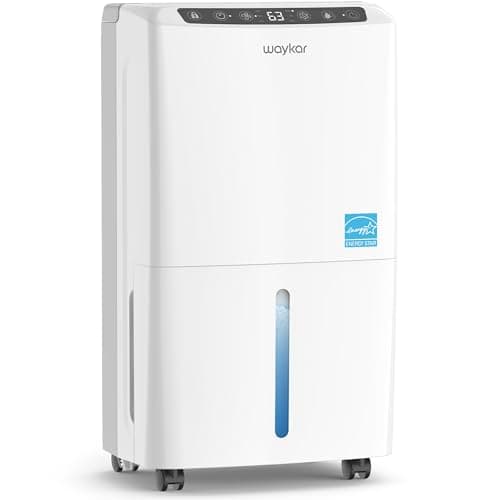
Waykar 34 Pint ENERGY STAR Most Efficient 2025 Dehumidifier (2,000 Sq Ft)See it on Amazon ↗

Quick Verdict

The efficient mid-size choice: ENERGY STAR Most Efficient 2025, a 30–80% humidity setting and power outage memory.

Key Specs

Capacity (stated)

34 pints/day at 95°F, 90% RH

Coverage (claimed)

Up to 2,000 sq ft

Efficiency

Listed as 2025 ENERGY STAR Most Efficient; DOE and TUV listed

Humidity setting

30% to 80%

Drainage

0.62 gal tank with auto shut-off, or the included 3.3 ft hose

Noise (claimed)

As low as 38 dB on the low fan speed; 2 fan speeds

Pros

  • Listed as 2025 ENERGY STAR Most Efficient, the top efficiency tier, in a mid-size body
  • A humidity setting from 30% to 80%, so it can hold the EPA's recommended range
  • Power outage memory, auto defrost, overload protection and a child lock
  • Quoted as low as 38 dB on its low fan speed

Cons

  • The 0.62 gallon tank holds about 5 pints; the included hose is the practical way to run it
  • The 34-pint figure is measured at the same 95°F, 90% RH saturation point as the Kesnos
  • The energy-savings claims on the listing are the maker's own estimates

Suited to

A room or apartment where the unit will run for months and running cost matters as much as the purchase

Our take

The certification is the reason to pick this over the Kesnos. ENERGY STAR Most Efficient goes to the top tier of certified models each year, and a dehumidifier that runs through a humid summer piles up its running cost hour by hour, so efficiency is the specification that keeps paying. It also gives you a humidity setting from 30% to 80% and two fan speeds, with the low speed quoted at 38 dB. Treat the savings figures on the listing as the maker's estimate rather than a planning number. One practical note from the listing itself: when you use the tank instead of the hose, the drain-pipe switch has to be tightened, or water can leak from the outlet.

Check today's price on Amazon →

Affiliate link — commission at no extra cost to you

#3
Best for Large or Very Damp Spaces

Check price

on Amazon ↗

Listing verified 13 Oct 2026

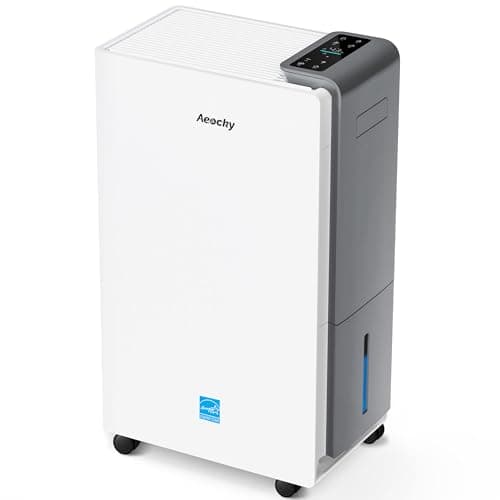
AEOCKY RHEA-001 Large-Space Dehumidifier (80 Pints Max, 5,500 Sq Ft)See it on Amazon ↗

Best for Large or Very Damp Spaces

AEOCKY RHEA-001 Large-Space Dehumidifier (80 Pints Max, 5,500 Sq Ft)

4.5(7,123 reviews)

Quick Verdict

The large-space pick: 56 pints a day at 86°F, ENERGY STAR Most Efficient 2025 and power-off memory — confirm the drain setup.

Key Specs

Capacity (stated)

80 pints/day at 95°F, 95% RH; 56 pints/day at 86°F, 80% RH

Coverage (claimed)

Up to 5,500 sq ft

Efficiency

Listed as ENERGY STAR Most Efficient 2025

Noise (claimed)

44 dB at the lowest fan speed

Restart

Power-off memory; resumes after power returns

Cold-room operation

Defrost sensors for running in cooler spaces

Pros

  • Two stated capacity figures, including 56 pints a day at 86°F and 80% RH, closer to real conditions than a saturation number
  • Listed as ENERGY STAR Most Efficient 2025, which counts most on a unit big enough to run all season
  • Power-off memory resumes operation after an outage
  • Defrost sensors for cooler spaces, and 3-year coverage per the listing

Cons

  • The listing bullets do not state the tank size or the drain-hose length
  • At 31 lb and just over 24 inches tall, it is a basement machine rather than one to carry from room to room
  • The listing's humidity-accuracy and low-temperature claims come with no figures to check them against

Suited to

A whole basement, an open-plan floor or a space with condensation on walls and windows

Our take

For a whole basement, an open-plan ground floor or any space with condensation on the walls, a mid-size unit will run flat out without catching up, and this is the step up. Its listing gives two capacity figures: 80 pints a day at 95°F and 95% RH, and 56 pints at 86°F and 80% RH. The second is the more useful one, and even that is warmer than a basement, where any compressor unit pulls less. It is listed as ENERGY STAR Most Efficient 2025, quotes 44 dB on its lowest fan speed and resumes after a power cut. What the bullets do not give is the tank size or a hose length, so check the drain arrangement on the product page before relying on it to run unattended.

Check today's price on Amazon →

Affiliate link — commission at no extra cost to you

#4
Biggest Bucket

Check price

on Amazon ↗

Listing verified 13 Oct 2026

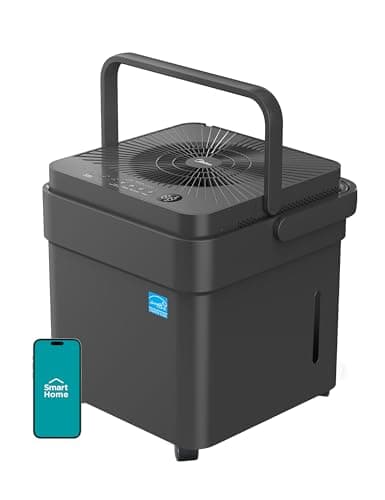
Midea Cube 35 Pint Dehumidifier (4.2 Gal Bucket, Wi-Fi)See it on Amazon ↗

Quick Verdict

The bucket you empty about once a day instead of several times, with a rating on the current DOE test — noise and auto-restart not stated.

Key Specs

Capacity (stated)

35 pints/day, described as similar to 50 pints under the 2012 DOE test

Coverage (claimed)

Up to 3,500 sq ft

Humidity setting

35% to 85%

Bucket

4.2 gal (15.9 L), removable

Drainage

Included drain hose for continuous drainage (length not stated)

Controls

Wi-Fi app; Alexa and Google Assistant voice control

Pros

  • Ties its 35-pint rating to the 50-pint figure under the 2012 DOE test, so it can be compared with older labels
  • A 4.2 gallon bucket holds about 33 pints, close to a day's rated output and the largest tank on this page
  • An included hose for continuous drainage wherever a drain sits lower than the unit
  • A humidity setting from 35% to 85%, with app and voice-assistant control

Cons

  • A much shorter buyer record than the Kesnos or Waykar listings
  • The listing does not state a noise level or whether it restarts after a power cut
  • The 3,500 sq ft coverage claim is the maker's ceiling

Suited to

A room with no drain nearby, where a tank that lasts about a day matters more than anything else

Our take

Two details set this listing apart. The first is the rating: it gives 35 pints a day and says that is similar to 50 pints under the 2012 DOE test, which places the 35 on the current, cooler DOE test rather than a saturation point. Compared like for like, it is a larger machine than its label suggests. The second is the bucket. At 4.2 gallons, about 33 pints, it holds roughly a full day of the unit's rated output, where most portable units need emptying within hours. That makes it the pick for a room with no drain. What the listing leaves out is a noise figure and any mention of restarting after an outage, so confirm both if they matter to you.

Check today's price on Amazon →

Affiliate link — commission at no extra cost to you

#5
Best for a Single Room

Check price

on Amazon ↗

Listing verified 13 Oct 2026

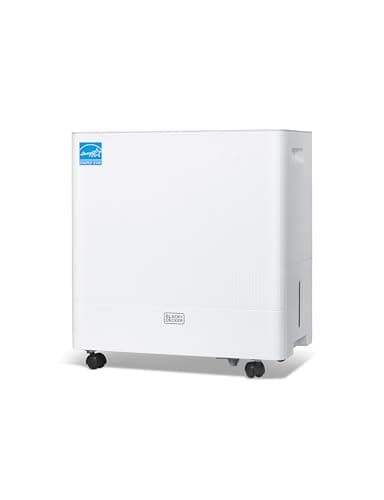
BLACK+DECKER BD22MWSA 22 Pint Dehumidifier (Drain Hose Included)See it on Amazon ↗

Quick Verdict

An honest single-room unit: 280 sq ft under the 2019 DOE standard, a hose in the box and an audible full alert.

Key Specs

Capacity (stated)

Up to 22.27 pints per 24 hours (test conditions not stated on the listing)

Coverage (stated)

Up to 1,500 sq ft under the 2012 DOE standard; 280 sq ft under the 2019 DOE standard

Bucket

6.8 pints, detachable

Hose

3.2 ft, included, for continuous drainage

Efficiency

Listed as ENERGY STAR and UL certified; R32 refrigerant

Full-tank protection

Overflow shut-off with indicator light and audible alert

Pros

  • States its coverage under both the 2012 and 2019 DOE standards, the most honest sizing figure on this page
  • An adjustable humidistat with a digital display
  • Overflow shut-off with both an indicator light and an audible alert
  • Includes a 3.2 ft hose for continuous drainage

Cons

  • The listing gives no noise figure and does not say whether it restarts after a power cut
  • The 6.8-pint bucket holds less than a third of the unit's stated daily output
  • The test conditions behind the 22.27-pint figure are not stated

Suited to

One damp room of a few hundred square feet, such as a bedroom, laundry room or small basement den

Our take

This listing makes the clearest case on the page for reading coverage claims with care. It states that the same machine covers up to 1,500 square feet under the 2012 DOE standard and 280 square feet under the 2019 one: one unit, two tests, more than a fivefold difference. The 280 is the number to plan with, and it describes what this is, a single-room dehumidifier for a damp bedroom, a laundry room or a small finished basement space. It includes a 3.2 ft drain hose and a 6.8-pint bucket that shuts the unit off and sounds an alert when full, and it is listed as ENERGY STAR certified. Noise and auto-restart are the gaps.

Check today's price on Amazon →

Affiliate link — commission at no extra cost to you

Buyer's Guide

What to know before you buy.

Size It by the Space and How Damp It Is

Start with two questions: how big is the space, and how wet is it. A single room that feels clammy is a small job, and a 22-pint unit such as the BLACK+DECKER covers it. A living area, an apartment or one basement room with a musty smell is a medium job, suited to a 30- to 35-pint unit like the Kesnos, Waykar or Midea Cube. A whole basement, an open-plan floor or any space with condensation on the walls, damp carpet or water on the windows each morning is a large job, and that is where an 80-pint unit like the AEOCKY earns its size. Before buying, leave a digital hygrometer in the space for a day. The EPA recommends keeping indoor humidity between 30% and 50%; the further above that the reading sits, the bigger the machine you need.

Pint Ratings and the 2019 DOE Test

The pint figure on a dehumidifier box is only comparable when you know the test behind it. Since 2019 the Department of Energy has rated capacity at 65°F and 60% relative humidity, cooler than the 80°F of the earlier test, so the same machine now earns a smaller number. The Midea Cube says as much: its 35 pints are similar to 50 under the 2012 test. Many listings instead quote a saturation figure, such as 95°F and 90% RH for the Kesnos and Waykar, which makes a unit look larger. BLACK+DECKER shows how far apart the standards sit, quoting 1,500 square feet under the 2012 test and 280 under the 2019 one for the same unit. Compare like with like, and when a listing names no test point, treat its figure as a maximum.

ENERGY STAR and Most Efficient

A dehumidifier can run most of the day for months at a time, so efficiency matters more than it does for most appliances. ENERGY STAR certification sets a minimum efficiency, measured in liters of water removed per kilowatt-hour on the DOE test. ENERGY STAR Most Efficient goes further and recognizes the top tier of certified models in a given year; the Waykar 34 Pint and the AEOCKY RHEA-001 are both listed as Most Efficient 2025. Kesnos, Midea and BLACK+DECKER list standard ENERGY STAR certification. The savings percentages printed on listings are the makers' own estimates and vary widely, so judge on the certification itself, which the ENERGY STAR website lets you look up by brand and model number.

Drain Hose, Tank or Pump

How the water leaves decides how often you have to think about the machine. Tanks on this page range from 0.39 gallons on the Kesnos, about 3 pints, to 4.2 gallons on the Midea Cube, about 33 pints. A small tank in a damp room means emptying it several times a day, and a full tank stops the unit. A drain hose fixes that, but only by gravity: it needs a floor drain, sump or utility sink lower than the unit's outlet. Four of the five picks include a hose in the box; the AEOCKY's bullets do not describe its drainage. If the only drain is higher than the floor, such as a laundry sink rim or a window, you need a model with a built-in pump, which has its own buying guide.

Noise, Humidistat Accuracy and Auto-Restart

Noise figures on listings are makers' numbers with no stated distance or mode, so treat a few decibels as a tie; Kesnos quotes 36 dB, Waykar 38 dB on low and AEOCKY 44 dB on its lowest fan. A compressor unit also cycles on and off as it reaches its set point, which some people notice more than a steady hum. The built-in humidistat reads the air at the unit's own intake, which can differ from the far side of the room, so check the display once against a separate hygrometer and adjust the set point to match. Auto-restart matters more than it sounds: after a storm knocks the power out, a unit without it stays off until someone notices. Kesnos, Waykar and AEOCKY state it; the Midea Cube 35 and BLACK+DECKER listings do not.

When a Space Needs a Specialized Unit

A general-purpose unit covers most rooms, but some spaces have their own demands. A cold basement or an unheated garage needs a unit that defrosts and keeps working as the temperature falls, because compressor coils frost as a room cools. A bedroom needs low noise and a light that goes fully dark. In a bathroom, the EPA's first advice is to vent moisture outside with an exhaust fan, with a compact unit for what the fan cannot clear. A home where every floor runs damp may be better served by a ducted whole-house dehumidifier tied into the HVAC system. And where mold has already grown, a dehumidifier helps stop it coming back but does not remove it; fix the moisture source and clean the growth first. Each of these has its own buying guide among the related reviews on this page.

Frequently Asked Questions

How strong of a dehumidifier do I need?

Match it to the space and how damp it is, using a figure from a known test. For one damp room, a small unit such as the 22-pint BLACK+DECKER, rated for 280 square feet under the 2019 DOE standard, is enough. A living area or apartment suits a 30- to 35-pint unit.

A whole basement or a space with wet walls needs a large unit; the AEOCKY quotes 56 pints a day at 86°F and 80% RH. If a unit runs constantly and the hygrometer still sits above 50%, it is too small for the space.

What is the best place to put a dehumidifier?

In the dampest space, as close as practical to where the moisture comes from, with the doors and windows to that space closed. Stand it on a hard, level floor in an open spot, with the intake and outlet clear of walls, curtains and furniture so air can reach it from every side.

If you are running a hose, place it beside a floor drain or sump so the water runs downhill, and check the hose end after the first day.

What should I set my dehumidifier to in my house?

Between 40% and 50% relative humidity for most of the year. The EPA recommends keeping indoor humidity between 30% and 50%, and below 60% at most, because mold can establish on damp surfaces above that level.

Pushing a house much below 40% adds running time without a real benefit and can leave the air feeling dry. If your unit has no numbered setting, use its continuous or auto mode and watch a separate hygrometer instead.

How long does it take a dehumidifier to reduce humidity?

It dependsOn the size of the space, how much moisture is stored in carpet, drywall and furniture, and how much is still coming in.

In the first days the tank tends to fill fastest while the reading falls slowly, because the unit is pulling stored moisture out of materials as well as the air. Track it with a hygrometer: a steady fall toward 50% over the first week means the unit suits the space, and no movement means it is too small or water is still getting in.

Can one dehumidifier do a whole house?

A portable unit dries the space it sits in and the rooms that share open air with it; it does little for rooms behind closed doors or on another floor. In an open-plan single-story home a large unit can cover a lot of ground.

In a multi-story house with closed rooms, use a unit in each problem area or consider a ducted whole-house dehumidifier that works through the HVAC system. Coverage claims on portable listings, such as 5,500 square feet, describe a ceiling rather than a promise.

Which brand of dehumidifier is best?

NoSingle brand wins on every point, so choose on stated figures and buyer record rather than the name.

On this page Kesnos has the strongest buyer record among the mid-size units, Waykar and AEOCKY carry ENERGY STAR Most Efficient 2025 listings, Midea gives a rating tied to the DOE test with the largest bucket, and BLACK+DECKER states its coverage under both DOE standards. Whichever brand you pick, confirm ENERGY STAR certification, a hose outlet and a capacity figure with its test conditions.

Who do I call right now for water damage?

Call (888) 840-6512. The line is answered 24 hours a day, seven days a week, and connects you with an IICRC-certified water damage restoration company that serves your area. A recorded menu picks up first: choose water damage or mold, key in your 5-digit ZIP code, and hold through the short silence while the call is passed to the company.

Describe what you can see — where the water is coming from, how long it has been there, and whether it smells — the more specific you are, the faster the right company is on the line. If the source is a pipe or an appliance, shut the main water valve first. Have four things ready and the call goes quickly: the address, when the water started, what is wet now, and whether you have filed an insurance claim.

Still not sure which of these is your situation? (888) 840-6512 · toll-free · answered 24/7

Sources

  1. EPA — A Brief Guide to Mold, Moisture, and Your Home
  2. ENERGY STAR — Dehumidifiers
  3. ENERGY STAR — Most Efficient

Methodology: How we source and verify data · Report an error

How we chose these picks

  • Every pick is a current listing. Stock, star ratings and rating counts are read from Amazon by script and carry the date they were read.
  • Nothing under 4.0 stars makes the list, and the top pick needs a large rating count, so one good week of reviews cannot put it there.
  • Specs are quoted from the listing or the maker, with the test condition behind the number where there is one, and sized against the job rather than the room on the box.
  • We do not run lab or field tests. Where a spec matters, we say what it is measured under and what it cannot tell you.

Free 2-day shipping

Amazon Prime members pay no shipping on restoration equipment

Dehumidifiers, air movers, and moisture meters qualify for free Prime delivery — bulk items that otherwise cost $15–$40 to ship.

Try Prime free →

Affiliate link — HearthDry earns a bounty if you sign up; costs you nothing extra.

Also Worth Comparing

Best Dehumidifier for Basement Use in 2026 — Drain Hose, Built-In Pump and Honest Pint Ratings

Most basement dehumidifier disappointment comes from two numbers nobody reads properly: the pint rating, measured at warm test conditions a 60°F basement never reaches, and the drainage method. Five units are compared here on those two points first, from a garden-hose drain to a built-in pump with a stated 15 ft lift.

Read the comparison

Best Dehumidifier for a Bedroom or Apartment in 2026 — Quiet Small-Room Units Compared

A bedroom dehumidifier has to be quiet enough to sleep beside, and five of the six picks here are thermoelectric units that remove ounces of water a day rather than pints. That is enough for a stuffy bedroom, closet or studio apartment; for a room with wet windows every morning, the sixth pick is a small compressor unit rated in pints.

Read the comparison

Best Dehumidifier for a Bathroom in 2026 — For Rooms With No Exhaust Fan or a Weak One

An exhaust fan ducted outdoors is the real fix for a steamy bathroom, and a plug-in dehumidifier is what you add when there is no fan or the one you have barely pulls. The units small enough for a bathroom remove ounces of water a day, so their job is drying the walls, ceiling and grout sooner after the steam clears, not clearing the steam.

Read the comparison

Best Dehumidifiers With a Built-In Pump in 2026 — Compared on Lift Height

A built-in pump is the answer when the only drain is above the dehumidifier: a laundry sink, a standpipe or a window. It is only an answer if it can lift water that high, and two of the four listings here state a lift height while two do not.

Read the comparison

Best Whole House Dehumidifiers in 2026 — Installed, Ducted and Sized to the Home

A whole house dehumidifier is installed, drains itself and, in most homes, is ducted into the heating and cooling system so it dries every room the air reaches. Three AprilAire E-series units carry the strongest buyer record in a category with far fewer ratings than portables, and one large portable is here for the open basement that does not need ducts.

Read the comparison

Best Dehumidifier for Mold and Musty Smells in 2026 — Picked to Hold a Room Below 50%

A dehumidifier stops mold by taking away the damp it needs, and the musty smell usually leaves with the damp. It does not kill mold that is already growing, so these picks are judged on the job they can do: holding a basement, a room or a closet below 50% humidity, day after day.

Read the comparison

Best Dehumidifiers for a Garage in 2026 — Judged on Cold-Weather Specs and Drainage

A garage is the hardest space in a house to dehumidify: it runs cold, it leaks air and it rarely has a drain. These four picks are judged on the specifications that decide whether a unit keeps working there, from a capacity stated at cool conditions and auto defrost to a desiccant option for winter and a hose that reaches a drain.

Read the comparison

Dehumidifier vs Humidifier in 2026 — Which One Your Air Needs, and the Ones Worth Buying

A dehumidifier and a humidifier are opposites: one pulls water out of air that is too damp, the other adds it to air that is too dry. A hygrometer reading tells you which one your home needs, and getting it wrong, such as running a humidifier in a damp room, can grow the mold you were trying to avoid.

Read the comparison

Best Dehumidifier for a Closet in 2026 — Hanging Absorbers, Mini Units and a Compressor for Damp Walk-Ins

A closed closet trades very little air with the rest of the house, so a hanging absorber or a mini dehumidifier can keep up with it where it could never dry a room. The picks here are sorted by the closet you have: no outlet, an outlet, or a walk-in beside a damp wall or a bathroom.

Read the comparison

Best Dehumidifiers for Campers and RVs in 2026 — Matched to Shore Power, Battery and Storage

A camper packs cooking, showers and sleeping into a few hundred square feet of thin, often cold shell, which is why windows stream and cabinets smell musty. These five picks are matched to how the RV is used, from a compact compressor on shore power and a low-watt unit for battery and inverter to cordless and disposable absorbers for the months it sits in storage.

Read the comparison

Best Dehumidifiers for a Laundry Room in 2026 — Judged on Clothes-Drying Modes, Capacity and Drainage

A laundry room collects moisture from the washer, from clothes dried on racks and from any dryer vent that leaks, and it is often the smallest, least ventilated room in the house. These five compressor dehumidifiers are judged on what that job needs: a clothes-drying or continuous mode, enough capacity for wet loads, and a drain hose that reaches a floor drain or utility sink.

Read the comparison

Best Hygrometers for Home in 2026 — Indoor Humidity Monitors That Tell You When a Room Is Too Damp

A hygrometer is the small, inexpensive instrument that tells you whether a room needs a dehumidifier, a humidifier or nothing at all. These picks are judged on the accuracy each listing states, how easily you can read them, and whether they can warn you about a damp basement before you smell it.

Read the comparison

Midea Cube Dehumidifier Review 2026 — The 20 and 35 Pint Cubes Compared From Their Listings, and When a Standard Midea With a Pump Makes More Sense

The Midea Cube's selling point is a big tank under the machine, so you empty it less often than a typical portable dehumidifier. This comparison is built from Midea's listings, published specs and buyer ratings, not from running the machines, and covers both Cube sizes plus the standard Midea models with a pump or a quieter stated noise figure.

Read the comparison

Frigidaire Dehumidifier Review 2026 — The 22, 35 and 50 Pint Models Compared From Their Listings, and What Those Listings Leave Out

Frigidaire sells dehumidifiers in 22, 35 and 50 pint sizes on Amazon, and its listings say less than most about test conditions, tanks and drainage. This comparison is built from those listings, published specs and buyer ratings, with ENERGY STAR's sizing chart, the details to check before you order, and a larger non-Frigidaire unit for big, wet basements.

Read the comparison

Hisense Dehumidifier Review 2026 — The Current 25, 35 and 50-Pint Models Compared From Their Listings, With the Pump, Drain and Cold-Basement Details

Hisense sells 25, 35 and 50-pint dehumidifiers on Amazon, including a lift-up model with a built-in pump. This review compares the current models from their listings, published specs and buyer ratings, and points out what each listing leaves out: test conditions, pump lift and drain options.

Read the comparison

GE Dehumidifier Review 2026 — GE's 25, 35 and 50-Pint Models Compared From Their Listings

This GE dehumidifier review compares GE's current 25, 35 and 50-pint models using their Amazon listings, published specs and buyer ratings rather than our own use of the machines. It covers which size fits which room by ENERGY STAR's sizing chart, what each listing leaves unstated, and the Midea and Waykar models to look at where GE's own options fall short.

Read the comparison

Honeywell Dehumidifier Review 2026 — The One Honeywell Still on Amazon, Who Stands Behind It, and What to Buy If Not Honeywell

Honeywell-branded portable dehumidifiers have become hard to find on Amazon, and Honeywell's own support page says a former licensee of the brand, Airtek International/Jmatek, is no longer in business. This review compares the one Honeywell still listed, the TP-Fit 32 Pint, with the Midea and Waykar machines that do the same jobs, built from the listings, published specs and buyer ratings read on 12 Oct 2026.

Read the comparison

hOmeLabs Dehumidifier Review 2026 — Four Current Models Compared on Capacity, Drainage and the Test Behind the Pint Figure

hOmeLabs sells dehumidifiers from 8 to 50 pints, with and without a pump, and the right one depends more on where the water drains than on the pint figure. This review compares four current models from their listings, the conditions behind each capacity number and ENERGY STAR's sizing guidance, rather than from use.

Read the comparison

Best Portable Dehumidifiers in 2026 — Compared on Weight, Wheels, Tank and What Each Removes at Its Stated Conditions

A portable dehumidifier can be a 2.6 lb closet unit or a 31 lb basement machine, and the right one depends on how much water the space gives off and how often you will move it. These five picks are compared from their listings on wheels, weight, tank, hose and the conditions behind each capacity figure.

Read the comparison

Best Dehumidifier for an Apartment in 2026 — Quiet, Small Units That Drain Without a Floor Drain

Most apartments need a small compressor dehumidifier, not a mini thermoelectric unit, and the real questions for a renter are noise, floor space and where the water goes without a floor drain. These picks are compared on what each listing states, alongside EPA's advice on reporting leaks and moisture to the building owner and ENERGY STAR's room sizing table.

Read the comparison

Best 50 Pint Dehumidifiers in 2026 — What '50 Pint' Means Under the DOE Test, and the Units That Earn the Label

A '50 pint' label means different things depending on the test behind it: the federal test has run at 65°F since 2019, while many listings quote output in 95°F air. This page explains the difference, checks each brand's rating against ENERGY STAR's certified list, and ranks the units that are 50-pint machines on the current scale.

Read the comparison