Best 50 Pint Dehumidifiers in 2026 — What '50 Pint' Means Under the DOE Test, and the Units That Earn the Label

Best 50 Pint Dehumidifiers in 2026

What '50 Pint' Means Under the DOE Test, and the Units That Earn the Label

3 picks compared · prices, ratings and stock checked October 12, 2026

Our Top Pick

For most basements with a floor drain, the Midea 50 Pint Dehumidifier. With no drain below the unit, the Midea 50 Pint Dehumidifier with Pump. For a second brand with the same DOE-class rating, the Frigidaire 50 Pint Dehumidifier with Wi-Fi.

4.4 on Amazon · 226 ratings

Quick answer

The best 50 pint dehumidifier is one rated at 50 pints under the DOE test, which runs at 65°F, not a unit sold on a 95°F figure; for most damp basements that is the Midea 50 Pint Dehumidifier, rated 4.4 stars across 226 Amazon ratings, with wheels, Wi-Fi and a hose socket. Midea's 50-pint models on ENERGY STAR's list are certified at 49.67 to 49.96 pints a day on that test. If the nearest drain sits above the floor, buy the Midea 50 Pint Dehumidifier with Pump instead. The Frigidaire 50 Pint Dehumidifier with Wi-Fi is the alternative from a second major brand.

Our Picks at a Glance

Every pick below is currently stocked — ratings and stock read from Amazon on 12 October 2026.

Best Alternative Brand
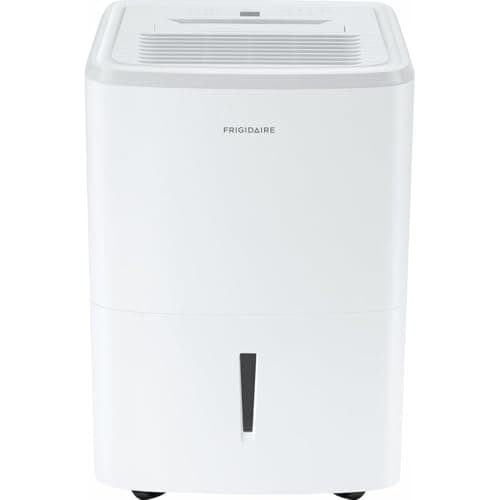
Frigidaire 50 Pint Dehumidifier with Wi-Fi
4.3 from 292 Amazon ratings · checked 12 Oct

Best for: A buyer who wants a long-standing appliance brand and will confirm the details on the box

Capacity (stated):
50 pints/day, per the title; test conditions not given in the listing bullets
DOE rating (ENERGY STAR list):
Frigidaire's 50-pint models (FHDD5033Y1, FHDD5034Y1, FHDP5033Y1) are certified at 49.71–49.95 pints/day

Listing verified 13 Oct 2026

How this page was made: we compare the current Amazon listings, the makers' published specs and what verified buyers report, then rank by fit for the job. Ratings, review counts and stock are read from Amazon and dated. We earn a commission on purchases through our links; it does not change the order. Reviewed by Marcus Reed, IICRC-certified Water Restoration Technician.

Full Reviews

Each pick in detail: what the listing states, what buyers report, and where it falls short.

#1
Best Overall

Check price

on Amazon ↗

Listing verified 13 Oct 2026

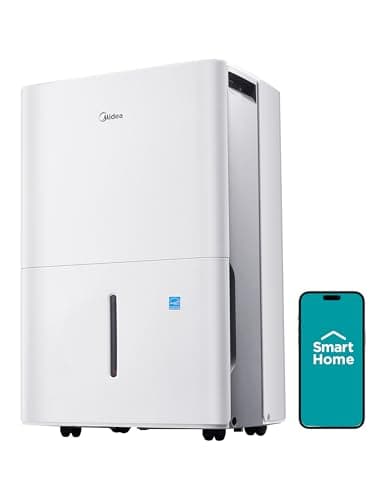
Midea 50 Pint Dehumidifier (4,500 Sq Ft, ENERGY STAR, Wi-Fi)See it on Amazon ↗

Quick Verdict

Midea 50 Pint Dehumidifier: a DOE-class 50 pint on wheels with Wi-Fi; buy a hose for the drain socket.

Key Specs

Capacity (stated)

Up to 50 pints/day; test conditions not given in the listing bullets

DOE rating (ENERGY STAR list)

Midea's 50-pint models are certified at 49.67–49.96 pints/day

Coverage (claimed)

Up to 4,500 sq ft

Humidity range (stated)

35% to 85%

Noise (stated)

49 dBA on low

Drainage (stated)

Tank stops the unit when full and it restarts once emptied; hose socket for continuous draining, hose not included

Pros

  • Midea's certified 50-pint models all rate just under 50 pints on the 65°F DOE test
  • 360° wheels and handles, per the listing
  • Stops when the tank is full and restarts by itself once it is emptied
  • Wi-Fi and voice control

Cons

  • No hose in the box for the continuous-drain socket
  • The listing bullets give no model number, tank size or low-temperature rating
  • 49 dBA is the low-fan figure; higher speeds are not stated

Suited to

A damp basement or large room with a floor drain nearby

Our take

This is the plain reading of '50 pint'. Midea's 50-pint models on ENERGY STAR's current list are all certified at 49.67 to 49.96 pints a day under the DOE test, which runs at 65°F, so the label already describes a cool-room figure rather than a hot-air maximum. The listing does not print its model number in the bullets, so check the label against ENERGY STAR's list when the unit arrives. Plan the drain before you plug it in. The socket takes a standard hose that is not included, and a floor drain lower than the unit lets it run for months with no tank to empty.

Check today's price on Amazon →

Affiliate link — commission at no extra cost to you

Compare elsewhere

These open a search for this model. We quote prices only where we can verify them — Amazon, Sylvane and eBay.

#2
Best Alternative Brand

Check price

on Amazon ↗

Listing verified 13 Oct 2026

Frigidaire 50 Pint Dehumidifier with Wi-FiSee it on Amazon ↗

Best Alternative Brand

Frigidaire 50 Pint Dehumidifier with Wi-Fi

4.3(292 reviews)

Quick Verdict

Frigidaire 50 Pint Dehumidifier with Wi-Fi: a DOE-class 50 from a familiar brand, on a listing too thin to check before buying.

Key Specs

Capacity (stated)

50 pints/day, per the title; test conditions not given in the listing bullets

DOE rating (ENERGY STAR list)

Frigidaire's 50-pint models (FHDD5033Y1, FHDD5034Y1, FHDP5033Y1) are certified at 49.71–49.95 pints/day

Efficiency (ENERGY STAR list)

2.01 L/kWh for each of those certified models

Filter (stated)

Washable

Humidity control (stated)

Adjustable humidity setting

Controls

Wi-Fi, per the title

Pros

  • Frigidaire's certified 50-pint models all rate within half a pint of 50 on the DOE test
  • Wi-Fi control, per the listing title
  • A washable filter you rinse rather than replace

Cons

  • The thinnest listing on this page: no tank size, drain details, noise figure or wheels in the bullets
  • No model number in the bullets, so you cannot match it to ENERGY STAR's list before buying

Suited to

A buyer who wants a long-standing appliance brand and will confirm the details on the box

Our take

Frigidaire's listing says very little, and that is its weakness: the bullets cover a washable filter and an adjustable humidity setting, and repeat one of them. What supports the pick is the brand's certified range. ENERGY STAR's current list shows three Frigidaire 50-pint models, FHDD5033Y1, FHDD5034Y1 and FHDP5033Y1, rated at 49.71 to 49.95 pints a day under the DOE test, so the brand's '50 pint' is the 65°F figure. All three share an efficiency of 2.01 liters per kWh. Before ordering, check the listing photos or the manual for the tank size and the drain outlet, and match the model number on the box when it arrives.

Check today's price on Amazon →

Affiliate link — commission at no extra cost to you

#3
Best With a Pump

Check price

on Amazon ↗

Listing verified 13 Oct 2026

Midea 50 Pint Dehumidifier with Pump (4,500 Sq Ft, ENERGY STAR)See it on Amazon ↗

Quick Verdict

Midea 50 Pint Dehumidifier with Pump: the Midea 50 for a basement with no low drain, with the lift height unstated.

Key Specs

Capacity (stated)

Up to 50 pints/day; the listing bullets do not give test conditions

Pump (stated)

Built in; drains vertically or horizontally into a sink or out a window. Lift height not stated

Gravity drain (stated)

Hose socket; hose not included

Tank (stated)

Unit stops when the tank is full and restarts after emptying

Humidity range (stated)

35% to 85%

Noise (stated)

49 dBA on low

Pros

  • The built-in pump sends water up to a sink or out a window
  • Keeps a gravity socket and the tank as fallbacks if the pump stops
  • Same 35–85% humidity range and Wi-Fi control as the non-pump Midea

Cons

  • Lift height and pump hose length are not on the listing
  • A weaker buyer record than the non-pump Midea
  • Wheels are not mentioned on this listing

Suited to

A basement where the nearest drain is a laundry sink or a window above the floor

Our take

Add the pump only if you need it. The listing says the built-in pump drains vertically or horizontally into a sink or out a window, which is the answer for a basement with no floor drain. It does not say how high, so measure from the floor to the sink rim or sill and ask Midea before relying on it for a tall climb. A pump is also a moving part that can clog, and this unit keeps both fallbacks: the tank, which stops the machine when full, and a gravity socket. On capacity it tells the same story as the non-pump Midea, since every Midea 50-pint model on ENERGY STAR's list sits just under 50 pints on the DOE test.

Check today's price on Amazon →

Affiliate link — commission at no extra cost to you

Buyer's Guide

What to know before you buy.

What Changed in 2019, and Why '50 Pint' Got Smaller

Dehumidifier pint ratings come from a federal test, and the test changed. ENERGY STAR explains that the DOE procedure in force since June 2019 tests portable dehumidifiers at 65°F rather than 80°F. Cooler air holds less water, so the same machine reports a lower number on the new test, and some brands now sell a machine as '70 pint' on the old test and '50 pint' on the new one. ENERGY STAR's own approximate conversion is less generous than that: it lists an old 70-pint portable at about 40 to 45 pints on the new test and an old 90-pint at about 55. On that table, a true 50-pint unit today sits between an old 70 and an old 90. If you are replacing a unit bought before 2019, compare on those numbers, not on the label alone.

Why an '80 Pint' Listing May Not Be a 50 Pint Machine

Many Amazon listings lead with a figure measured in hot, saturated air, such as 80 pints at 95°F and 90% RH. That is not the DOE figure, and it is usually far higher. ENERGY STAR's certified list, read on 12 Oct 2026, shows the scale of the gap: Waykar's CTH80B is certified at 24.84 pints a day under the DOE test and its CTH150B at 49.43, while Waykar's listings quote their pint figures at 95°F. Among the listings considered for this page, the Waykar and KNKA units sold as 80 pints, and an AEOCKY compact sold as 50 pints, all quote 95°F figures without a DOE rating. They may be good machines, but nothing on their listings shows they are 50-pint units on the current scale, so they are not ranked here. To check any unit, find its model number and look it up on ENERGY STAR's list.

How Big a Space a 50 Pint Unit Handles

ENERGY STAR sizes a dehumidifier by how damp the space is as well as its area. Under 2,000 sq ft, it suggests 20 to 30 pints a day for a room that smells musty at times, 25 to 40 for one that always feels damp with damp spots on walls or floor, and 30 to 50 where walls sweat or water seeps in. Over 2,000 sq ft, the same three conditions call for 30, 40 and 50 pints or more. A 50-pint unit therefore covers a wet basement up to about 2,000 sq ft, or a very damp larger one. ENERGY STAR also says it is better to oversize than undersize. Treat the 4,500 sq ft on the Midea listings as a best-case ceiling, not a recommendation.

Drainage: Tank, Hose or Pump

At 50 pints a day, a tank is not a plan. Fifty pints is 6.25 gallons, and the tanks stated on the listings reviewed for this page hold 0.5 to 1.72 gallons, so a wet basement would fill one several times a day. Use the hose socket and a floor drain if one sits lower than the unit; both Midea listings say the hose is not included, so buy a standard hose with the machine. If the nearest drain is a laundry sink or a window, the pump model pushes the water up, though Midea does not state how high. Keep the hose falling and the pump line free of kinks, and glance at the tank now and then. Water collecting in it means the hose or pump is not keeping up.

Who Does Not Need a 50 Pint Unit

A 50-pint dehumidifier is the wrong buy for several jobs. A single bedroom, bathroom or closet needs a smaller unit, because a 50 that reaches its set point quickly just cycles on and off while taking up floor space. A crawl space or unheated basement below 65°F needs a machine rated for low temperatures: ENERGY STAR notes that frost can form on the coils below 65°F, and none of the three listings here states a low-temperature rating. A home damp on every floor is better served by a whole-home unit on the ductwork. A flooded room needs drying equipment set up to the IICRC S500 water damage restoration standard rather than a household unit, and EPA advises drying water-damaged areas within 24 to 48 hours to prevent mold growth.

Efficiency and Running Hours

A basement dehumidifier can run for thousands of hours a year, so efficiency matters more than a small difference in pints. ENERGY STAR measures it as liters of water removed per kilowatt-hour and says certified units are 20% more efficient than non-certified models. On its current list, Midea's and Frigidaire's 50-pint models mostly sit at 2.01 L/kWh, while Waykar's CTH150B reaches 2.20 L/kWh and meets the Most Efficient criteria. Running hours matter as much as the rating. Set the humidistat at 45% to 50% rather than the lowest setting, since EPA's guidance is below 60% and ideally 30% to 50%, and clean the filter on the schedule in the manual so airflow over the coil stays strong.

Frequently Asked Questions

Is a 50 pint dehumidifier the same as a 70 pint?

Not exactly. A unit labeled 50 pints under the DOE procedure in force since June 2019 is measured at 65°F, while old 70-pint labels came from an 80°F test.

ENERGY STAR's approximate conversion puts an old 70-pint portable at about 40 to 45 pints on the new test, so a current 50 is, if anything, a little larger than an old 70. ENERGY STAR notes the actual change varies by model, so check the DOE rating of the specific unit.

How many square feet will a 50 pint dehumidifier cover?

Up to about 2,000 sq ft of wet space, and more if the space is only damp. ENERGY STAR sizes by condition: it suggests 30 to 50 pints a day for a space under 2,000 sq ft where walls sweat or water seeps in, and 40 pints or more for a very damp space larger than that.

Listing claims such as 4,500 sq ft assume ideal conditions, so treat them as the outer limit.

Is a 50 pint dehumidifier big enough for a basement?

For most basements, yes. A damp basement under 2,000 sq ft sits inside ENERGY STAR's range for a 50-pint unit, even one where the walls sweat.

A very large or seeping basement may need two units or a whole-home system. Judge the result with a hygrometer: the space should settle between 45% and 50% RH, and EPA advises keeping indoor humidity below 60%.

How much water does a 50 pint dehumidifier remove a day?

Up to 50 pints, or 6.25 gallons, under the DOE test's 65°F conditions. Real removal falls as the room dries, because drier air gives up less water, and it rises in a warmer, wetter space.

Even a day well below the rating can fill a typical tank more than once, so plan on a hose to a floor drain or a pump model from the start.

Do 50 pint dehumidifiers work in cold basements?

Only if the model is built for it. ENERGY STAR notes that frost can form on a dehumidifier's coils when the air drops below 65°F, which cuts performance, and suggests a product specified for lower temperatures if the space usually runs cooler.

None of the three listings here states a minimum operating temperature in its bullets, so check the manual or ask the maker before buying for a space that stays in the 50s °F.

Should I get a 50 pint or a 35 pint dehumidifier?

Get the 50 if the space is large, wet or both, and the 35 for a damp room or small basement that only smells musty now and then. ENERGY STAR says it is better to oversize than undersize.

Compare both on the same test: a 35-pint label under the 2019 DOE procedure is a 65°F figure, and Midea's Cube 35 listing describes itself as similar to a 50 pint on the older 2012 test.

Who do I call right now for water damage?

Call (888) 840-6512. The line is answered 24 hours a day, seven days a week, and connects you with an IICRC-certified water damage restoration company that serves your area. A recorded menu picks up first: choose water damage or mold, key in your 5-digit ZIP code, and hold through the short silence while the call is passed to the company.

Describe what you can see — where the water is coming from, how long it has been there, and whether it smells — the more specific you are, the faster the right company is on the line. If the source is a pipe or an appliance, shut the main water valve first. Have four things ready and the call goes quickly: the address, when the water started, what is wet now, and whether you have filed an insurance claim.

Still not sure which of these is your situation? (888) 840-6512 · toll-free · answered 24/7

Sources

  1. ENERGY STAR — Dehumidifiers
  2. ENERGY STAR — Most Efficient
  3. EPA — A Brief Guide to Mold, Moisture, and Your Home
  4. IICRC — S500 Standard for Professional Water Damage Restoration
  5. ENERGY STAR — Dehumidifier Testing and Capacity

Methodology: How we source and verify data · Report an error

How we chose these picks

  • Every pick is a current listing. Stock, star ratings and rating counts are read from Amazon by script and carry the date they were read.
  • Nothing under 4.0 stars makes the list, and the top pick needs a large rating count, so one good week of reviews cannot put it there.
  • Specs are quoted from the listing or the maker, with the test condition behind the number where there is one, and sized against the job rather than the room on the box.
  • We do not run lab or field tests. Where a spec matters, we say what it is measured under and what it cannot tell you.

Free 2-day shipping

Amazon Prime members pay no shipping on restoration equipment

Dehumidifiers, air movers, and moisture meters qualify for free Prime delivery — bulk items that otherwise cost $15–$40 to ship.

Try Prime free →

Affiliate link — HearthDry earns a bounty if you sign up; costs you nothing extra.

Also Worth Comparing

Best Dehumidifier for Basement Use in 2026 — Drain Hose, Built-In Pump and Honest Pint Ratings

Most basement dehumidifier disappointment comes from two numbers nobody reads properly: the pint rating, measured at warm test conditions a 60°F basement never reaches, and the drainage method. Five units are compared here on those two points first, from a garden-hose drain to a built-in pump with a stated 15 ft lift.

Read the comparison

Best Dehumidifiers With a Built-In Pump in 2026 — Compared on Lift Height

A built-in pump is the answer when the only drain is above the dehumidifier: a laundry sink, a standpipe or a window. It is only an answer if it can lift water that high, and two of the four listings here state a lift height while two do not.

Read the comparison

Best Dehumidifier for Home in 2026 — Sized by Room, Dampness and Drain

The right dehumidifier for a home depends on the size of the space and how damp it is, and the pint number on the box depends on which test produced it. These five picks run from a 22-pint single-room unit to an 80-pint machine for a whole basement, compared on the figures their listings actually state.

Read the comparison

Best Whole House Dehumidifiers in 2026 — Installed, Ducted and Sized to the Home

A whole house dehumidifier is installed, drains itself and, in most homes, is ducted into the heating and cooling system so it dries every room the air reaches. Three AprilAire E-series units carry the strongest buyer record in a category with far fewer ratings than portables, and one large portable is here for the open basement that does not need ducts.

Read the comparison

Best Crawl Space Dehumidifiers in 2026 — Compared at Crawl-Space Temperatures

A damp crawl space feeds mold and wood rot in the framing above it. These four crawl space dehumidifiers are ranked on published specifications, buyer records and how honestly each states its capacity for the cool, damp conditions under a house.

Read the comparison