Best Dehumidifier for an Apartment in 2026 — Quiet, Small Units That Drain Without a Floor Drain

Best Dehumidifier for an Apartment in 2026

Quiet, Small Units That Drain Without a Floor Drain

5 picks compared · prices, ratings and stock checked October 12, 2026

Our Top Pick

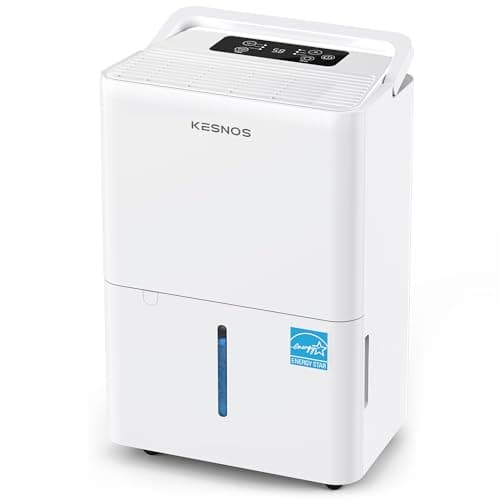
For a studio or one-bedroom, the Kesnos 30 Pint ENERGY STAR Dehumidifier: a compressor unit quoted at 36 dB, about 11 x 7.7 in on the floor, with a drain hose included. For one small closed room, the ToLife 95 oz Thermoelectric Dehumidifier runs under 30 dB in sleep mode.

4.5 on Amazon · 4,217 ratings

Quick answer

For most apartments, buy a small ENERGY STAR compressor dehumidifier rather than a mini thermoelectric unit, and the default pick is the Kesnos 30 Pint ENERGY STAR Dehumidifier: quoted at 36 dB, about 11 x 7.7 in on the floor, and shipped with a hose you can run to a tub or shower drain. ENERGY STAR suggests 20 to 30 pints a day for a small-to-medium room that is slightly to moderately damp. Hold humidity below 60%, ideally 30–50%, as EPA advises, and report any leak or mold that keeps coming back to your landlord.

Our Picks at a Glance

Every pick below is currently stocked — ratings and stock read from Amazon on 12 October 2026.

How this page was made: we compare the current Amazon listings, the makers' published specs and what verified buyers report, then rank by fit for the job. Ratings, review counts and stock are read from Amazon and dated. We earn a commission on purchases through our links; it does not change the order. Reviewed by Marcus Reed, IICRC-certified Water Restoration Technician.

Full Reviews

Each pick in detail: what the listing states, what buyers report, and where it falls short.

#1
Best Overall for a Studio or One-Bedroom

Check price

on Amazon ↗

Listing verified 13 Oct 2026

Kesnos 30 Pint ENERGY STAR Dehumidifier (36 dB, 11 x 7.7 in Footprint, Drain Hose Included)See it on Amazon ↗

Quick Verdict

Kesnos 30 Pint ENERGY STAR Dehumidifier: a small, quiet compressor unit with a hose, sized for a studio or one-bedroom.

Key Specs

Capacity (stated)

30 pints/day at 95°F, 90% RH

Noise (stated)

36 dB; mode and distance not stated

Size

11.02 x 7.68 x 15.20 in, on 360° casters

Tank

0.39 gal with auto shut-off and a full indicator

Drain hose

3.3 ft included; fits a 1/2 in garden hose to extend

Humidity floor (stated)

Down to 30% RH

Pros

  • Quoted at 36 dB, low for a compressor unit that shares a room with you
  • A footprint of about 11 by 7.7 in fits beside a dresser or at the end of a hallway
  • Ships with a hose, so it can drain into a tub or shower instead of being emptied by hand
  • Memory restart picks up after a power cut, useful in buildings where a breaker trips now and then

Cons

  • The 0.39-gallon tank holds only about 3 pints, so tank-only use means emptying it more than once a day in muggy weather
  • The 3.3 ft hose is short; most routes to a tub need a garden-hose extension
  • The 36 dB figure carries no mode or distance, so expect more noise on Turbo

Suited to

A studio or one-bedroom apartment with a tub or shower the hose can reach

Our take

For a renter, three questions decide a dehumidifier: will it fit, can I sleep near it, and where does the water go. This listing answers all three. It is a compressor unit, so it pulls pints rather than ounces, yet it is small enough to tuck beside furniture and is quoted at 36 dB. The 30-pint figure comes from 95°F and 90% humidity, air your apartment will rarely see, so read it as a class marker; a 70°F room gives up far less. The included hose is what makes it work without a floor drain. Set the unit on a sturdy step beside the tub so the hose falls the whole way, and clip the end inside the tub where it cannot slip out.

Check today's price on Amazon →

Affiliate link — commission at no extra cost to you

Compare elsewhere

These open a search for this model. We quote prices only where we can verify them — Amazon, Sylvane and eBay.

#2
Best When You Empty It by Hand

Check price

on Amazon ↗

Listing verified 13 Oct 2026

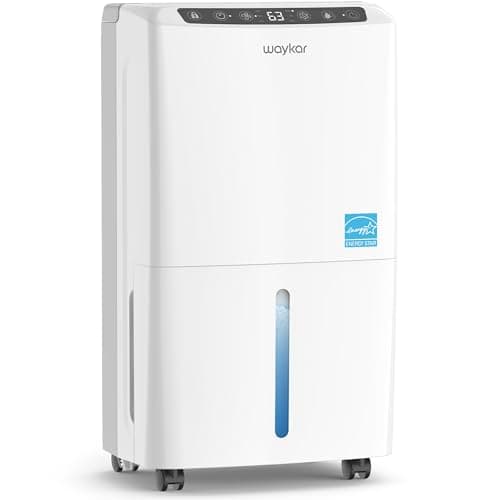
Waykar 34 Pint ENERGY STAR Most Efficient 2025 Dehumidifier (38 dB Low Speed, 0.62 Gal Tank)See it on Amazon ↗

Quick Verdict

Waykar 34 Pint ENERGY STAR Most Efficient 2025: the bigger 0.62-gallon tank for apartments with no hose route.

Key Specs

Capacity (stated)

34 pints/day at 95°F, 90% RH

Coverage (claimed)

Up to 2,000 sq ft

Noise (stated)

As low as 38 dB on the low fan speed

Tank

0.62 gal with auto shut-off

Drain hose

3.3 ft included

Humidity setting

30% to 80%

Pros

  • A 0.62-gallon tank holds about 5 pints, the largest compressor tank on this page, so fewer trips to the sink
  • Two fan speeds, with the low one quoted at 38 dB for nights
  • Listed as ENERGY STAR Most Efficient 2025, the top tier of the label
  • A child lock keeps small hands off the settings in a shared room

Cons

  • Footprint and weight are not in the listing's bullet points, so check the detail table before you clear a spot
  • Its energy-saving percentage is measured against unnamed traditional models; ENERGY STAR's own figure for certified units is 20% less energy
  • The 2,000 sq ft coverage claim is generous, so size by ENERGY STAR's room table instead

Suited to

An apartment with no hose route, where the tank has to be carried to the sink

Our take

Pick this one when the water has to go to the sink by hand. With no floor drain and no tub the hose can reach, tank size sets how often you are on duty, and this tank holds about 5 pints against roughly 3 for the Kesnos. At its stated maximum of 34 pints a day, about 1.4 pints an hour, a full tank would come every 3 to 4 hours; a real room is slower, but the arithmetic shows why the bigger tank matters. Set the target at 50% rather than 30% so the humidistat cycles the compressor off sooner. Its Most Efficient 2025 label is worth checking: read the model number off the rating plate and look it up in ENERGY STAR's product finder.

Check today's price on Amazon →

Affiliate link — commission at no extra cost to you

#3
Best for a Damp Ground-Floor or Garden-Level Unit

Check price

on Amazon ↗

Listing verified 13 Oct 2026

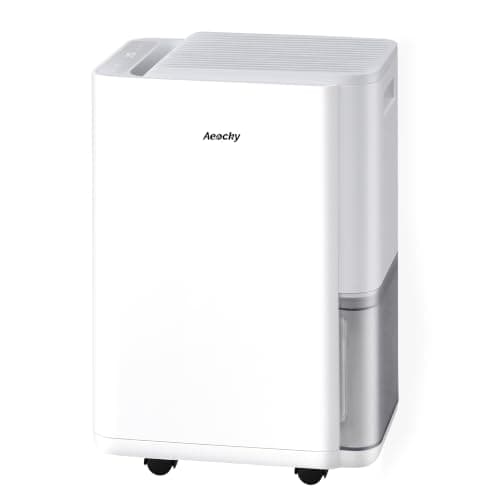
AEOCKY ARION-001 50 Pint Compact Compressor Dehumidifier (8 x 11.1 in Footprint, Drain Hose)See it on Amazon ↗

Best for a Damp Ground-Floor or Garden-Level Unit

AEOCKY ARION-001 50 Pint Compact Compressor Dehumidifier (8 x 11.1 in Footprint, Drain Hose)

4.8(192 reviews)

Quick Verdict

AEOCKY ARION-001 50 Pint: a 50-pint compressor in a small body, for damp ground-floor units with a hose route.

Key Specs

Capacity (stated)

50 pints/day at 95°F, 95% RH

Coverage (claimed)

Up to 3,000 sq ft

Size

8.03 in D x 11.1 in W x 15.75 in H, on 360° casters

Tank

0.5 gal with full-tank auto shut-off

Drainage

Continuous gravity drain through the included hose

Modes

Auto (holds 45%–55%), Constant Humidity (40%–80%), Continuous, Sleep

Pros

  • Fits a 50-pint compressor into about the same floor space as the 30-pint units here
  • Auto mode holds 45% to 55% on its own, under the 60% ceiling EPA sets for indoor humidity
  • Two water-level sensors, a float and a proximity switch, guard against a tank overflow
  • Three years of coverage, per the listing

Cons

  • No decibel figure in the listing's bullets, so its noise cannot be compared with the others on this page
  • The listing itself warns that this output fills the 0.5-gallon tank quickly, so plan on the hose
  • The listing makes no ENERGY STAR claim

Suited to

A ground-floor or garden-level apartment with damp walls, musty closets or laundry drying indoors

Our take

Garden-level and ground-floor units are where apartment damp gets serious: walls against soil, a slab that stays cool, and condensation behind furniture pushed against an outside wall. A 30-pint machine can fall behind there. The ARION puts a 50-pint compressor, rated at 95°F and 95% humidity, into a body about 8 by 11 inches, and its own listing warns that the output fills the small tank fast, so run the included hose to a tub, shower or floor-level drain. Auto mode, which holds 45% to 55%, is the sensible set-and-forget choice. The trade-offs are plain: no noise figure and no ENERGY STAR claim, so this is the pick for moisture, not for a bedroom at night.

Check today's price on Amazon →

Affiliate link — commission at no extra cost to you

#4
Best for One Small Closed Room

Check price

on Amazon ↗

Listing verified 13 Oct 2026

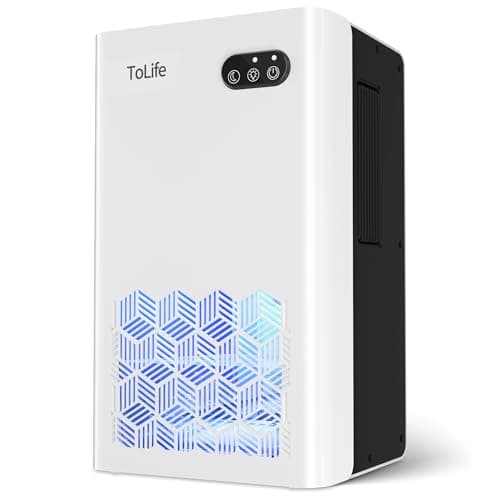
ToLife 95 oz Thermoelectric Dehumidifier (Sleep Mode Under 30 dB, Auto Shut-Off)See it on Amazon ↗

Quick Verdict

ToLife 95 oz Thermoelectric Dehumidifier: under 30 dB in sleep mode, for one small closed room rather than a whole apartment.

Key Specs

Type

Thermoelectric (semiconductor) condensation

Tank

95 oz, with auto shut-off when full or seated wrong

Noise (stated)

Under 30 dB in sleep mode

Size

8.27 x 5.55 x 13.78 in

Daily removal

Not stated on the listing

Coverage (claimed)

Up to 1,000 sq ft

Pros

  • Sleep mode is quoted under 30 dB, quiet enough for a bedroom or a studio's sleeping corner
  • The 95 oz tank is larger than any compressor tank here, because a thermoelectric unit fills it slowly
  • Small and light enough to move between a bathroom, a closet and a bedroom

Cons

  • Daily removal is not stated, and thermoelectric units that do state it list ounces a day, not pints
  • The 1,000 sq ft coverage claim does not match how this technology works; keep it to one closed room
  • No adjustable humidity target is described

Suited to

One small room with the door shut: a bathroom without a fan, a closet, or a small bedroom

Our take

Thermoelectric units are the quiet, compact option most apartment shoppers find first, and they have a real place: one small room with the door closed. They do not have the capacity for a whole apartment. ToLife gives no daily removal figure, but listings for similar units that do, such as Spacekey's and NineSky's, state 40 oz and 34 oz a day at 86°F and 80% humidity. Set that beside a compressor unit rated in pints and the gap is obvious. Where this one earns its place is noise and size: under 30 dB in sleep mode, a base about 8 by 5.5 inches, and a tank that stops the unit before it overflows. Check a hygrometer after a week, and if the room still reads above 60%, move up to a compressor unit.

Check today's price on Amazon →

Affiliate link — commission at no extra cost to you

#5
Best Small Unit with a Humidity Display

Check price

on Amazon ↗

Listing verified 13 Oct 2026

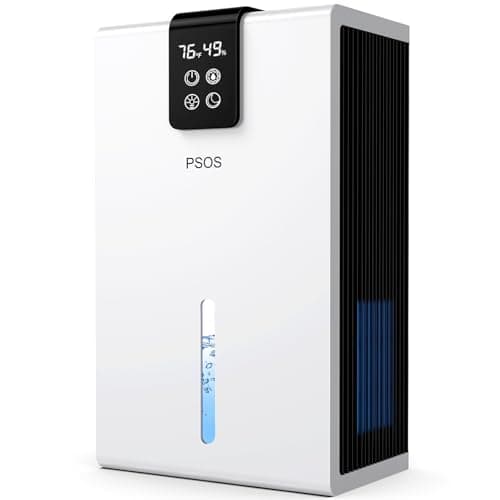
PSOS 98 oz Dual-Semiconductor Dehumidifier (Humidity and Temperature Display, Under 30 dBA Sleep Mode)See it on Amazon ↗

Quick Verdict

PSOS 98 oz Dual-Semiconductor Dehumidifier: a quiet one-room unit with a humidity display you can log.

Key Specs

Type

Dual semiconductor (thermoelectric)

Tank

98 oz with auto shut-off

Display

Real-time humidity and temperature

Noise (stated)

Under 30 dBA in sleep mode, with the lights off

Low-temperature operation (stated)

Down to 41°F, with auto defrost

Size

9.44 x 5.9 x 14.17 in

Pros

  • The only unit here whose listing describes a humidity and temperature display, a running record you can photograph
  • Sleep mode turns the lights off and is quoted under 30 dBA
  • Auto defrost and a stated low of 41°F, so a cool spare room does not stop it

Cons

  • Thermoelectric, so its job is one room, measured in ounces a day
  • A sensor built into the machine reads the air right at the unit, which can differ from the far side of the room
  • No drain hose is described, so the tank is the only way out for the water

Suited to

A renter who wants a small, quiet unit and a humidity reading to track a damp room over time

Our take

A number on the panel is more useful to a renter than it sounds. If a bedroom smells musty or a window drips every morning, a log of humidity readings turns a complaint into something the landlord can act on. This PSOS shows humidity and temperature in real time, runs with its lights off in sleep mode, and its listing states operation down to 41°F with auto defrost. It is still a thermoelectric unit, so its job is one closed room, not the whole apartment. Read its built-in figure with care, since the sensor sits on the machine itself; a separate hygrometer across the room gives the truer number, and EPA's guidance is to keep that number below 60%.

Check today's price on Amazon →

Affiliate link — commission at no extra cost to you

Buyer's Guide

What to know before you buy.

Compressor or Thermoelectric: What an Apartment Needs

There are two kinds of small dehumidifier, and they are not close in output. A compressor unit cools a coil the way an air conditioner does and is rated in pints a day. A thermoelectric, or Peltier, unit uses a solid-state chip, runs almost silently and is rated in ounces, when it is rated at all. ENERGY STAR's sizing table suggests 20 to 30 pints a day for a small-to-medium room that is slightly to moderately damp (50–75% RH), and 25 to 40 pints if it is very damp. Thermoelectric listings that state a figure at all give 16 to 40 oz a day, about 1 to 2.5 pints, and that is at 86°F and 80% humidity. So for a whole studio or one-bedroom, choose a compressor unit of about 30 pints on its label. Keep the thermoelectric units for one closed room: a bathroom without a fan, a closet, or a bedroom you can shut.

Draining Without a Floor Drain

Apartments rarely have a floor drain, so pick the drain route before the machine. The simplest is the tank: you empty it by hand, and its size sets how often. The tanks here run from 0.39 gallon to 98 oz. The next step is a hose to a bathtub, shower or laundry sink. Gravity only works downhill, so the hose outlet must sit lower than the unit's drain port the whole way; set the unit on a sturdy step or stool beside the tub and clip the hose end so it cannot jump out. To reach a kitchen sink or anything higher, you need a model with a built-in pump. Never run a hose out a window onto a neighbor's balcony or a walkway. A hose that slips loose can soak the unit below, and that becomes a claim on your renters insurance.

Noise: How to Read a Decibel Figure

Noise is the complaint renters raise most, and listings make it hard to compare. A decibel figure means little without the mode and the distance, and most listings give neither. As a rough guide, the thermoelectric units here are quoted under 30 dB in sleep mode, the small compressor units at 36 to 38 dB, and larger machines higher; Midea's 50-pint listing, for example, gives 49 dBA even on its low mode. Decibels run on a log scale, and 10 dB more is generally heard as about twice as loud, so the step from 38 to 49 is bigger than it looks. If the unit has to share your bedroom, choose a low fan speed and a quoted figure under 40 dB, or run it in the living area with the bedroom door open during the day.

Condensation, Mold and When It Is the Landlord's Job

A dehumidifier handles the moisture you make: showers, cooking, laundry drying on a rack, and breathing in a small space. It does not fix water coming from the building. EPA's advice to renters is direct: report all plumbing leaks and moisture problems right away to the building owner, manager or superintendent, and if a persistent problem is not addressed, contact local or state health or housing authorities. Signs that point to the building rather than your habits include a ceiling stain, mold that returns in the same spot, a musty smell from under the sink, or damp drywall. EPA also notes that condensation can be a sign of high humidity. In winter, ENERGY STAR suggests aiming for 30% to 40% to stop windows sweating. Report in writing, keep photos with dates, and save your hygrometer readings.

Who Should Not Buy a Dehumidifier for Their Apartment

Check the humidity before you buy. A hygrometer is a small purchase, and if your rooms already read below 50% most of the year, a dehumidifier adds noise and an electric bill without solving anything. Do not buy one to cope with an active leak, a wet ceiling or water under the floor; that is the owner's repair, and a machine that hides the symptom can weaken your case. If mold covers more than about 10 square feet, EPA points to its guidance for larger cleanups rather than a simple homeowner job, and in a rental that means the landlord. If the damp is only in the bathroom after showers, a working exhaust fan run for longer may be the real fix. And if central air keeps the place below 50% all summer, ENERGY STAR notes that an A/C vent in a humid room can help.

Power, Placement and Moving Day

ENERGY STAR's practical rules fit apartments well. Plug the unit into a properly grounded wall outlet, and keep the drain hose away from the cord and its connection. Unless the unit blows air out of the top, leave space between it and walls or furniture so air can circulate. Keep doors and windows to the room closed while it runs; drying the hallway or the street wastes power. Expect the air right next to it to feel a little warmer, which is normal. Compressor units have one more rule renters run into: after a move, let the machine stand upright before you switch it on. Several compressor listings, including KNKA's and DR.PREPARE's, ask for 24 hours upright before first use, so check your manual before plugging it in on moving day.

Frequently Asked Questions

Do I need a dehumidifier in my apartment?

You need one if a hygrometer reads above 60% for days at a time, or if windows sweat, closets smell musty or towels never dry. EPA advises keeping indoor humidity below 60%, ideally between 30% and 50%.

Many apartments with central air stay in that range without help. Check for a week first, since a dehumidifier in a room that is already dry only adds noise and cost.

What size dehumidifier do I need for an apartment?

For a studio or one-bedroom, a compressor unit of about 30 pints on its label is the usual fit. ENERGY STAR suggests 20 to 30 pints a day for a small-to-medium room that is slightly to moderately damp, and more for a very damp one.

A garden-level or ground-floor unit with damp walls can justify 50 pints. Thermoelectric minis rated in ounces suit one closed room only.

Can I drain a dehumidifier into a sink or bathtub?

YesAs long as the hose runs downhill the whole way from the unit's drain port.

A bathtub or shower is the easiest target, because the unit can sit on a sturdy step beside it. A kitchen sink is usually higher than the port, so it needs a model with a built-in pump. Clip the hose end in place and check it before bed, since a loose hose can leak into the unit below.

Can I run a dehumidifier all night while I sleep?

YesIf it shuts itself off when the tank is full, which every unit on this page lists, and ideally holds a humidity target.

Choose a sleep or low fan mode, since that is where the quoted decibel figures come from. Plug it straight into a grounded wall outlet rather than a power strip. If the noise keeps you awake, run it in the living area during the day with doors open, then close the bedroom door at night.

Should my landlord fix humidity or mold in my apartment?

The landlord should hear about any leak or moisture problem, and EPA's guidance is to report them to the building owner or manager right away. Damp caused by plumbing, roof or wall leaks is a building repair.

Everyday humidity from showers and cooking is usually yours to manage with fans and a dehumidifier. Rules vary by state and lease, so put reports in writing and see our guide on who fixes mold in an apartment.

Where should I put a dehumidifier in an apartment?

Put it in the dampest room, with that room's door and windows closed, and away from walls unless it blows air out the top. In most apartments that is the bathroom doorway, the bedroom on an outside wall, or near the laundry rack.

A central hallway works for a small open-plan unit. Keep it where the hose can reach a tub or shower if you do not want to empty the tank.

Who do I call right now for water damage?

Call (888) 840-6512. The line is answered 24 hours a day, seven days a week, and connects you with an IICRC-certified water damage restoration company that serves your area. A recorded menu picks up first: choose water damage or mold, key in your 5-digit ZIP code, and hold through the short silence while the call is passed to the company.

Describe what you can see — where the water is coming from, how long it has been there, and whether it smells — the more specific you are, the faster the right company is on the line. If the source is a pipe or an appliance, shut the main water valve first. Have four things ready and the call goes quickly: the address, when the water started, what is wet now, and whether you have filed an insurance claim.

Still not sure which of these is your situation? (888) 840-6512 · toll-free · answered 24/7

Sources

  1. EPA — A Brief Guide to Mold, Moisture, and Your Home
  2. ENERGY STAR — Dehumidifiers

Methodology: How we source and verify data · Report an error

How we chose these picks

  • Every pick is a current listing. Stock, star ratings and rating counts are read from Amazon by script and carry the date they were read.
  • Nothing under 4.0 stars makes the list, and the top pick needs a large rating count, so one good week of reviews cannot put it there.
  • Specs are quoted from the listing or the maker, with the test condition behind the number where there is one, and sized against the job rather than the room on the box.
  • We do not run lab or field tests. Where a spec matters, we say what it is measured under and what it cannot tell you.

Free 2-day shipping

Amazon Prime members pay no shipping on restoration equipment

Dehumidifiers, air movers, and moisture meters qualify for free Prime delivery — bulk items that otherwise cost $15–$40 to ship.

Try Prime free →

Affiliate link — HearthDry earns a bounty if you sign up; costs you nothing extra.

Also Worth Comparing

Best Dehumidifier for a Bedroom or Apartment in 2026 — Quiet Small-Room Units Compared

A bedroom dehumidifier has to be quiet enough to sleep beside, and five of the six picks here are thermoelectric units that remove ounces of water a day rather than pints. That is enough for a stuffy bedroom, closet or studio apartment; for a room with wet windows every morning, the sixth pick is a small compressor unit rated in pints.

Read the comparison

Best Dehumidifiers With a Built-In Pump in 2026 — Compared on Lift Height

A built-in pump is the answer when the only drain is above the dehumidifier: a laundry sink, a standpipe or a window. It is only an answer if it can lift water that high, and two of the four listings here state a lift height while two do not.

Read the comparison

Best Dehumidifier for a Bathroom in 2026 — For Rooms With No Exhaust Fan or a Weak One

An exhaust fan ducted outdoors is the real fix for a steamy bathroom, and a plug-in dehumidifier is what you add when there is no fan or the one you have barely pulls. The units small enough for a bathroom remove ounces of water a day, so their job is drying the walls, ceiling and grout sooner after the steam clears, not clearing the steam.

Read the comparison

Best Hygrometers for Home in 2026 — Indoor Humidity Monitors That Tell You When a Room Is Too Damp

A hygrometer is the small, inexpensive instrument that tells you whether a room needs a dehumidifier, a humidifier or nothing at all. These picks are judged on the accuracy each listing states, how easily you can read them, and whether they can warn you about a damp basement before you smell it.

Read the comparison

Best Dehumidifier for a Closet in 2026 — Hanging Absorbers, Mini Units and a Compressor for Damp Walk-Ins

A closed closet trades very little air with the rest of the house, so a hanging absorber or a mini dehumidifier can keep up with it where it could never dry a room. The picks here are sorted by the closet you have: no outlet, an outlet, or a walk-in beside a damp wall or a bathroom.

Read the comparison

Best Quiet Dehumidifier in 2026 — Ranked Only on the Decibel Figures the Listings State, Compressor and Thermoelectric

A quiet dehumidifier is only worth buying if it still keeps the room dry, and the decibel figures on listings are the seller's own, with no measuring distance given. These picks are ranked on the noise each listing actually states, from an under-30 dBA thermoelectric unit to compressor units at 36 to 45 dB, with the sleep-mode, timer and placement habits that make any of them quieter.

Read the comparison