Best Dehumidifier for a Bedroom or Apartment in 2026 — Quiet Small-Room Units Compared

Best Dehumidifier for a Bedroom or Apartment in 2026

Quiet Small-Room Units Compared

6 picks compared · prices, ratings and stock checked October 11, 2026

Our Top Pick

For most bedrooms and apartments, the ToLife 95 oz: the longest buyer record among the quiet units and a sleep mode quoted under 30 dB. If the unit can sit beside a drain, the boglvr 98 oz runs on a hose instead of a tank; if you want to see the room's humidity, the PSOS displays it.

4.3 on Amazon · 5,275 ratings

Quick answer

For a bedroom, apartment or other small single room, buy a quiet thermoelectric dehumidifier with a sleep mode, and the ToLife 95 oz is the default pick: rated 4.3 stars across 5,275 Amazon ratings, with sleep mode quoted under 30 dB and a tank that shuts the unit off when full. Units like this remove ounces of water a day, not pints, so close the door while it runs and check a hygrometer against the EPA's 30–50% target. A room that stays above 60% after a week needs a compressor unit instead, such as the Midea 22 Pint at the end of this page.

Our Picks at a Glance

Available picks first — 5 of 6 in stock at our last check — ratings and stock read from Amazon on 11 October 2026.

Best With Drain Hose
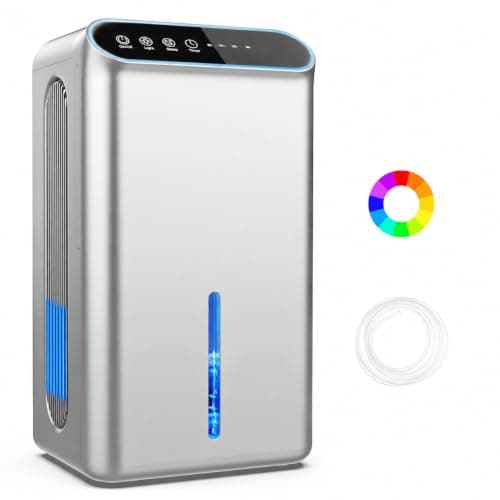
boglvr 98 oz Dehumidifier with Drain Hose (Sleep Mode Under 30 dB)
4.5 from 2,019 Amazon ratings · checked 11 Oct

Out of stock at our last check — the link still works if it returns.

Best for: A room beside a drain, such as a bedroom with an en-suite or a basement bedroom with a floor drain, or anyone who will not empty a tank

Type:
Dual-core thermoelectric (semiconductor)
Moisture removal:
Not stated on the listing

Listing verified 11 Oct 2026

Best for a Damp Room (Compressor)
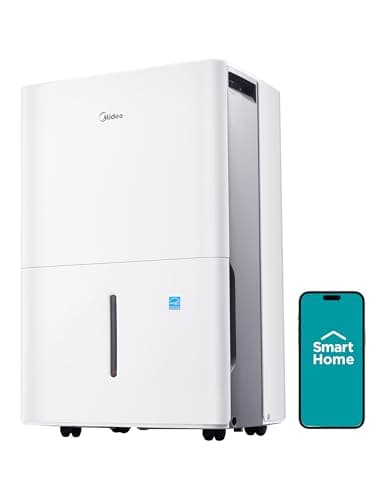
Midea 22 Pint ENERGY STAR Compressor Dehumidifier (Wi-Fi, Auto Restart)
4.4 from 7,197 Amazon ratings · checked 11 OctAmazon's Choice

Best for: A bedroom that stays above 60% with a small unit running, fogs its windows each morning, or sits below grade

Type:
Compressor (refrigerant), rated in pints rather than ounces
Moisture removal (stated):
Up to 22 pints/day (test conditions not stated on the listing)

Listing verified 13 Oct 2026

How this page was made: we compare the current Amazon listings, the makers' published specs and what verified buyers report, then rank by fit for the job. Ratings, review counts and stock are read from Amazon and dated. We earn a commission on purchases through our links; it does not change the order. Reviewed by Marcus Reed, IICRC-certified Water Restoration Technician.

Full Reviews

Each pick in detail: what the listing states, what buyers report, and where it falls short.

#1
Best Overall

Check price

on Amazon ↗

Listing verified 13 Oct 2026

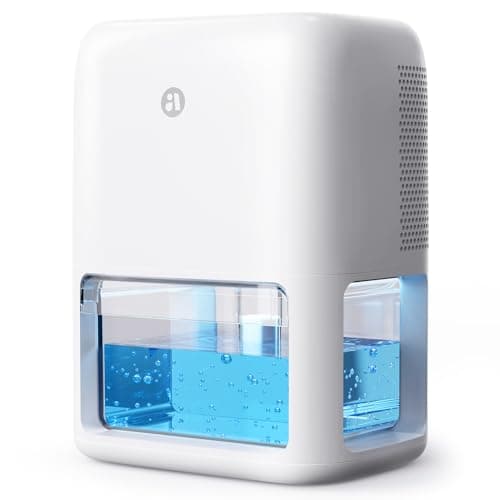
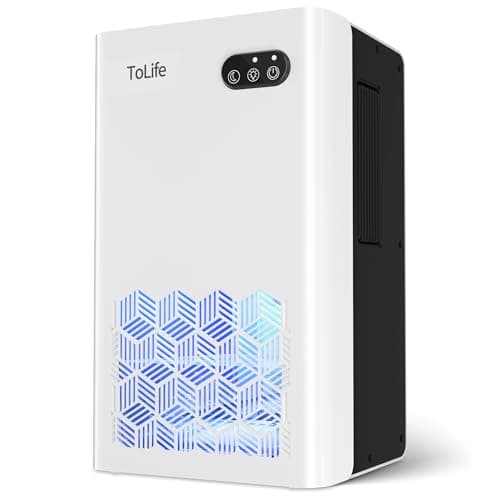
ToLife 95 oz Dehumidifier (Sleep Mode Under 30 dB)See it on Amazon ↗

Quick Verdict

The most proven quiet bedroom unit here, quoted under 30 dB in sleep mode with a 95 oz tank — the listing does not state its daily output.

Key Specs

Type

Thermoelectric (semiconductor condensation), no compressor

Moisture removal

Not stated on the listing

Tank

95 oz; stops when full or not seated correctly

Noise (claimed)

Under 30 dB in sleep mode; power mode not stated

Modes

Power mode and low-speed sleep mode

Size

About 8.27 x 5.55 x 13.78 in, with handles

Pros

  • The longest buyer record among the quiet bedroom units on this page
  • Sleep mode is quoted under 30 dB, among the lowest figures here
  • The 95 oz tank cuts power when full or when it is not seated properly, so a missed emptying stops the unit instead of spilling
  • Two modes: run it on power while you are out and switch to sleep mode at bedtime

Cons

  • The listing gives no daily moisture-removal figure, so its output cannot be compared with BREEZOME's stated 700 ml
  • The listing describes locking the light on one color but does not say it can be switched off completely
  • The 1,000 sq ft coverage claim is far beyond what a thermoelectric unit can hold dry; treat it as one-room equipment

Suited to

A bedroom, nursery or studio apartment that feels stuffy or damp, with the unit running at night near the bed

Our take

This is the unit to buy when you want the safest bet on buyer experience rather than the longest spec sheet. Its listing is plain about what it is, a semiconductor condensation unit, and it quotes the number a bedroom buyer cares about most: under 30 dB in sleep mode. What it leaves out is the output figure, which matters because thermoelectric units remove ounces rather than pints, and the 1,000 sq ft headline implies otherwise. Use it in one closed room, put a hygrometer on the far side of that room, and give it a week. A reading that settles under 50% means it is doing its job; a reading stuck above 60% means the room needs a compressor unit.

Check today's price on Amazon →

Affiliate link — commission at no extra cost to you

Compare elsewhere

These open a search for this model. We quote prices only where we can verify them — Amazon, Sylvane and eBay.

#2
Best With Drain Hose

Check price

on Amazon ↗

Listing verified 11 Oct 2026

boglvr 98 oz Dehumidifier with Drain Hose (Sleep Mode Under 30 dB)See it on Amazon ↗

Quick Verdict

The one quiet bedroom unit here that drains through a hose, with a light that turns fully off — output not stated.

Key Specs

Type

Dual-core thermoelectric (semiconductor)

Moisture removal

Not stated on the listing

Drainage

98 oz tank with auto shut-off, or included hose for continuous gravity drainage (hose length not stated)

Noise (claimed)

Under 30 dB in sleep mode

Timer

8, 16 or 24 hours

Filter

Washable, reusable filter pre-installed

Pros

  • The only bedroom pick with a drain hose, so it can run continuously without a tank to empty
  • The ambient light can be turned off entirely, which matters in a dark bedroom
  • A washable, reusable filter comes installed
  • Sleep mode is quoted under 30 dB, with a timer for overnight runs

Cons

  • No daily moisture-removal figure on the listing, despite the 1,000 sq ft claim
  • Gravity drainage needs a drain lower than the unit's outlet, which few bedrooms have
  • The aroma-pad slot adds scent, which can hide a musty smell rather than tell you it has gone

Suited to

A room beside a drain, such as a bedroom with an en-suite or a basement bedroom with a floor drain, or anyone who will not empty a tank

Our take

A drain hose changes how a small dehumidifier gets used. Tank units stop the moment they fill, and the most common way a bedroom dehumidifier fails is a full tank nobody noticed. The boglvr can feed a hose by gravity instead, which works wherever there is a drain lower than the unit: a floor drain in a basement bedroom, a tub in an en-suite, or a sink when the unit stands on the counter beside it. In a bedroom with no drain it is simply a 98 oz tank unit with a light that goes fully dark and an 8, 16 or 24 hour timer. Skip the aroma pads in a room that smells musty; the smell is the signal that tells you whether the damp is gone.

Check today's price on Amazon →

Affiliate link — commission at no extra cost to you

#3
Best-Documented Output

Check price

on Amazon ↗

Listing verified 13 Oct 2026

BREEZOME 60 oz Dual-Semiconductor Dehumidifier (700 ml/day, 48 W)See it on Amazon ↗

Quick Verdict

The clearest numbers on the page, 700 ml a day at a stated test point and 48 W — a little louder in sleep mode.

Key Specs

Type

Two thermoelectric (semiconductor) condensers

Moisture removal (stated)

Up to 700 ml (about 24 oz) a day at 86°F, 80% RH

Tank

60 oz (1.8 L); stops and flashes red when full

Power

48 W; 1.15 kWh over 24 hours

Noise (claimed)

35 dB in sleep mode

Timer

12, 24, 36 or 48 hours

Pros

  • The only bedroom pick that states both its moisture removal and its power draw, so you can judge it before buying
  • Two semiconductor condensers, which the listing credits for its output
  • 1.15 kWh across a full day of running is a small load for a unit left on every night
  • A defrost function keeps the cold plates working in a cool room

Cons

  • 35 dB in sleep mode is higher than the under-30 dB figures quoted by the other four
  • The 700 ml figure is measured at 86°F and 80% RH; a 70°F bedroom will see less
  • The listing does not say whether the night light can be turned off

Suited to

A damp bedroom or small apartment where you want to know what the unit should remove before you buy it

Our take

This is the listing to read if you want to understand the category. It gives a removal figure with its test point, 700 ml a day at 86°F and 80% relative humidity, which works out to about 24 fluid ounces, or a pint and a half. That is the honest scale of a thermoelectric unit, and a cooler, drier bedroom will see less of it. It also gives the power draw, 48 W and 1.15 kWh over 24 hours, low enough to run every night without a second thought. The trade is noise: 35 dB in sleep mode is still quiet, but it is the highest sleep figure among the bedroom picks.

Check today's price on Amazon →

Affiliate link — commission at no extra cost to you

#4
Shows Room Humidity

Check price

on Amazon ↗

Listing verified 13 Oct 2026

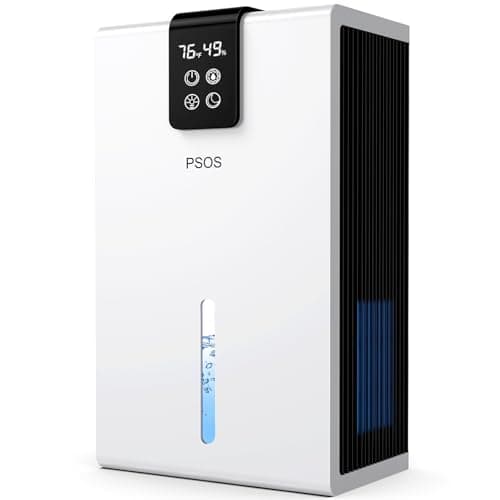
PSOS 98 oz Dehumidifier with Humidity Display (Sleep Mode Under 30 dBA)See it on Amazon ↗

Quick Verdict

The one bedroom pick that shows the room's humidity, with a lights-off sleep mode under 30 dBA — a shorter buyer record.

Key Specs

Type

Dual thermoelectric (semiconductor)

Moisture removal

Not stated on the listing

Display

Real-time humidity and temperature

Tank

98 oz, auto shut-off when full

Noise (claimed)

Under 30 dBA in sleep mode; lights off in sleep mode

Low-temperature use

Auto defrost; stated to run at temperatures as low as 41°F (5°C)

Pros

  • The only bedroom pick with a built-in humidity readout, so you can see whether the room is actually drying
  • Sleep mode turns the lights off and is quoted under 30 dBA
  • Auto defrost and a stated operating floor of 41°F suit a cool basement bedroom
  • A 98 oz tank, tied for the largest among the bedroom picks

Cons

  • A much shorter buyer record than ToLife or boglvr
  • No daily moisture-removal figure; the display shows the result, but the listing does not promise one
  • A sensor on the unit reads the air right beside it, so check it once against a separate hygrometer

Suited to

Anyone who wants to see the humidity number without buying a separate hygrometer

Our take

The display is the feature that earns this a place. None of the bedroom picks has a humidity setting; each runs until its tank fills or its timer ends, so a live humidity and temperature reading is the only built-in way to see whether the room is drying. If it sits above 60% after a few days with the door closed, the room has more moisture coming in than any unit this size can take out. Treat the number as a guide rather than a lab reading, since the sensor sits on the unit and reads the air right around it, not the far wall behind the bed.

Check today's price on Amazon →

Affiliate link — commission at no extra cost to you

#5
Smallest Footprint

Check price

on Amazon ↗

Listing verified 13 Oct 2026

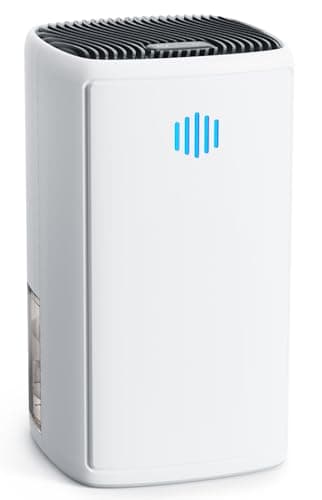
TABYIK 38 oz Small Dehumidifier (11 oz/day, Under 30 dB)See it on Amazon ↗

Quick Verdict

A six-inch-square unit for closets, dorms and small bedrooms, open about its 11 oz a day — too small for a genuinely damp room.

Key Specs

Type

Thermoelectric (semiconductor)

Moisture removal (stated)

11 oz a day at 86°F, 80% RH

Tank

38 oz; shuts off with a red indicator when full

Noise (claimed)

Below 30 dB

Defrost

Automatic

Size

5.91 x 5.91 x 11.42 in

Pros

  • The smallest footprint among the bedroom picks, about six inches square, so it fits a nightstand corner, shelf or closet floor
  • States its output plainly, 11 oz a day at a named test point, instead of leaning on a square-footage claim
  • Quoted below 30 dB overall, not only in a sleep mode
  • Auto defrost for a cool room

Cons

  • 11 oz a day is too little for a room with fogged windows or a musty smell; it maintains a space rather than drying one
  • A much shorter buyer record than the larger units on this page

Suited to

A small bedroom, dorm room, walk-in closet or wardrobe that needs light, constant moisture control

Our take

Eleven ounces a day at 86°F and 80% RH is a modest figure, and the listing deserves credit for printing it rather than hiding behind coverage claims. At that rate the unit is for keeping a small space from creeping upward: a closet where clothes smell stale, a dorm room, a wardrobe against a cold outside wall. It will not pull a genuinely damp room down. Its strength is size, about six inches square, which lets it sit on a nightstand or a closet shelf where a 14-inch unit will not fit. Keep the top inlet and back outlet clear, as the listing instructs; boxed into a tight shelf, it cannot draw air across its cold plate.

Check today's price on Amazon →

Affiliate link — commission at no extra cost to you

#6
Best for a Damp Room (Compressor)

Check price

on Amazon ↗

Listing verified 13 Oct 2026

Midea 22 Pint ENERGY STAR Compressor Dehumidifier (Wi-Fi, Auto Restart)See it on Amazon ↗

Best for a Damp Room (Compressor)

Midea 22 Pint ENERGY STAR Compressor Dehumidifier (Wi-Fi, Auto Restart)

4.4(7,197 reviews)

Quick Verdict

The step up for a genuinely damp bedroom: up to 22 pints a day, a 35–85% humidity setting and auto restart — louder at 47 dBA, hose not included.

Key Specs

Type

Compressor (refrigerant), rated in pints rather than ounces

Moisture removal (stated)

Up to 22 pints/day (test conditions not stated on the listing)

Humidity setting

35% to 85%

Noise (claimed)

47 dBA (mode and distance not stated)

Efficiency

ENERGY STAR certified; the listing claims 31% less energy than traditional dehumidifiers

Drainage

Tank stops the unit when full and restarts it once emptied; built-in socket for a standard hose (hose not included)

Pros

  • Rated in pints rather than ounces, up to 22 a day, the scale a room with wet windows or a lingering musty smell needs
  • A humidity setting from 35% to 85%, so it holds a target instead of running until the tank fills
  • ENERGY STAR certified, with auto restart after a power outage and auto defrost
  • A long buyer record and an Amazon's Choice badge

Cons

  • Quoted at 47 dBA, well above the thermoelectric picks, and a compressor starts and stops as it holds its setting
  • The drain hose is not included, and the listing does not state the tank size or the conditions behind the 22-pint figure
  • Larger than the thermoelectric units, and the listing gives no dimensions or weight

Suited to

A bedroom that stays above 60% with a small unit running, fogs its windows each morning, or sits below grade

Our take

This is the pick for the bedroom the thermoelectric units cannot keep up with. A stated 22 pints a day is a different scale from the 11 to 24 ounces the small units above quote, and the listing does not give the test conditions behind it, so read it as a maximum. Two features change how it lives in a bedroom. It has a humidity setting, so set at 45% or 50% it stops drying once the room reaches that level instead of running all night, and it restarts on its own after a power outage. The trade is sound: 47 dBA, plus the start and stop of a compressor. If that keeps you awake, run it with the door closed during the day.

Check today's price on Amazon →

Affiliate link — commission at no extra cost to you

Buyer's Guide

What to know before you buy.

Thermoelectric or Compressor: Decide This First

Five of the six units on this page are thermoelectric. A small electronic module, often called a Peltier, turns cold on one side, a fan pulls room air across it, and water condenses into the tank. There is no compressor, which is why these units are quiet, light and low-power. The cost is capacity. The thermoelectric picks that state an output give 11 to 24 ounces a day at 86°F and 80% relative humidity, and a pint is 16 ounces. A compressor dehumidifier, the kind sold for basements, is rated in pints per day and removes many times as much, with the size and hum to match. For a bedroom that feels stuffy or a closet that smells stale, thermoelectric is the right tool. For a bedroom with water on the windows every morning, damp walls or a musty smell that will not clear, it is not, and a compressor unit such as the Midea 22 Pint, the sixth pick here, is.

How Quiet Is Quiet Enough to Sleep

Four of the five thermoelectric picks quote under 30 dB in their quietest setting, and BREEZOME quotes 35 dB in sleep mode. Those are the makers' figures with no test distance stated, and none of the thermoelectric listings gives a number for the full-power mode. The Midea compressor pick quotes 47 dBA, a clear step louder. A thermoelectric unit has no compressor cycling on and off, so the sound is a steady fan note, which many people find easier to sleep through than a motor starting and stopping. In a bedroom, light matters as much as noise. boglvr's ambient light can be switched off, PSOS turns its lights off in sleep mode, the TABYIK listing mentions no ambient light at all, and ToLife and BREEZOME do not say whether theirs goes fully dark. If you sleep in full darkness, check that detail before you buy.

Ignore the Square Footage, Read the Ounces

Three of these listings claim coverage up to 1,000 square feet, which no unit removing ounces a day can hold dry. The figure to compare is daily moisture removal with its test conditions, and only two of the five thermoelectric picks state one: BREEZOME at 700 ml, about 24 oz, and TABYIK at 11 oz, both measured at 86°F and 80% RH. Those are warm, very humid test points. A bedroom at 70°F and 60% gives a thermoelectric unit less moisture to condense, so expect less than the label. The practical rule is one unit per closed room. Keep the door shut while it runs, keep the windows closed in humid weather, and do not expect a unit in the bedroom to dry the hallway, the bathroom or the rest of the apartment.

Set a Target and Check It With a Hygrometer

The EPA recommends keeping indoor humidity between 30% and 50%, and below 60% at most. None of the five thermoelectric listings describes a humidity setting you can dial in; they run until the tank fills or a timer ends. The Midea compressor pick works like most compressor units, holding a setting between 35% and 85%. PSOS shows the room's humidity on its own display, and for the other four thermoelectric units a separate digital hygrometer is the only way to know whether the unit is keeping up. Put it on the opposite side of the room from the dehumidifier, at about bed height, and read it after a few days of steady running with the door closed. Settling under 50% means the unit is the right size. Holding above 60% means the room takes on more moisture than a thermoelectric unit removes; step up to the Midea 22 Pint compressor unit and look for the source.

Renters and Apartments

In an apartment a small unit is often the only option: no basement, no drain, and a lease that rules out new vents. Work on one room at a time and plan on emptying the tank, unless the unit can sit beside a tub or sink where boglvr's hose can run. Running cost is modest; BREEZOME states 1.15 kWh for a full 24 hours. Know where your part ends, though. Condensation on cold windows each morning is a household-moisture problem a dehumidifier can help with. A damp patch on a wall, a water stain on the ceiling or mold that returns after cleaning usually points to a leak or a building problem, and that is normally the landlord's to repair. Report it in writing and keep dated photos.

Where to Put It and What the First Week Shows

Stand the unit on a hard, level surface a little away from the wall, with the top intake and rear outlet clear; TABYIK's listing specifically warns against blocking them. If the damp is concentrated in one place, such as a closet, a cold exterior corner or a window that fogs, move the unit closer to it. Expect the first few days to fill the tank fastest, as the unit draws stored moisture out of bedding, carpet and furniture as well as the air. After that the daily amount should fall and level off. If it does not, and the tank fills as fast in the second week as in the first, the room is being resupplied with moisture from somewhere, and finding that source matters more than the dehumidifier.

Frequently Asked Questions

Is it OK to sleep with a dehumidifier on in the bedroom?

YesAnd small thermoelectric units are built for it. Each unit on this page stops itself when the tank is full, so an overnight run cannot overflow onto the floor.

Use the sleep mode, turn off or dim the ambient light where the unit allows it, and place it a few feet from the bed rather than blowing toward you, because the air it returns is slightly warmer than the room. Keep the bedroom door closed so it dries your room rather than the whole home.

What size dehumidifier do I need for a bedroom?

For a normal bedroom that feels stuffy, or a closet that smells stale, a thermoelectric unit stating roughly 10 to 25 oz a day at its test point is the right size.

For a bedroom with condensation on the windows each morning, damp walls, or a musty smell that does not clear after a week with a small unit running, step up to a compressor dehumidifier rated in pints per day, such as the Midea 22 Pint on this page. The square-footage claims on small units are not a sizing guide; the stated daily output and a hygrometer reading are.

Do mini dehumidifiers actually work?

They work within their scale, which is smaller than the marketing suggests. BREEZOME states about 24 oz a day at 86°F and 80% RH, roughly a pint and a half, and that is one of the higher figures for a unit this size.

That is enough to take the edge off a closed bedroom or closet and stop it creeping upward. It is not enough to dry a room with an active moisture source. Judge one by your hygrometer after a week, not by how full the tank looks.

Should I get a dehumidifier for my apartment?

If one room feels damp, smells stale or fogs its windows, a small unit in that room is a reasonable first step and runs on very little power. Measure first: a hygrometer that reads above 50% most days says yes, and one that reads 40% says the problem lies elsewhere.

If there is visible mold, a water stain or a damp patch on a wall, tell the landlord in writing before buying anything, because that usually points to a leak the building has to fix.

What humidity should a bedroom be?

Between 30% and 50% relative humidity, the range the EPA recommends for homes, and never above 60% for long.

Above that level, mold can establish on cool surfaces such as window frames, closet walls and the wall behind a headboard, and the EPA notes that damp materials can start growing mold within 24 to 48 hours. There is no benefit in pushing a bedroom far below 40%; the air simply gets dry.

What is the quietest dehumidifier for a bedroom?

Thermoelectric units are the quiet type because they have no compressor, only a small fan, and the lowest figures quoted on this page fall under 30 dB. Those are maker figures with no test distance stated, so treat a few decibels of difference as a tie.

If you need true silence, a non-electric moisture absorber makes no sound at all, but it holds only a small amount of water and suits a closet better than a whole bedroom.

Who do I call right now for water damage?

Call (888) 840-6512. The line is answered 24 hours a day, seven days a week, and connects you with an IICRC-certified water damage restoration company that serves your area. A recorded menu picks up first: choose water damage or mold, key in your 5-digit ZIP code, and hold through the short silence while the call is passed to the company.

Describe what you can see — where the water is coming from, how long it has been there, and whether it smells — the more specific you are, the faster the right company is on the line. If the source is a pipe or an appliance, shut the main water valve first. Have four things ready and the call goes quickly: the address, when the water started, what is wet now, and whether you have filed an insurance claim.

Still not sure which of these is your situation? (888) 840-6512 · toll-free · answered 24/7

Sources

  1. EPA — A Brief Guide to Mold, Moisture, and Your Home
  2. ENERGY STAR — Dehumidifiers

Methodology: How we source and verify data · Report an error

How we chose these picks

  • Every pick is a current listing. Stock, star ratings and rating counts are read from Amazon by script and carry the date they were read.
  • Nothing under 4.0 stars makes the list, and the top pick needs a large rating count, so one good week of reviews cannot put it there.
  • Specs are quoted from the listing or the maker, with the test condition behind the number where there is one, and sized against the job rather than the room on the box.
  • We do not run lab or field tests. Where a spec matters, we say what it is measured under and what it cannot tell you.

Free 2-day shipping

Amazon Prime members pay no shipping on restoration equipment

Dehumidifiers, air movers, and moisture meters qualify for free Prime delivery — bulk items that otherwise cost $15–$40 to ship.

Try Prime free →

Affiliate link — HearthDry earns a bounty if you sign up; costs you nothing extra.

Also Worth Comparing

Best Dehumidifier for a Bathroom in 2026 — For Rooms With No Exhaust Fan or a Weak One

An exhaust fan ducted outdoors is the real fix for a steamy bathroom, and a plug-in dehumidifier is what you add when there is no fan or the one you have barely pulls. The units small enough for a bathroom remove ounces of water a day, so their job is drying the walls, ceiling and grout sooner after the steam clears, not clearing the steam.

Read the comparison

Best Dehumidifier for Basement Use in 2026 — Drain Hose, Built-In Pump and Honest Pint Ratings

Most basement dehumidifier disappointment comes from two numbers nobody reads properly: the pint rating, measured at warm test conditions a 60°F basement never reaches, and the drainage method. Five units are compared here on those two points first, from a garden-hose drain to a built-in pump with a stated 15 ft lift.

Read the comparison

Best Moisture Meters for Homeowners in 2026 — Water Damage Detection

A moisture meter tells you what your eyes can't see — wet drywall, soggy subfloor, and moisture in framing. These are the four best moisture meters for homeowners dealing with water damage.

Read the comparison

Best Mold Test Kits for Home in 2026 — Petri-Dish, Lab, 5-Minute and Air-Pump Kits Compared

A home mold test kit answers one question — is there mold here — and in almost every house the answer is yes. The kits differ in how well they answer the questions that matter, namely what kind, how much and whether it is growing, and this guide shows which kit answers which and when to skip the kit and fix the moisture instead.

Read the comparison

Best Dehumidifier for Home in 2026 — Sized by Room, Dampness and Drain

The right dehumidifier for a home depends on the size of the space and how damp it is, and the pint number on the box depends on which test produced it. These five picks run from a 22-pint single-room unit to an 80-pint machine for a whole basement, compared on the figures their listings actually state.

Read the comparison

Best Dehumidifier for a Closet in 2026 — Hanging Absorbers, Mini Units and a Compressor for Damp Walk-Ins

A closed closet trades very little air with the rest of the house, so a hanging absorber or a mini dehumidifier can keep up with it where it could never dry a room. The picks here are sorted by the closet you have: no outlet, an outlet, or a walk-in beside a damp wall or a bathroom.

Read the comparison

Best Hygrometers for Home in 2026 — Indoor Humidity Monitors That Tell You When a Room Is Too Damp

A hygrometer is the small, inexpensive instrument that tells you whether a room needs a dehumidifier, a humidifier or nothing at all. These picks are judged on the accuracy each listing states, how easily you can read them, and whether they can warn you about a damp basement before you smell it.

Read the comparison

Best Dehumidifier for a Grow Tent in 2026 — Sized by the Water You Pour In, Not the Tent's Footprint

Most of the water you pour into a grow tent's pots leaves the plants as vapor, so a tent dehumidifier has to remove roughly what you water each day, in air that is cooler and drier than the test conditions behind the figure on the box. These picks are compared on stated capacity and its test conditions, compressor against thermoelectric, drainage, and the heat each unit adds to the space.

Read the comparison

Best Portable Dehumidifiers in 2026 — Compared on Weight, Wheels, Tank and What Each Removes at Its Stated Conditions

A portable dehumidifier can be a 2.6 lb closet unit or a 31 lb basement machine, and the right one depends on how much water the space gives off and how often you will move it. These five picks are compared from their listings on wheels, weight, tank, hose and the conditions behind each capacity figure.

Read the comparison

Best Dehumidifier for an Apartment in 2026 — Quiet, Small Units That Drain Without a Floor Drain

Most apartments need a small compressor dehumidifier, not a mini thermoelectric unit, and the real questions for a renter are noise, floor space and where the water goes without a floor drain. These picks are compared on what each listing states, alongside EPA's advice on reporting leaks and moisture to the building owner and ENERGY STAR's room sizing table.

Read the comparison

Best Quiet Dehumidifier in 2026 — Ranked Only on the Decibel Figures the Listings State, Compressor and Thermoelectric

A quiet dehumidifier is only worth buying if it still keeps the room dry, and the decibel figures on listings are the seller's own, with no measuring distance given. These picks are ranked on the noise each listing actually states, from an under-30 dBA thermoelectric unit to compressor units at 36 to 45 dB, with the sleep-mode, timer and placement habits that make any of them quieter.

Read the comparison