

Best Dehumidifier for a Grow Tent in 2026 — Sized by the Water You Pour In, Not the Tent's Footprint

Best Dehumidifier for a Grow Tent in 2026

Sized by the Water You Pour In, Not the Tent's Footprint

5 picks compared · prices, ratings and stock checked October 12, 2026

Our Top Pick

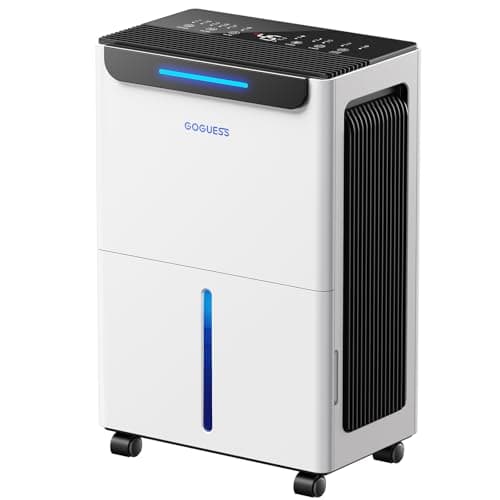
For most small and mid-size tents, the GoGuess 21 Pint Compressor Dehumidifier, set in the room outside the tent with its drain hose running to a bucket or floor drain. For a 2x2 tent holding a few lightly watered pots, the BREEZOME 60 oz Dual-Semiconductor Mini Dehumidifier is enough.

4.5 on Amazon · 972 ratings

Quick answer

The best dehumidifier for a grow tent is a compressor unit with a humidity set point and a drain hose, sized so its stated pints per day comfortably beat the water your plants give off; if you water about a gallon a day or less, that is the GoGuess 21 Pint Compressor Dehumidifier, rated 4.5 stars across 972 Amazon ratings. Each gallon you water can put up to 8 pints of moisture into the air. The 21-pint figure is measured at 95°F and 90% RH, so expect less in a cooler tent, and run it outside the tent unless the manual says otherwise.

Our Picks at a Glance

Every pick below is currently stocked — ratings and stock read from Amazon on 12 October 2026.

Best for a Grow Room or Several Tents
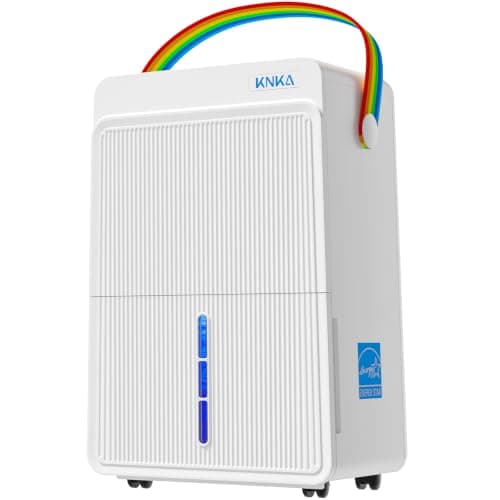
KNKA 80 Pint ENERGY STAR Dehumidifier (56 Pints/Day at 86°F/80% RH, 6.56 ft Drain Hose)
4.4 from 1,209 Amazon ratings · checked 12 OctAmazon's Choice

Best for: A spare room holding two or more tents, or one large tent watered with several gallons a day

Type:
Compressor; ENERGY STAR certified, per the listing
Capacity (stated):
Up to 80 pints/day at 95°F and 95% RH; 56 pints/day at 86°F and 80% RH

Listing verified 13 Oct 2026

How this page was made: we compare the current Amazon listings, the makers' published specs and what verified buyers report, then rank by fit for the job. Ratings, review counts and stock are read from Amazon and dated. We earn a commission on purchases through our links; it does not change the order. Reviewed by Marcus Reed, IICRC-certified Water Restoration Technician.

Full Reviews

Each pick in detail: what the listing states, what buyers report, and where it falls short.

#1
Best Overall

Check price

on Amazon ↗

Listing verified 13 Oct 2026

GoGuess 21 Pint Compressor Dehumidifier (30–80% RH Set Point, Continuous Drain Hose)See it on Amazon ↗

Quick Verdict

GoGuess 21 Pint Compressor Dehumidifier: a stated 21 pints/day at 95°F/90% RH, a set point and a drain hose, for tents watered lightly to moderately.

Key Specs

Type

Compressor

Capacity (stated)

Up to 21 pints/day at 95°F and 90% RH

Humidity setting (stated)

30% to 80% RH in DEHU mode

Drain (stated)

2.3 L tank with auto shutoff, plus an included 3.28 ft hose for continuous draining

Defrost (stated)

Auto-defrost for cooler rooms

Noise (stated)

40 dB

Pros

  • A 30% to 80% RH set point lets it switch off at your target instead of running flat out
  • Comes with a drain hose, so it can run for days without anyone emptying a tank
  • Auto-defrost keeps it working in a cool basement or garage grow space
  • States the temperature and humidity behind its capacity figure

Cons

  • Its 21 pints/day is a hot, saturated-air figure; a tent kept cooler and drier gets noticeably less
  • Power draw is not stated, so the listing does not tell you how much heat it adds
  • The 3.28 ft hose is short; you may need a longer one to reach a drain

Suited to

A small or mid-size tent watered with about a gallon a day or less, in a room where the unit can sit outside the tent

Our take

GoGuess gives the two facts a tent grower needs: a capacity of up to 21 pints a day and the conditions behind it, 95°F at 90% RH. Few tents run that hot and wet, and a dehumidifier pulls less water from cooler, drier air, so read 21 pints as a ceiling. That still covers a tent taking around one gallon daily, a load of up to 8 pints of vapor. The set point means it switches off at your target instead of over-drying, and the included hose lets it run while you are away. Power draw is not listed. Every watt a dehumidifier uses ends up as heat, so place it outside the tent and let the tent's intake draw its drier air.

Check today's price on Amazon →

Affiliate link — commission at no extra cost to you

Compare elsewhere

These open a search for this model. We quote prices only where we can verify them — Amazon, Sylvane and eBay.

#2
Best for a Grow Room or Several Tents

Check price

on Amazon ↗

Listing verified 13 Oct 2026

KNKA 80 Pint ENERGY STAR Dehumidifier (56 Pints/Day at 86°F/80% RH, 6.56 ft Drain Hose)See it on Amazon ↗

Quick Verdict

KNKA 80 Pint ENERGY STAR Dehumidifier: 56 pints/day at 86°F/80% RH and a 6.56 ft drain hose, sized for a grow room rather than one small tent.

Key Specs

Type

Compressor; ENERGY STAR certified, per the listing

Capacity (stated)

Up to 80 pints/day at 95°F and 95% RH; 56 pints/day at 86°F and 80% RH

Humidity setting (stated)

30% to 80% RH; AUTO mode defaults to 50%

Drain (stated)

1.45 gal tank plus a 6.56 ft hose for continuous draining

Noise (stated)

40–45 dB

Humidity reading (stated)

Taken at the air inlet, so it may differ from a separate meter

Pros

  • The only listing here that gives capacity at two test conditions, which shows how much output falls in milder air
  • A 6.56 ft drain hose is included
  • ENERGY STAR certified, per the listing
  • The display and indicator lights can be switched off, useful when the room has to stay dark

Cons

  • Oversized for one small tent; in a small closed room its running heat can push the temperature up
  • Power draw is not stated on this listing
  • Has to stand upright for a day before its first run

Suited to

A spare room holding two or more tents, or one large tent watered with several gallons a day

Our take

KNKA's listing does something most dehumidifier listings skip: it gives capacity at two conditions. The unit is rated for up to 80 pints a day at 95°F and 95% RH, but 56 pints at 86°F and 80% RH, a 30% drop for air that is only a little milder. A room kept in the mid-70s at moderate humidity will see less again, and that is the arithmetic to apply to every headline figure on this page. At this size it suits a spare room with two or more tents, or one big tent with a heavy watering schedule, set in the room with the tent intakes drawing its dry air. For one small tent it is oversized and will cycle on and off, warming the room each time it runs.

Check today's price on Amazon →

Affiliate link — commission at no extra cost to you

#3
Best Step Up for Heavier Watering

Check price

on Amazon ↗

Listing verified 13 Oct 2026

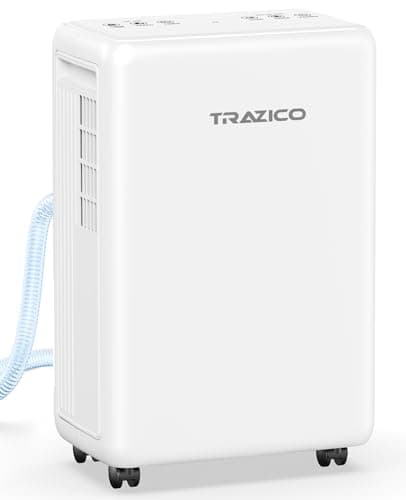
Trazico 30 Pint Compressor Dehumidifier (35 dB Sleep Mode, 3.3 ft Drain Hose, Auto-Restart)See it on Amazon ↗

Quick Verdict

Trazico 30 Pint Compressor Dehumidifier: a stated 30 pints/day at 95°F/90% RH, auto-restart and a drain hose, for heavier watering.

Key Specs

Type

Compressor

Capacity (stated)

Up to 30 pints/day at 95°F and 90% RH

Humidity setting (stated)

Comfort Mode, 30% to 80% RH; Continuous Mode runs without stopping

Drain (stated)

1.7 L tank with auto shutoff, plus an included 3.3 ft hose

Restart (stated)

Auto-restart function

Noise (stated)

35 dB in sleep mode

Pros

  • Nine more stated pints per day than the GoGuess, at the same 95°F, 90% RH test condition
  • Auto-restart is listed, so a short power blip should not leave it switched off for hours
  • A drain hose is included for unattended running
  • A 35 dB sleep mode suits a tent set up in a living area

Cons

  • Power draw is not stated, so its heat output is unknown from the listing
  • A shorter buyer record than the GoGuess and KNKA
  • The 3.3 ft hose limits how far it can sit from a drain

Suited to

A tent watered more heavily than a gallon a day, or one whose exhaust vents back into the same room

Our take

Trazico's 30-pint rating uses the same 95°F, 90% RH test condition as the GoGuess, so the two compare directly: nine more pints a day on paper. That margin matters once your daily watering climbs past a gallon, or in a room where the tent's exhaust fan blows straight back into the same space. Auto-restart is listed, and in a grow space that is worth more than it sounds. A dehumidifier that stays off after a brief outage lets humidity climb for hours with nobody noticing. The listing's line about holding 35% to 55% humidity is a general home figure; the set point and the room decide what it actually reaches. Use the drain hose rather than the tank whenever it runs unattended.

Check today's price on Amazon →

Affiliate link — commission at no extra cost to you

#4
Best Ducted Design

Check price

on Amazon ↗

Listing verified 13 Oct 2026

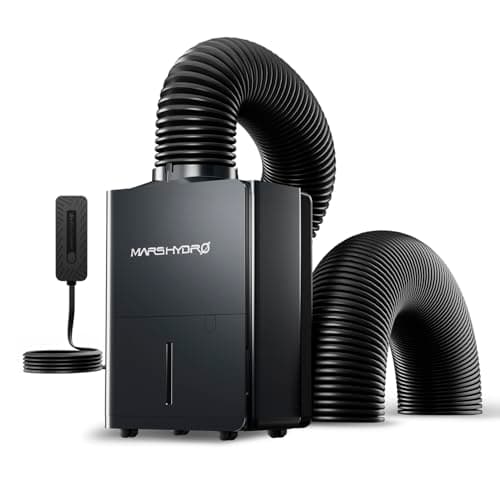
MARS HYDRO 38 Pint Plant Dehumidifier (Ducted, Sits Outside the Tent, 30–90% RH)See it on Amazon ↗

Quick Verdict

MARS HYDRO 38 Pint Plant Dehumidifier: the one tent-specific ducted design here, with no stated test conditions and a short buyer record.

Key Specs

Type

Compressor, designed for grow tents (stated)

Capacity (stated)

Up to 38 pints/day; test conditions not stated

Placement (stated)

An air duct lets it sit outside the tent and channel moisture out

Tent sizes named (stated)

3x3, 2x4 and 4x4 ft

Humidity setting (stated)

30% to 90% RH in auto mode

Drain

Tank with auto shutoff; a drain hose is not mentioned on this listing

Pros

  • The only pick here designed for a tent, with a duct so the unit and its heat stay out of the canopy
  • Names the tent sizes it is meant for
  • Built-in sensors and an auto mode hold a set humidity
  • Casters and handles make it easy to move

Cons

  • A short buyer record on Amazon so far
  • No test conditions behind the 38 pints/day figure, so it cannot be compared directly with the others
  • No drain hose mentioned, so plan on emptying the tank

Suited to

A 3x3, 2x4 or 4x4 ft tent where you want the dehumidifier outside the canopy, ducted in

Our take

Mars Hydro's unit is the one pick here built for a tent. Its listing says it can sit outside the tent and connect through an air duct, which keeps its compressor heat, noise and display light away from the plants. It names 3x3, 2x4 and 4x4 ft tents and a 30% to 90% set range. Two gaps hold it back from a higher rank. The 38 pints/day figure comes without test conditions, so it cannot be weighed against the GoGuess or Trazico numbers, and a figure measured in hot, saturated air would shrink a lot in a tent. The listing also describes a tank with auto shutoff and no drain hose, so heavy watering means emptying it often.

Check today's price on Amazon →

Affiliate link — commission at no extra cost to you

#5
Best for a 2x2 Tent With Light Watering

Check price

on Amazon ↗

Listing verified 13 Oct 2026

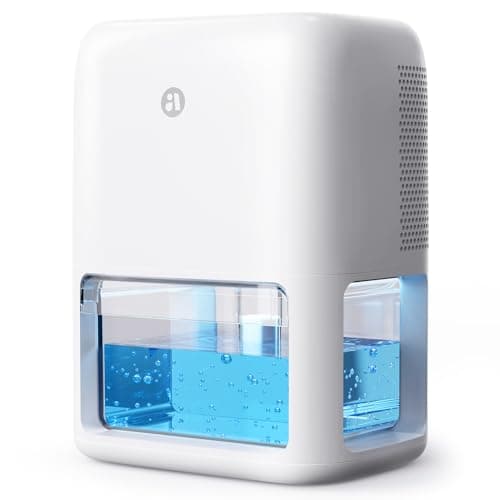
BREEZOME 60 oz Dual-Semiconductor Mini Dehumidifier (700 ml/day at 86°F/80% RH, 48 W)See it on Amazon ↗

Quick Verdict

BREEZOME 60 oz Dual-Semiconductor Mini Dehumidifier: about 1.5 pints/day at 86°F/80% RH from 48 W, enough only for a lightly watered small tent.

Key Specs

Type

Thermoelectric (two semiconductor coolers)

Capacity (stated)

Up to 700 ml/day, about 1.5 pints, at 86°F and 80% RH

Power (stated)

48 W; 1.15 kWh over 24 hours

Tank (stated)

1.8 L (60 oz) with auto shutoff

Defrost (stated)

Defrost function for the cooling plates

Noise (stated)

35 dB sleep mode

Pros

  • States its power draw, so you know the heat it adds: 48 W
  • Gives the test conditions behind its capacity figure
  • No compressor, so it runs quietly
  • A timer and a tank that shuts the unit off when full

Cons

  • About 1.5 pints a day at 86°F and 80% RH is less than a quarter of the moisture one gallon of watering can release
  • No drain hose mentioned, so the tank must be emptied by hand
  • Its output falls further in a tent cooler than 86°F

Suited to

A 2x2 tent with a few small pots of herbs or houseplants watered lightly

Our take

This is the honest size of a thermoelectric dehumidifier. BREEZOME states up to 700 ml a day at 86°F and 80% RH, about 1.5 pints, from 48 W of power. A gallon of water poured into pots can release up to 8 pints into the air, so this unit keeps up only with light watering, such as a few small herb pots or houseplants in a 2x2 tent. Its strength is that the heat it adds is known and small, and it runs quietly with no compressor. In a tent of large plants watered daily it will run all day without moving the humidity much. The 1.8 L tank needs checking every day, because the drying stops when it fills.

Check today's price on Amazon →

Affiliate link — commission at no extra cost to you

Buyer's Guide

What to know before you buy.

Size It by the Water You Pour In

A tent's footprint tells you little about the moisture inside it. The number that matters is water. Plants release most of the water they take up through their leaves as vapor, so the daily moisture load is roughly what you pour into the pots, minus whatever drains out as runoff. One US gallon is 8 pints. Four pots taking half a gallon each per day add up to 2 gallons, which can put up to 16 pints of moisture into the air. Wet soil surfaces and an open reservoir add more. Work out that daily figure first, then look for a dehumidifier whose capacity, after allowing for the cooler conditions in your tent, stays comfortably above it. A heavier watering schedule as plants grow raises the load with it.

Read the Test Conditions, Not Just the Pints

Dehumidifier capacity is measured in hot, wet air, and output falls as the air gets cooler and drier. GoGuess and Trazico state their figures at 95°F and 90% RH. BREEZOME uses 86°F and 80% RH. KNKA states two figures, and the one taken in milder air is 30% lower than its headline number. Mars Hydro gives no conditions at all. A tent kept at ordinary room temperature and moderate humidity will see well under any of these headline numbers, so buy with a margin. Ignore square-foot coverage claims for this job; they describe open rooms, and a small bedroom unit claiming 1,000 sq ft says nothing about a tent full of transpiring plants.

Compressor or Thermoelectric

Thermoelectric units, sometimes sold as Peltier or semiconductor dehumidifiers, use a small chilled plate and a fan. They are light, quiet and low on power, but BREEZOME's stated output is about 1.5 pints a day even at 86°F and 80% RH. That suits a 2x2 tent with a few lightly watered pots and little else. Compressor units such as the GoGuess, Trazico, KNKA and Mars Hydro remove many times more water, and they are heavier, louder and use more power. A simple rule follows from the arithmetic: if you pour in more than about a quart a day, which can mean 2 pints of moisture, skip thermoelectric and buy a compressor model. Check that it has an adjustable set point, so it stops when the target is reached.

Heat, Placement and Drainage

A dehumidifier warms the air it dries. All the electricity it draws ends up as heat in the space, and condensing water vapor releases more heat on top. Inside a closed tent, that adds to the heat from the grow lights. Most setups put the unit in the room outside the tent, where the tent's intake fan draws its drier air in, or use a ducted design like the Mars Hydro that feeds dry air through the wall of the tent. Follow the manual on placement and keep the clearance it asks for around the air inlet and outlet. For drainage, run the hose downhill to a floor drain, sink or bucket, because a tank that fills stops the drying. Keep plugs and cords off the tent floor, away from spills and runoff.

Humidity Targets and the Room Around the Tent

The right humidity inside the tent depends on the plants and their stage. Seedlings and cuttings generally like more humid air, while many mature plants do better with less, so follow the growing guidance for the plants you keep and measure with a hygrometer at plant height. The room around the tent has its own target. EPA advises keeping indoor humidity below 60 percent, ideally between 30 and 50 percent, and notes that condensation can be a sign of high humidity. A tent that vents moist air into a closet, bedroom or basement can push that room over the line. EPA also lists excess moisture as a source of indoor air pollution, so put a second hygrometer in the room and dry it as well if it stays high.

Who Should Not Buy One

Not every tent needs a dehumidifier. A tent of seedlings or cuttings usually wants humid air, so drying it works against the plants. If humidity only spikes when the lights switch off, a stronger exhaust fan venting to a drier space may be the simpler fix. In winter, the house air is often dry enough that venting the tent into the room brings it down without any machine. Skip thermoelectric units altogether if your plants drink more than a quart a day. And if the tent sits in a basement or closet that already smells musty or shows mold on the walls, the room is the problem: that space needs a properly sized room dehumidifier and the moisture source fixed before any tent unit can keep up.

Frequently Asked Questions

What size dehumidifier do I need for a grow tent?

You need one whose real output beats the moisture your plants give off, which is close to the water you pour in each day. Each gallon can add up to 8 pints to the air.

Because stated capacity is measured in hot, wet air, choose a unit whose figure sits well above your daily load. KNKA's own numbers fall by 30% between its two test conditions, which shows how much margin you need.

Should a dehumidifier be inside or outside a grow tent?

Outside, in the same room, suits most setups, unless the maker designs the unit for use inside a tent. Outside, its heat, bulk and display light stay away from the plants, and the tent's intake fan pulls in the drier room air.

The Mars Hydro listing describes sitting outside and ducting in. A small thermoelectric unit can fit inside a 2x2 tent, but check its manual for clearance first.

Does a dehumidifier add heat to a grow tent?

YesEvery dehumidifier adds heat. The electricity it uses turns into warmth, and so does the vapor it condenses into water.

BREEZOME states 48 W, so its heat is small and known. The compressor units on this page do not state their power draw, so assume they add more. Running the unit outside the tent and letting the exhaust fan carry warm air away keeps the heat off the plants.

Is a mini dehumidifier enough for a grow tent?

Only for a small tent watered lightly. A thermoelectric mini unit such as the BREEZOME removes roughly a pint and a half daily under warm, damp test conditions, a small fraction of what one gallon of watering releases.

A mini unit can hold a 2x2 tent of a few small herb pots or houseplants. Larger plants watered every day need a compressor dehumidifier with a set point and a drain hose.

What humidity should a grow tent be?

It dependsOn the plants and their stage of growth, so follow the guidance for what you are growing.

In general, seedlings and cuttings prefer more humid air than mature plants. Measure with a hygrometer at plant height rather than trusting the dehumidifier's own display, which reads at its inlet. Keep the room outside the tent in check as well, within the indoor humidity range EPA recommends for homes.

Can a grow tent cause mold in my house?

YesIt can, if the tent vents moist air into a closed room that stays humid for weeks.

Watch for condensation on windows, a musty smell, or spots on walls and closet ceilings near the tent. Vent the tent's exhaust to a drier space where possible, and dry the room as well as the tent. If mold is already growing on drywall, clean it up promptly and fix the humidity before restarting.

Who do I call right now for water damage?

Call (888) 840-6512. The line is answered 24 hours a day, seven days a week, and connects you with an IICRC-certified water damage restoration company that serves your area. A recorded menu picks up first: choose water damage or mold, key in your 5-digit ZIP code, and hold through the short silence while the call is passed to the company.

Describe what you can see — where the water is coming from, how long it has been there, and whether it smells — the more specific you are, the faster the right company is on the line. If the source is a pipe or an appliance, shut the main water valve first. Have four things ready and the call goes quickly: the address, when the water started, what is wet now, and whether you have filed an insurance claim.

Still not sure which of these is your situation? (888) 840-6512 · toll-free · answered 24/7

Sources

  1. EPA — A Brief Guide to Mold, Moisture, and Your Home
  2. EPA — Introduction to Indoor Air Quality

Methodology: How we source and verify data · Report an error

How we chose these picks

  • Every pick is a current listing. Stock, star ratings and rating counts are read from Amazon by script and carry the date they were read.
  • Nothing under 4.0 stars makes the list, and the top pick needs a large rating count, so one good week of reviews cannot put it there.
  • Specs are quoted from the listing or the maker, with the test condition behind the number where there is one, and sized against the job rather than the room on the box.
  • We do not run lab or field tests. Where a spec matters, we say what it is measured under and what it cannot tell you.

Free 2-day shipping

Amazon Prime members pay no shipping on restoration equipment

Dehumidifiers, air movers, and moisture meters qualify for free Prime delivery — bulk items that otherwise cost $15–$40 to ship.

Try Prime free →

Affiliate link — HearthDry earns a bounty if you sign up; costs you nothing extra.

Also Worth Comparing

Best Dehumidifier for a Closet in 2026 — Hanging Absorbers, Mini Units and a Compressor for Damp Walk-Ins

A closed closet trades very little air with the rest of the house, so a hanging absorber or a mini dehumidifier can keep up with it where it could never dry a room. The picks here are sorted by the closet you have: no outlet, an outlet, or a walk-in beside a damp wall or a bathroom.

Read the comparison

Best Dehumidifier for a Bedroom or Apartment in 2026 — Quiet Small-Room Units Compared

A bedroom dehumidifier has to be quiet enough to sleep beside, and five of the six picks here are thermoelectric units that remove ounces of water a day rather than pints. That is enough for a stuffy bedroom, closet or studio apartment; for a room with wet windows every morning, the sixth pick is a small compressor unit rated in pints.

Read the comparison

Best Hygrometers for Home in 2026 — Indoor Humidity Monitors That Tell You When a Room Is Too Damp

A hygrometer is the small, inexpensive instrument that tells you whether a room needs a dehumidifier, a humidifier or nothing at all. These picks are judged on the accuracy each listing states, how easily you can read them, and whether they can warn you about a damp basement before you smell it.

Read the comparison

Best Dehumidifier for Basement Use in 2026 — Drain Hose, Built-In Pump and Honest Pint Ratings

Most basement dehumidifier disappointment comes from two numbers nobody reads properly: the pint rating, measured at warm test conditions a 60°F basement never reaches, and the drainage method. Five units are compared here on those two points first, from a garden-hose drain to a built-in pump with a stated 15 ft lift.

Read the comparison