
Quick answer
Mold in a closet usually comes from still air plus a cold exterior wall, where humid room air condenses, or from a leak in a shared wall. Remove everything, bag anything moldy, and test the wall with a moisture meter. If it reads dry, clean the surface with detergent and water and lower the room's humidity. If it reads wet, there is water inside the wall that cleaning will not reach. Most washable clothes can be saved with a hot wash and oxygen bleach or vinegar. Call (888) 840-6512 to reach a certified water damage restoration company in your area; the line is answered 24/7.
Written & reviewed by Marcus ReedIICRC WRT
Reviewed September 27, 2026· Next review Mar 2027
Closets grow mold because they combine the three things mold needs: still air, a surface that stays cool, and something absorbent to eat. Take everything out, find out whether the wall itself is wet, and only then decide what to clean. Spots on a dry wall are a humidity problem you can fix; spots on a wall that reads wet are a leak, and the clothes are the least of it.
Why Closets, of All Places
A closet is the one room in the house where the door stays shut and nothing moves the air. That alone raises the humidity inside it. Add any of these and mold follows:
- An exterior wall. In winter the outside wall is the coldest surface in the room. Warm, humid air from the bedroom creeps in, meets that cold drywall and condenses, especially in a corner where insulation is thin.
- A cold corner or ceiling. Closets under an attic, against a garage or over an unheated space get the same effect on the ceiling. Mold on a closet ceiling that sits under the roof is also a common sign of a roof or attic moisture problem.
- A leak on the other side. A bathroom, laundry room or water heater closet next door can leak into the shared wall for months before anyone looks. The closet side shows it first because nobody looks at the back wall of a closet.
- Packed clothing. Clothes pressed against the wall block what little airflow there is, and cotton, wool and leather hold moisture and feed growth.
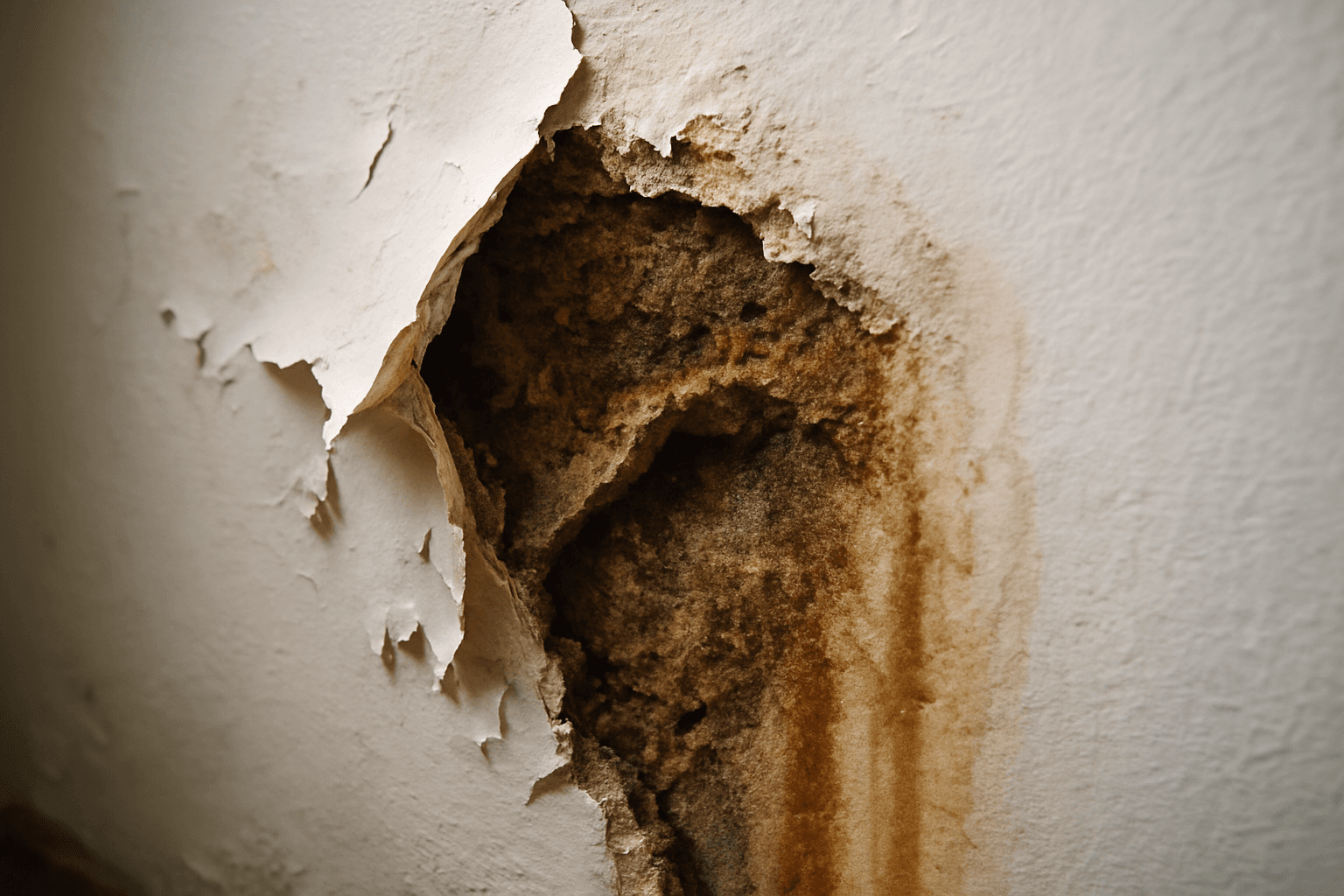
The pattern of the spots tells you which. Speckling spread across the lower part of an outside wall, worst in the corners, is condensation. A patch centered on one area, especially with a tide-line stain or bubbling paint, is water arriving from somewhere. Growth that starts at the floor and climbs points to water in the bottom of the wall, which is covered in the baseboard mold guide.
What to Do, Step by Step
- 1Empty the closet and bag the moldy items. Wear an N95 mask and gloves. Put anything with visible growth or a musty smell into plastic bags before carrying it through the house, so spores do not scatter on the way. Leave the closet door open and point a fan out of the room, not into it.
- 2Check the wall with a moisture meter. Press a pinless meter against the moldy area and compare it with a wall in the same room that looks clean. If the moldy wall reads close to the clean one, the growth is from humidity and condensation. If it reads much higher, water is in the wall, and cleaning the surface will not end it.
- 3Clean surface mold on hard surfaces. On painted drywall, shelves and closet rods, scrub with a detergent solution, wipe with a damp cloth and let it dry completely. The EPA's guidance is that detergent and water is enough for hard surfaces; bleach is not required and does not reach into drywall paper. If the drywall is soft, crumbles, or the mold keeps coming through after cleaning, it needs to be cut out, which the drywall mold guide explains.
- 4Launder, clean or discard the clothes. Sort everything into three piles, as below.
The EPA's line for doing it yourself is about 10 square feet of growth, roughly a three-by-three-foot patch. Beyond that, or anywhere the wall reads wet, it is a job for a professional.
What to Do With the Clothes
Most clothing survives closet mold if it is dealt with quickly.
| Item | What to do |
|---|---|
| Washable cotton, synthetics, linens | Brush off outdoors, then wash hot with oxygen bleach or a cup of white vinegar; dry in sun or on high heat |
| Wool, silk, delicates, anything dry-clean only | Professional cleaner; tell them it is mold |
| Leather shoes, bags, jackets | Wipe with a damp cloth outdoors, clean with a leather cleaner, dry slowly away from heat |
| Heavily stained, still musty after two washes, or rotted fabric | Discard |
| Cardboard boxes, paper, stored bedding in the closet | Usually discard; porous paper cannot be cleaned |
Do not put moldy clothes back until the closet is dry. They will pick the smell right back up. The clothes guide covers washing methods and stains in detail, and the leather guide covers shoes and jackets.
Talk to a water damage pro now
Answered 24/7 · Toll-free · answered 24/7 · no obligation
(888) 840-6512- Describe the damage & give your ZIP
- You're routed to the on-call local crew
- They quote — you decide, no obligation
Is Mold on Clothes in a Closet Dangerous?
For most healthy adults, a few spotted garments in a closet are an irritant, not an emergency. The EPA and CDC describe mold's effects as allergic reactions, stuffy nose, itchy eyes, coughing and worsened asthma, and they name people with asthma, allergies or weakened immune systems as the ones most at risk. Black spots on a jacket are not a sign of "toxic black mold"; color does not tell you how harmful a mold is. If you sleep next to that closet and wake up congested, clean it and keep it dry, and talk to a doctor if symptoms continue.
When It Is a Wall Problem
If step 2 showed a wet wall, or the mold returns within a few weeks of a thorough clean, the source is inside the wall. That means a plumbing leak, a window or siding leak on the exterior side, or a condensation problem bad enough to soak the drywall. Cleaning the paint will not reach it. The drywall usually has to come off far enough to see the back side and the framing, the leak has to be found and fixed, and the cavity has to be dried and treated before it is closed up. Wet drywall begins growing mold within 24–48 hours, so a leak that has been feeding a closet wall has almost always grown more on the back than on the front.
That job, removing a section of wall under containment, drying it and rebuilding, runs about $1,500–$3,500 when it is one closet wall. If you want it assessed, (888) 840-6512 is answered 24/7 and connects you with an IICRC-certified restoration company that serves your area; the company gives you an arrival window for your address on the call.
Keeping It From Coming Back
- Leave a few inches between clothes and the outside wall, and do not store boxes flat against it.
- Keep the bedroom under 50 percent humidity. A small dehumidifier in the room does more than one in the closet.
- Swap a solid door for a louvered one, or leave it open a crack at night.
- Never put away damp clothes, gym gear or dry cleaning still in its plastic.
- Check the closet after heavy rain and after any leak in the room next door.
Reading to confirm what you already suspect?
Confirm it in two minutes instead — the pro on this line answers questions about YOUR situation all day: what it is, what it should cost, whether you even need service. If you want, they'll set the appointment on the same call.
Toll-free · no obligation · asking costs nothing
Frequently Asked Questions
What do I do if I find mold in my closet?
Take everything out and bag moldy items before carrying them through the house. Check the moldy wall with a moisture meter against a clean wall.
If it is dry, clean hard surfaces with detergent and water, dry thoroughly and lower humidity. If it reads wet, there is a leak or condensation inside the wall and the drywall likely needs to be opened.
What do I do with clothes that have mold on them from the closet?
Brush off loose mold outdoors, then wash washable fabrics on the hottest setting they allow with oxygen bleach or a cup of white vinegar, and dry in sun or on high heat. Send wool, silk and dry-clean-only items to a cleaner. Discard anything still musty after two washes or with rotted fabric.
Is mold on clothes in a closet dangerous?
For most healthy people it is an irritant rather than an emergency: the EPA and CDC list allergic reactions, congestion, eye irritation and worsened asthma. People with asthma, allergies or weakened immune systems are more at risk. The color of the mold does not indicate how harmful it is.
Why is there mold on my closet wall or ceiling?
An exterior wall or a ceiling under the attic is colder than the room, so humid air condenses on it inside a closed closet with no airflow. Mold concentrated in one spot, with staining or bubbling paint, points to a leak from a roof, window, or a bathroom or laundry on the other side.
How do I clean mold in a closet?
Wear an N95 and gloves, empty the closet, scrub painted walls, shelves and rods with a detergent solution, wipe with a damp cloth and let everything dry fully. Bleach is not needed on hard surfaces. For growth over about 10 square feet, or drywall that is soft or wet, have it removed professionally.
Who do I call right now for water damage?
Call (888) 840-6512. The line is answered 24 hours a day, seven days a week, and connects you with an IICRC-certified water damage restoration company that serves your area. Describe what you can see — where the water is coming from, how long it has been there, and whether it smells — the more specific you are, the faster the right company is on the line.
If the source is a pipe or an appliance, shut the main water valve first. Have four things ready and the call goes quickly: the address, when the water started, what is wet now, and whether you have filed an insurance claim.
Still not sure which of these is your situation? (888) 840-6512 · toll-free · answered 24/7
Sources
- EPA — A Brief Guide to Mold, Moisture and Your Home
- CDC — About Mold and Your Health
- IICRC S520 Standard for Professional Mold Remediation
Methodology: How we source and verify data · Report an error
Disclaimer: HearthDry is an independent educational resource. This article is for informational purposes only and does not constitute professional, legal, or insurance advice. Consult licensed professionals before making decisions about your property or insurance claims.
Free 2-day shipping
Amazon Prime members pay no shipping on restoration equipment
Dehumidifiers, air movers, and moisture meters qualify for free Prime delivery — bulk items that otherwise cost $15–$40 to ship.
Affiliate link — HearthDry earns a bounty if you sign up; costs you nothing extra.
Equipment
What each machine actually does
Removes the moisture the structure is still giving off — the machine that decides how long drying takes
See the picks →Moves air across wet surfaces so the dehumidifier has something to take out of the air
See the picks →Finds water behind walls and under floors, and tells you when a material is actually dry
See the picks →Alerts you the moment a leak starts — the cheapest thing on this list and the only preventive one
See the picks →Those pages carry affiliate links. As an Amazon Associate, HearthDry earns from qualifying purchases; it costs you nothing extra.
Our Amazon storefront →Advertisement
