
Quick answer
Mold on baseboards usually means the bottom of the wall has been wet, because drywall wicks water up from the floor like a sponge and the trim hides the wettest part. Common sources are a toilet, tub, appliance line, window or door threshold. Test the drywall above the trim with a moisture meter, then remove the baseboard to look at the back of the trim and the wall. Surface mold on dry trim can be cleaned; wet or moldy drywall behind it has to be dried or cut out. Call (888) 840-6512 to reach a certified water damage restoration company in your area; the line is answered 24/7.
Written & reviewed by Marcus ReedIICRC WRT
Reviewed September 27, 2026· Next review Mar 2027
Mold growing along a baseboard is a floor-level warning: water is usually sitting in the bottom of the wall, soaking up into the drywall from below. Wiping the trim clean does nothing about that. The only way to know is to take the baseboard off and put a moisture meter on what is behind it.
Why Mold Shows Up at the Baseboard First
Drywall acts like a sponge standing in a puddle. When water reaches the floor, from a leaking supply line, an overflowing toilet, a dishwasher, a slab leak or rain coming under a door, it runs along the floor to the wall and gets pulled up into the gypsum and the paper facing. This is called wicking, and it can carry water a foot or more up a wall that looks perfectly dry from a few feet away.
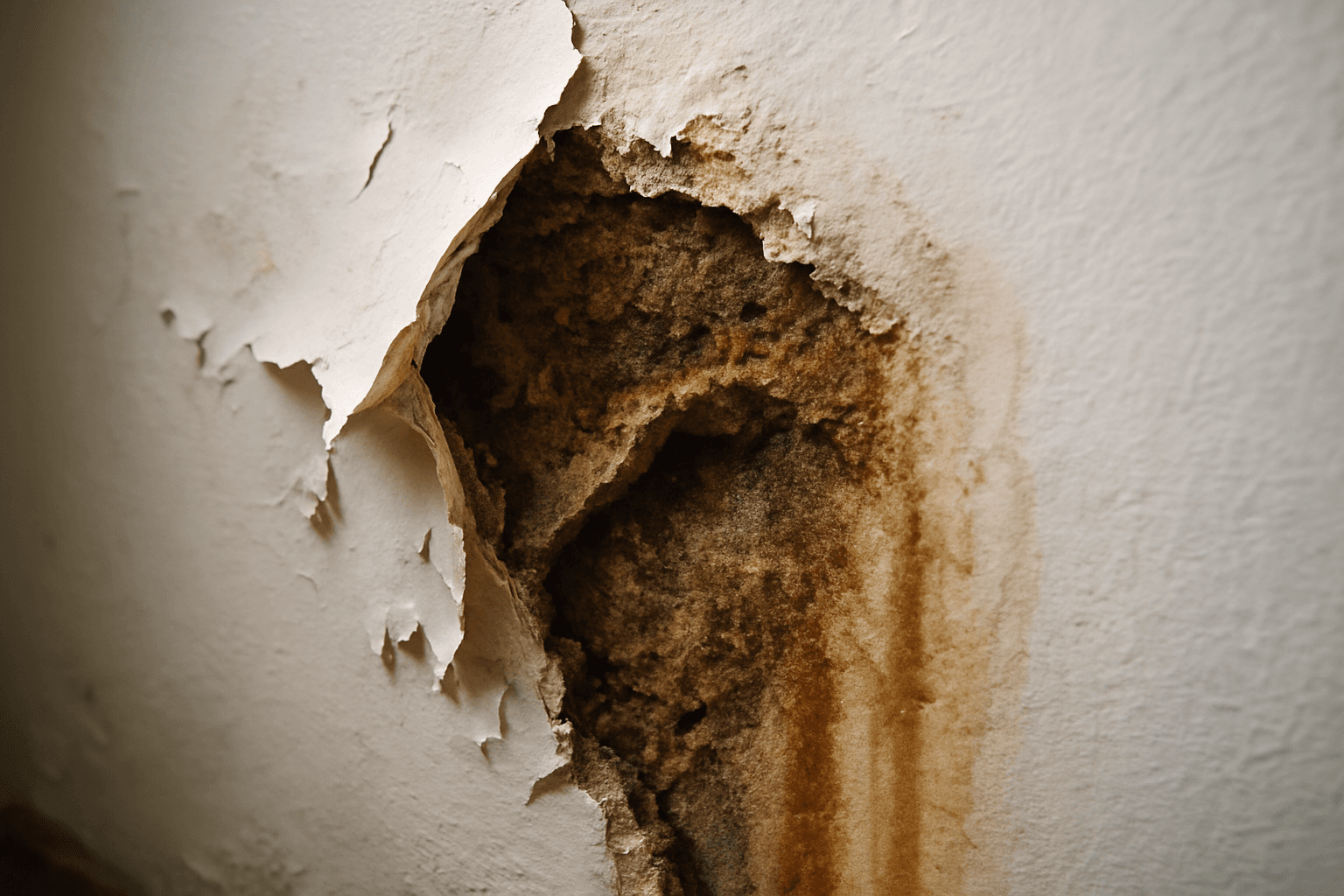
The baseboard covers the wettest part. Mold grows on the back of the drywall and the back of the trim first, then shows on the painted face, in the caulk line, or at the joint between baseboard and floor. By the time you see it, the hidden side is usually worse.
Where it appears narrows the cause:
| Where | Most common source |
|---|---|
| Bathroom | Toilet wax ring, tub or shower pan leak, water splashed over the tub edge and left on the floor |
| Kitchen or laundry | Dishwasher, refrigerator ice maker line, sink drain, washer hoses |
| Bedroom on an outside wall | Condensation on a cold wall, a window leak running down inside the wall, or wet carpet |
| Basement | Water coming through the slab or foundation, or humid air condensing on cool finished walls |
| Closet | Leak from a room on the other side, or condensation in a cold corner |
| Next to an exterior door | Rain getting under the threshold |
Signs of Water Damage on Baseboards
Before any mold appears, the trim usually shows it:
- Paint bubbling, peeling or cracking along the top edge.
- Swelling, especially on MDF baseboard, which puffs up and goes soft when it gets wet and never goes back.
- Gaps opening between baseboard and wall, or the caulk line separating.
- Dark staining or tide marks on the trim or the wall just above it.
- Carpet damp or tack strip rusty at the wall edge.
- A musty smell at floor level that is stronger when you kneel down.
Any one of these, with or without visible mold, is a reason to check behind the trim. The hidden water damage guide covers the related signs in floors and walls.
Black Mold on Baseboards
Dark mold on trim looks alarming, but the color does not tell you the species or how harmful it is. The EPA and CDC treat all indoor mold growth the same way: remove it and fix the moisture. Several common molds are black or dark green, and a lab test for species rarely changes what gets done. What matters is how much there is and whether the wall behind it is wet. The mold colors guide goes into what the colors can and cannot tell you.
Talk to a water damage pro now
Answered 24/7 · Toll-free · answered 24/7 · no obligation
(888) 840-6512- Describe the damage & give your ZIP
- You're routed to the on-call local crew
- They quote — you decide, no obligation
What to Do, Step by Step
- 1Probe and meter the wall above the baseboard. Press a thumb along the drywall just above the trim. Soft, crumbly or cold-and-damp drywall is wet. Then use a pinless moisture meter at the base of the wall and at 6, 12 and 24 inches up, and compare with a dry wall in the same room. A reading that is high at the bottom and falls off as you go up is the wicking pattern.
- 2Pull the baseboard off. Wear an N95 and gloves. Score the caulk and paint line with a utility knife, then pry gently with a flat bar against a putty knife so the wall is not crushed. Look at the back of the trim and at the bottom few inches of drywall. Black, gray or green speckling there, or drywall that is stained and swollen, confirms it.
- 3Find where the water is coming from. Follow the wet readings along the wall to where they are highest. Check the nearest fixture, appliance, supply line or door. If nothing obvious is leaking and the readings are high, the source may be inside the wall or under the floor, and that is when a professional with thermal imaging earns the fee. The guide to water damage in walls covers who to call for which source.
- 4Dry or cut out the wet drywall. If the drywall is only damp, the source is stopped, and there is little growth, it can often be dried in place with the baseboard off, a fan and a dehumidifier, until it reads the same as the dry wall. If it is soft, moldy on the back, or has been wet for more than a couple of days, cut it out a foot or so above the wet line, let the cavity dry, clean the framing, and patch. Wood framing should read under 16 percent moisture content before it is closed.
Water behind a baseboard does not evaporate on its own. There is no airflow at the bottom of a wall cavity, and drywall wet from wicking can stay wet for weeks. Mold starts on wet material within 24–48 hours, so this is not a wait-and-see problem.
Can You Clean It Yourself?
If the wall reads dry and the growth is on the painted face of the trim only, yes. Wipe with detergent and water, dry it, and watch for it to return. If it comes back, the moisture is still there.
If the wall behind reads wet, the patch is more than about 10 square feet, the drywall is moldy on the back, or the source is a leak you cannot find, bring in a professional. A single wall cavity with containment and removal usually runs $1,500–$3,500, and more if the leak ran along several rooms. The guide to removing mold from walls explains how far DIY can safely go.
When the meter says the bottom of a wall is wet and you cannot say why, that is the point to have someone measure it properly. (888) 840-6512 is answered 24/7 and connects you with an IICRC-certified restoration company that serves your area; the company gives you an arrival window for your address on the call and explains the cost before any work starts.
Before You Put the Baseboard Back
Check the meter one more time. Replace MDF trim that swelled rather than trying to sand it flat. Leave a small gap between the bottom of new drywall and the floor so it cannot wick again, and caulk the baseboard to the floor in bathrooms and kitchens so a spill cannot run under it.
Reading to confirm what you already suspect?
Confirm it in two minutes instead — the pro on this line answers questions about YOUR situation all day: what it is, what it should cost, whether you even need service. If you want, they'll set the appointment on the same call.
Toll-free · no obligation · asking costs nothing
Frequently Asked Questions
What causes mold on baseboards?
Water reaching the floor and wicking up into the bottom of the drywall, from a leaking toilet, tub, dishwasher, washer, refrigerator line, window, exterior door or slab. On a cold exterior wall in a bedroom or basement, condensation can also do it. The baseboard hides the wettest part of the wall.
Is there mold behind my baseboards?
If there is mold on the face of the trim, there is often more on its back and on the bottom of the drywall. Test the wall above the trim with a moisture meter, then pry the baseboard off carefully and look. Staining, swelling or speckling on the back of the drywall confirms it.
Is black mold on baseboards dangerous?
The color does not identify the species or how harmful it is; several common molds are dark. The EPA and CDC advise treating any indoor mold the same way: remove it and fix the moisture. People with asthma, allergies or weakened immune systems are most affected.
What are the signs of water damage on baseboards?
Paint bubbling or peeling along the top edge, swollen or soft MDF trim, gaps opening between trim and wall, dark tide-line stains, damp carpet or rusty tack strip at the wall, and a musty smell that is stronger at floor level.
Will water behind a baseboard dry on its own?
RarelyThere is no airflow at the bottom of a wall cavity and drywall wet from wicking can stay wet for weeks.
With the source stopped, removing the baseboard and running a fan and dehumidifier can dry lightly damp drywall; soaked or moldy drywall should be cut out.
Who do I call right now for water damage?
Call (888) 840-6512. The line is answered 24 hours a day, seven days a week, and connects you with an IICRC-certified water damage restoration company that serves your area. Describe what you can see — where the water is coming from, how long it has been there, and whether it smells — the more specific you are, the faster the right company is on the line.
If the source is a pipe or an appliance, shut the main water valve first. Have four things ready and the call goes quickly: the address, when the water started, what is wet now, and whether you have filed an insurance claim.
Still not sure which of these is your situation? (888) 840-6512 · toll-free · answered 24/7
Sources
- EPA — A Brief Guide to Mold, Moisture and Your Home
- CDC — About Mold and Your Health
- IICRC S500 Standard for Professional Water Damage Restoration
- IICRC S520 Standard for Professional Mold Remediation
Methodology: How we source and verify data · Report an error
Disclaimer: HearthDry is an independent educational resource. This article is for informational purposes only and does not constitute professional, legal, or insurance advice. Consult licensed professionals before making decisions about your property or insurance claims.
Free 2-day shipping
Amazon Prime members pay no shipping on restoration equipment
Dehumidifiers, air movers, and moisture meters qualify for free Prime delivery — bulk items that otherwise cost $15–$40 to ship.
Affiliate link — HearthDry earns a bounty if you sign up; costs you nothing extra.
Equipment
What each machine actually does
Removes the moisture the structure is still giving off — the machine that decides how long drying takes
See the picks →Moves air across wet surfaces so the dehumidifier has something to take out of the air
See the picks →Finds water behind walls and under floors, and tells you when a material is actually dry
See the picks →Alerts you the moment a leak starts — the cheapest thing on this list and the only preventive one
See the picks →Those pages carry affiliate links. As an Amazon Associate, HearthDry earns from qualifying purchases; it costs you nothing extra.
Our Amazon storefront →Advertisement
