
Quick answer
Mold color comes from pigments, spores and what the mold is eating, and the same species can appear in several colors — so color does not identify a mold and does not indicate how harmful it is. In homes, black or dark green growth is usually Cladosporium, Aspergillus or Alternaria and only sometimes Stachybotrys; white growth is often early-stage mold or mildew, or on masonry may be efflorescence (mineral salts, not mold); green is typically Penicillium or Aspergillus; orange and red on damp bathroom surfaces are usually Serratia bacteria or a yeast rather than mold; yellow can be Aspergillus or, on wood, a slime mold or fungus. CDC's position is that visible mold is removed regardless of type — the response is identical for every color: find the moisture, remove the growth, dry the material. Call (888) 840-6512 to reach a certified water damage restoration company in your area; the line is answered 24/7.
Press 1 for water damage or 2 for mold, then your 5-digit ZIP. The line goes quiet for about half a minute while it connects — that is normal, stay on.
Written & reviewed by Marcus ReedIICRC WRT
Reviewed August 30, 2026· Next review Feb 2027
Why Color Is a Poor Guide
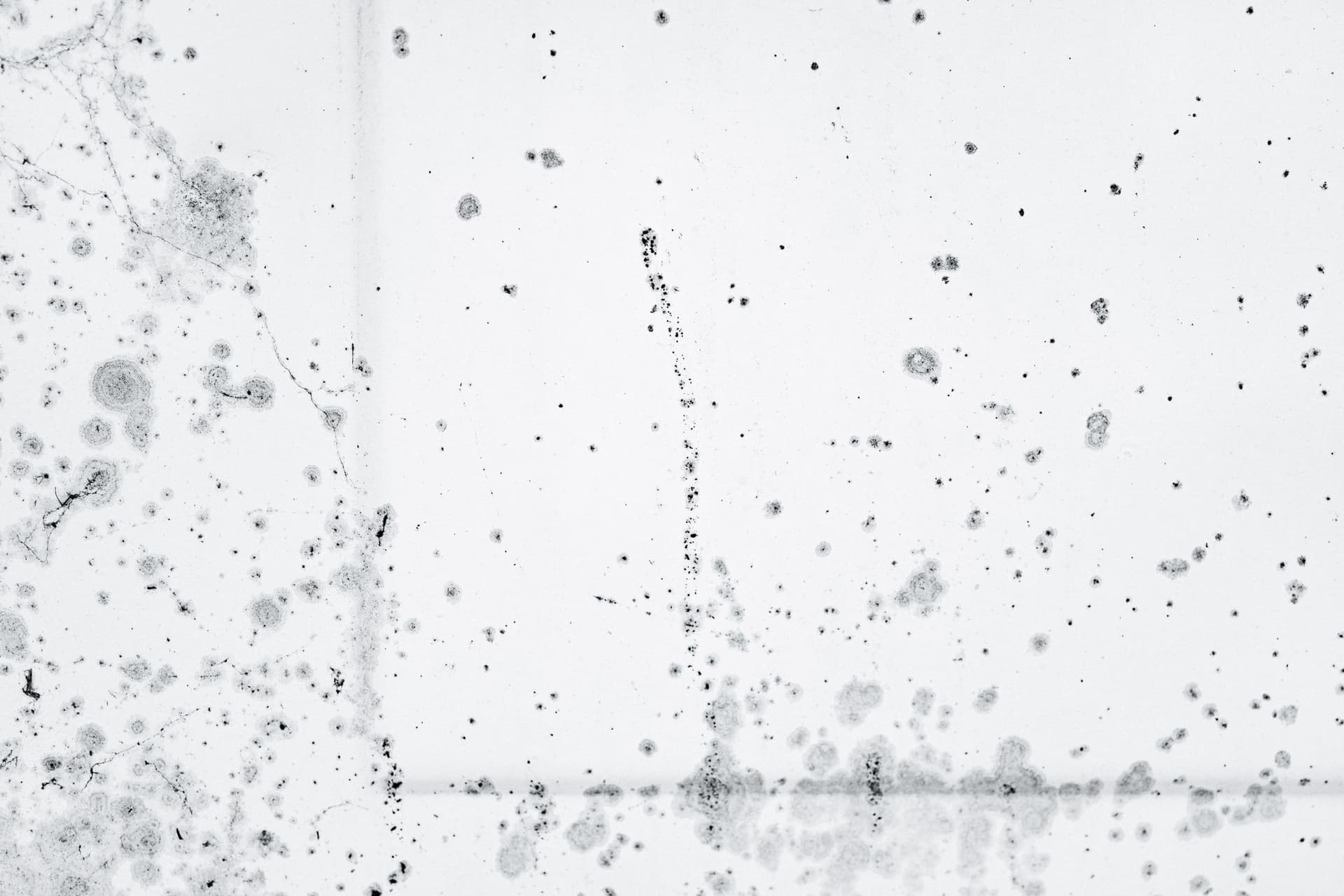
Mold color comes from three things: pigments the species produces, the color of its spores, and what it is growing on. The same species grows white when young and green or black when it sporulates; the same color appears in a dozen unrelated species. So color tells you a little about *what* and nothing reliable about *how harmful*. CDC and EPA guidance sidesteps the whole question: visible mold is removed regardless of type, and sampling to identify it is generally unnecessary.
What color *can* do is give a rough idea of where you are — and rule out a few things that are not mold at all.
Color by Color
| Color | What it usually is in a home | Where | Note |
|---|---|---|---|
| Black / dark green | Cladosporium, Aspergillus, Alternaria; sometimes Stachybotrys | bathrooms, window frames, wet drywall | Stachybotrys means long-soaked material — black mold symptoms separates fact from myth |
| White | early-stage mold or mildew; some species stay pale — or efflorescence on masonry (salt, not mold) | closets, basements, concrete walls, wood | chalky powder that brushes off dry from concrete is salt; white mold in the house covers the rest |
| Green | Penicillium, Aspergillus, Cladosporium | food, damp fabric, walls, wood | the classic "bread mold" family; very common indoors |
| Grey / brown | Alternaria, Ulocladium, mature Cladosporium | window sills, showers, cold walls | grey-brown velvet on a sill is the condensation mold |
| Pink / orange-red slime | Serratia marcescens — a bacterium, not mold | grout, shower curtains, drains, toilet bowl | pink shower slime: cleans off, returns unless the shower dries |
| Orange (fuzzy) | a true mold, or a slime mold on wood | damp wood, food, mulch | on structural wood, a sign of persistent wetness |
| Yellow | Aspergillus species; on wood, a "yellow slime" or fungus | food, damp wood, insulation | on framing or subfloor, treat as a wet-wood problem |
| Blue / blue-green | Penicillium | food, damp organics | the antibiotic's namesake; a food and fabric mold |
| Fuzzy vs slimy | fuzzy = mold (fungal); slimy film = bacteria or yeast | — | a useful distinction in bathrooms |
The Two Colors That Aren't Mold
Pink and orange slime in wet bathroom areas is Serratia marcescens, a bacterium living on soap residue. It cleans with a bleach-based or peroxide cleaner and a brush, and is prevented by drying the shower after use. It is an opportunistic pathogen for the vulnerable, which is reason enough to keep on top of it.
White crystalline powder on concrete, brick or block that brushes off dry is efflorescence — mineral salts carried to the surface by water evaporating out of the masonry. It is not alive and not harmful, but it is a moisture report: that wall is wet from behind, and the basement humidity and seepage rules apply. Fuzzy, spreading white growth with a musty smell is mold.
Talk to a water damage pro now
Answered 24/7 · Toll-free · answered 24/7 · no obligation
(888) 840-6512- Describe the damage & give your ZIP
- You're routed to the on-call local crew
- They quote — you decide, no obligation
What Color Doesn't Tell You
- How dangerous it is. The molds that produce mycotoxins come in several colors, and most dark mold is not one of them. The exposure evidence does not sort by color.
- Whether it's "toxic." CDC calls the term inaccurate; no home test identifies it by color.
- How to clean it. Every color gets the same method: fix the moisture, scrub hard surfaces and replace porous ones, dry the area, and a professional above about 10 square feet or in HVAC.
What Color and Texture Together Do Tell You
Heavy, dark, slimy-then-powdery growth on drywall or ceiling tile says a material has been saturated for a long time — a leak, not condensation. Light speckling across a bathroom ceiling says steam and a weak fan. Grey-brown velvet on a sill says a cold window in winter. Pink slime says soap and standing water. Use the color to guess at the *water*, then go and fix the water.
Bottom Line
Black isn't necessarily Stachybotrys, pink isn't mold, white may be salt, and no color changes what you do. Read the color as a hint about where the moisture is coming from, then treat every one of them the same way: find the water, remove the growth, dry the material.
Reading to confirm what you already suspect?
Confirm it in two minutes instead — the pro on this line answers questions about YOUR situation all day: what it is, what it should cost, whether you even need service. If you want, they'll set the appointment on the same call.
Toll-free · no obligation · asking costs nothing
Frequently Asked Questions
Is black mold the most dangerous color?
No'Black mold' as a species — Stachybotrys — is one of many dark molds, and most dark growth in homes is Cladosporium, Aspergillus or Alternaria.
Its documented health effects are the same respiratory and allergic ones as other indoor molds; the CDC calls the term 'toxic mold' inaccurate. What a dark colony reliably indicates is not danger but time: dark, heavy growth means a material has been wet for a while.
What is orange or red mold in the bathroom?
On shower grout, curtains and drains it is usually not mold at all but Serratia marcescens, a bacterium that forms a pink-to-orange-red slimy film on soap residue in wet places.
Fuzzy orange growth on wood or food is a true mold. The bathroom kind cleans off with a bleach-based cleaner or peroxide and stays away only if the shower dries between uses.
Is white mold dangerous?
White growth is treated like any mold — it can be an early stage of a mold that darkens as it matures, or a species that stays pale.
On concrete and brick, a white crystalline deposit that brushes off dry is efflorescence, mineral salts left by evaporating water, not mold — but it means the wall is wet, which is the same problem by another route. Fuzzy, spreading or musty-smelling white growth is mold; a chalky white powder on masonry is salt.
Do I need to identify the mold color before cleaning?
NoCDC and EPA guidance is that visible mold is removed regardless of species, and color identifies neither species nor risk.
The cleanup is the same for every color: fix the moisture, remove the growth from hard surfaces or replace porous material it has grown into, dry the area, and call a professional above about 10 square feet or for mold in HVAC.
Who do I call right now for water damage?
Call (888) 840-6512. The line is answered 24 hours a day, seven days a week, and connects you with an IICRC-certified water damage restoration company that serves your area. A recorded menu picks up first: choose water damage or mold, key in your 5-digit ZIP code, and hold through the short silence while the call is passed to the company.
Describe what you can see — where the water is coming from, how long it has been there, and whether it smells — the more specific you are, the faster the right company is on the line. If the source is a pipe or an appliance, shut the main water valve first. Have four things ready and the call goes quickly: the address, when the water started, what is wet now, and whether you have filed an insurance claim.
Still not sure which of these is your situation? (888) 840-6512 · toll-free · answered 24/7
Sources
- CDC — Basic Facts About Mold and Dampness
- EPA — Mold Cleanup in Your Home
- CDC — Facts about Stachybotrys chartarum
Methodology: How we source and verify data · Report an error
Disclaimer: HearthDry is an independent educational resource. This article is for informational purposes only and does not constitute professional, legal, or insurance advice. Consult licensed professionals before making decisions about your property or insurance claims.
Free 2-day shipping
Amazon Prime members pay no shipping on restoration equipment
Dehumidifiers, air movers, and moisture meters qualify for free Prime delivery — bulk items that otherwise cost $15–$40 to ship.
Affiliate link — HearthDry earns a bounty if you sign up; costs you nothing extra.
Equipment
What each machine actually does
Removes the moisture the structure is still giving off — the machine that decides how long drying takes
See the picks →Moves air across wet surfaces so the dehumidifier has something to take out of the air
See the picks →Finds water behind walls and under floors, and tells you when a material is actually dry
See the picks →Alerts you the moment a leak starts — the cheapest thing on this list and the only preventive one
See the picks →Those pages carry affiliate links. As an Amazon Associate, HearthDry earns from qualifying purchases; it costs you nothing extra.
Our Amazon storefront →Advertisement
