
Quick answer
Black mold usually means Stachybotrys chartarum, a greenish-black mold that grows on water-soaked, cellulose-rich material like drywall and ceiling tile after a leak or flood. Its documented health effects are the same as for other indoor molds — stuffy nose, wheezing, cough, red or itchy eyes and skin, worse asthma in people with asthma, and rarely hypersensitivity pneumonitis. The CDC states that the term 'toxic mold' is not accurate and that reports of black mold causing memory loss, bleeding in the lungs or other unusual conditions are not proven; there is no blood or urine test for black mold exposure. Color does not identify the species — most dark mold in homes is not Stachybotrys — and the response is the same either way: find the water, remove the moldy material, and see a doctor for persistent breathing symptoms. Call (888) 840-6512 to reach a certified water damage restoration company in your area; the line is answered 24/7.
Press 1 for water damage or 2 for mold, then your 5-digit ZIP. The line goes quiet for about half a minute while it connects — that is normal, stay on.
Written & reviewed by Marcus ReedIICRC WRT
Reviewed August 30, 2026· Next review Feb 2027
What "Black Mold" Is
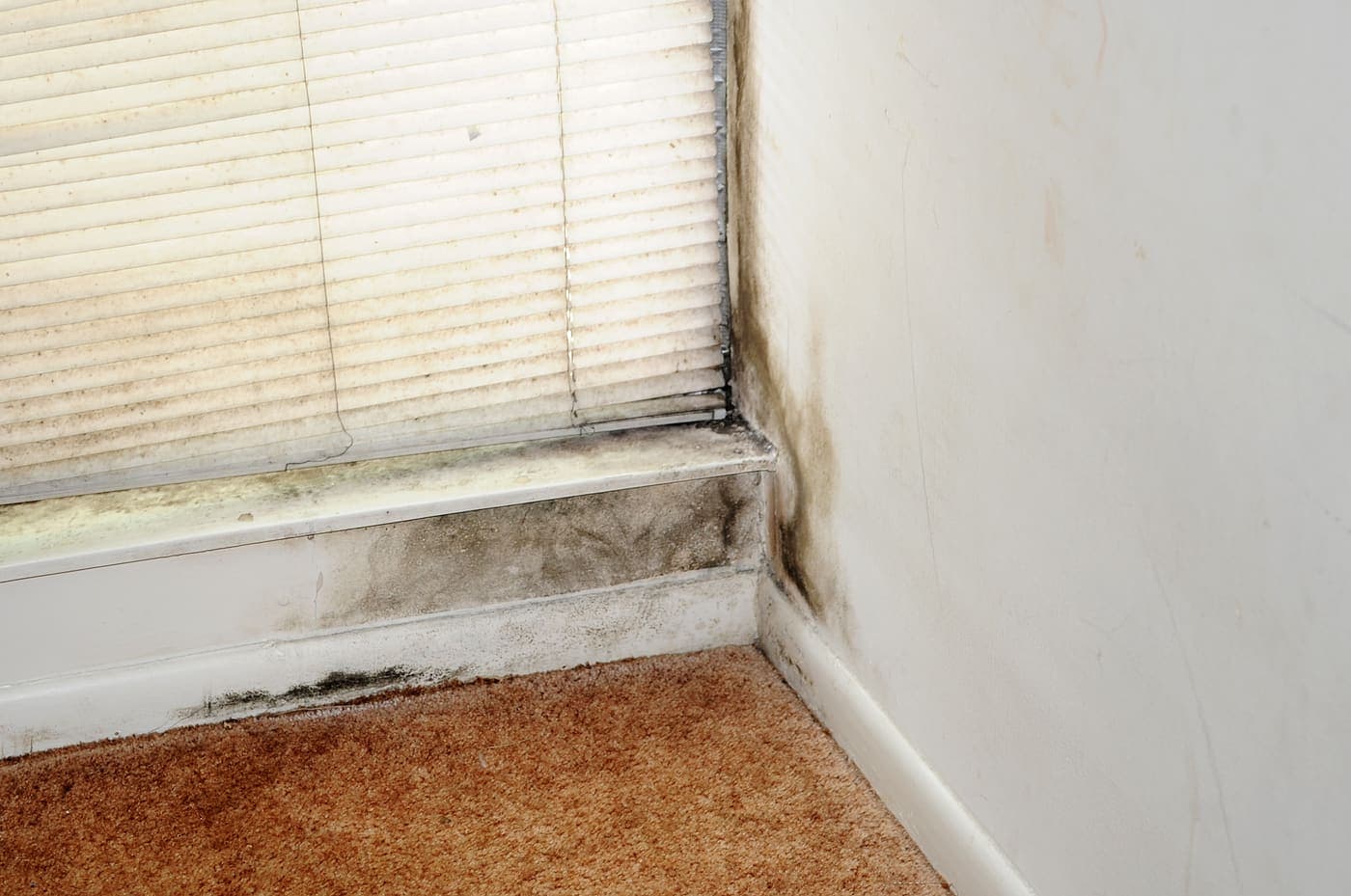
The mold people mean by *black mold* is Stachybotrys chartarum — a greenish-black, slimy-then-powdery mold that grows on materials with a high cellulose content that have been thoroughly wet for days or weeks: drywall paper, ceiling tile, wallpaper, cardboard, the paper facing on insulation. It is not a mold of condensation on a bathroom ceiling or a damp window frame; it is a mold of leaks and floods that went unattended.
Two facts reorganise the whole subject. First, most dark mold in homes is not Stachybotrys — Cladosporium, Aspergillus and Alternaria are darker and far more common, and color cannot identify a species. Second, the CDC does not recommend testing to find out, because the response to visible mold is the same whatever it is: remove it, and fix the water.
The Symptoms the Evidence Supports
They are the symptoms of indoor mold exposure generally, and the mold exposure guide covers them in full:
- stuffy nose, sneezing, cough, wheeze, chest tightness
- red, itchy or watery eyes; irritated skin
- worse asthma in people who have asthma — the most important signal
- rarely, hypersensitivity pneumonitis in susceptible people — fever, breathlessness, fatigue
The pattern — worse in the building, better away from it — is the diagnostic feature. Symptoms in children, adults and pets look the same.
What the Evidence Does Not Support
The phrase *toxic black mold* comes from the fact that Stachybotrys can produce mycotoxins under some conditions. From there, a long list of alleged effects grew: memory loss, brain fog, chronic fatigue, joint pain, "mold poisoning," bleeding lungs in infants. The CDC's position is direct: the term "toxic mold" is not accurate, and reports linking Stachybotrys to unusual conditions such as memory loss or pulmonary haemorrhage are not proven. The 2004 Institute of Medicine review reached the same conclusion — insufficient evidence for those associations, sufficient evidence for the respiratory ones.
Two practical consequences:
- There is no test for black mold exposure. Per the CDC, no blood or urine test can tell whether you have been exposed to mold. The urine "mycotoxin" panels marketed online are not validated for diagnosis, and allergy societies advise against them.
- The "10 warning signs of mold toxicity" lists are not derived from any recognized diagnostic criteria. Someone with those symptoms deserves a doctor's attention — for the symptoms, whatever their cause.
Talk to a water damage pro now
Answered 24/7 · Toll-free · answered 24/7 · no obligation
(888) 840-6512- Describe the damage & give your ZIP
- You're routed to the on-call local crew
- They quote — you decide, no obligation
Why It Still Matters — the Wall
Discounting the mythology does not make Stachybotrys trivial. Its presence is a reliable sign that building material has been saturated for a long time — a leak inside a wall, a flooded basement dried too slowly, a roof that has let water in for a season. That material is porous, the mold is inside it, and no surface treatment reaches it. The drywall comes out, cut at least a foot past the growth, with containment so spores do not spread through the house; the drywall guide covers the sequence, and above about 10 square feet EPA guidance points to professional remediation.
People with asthma, allergies, infants and anyone immunocompromised should stay out of the affected rooms until the work is done, and should not be the ones doing it.
What to Do, in Order
- 1Find the water. Stachybotrys means a long-wet material; tracing mold inside walls is where to start.
- 2Contain and remove, don't clean. The safe method for small areas; a remediation contractor for large ones, HVAC involvement, or a household with vulnerable people.
- 3Dry and verify before rebuilding.
- 4See a doctor for persistent respiratory symptoms, and urgent care for shortness of breath. Tell them about the mold; the useful history is the building.
*This guide summarises public-health guidance and is not medical advice.*
Bottom Line
Black mold is a real mold with a real meaning — soaked material and a leak that has gone on too long — and the same documented health effects as other indoor molds. The "toxic mold syndrome" attached to it is not established, and no test can measure exposure. The color changes nothing about what to do: contain it, remove the wet material, fix the water, and get medical care for symptoms that persist.
Reading to confirm what you already suspect?
Confirm it in two minutes instead — the pro on this line answers questions about YOUR situation all day: what it is, what it should cost, whether you even need service. If you want, they'll set the appointment on the same call.
Toll-free · no obligation · asking costs nothing
Frequently Asked Questions
How do you tell if black mold is making you sick?
By pattern, not by test. Symptoms — congestion, cough, wheeze, itchy eyes, sore throat, worse asthma — that are consistently worse in one building and ease within a day or two away from it point to that building.
Household members and pets often share the pattern. A doctor can confirm asthma or allergy; no test confirms 'black mold sickness' specifically, because the CDC notes that no blood or urine test can detect mold exposure.
Is black mold more dangerous than other mold?
The evidence does not single it out. Stachybotrys can produce mycotoxins in laboratory conditions, and that is the origin of the 'toxic mold' label — but the CDC calls that term inaccurate and the alleged link to rare conditions like pulmonary haemorrhage unproven.
Its established effects are the respiratory and allergic ones shared by other molds. What makes it a serious indoor problem is where it grows: water-soaked drywall, which means a leak or flood that has been going on for a while.
Do black mold symptoms go away after removal?
For most people, allergic and irritant symptoms ease within days to weeks once the mold and moisture are removed. Asthma control improves with the environment.
Symptoms that continue after the building is dry and verified clean need medical evaluation for other causes. Long-term effects are documented mainly for asthma and for the rare immune-mediated conditions, not for the general population.
Is it safe to be in a house with black mold?
Short exposure while arranging removal is not an emergency for most healthy adults; the risk is cumulative and worst for people with asthma, allergies, infants and the immunocompromised, who should stay out of the affected rooms.
Nobody should sleep in a room with active growth on the walls. Removal — not cleaning — is the answer for soaked drywall, and it should be done with containment so spores do not spread through the house.
Who do I call right now for water damage?
Call (888) 840-6512. The line is answered 24 hours a day, seven days a week, and connects you with an IICRC-certified water damage restoration company that serves your area. A recorded menu picks up first: choose water damage or mold, key in your 5-digit ZIP code, and hold through the short silence while the call is passed to the company.
Describe what you can see — where the water is coming from, how long it has been there, and whether it smells — the more specific you are, the faster the right company is on the line. If the source is a pipe or an appliance, shut the main water valve first. Have four things ready and the call goes quickly: the address, when the water started, what is wet now, and whether you have filed an insurance claim.
Still not sure which of these is your situation? (888) 840-6512 · toll-free · answered 24/7
Sources
- CDC — Basic Facts About Mold and Dampness
- CDC — Facts about Stachybotrys chartarum
- Institute of Medicine (2004) — Damp Indoor Spaces and Health
- EPA — Mold Cleanup in Your Home
Methodology: How we source and verify data · Report an error
Disclaimer: HearthDry is an independent educational resource. This article is for informational purposes only and does not constitute professional, legal, or insurance advice. Consult licensed professionals before making decisions about your property or insurance claims.
Free 2-day shipping
Amazon Prime members pay no shipping on restoration equipment
Dehumidifiers, air movers, and moisture meters qualify for free Prime delivery — bulk items that otherwise cost $15–$40 to ship.
Affiliate link — HearthDry earns a bounty if you sign up; costs you nothing extra.
Equipment
What each machine actually does
Removes the moisture the structure is still giving off — the machine that decides how long drying takes
See the picks →Moves air across wet surfaces so the dehumidifier has something to take out of the air
See the picks →Finds water behind walls and under floors, and tells you when a material is actually dry
See the picks →Alerts you the moment a leak starts — the cheapest thing on this list and the only preventive one
See the picks →Those pages carry affiliate links. As an Amazon Associate, HearthDry earns from qualifying purchases; it costs you nothing extra.
Our Amazon storefront →Advertisement
