
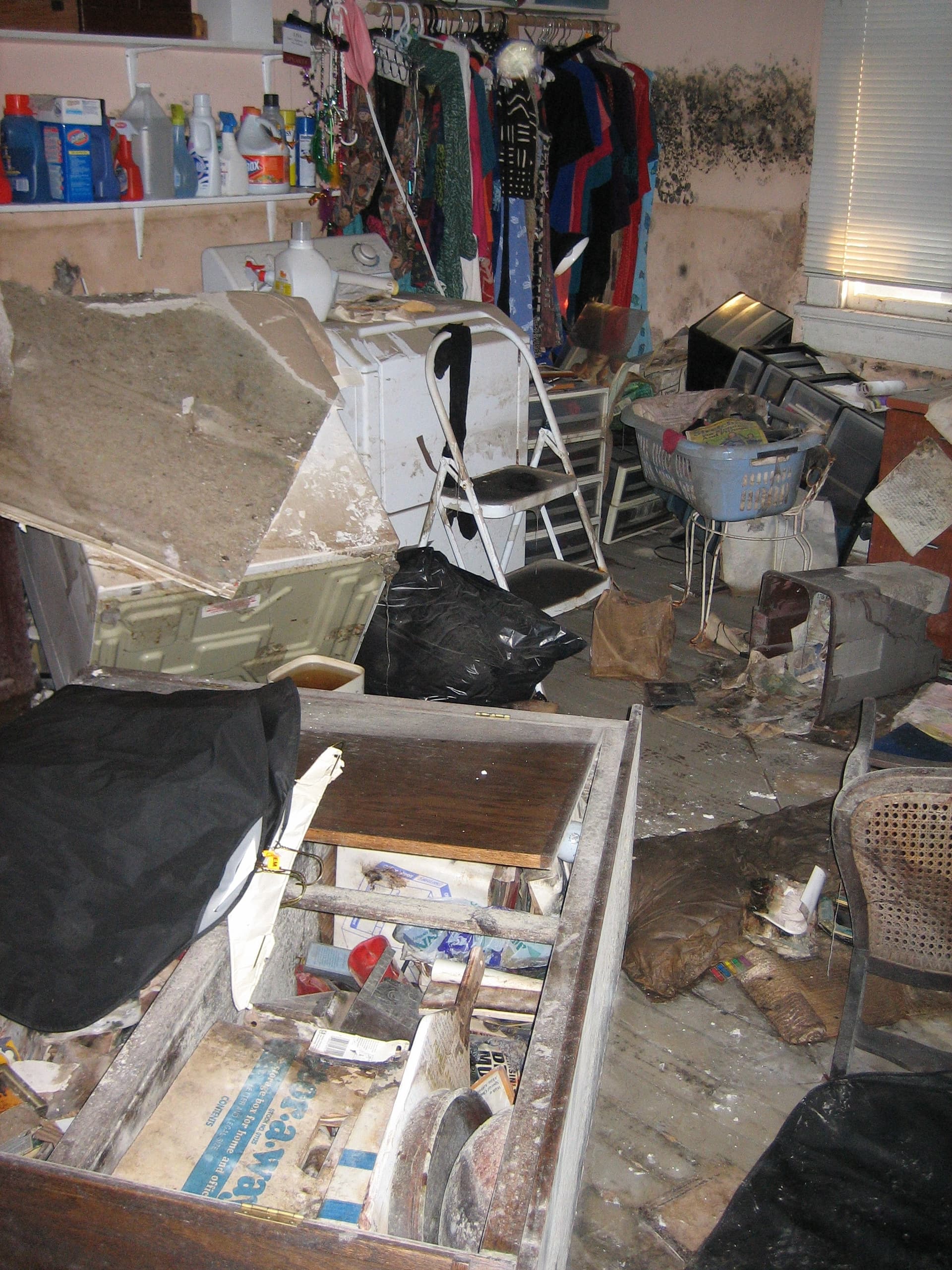
Quick answer
You can remove black mold yourself when it covers less than about 10 square feet, sits on a hard surface you can scrub, and the moisture feeding it is fixed. Wear an N95 respirator, gloves and eye protection, close off the room with plastic and keep others out, HEPA-vacuum loose growth rather than dry-brushing it, scrub with detergent and water, bag the waste, and dry the area. EPA guidance draws the professional line at about 10 square feet — and at any mold in HVAC, mold from sewage or floodwater, mold inside drywall or insulation, or a household member with asthma or a weakened immune system. The color does not change any of this: 'black mold' is not one species, and the method is the same for green, white or grey. Call (888) 840-6512 to reach a certified water damage restoration company in your area; the line is answered 24/7.
Press 1 for water damage or 2 for mold, then your 5-digit ZIP. The line goes quiet for about half a minute while it connects — that is normal, stay on.
Written & reviewed by Marcus ReedIICRC WRT
Reviewed August 30, 2026· Next review Feb 2027
The Question Behind the Question
"Is it safe to remove black mold yourself" is really two questions: *is the mold dangerous to disturb*, and *will my removal actually work*. Both have the same answer, and it depends on size, surface and source — not color.
Color first, because it is the myth that drives the fear. "Black mold" is not a species. The dark growth on bathroom drywall and window frames is usually Cladosporium or Aspergillus; Stachybotrys — the one people mean — grows on water-soaked porous material and is far less common. CDC's guidance is that if you can see mold, you do not need to know which kind it is: the cleanup is the same, and sampling is usually unnecessary. All molds are treated as a health concern for the same reasons — spores, allergens, irritants — and removed the same way.
The Line: When It's Yours and When It Isn't
EPA's home cleanup guidance sets the practical threshold at about 10 square feet — roughly a 3 × 3 patch, a bathroom mirror. Under that, on a hard surface, with the moisture fixed, a careful homeowner can do it. The other conditions matter as much as the size:
| Do it yourself when… | Call a professional when… |
|---|---|
| under ~10 sq ft | over ~10 sq ft, or in more than one place |
| on a hard surface: tile, painted drywall, sealed wood, glass | inside drywall, insulation, carpet, ceiling tile — porous material that is replaced, not cleaned |
| the moisture source is found and fixed | you cannot find what is wetting it |
| not in the HVAC system | on the coil, in ducts or the air handler — spores go house-wide |
| from clean water or condensation | from sewage, a backup or floodwater — Category 3 contamination |
| everyone in the home is healthy | anyone with asthma, allergies, or a weakened immune system lives there |
Any entry in the right column is a job for a remediation contractor working to the IICRC S520 standard — containment, negative air, HEPA, source correction, clearance — and the who-to-call guide explains why the company that tests should not be the company that removes. What that costs is driven by square footage and access.
The Gear
Removing mold releases spores in quantity — scrubbing, scraping and dry-brushing are the moments of highest exposure, higher than living with the patch. EPA's cleanup guidance names the equipment:
- N95 respirator at minimum, fitted to the face. A paper dust mask does nothing. For bigger or dustier work, a half-face respirator with P100 filters.
- Non-vented goggles — spores and cleaning solution both go for the eyes.
- Long gloves — nitrile or rubber, to the forearm.
- Old clothes straight into a hot wash afterwards; shoes that stay in the room until you are done.
Talk to a water damage pro now
Answered 24/7 · Toll-free · answered 24/7 · no obligation
(888) 840-6512- Describe the damage & give your ZIP
- You're routed to the on-call local crew
- They quote — you decide, no obligation
The Method
- 1Fix the water. Leak, condensation, humidity — whatever is feeding the colony gets corrected before anything is cleaned. This is the step that makes removal permanent, and the one most guides bury.
- 2Contain. Plastic sheeting taped over the doorway. HVAC registers in the room closed and covered so spores do not ride the ductwork. A box fan in a window blowing out, so air leaves the room rather than the house.
- 3Vacuum first, brush second. A HEPA vacuum over the growth lifts loose spores before you disturb them. No HEPA vacuum: mist the growth lightly with water so it does not become dust.
- 4Scrub with detergent and water, in small sections, with a stiff brush. That is EPA's method for hard surfaces, and it works because removal is mechanical. Vinegar or 3% hydrogen peroxide add a mild antifungal effect on tile and grout. Bleach is not required, and on drywall or wood it fails in a way that looks like success.
- 5Bag everything. Cloths, brush heads, any material you removed — sealed in bags inside the room.
- 6Wipe, vacuum, dry. Wipe the surfaces of the room, HEPA-vacuum again, and run fans until a moisture meter reads the same as an unaffected area. Then the plastic comes down.
Keep children, pets and anyone with a respiratory condition out of the room until it is dry and clean.
When the Wall Is the Problem
Mold on painted drywall that scrubs off is surface growth. Mold that stains through, that comes back in weeks, or that sits on drywall that has been wet for more than about 48 hours is inside the board, and no scrubbing reaches it. The drywall decision covers the cut-out-a-foot-past-the-growth method; mold inside walls covers what a musty smell with little to see usually means. Both cross the professional line quickly.
The Myths, Briefly
- "Black mold is toxic mold." Color is not species; the molds that produce mycotoxins do not all look black, and most black mold in homes is not one of them. All indoor mold is removed the same way.
- "You must test it first." Not for visible mold — CDC and EPA both say so. Testing earns its cost for hidden growth, disputes and post-remediation clearance.
- "Bleach kills it permanently." Nothing sprayed kills mold permanently. Water returning is what grows it back; what actually kills mold is a shorter list than the shelf suggests.
- "Dead mold is harmless." Dead spores are still allergenic, which is why EPA's emphasis is on removing mold, not killing it in place.
Bottom Line
Small, hard surface, moisture fixed, healthy household: N95, goggles, gloves, plastic over the door, HEPA-vacuum, scrub with detergent and water, bag it, dry it. Over 10 square feet, in the HVAC, from dirty water, inside drywall, or with a vulnerable person in the home: a remediation crew with containment. And whatever the color, the mold is not the enemy — the water is.
Reading to confirm what you already suspect?
Confirm it in two minutes instead — the pro on this line answers questions about YOUR situation all day: what it is, what it should cost, whether you even need service. If you want, they'll set the appointment on the same call.
Toll-free · no obligation · asking costs nothing
Frequently Asked Questions
Is it safe to remove black mold yourself?
For a small patch — under about 10 square feet — on a hard surface, with the moisture source fixed, yes, with an N95, gloves, eye protection and the room closed off.
It is not safe, or not effective, when the mold is inside drywall or insulation, in the HVAC system, from sewage or floodwater, larger than that threshold, or when someone in the home has asthma, allergies or a compromised immune system. Those are professional jobs under EPA guidance.
Do I need to test black mold before removing it?
NoCDC and EPA both say that if you can see mold, you do not need to identify the species — the cleanup is the same whatever it is, and sampling is generally not necessary.
The color does not tell you the species either; the dark mold on bathroom drywall is usually Cladosporium or Aspergillus, not Stachybotrys. Testing earns its cost for hidden mold, disputes and clearance, not for a patch you can see.
What protective gear do I need to remove mold?
An N95 respirator at minimum — not a paper dust mask — plus non-vented goggles and long gloves. Old clothes that go straight into a hot wash.
For anything larger or dustier, a half-face respirator with P100 cartridges. EPA's cleanup guidance lists this gear specifically because scrubbing and scraping mold releases spores in quantity.
What kills black mold permanently?
Nothing sprayed on it. Mold comes back wherever water returns, so the permanent fix is the moisture — the leak, the condensation, the humidity over 60%.
Once that is corrected, removing the growth (detergent and water on hard surfaces; replacement of moldy porous materials) is what keeps it gone. Killing mold in place is less important than removing it, because dead mold is still allergenic.
Can Lysol kill black mold?
On a hard, non-porous surface — tile, glass, sealed countertop — a disinfectant like Lysol will kill surface mold, the same as any EPA-registered disinfectant.
It does nothing useful on drywall, wood, grout or fabric, where the mold is rooted in the material and the dead growth stays behind, and EPA does not recommend routine biocide use for mold cleanup. For a small patch on a hard surface: detergent and water, scrub, dry. For anything porous or over about 10 square feet: removal, not spraying.
Who do I call right now for water damage?
Call (888) 840-6512. The line is answered 24 hours a day, seven days a week, and connects you with an IICRC-certified water damage restoration company that serves your area. A recorded menu picks up first: choose water damage or mold, key in your 5-digit ZIP code, and hold through the short silence while the call is passed to the company.
Describe what you can see — where the water is coming from, how long it has been there, and whether it smells — the more specific you are, the faster the right company is on the line. If the source is a pipe or an appliance, shut the main water valve first. Have four things ready and the call goes quickly: the address, when the water started, what is wet now, and whether you have filed an insurance claim.
Still not sure which of these is your situation? (888) 840-6512 · toll-free · answered 24/7
Sources
- EPA — Mold Cleanup in Your Home
- CDC — Mold: Cleanup and Remediation
- EPA — Mold Remediation in Schools and Commercial Buildings (PPE and containment)
Methodology: How we source and verify data · Report an error
Disclaimer: HearthDry is an independent educational resource. This article is for informational purposes only and does not constitute professional, legal, or insurance advice. Consult licensed professionals before making decisions about your property or insurance claims.
Free 2-day shipping
Amazon Prime members pay no shipping on restoration equipment
Dehumidifiers, air movers, and moisture meters qualify for free Prime delivery — bulk items that otherwise cost $15–$40 to ship.
Affiliate link — HearthDry earns a bounty if you sign up; costs you nothing extra.
Equipment
What each machine actually does
Removes the moisture the structure is still giving off — the machine that decides how long drying takes
See the picks →Moves air across wet surfaces so the dehumidifier has something to take out of the air
See the picks →Finds water behind walls and under floors, and tells you when a material is actually dry
See the picks →Alerts you the moment a leak starts — the cheapest thing on this list and the only preventive one
See the picks →Those pages carry affiliate links. As an Amazon Associate, HearthDry earns from qualifying purchases; it costs you nothing extra.
Our Amazon storefront →Advertisement
