
Quick answer
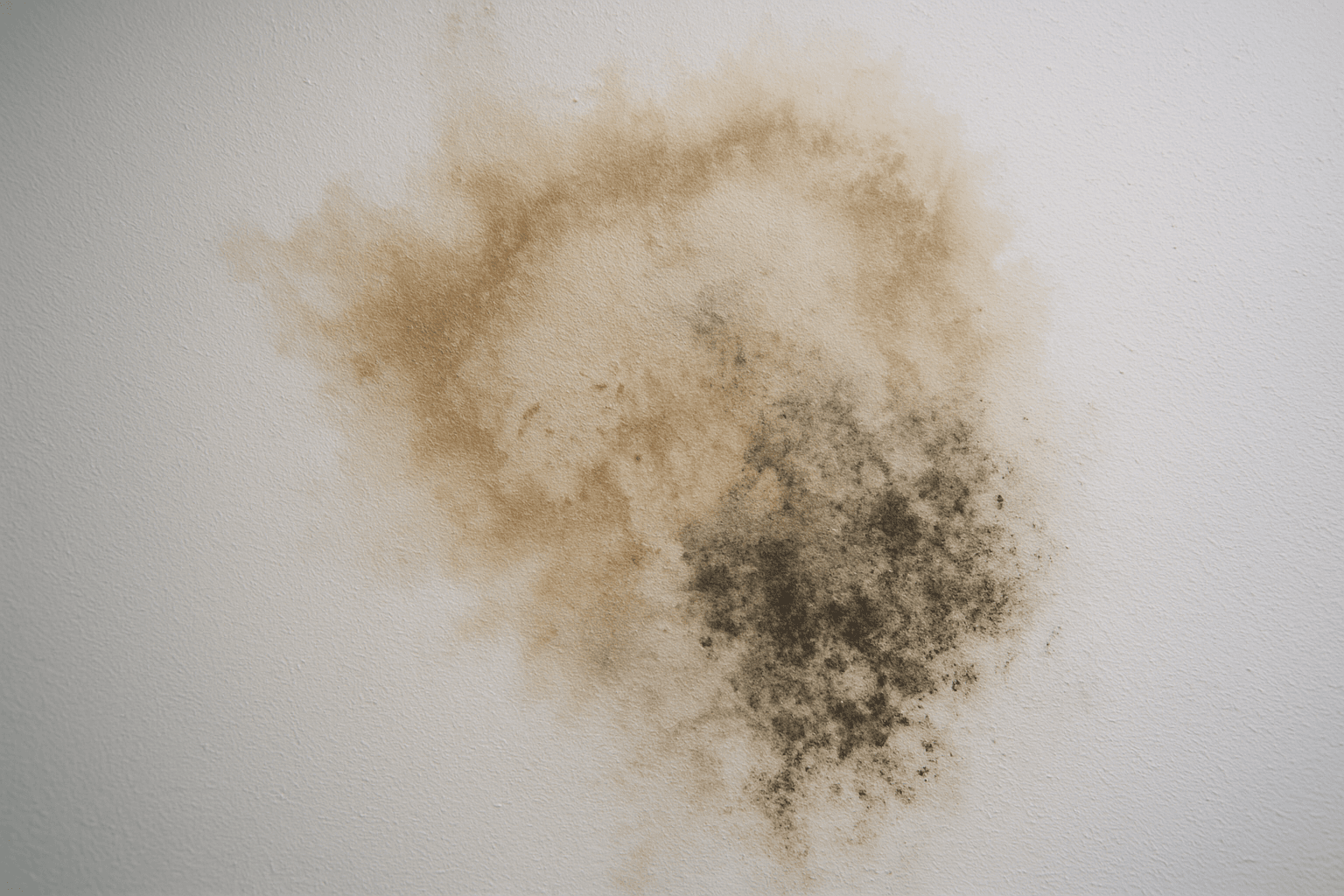
Mold patches under about 10 square feet on sound painted walls can be handled carefully at home: ventilate, wear an N95 and gloves, apply a no-bleach mold cleaner, dry fully, and fix the moisture source. Bleach is the wrong tool on drywall — it whitens the surface while its water content feeds the roots. Larger areas, soft drywall or post-flood growth need professional containment. Call (888) 840-6512 to reach a certified water damage restoration company in your area; the line is answered 24/7.
Written & reviewed by Marcus ReedIICRC WRT
Reviewed August 12, 2026· Next review Feb 2027
Before You Touch It: Size It Up
The EPA's do-it-yourself threshold is about 10 square feet — roughly a 3×3 ft patch. Under that, on sound surfaces, careful DIY is reasonable. Over that — or if the mold followed flooding, the drywall feels soft, or the patch keeps returning — a spray bottle is the wrong category of solution, and disturbing the colony spreads spores through the house.
Why Bleach on Drywall Backfires
Bleach works on tile and tubs. On drywall and bare wood it does the opposite of what you want: the chlorine stays at the surface while the water content soaks into the material — feeding the roots you didn't kill. That's why "I bleached it and it came back darker" is the most common wall-mold story. On porous surfaces, use a penetrating no-bleach killer instead.
The Right Sequence for Small Patches
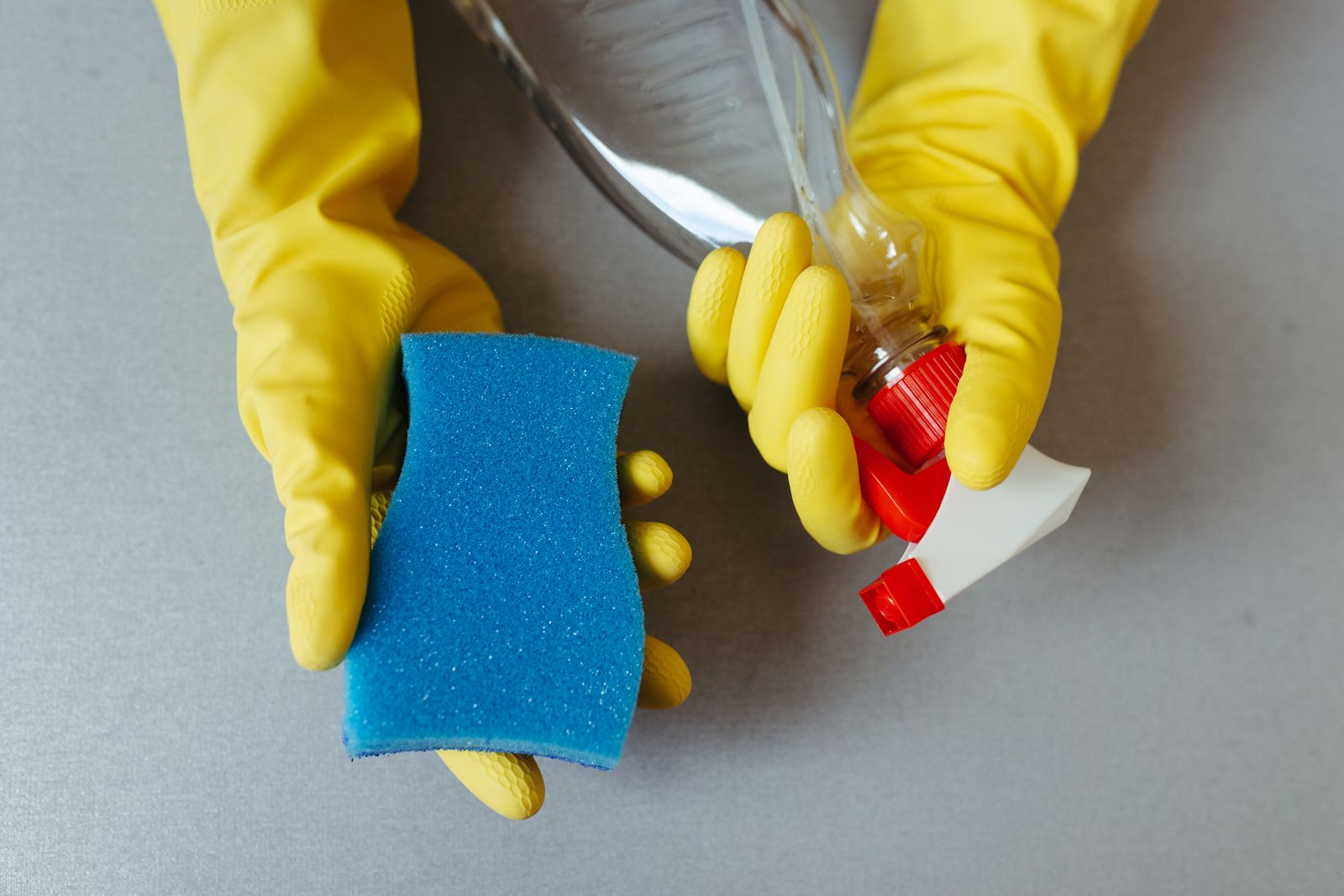
- 1Protect yourself and the room — N95 (or better), gloves, eye protection; door closed, window cracked, HVAC off to the room, plastic on the floor
- 2Kill first — apply a no-bleach mold killer and let it dry completely; it works as it dries. Don't scrub live growth — scrubbing launches spores
- 3Wipe and bag — disposable cloths straight into a trash bag; never rinse them in the sink
- 4Handle stains separately — leftover dark marks are dead staining; a stain remover or stain-blocking primer is the cosmetic step, never the substitute for killing
- 5Fix the moisture — condensation, plumbing, exterior leak, or humidity over 60%. Skip this and the patch is back in 4–8 weeks
Our mold spray comparison covers which product does which job — killer, stain remover, and bathroom disinfectant are three different tools.
Painted Walls vs Tile vs Bare Drywall
- Painted walls: treatable if paint is intact; bubbling or soft spots mean moisture behind the paint — cavity problem
- Tile & grout: the one place bleach-based bathroom cleaners genuinely excel
- Bare drywall: stains that soak through, sagging, or a musty smell stronger than the visible patch = the colony is inside, and that section needs removal, not treatment
Talk to a water damage pro now
Answered 24/7 · Toll-free · answered 24/7 · no obligation
(888) 840-6512- Describe the damage & give your ZIP
- You're routed to the on-call local crew
- They quote — you decide, no obligation
When to Stop and Call
More than 10 sq ft, recurring growth, post-flood mold, wall cavities or HVAC involvement, or anyone in the home with asthma or immune conditions — that's professional containment-and-removal territory. See how fast mold spreads to understand why waiting costs more than acting.
Cleaner by Surface
| Surface | What works | What doesn't |
|---|---|---|
| Painted drywall, paint intact | Detergent and water; a no-bleach mold cleaner or 3% hydrogen peroxide left to dry | Bleach (wets the board, stays on the surface), scrubbing live growth dry |
| Bare or damaged drywall | Nothing — mold rooted in the paper means the section comes out | Any cleaner over a soft or stained board |
| Bare wood (studs, trim, sheathing) | Detergent scrub, HEPA vacuum, dry fully; sanding or wire brush on heavier growth | Sealing over uncleaned growth |
| Tile and grout | Bleach-based bathroom cleaner or peroxide; brush the grout lines | Leaving it wet |
| Concrete and block | Detergent and stiff brush; the growth is on dust and residue, not in the masonry | Waterproof paint over a damp wall |
| Wallpaper | Remove it — growth is usually behind the paper on the paste | Cleaning the face |
Whether vinegar, hydrogen peroxide or bleach is the right bottle depends on the surface; on drywall the answer is usually none of them, because removal is what works.
Behind the Wall: When the Patch Is the Tip
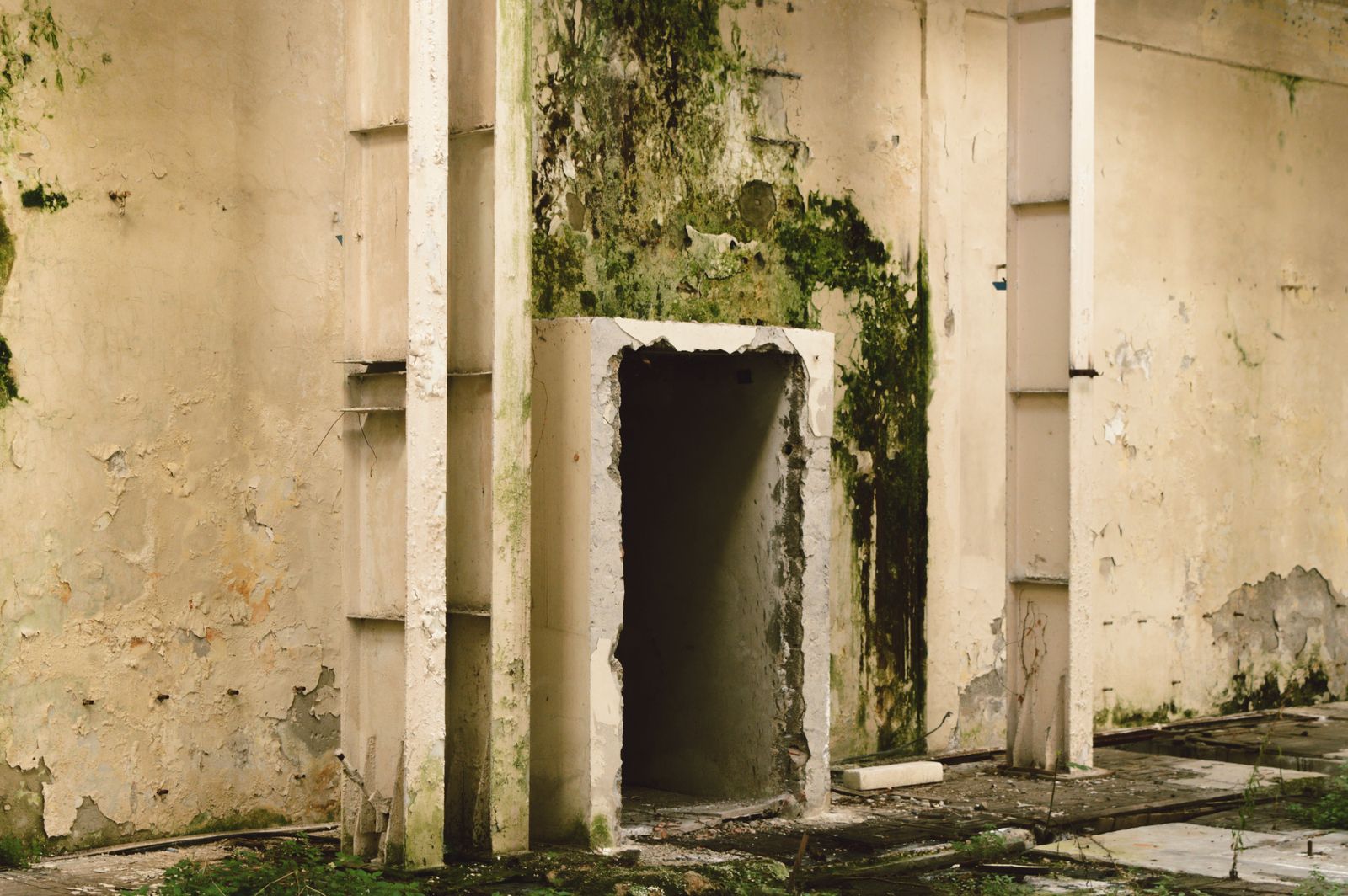
Mold on the face of a wall is often the smallest part of the colony. Three signs the growth is inside: the patch is at the bottom of the wall (floor water wicked up), the patch is on an exterior wall and returns every winter (condensation on cold sheathing or wet insulation), or the smell is stronger than the size of the patch justifies. Take the outlet cover off (power off) and look; press the wall for softness; run a moisture meter against a known-dry wall. A high reading means the cavity is wet and the cleaning is cosmetic.
After Cleaning: The Repaint Rules
- Let the wall dry completely — readings back to the dry baseline, not just dry to the touch.
- Prime with a stain-blocking primer; ordinary paint lets the stain bleed back.
- On bathrooms, laundries and basements, a mold-resistant primer and paint buys time; it does not replace the moisture fix.
- Do not paint over a soft spot, a bulge, or a stain that is still spreading. That wall is wet.
Recurring Mold on the Same Wall
The same patch every few months has a cause the cleaning never touched:
| Where it recurs | Usual cause | Fix |
|---|---|---|
| Exterior wall, especially behind furniture or in a closet | Cold wall, warm humid air, no airflow | Move furniture off the wall, crack closet doors, dehumidify, check insulation |
| Around a window | Condensation on cold glass running to the sill | Reduce humidity, fix the seal, insulated blinds |
| Bathroom ceiling and upper walls | Steam with no exhaust | Exhaust fan vented outside, run 20 minutes after showers |
| Bottom foot of a wall | Floor water, slab moisture, or a plumbing leak in the wall | Find the water; how to get rid of mold in a bathroom for the wet-room version |
| A wall with a pipe in it | Slow leak | Plumber, then dry the cavity |
Twice on the same wall is the signal to stop cleaning and start diagnosing; who to call for mold sorts inspector from remediator from plumber.
Reading to confirm what you already suspect?
Confirm it in two minutes instead — the pro on this line answers questions about YOUR situation all day: what it is, what it should cost, whether you even need service. If you want, they'll set the appointment on the same call.
Toll-free · no obligation · asking costs nothing
Frequently Asked Questions
How do I remove mold from painted walls?
For patches under ~10 sq ft on sound painted surfaces: ventilate, wear an N95 and gloves, apply a no-bleach mold killer (like Concrobium), let it dry fully, then wipe residue and address stains separately. Fix the moisture cause — condensation, leak, or humidity — or the patch returns within weeks.
Why does mold keep coming back after I clean the wall?
Two usual reasons: the cleaner only treated the surface while roots survived inside porous paint or drywall (classic with bleach), or the moisture source was never fixed. Recurring mold in the same spot is a moisture signal, not a cleaning failure — check behind that wall.
When is wall mold too much to DIY?
Past ~10 square feet, when drywall is soft or stained through, when mold follows flooding or a pipe leak inside the wall, when it returns after proper cleaning, or when the musty smell is stronger than the visible patch suggests (hidden cavity growth). Those need professional containment and removal.
How do I get rid of black mold on walls?
For black mold patches under about 10 sq ft on sound painted walls, ventilate, wear an N95 and gloves, apply a no-bleach mold killer, let it dry, and correct the moisture source — condensation, leak, or humidity.
Larger areas, soft drywall, or mold that returns after cleaning need professional remediation with containment.
Who do I call right now for water damage?
Call (888) 840-6512. The line is answered 24 hours a day, seven days a week, and connects you with an IICRC-certified water damage restoration company that serves your area. Describe what you can see — where the water is coming from, how long it has been there, and whether it smells — the more specific you are, the faster the right company is on the line.
If the source is a pipe or an appliance, shut the main water valve first. Have four things ready and the call goes quickly: the address, when the water started, what is wet now, and whether you have filed an insurance claim.
Need it handled now?
Black Mold Removal — 24/7 Certified Crews
Patch bigger than 10 sq ft, or keeps coming back? That's containment-and-removal territory.
Sources
- CDC — Mold After a Disaster(retrieved 2026-07-02)
- EPA — Mold Remediation Guidance(retrieved 2026-07-02)
- IICRC S520 — Mold Remediation(retrieved 2026-07-02)
Methodology: How we source and verify data · Report an error
Disclaimer: HearthDry is an independent educational resource. This article is for informational purposes only and does not constitute professional, legal, or insurance advice. Consult licensed professionals before making decisions about your property or insurance claims.
Professional Equipment
Scrubbing Walls Without Air Filtration Spreads Spores
Disturbing mold on drywall releases spores that settle in other rooms. Run a HEPA air scrubber during and after cleanup, and keep humidity under 50% so regrowth never gets a foothold.
Affiliate link — HearthDry earns a commission from Sylvane via CJ at no extra cost to you
Free 2-day shipping
Amazon Prime members pay no shipping on restoration equipment
Dehumidifiers, air movers, and moisture meters qualify for free Prime delivery — bulk items that otherwise cost $15–$40 to ship.
Affiliate link — HearthDry earns a bounty if you sign up; costs you nothing extra.
Equipment
What each machine actually does
Removes the moisture the structure is still giving off — the machine that decides how long drying takes
See the picks →Moves air across wet surfaces so the dehumidifier has something to take out of the air
See the picks →Finds water behind walls and under floors, and tells you when a material is actually dry
See the picks →Alerts you the moment a leak starts — the cheapest thing on this list and the only preventive one
See the picks →Those pages carry affiliate links. As an Amazon Associate, HearthDry earns from qualifying purchases; it costs you nothing extra.
Our Amazon storefront →Advertisement
