
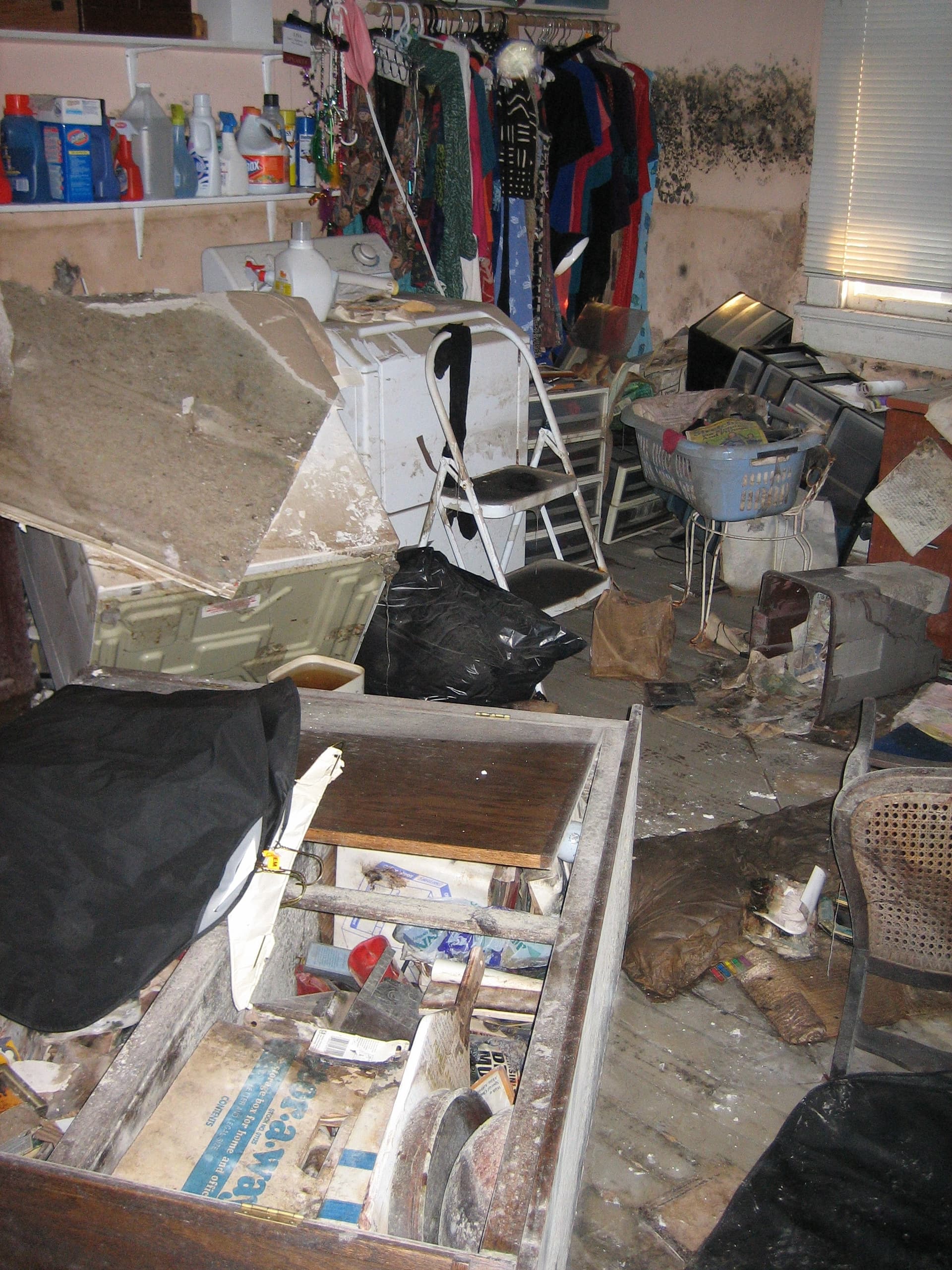
Quick answer
To get rid of mold for good: find and fix the moisture feeding it, then remove the growth in the way the surface allows. Hard, non-porous surfaces — tile, grout, glass, sealed wood, painted walls with surface mildew — are scrubbed with detergent and water (vinegar, 3% hydrogen peroxide or diluted bleach add a mild antifungal effect on those surfaces only), then dried. Porous materials the mold has grown into — drywall, insulation, carpet, ceiling tile, bare wood with stains that won't lift — are removed and replaced, because no spray reaches inside them. EPA's line for professional remediation is about 10 square feet of growth, any mold in the HVAC system, mold from sewage or floodwater, or a household member with asthma or a weakened immune system. Whatever the surface, wear an N95, gloves and eye protection, contain the room, and never mix cleaning products. Call (888) 840-6512 to reach a certified water damage restoration company in your area; the line is answered 24/7.
Press 1 for water damage or 2 for mold, then your 5-digit ZIP. The line goes quiet for about half a minute while it connects — that is normal, stay on.
Written & reviewed by Marcus ReedIICRC WRT
Reviewed August 30, 2026· Next review Feb 2027
Two Questions Before Any Bottle
Every "how to get rid of mold" answer depends on two facts, and the internet skips both:
- 1What is it growing on? Hard and non-porous, or porous? Tile cleans. Drywall the mold has grown into does not.
- 2What is feeding it? Condensation, a leak, humidity, a flood? Mold removed from a surface that is still wet is back in weeks.
Answer those and the method writes itself. This page is the map; each destination has its own guide.
By Surface
| Surface | What works | Guide |
|---|---|---|
| Tile, grout, glass, porcelain | detergent and water; peroxide or bleach for stains | shower mold |
| Painted walls and ceilings — surface mildew | detergent and water, dry, mold-resistant primer | walls · bathroom ceiling |
| Drywall the mold has penetrated | cut out a foot past the growth, dry the cavity, replace | drywall: clean or replace |
| Wood — finished | detergent and water, vinegar or peroxide | mold on wood |
| Wood — bare or structural | sand, or borate treatment; find the water first | mold on wood |
| Popcorn ceiling | asbestos test first; mist and dab, never scrub | popcorn ceiling |
| Window sills and frames | detergent or vinegar; humidity is the cause | window sill mold |
| Clothes and fabric | brush outdoors, vinegar or oxygen-bleach soak, hot wash, sun | clothes |
| Leather | diluted vinegar, slow dry, condition | leather |
| Carpet, padding, insulation, ceiling tile, mattress | replace — EPA: porous materials may need to be discarded | black mold safely |
| Stains left after the mold is gone | peroxide, stain remover, sanding, stain-blocking primer | mold stains |
By Place
| Where | The usual cause | Guide |
|---|---|---|
| Bathroom and shower | steam with no working exhaust fan | shower · ceiling · pink slime |
| Basement | humidity over 60%, seepage | musty basement · humidity · dehumidifiers |
| Inside walls | a leak or condensation in the cavity | mold in walls |
| Attic | roof leak or exhaust fans venting into the attic | attic mold |
| Crawl space | ground moisture, no vapour barrier | crawl space |
| Air conditioner, ducts | wet coil and pan; EPA's narrow duct-cleaning rule | AC mold |
| Washing machine, dishwasher, fridge | residue in a sealed, damp appliance | washer · dishwasher · fridge |
| Car | a leaking seal, wet mats, the AC evaporator | mold in a car |
Talk to a water damage pro now
Answered 24/7 · Toll-free · answered 24/7 · no obligation
(888) 840-6512- Describe the damage & give your ZIP
- You're routed to the on-call local crew
- They quote — you decide, no obligation
The Products, Honestly
EPA's recommendation for hard surfaces is detergent and water, scrubbed and dried — because removal is mechanical, and killing mold in place matters less than getting it off (dead mold is still allergenic). The three household additives each have a place and a limit: vinegar kills many species and not others; hydrogen peroxide lifts staining with no fumes; bleach whitens best and fails on anything porous. None of them reaches mold inside drywall, wood or carpet, and none of them fixes water. Never mix them. The spray comparison sorts the branded bottles into the same three categories.
The Line Between You and a Professional
EPA's home guidance sets the DIY threshold at about 10 square feet. Beyond that — or for mold in the HVAC system, mold from sewage or floodwater, mold inside walls or insulation, or a household member with asthma, allergies or a weakened immune system — the job is containment, negative air, HEPA filtration, material removal and clearance, which is what a remediation contractor working to the IICRC S520 standard does. Who to call, and in what order, and what it costs. For anything under the line, the safe method covers gear, containment and the steps.
The Part That Makes It Permanent
Mold is a moisture symptom. Every removal on this page is temporary unless the water is fixed:
- Humidity under 50% — a hygrometer, exhaust fans, a dehumidifier where needed
- Leaks repaired, and anything wet dried within 48 hours — how fast mold starts
- Condensation addressed — cold walls, windows, uninsulated ceilings
- The musty smell taken seriously — with nothing visible, it is the sign of a colony inside a wall or a duct
Bottom Line
Find the water, then match the method to the surface: scrub what is hard, replace what is porous, hand over what is large, in the ducts, from dirty water, or in a vulnerable household. Wear the respirator, close off the room, keep the products apart. And keep the room dry afterwards, because that — not any bottle — is what gets rid of mold.
We pulled the questions American homeowners actually search about mold and counted them: what America asks about mold is the whole dataset, and the ranking is not what most people expect.
Reading to confirm what you already suspect?
Confirm it in two minutes instead — the pro on this line answers questions about YOUR situation all day: what it is, what it should cost, whether you even need service. If you want, they'll set the appointment on the same call.
Toll-free · no obligation · asking costs nothing
Frequently Asked Questions
What kills mold permanently?
Nothing sprayed on it. Mold returns wherever water returns, so the permanent part of any removal is fixing the moisture — the leak, the condensation, the humidity over 60%.
After that, physically removing the growth (scrubbing hard surfaces, replacing porous materials) is what keeps it gone. Killing mold in place matters less than removing it, because dead mold is still allergenic.
What is the best thing to get rid of mold — vinegar, bleach or peroxide?
On hard surfaces all three work with scrubbing and drying, and EPA's own recommendation is plain detergent and water. Vinegar is gentle and kills many species; peroxide has no fumes and lifts some staining; bleach whitens most and corrodes most.
On porous surfaces none of them works — the material is replaced. The choice matters far less than matching the method to the surface and fixing the water.
Can I get rid of mold myself?
YesWhen the growth is under about 10 square feet, on a surface you can scrub or a material you can replace, with the moisture source fixed, and nobody in the home has asthma or a compromised immune system — with an N95, gloves, goggles and the room closed off.
Larger areas, mold inside walls or ducts, mold from dirty water, or a vulnerable household member are a remediation contractor's job under EPA guidance.
How do I get rid of mold smell?
The musty smell is active growth releasing volatile compounds, so it goes when the growth and its moisture go — not with sprays or air fresheners.
Find the colony (bathroom, basement, a wall that stays damp, the AC coil), remove it, dry the space under 50% humidity, and the smell fades within days. A smell with no visible mold is the classic sign of growth inside a wall or an HVAC system.
Who do I call right now for water damage?
Call (888) 840-6512. The line is answered 24 hours a day, seven days a week, and connects you with an IICRC-certified water damage restoration company that serves your area. A recorded menu picks up first: choose water damage or mold, key in your 5-digit ZIP code, and hold through the short silence while the call is passed to the company.
Describe what you can see — where the water is coming from, how long it has been there, and whether it smells — the more specific you are, the faster the right company is on the line. If the source is a pipe or an appliance, shut the main water valve first. Have four things ready and the call goes quickly: the address, when the water started, what is wet now, and whether you have filed an insurance claim.
Still not sure which of these is your situation? (888) 840-6512 · toll-free · answered 24/7
Sources
- EPA — Mold Cleanup in Your Home
- EPA — Should I use bleach to clean up mold?
- CDC — Basic Facts About Mold and Dampness
Methodology: How we source and verify data · Report an error
Disclaimer: HearthDry is an independent educational resource. This article is for informational purposes only and does not constitute professional, legal, or insurance advice. Consult licensed professionals before making decisions about your property or insurance claims.
Free 2-day shipping
Amazon Prime members pay no shipping on restoration equipment
Dehumidifiers, air movers, and moisture meters qualify for free Prime delivery — bulk items that otherwise cost $15–$40 to ship.
Affiliate link — HearthDry earns a bounty if you sign up; costs you nothing extra.
Equipment
What each machine actually does
Removes the moisture the structure is still giving off — the machine that decides how long drying takes
See the picks →Moves air across wet surfaces so the dehumidifier has something to take out of the air
See the picks →Finds water behind walls and under floors, and tells you when a material is actually dry
See the picks →Alerts you the moment a leak starts — the cheapest thing on this list and the only preventive one
See the picks →Those pages carry affiliate links. As an Amazon Associate, HearthDry earns from qualifying purchases; it costs you nothing extra.
Our Amazon storefront →Advertisement
