
Quick answer
Mold on wood comes off in three tiers. Surface growth on finished or painted wood scrubs off with detergent and water — vinegar or 3% hydrogen peroxide add a mild antifungal effect on hard finishes. Mold that has gone into the grain of bare wood leaves a stain after cleaning; it is sanded back to clean wood with an N95 on, or treated with a borate solution that penetrates and stays in the wood. Mold on structural wood — joists, studs, subfloor, crawl-space framing — means the wood has been wet long enough to feed it, and the moisture source has to be found before any cleaning holds; growth beyond about 10 square feet, or wood that is soft, is a professional job. Call (888) 840-6512 to reach a certified water damage restoration company in your area; the line is answered 24/7.
Press 1 for water damage or 2 for mold, then your 5-digit ZIP. The line goes quiet for about half a minute while it connects — that is normal, stay on.
Written & reviewed by Marcus ReedIICRC WRT
Reviewed August 30, 2026· Next review Feb 2027
Three Kinds of Mold on Wood
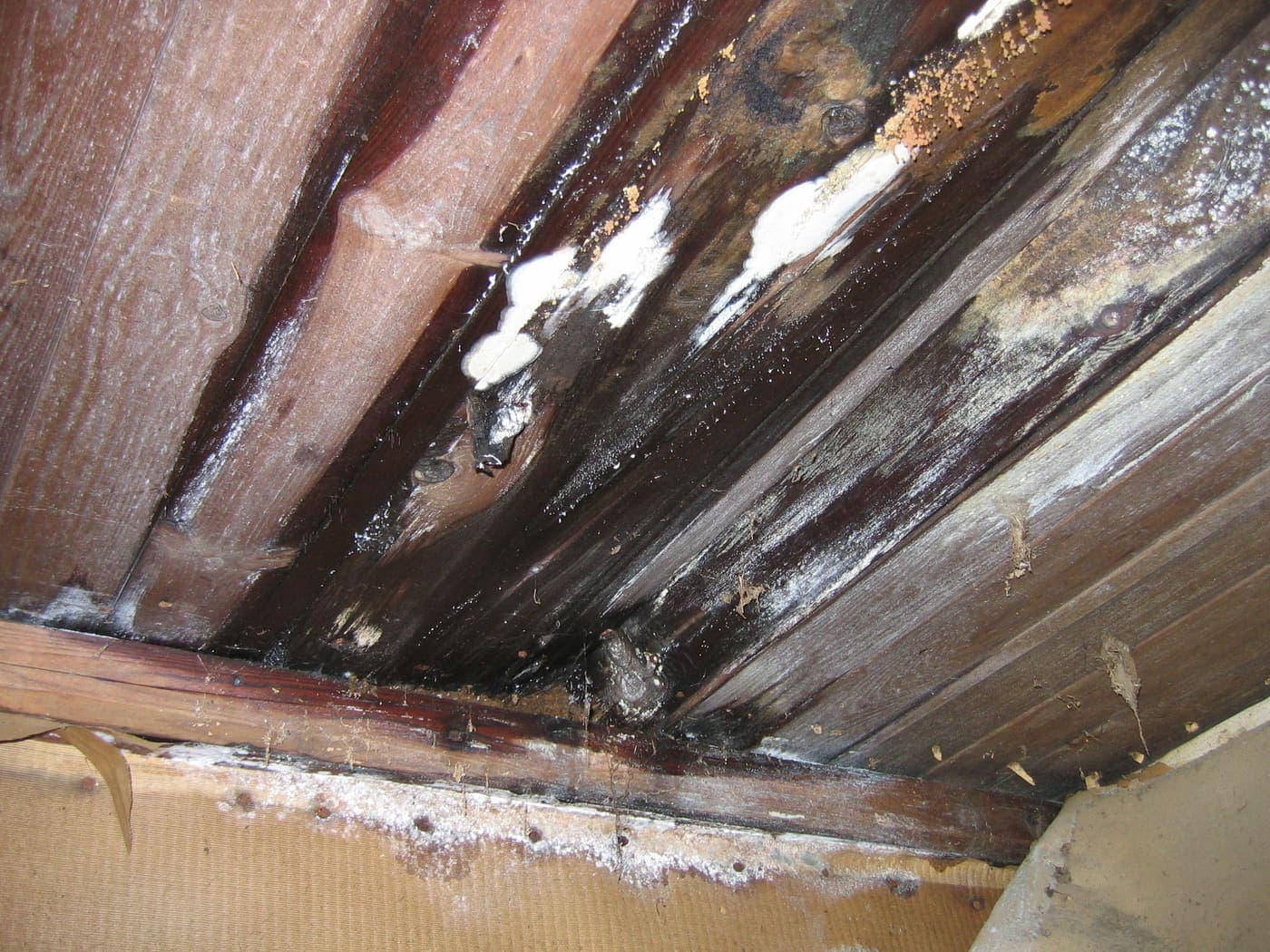
Wood is porous, and that single fact decides everything about cleaning mold off it. Growth that sits on a finish — paint, varnish, a sealed deck — is on a hard surface and cleans off. Growth on bare wood sends hyphae into the grain, and what looks like a stain after cleaning is the part you did not reach. And growth on structural wood — the joists over a crawl space, the studs in a wet wall, the sheathing under a leaking roof — is a symptom of a moisture problem that will keep feeding it until the water is fixed.
The good news is that mold discolors wood long before it weakens it. The fungi that soften and destroy wood — rot — need the wood wet for months. Most moldy wood is sound, and most of it can be kept.
First: Firm or Soft?
Push a screwdriver into the worst-looking area. Firm wood is a cleaning or sanding job. Wood that is soft, spongy or crumbles has rot, and rot is replacement — no cleaner reverses it. Do this test before buying anything.
Tier 1 — Surface Growth on Finished Wood
Painted trim, varnished furniture, a sealed deck, a stained fence: the mold is on the finish, not in the wood. EPA's guidance for hard surfaces applies — scrub with detergent and water, then dry. A soft brush with the grain, warm soapy water, wipe, and let it dry in moving air. White vinegar or 3% hydrogen peroxide, sprayed and left ten minutes before scrubbing, add a mild antifungal effect and are safe on most finishes (test a hidden spot; peroxide can lighten some stains).
Bleach is the tool most people reach for and the wrong one for wood: its water soaks in while the chlorine stays on top, so the surface looks clean and the colony under it survives. EPA does not recommend bleach as routine mold practice for exactly this reason — the full explanation is worth two minutes before you pour it.
N95, gloves and eye protection whenever you brush dry growth. Better still, HEPA-vacuum the loose growth off first so the brushing releases less.
Talk to a water damage pro now
Answered 24/7 · Toll-free · answered 24/7 · no obligation
(888) 840-6512- Describe the damage & give your ZIP
- You're routed to the on-call local crew
- They quote — you decide, no obligation
Tier 2 — Mold in the Grain of Bare Wood
Bare wood — unfinished furniture, the underside of a deck board, a workbench, framing lumber — takes mold into the grain. After a proper cleaning a grey or black shadow remains. That is not a stain to be scrubbed harder; it is growth below the surface.
Two answers:
- Sand it. 100–120 grit, with the grain, back to clean wood, N95 on and a vacuum running. This is the method for anything you will refinish — furniture, decking, trim. Seal or refinish once it is dry, because bare wood that stays bare re-molds in a damp room.
- Treat it with borate. A borate solution — disodium octaborate tetrahydrate, sold under several trade names and applied with a garden sprayer — penetrates bare wood, kills mold and wood-boring insects, and stays in the wood as long as liquid water does not rinse it out. This is what remediation contractors put on framing after cleaning, and it is the right tool for wood you cannot sand: joists, studs, subfloor, the back of sheathing. It goes on dry, bare wood; it does not work through paint.
Sand for the wood you look at; borate for the wood that holds the house up.
Tier 3 — Structural Wood: Framing, Subfloor, Crawl Space, Attic
Mold on the joists above a crawl space, the studs inside a wall, or the sheathing under a roof is different in kind, because it tells you those materials have been wet long enough to grow it. Cleaning it without finding the water is a subscription.
- Crawl space joists and subfloor — almost always ground moisture and humidity, sometimes a plumbing leak. The fix is a vapour barrier, drainage and a dehumidifier before any wood treatment; the crawl-space guide walks through it. Then HEPA-vacuum, clean, dry to under 16% moisture content, and borate.
- Attic sheathing and rafters — a roof leak or, more often, bathroom and kitchen exhaust venting into the attic instead of outdoors. The attic mold guide covers the ventilation fix.
- Wall studs — mold inside a wall cavity means a leak or condensation inside it, and the drywall usually comes out to reach it. The drywall guide covers the cut-and-dry sequence; mold in walls covers the source hunt.
EPA's threshold for professional remediation is about 10 square feet of growth, and structural mold crosses it quickly. Over that line, or where the wood is soft, or where the source is unknown, a remediation contractor working to the IICRC S520 standard — containment, negative air, HEPA, source correction, verification — is the job, with an independent inspector's scope before the bid. Remediation pricing depends mainly on square footage and access.
Drying: The Number That Decides It
Wood below about 15–16% moisture content does not support mold; wood above 20% does. A pin moisture meter reads it in seconds — the homeowner moisture meter review covers the ones worth owning — and it is the difference between "it looks dry" and "it is dry." Fans and a dehumidifier bring cleaned wood down over two to four days; the room stays under 50% humidity afterwards or the whole exercise repeats.
Bottom Line
Firm or soft first. Finished wood: detergent and water. Bare wood with a shadow left: sand it if you can refinish it, borate it if it holds the house up. Structural wood: find the water, dry to under 16%, then treat — and over 10 square feet, or soft, or with no source in sight, hand it to a remediation crew. Bleach stays in the laundry room.
Reading to confirm what you already suspect?
Confirm it in two minutes instead — the pro on this line answers questions about YOUR situation all day: what it is, what it should cost, whether you even need service. If you want, they'll set the appointment on the same call.
Toll-free · no obligation · asking costs nothing
Frequently Asked Questions
Does vinegar or bleach work on mold on wood?
Vinegar does more than bleach on wood, but neither reaches mold in the grain. Bleach's water soaks into the wood while the chlorine stays on the surface — which is why EPA does not recommend it as a routine mold cleaner and why bleached wood often re-molds.
On a sealed or painted surface, detergent and water, vinegar, or 3% hydrogen peroxide all remove surface growth. For bare wood with penetrated mold, sanding or a borate treatment is the answer.
Can moldy wood be saved?
Usually, if it is sound. Mold discolors wood long before it weakens it — the rot that softens wood is a different fungus that needs the wood to stay wet for months.
Scrape a screwdriver into the surface: firm wood is cleaned or sanded and kept; wood that is soft, spongy or crumbling has rot and is replaced. Cosmetic staining that survives cleaning is not a structural problem.
What is a borate treatment for mold on wood?
A solution of a borate salt (disodium octaborate tetrahydrate, sold under several brand names) that is sprayed or brushed onto bare wood. It penetrates the grain, kills mold and wood-boring insects, and stays in the wood as long as it is not rinsed out by liquid water.
Remediation contractors use it on framing and crawl-space wood after cleaning; it is available to homeowners and applied with a garden sprayer to dry, bare wood.
When is mold on wood a job for a professional?
When it is on structural framing in a wall cavity, attic or crawl space; when it covers more than about 10 square feet; when the wood is soft; or when you cannot find what is wetting it.
Those cases need containment, HEPA filtration and source correction — the IICRC S520 standard — and an independent inspector's scope before a remediation bid.
Who do I call right now for water damage?
Call (888) 840-6512. The line is answered 24 hours a day, seven days a week, and connects you with an IICRC-certified water damage restoration company that serves your area. A recorded menu picks up first: choose water damage or mold, key in your 5-digit ZIP code, and hold through the short silence while the call is passed to the company.
Describe what you can see — where the water is coming from, how long it has been there, and whether it smells — the more specific you are, the faster the right company is on the line. If the source is a pipe or an appliance, shut the main water valve first. Have four things ready and the call goes quickly: the address, when the water started, what is wet now, and whether you have filed an insurance claim.
Still not sure which of these is your situation? (888) 840-6512 · toll-free · answered 24/7
Sources
- EPA — Mold Cleanup in Your Home
- EPA — Should I use bleach to clean up mold?
- USDA Forest Products Laboratory — Wood Handbook (moisture and decay)
Methodology: How we source and verify data · Report an error
Disclaimer: HearthDry is an independent educational resource. This article is for informational purposes only and does not constitute professional, legal, or insurance advice. Consult licensed professionals before making decisions about your property or insurance claims.
Free 2-day shipping
Amazon Prime members pay no shipping on restoration equipment
Dehumidifiers, air movers, and moisture meters qualify for free Prime delivery — bulk items that otherwise cost $15–$40 to ship.
Affiliate link — HearthDry earns a bounty if you sign up; costs you nothing extra.
Equipment
What each machine actually does
Removes the moisture the structure is still giving off — the machine that decides how long drying takes
See the picks →Moves air across wet surfaces so the dehumidifier has something to take out of the air
See the picks →Finds water behind walls and under floors, and tells you when a material is actually dry
See the picks →Alerts you the moment a leak starts — the cheapest thing on this list and the only preventive one
See the picks →Those pages carry affiliate links. As an Amazon Associate, HearthDry earns from qualifying purchases; it costs you nothing extra.
Our Amazon storefront →Advertisement
