
Quick answer
A dehumidifier helps with mold in one specific way: by holding indoor humidity below about 50%, it removes the moisture mold needs to start and keeps damp surfaces from staying damp — which prevents new growth and stops the spread of existing colonies. It does not kill mold that is already growing, does not remove spores from the air (that is a HEPA filter's job), and cannot overcome an active leak or seepage, which supplies water faster than any dehumidifier removes it. The right use is: remove existing mold, fix any leak, then run a correctly sized dehumidifier with a humidistat set to 45–50% — continuously in a basement, seasonally elsewhere — with a hygrometer to confirm it is working. Call (888) 840-6512 to reach a certified water damage restoration company in your area; the line is answered 24/7.
Press 1 for water damage or 2 for mold, then your 5-digit ZIP. The line goes quiet for about half a minute while it connects — that is normal, stay on.
Written & reviewed by Marcus ReedIICRC WRT
Reviewed August 30, 2026· Next review Feb 2027
The Honest Split: Prevention Yes, Removal No
Mold needs moisture. A dehumidifier removes moisture from the air, which lowers the relative humidity of the room and dries the surfaces in it. Below about 50% relative humidity — EPA's guidance is 30–50% — mold cannot start a new colony on a dry surface, and existing growth on a surface that has dried stops spreading. That is a real, large effect, and in a damp basement it is the single most effective thing a homeowner can do.
What a dehumidifier does not do:
- Kill or remove existing mold. The growth, its spores and its allergens stay on the surface until removed. Dry mold is still allergenic.
- Clean spores from the air. That is a HEPA air purifier's job; a dehumidifier moves air through a coil, not a filter.
- Beat a leak. Seepage through a foundation, a dripping pipe, water under a floor — these supply water faster than any dehumidifier removes it. The unit runs forever and the humidity never reaches 50%.
So the sequence is: remove the mold, fix the water, then dehumidify to keep it gone.
Where It Helps Most
| Space | Helps? | Notes |
|---|---|---|
| Basement | most | below-grade rooms condense atmospheric moisture on cool walls; a dehumidifier is the fix — the basement humidity guide covers targets |
| Crawl space | yes, with a vapour barrier | a dehumidifier over bare dirt fights the ground and loses |
| Bathroom | a little | an exhaust fan that runs 20 minutes after showers does far more — the ceiling mold guide |
| Bedroom / closet on a cold wall | yes | condensation on the wall behind furniture is a humidity problem |
| Whole house in a humid climate | yes | a whole-house unit or the AC's dehumidification; portable units in the worst rooms |
| Room with an active leak | no | fix the leak |
Choosing and Setting It
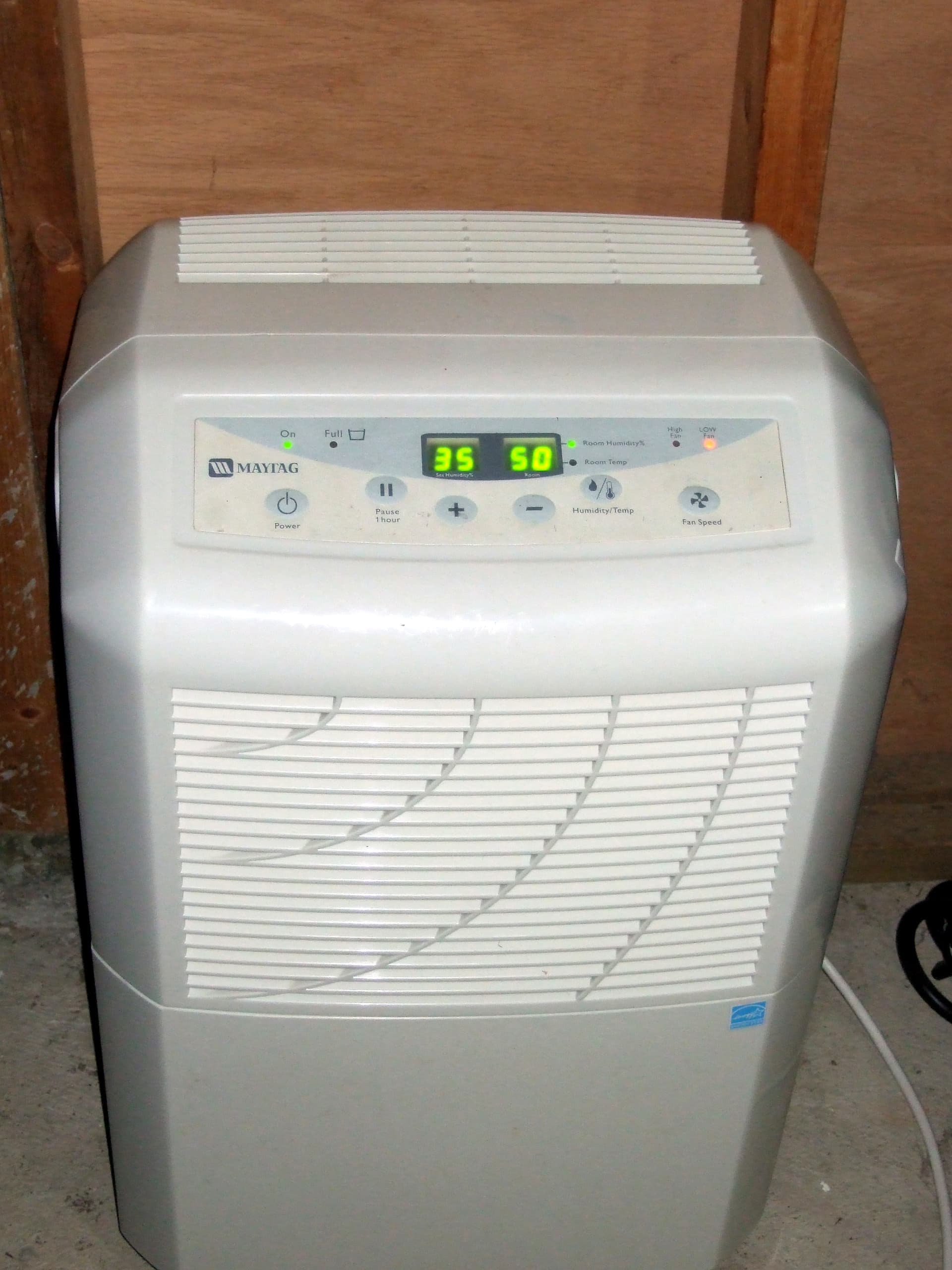
- Capacity: 35–50 pints/day for a typical damp basement; 50–70 pints or a commercial low-grain unit for a wet one. Undersized units run all day and never get there — the most common "it didn't work." The homeowner dehumidifier review and the basement dehumidifier review size the options; crawl spaces need their own class.
- Humidistat set to 45–50%. Lower wastes electricity and dries wood and skin.
- Continuous drain. A hose to a floor drain or a condensate pump. Units that need their bucket emptied get abandoned by February.
- Placement: center of the room, away from walls, doors closed. Not behind the furnace, not in a closet.
- A separate hygrometer on the far side of the room. The unit's own reading is at the unit; the corner behind the boxes is what matters.
- Run it continuously in a basement through the humid months; a bedroom unit runs when the hygrometer says so.
Talk to a water damage pro now
Answered 24/7 · Toll-free · answered 24/7 · no obligation
(888) 840-6512- Describe the damage & give your ZIP
- You're routed to the on-call local crew
- They quote — you decide, no obligation
The Test That It's Working
A hygrometer reading under 50% across the room for two weeks, and a musty smell that has faded. A smell that persists at 45% means a colony is still being fed by water somewhere — a wall cavity, a floor drain, a hidden leak — and the dehumidifier is drying the air around a problem it cannot reach. That is the moment for a source hunt, and for an independent inspection if nothing is visible.
What to Do About the Mold That's Already There
The dehumidifier has stopped it spreading. Now it comes off. Under about 10 square feet on a hard surface, the safe DIY method; porous material that has molded — drywall, carpet, insulation — is replaced; larger areas, or a household with someone allergic or asthmatic, are a remediation contractor's job. Then the dehumidifier keeps the room from growing it back.
Bottom Line
A dehumidifier is the best mold-prevention purchase in the house and a useless mold-removal one. Remove what has grown, fix any leak, then hold the room under 50% with a correctly sized unit on a continuous drain and check it with a hygrometer. A basement that stays at 45% does not grow mold; a basement with a dehumidifier and a seeping wall still does.
Reading to confirm what you already suspect?
Confirm it in two minutes instead — the pro on this line answers questions about YOUR situation all day: what it is, what it should cost, whether you even need service. If you want, they'll set the appointment on the same call.
Toll-free · no obligation · asking costs nothing
Frequently Asked Questions
Will a dehumidifier get rid of existing mold?
NoIt dries the environment so the colony stops growing and spreading, and dead-dry mold is less active — but the growth, its spores and its allergens stay on the surface until they are physically removed.
Clean or remove the moldy material first, then run the dehumidifier to keep it from returning. A dehumidifier pointed at a moldy wall is prevention for the future, not treatment for the present.
What humidity setting prevents mold?
Below 50% relative humidity, and ideally 30–50%, which is the EPA's range for controlling mold. Set the dehumidifier's humidistat to 45–50%. Below 30% is unnecessary, dries wood and skin, and costs electricity. A separate hygrometer on the far side of the room is the check that the setting is actually being reached.
Does a dehumidifier help with mold smell?
PartlyThe musty smell comes from active growth releasing volatile compounds; drying the room slows that, and the smell fades as humidity drops.
But a smell that persists at 45% humidity means there is a colony somewhere still fed by water — a leak, a wet wall cavity, a floor drain — and the dehumidifier is masking a source it cannot fix.
What size dehumidifier do I need for mold?
For a typical damp basement, a 35–50 pint-per-day unit with a continuous drain hose; for a very wet basement or crawl space, a 50–70 pint or a commercial low-grain unit.
Undersized units run constantly without reaching 50%, which is the most common reason 'the dehumidifier didn't help'. A bathroom or bedroom needs a 20–30 pint unit or, better, a working exhaust fan.
Who do I call right now for water damage?
Call (888) 840-6512. The line is answered 24 hours a day, seven days a week, and connects you with an IICRC-certified water damage restoration company that serves your area. A recorded menu picks up first: choose water damage or mold, key in your 5-digit ZIP code, and hold through the short silence while the call is passed to the company.
Describe what you can see — where the water is coming from, how long it has been there, and whether it smells — the more specific you are, the faster the right company is on the line. If the source is a pipe or an appliance, shut the main water valve first. Have four things ready and the call goes quickly: the address, when the water started, what is wet now, and whether you have filed an insurance claim.
Still not sure which of these is your situation? (888) 840-6512 · toll-free · answered 24/7
Sources
- EPA — A Brief Guide to Mold, Moisture and Your Home (humidity 30–50%)
- EPA — Mold Cleanup in Your Home
Methodology: How we source and verify data · Report an error
Disclaimer: HearthDry is an independent educational resource. This article is for informational purposes only and does not constitute professional, legal, or insurance advice. Consult licensed professionals before making decisions about your property or insurance claims.
Free 2-day shipping
Amazon Prime members pay no shipping on restoration equipment
Dehumidifiers, air movers, and moisture meters qualify for free Prime delivery — bulk items that otherwise cost $15–$40 to ship.
Affiliate link — HearthDry earns a bounty if you sign up; costs you nothing extra.
Equipment
What each machine actually does
Removes the moisture the structure is still giving off — the machine that decides how long drying takes
See the picks →Moves air across wet surfaces so the dehumidifier has something to take out of the air
See the picks →Finds water behind walls and under floors, and tells you when a material is actually dry
See the picks →Alerts you the moment a leak starts — the cheapest thing on this list and the only preventive one
See the picks →Those pages carry affiliate links. As an Amazon Associate, HearthDry earns from qualifying purchases; it costs you nothing extra.
Our Amazon storefront →Advertisement
