

Dehumidifier vs Air Purifier in 2026 — Which Problem Each One Solves, and Which to Buy

Dehumidifier vs Air Purifier in 2026

Which Problem Each One Solves, and Which to Buy

4 picks compared · prices, ratings and stock checked October 11, 2026

Our Top Pick

Damp, musty or above 60% humidity: the AEOCKY RHEA-001 dehumidifier. Dust, pollen or spores in air that is already dry enough: the Levoit Core 300-P purifier.

4.5 on Amazon · 7,116 ratings

Quick answer

A dehumidifier pulls water out of the air to hold a room at 30–50% relative humidity, the range EPA recommends for mold control, while an air purifier filters dust, pollen, smoke and spores without changing humidity at all. If a room smells musty, fogs its windows or reads above 60% on a hygrometer, buy the dehumidifier first; the AEOCKY RHEA-001 is the pick, rated 4.5 stars across 7,116 Amazon ratings. If the air is dry enough and the problem is allergies or dust, the Levoit Core 300-P is the purifier to buy.

Our Picks at a Glance

Available picks first — 3 of 4 in stock at our last check — ratings and stock read from Amazon on 11 October 2026.

Best Combo (Small Spaces Only)
Tenergy Sorbi Dehumidifier and True HEPA Purifier Combo (750 ml/day)
4.4 from 2,986 Amazon ratings · checked 11 Oct

Out of stock at our last check — the link still works if it returns.

Best for: A closet, small bathroom or RV where there is room for only one machine

Type:
Peltier (thermoelectric) dehumidifier with a True HEPA filter
Moisture removal (stated):
750 ml (about 1.6 pints) a day at 86°F, 80% RH

Listing verified 12 Oct 2026

How this page was made: we compare the current Amazon listings, the makers' published specs and what verified buyers report, then rank by fit for the job. Ratings, review counts and stock are read from Amazon and dated. We earn a commission on purchases through our links; it does not change the order. Reviewed by Marcus Reed, IICRC-certified Water Restoration Technician.

Full Reviews

Each pick in detail: what the listing states, what buyers report, and where it falls short.

#1
Best Dehumidifier

Check price

on Amazon ↗

Listing verified 13 Oct 2026

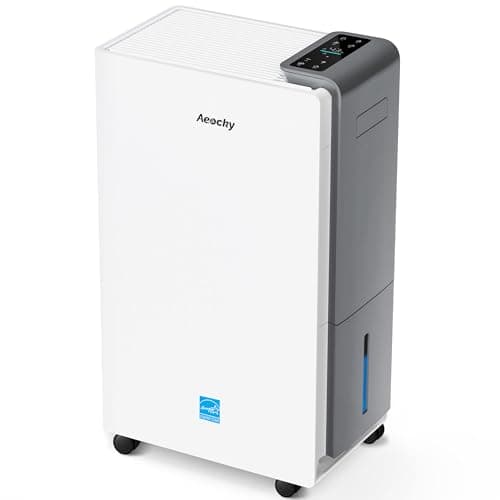
AEOCKY RHEA-001 Dehumidifier (56 Pints at 86°F, ENERGY STAR Most Efficient 2025)See it on Amazon ↗

Quick Verdict

Most Efficient 2025 and a realistic 56-pint figure: the machine that fixes damp air, once you confirm how it drains.

Key Specs

Capacity (stated)

56 pints/day at 86°F, 80% RH; 80 pints/day at 95°F, 95% RH

Efficiency

Listed as ENERGY STAR Most Efficient 2025

Coverage (claimed)

Up to 5,500 sq ft

Noise (claimed)

44 dB at the lowest fan speed

Size and weight

14.45 x 8.66 x 24.09 in; 31 lb

After a power cut

Power-off memory resumes the previous settings

Pros

  • Listed as ENERGY STAR Most Efficient 2025, a checkable certification on a machine that may run thousands of hours a year
  • Gives a capacity at 86°F and 80% RH alongside the 95°F headline, a test point much closer to a damp room
  • Resumes its settings after a power cut, so a basement unit does not sit idle after a storm
  • States three years of coverage

Cons

  • The listing bullets do not state the tank size or whether a drain hose is included; confirm both before planning on continuous drainage
  • At 31 lb and about 24 in tall it is a basement or utility-room machine rather than a bedroom one
  • The product page leans on superlatives it does not support; buy it on the certification and the two capacity figures

Suited to

A damp basement, a musty ground-floor room or any space that reads above 60% humidity

Our take

This is the machine that deals with the cause when a room smells musty: it takes water out of the air until humidity is low enough that mold stops growing. Read its two capacity figures as a pair. The 80 pints is at 95°F and 95% RH, conditions a house never reaches; the 56 pints at 86°F and 80% RH is the more useful number, and it is the same test point the Tenergy combo below uses, which makes the comparison stark. The Most Efficient listing matters more than any slogan on the page, because a dehumidifier holding a basement at 50% runs for months on end. Check the drainage before you buy, since the listing does not say.

Check today's price on Amazon →

Affiliate link — commission at no extra cost to you

Compare elsewhere

These open a search for this model. We quote prices only where we can verify them — Amazon, Sylvane and eBay.

#2
Best Air Purifier

Check price

on Amazon ↗

Listing verified 13 Oct 2026

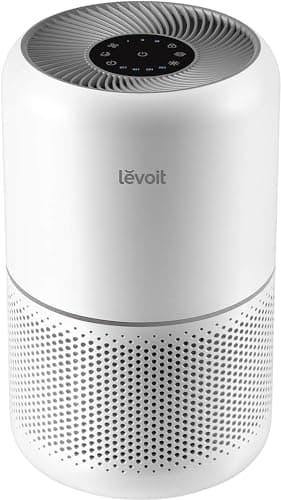
Levoit Core 300-P Air Purifier (AHAM-Verified 143 CFM CADR)See it on Amazon ↗

Quick Verdict

The purifier to buy once the humidity is under control: AHAM-verified, bedroom-sized and quiet.

Key Specs

CADR (AHAM Verifide)

143 CFM smoke, 153 CFM dust, 167 CFM pollen

Room size (stated)

4.8 air changes an hour in 222 sq ft

Filter efficiency (stated)

99.97% for 0.1–0.3 μm particles, independent lab

Humidity control

None; an air purifier does not change humidity

Noise (claimed)

24 dB in Sleep Mode

Certifications

AHAM Verifide, ETL Listed, FCC, CARB compliant

Pros

  • Airflow verified by a third party: AHAM measured its clean air delivery rate on smoke, dust and pollen
  • Right-sized for the room most people buy a purifier for, a bedroom of about 220 sq ft
  • Quiet enough to leave on overnight, quoted at 24 dB in Sleep Mode
  • CARB compliant for ozone emissions

Cons

  • Does nothing for humidity, condensation or a musty smell caused by damp; in a room above 60% it is the second machine, not the first
  • Fan speed is set by hand, with no sensor-driven mode on the listing

Suited to

Allergy or asthma symptoms in a bedroom where a hygrometer already reads 50% or lower

Our take

A purifier is the right first purchase when the air is already dry enough and the problem is what floats in it: pollen, pet dander, dust, smoke, or spores drifting in from outdoors. The Core 300-P is the default because its numbers are verified rather than claimed, and 222 sq ft at 4.8 air changes an hour matches a real bedroom. What it cannot do is the job on the other half of this page. It will not lower humidity by a single point, so in a damp room it filters spores while the conditions that produce them carry on. Check the hygrometer first; if it reads above 60%, buy the dehumidifier before this.

Check today's price on Amazon →

Affiliate link — commission at no extra cost to you

#3
Drain Hose Included

Check price

on Amazon ↗

Listing verified 13 Oct 2026

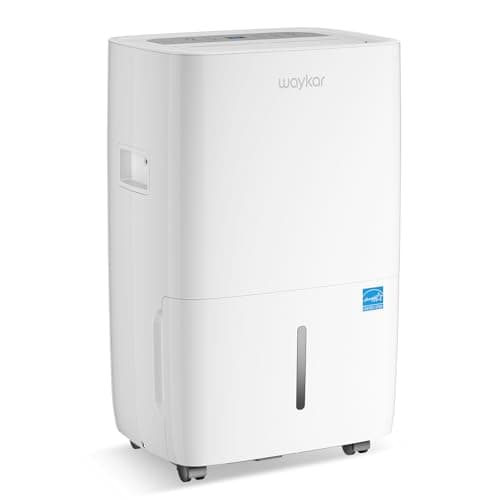
Waykar 80 Pint ENERGY STAR Dehumidifier (Drain Hose Included, 30% RH Floor)See it on Amazon ↗

Quick Verdict

The hands-off option: hose in the box, a garden-hose thread and a 30% floor, ENERGY STAR certified.

Key Specs

Capacity (stated)

80 pints/day at 95°F, 90% RH

Coverage (claimed)

Up to 5,000 sq ft

Humidity range

30–80% RH

Drainage

1.14 gal (4.3 L) tank; 3.3 ft hose included; standard 3/4 in garden-hose connection

Efficiency

ENERGY STAR certified

Noise (claimed)

About 42 dB

Pros

  • A drain hose comes in the box, with a standard garden-hose thread for a longer run
  • Can be set as low as 30% RH, the bottom of EPA's recommended range
  • The same unit that leads HearthDry's basement dehumidifier comparison
  • ENERGY STAR certified, with auto defrost for a cool basement

Cons

  • Its only capacity figure is at 95°F and 90% RH, so it cannot be compared directly with the AEOCKY's 86°F number
  • The included hose is 3.3 ft, so it needs a floor drain close by or a longer garden hose
  • ENERGY STAR certified, but not the Most Efficient tier the AEOCKY carries

Suited to

A basement with a floor drain nearby, where the unit should drain itself from the first day

Our take

The practical difference from the AEOCKY is drainage. Waykar puts a 3.3 ft hose in the box and a standard 3/4 in garden-hose connection on the unit, so a basement with a floor drain can be set up to run unattended on day one; a full tank stops any dehumidifier, and 1.14 gallons fills quickly in a damp space. The 30% floor on the humidistat is lower than many units allow, though for mold control 45 to 50% is the sensible setting. Its 80-pint rating is quoted at 95°F and 90% RH, so expect much less in a cool basement, as with every saturation figure.

Check today's price on Amazon →

Affiliate link — commission at no extra cost to you

#4
Best Combo (Small Spaces Only)

Check price

on Amazon ↗

Listing verified 12 Oct 2026

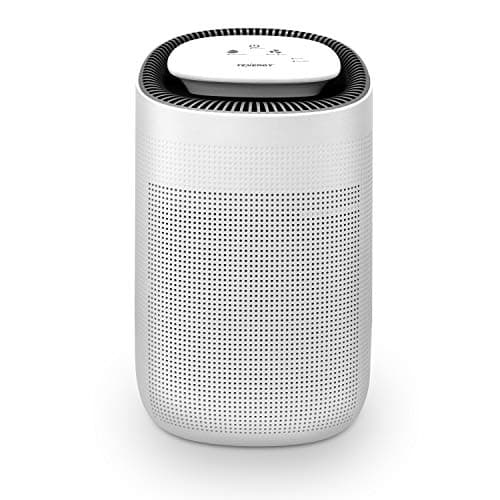
Tenergy Sorbi Dehumidifier and True HEPA Purifier Combo (750 ml/day)See it on Amazon ↗

Best Combo (Small Spaces Only)

Tenergy Sorbi Dehumidifier and True HEPA Purifier Combo (750 ml/day)

4.4(2,986 reviews)

Quick Verdict

Fine for a closet or small bathroom; a damp room needs a real dehumidifier and a separate purifier.

Key Specs

Type

Peltier (thermoelectric) dehumidifier with a True HEPA filter

Moisture removal (stated)

750 ml (about 1.6 pints) a day at 86°F, 80% RH

Tank

1 liter, removable; auto shut-off and water-level sensor

Coverage (stated)

Spaces up to 200 sq ft

Noise (claimed)

35–42 dB

Weight

7 lb

Pros

  • One small machine that both dries and filters a closet, a small bathroom or an RV
  • The listing names the filter as True HEPA and states 99.97%
  • Quiet, light at 7 lb, and switches itself off when the tank is full
  • CARB certified

Cons

  • At the same 86°F, 80% RH test point the AEOCKY quotes 56 pints a day; this removes about 1.6, roughly one-thirty-fifth as much
  • No CADR or airflow figure, so there is no way to judge how much air its HEPA filter cleans
  • A 1-liter tank, with no drain hose mentioned on the listing, means emptying it by hand, often daily in damp weather

Suited to

A closet, small bathroom or RV where there is room for only one machine

Our take

This is the honest picture of an all-in-one unit: both halves work, and both are small. The dehumidifier is a Peltier module, which is quiet and has no compressor, but at 86°F and 80% RH it is rated at 750 ml a day; the AEOCKY, at the identical test point, is rated at 56 pints, about 35 times as much. The HEPA filter is genuine by the listing's account, but no CADR is given, and a compact unit moving little air cleans little of it. Buy it for a closet or a small bathroom where space is the constraint. For a damp bedroom or basement, two separate machines will do far more.

Check today's price on Amazon →

Affiliate link — commission at no extra cost to you

Buyer's Guide

What to know before you buy.

Which Machine Solves Which Problem

Start from the symptom, not the machine. A musty smell, condensation on windows or cold pipes, a clammy feel, peeling paint or a hygrometer reading above 60% all point to too much water in the air, and only a dehumidifier removes it. Sneezing, itchy eyes, visible dust, pet dander, pollen season and wildfire smoke are particle problems, and only a filter removes particles. Mold sits across both: the spores in the air are a purifier's job, but the growth that releases them is driven by damp, so the dehumidifier and the cleanup come first. Plenty of homes with a damp basement and an allergic occupant end up with one of each, each in the room where its problem lives.

Measure the Humidity Before You Buy Either

An inexpensive digital hygrometer settles the question within a few days. Put it in the room that concerns you, away from the shower and the stove, and read it morning and evening. EPA's guidance is to keep indoor humidity below 60%, ideally between 30 and 50%. If the readings sit above 60%, the room needs a dehumidifier, and a purifier on its own will not change the conditions that mold and dust mites need. If they sit in the 30 to 50% band and symptoms persist, the problem is in the air rather than the moisture, and a HEPA purifier is the better spend. Below 30% the air is too dry, and neither machine helps; that is a humidifier question.

Why Mold Needs Moisture Control First

EPA's summary of mold control is short: the key is moisture control. Mold spores are present in every home, indoors and out, and they only grow where something stays damp. A purifier lowers how many float in the air at any moment, but a wet wall or a humid basement keeps producing more, so the purifier never catches up. A dehumidifier changes the conditions, and below about 50% most surfaces dry enough that new growth stops. Neither machine removes mold that is already there, which has to be cleaned off or cut out, and neither can outrun a leak: if water is coming through a wall or from a pipe, fix that before buying anything.

Combo Units: What You Give Up

The all-in-one units sold as dehumidifier and air purifier combos are mostly small Peltier dehumidifiers with a filter added. That design is quiet and compact, and it is weak on both counts. The Tenergy Sorbi on this page is rated at 750 ml of water a day at 86°F and 80% RH, and gives no airflow figure for its filter. Placement works against combos too: a dehumidifier belongs where the damp is, often a basement, while a purifier belongs where you breathe, usually a bedroom. A combo makes sense in a closet, a small bathroom or an RV, where one plug and one footprint matter more than output. Pass on any combo that adds an ionizer or an ozone function; those add a problem rather than solving one.

Sizing Each Machine to the Room

Size a dehumidifier to the dampness and the space, and read the test conditions behind its pint rating: a figure at 95°F and 90 to 95% RH is headroom, while the AEOCKY's 56 pints at 86°F is closer to a real room. A large basement or a room that has had water damage needs a compressor unit; Peltier units suit closets. Size a purifier by its clean air delivery rate: AHAM's rule is a smoke CADR of about two-thirds of the floor area, so the Core 300-P's 143 CFM suits roughly 215 sq ft. Square-foot coverage headlines on both kinds of machine are best ignored, because they are calculated at conditions or air-change rates no home runs at.

Frequently Asked Questions

Do I need a dehumidifier or an air purifier for mold?

A dehumidifier, if you have to choose one. Mold grows where moisture lets it, and holding a room at or below 50% humidity stops new growth and helps surfaces dry out; a purifier only captures the spores the growth releases.

Clean up the mold that is already there first, and consider professional help for anything larger than about 10 square feet, the threshold EPA uses. Add a HEPA purifier afterwards if someone in the house reacts to spores.

Can I run a dehumidifier and an air purifier at the same time?

YesAnd in a damp house with an allergic occupant that is often the right setup. They do not interfere: one removes water vapor, the other removes particles.

Put each where its problem is, usually the dehumidifier in the basement or the damp room and the purifier in the bedroom. If both share a room, give each a clear foot or two around its intake. Running both does add to the electricity bill, which is where an ENERGY STAR dehumidifier earns its keep.

Does a dehumidifier purify air?

Not in the way a purifier does. Most dehumidifiers have only a washable mesh screen to keep dust off the coil, which is not a HEPA filter and does not capture spores or fine dust.

A dehumidifier improves air quality indirectly: dust mites and mold both depend on humidity, and holding a room below 50% makes it a poor place for either over weeks and months. For particles already in the air, including spores, a HEPA purifier is still the tool.

Is a dehumidifier and air purifier combo worth it?

Only for a small, enclosed space. Most combos sold online pair a thermoelectric dehumidifier with a filter, and the dehumidifier half removes a pint or two a day where a compressor unit removes dozens.

They suit a closet, a small bathroom or an RV, where one quiet machine is the only option. For a bedroom, a basement or a home with a mold problem, a compressor dehumidifier and a separate HEPA purifier, each sized to its room, will do far more.

Dehumidifier vs air conditioner: does the AC remove enough humidity?

An air conditioner dries the air only while it is cooling, as a side effect of chilling its coil. On a hot day that can be plenty. In spring and fall, in a cool basement, or with an oversized unit that cools the room fast and shuts off, the AC runs too little to keep humidity down, and rooms end up cold and clammy at once.

A dehumidifier controls humidity whatever the temperature, which is why basements need one even in houses with central air. It does add a little heat to the room it runs in.

Is a dehumidifier the same as a humidifier?

NoThey do opposite jobs. A dehumidifier takes water out of the air; a humidifier adds it, which helps when winter air drops below about 30%.

In a house with damp or mold, a humidifier can make things worse by pushing humidity into the range where mold grows, so check a hygrometer before running one. If the readings are above 50%, the humidifier stays off.

Who do I call right now for water damage?

Call (888) 840-6512. The line is answered 24 hours a day, seven days a week, and connects you with an IICRC-certified water damage restoration company that serves your area. A recorded menu picks up first: choose water damage or mold, key in your 5-digit ZIP code, and hold through the short silence while the call is passed to the company.

Describe what you can see — where the water is coming from, how long it has been there, and whether it smells — the more specific you are, the faster the right company is on the line. If the source is a pipe or an appliance, shut the main water valve first. Have four things ready and the call goes quickly: the address, when the water started, what is wet now, and whether you have filed an insurance claim.

Still not sure which of these is your situation? (888) 840-6512 · toll-free · answered 24/7

Sources

  1. EPA — A Brief Guide to Mold, Moisture, and Your Home
  2. EPA — Guide to Air Cleaners in the Home
  3. ENERGY STAR — Dehumidifiers
  4. ENERGY STAR — Most Efficient

Methodology: How we source and verify data · Report an error

How we chose these picks

  • Every pick is a current listing. Stock, star ratings and rating counts are read from Amazon by script and carry the date they were read.
  • Nothing under 4.0 stars makes the list, and the top pick needs a large rating count, so one good week of reviews cannot put it there.
  • Specs are quoted from the listing or the maker, with the test condition behind the number where there is one, and sized against the job rather than the room on the box.
  • We do not run lab or field tests. Where a spec matters, we say what it is measured under and what it cannot tell you.

Free 2-day shipping

Amazon Prime members pay no shipping on restoration equipment

Dehumidifiers, air movers, and moisture meters qualify for free Prime delivery — bulk items that otherwise cost $15–$40 to ship.

Try Prime free →

Affiliate link — HearthDry earns a bounty if you sign up; costs you nothing extra.

Also Worth Comparing

Best Air Purifiers for Mold in 2026 — HEPA Units Compared on Verified Airflow

An air purifier is the right tool for airborne spores and the allergy symptoms they cause, and the wrong one for the colony and the damp that feeds it. These five HEPA units are compared on the figures that decide how much air they really clean: verified CADR, the stated filter rating and the room size at about five air changes an hour.

Read the comparison

Best Dehumidifier for Basement Use in 2026 — Drain Hose, Built-In Pump and Honest Pint Ratings

Most basement dehumidifier disappointment comes from two numbers nobody reads properly: the pint rating, measured at warm test conditions a 60°F basement never reaches, and the drainage method. Five units are compared here on those two points first, from a garden-hose drain to a built-in pump with a stated 15 ft lift.

Read the comparison

Best HEPA Air Scrubbers in 2026 — For Mold, Water Damage and Renovation Dust

During mold remediation, disturbed spores become airborne and spread through the HVAC system. A HEPA air scrubber captures 99.97% of particles down to 0.3 microns — including mold spores — protecting your family and containing the remediation zone.

Read the comparison

Best Dehumidifiers for Water Damage in 2026

After a flood or pipe burst, a dehumidifier is your single most powerful drying tool. These are the 3 best dehumidifiers for water damage restoration, ranked on published specifications against IICRC S500 drying targets and verified-buyer reports.

Read the comparison

Best Moisture Meters for Homeowners in 2026 — Water Damage Detection

A moisture meter tells you what your eyes can't see — wet drywall, soggy subfloor, and moisture in framing. These are the four best moisture meters for homeowners dealing with water damage.

Read the comparison

Dehumidifier vs Humidifier in 2026 — Which One Your Air Needs, and the Ones Worth Buying

A dehumidifier and a humidifier are opposites: one pulls water out of air that is too damp, the other adds it to air that is too dry. A hygrometer reading tells you which one your home needs, and getting it wrong, such as running a humidifier in a damp room, can grow the mold you were trying to avoid.

Read the comparison

Best Dehumidifier for Mold and Musty Smells in 2026 — Picked to Hold a Room Below 50%

A dehumidifier stops mold by taking away the damp it needs, and the musty smell usually leaves with the damp. It does not kill mold that is already growing, so these picks are judged on the job they can do: holding a basement, a room or a closet below 50% humidity, day after day.

Read the comparison