Best for: A tiled or fiberglass shower with gray-black speckling on the grout and soap film on the walls
- Type:
- Foaming bleach bathroom cleaner, trigger spray
- Size:
- 32 oz
Listing verified 13 Oct 2026

What a Spray Can and Cannot Fix
5 picks compared · prices, ratings and stock checked October 11, 2026
Our Top Pick
For most showers, Scrubbing Bubbles Foaming Bleach: the foam stays on vertical tile long enough to lift mold stains and soap scum together. For black lines along caulk or grout that a spray keeps running off, the APULITO gel sits in place for hours.
4.6 on Amazon · 17,043 ratings
Quick answer
The best mold remover for a shower is a bleach-based foam or spray that clings to tile and grout, used with the fan running and the door open. Scrubbing Bubbles Foaming Bleach Bathroom Cleaner is the default pick, rated 4.6 stars across 17,043 Amazon ratings, and it lifts mold stains and soap scum from tubs, fiberglass and glass doors in one pass. Bleach only whitens what sits on a hard surface, though. Caulk that is black inside has to be cut out and replaced, and a patch larger than about 10 square feet, the EPA's line for doing it yourself, calls for more than a spray bottle.
Every pick below is currently stocked — ratings and stock read from Amazon on 11 October 2026.
Best for: A tiled or fiberglass shower with gray-black speckling on the grout and soap film on the walls
Listing verified 13 Oct 2026
Best for: Glazed tile, glass and fiberglass showers where you want a stated kill claim, not only a whiter grout line
Listing verified 13 Oct 2026
Best for: Black lines along the tub caulk or in the corner grout that sprays keep running off
Listing verified 13 Oct 2026
Best for: A painted bathroom ceiling with recurring gray spotting from shower steam, after cleaning and drying it
Listing verified 13 Oct 2026
Best for: A shower that is clean now and keeps re-spotting between deep cleans
Listing verified 13 Oct 2026
How this page was made: we compare the current Amazon listings, the makers' published specs and what verified buyers report, then rank by fit for the job. Ratings, review counts and stock are read from Amazon and dated. We earn a commission on purchases through our links; it does not change the order. Reviewed by Marcus Reed, IICRC-certified Water Restoration Technician.
Full Reviews
Each pick in detail: what the listing states, what buyers report, and where it falls short.
Check price
on Amazon ↗
Listing verified 13 Oct 2026
See it on Amazon ↗Quick Verdict
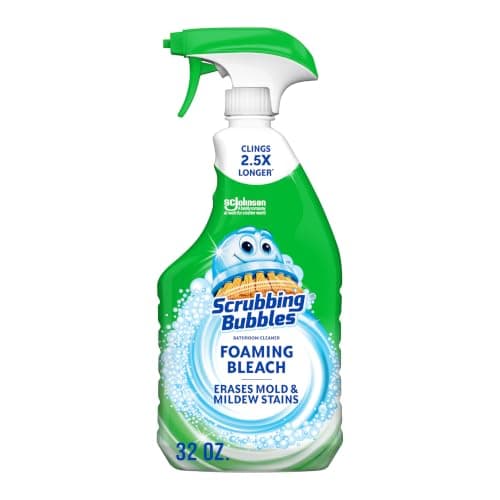
The foam that stays on shower walls long enough to lift mold stains and soap scum together; a stain remover, not a mold treatment.
Key Specs
Type
Foaming bleach bathroom cleaner, trigger spray
Size
32 oz
Targets (stated)
Mold and mildew stains, built-up soap scum
Surfaces (stated)
Tubs, showers, shower doors, fiberglass, plastic, vinyl, porcelain, glass, chrome, stainless steel, sealed granite and quartz
Kill claim
None stated; the listing describes stain removal
Dwell time
Not stated on the listing; follow the bottle label
Pros
Cons
Suited to
A tiled or fiberglass shower with gray-black speckling on the grout and soap film on the walls
Our take
Foam is the right format for a shower for a physical reason: a thin bleach spray sheets down vertical tile in seconds, while foam holds the active ingredient against the grout line long enough to lighten it. That makes this the practical first thing to try on the gray and black speckling that collects along the bottom rows of a shower wall. Read the listing carefully, though. It promises to eliminate mold and mildew stains, not to kill mold, and speckling that returns soon after a thorough clean is telling you the growth lives somewhere bleach does not reach, usually behind the caulk or deep in porous grout. Sealed granite and quartz are on its surface list, but try any natural stone in a hidden corner first.
Affiliate link — commission at no extra cost to you
Compare elsewhere
These open a search for this model. We quote prices only where we can verify them — Amazon, Sylvane and eBay.
Check price
on Amazon ↗
Listing verified 13 Oct 2026
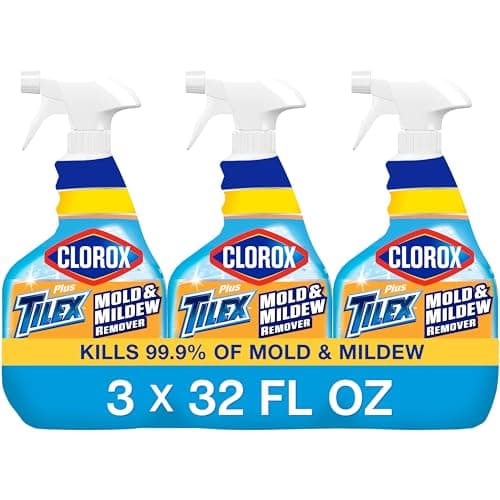
See it on Amazon ↗Quick Verdict
The dedicated mold and mildew spray, with Clorox claiming a 99.9% kill on hard, nonporous shower surfaces; rinse metal and old porcelain.
Key Specs
Type
Bleach-based mold and mildew spray
Size
Three 32 fl oz bottles
Kill claim (manufacturer)
Eliminates 99.9% of mold and mildew, per Clorox
Surfaces (stated)
Hard, nonporous surfaces: shower walls, tubs, tile, sinks, counters
Cautions (stated)
Avoid prolonged contact with metal and old porcelain
Use
Indoors and outdoors
Pros
Cons
Suited to
Glazed tile, glass and fiberglass showers where you want a stated kill claim, not only a whiter grout line
Our take
This is the specialist on the page. Where the foam and the gel above describe stain removal, Clorox claims this spray kills mold and mildew and puts a figure on it: 99.9% on the surfaces its label covers. The qualifier is the whole story. Those surfaces are hard and nonporous, which in a shower means glazed tile, glass, fiberglass and sealed stone. Most grout is cement-based and only resists bleach while its sealer holds, and silicone caulk lets growth root below its surface where no spray follows. The caution about metal and old porcelain is worth taking literally: wipe chrome fixtures and the drain with clean water afterward, and on an older enameled tub, try a small area first.
Affiliate link — commission at no extra cost to you
Compare elsewhere
Check price
on Amazon ↗
Listing verified 13 Oct 2026
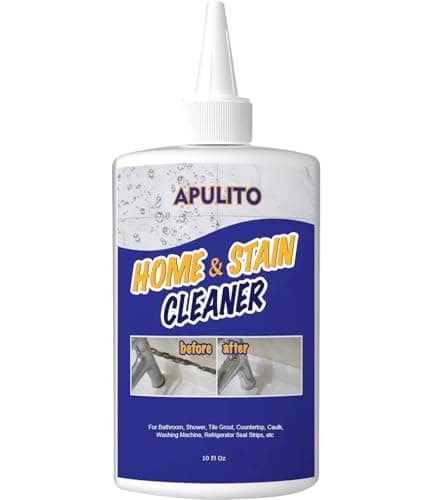
See it on Amazon ↗Best Gel for Caulk and Grout
Quick Verdict
The gel for caulk beads and grout corners: dry the surface, leave it 3–5 hours, rinse; it cannot reach mold inside the caulk.
Key Specs
Type
Gel, applied from the bottle
Size
10 fl oz
Dwell time (stated)
3–5 hours, up to 10 hours for severe areas
Surface prep (stated)
Dry the surface before applying
Surfaces (stated)
Tile, walls, bathtubs, silicone sealant around windows, sinks and baths
Active ingredient
Not stated on the listing
Pros
Cons
Suited to
Black lines along the tub caulk or in the corner grout that sprays keep running off
Our take
Caulk and grout lines are where shower mold collects, and they are exactly where sprays perform worst, because liquid runs off a narrow vertical bead before it can work. A gel solves the contact-time problem, which is why this format now dominates searches about shower grout. The routine on the listing is specific and worth following: dry the surface, apply, leave it three to five hours, longer on severe staining, then rinse. Two honest limits apply. The listing never says what the active ingredient is, which matters for safety, so keep every other cleaner away from it. And a gel only lifts what sits on the surface; a bead that stays gray after a ten-hour treatment is moldy inside and needs replacing.
Affiliate link — commission at no extra cost to you
Compare elsewhere
Check price
on Amazon ↗
Listing verified 13 Oct 2026
See it on Amazon ↗Quick Verdict
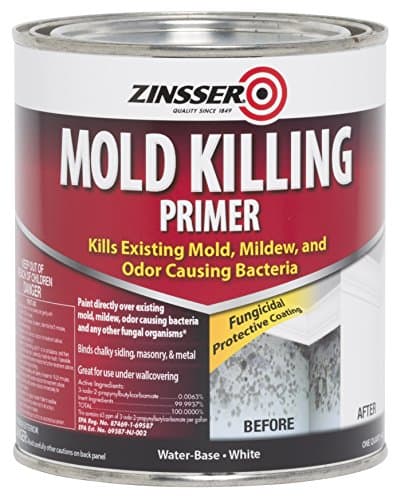
EPA-registered mold-killing primer for a cleaned, dry bathroom ceiling; it seals stains under the topcoat but does not fix steam or a leak.
Key Specs
Type
Water-based fungicidal primer
Size
1 quart
Registration (stated)
EPA Reg. No. 87469-1-69587, per the listing
Claim (manufacturer)
Kills existing mold, mildew and odor-causing bacteria
Topcoat
Works under any coating, per the listing; Zinsser pairs it with its Perma-White paint
Recommended areas (stated)
Bathrooms, basements, wall cavities, window frames
Pros
Cons
Suited to
A painted bathroom ceiling with recurring gray spotting from shower steam, after cleaning and drying it
Our take
Bathroom ceiling mold is usually a condensation problem: warm shower air meets the coolest surface in the room and leaves the paint damp for hours. A spray is awkward overhead because bleach drips toward your face, so the practical sequence is to wipe the spots off, let the drywall dry completely, prime with this, then topcoat with a mildew-resistant bathroom paint. Zinsser's listing says you can paint over mold without extensive pre-cleaning; the EPA advises cleaning and drying moldy surfaces before painting, and the two fit together if you clean first. The footnote is the line that matters most: fix all moisture issues. A brown-ringed stain or soft drywall means water is coming from above, and primer is not the answer to that.
Affiliate link — commission at no extra cost to you
Compare elsewhere
Check price
on Amazon ↗
Listing verified 13 Oct 2026
See it on Amazon ↗Best for Weekly Prevention
Quick Verdict
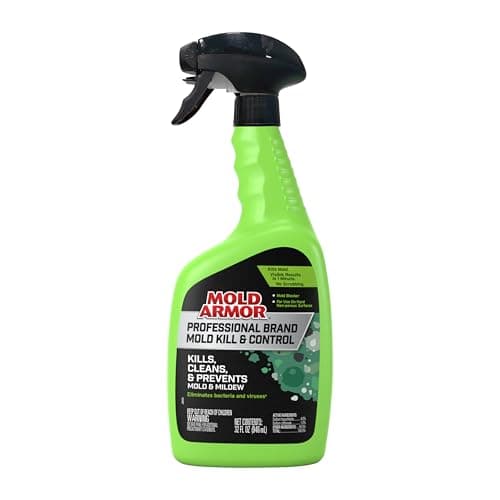
A mold spray with a stated weekly prevention routine for sealed grout and shower stalls; a backstop for slow drying, not a cure for it.
Key Specs
Type
Ready-to-use mold and mildew spray
Size
32 oz
Surfaces (stated)
Hard, non-porous: sealed grout, laminate, linoleum, stainless steel, plastic, shower stalls
Directions (stated)
Apply, wait 10 minutes, rinse or wipe within 15 minutes
Prevention routine (stated)
Wet the surface, let it air dry, repeat every 7 days
Organism named (stated)
Effective against Aspergillus niger
Pros
Cons
Suited to
A shower that is clean now and keeps re-spotting between deep cleans
Our take
Once the stains are gone, the question becomes how to keep them gone, and this is the one product on the page that answers it on its listing. Mold Armor states a prevention routine: wet the surface, let it air dry, repeat every seven days. That suits sealed grout and stall walls that never quite dry between showers. Two limits keep it honest. The routine applies to hard, non-porous surfaces, so it will not protect unsealed grout or the inside of a caulk bead. And a spray that has to go on weekly is managing a moisture problem the exhaust fan should be solving; if the shower re-spots within days, the ventilation is the thing to fix first.
Affiliate link — commission at no extra cost to you
Compare elsewhere
What to know before you buy.
Shower mold shows up as two problems that look the same. The first is staining: pigment left on glazed tile, on the face of the grout or on a caulk bead by mildew that grew there. A bleach foam or spray removes it in minutes, and if the bathroom dries properly between showers it stays gone. The second is growth rooted below the surface, in unsealed grout, behind a caulk bead that has pulled away from the tile, or in the paper face of a ceiling. Bleach lightens what it touches but does not penetrate porous material, so the color comes back. A simple test tells you which you have: clean the area thoroughly, then watch it. Spots that reappear in the same places within a few weeks are growth, and the fix is replacement, sealing or drying rather than a stronger product.
Foam suits open tile walls and glass doors, because it clings instead of sheeting off. A thin trigger spray suits horizontal surfaces such as a tub deck or a shower floor, where runoff does not matter. Gel suits narrow lines: the caulk bead where the tub meets the wall, inside corners and single grout joints, since it sits for hours exactly where you put it. Primer belongs on the ceiling, after cleaning and under the paint. Read each listing's surface list before you start. Clorox warns against prolonged contact with metal and old porcelain, Mold Armor limits itself to hard, non-porous surfaces, and natural stone can discolor under strong cleaners, so try any stone in a hidden spot first. Epoxy grout and glazed tile shrug off bleach; plain cement grout that has never been sealed does not.
Silicone caulk is the most common place shower mold refuses to leave. If the black shows through the bead, or sits underneath where an edge has lifted, no spray or gel will reach it, and the only fix is to cut the old bead out. Slice along both edges with a utility knife, pull the bead away and scrape off every trace of residue, because new silicone does not bond well to old. Clean the joint, then let it dry completely, ideally overnight with the fan running. Run a new bead of 100% silicone labeled mildew-resistant for kitchen and bath use, and keep the shower out of use for the full cure time printed on the tube. Mildew resistance in caulk slows regrowth; it does not stop it in a bathroom that stays damp.
Mold on a bathroom ceiling is nearly always condensation from shower steam settling on the coolest surface in the room. Small gray spots on paint can be wiped off with a bathroom cleaner on a sponge; spraying overhead sends bleach mist toward your eyes, so wear eye protection and open the window. Once the paint is clean and completely dry, a mold-killing primer such as Zinsser's and a mildew-resistant bathroom paint make the next round slower to start. Two signs mean the problem is not steam. A brown ring, or a stain that spreads outward from one point, suggests a leak from a bathroom, pipe or roof above. A ceiling that sags or feels soft has wet drywall behind the paint, and that board needs drying or replacing rather than cleaning.
Every product on this page treats a symptom. The cause is a bathroom that stays wet long enough for mildew to establish, and the fix is moving that moisture out. Run the exhaust fan during every shower and for at least 20 minutes after, and check that it actually pulls: a square of tissue held to the grille should stay there. A fan that dumps air into the attic instead of outdoors only moves the problem into the roof space. Squeegee the walls and glass after showering, spread the curtain out to dry and leave the door open afterward. EPA guidance is to keep indoor humidity below 60 percent, ideally 30 to 50; a bathroom with no working fan or window may need a small dehumidifier to get there.
Bleach-based foams and sprays release chlorine fumes in a small, enclosed room, so open the window or door, run the fan, and wear rubber gloves and eye protection. Never mix bleach with ammonia, which forms toxic chloramine gas, or with acids such as vinegar and some toilet bowl and lime-scale cleaners, which release chlorine gas. The rule extends to products whose listings do not name an active ingredient: rinse the surface with water between any two cleaners. The EPA's line for doing mold cleanup yourself is an area under about 10 square feet. A larger patch, mold that keeps returning through new paint, or mold next to a leak points to a moisture source inside the wall or ceiling, which is a job for a remediation contractor rather than a stronger spray.
For tile, glass and fiberglass, a bleach-based foam such as Scrubbing Bubbles Foaming Bleach, because foam stays on vertical walls. For a stated kill claim on hard surfaces, Clorox Plus Tilex.
For caulk lines and grout corners, a gel like APULITO that can sit for hours. None of them clears mold growing inside caulk or unsealed grout: if the black returns soon after a thorough clean, the caulk needs replacing or the grout needs sealing.
On a painted ceiling, use a bathroom cleaner wiped on with a sponge rather than sprayed overhead, then a mold-killing primer and a mildew-resistant paint once the surface is dry. Zinsser Mold Killing Primer is EPA registered, according to its listing.
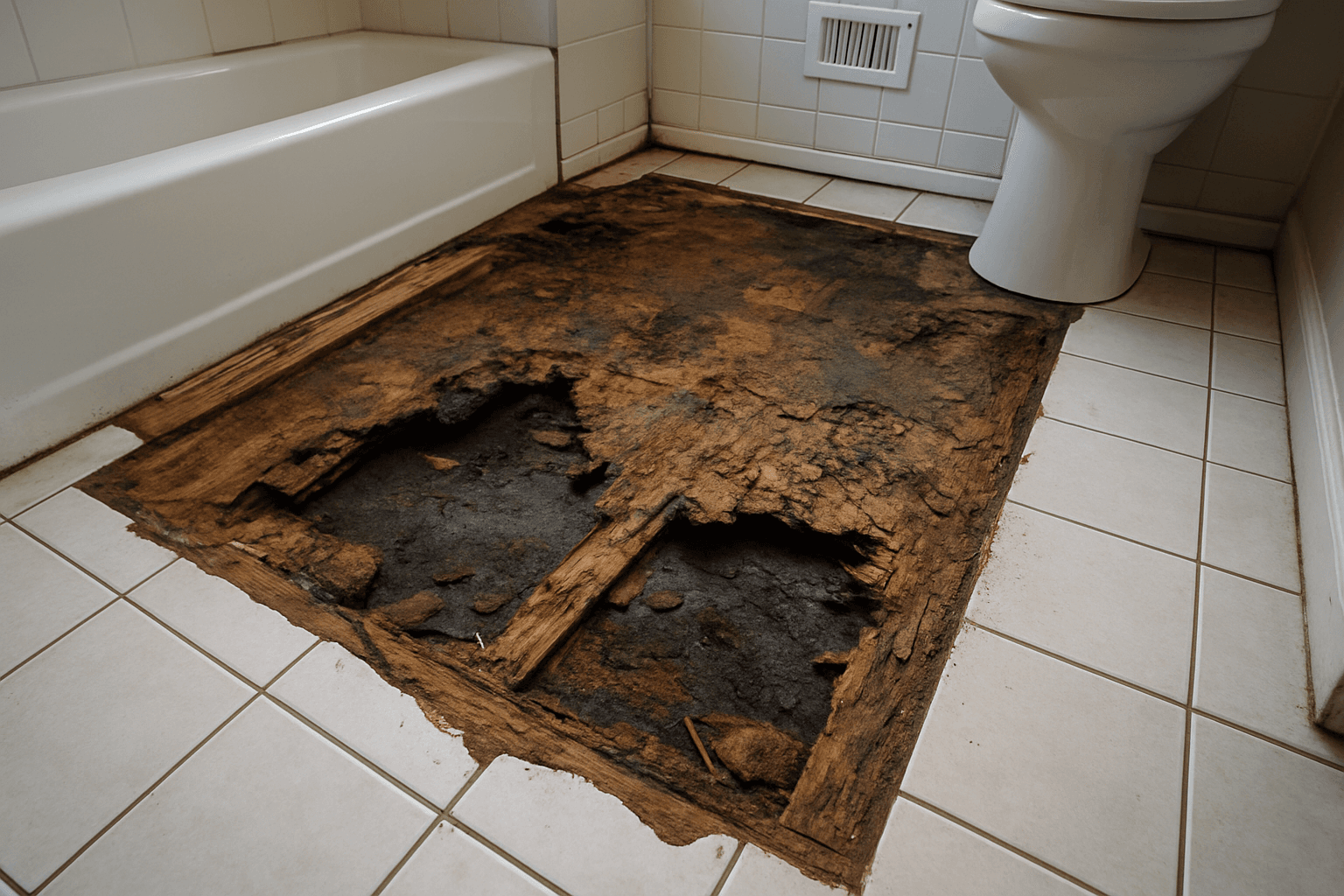
If the spot has a brown edge, keeps spreading or the drywall feels soft, water is coming from above, and no cleaning will hold until the leak is found and the board is dried or replaced.
Dry the grout, apply a gel or foam and give it time to work: the APULITO listing calls for three to five hours, and up to ten on heavy staining.
Rinse, and once the grout is clean and fully dry, apply a penetrating grout sealer so water stops soaking in. If the grout stays dark after two treatments, or is cracked and crumbling, the mold is inside it and the joint needs regrouting.
Look for a 100% silicone caulk labeled mildew-resistant and rated for kitchen and bath, rather than an acrylic latex caulk, which is less suited to joints that are wet every day.
The prep matters more than the brand: remove every trace of the old bead, clean and dry the joint, and let the new bead cure for the full time on the tube before anyone showers. Even the best caulk will spot again in a bathroom that never dries.
NoBleach mixed with vinegar or any other acid releases chlorine gas, and bleach mixed with ammonia forms chloramine gas; both are dangerous in a small bathroom.
Use one product at a time, rinse with plain water before switching, and keep the fan running with the door open. Treat any gel or spray that does not list its active ingredient as if it contains bleach.
Either the shower stays wet long enough for it to regrow, or it is living where cleaners do not reach. Keep the fan on through every shower and well after, squeegee the walls, and confirm the fan vents outdoors.
If spots return in the same places, look closely at the caulk and grout, since a lifted bead or unsealed grout holds water. Loose tiles, cracked grout or a musty smell from the wall can mean a leak behind the shower.
Call (888) 840-6512. The line is answered 24 hours a day, seven days a week, and connects you with an IICRC-certified water damage restoration company that serves your area. A recorded menu picks up first: choose water damage or mold, key in your 5-digit ZIP code, and hold through the short silence while the call is passed to the company.
Describe what you can see — where the water is coming from, how long it has been there, and whether it smells — the more specific you are, the faster the right company is on the line. If the source is a pipe or an appliance, shut the main water valve first. Have four things ready and the call goes quickly: the address, when the water started, what is wet now, and whether you have filed an insurance claim.
Still not sure which of these is your situation? (888) 840-6512 · toll-free · answered 24/7
Methodology: How we source and verify data · Report an error
Free 2-day shipping
Amazon Prime members pay no shipping on restoration equipment
Dehumidifiers, air movers, and moisture meters qualify for free Prime delivery — bulk items that otherwise cost $15–$40 to ship.
Affiliate link — HearthDry earns a bounty if you sign up; costs you nothing extra.

The three most-searched mold sprays do three DIFFERENT jobs: one erases stains, one disinfects, one kills and prevents. Using the wrong one is why 'the mold came back.' Here's which to use where — and the honest line where sprays stop working.
Read the comparisonAfter water damage, the right treatment helps keep mold from returning on framing and concrete once the cleanup is done. These are three products for water damage cleanup in 2026, compared on what each listing claims, bleach content and where each belongs in the cleanup.
Read the comparisonA home mold test kit answers one question — is there mold here — and in almost every house the answer is yes. The kits differ in how well they answer the questions that matter, namely what kind, how much and whether it is growing, and this guide shows which kit answers which and when to skip the kit and fix the moisture instead.
Read the comparisonA moisture meter tells you what your eyes can't see — wet drywall, soggy subfloor, and moisture in framing. These are the four best moisture meters for homeowners dealing with water damage.
Read the comparisonAn exhaust fan ducted outdoors is the real fix for a steamy bathroom, and a plug-in dehumidifier is what you add when there is no fan or the one you have barely pulls. The units small enough for a bathroom remove ounces of water a day, so their job is drying the walls, ceiling and grout sooner after the steam clears, not clearing the steam.
Read the comparisonA mold-killing primer kills the mold it coats and keeps new growth off its own film, but it cannot dry a wet wall or reach growth inside one. These picks are judged on that narrow job: sealing a bathroom, basement wall or window frame after the leak is fixed and the surface is clean and dry.
Read the comparisonIn a bathroom with mold, the exhaust fan is the thing to fix first, because it clears the steam before it condenses on the ceiling, the grout and the window. These picks are compared on the airflow and noise each listing states, humidity sensing and the duct each fan needs, alongside the sizing rule, the 20-minute habit and the attic-venting mistake that undoes any fan.
Read the comparisonMold-resistant shower caulk keeps growth off the cured bead, but it cannot kill mold left in the joint behind it, so old caulk with mold inside has to be cut out first. These picks are compared on what each listing states about silicone content, mold resistance and the wait before water, alongside how much caulk a tub surround takes and the fan habit that keeps a new bead clean.
Read the comparisonGrout sealer keeps water and stains from soaking into cement grout, but only when it goes onto clean, dry grout with no mold in it, and it cannot fix cracked grout or a leaking shower pan. These five sealers are compared on what each listing states about type, coverage and resealing, alongside the water drop test and the grout arithmetic that tell you when to seal and how much to buy.
Read the comparisonA mildewcide in the paint film keeps growth off the paint, and Zinsser's own listing says the protection stops there, so the wall under it still has to be clean and dry. These picks are compared on sheen, can size and what each listing states, alongside the paint arithmetic for a bathroom and the EPA advice on when not to paint at all.
Read the comparison