Quick answer
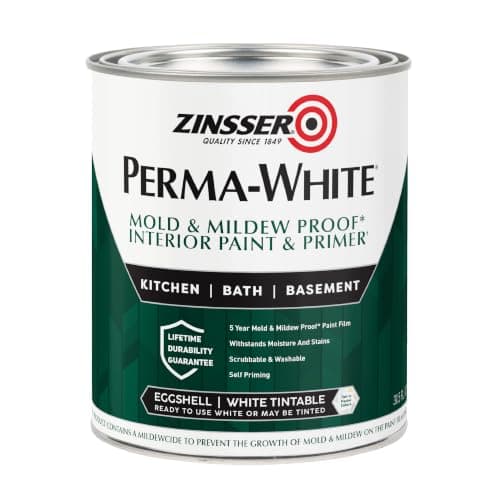
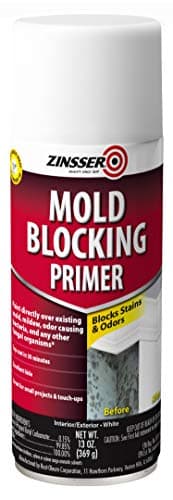
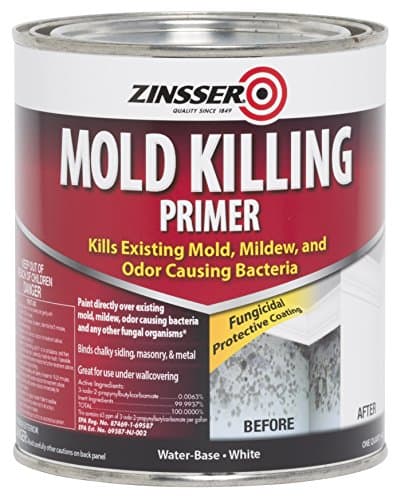
If the leak or condensation is fixed and the moldy surface has been cleaned and dried, buy the Zinsser Mold Killing Primer: water-based, EPA-registered under Reg. No. 87469-1-69587 per its listing, and rated 4.5 stars across 4,504 Amazon ratings. It kills mold on the surface it coats and carries an antimicrobial that keeps new growth off its own film. It does not dry a wet wall or reach mold inside a cavity, and the EPA says not to paint moldy surfaces at all. Topcoat it with a mold-resistant paint such as Zinsser Perma-White.
Buyer's Guide
What to know before you buy.
What a Mold-Killing Primer Kills, and Where It Stops
The word that matters on the Zinsser labels is film. Zinsser's mold primer kills mold, mildew and odor-causing bacteria that it contacts, and its EPA-registered antimicrobial keeps fungi from growing on the dried coating. Mold-resistant paint and additives only do the second half. None of them reaches growth behind the surface: mold in a wall cavity, on the back of the drywall or inside insulation keeps feeding on whatever moisture is there, and a fresh coat simply hides it. The EPA's homeowner guidance is blunt on this point: do not paint or caulk moldy surfaces, because paint applied over mold is likely to peel. IICRC S520, the professional mold remediation standard, likewise centers on physically removing contamination rather than sealing it in place. Treat these products as the last coat on a clean, dry surface, and they do their job well.
The Order: Fix, Clean, Dry, Prime, Topcoat
Start with the water. A bathroom ceiling that grows spots every winter is usually condensation; a stain with a brown edge is usually a leak from above. Fix that first, or nothing else lasts. Next, clean: the EPA's method for hard surfaces is to scrub mold off with detergent and water and dry completely. If you use bleach, ventilate, wear gloves and goggles, and never mix it with ammonia or any cleaner that contains it, because the EPA warns the combination produces toxic fumes. Then let the surface dry fully; for drywall, a moisture meter reading close to that of a dry wall elsewhere in the house is a better test than touch. Only then prime, with the brush-on quart for areas and the spray for spots, and finish with a mold-resistant topcoat in rooms that stay humid.
Primer, Mold-Resistant Paint or an Additive
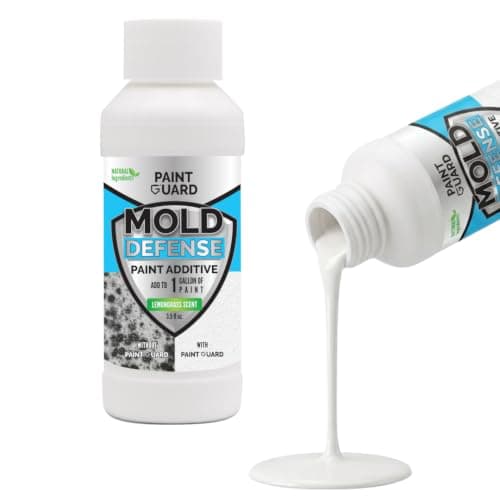
These three get lumped together in search results, but they do different things. A mold-killing primer, such as the Zinsser quart, is the only type here that claims to kill existing mold on the surface, so it belongs on any spot that has had growth, even after cleaning. Mold-resistant paint, such as Perma-White, carries a mildewcide that protects its own film, which makes it the right topcoat for bathrooms, laundry rooms and basements that will stay damp at times. An additive like Paint-Guard turns ordinary paint into a mildew-resistant one, useful when you want a specific color, but it makes no kill claim. A stain blocker like KILZ Original is a fourth tool for marks that bleed through. For most bathrooms the strongest combination is the mold primer on the affected area, then a mold-resistant topcoat over the whole room.
How Much to Buy
Measure before ordering. A ceiling is length times width: a 5-by-8-foot bathroom ceiling is 40 sq ft. Walls are the room's perimeter times its height, minus doors and windows: the same bathroom with 8-foot walls has a 26-foot perimeter, so about 208 sq ft, or roughly 190 sq ft after a door. Zinsser's 3-pack listing puts the mold primer at up to 160 sq ft per quart, so one quart primes that ceiling with plenty left, and two quarts cover ceiling and walls in one coat. The spray primer covers only 8 to 10 sq ft per can, which is why it suits spots rather than surfaces. Perma-White and Paint-Guard do not state coverage per quart on their listings, so check the figure printed on the can, and buy a little extra for a second coat on any wall that showed staining.
Who Should Not Buy a Mold Primer
Skip the primer aisle if the drywall is soft, swollen or crumbling, if the growth covers more than about 10 square feet, or if it followed sewage or other contaminated water. The EPA treats patches under about 10 square feet as a homeowner job and points larger ones toward fuller remediation guidance and experienced contractors, and absorbent materials such as ceiling tiles and carpet often have to be thrown away rather than cleaned. A musty smell with no visible growth is another case where paint is the wrong answer: the source is hidden, and finding it comes before any coating. Renters should report mold to the landlord before painting over anything, since a painted wall hides the evidence of the problem. In each of these cases, what you need is a repair, a removal or a professional assessment, not a better primer.
Bathrooms: The Fan Matters More Than the Paint
Most bathroom mold on painted ceilings and walls comes from condensation, not leaks: warm shower air hits the coolest surface in the room and leaves it wet for an hour or more. Mold-resistant coatings slow what grows on that film, but the lasting fix is drying the room. The EPA advises running the bathroom fan or opening a window when showering and keeping indoor humidity below 60%, ideally between 30% and 50%. Run the fan for the whole shower and a while after, and check that it actually vents outdoors rather than into the attic. In a bathroom with no window and a weak fan, a small dehumidifier keeps the walls drier between uses. Paint chosen with all of that in place lasts for years; paint asked to replace it rarely lasts a season.
Free 2-day shipping
Amazon Prime members pay no shipping on restoration equipment
Dehumidifiers, air movers, and moisture meters qualify for free Prime delivery — bulk items that otherwise cost $15–$40 to ship.
Affiliate link — HearthDry earns a bounty if you sign up; costs you nothing extra.