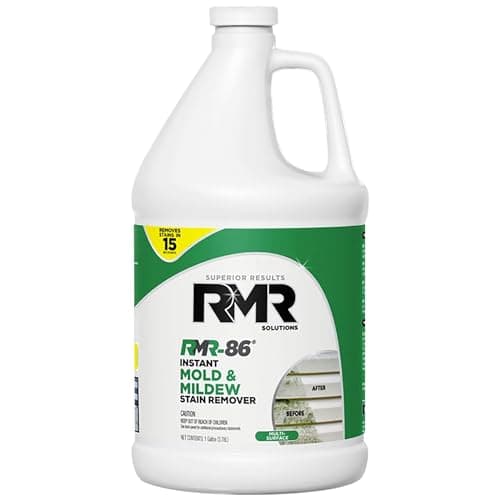
Best for: Dark stains left on drywall, plaster or brick after the visible mold has been scrubbed off and the wall has dried
- Type:
- Ready-to-use mold and mildew stain remover
- Size:
- 1 gallon
Listing verified 13 Oct 2026

Painted Walls, Drywall and Masonry, and When the Wall Has to Come Out
5 picks compared · prices, ratings and stock checked October 12, 2026
Our Top Pick
For mold stains left on a wall after scrubbing, the RMR-86 Instant Mold and Mildew Stain Remover in the 1 gallon jug, used with the ventilation and protective gear its listing calls for. For colored paint you want to keep, the bleach-free CLR Mold and Mildew Stain Remover names painted walls among its surfaces.
4.4 on Amazon · 66,851 ratings
Quick answer
If the mold is on a painted wall or bare masonry and covers less than about 10 sq ft, scrub it off with detergent and water first, then lift the leftover stain with the RMR-86 Instant Mold and Mildew Stain Remover, rated 4.4 stars across 66,851 Amazon ratings. On colored paint, test a hidden patch first, or use the bleach-free CLR Mold and Mildew Stain Remover, whose listing names painted walls. Bare drywall that stays stained or feels soft is a different job, since EPA notes porous materials may have to be thrown away. Fix the moisture source too, or the mold comes back.
Every pick below is currently stocked — ratings and stock read from Amazon on 12 October 2026.
Best for: Dark stains left on drywall, plaster or brick after the visible mold has been scrubbed off and the wall has dried
Listing verified 13 Oct 2026
Best for: Light mold stains on painted drywall or plaster where you want to keep the paint color
Listing verified 13 Oct 2026
Best for: One small patch of staining on drywall or a brick or block basement wall
Listing verified 13 Oct 2026
Best for: Light growth on the paper face of firm, dry drywall, or on wood trim, before priming
Listing verified 13 Oct 2026
Best for: Mold on tile, laminate or plastic wall panels in a bathroom, laundry room or basement
Listing verified 13 Oct 2026
How this page was made: we compare the current Amazon listings, the makers' published specs and what verified buyers report, then rank by fit for the job. Ratings, review counts and stock are read from Amazon and dated. We earn a commission on purchases through our links; it does not change the order. Reviewed by Marcus Reed, IICRC-certified Water Restoration Technician.
Full Reviews
Each pick in detail: what the listing states, what buyers report, and where it falls short.
Check price
on Amazon ↗
Listing verified 13 Oct 2026
See it on Amazon ↗Best Overall for Mold Stains on Walls
Quick Verdict
RMR-86 Instant Mold and Mildew Stain Remover: the stain step after scrubbing, for drywall, plaster and brick, with ventilation and gear on every use.
Key Specs
Type
Ready-to-use mold and mildew stain remover
Size
1 gallon
Stated job
Removes mold and mildew stains and odors
Surfaces named
Drywall, brick walls, concrete floors, wood, vinyl siding, decks, kitchen surfaces
Use (stated)
Spray on; no scrubbing needed
Safety (stated)
Use proper ventilation and PPE for each application
Pros
Cons
Suited to
Dark stains left on drywall, plaster or brick after the visible mold has been scrubbed off and the wall has dried
Our take
Read this as a stain remover, because that is how RMR describes it. EPA's cleanup page warns that mold can cause staining and cosmetic damage, and that cleaning may not bring back the original look; that leftover shadow is what this jug targets. Use it in order. Scrub the growth off with detergent and water, let the wall dry, then spray what is still dark. The listing names drywall and brick walls but not its active ingredient, so the label is where to check before it goes near a colored finish. Open a window and wear gloves and eye protection, as the listing asks. If the stain creeps back within a few weeks, the moisture source is still active and no spray will outlast it.
Affiliate link — commission at no extra cost to you
Compare elsewhere
These open a search for this model. We quote prices only where we can verify them — Amazon, Sylvane and eBay.
Check price
on Amazon ↗
Listing verified 13 Oct 2026
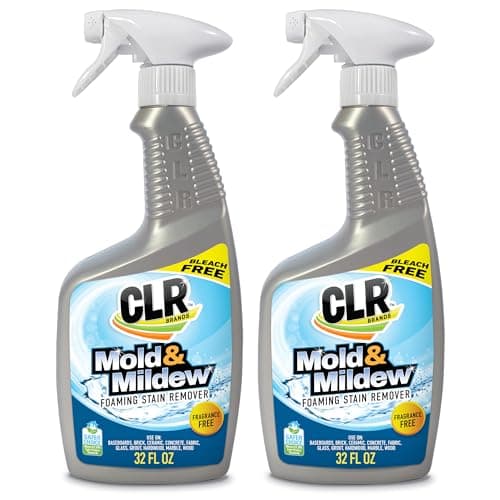
See it on Amazon ↗Best Bleach-Free Pick for Painted Walls
Quick Verdict
CLR Mold and Mildew Stain Remover: bleach-free, ammonia-free and named for painted walls, for stains where the paint color matters.
Key Specs
Type
Bleach-free mold and mildew stain remover
Size
Two 32 oz spray bottles
Surfaces named
Painted walls, ceramic tile, hardwood floors, fabrics, glass, laminate and marble countertops
Contains (stated)
No phosphates, ammonia or bleach
Program (stated)
Part of EPA's Safer Choice program, per the listing
Speed (stated)
Starts breaking down stains in minutes
Pros
Cons
Suited to
Light mold stains on painted drywall or plaster where you want to keep the paint color
Our take
Painted walls are why this one made the list. Most stain removers name drywall, brick or decks; CLR names painted walls outright, states no bleach, ammonia or phosphates, and carries EPA's Safer Choice label, per the listing. Leaving bleach out matters twice on a wall. Chlorine can lighten colored paint, and EPA warns never to mix chlorine bleach with cleaners that contain ammonia, a mistake that is easy to make when three bottles share one cabinet. What it does not claim is to kill mold, so the order holds: scrub with detergent and water, dry, then treat what is left of the stain. Spot-test near the floor or behind a door first, because sheen and color vary from wall to wall.
Affiliate link — commission at no extra cost to you
Compare elsewhere
Check price
on Amazon ↗
Listing verified 13 Oct 2026
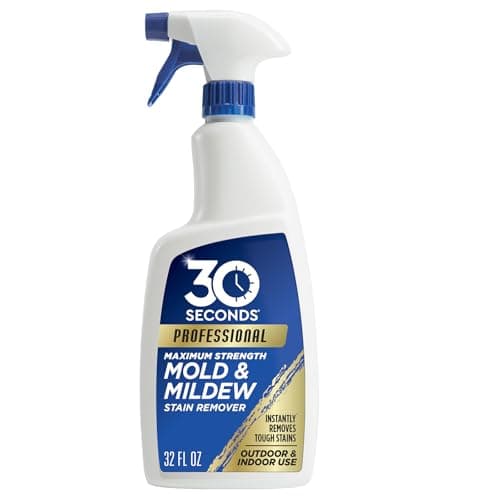
See it on Amazon ↗Best Small Bottle for One Patch
Quick Verdict
30 SECONDS Pro Mold and Mildew Stain Remover: a 32 oz scrub-free bottle sized for one patch on drywall or brick.
Key Specs
Type
Scrub-free mold and mildew stain remover
Size
32 oz
Surfaces named
Drywall, brick walls, concrete floors, wood, siding, fences, decks, kitchen surfaces, bathroom tile and grout
Use (stated)
Apply, watch and rinse where needed
Strength (stated)
2X stronger than the standard 30 SECONDS Outdoor Cleaner
Active ingredient
Not named in the listing's bullets
Pros
Cons
Suited to
One small patch of staining on drywall or a brick or block basement wall
Our take
Size the bottle to the job. EPA's guidance treats a moldy area under about 10 square feet as something most people can handle themselves, and a 32 oz bottle is a sensible size for that. If a wall looks like it needs a gallon, the patch has probably outgrown a spray bottle and deserves a closer look at what is behind it. The listing's directions are short: apply, watch the stain lift, and rinse where needed. On a painted wall, rinse with a damp sponge and dry the area with a fan rather than leaving solution to sit. The bullets name drywall and brick walls but not the active ingredient, so test a small spot low on the wall first.
Affiliate link — commission at no extra cost to you
Compare elsewhere
Check price
on Amazon ↗
Listing verified 13 Oct 2026
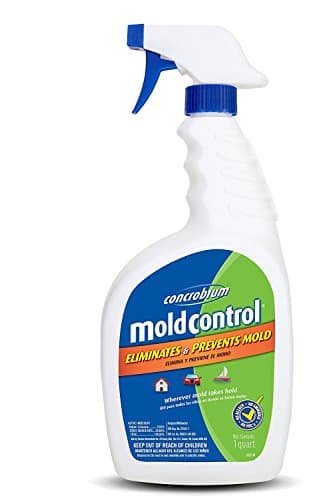
See it on Amazon ↗Best Bleach-Free Treatment for Drywall and Wood Trim
Quick Verdict
Concrobium Mold Control: a bleach-free, VOC-free treatment with stated 100 sq ft coverage, for firm drywall and wood trim.
Key Specs
Type
Bleach-free mold control spray
Size
Two 32 oz trigger sprays
Coverage (stated)
Up to 100 sq ft per bottle
Contains (stated)
No bleach, ammonia or volatile organic compounds
Surfaces named
Drywall, wood, composite wood, concrete, brick, stone, tile, grout, fabric and more
Claims (stated)
Eliminates existing mold, prevents regrowth, removes musty odors
Pros
Cons
Suited to
Light growth on the paper face of firm, dry drywall, or on wood trim, before priming
Our take
Concrobium works differently from the stain removers above. The listing says it eliminates existing mold and leaves an invisible shield that prevents regrowth, with no bleach, ammonia or VOCs. That suits two wall jobs: a light bloom on drywall that is still firm and dry, and a baseboard or window casing where bleach would mark the wood. Hold it to its limits. A spray treats the face of the board; mold that has grown into the gypsum or onto the back of the panel means cutting that section out. EPA also says killing mold is not enough, because dead mold may still cause allergic reactions and has to be removed. Scrub off the visible growth before relying on any spray.
Affiliate link — commission at no extra cost to you
Compare elsewhere
Check price
on Amazon ↗
Listing verified 13 Oct 2026
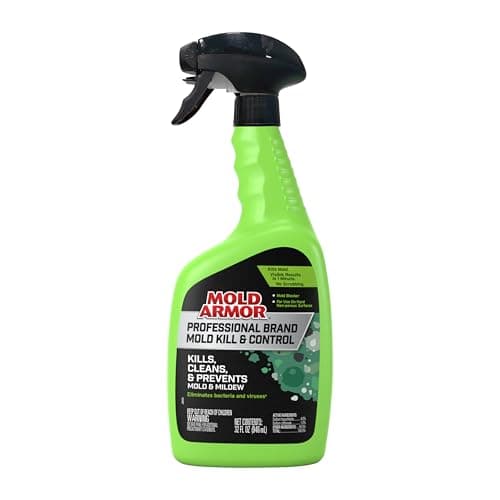
See it on Amazon ↗Best for Tile, Laminate and Plastic Wall Panels
Quick Verdict
MOLD ARMOR Professional Brand Mold Kill & Control: a timed kill-and-rinse spray for tile, laminate and plastic wall panels, not drywall.
Key Specs
Type
Mold and mildew killer and cleaner for hard, non-porous surfaces
Size
32 oz
Surfaces named
Laminate, linoleum, sealed grout, stainless steel, plastic
Directions (stated)
Test an inconspicuous area; apply, wait 10 minutes, rinse or wipe within 15 minutes
Prevention (stated)
Wet the surface, let it air dry, repeat every 7 days
Organism named
Effective against Aspergillus niger, per the listing
Pros
Cons
Suited to
Mold on tile, laminate or plastic wall panels in a bathroom, laundry room or basement
Our take
Walls are not all drywall. Bathrooms carry tile and plastic tub surrounds, and laundry rooms and finished basements often carry laminate or plastic panels; those hard, non-porous faces are what this spray is labeled for. Its directions are specific: test an inconspicuous area, apply, wait 10 minutes, then rinse or wipe within 15 minutes. That timed rinse is what keeps a mold killer from lingering on a finish. The listing names Aspergillus niger as an organism it works against. Do not stretch it to bare drywall or flat paint, which its list leaves out. For a damp room where spots keep coming back, EPA's advice is more ventilation and more frequent cleaning, which does more than any spray schedule.
Affiliate link — commission at no extra cost to you
Compare elsewhere
What to know before you buy.
Name the surface first, because it sets what a remover can reach. Paint in good condition is a sealed skin: mold on it usually sits on top, and it cleans off. Bare drywall is different. Its paper face and gypsum core are absorbent, and EPA notes that mold can grow on or fill in the empty spaces and crevices of porous materials, which can make it difficult or impossible to remove completely. EPA's examples are ceiling tiles and carpet, which may have to be thrown away, and drywall is absorbent in the same way. Bare concrete, block and brick are porous too, but mold there mostly feeds on dust and grime on the surface, so a scrub and a stain remover usually do the job. Press the wall: drywall that is soft, crumbling or bulging is past cleaning.
EPA's guidance for homeowners starts with the water, not the mold: fix plumbing leaks and other water problems as soon as possible. Next comes the scrub, with detergent and water on hard surfaces, followed by drying completely. A remover belongs after that. EPA points out that mold may cause staining and cosmetic damage, and that it may not be possible to restore an item's original appearance; a stain remover works on exactly that leftover shadow. Put on gloves, goggles and an N-95 respirator before the first wipe, since scrubbing stirs spores into the air you breathe. Work from the clean edge toward the center, change rags often, and bag them before carrying them through the house. Then point a fan at the wall. EPA's advice is to dry water-damaged areas within 24 to 48 hours to prevent mold growth.
Chlorine bleach lightens stains, and it can lighten paint the same way, so the choice matters most on colored walls. Of the picks here, CLR and Concrobium state they contain no bleach. RMR-86, 30 SECONDS and Mold Armor do not name an active ingredient in their bullets, so read the label on any of them before it touches a painted finish. Whatever you choose, try it first low on the wall, behind a door or inside a closet, and wait for it to dry before judging. EPA's rules for any disinfectant or biocide are short: ventilate the area and exhaust the air to the outdoors, and never mix chlorine bleach with cleaners or detergents that contain ammonia, because toxic fumes could be produced. Use one product at a time and rinse it off before reaching for another.
EPA draws the line at about 10 square feet: if the moldy area is smaller than that, roughly a 3 ft by 3 ft patch, in most cases you can handle the job yourself. Measure it rather than guessing. A stain 2 ft wide and 4 ft tall is already 8 sq ft, and growth often runs further behind a dresser or inside a closet than the part you first noticed. If there has been a lot of water damage, or the growth covers more than 10 sq ft, EPA points to its guide Mold Remediation in Schools and Commercial Buildings and says it applies to other building types too. If you hire help, EPA's advice is to make sure the contractor has experience cleaning up mold, check references, and ask them to follow EPA, ACGIH or IICRC guidelines. Where sewage or other contaminated water caused the damage, EPA says to call in a professional.
A remover is the wrong purchase when the mold is a symptom of something you have not found. Spots that return within weeks on an outside wall, a stain spreading down from the ceiling line, paint that bubbles, or a musty smell with no visible growth all point to water inside the wall or condensation on its cold side. EPA lists the back side of drywall, wallpaper and paneling among the places hidden mold grows, and it warns that peeling wallpaper off a moldy wall can release a massive amount of spores if mold is growing on its underside. What you need then is the leak found and fixed, a moisture reading, and possibly a section of drywall cut out. Renters should report the growth to the landlord before cleaning anything. People with health concerns should talk to a health professional before starting, as EPA advises.
A clean wall stays clean only if it stays dry. EPA's target is indoor humidity below 60 percent, ideally between 30 and 50 percent, and a small humidity meter tells you which side of that line a room sits on. Outside walls are the usual trouble spot in winter. EPA lists the surface of walls behind furniture among the places where condensation forms and hidden mold grows, so pull dressers and beds a few inches off those walls. In bathrooms, run the fan or open a window during every shower; in a basement, a dehumidifier does the same job. Before repainting, give any remaining shadow a coat of mold-resistant, stain-blocking primer so it cannot bleed through, and pick a topcoat with a mildew-resistant claim for rooms that run damp.
For leftover mold stains on a painted or masonry wall, the RMR-86 Instant Mold and Mildew Stain Remover, used after the growth has been scrubbed off with detergent and water. The order matters more than the bottle: EPA's method for hard surfaces is scrub, then dry completely, and a stain remover handles the shadow left behind.
If the paint color matters, CLR Mold and Mildew Stain Remover is bleach-free and lists painted walls among its surfaces. Drywall that is soft or stained through needs replacing, not spraying.
Often yes on painted drywall, and often no on bare or water-soaked board. Paint holds the growth on its surface, where it scrubs off. Unpainted drywall has an absorbent paper face and gypsum core, and EPA warns that mold in porous materials may be difficult or impossible to remove completely.
If the board is soft or crumbling, or the stain keeps returning through primer, cut that section out back to clean, dry drywall and replace it.
It kills mold, but EPA does not recommend it as a routine part of mold cleanup. EPA gives chlorine bleach as its example of a biocide that kills organisms such as mold, then adds that dead mold may still cause allergic reactions in some people, so the growth has to come off the wall anyway.
On a colored wall it can also leave a pale patch. If you use it, open windows, and keep every ammonia-based cleaner out of the room.
Fix the water that feeds it, because no remover keeps a damp wall clean. EPA's warning is direct: if you clean up the mold but do not fix the water problem, the mold will most likely come back.
Look for the cause behind the patch, such as a plumbing leak inside the wall, rain getting in outside, or condensation on a cold exterior wall. Then hold indoor humidity under 60 percent with a dehumidifier or exhaust fan, and clean, dry, prime and paint.
For most people, yes, if the patch is under about 10 sq ft and you wear the gear EPA lists: gloves, goggles and an N-95 respirator. EPA suggests long gloves reaching the middle of the forearm, in natural rubber, neoprene, nitrile, polyurethane or PVC when a disinfectant or strong cleaning solution is involved, and goggles without ventilation holes.
Keep children and pets out of the room and bag used rags. Anyone with asthma, allergies or other health concerns should check with a health professional first.
NoEPA's instruction is not to paint or caulk moldy surfaces, and it notes that paint over mold is likely to peel.
Clean the growth off, let the wall dry for at least a day with a fan on it, and seal any stain that remains with a stain-blocking primer before the topcoat. Mold-resistant paint protects its own film; it does nothing for growth sealed underneath, and an unprimed stain can bleed through the new coat.
Call (888) 840-6512. The line is answered 24 hours a day, seven days a week, and connects you with an IICRC-certified water damage restoration company that serves your area. A recorded menu picks up first: choose water damage or mold, key in your 5-digit ZIP code, and hold through the short silence while the call is passed to the company.
Describe what you can see — where the water is coming from, how long it has been there, and whether it smells — the more specific you are, the faster the right company is on the line. If the source is a pipe or an appliance, shut the main water valve first. Have four things ready and the call goes quickly: the address, when the water started, what is wet now, and whether you have filed an insurance claim.
Still not sure which of these is your situation? (888) 840-6512 · toll-free · answered 24/7
Methodology: How we source and verify data · Report an error
Free 2-day shipping
Amazon Prime members pay no shipping on restoration equipment
Dehumidifiers, air movers, and moisture meters qualify for free Prime delivery — bulk items that otherwise cost $15–$40 to ship.
Affiliate link — HearthDry earns a bounty if you sign up; costs you nothing extra.

A mold-killing primer kills the mold it coats and keeps new growth off its own film, but it cannot dry a wet wall or reach growth inside one. These picks are judged on that narrow job: sealing a bathroom, basement wall or window frame after the leak is fixed and the surface is clean and dry.
Read the comparisonThe three most-searched mold sprays do three DIFFERENT jobs: one erases stains, one disinfects, one kills and prevents. Using the wrong one is why 'the mold came back.' Here's which to use where — and the honest line where sprays stop working.
Read the comparisonNo single product removes mold from a house; each one does one job, and the order you use them in matters more than the brand. This roundup picks the strongest product for each job, from killing growth on tile to sealing a cleaned ceiling, and says plainly what each one cannot do.
Read the comparisonMold on wood needs two different products: one that treats the growth and one that lifts the dark stain it leaves, and on finished wood the first one should not be bleach. These picks are matched to sealed furniture and floors, raw framing and plywood, and outdoor decks, with the screwdriver test that tells you when the wood is rotten and no spray will help.
Read the comparisonMildew on clothes comes out mostly in the wash and the dry, so the product you buy is for the mark it leaves, and it has to suit the fabric: color-safe for clothes, a bleach cleaner only for outdoor fabrics labeled for it. These picks cover washable clothes, patio cushions, the washer gasket behind musty towels and the damp closet that started it.
Read the comparisonRMR sells two different products under similar names: RMR-86 lifts the dark stains mold leaves behind, and RMR-141 is the EPA-registered disinfectant and fungicide. This review compares five RMR listings on their published claims, label directions and buyer ratings, not on our own use, and sets out the cleanup order EPA describes so each bottle goes on at the right point.
Read the comparisonA carpet mold remover can treat mildew on the face of a carpet that got damp, but carpet and pad that stayed wet after a leak usually have to come out, as EPA guidance warns. These picks are compared on the one job each listing says it does, killing growth, lifting the stain, clearing the odor or preventing regrowth, alongside the colorfast test, the drying order and the signs a carpet is past saving.
Read the comparison