Best Mildew and Mold Remover for Clothes and Fabric in 2026 — What Goes in the Wash, and What Belongs on the Patio

Best Mildew and Mold Remover for Clothes and Fabric in 2026

What Goes in the Wash, and What Belongs on the Patio

4 picks compared · prices, ratings and stock checked October 12, 2026

Our Top Pick

For mildew on washable clothes, a hot wash first, then the OxiClean Max Force Laundry Stain Treater Spray for any mark that stays: color-safe, no chlorine bleach, and made for all machine-washable fabrics. For outdoor cushions and Sunbrella-type canvas, the STAR BRITE Mold Stain & Mildew Stain Remover 32 oz.

4.7 on Amazon · 15,853 ratings

Quick answer

If mildew is on washable clothes, wash it out hot and dry it fully, then pretreat any mark that stays with a color-safe spray such as the OxiClean Max Force Laundry Stain Treater Spray, rated 4.7 stars across 15,853 Amazon ratings. Brush loose growth off outdoors first and use the hottest water the care label allows. The OxiClean listing covers all machine-washable fabrics and rules out chlorine bleach, though it does not name mildew. Use chlorine bleach only when the label's triangle allows it, and keep bleach-based outdoor cleaners for cushions and awnings.

Our Picks at a Glance

Every pick below is currently stocked — ratings and stock read from Amazon on 12 October 2026.

How this page was made: we compare the current Amazon listings, the makers' published specs and what verified buyers report, then rank by fit for the job. Ratings, review counts and stock are read from Amazon and dated. We earn a commission on purchases through our links; it does not change the order. Reviewed by Marcus Reed, IICRC-certified Water Restoration Technician.

Full Reviews

Each pick in detail: what the listing states, what buyers report, and where it falls short.

#1
Best for Washable Clothes

Check price

on Amazon ↗

Listing verified 13 Oct 2026

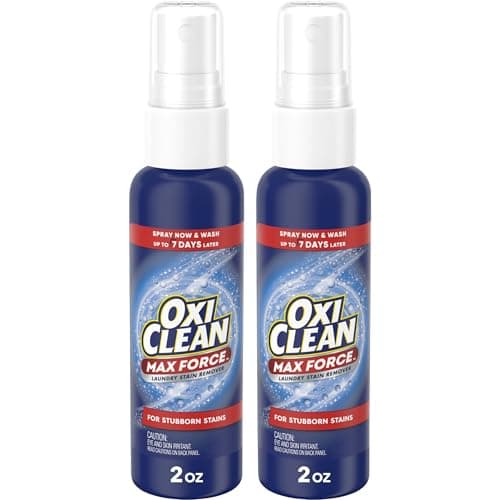
OxiClean Max Force Laundry Stain Treater Spray, 2 fl oz 2-Pack (Color-Safe, No Chlorine Bleach)See it on Amazon ↗

Quick Verdict

OxiClean Max Force Laundry Stain Treater Spray: a color-safe pretreater for the mark mildew leaves on washable clothes; the hot wash does the rest.

Key Specs

Type

Enzymatic laundry stain pretreater spray

Bleach (stated)

Color-safe; no chlorine bleach, brighteners, dyes or phosphates

Fabrics named

All machine-washable fabrics, including cotton, linen, spandex, fleece, polyester and nylon

Timing (stated)

Spray now and wash up to 7 days later

Mildew or mold named

Not on the listing; sold for set-in laundry stains

Size

Two 2 fl oz spray bottles

Pros

  • Color-safe with no chlorine bleach, per the listing, so it can go on printed and dark clothes after a hidden-spot test
  • Names spandex, fleece and nylon, fibers that chlorine bleach damages
  • A small spray bottle puts the treatment on one collar, cuff or seam instead of soaking the whole garment

Cons

  • Its listing does not mention mildew or mold, so it is a stain pretreater; the hot wash and full drying do the main work
  • Two 2 fl oz bottles suit spot treatment, not a soak for a full load of musty towels
  • Machine-washable fabrics only, so wool, silk and dry-clean-only items still go to a cleaner

Suited to

Pretreating mildew marks on washable clothes, sheets and towels before a hot wash

Our take

Mildew on clothes is two problems: the growth itself and the gray or brown mark it leaves. The growth goes in the wash. Water as hot as the care label allows, followed by complete drying, removes most of it, and a scoop of oxygen bleach powder or a cup of white vinegar in the load is common household advice for the smell. This spray is for the mark. It is color-safe, contains no chlorine bleach, and covers every machine-washable fabric, spandex and fleece included. Its listing never mentions mildew, so treat it as a pretreater for a set-in stain, not a mold killer. If a shadow remains after one wash, treat and wash again before machine drying, since dryer heat can set it.

Check today's price on Amazon →

Affiliate link — commission at no extra cost to you

Compare elsewhere

These open a search for this model. We quote prices only where we can verify them — Amazon, Sylvane and eBay.

#2
Best for Outdoor Cushions and Canvas

Check price

on Amazon ↗

Listing verified 13 Oct 2026

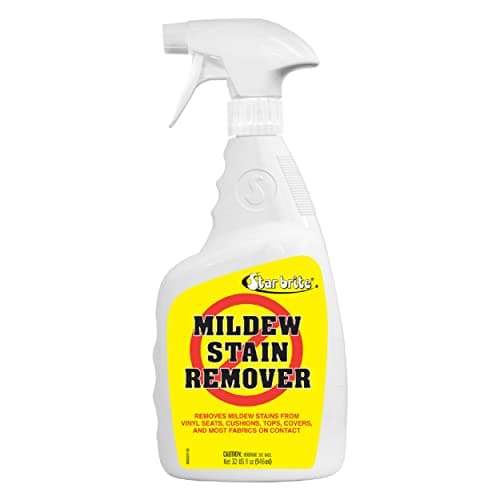
STAR BRITE Mold Stain & Mildew Stain Remover 32 oz (Buffered Bleach, Outdoor Acrylic Fabrics)See it on Amazon ↗

Quick Verdict

STAR BRITE Mold Stain & Mildew Stain Remover 32 oz: a buffered bleach spray for outdoor acrylic cushions and awnings, never for clothes.

Key Specs

Type

Concentrated mold and mildew stain remover spray

Formula (stated)

Buffered bleach, said to protect stitching and threads

Fabrics named

Outdoor acrylic fabrics including Sunbrella, marine and outdoor upholstery, vinyl upholstery, awnings

Other surfaces named

Fiberglass, concrete, drywall, siding, tile and grout, gutters and roofs

Directions (stated)

Spray, wait until the stain disappears, then rinse; stubborn stains may need a second coat and light scrubbing

Colorfast test (stated)

Always test for colorfastness before use

Pros

  • Names Sunbrella and other outdoor acrylic fabrics, the cushion and awning fabrics most likely to tolerate a bleach product
  • The buffered formula is said to spare stitching and threads, the parts of a cushion cover that give out first
  • Spray, wait and rinse, so cushions and awnings can be cleaned where they sit, with no washing machine

Cons

  • A bleach product: keep it off clothes, cotton prints, wool, silk and any fabric whose label rules out bleach
  • Related Star brite listings in the same family say the formula removes stains only and does not control mold, so regrowth depends on drying
  • One listing in the same Star brite family says not recommended for fabric, so follow the label on the bottle you receive

Suited to

Mildew stains on outdoor cushions, Sunbrella-type acrylic fabric, awnings, boat seats and vinyl upholstery

Our take

Outdoor fabric is a different job from laundry, and this is a product for the patio. Solution-dyed acrylics such as Sunbrella carry their color all the way through the fiber, which is why a buffered bleach cleaner suits them when it would strip a cotton shirt. Star brite's listing names outdoor acrylic fabrics and vinyl upholstery, says the formula protects stitching, and asks for a colorfast test first. Read the bottle that arrives, because a related listing says not for fabric. Rinse thoroughly, then stand the cushion on its edge in the sun until the foam inside is dry, because a damp core grows mildew back from the inside.

Check today's price on Amazon →

Affiliate link — commission at no extra cost to you

#3
Best for the Washer Gasket Behind Musty Towels

Check price

on Amazon ↗

Listing verified 13 Oct 2026

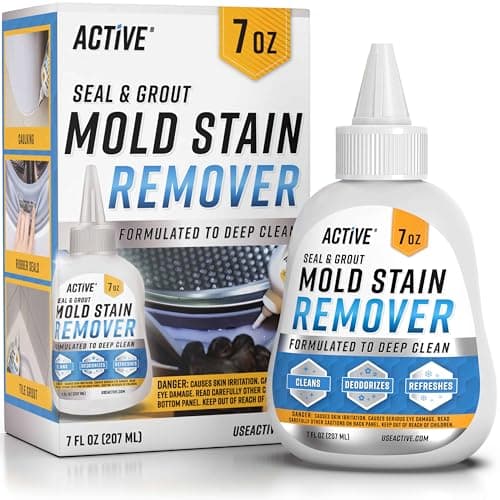
ACTIVE Mold Stain Remover Gel 7 fl oz (Front-Load Washer Gasket, Grout and Caulk)See it on Amazon ↗

Best for the Washer Gasket Behind Musty Towels

ACTIVE Mold Stain Remover Gel 7 fl oz (Front-Load Washer Gasket, Grout and Caulk)

4.1(31,065 reviews)

Quick Verdict

ACTIVE Mold Stain Remover Gel: the five-hour gasket treatment for a front-loader that keeps making towels smell.

Key Specs

Type

Mold and mildew stain remover gel

Uses named

Front-load washer rubber gaskets and drums, refrigerator seals, shower caulk, tile and grout

Directions (stated)

Shake, apply an even layer, leave at least 5 hours, wipe off and rinse thoroughly

Form

Thick gel meant to stay on seals and vertical lines without running

Ingredients

Not named on the listing beyond simple ingredients

Size

7 fl oz; the listing says one bottle lasts up to a year

Pros

  • Made for the front-load washer gasket, the usual source of the musty smell on freshly washed towels
  • A gel stays in the folds of the rubber seal instead of running into the drum the way a spray does
  • Also works on the shower caulk line and the refrigerator door seal, per the listing

Cons

  • Needs at least 5 hours on the surface, so plan it for a day the washer can sit idle
  • Ingredients are not named, so never combine it with bleach, vinegar or another cleaner
  • Removes the stain from the seal; mold grown deep into the rubber means a new gasket, and the towels still need their own hot wash

Suited to

Clearing black mildew from a front-load washer door gasket so towels stop coming out musty

Our take

If towels smell musty a day after washing, check the washer before blaming the towels. Front-load machines seal tightly, and the folds of the rubber door gasket hold water, lint and detergent film between loads. Mildew growing there passes its smell to every load. This gel is made for that seal: the listing says to spread an even layer, leave it at least five hours, then wipe and rinse. Pull the gasket back and treat every fold, then clean the detergent drawer and run an empty hot cycle. After that, habit does the work: wipe the gasket dry and leave the door and drawer open between loads. Black spots that survive two treatments are in the rubber itself.

Check today's price on Amazon →

Affiliate link — commission at no extra cost to you

#4
Best for Keeping Mildew Off Stored Fabric

Check price

on Amazon ↗

Listing verified 13 Oct 2026

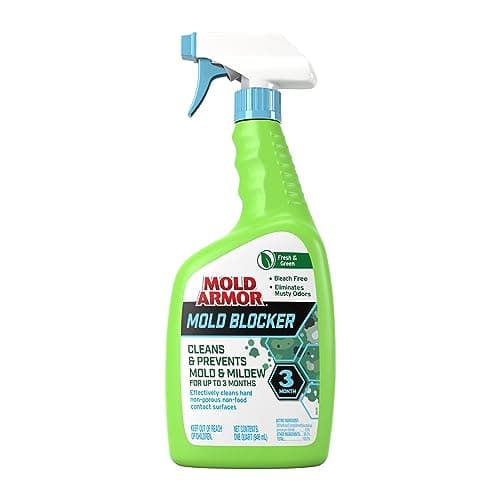
MOLD ARMOR Mold Blocker 32 oz (Fabric and Linen Mold Prevention Spray)See it on Amazon ↗

Best for Keeping Mildew Off Stored Fabric

MOLD ARMOR Mold Blocker 32 oz (Fabric and Linen Mold Prevention Spray)

4.2(2,980 reviews)

Quick Verdict

MOLD ARMOR Mold Blocker 32 oz: a fabric-labeled prevention spray for clean, dry stored items, not a mildew remover.

Key Specs

Type

Mold prevention spray; not a stain remover

Claim (stated)

Waterproof, invisible barrier that prevents mold growth for up to 3 months

Fabrics named

Linens, draperies, fabrics, apparel, carpets, bedding and upholstery

Directions (stated)

Spray the surface until wet and allow to air dry

Reapply (stated)

Every 3 months on fabric; every 7 days on hard, non-porous surfaces

Size

32 oz trigger spray

Pros

  • Names apparel, linens and draperies, so its label covers the fabrics kept in a damp closet or storage bin
  • States a reapply interval of 3 months on fabric, an easy schedule to tie to each change of season
  • Suits items that cannot go through a hot wash often, such as canvas covers, curtains and upholstery

Cons

  • Prevents growth only; it does not remove a stain, so clean and fully dry the item before spraying it
  • No spray replaces drier air, and a closet that stays damp still needs a dehumidifier or moisture absorbers
  • Ingredients are not named in the listing bullets, so test a hidden spot and read the label before spraying clothes

Suited to

Keeping mildew off clean, dry curtains, canvas, stored linens and seasonal clothes in a damp space

Our take

Every other pick on this page deals with mildew that is already there; this one is for next season. Mold Armor's listing describes a waterproof, invisible barrier that prevents growth for up to three months on fabric, and it names apparel, linens, draperies and upholstery. Spray only items that are already clean and completely dry, since the label is written for prevention, not cleanup. It cannot make up for damp air. The EPA's target is indoor humidity below 60%, ideally 30% to 50%, and a closet on an exterior wall can sit above that for months. Put a hygrometer on the shelf, and add a closet dehumidifier or moisture absorbers if the reading stays high.

Check today's price on Amazon →

Affiliate link — commission at no extra cost to you

Buyer's Guide

What to know before you buy.

Clothes and Outdoor Fabric Need Different Products

Most products sold as mildew removers are built for patios, boats and showers, and many of them contain bleach. That is fine on a solution-dyed acrylic cushion and ruinous on a cotton T-shirt, a pair of leggings or a wool sweater. For clothes, the remover is mostly the washing machine: hot water within the care label, a laundry additive such as oxygen bleach or white vinegar, and a full dry. A color-safe pretreater like OxiClean Max Force handles the mark that is left. Outdoor fabric goes the other way. Cushions, awnings and boat seats cannot go in a washer, so a spray-and-rinse product such as Star brite does the work in place. Check which group your item belongs to before you buy, and never move a patio cleaner into the laundry room.

Read the Care Label, Then Test a Hidden Spot

The triangle on a care label tells you what bleach the fabric takes. An empty triangle allows any bleach. A triangle with diagonal lines allows only non-chlorine, color-safe bleach. A crossed-out triangle means no bleach of any kind. Wool, silk, mohair, leather and spandex should not get chlorine bleach whatever their color, and a blend with spandex counts. Even with a label that allows it, test the product first. Choose an inside seam or the hem allowance, dab a little on, wait the time on the product label, then blot with a white cloth. Color on the cloth, or a change in the fabric, means stop. Outdoor products ask for the same check: Star brite's listing says to test for colorfastness before use.

How to Get Mildew Out of Clothes, Step by Step

Take the item outside and brush off loose growth with a soft brush, so spores land outdoors and not in your closet. If you have asthma or a mold allergy, let someone else do this step. Pretreat any mark with a color-safe spray, then presoak for about an hour in hot water with oxygen bleach powder or a cup of white vinegar, using one or the other. Never mix vinegar and chlorine bleach, which releases chlorine gas. Wash on the hottest setting the label allows. Before drying, look at the stain in daylight. If it is still there, repeat the soak and wash, because dryer heat can set it. Then dry completely, in direct sun if you can. A garment put away even slightly damp starts the problem over.

Musty Towels Usually Start in the Washer

Towels that smell sour a day after washing are often picking up mildew from the machine, not growing it themselves. Front-load washers are the usual culprit. The rubber door gasket holds a ring of water, lint and detergent film, and a closed door keeps it wet between loads. Wet laundry left in the drum overnight adds to it. Fix the machine first: clean every fold of the gasket and the detergent drawer, and run an empty hot cleaning cycle. Then rewash the towels hot with a cup of white vinegar, run a second normal wash, and dry them fully. Use the detergent dose your machine calls for, since extra soap leaves the film mildew feeds on. Leave the door and drawer open between loads.

Closets, Storage Bins and the Humidity Behind Mildew

Mildew on clothes in a closet means the air in that closet stays damp. The EPA's guidance is to keep indoor humidity below 60%, ideally between 30% and 50%, and a closet on an exterior wall or under a cold roof can run well above the room around it. Put a hygrometer on the shelf for a week. If it reads high, add moisture absorbers for a small reach-in closet or a small dehumidifier for a walk-in, and leave the door open when you can. Store only clothes that are clean and fully dry, and avoid sealing them in plastic bins in a basement or garage. Clothes molding again within weeks of a good wash point to the room, not the laundry.

Who Should Not Bother With a Mildew Remover

Some items are past what any remover can do. Leather, suede, silk, wool and dry-clean-only pieces belong with a professional cleaner, not a spray bottle. Pillows, stuffed toys and cushion foam that still smell musty after two hot washes have growth inside the filling, and those are usually thrown away. Clothes soaked by sewage are a contaminated-water problem, not a mildew one, and anything that cannot be washed hot is usually discarded. If you find mildew on clothes in several rooms, or on the closet wall itself, the fabric is a symptom. Mold on a wall covering more than about 10 square feet is past the EPA's homeowner range, and a leak or a humidity problem in the house needs an inspector, not a better detergent.

Frequently Asked Questions

What is the best mold remover for clothes?

For washable clothes, a hot wash and a full dry remove most mold, and a color-safe pretreater such as OxiClean Max Force Laundry Stain Treater Spray takes care of the mark that stays.

Its listing covers all machine-washable fabrics and contains no chlorine bleach. Add oxygen bleach powder or white vinegar to the load for the smell. Keep bleach-based mildew sprays for outdoor fabrics labeled for them.

Does vinegar remove mildew from clothes?

YesFor light mildew and the musty smell, vinegar in the wash usually helps.

Add a cup of white vinegar to a hot wash, or presoak the item for about an hour in hot water with a cup of vinegar first. It is gentle on most colors. It may not lift a stain that has set for weeks, and it should never go in the same load as chlorine bleach.

Can you use bleach on mildew stains on colored clothes?

Only if the care label allows it and the fabric passes a spot test. An empty triangle allows any bleach; diagonal lines in the triangle mean non-chlorine bleach only; a crossed-out triangle means none.

Most colored clothes are better served by oxygen bleach, which is color-safe. Chlorine bleach should never touch wool, silk or anything with spandex, whatever the color.

How do I get the mildew smell out of towels?

Rewash them hot with a cup of white vinegar and no detergent, then run a normal wash and dry them completely. If they smell again within a day, the smell is probably coming from the washer, so clean the door gasket and detergent drawer and run an empty hot cycle. Hang used towels spread open so they dry between uses.

Can moldy clothes be saved, or should I throw them away?

Most washable clothes can be saved with a hot wash, oxygen bleach or vinegar, and a full dry in the sun. A faint stain may stay even when the growth is gone, which is a cosmetic mark, not a hazard.

Throw out items that still smell musty after two washes, fabric that tears easily, and cushions or stuffing with growth inside.

How do you remove mildew from outdoor cushions?

Use an outdoor fabric cleaner on the cover, rinse it well, and dry the cushion completely. On solution-dyed acrylic such as Sunbrella, a buffered bleach product like STAR BRITE Mold Stain & Mildew Stain Remover is labeled for the job after a colorfast test.

Stand the cushion on its edge in the sun so the foam dries, and store cushions indoors and dry over winter.

Who do I call right now for water damage?

Call (888) 840-6512. The line is answered 24 hours a day, seven days a week, and connects you with an IICRC-certified water damage restoration company that serves your area. A recorded menu picks up first: choose water damage or mold, key in your 5-digit ZIP code, and hold through the short silence while the call is passed to the company.

Describe what you can see — where the water is coming from, how long it has been there, and whether it smells — the more specific you are, the faster the right company is on the line. If the source is a pipe or an appliance, shut the main water valve first. Have four things ready and the call goes quickly: the address, when the water started, what is wet now, and whether you have filed an insurance claim.

Still not sure which of these is your situation? (888) 840-6512 · toll-free · answered 24/7

Sources

  1. EPA — A Brief Guide to Mold, Moisture, and Your Home
  2. EPA — Mold Cleanup in Your Home

Methodology: How we source and verify data · Report an error

How we chose these picks

  • Every pick is a current listing. Stock, star ratings and rating counts are read from Amazon by script and carry the date they were read.
  • Nothing under 4.0 stars makes the list, and the top pick needs a large rating count, so one good week of reviews cannot put it there.
  • Specs are quoted from the listing or the maker, with the test condition behind the number where there is one, and sized against the job rather than the room on the box.
  • We do not run lab or field tests. Where a spec matters, we say what it is measured under and what it cannot tell you.

Free 2-day shipping

Amazon Prime members pay no shipping on restoration equipment

Dehumidifiers, air movers, and moisture meters qualify for free Prime delivery — bulk items that otherwise cost $15–$40 to ship.

Try Prime free →

Affiliate link — HearthDry earns a bounty if you sign up; costs you nothing extra.

Also Worth Comparing

Best Mold Removal Products in 2026 — One Pick for Each Job, From Killer Spray to Final Coat

No single product removes mold from a house; each one does one job, and the order you use them in matters more than the brand. This roundup picks the strongest product for each job, from killing growth on tile to sealing a cleaned ceiling, and says plainly what each one cannot do.

Read the comparison

Best Dehumidifier for a Closet in 2026 — Hanging Absorbers, Mini Units and a Compressor for Damp Walk-Ins

A closed closet trades very little air with the rest of the house, so a hanging absorber or a mini dehumidifier can keep up with it where it could never dry a room. The picks here are sorted by the closet you have: no outlet, an outlet, or a walk-in beside a damp wall or a bathroom.

Read the comparison

Best Moisture Absorbers in 2026 — For Cabinets, Storage Rooms, Cars and Bathrooms, and Where a Dehumidifier Wins

A moisture absorber is a no-power container of crystals or gel that draws water out of the air in a small, closed space. It is the right tool for a cabinet, a car or a boat and the wrong one for a basement or a room after a leak, so these picks are sorted by where they will sit.

Read the comparison

Best Mold Remover for Carpet in 2026 — What Works on Surface Mildew, and When the Carpet and Pad Have to Go

A carpet mold remover can treat mildew on the face of a carpet that got damp, but carpet and pad that stayed wet after a leak usually have to come out, as EPA guidance warns. These picks are compared on the one job each listing says it does, killing growth, lifting the stain, clearing the odor or preventing regrowth, alongside the colorfast test, the drying order and the signs a carpet is past saving.

Read the comparison

Wet & Forget Review 2026 — Outdoor Concentrate, Hose End, Ready-to-Use and Shower Cleaner Compared From Their Listings, and the Mold It Is Not Made For

Wet & Forget is a spray-and-leave outdoor cleaner: you wet the surface once and the wind and rain do the work over weeks or months. This review compares the concentrate, the hose-end bottle, the ready-to-use spray and the indoor shower cleaner from their listings, published directions and buyer ratings, not hands-on use, and sets out what the brand cannot do about mold inside a house.

Read the comparison