Best Mold Removal Products in 2026 — One Pick for Each Job, From Killer Spray to Final Coat

Best Mold Removal Products in 2026

One Pick for Each Job, From Killer Spray to Final Coat

5 picks compared · prices, ratings and stock checked October 11, 2026

Our Top Pick

For mold on tile, sealed grout, glass or other hard surfaces, the Mold Armor Rapid Clean Remediation gallon kills and cleans in one step. For the gray-black staining left on wood, concrete or brick once the growth is gone, add RMR-86 Instant Mold and Mildew Stain Remover.

4.5 on Amazon · 1,344 ratings

Quick answer

If the mold is on a hard surface such as tile, sealed grout, plastic, metal or glass and covers less than about 10 square feet, the product to buy first is the Mold Armor Rapid Clean Remediation gallon, rated 4.5 stars across 1,344 Amazon ratings, which its listing says kills, cleans and prevents mold on hard non-porous surfaces. Add a stain remover for leftover discoloration, a gel for caulk lines and a mold-killing primer for the final coat. None of them fixes the moisture, and moldy drywall, carpet or ceiling tile usually has to be cut out rather than sprayed.

Our Picks at a Glance

Every pick below is currently stocked — ratings and stock read from Amazon on 11 October 2026.

Best Overall: Hard-Surface Mold Killer
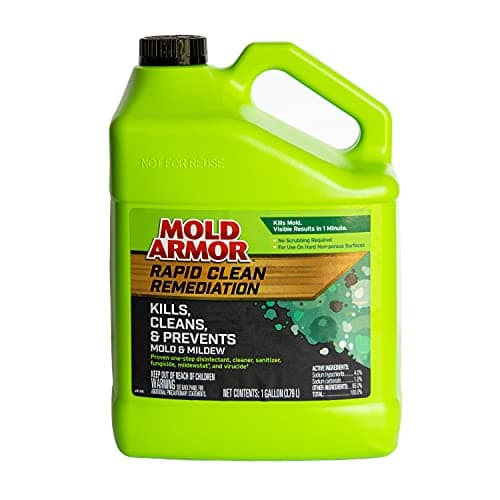
Mold Armor Rapid Clean Remediation, 1 Gallon (Kills, Cleans and Prevents on Hard Surfaces)
4.5 from 1,344 Amazon ratings · checked 11 OctAmazon's Choice

Best for: Visible mold on tile, block, sealed grout, plastic, metal or glass, in a patch under about 10 sq ft

Job:
Kill and clean mold on hard, non-porous surfaces
Claims (stated):
Kills, cleans and prevents mold and mildew, with visible results in 1 minute

Listing verified 13 Oct 2026

How this page was made: we compare the current Amazon listings, the makers' published specs and what verified buyers report, then rank by fit for the job. Ratings, review counts and stock are read from Amazon and dated. We earn a commission on purchases through our links; it does not change the order. Reviewed by Marcus Reed, IICRC-certified Water Restoration Technician.

Full Reviews

Each pick in detail: what the listing states, what buyers report, and where it falls short.

#1
Best Overall: Hard-Surface Mold Killer

Check price

on Amazon ↗

Listing verified 13 Oct 2026

Mold Armor Rapid Clean Remediation, 1 Gallon (Kills, Cleans and Prevents on Hard Surfaces)See it on Amazon ↗

Quick Verdict

Mold Armor Rapid Clean Remediation: kills and cleans hard-surface mold in one step — not for drywall, carpet or ceiling tile.

Key Specs

Job

Kill and clean mold on hard, non-porous surfaces

Claims (stated)

Kills, cleans and prevents mold and mildew, with visible results in 1 minute

Label uses (stated)

Disinfectant, sanitizer, fungicide, mildewstat (Aspergillus niger) and virucide

Directions (stated)

Pre-clean heavy soil, spray until wet, wait, then rinse or wipe; no scrubbing required

Surfaces (stated)

Hard, non-porous; non-abrasive formula

Size

1 gallon

Pros

  • Does the two jobs most small mold patches need, killing and cleaning, in one product
  • A mildewstat claim against Aspergillus niger, per the listing, so a treated surface resists regrowth for a time
  • Non-abrasive, per the listing, so it can go on surfaces that scratch under a scouring pad
  • Rinse or wipe away afterward, which removes the dead growth instead of leaving it on the wall

Cons

  • The listing names no active ingredient and shows no EPA registration number; check the label before use and never mix it with another cleaner
  • Hard, non-porous surfaces only, so it will not clean mold out of drywall paper, carpet or ceiling tile
  • The listing does not say whether a sprayer comes with the gallon

Suited to

Visible mold on tile, block, sealed grout, plastic, metal or glass, in a patch under about 10 sq ft

Our take

Start with the EPA's baseline: on hard surfaces, scrub mold off with detergent and water and dry completely, and the agency does not recommend biocides as a routine part of cleanup. So why buy a killer at all? Because on a damp basement block wall or a shower that grows spots every week, a product that cleans and leaves a mildewstat behind saves repeat work. Mold Armor's listing claims both, on hard non-porous surfaces, with a pre-clean step for heavy soil and a rinse or wipe at the end. That last step is the point, since the EPA notes dead mold can still cause allergic reactions and has to be removed, not just killed. Wear gloves and goggles, ventilate, and keep it to small patches.

Check today's price on Amazon →

Affiliate link — commission at no extra cost to you

Compare elsewhere

These open a search for this model. We quote prices only where we can verify them — Amazon, Sylvane and eBay.

#2
Best Stain Remover

Check price

on Amazon ↗

Listing verified 13 Oct 2026

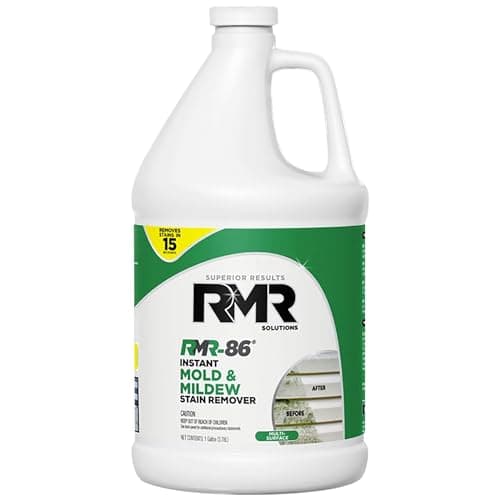
RMR-86 Instant Mold and Mildew Stain Remover Spray, 1 Gallon (Scrub-Free)See it on Amazon ↗

Quick Verdict

RMR-86 Instant: the scrub-free stain remover with the biggest buyer record here — for leftover discoloration, with no kill claim.

Key Specs

Job

Remove the discoloration mold and mildew leave behind

Surfaces (stated)

Decks, wood, vinyl siding, drywall, concrete floors, brick walls, kitchen surfaces

Directions (stated)

Spray on; no scrubbing

Safety (stated)

Ventilation and PPE for every indoor application

Size

1 gallon, ready to use

Active ingredient

Not stated on this listing; RMR's separate PRO formula lists sodium hypochlorite

Pros

  • The largest buyer record of any product on this page, by a wide margin
  • Spray-on and scrub-free, a real help on rough brick, block and open wood grain
  • The listing itself calls for ventilation and PPE, the right framing for a strong stain remover

Cons

  • Sold for stains; the listing makes no claim to kill mold or prevent regrowth
  • No active ingredient named, so handle it like bleach: ventilate and never mix it with ammonia or other cleaners
  • Lightening a stain on drywall does not remove growth inside the paper

Suited to

Gray or black staining on framing, concrete, brick or siding after the growth itself has been cleaned off

Our take

Most people searching for mold removal want the black to disappear, and that is a different job from killing mold. Mold leaves pigment in wood grain, grout and porous masonry long after the growth is dead, and RMR-86 is sold for exactly that pigment, which is why its buyer record is so large: the result is visible within minutes. Keep the order straight. Clean and dry the growth first, use this to lift what remains, then decide whether the material can stay. On drywall, a stain that fades is not proof the panel is clean inside; the EPA notes mold can be difficult or impossible to remove completely from absorbent materials. Because the listing names no active ingredient, give it bleach-level care.

Check today's price on Amazon →

Affiliate link — commission at no extra cost to you

#3
Best for Grout and Caulk

Check price

on Amazon ↗

Listing verified 13 Oct 2026

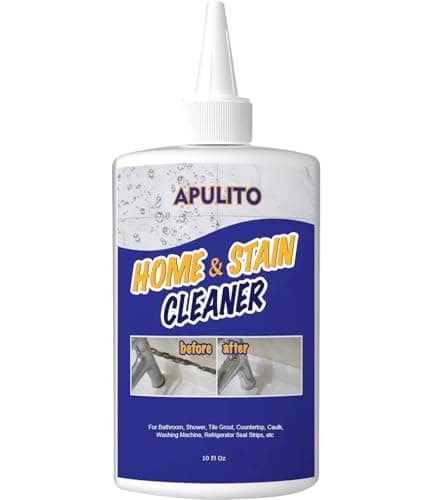
APULITO Mold Stain Gel for Grout, Caulk and Tile (10 fl oz)See it on Amazon ↗

Best for Grout and Caulk

APULITO Mold Stain Gel for Grout, Caulk and Tile (10 fl oz)

4.3(5,734 reviews)

Quick Verdict

APULITO gel: hours of contact on caulk and grout where sprays run off, and a quick test of whether the bead needs replacing.

Key Specs

Job

Lift mold staining from caulk beads and grout lines

Type

Gel, applied from the bottle

Size

10 fl oz

Dwell time (stated)

3–5 hours; up to 10 hours for severe areas

Prep (stated)

Apply to a dry surface

Surfaces (stated)

Tile, walls, bathtubs, silicone sealant around windows, sinks and baths

Pros

  • Clings to a vertical caulk bead for hours, where a liquid runs off in seconds
  • Names the sealant around windows and sinks as well as baths, so it covers window-sill mold that bathroom sprays miss
  • Rinse-off use with no scrubbing, per the listing

Cons

  • Hours of dwell time keep the tub or sink out of use until it is rinsed
  • Active ingredient not stated, so keep every other cleaner away from it and ventilate
  • If the black is inside the silicone, the bead has to be cut out and replaced

Suited to

Gray or black lines in shower caulk, tub grout or the sealant around a window or sink

Our take

This pick earns its place as a diagnostic as much as a cleaner. Mold in silicone either sits on the surface, where a gel with hours of contact can lift it, or has grown into the bead, where nothing applied from outside will reach. The listing allows up to 10 hours for severe areas, so give one treatment that full time on a dry joint. If the line comes up clean, keep it that way by drying the shower after use. If it stays gray, stop buying cleaners: cut the old bead out, let the joint dry completely, and run new mold-resistant silicone. Window sealant is worth checking at the same time, since condensation on cold glass feeds the same growth.

Check today's price on Amazon →

Affiliate link — commission at no extra cost to you

#4
Best Final Coat

Check price

on Amazon ↗

Listing verified 13 Oct 2026

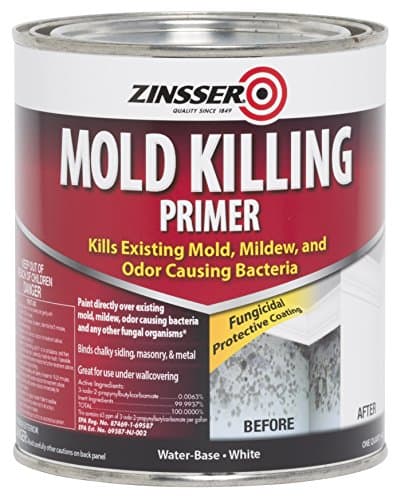
Zinsser Mold Killing Primer, Quart (Water-Based, EPA Reg. No. 87469-1-69587)See it on Amazon ↗

Quick Verdict

Zinsser Mold Killing Primer: the EPA-registered final coat after cleanup — never a way to cover mold that is still there.

Key Specs

Job

Seal a cleaned, dry surface and resist regrowth on the coating

Registration (stated)

EPA Reg. No. 87469-1-69587, per the listing

Type

Water-based fungicidal primer

Size

1 quart

Topcoat

Any coating, per the listing

Uses named

Bathrooms, basements, wall cavities, window frames

Pros

  • The only product on this page with an EPA registration number printed in its listing
  • Finishes a cleanup with protection a plain primer does not offer, on the film it leaves behind
  • Water-based, with soap-and-water cleanup, so a small room can be primed without solvent fumes

Cons

  • A coating, not a cleaner; growth has to come off first, whatever the label's pre-cleaning line suggests
  • Cannot reach mold behind the drywall it covers

Suited to

The last step on a bathroom ceiling, basement wall or window frame after cleaning and drying

Our take

Every mold job on a painted surface ends with paint, and the primer is where a product can still add protection. Zinsser registers this one with the EPA and states that it kills mold on contact and keeps its own film free of new growth, which makes it the right final coat in a room that will stay humid. It is also the product most often misused. Painting over a spot to make it disappear hides growth that keeps feeding on damp drywall, and the EPA says paint over moldy surfaces is likely to peel. The separate mold-killing primer comparison sets it against a spray version, a mold-resistant topcoat, an additive and a stain blocker.

Check today's price on Amazon →

Affiliate link — commission at no extra cost to you

#5
Best Fogger, With Limits

Check price

on Amazon ↗

Listing verified 13 Oct 2026

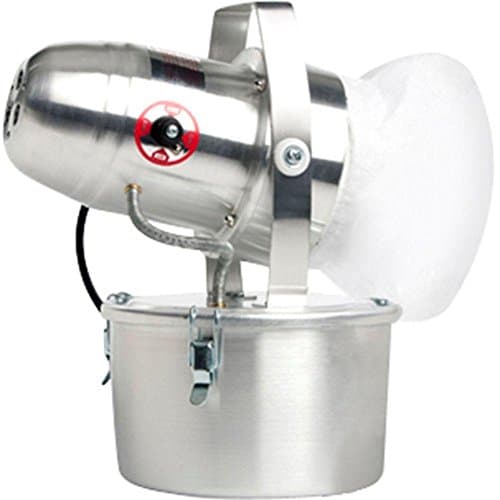
Concrobium Mold Control Fogger (Electric Fogger for Basements, Attics and Crawl Spaces)See it on Amazon ↗

Quick Verdict

Concrobium Mold Control Fogger: an even final coat for crawl spaces and attics after removal — it removes nothing on its own.

Key Specs

Job

Apply Concrobium Mold Control solution as a fine mist across a large enclosed space

Type

Electric fogger; solution sold separately

Flow (stated)

Adjustable to match room size

Spaces (stated)

Basements, attics, crawl spaces, garages, storage areas

Reach (stated)

Exposed surfaces, including hard-to-access ones

Kill or removal claim for the machine

None; it applies the solution

Pros

  • Coats every exposed joist, rafter and block face in one pass, which a hand sprayer cannot do overhead in a crawl space
  • Adjustable flow, per the listing, so output can be turned down for a small storage room
  • A refillable machine rather than a one-shot can, so it serves later treatments too

Cons

  • Reaches exposed surfaces only; it does nothing for mold inside wall cavities, under insulation or in carpet
  • Applies solution but removes nothing, so dead growth still has to be cleaned or vacuumed off
  • A machine plus separately sold solution; for one small room, a hand spray does the same work

Suited to

A crawl space, attic or unfinished basement after moldy materials are out and the moisture source is fixed

Our take

Fogging is the most oversold idea in mold removal, and the honest version is narrow. A fogger turns liquid into a mist that settles on every exposed surface, so it is a fast way to put an even coat of Concrobium on framing that has already been cleaned, or on sheathing in an attic where a hand sprayer cannot reach the eaves. That is a finishing pass, not a removal. It cannot pull mold out of insulation, reach the back of drywall or lift growth off a surface, and dead mold left in place is still an allergen. Use it after removal and drying, wear an N-95 and goggles, follow the solution label on how long to stay out, and read the separate fogger review before buying for a single room.

Check today's price on Amazon →

Affiliate link — commission at no extra cost to you

Buyer's Guide

What to know before you buy.

Match the Product to the Job, Not the Brand

Mold removal products fall into six jobs, and buying for the wrong one is how a bathroom ends up with three half-used bottles and the same spots. A hard-surface killer-cleaner deals with live growth on tile, block and glass. A stain remover lifts the pigment left in wood, grout and masonry. A gel holds a cleaner on caulk and grout long enough to work. A fogger puts an even coat on large, open framing after removal. A mold-killing primer seals a cleaned, dry surface. Then there are the two jobs no chemical does: a test kit, for when you suspect mold you cannot see, and protective gear, for every job. Use them in that order, clean before you treat and treat before you paint, and then keep the room at 30% to 50% humidity, the range the EPA recommends, so nothing grows back.

What the EPA Says to Reach for First

For hard surfaces, the EPA's homeowner method is plain: scrub the mold off with detergent and water, and dry completely. The agency does not recommend biocides such as chlorine bleach as a routine part of mold cleanup, though it allows that professional judgment may call for one, for example where someone in the home has a weakened immune system. IICRC S520, the professional mold remediation standard, likewise centers on physically removing contamination rather than killing it in place. That does not make killer sprays useless. They save repeat work on surfaces that stay damp, and a mildewstat slows regrowth between cleanings. But the scrubbing, the wiping away and the drying are what remove mold. If you use bleach, ventilate the room and never mix it with ammonia or any cleaner that contains it; the EPA warns the combination produces toxic fumes.

Porous Materials: Where Every Product Fails

Every product on this page works on the surface. Mold growing in drywall paper, ceiling tiles, carpet, insulation or upholstery has roots and staining inside the material, where no spray, gel or fog can reach. The EPA notes that absorbent or porous materials such as ceiling tiles and carpet may have to be thrown away if they become moldy, because the growth can be difficult or impossible to remove completely. Wood is in between: sound framing can usually be cleaned, sanded and treated, while soft or crumbling wood needs replacing. The practical test for drywall is pressure and moisture. If the panel is soft, swollen, or reads wet on a moisture meter days after the leak stopped, cut out the affected section with a margin beyond the visible growth and replace it. A stain remover that makes the surface look clean only hides the decision.

Test Kits: When They Help and When They Do Not

A mold test kit is a product many shoppers add to the cart first, and in most homes it is not needed. The EPA's guidance is that when mold is visible, sampling is usually unnecessary: you already know it is there, and the plan is the same whatever the species. Black mold gets cleaned the same way as green or white. Kits earn their place in other situations: a musty smell with nothing visible, checking whether a cleaned room is still shedding spores, or documenting a problem for a landlord or an insurer. Even then, a settle-plate kit says only that spores landed, which happens in every home. Lab-analyzed kits report more, but the EPA notes that no federal limits exist for mold or spores to compare them against. The separate mold test kit review compares the lab-analyzed and same-day types and explains what each result can and cannot tell you.

Protective Gear Comes Before Any Spray

Cleaning mold puts spores in the air, and strong cleaners add fumes, so protective gear belongs on the list before any bottle. The EPA's homeowner guidance suggests an N-95 respirator to limit what you breathe, long gloves that reach the middle of the forearm, and goggles without ventilation holes. Add old clothes you can wash right away, and keep the door to the rest of the house closed while you work. Ventilate with an open window and a fan blowing out, not into the next room. Read each label for its own protective requirements; the RMR-86 listing, for one, calls for PPE on every indoor use. A HEPA air purifier in the room afterward catches airborne spores, but it does not clean surfaces. The separate PPE review lists respirators, gloves and goggles that fit these jobs.

Who Should Not Buy Mold Removal Products

Skip the cart and call for help when the growth covers more than about 10 square feet, the line where the EPA points homeowners to fuller remediation guidance and to contractors with mold experience. The same goes for mold that followed sewage or other contaminated water, mold in the heating and cooling system, and mold you can smell but not find, which usually means it is inside a wall, under flooring or in ductwork. Anyone with asthma, allergies or a weakened immune system should talk to a doctor before doing any cleanup. Renters should report mold to the landlord rather than treat it themselves, because a cleaned wall erases the evidence of a recurring leak. In each case, what you need is an assessment and possibly removal of materials, and the products here become useful only afterward, for upkeep.

Frequently Asked Questions

What is the best product to remove mold?

It dependsOn the surface: for hard surfaces, a killer-cleaner such as Mold Armor Rapid Clean Remediation; for leftover staining, a remover such as RMR-86 Instant.

No single product handles every material. Caulk and grout respond best to a gel held on for hours, and porous materials such as drywall, carpet and ceiling tile often cannot be cleaned at all. Whatever you choose, the EPA's first step on hard surfaces is detergent, water and scrubbing, followed by complete drying.

What do professionals use to remove mold?

Mostly physical removal, not sprays. Remediation contractors working to IICRC S520 contain the area, run HEPA air scrubbers, HEPA-vacuum and scrub surfaces, and cut out porous materials such as drywall, insulation and carpet that have grown mold.

Antimicrobial products play a supporting role on surfaces that stay in place. That is why a professional job on a large area looks like demolition and cleaning rather than spraying, and why no product on a store shelf replaces it for growth beyond about 10 square feet.

Does a mold fogger work?

Only as a final coat on exposed surfaces, after the mold has been removed and the moisture fixed. A fogger spreads a solution such as Concrobium Mold Control evenly over framing, sheathing and block in a crawl space, attic or basement.

It cannot reach mold inside walls, insulation or carpet, and it does not remove dead growth, which the EPA notes can still cause allergic reactions. Fogging a room in place of cleaning it leaves the problem where it was.

Is it safe to use bleach to remove mold?

On hard, non-porous surfaces it can be, with the room ventilated and gloves and goggles on, but it is rarely the best tool. The EPA does not recommend biocides such as bleach as a routine part of mold cleanup, and bleach does little for mold inside porous materials like drywall.

Never mix bleach with ammonia or any cleaner that contains it, because the combination releases toxic fumes. Some stain removers do not name their active ingredient on the listing, so use one cleaner at a time and rinse between products.

Do mold removal products kill mold permanently?

NoEvery product kills or removes only the mold it touches, and new spores arrive constantly; growth returns wherever moisture returns.

The lasting fix is controlling the water: repair leaks, run bathroom fans, and keep indoor humidity below 60%, ideally between 30% and 50%, as the EPA advises. A dehumidifier in a damp basement and a mold-resistant primer and topcoat in a humid bathroom keep a cleaned area clean far longer than any spray.

When should you call a professional instead of buying mold products?

When the mold covers more than about 10 square feet, followed contaminated water such as sewage, is in the heating and cooling system, or keeps returning after cleaning. Those are the cases where the EPA points homeowners toward experienced contractors and fuller remediation guidance.

Call one too when you smell mold but cannot find it, and talk to a doctor first if anyone in the home has asthma or a weakened immune system. Ask any contractor about their mold experience before hiring.

Who do I call right now for water damage?

Call (888) 840-6512. The line is answered 24 hours a day, seven days a week, and connects you with an IICRC-certified water damage restoration company that serves your area. A recorded menu picks up first: choose water damage or mold, key in your 5-digit ZIP code, and hold through the short silence while the call is passed to the company.

Describe what you can see — where the water is coming from, how long it has been there, and whether it smells — the more specific you are, the faster the right company is on the line. If the source is a pipe or an appliance, shut the main water valve first. Have four things ready and the call goes quickly: the address, when the water started, what is wet now, and whether you have filed an insurance claim.

Still not sure which of these is your situation? (888) 840-6512 · toll-free · answered 24/7

Sources

  1. EPA — Mold Cleanup in Your Home
  2. EPA — A Brief Guide to Mold, Moisture, and Your Home
  3. IICRC S520 — Standard for Professional Mold Remediation

Methodology: How we source and verify data · Report an error

How we chose these picks

  • Every pick is a current listing. Stock, star ratings and rating counts are read from Amazon by script and carry the date they were read.
  • Nothing under 4.0 stars makes the list, and the top pick needs a large rating count, so one good week of reviews cannot put it there.
  • Specs are quoted from the listing or the maker, with the test condition behind the number where there is one, and sized against the job rather than the room on the box.
  • We do not run lab or field tests. Where a spec matters, we say what it is measured under and what it cannot tell you.

Free 2-day shipping

Amazon Prime members pay no shipping on restoration equipment

Dehumidifiers, air movers, and moisture meters qualify for free Prime delivery — bulk items that otherwise cost $15–$40 to ship.

Try Prime free →

Affiliate link — HearthDry earns a bounty if you sign up; costs you nothing extra.

Also Worth Comparing

Best Mold Killer for Water Damage 2026 — Three Antimicrobials Reviewed

After water damage, the right treatment helps keep mold from returning on framing and concrete once the cleanup is done. These are three products for water damage cleanup in 2026, compared on what each listing claims, bleach content and where each belongs in the cleanup.

Read the comparison

Best Mold Remover Sprays in 2026 — RMR-86, Mold Armor & Concrobium Compared

The three most-searched mold sprays do three DIFFERENT jobs: one erases stains, one disinfects, one kills and prevents. Using the wrong one is why 'the mold came back.' Here's which to use where — and the honest line where sprays stop working.

Read the comparison

Best Mold Remover for Shower Tile, Grout and Caulk in 2026 — What a Spray Can and Cannot Fix

Most black marks in a shower are stains sitting on tile and grout, and a bleach foam or gel removes them in minutes to hours. The marks that come back within weeks are living in the caulk, the grout pores or the ceiling paint, and those need cutting out, sealing or drying, not a stronger spray.

Read the comparison

Best Mold Killing Primer and Mold-Resistant Paint in 2026 — The Last Coat After the Mold Is Gone

A mold-killing primer kills the mold it coats and keeps new growth off its own film, but it cannot dry a wet wall or reach growth inside one. These picks are judged on that narrow job: sealing a bathroom, basement wall or window frame after the leak is fixed and the surface is clean and dry.

Read the comparison

Best Mold Foggers in 2026 — Concrobium Cold Fogger & BioCide Mold Bomb, Honestly Compared

Fogging is the last step of a mold job, not the first. Here is what the two most-searched foggers actually do — one applies an EPA-registered mold-control solution, the other grounds particulates and odor — and the removal work both of them assume you've already done.

Read the comparison

Best Mold Test Kits for Home in 2026 — Petri-Dish, Lab, 5-Minute and Air-Pump Kits Compared

A home mold test kit answers one question — is there mold here — and in almost every house the answer is yes. The kits differ in how well they answer the questions that matter, namely what kind, how much and whether it is growing, and this guide shows which kit answers which and when to skip the kit and fix the moisture instead.

Read the comparison

Best PPE for Sewage Cleanup in 2026 — Category 3 Safety Gear

Sewage water (Category 3) contains E. coli, hepatitis A, Norovirus, and dozens of other pathogens. The right PPE is not optional — it's the difference between a cleanup job and a biohazard exposure.

Read the comparison

Best Air Purifiers for Mold in 2026 — HEPA Units Compared on Verified Airflow

An air purifier is the right tool for airborne spores and the allergy symptoms they cause, and the wrong one for the colony and the damp that feeds it. These five HEPA units are compared on the figures that decide how much air they really clean: verified CADR, the stated filter rating and the room size at about five air changes an hour.

Read the comparison

Best Dehumidifier for Mold and Musty Smells in 2026 — Picked to Hold a Room Below 50%

A dehumidifier stops mold by taking away the damp it needs, and the musty smell usually leaves with the damp. It does not kill mold that is already growing, so these picks are judged on the job they can do: holding a basement, a room or a closet below 50% humidity, day after day.

Read the comparison

Best Mold Remover for Walls in 2026 — Painted Walls, Drywall and Masonry, and When the Wall Has to Come Out

A mold remover can clear growth and staining from painted walls and bare masonry, but it cannot save drywall the mold has grown into, and it does nothing about the water that fed it. These picks are compared on what each listing states about bleach, surfaces and directions, set against EPA's cleanup steps and its 10 square foot line for doing the job yourself.

Read the comparison

Best Mold Remover for Wood in 2026 — Bleach-Free Treatments, Stain Removers, and How to Tell Mold From Rot

Mold on wood needs two different products: one that treats the growth and one that lifts the dark stain it leaves, and on finished wood the first one should not be bleach. These picks are matched to sealed furniture and floors, raw framing and plywood, and outdoor decks, with the screwdriver test that tells you when the wood is rotten and no spray will help.

Read the comparison

Best Mildew and Mold Remover for Clothes and Fabric in 2026 — What Goes in the Wash, and What Belongs on the Patio

Mildew on clothes comes out mostly in the wash and the dry, so the product you buy is for the mark it leaves, and it has to suit the fabric: color-safe for clothes, a bleach cleaner only for outdoor fabrics labeled for it. These picks cover washable clothes, patio cushions, the washer gasket behind musty towels and the damp closet that started it.

Read the comparison

Best HEPA Vacuums in 2026 — Sealed Machines for Mold and Dust Cleanup, Wet/Dry Shop Vacs, and What a HEPA Label Does Not Promise

A HEPA filter catches mold spores and fine dust only when all the air a vacuum pulls in passes through it, so the seal around the filter matters as much as the filter itself. These five vacuums are compared on what each listing actually states about filtration and sealing, with the cleanup order EPA describes for mold: dry the area first, then vacuum.

Read the comparison

RMR-86 Review 2026 — RMR-86 Instant vs RMR-86 Pro vs RMR-141, What Each Label Claims, and the Order to Use Them

RMR sells two different products under similar names: RMR-86 lifts the dark stains mold leaves behind, and RMR-141 is the EPA-registered disinfectant and fungicide. This review compares five RMR listings on their published claims, label directions and buyer ratings, not on our own use, and sets out the cleanup order EPA describes so each bottle goes on at the right point.

Read the comparison

Concrobium Review 2026 — Mold Control Spray, Aerosol, Gallon and Fogger Compared From Their Listings, and the Stains None of Them Remove

Concrobium Mold Control is a bleach-free treatment that works as it dries and leaves a film meant to stop regrowth, but its own listing says it is not a stain remover. This review compares the spray, aerosol, gallon and fogger from their listings and published guidance, not hands-on use, and sets out the order of cleanup that lets the product do its job.

Read the comparison

Wet & Forget Review 2026 — Outdoor Concentrate, Hose End, Ready-to-Use and Shower Cleaner Compared From Their Listings, and the Mold It Is Not Made For

Wet & Forget is a spray-and-leave outdoor cleaner: you wet the surface once and the wind and rain do the work over weeks or months. This review compares the concentrate, the hose-end bottle, the ready-to-use spray and the indoor shower cleaner from their listings, published directions and buyer ratings, not hands-on use, and sets out what the brand cannot do about mold inside a house.

Read the comparison