
Written & reviewed by Marcus ReedIICRC WRT
Reviewed September 4, 2026· Next review Mar 2027
Quick answer
No spray kills mold permanently, because products kill ORGANISMS while the problem is the MOISTURE feeding them: as long as the water source remains, mold returns in weeks regardless of what you spray. On non-porous surfaces (tile, glass, sealed counters), detergent scrubbing or hydrogen peroxide removes small growth fine. On porous materials (drywall, wood, insulation, carpet), bleach kills the surface and leaves roots inside the material — regrowth is the rule, and invaded porous material gets REMOVED, not treated. The permanent kill is always the same recipe: fix the water source, remove what's colonized, dry what remains to measured standard.
Sound like your situation? Confirm it in one call instead of ten more minutes of reading — (888) 840-6512 · toll-free · no obligation
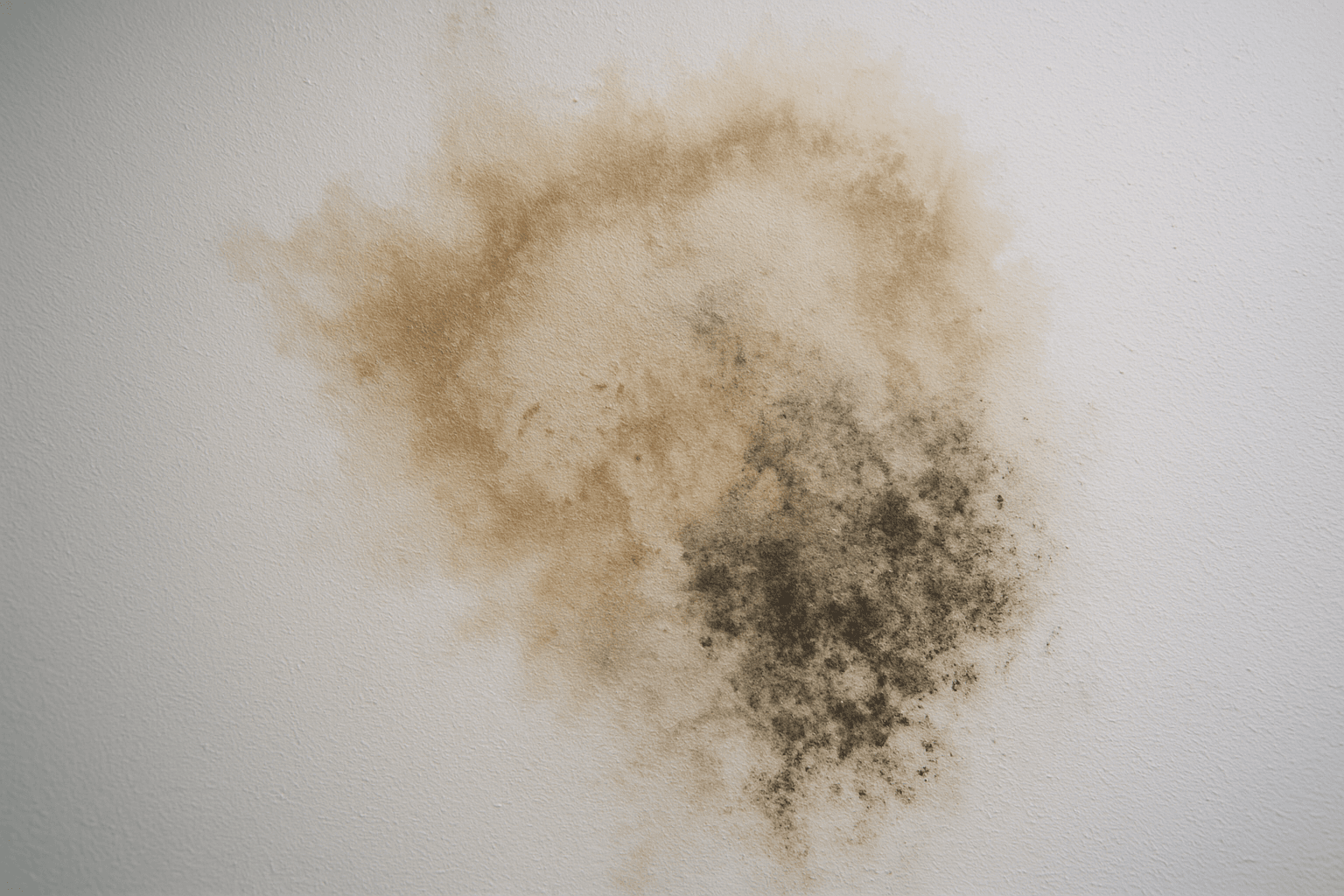
Every product on the mold shelf kills surface mold — and none of them kills a mold PROBLEM. The difference is the moisture feeding it. What works on which surface, and the permanent fix no spray can deliver.
The Short Answer
No spray kills mold permanently, because products kill ORGANISMS while the problem is the MOISTURE feeding them: as long as the water source remains, mold returns in weeks regardless of what you spray. On non-porous surfaces (tile, glass, sealed counters), detergent scrubbing or hydrogen peroxide removes small growth fine. On porous materials (drywall, wood, insulation, carpet), bleach kills the surface and leaves roots inside the material — regrowth is the rule, and invaded porous material gets REMOVED, not treated. The permanent kill is always the same recipe: fix the water source, remove what's colonized, dry what remains to measured standard.
What This Page Covers
Bleach, vinegar, hydrogen peroxide, 'mold killer' sprays — what each actually does, why mold returns after all of them, and the only thing that ends a mold problem permanently: killing its water supply.
Talk to a water damage pro now
Avg 45-min response · Free call · Your ZIP routes you to the nearest crew
(888) 840-6512- Describe the damage & give your ZIP
- You're routed to the on-call local crew
- They quote — you decide, no obligation
If the Mold Followed a Leak
Stop the water at the fixture valve or the main, cut power to wet rooms at the breaker if you can reach the panel safely, move what you can out of the water, and photograph everything before it is touched. Water that has reached carpet pad, drywall or a subfloor is a same-day restoration call rather than a cleanup: mold can establish on wet materials within 24–48 hours, and every hour of delay moves materials from "dry it" to "replace it."
Before You Sign Anything
Ask for a written scope and the pricing basis, who is fixing the water source and when, and what the moisture readings are — a company that does not take readings is not drying. Sudden, accidental water damage (a burst pipe, a failed supply line, an appliance leak) is usually covered by homeowners insurance; long-term leaks, neglected maintenance and rising outside water usually are not. Document first, then call the restoration company, then the insurer.
Reading to confirm what you already suspect?
Confirm it in two minutes instead — the pro on this line answers questions about YOUR situation all day: what it is, what it should cost, whether you even need service. If you want, they'll set the appointment on the same call.
Toll-free · no obligation · asking costs nothing
Frequently Asked Questions
- 1kill the moisture — repair the leak, correct drainage, control humidity below 60%
- 2remove colonized porous materials under containment with HEPA filtration (the S520 standard)
- 3dry and verify with moisture readings before closing up. A certified pro scopes all three in one visit — and explains costs on the call, before anything is agreed.
Does bleach kill mold or not?
On hard non-porous surfaces — yes, it kills surface growth. On drywall and wood — misleading: chlorine bleach is mostly water, its active agent doesn't penetrate to the root structure (hyphae) inside the material, and the water half of the mix actually FEEDS the roots it missed.
That's why the patch returns in weeks, often larger. The EPA's guidance doesn't recommend routine bleaching of moldy porous materials.
What about vinegar or hydrogen peroxide?
BothOutperform bleach on penetration and are reasonable for SMALL growth on semi-porous surfaces — vinegar's acidity kills most species, peroxide adds some lifting action.
Same physics applies though: on soaked drywall or colonized wood, you're treating the visible fraction of an organism living inside the material. Products are for surfaces; removal is for materials.
Why does my mold keep coming back after cleaning?
Because cleaning treated the symptom twice a month while the cause ran 24/7. Recurring mold means active moisture — a slow leak, condensation on a cold surface, humidity over 60%, or seepage. Find and fix the water and the same cleaning finally holds; skip the water and no product on Earth changes the outcome.
When is mold officially beyond DIY?
The EPA's practical line is about 10 square feet (roughly 3×3 ft).
Beyond that — or ANY size if it's inside walls or HVAC, it returns after cleaning, or someone in the house has asthma/allergies — containment matters more than chemicals, because disturbing large growth without it seeds the rest of the house with spores.
Do 'mold bomb' foggers or air purifiers fix mold?
Foggers coat surfaces and kill some airborne spores — and change nothing about the colony's water supply or the growth inside materials; the EPA specifically cautions against relying on them.
Air purifiers with HEPA reduce airborne spores (useful for symptoms) but are furniture, not remediation. Both are supplements to source-fix-plus-removal, never substitutes.
What does the permanent fix actually look like?
Three steps in strict order:
Sources
Methodology: How we source and verify data · Report an error
Disclaimer: HearthDry is an independent educational resource. This article is for informational purposes only and does not constitute professional, legal, or insurance advice. Consult licensed professionals before making decisions about your property or insurance claims.
Recommended Equipment
Tools Water Damage Pros Use
Remove moisture fast — needed for drying walls, floors & crawlspaces
Shop on Amazon →Professional-grade air circulation speeds drying time by 3–5x
Shop on Amazon →Detect hidden moisture behind walls & under floors before mold starts
Shop on Amazon →Smart alarms alert you the moment a leak starts — prevent next time
Shop on Amazon →As an Amazon Associate, HearthDry earns from qualifying purchases. Prices and availability may vary.
