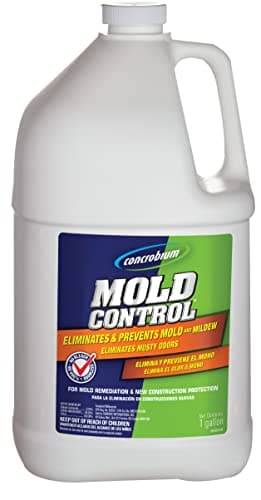
Best for: A basement wall, attic sheathing or crawl space framing with growth spread across the whole surface, treated once and left to dry
- Type:
- Ready-to-use mold and mildew treatment
- Size:
- 1 gallon jug
Listing verified 13 Oct 2026

What Each Label Claims, Which Surfaces Each Suits, and the Order to Use Them With RMR-86
5 picks compared · prices, ratings and stock checked October 13, 2026
Our Top Pick
Hard, non-porous surfaces that need disinfecting, such as shower tile, grout, a tub or a sealed concrete floor: RMR-141. Wood, drywall, fabric, or a whole basement, attic or crawl space you want treated once and left to dry: Concrobium Mold Control. The dark mark that stays afterward: RMR-86.
4.5 on Amazon · 4,171 ratings
Quick answer
If you need a surface disinfected, buy RMR-141; if you need a treatment that dries into a barrier on wood, drywall or a whole room, buy Concrobium Mold Control. For most homeowners the pick is the Concrobium Mold Control 1 Gallon jug, rated 4.5 stars across 4,171 Amazon ratings, because Concrobium's listings name the surfaces that grow mold in a house: drywall, wood, concrete, fabric. RMR-141's listing sells it as an EPA-registered disinfectant and fungicide for hard surfaces. Neither claims to remove stains; that is RMR-86. Per EPA, fix the water problem and scrub the surface clean and dry before either bottle comes out.
Every pick below is currently stocked — ratings and stock read from Amazon on 13 October 2026.
Best for: A basement wall, attic sheathing or crawl space framing with growth spread across the whole surface, treated once and left to dry
Listing verified 13 Oct 2026
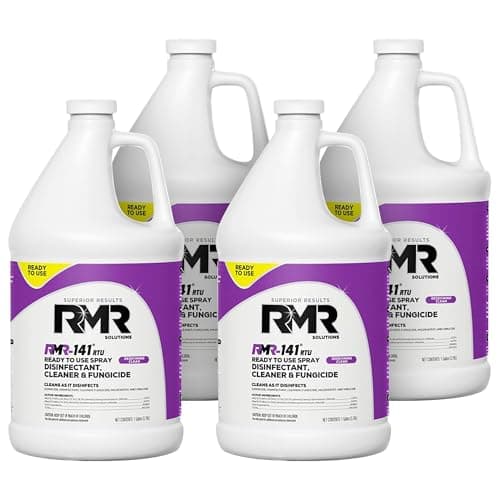
Best for: Shower tile, grout, tubs, toilets and sealed concrete that need a kill and a disinfectant, not just a barrier
Listing verified 13 Oct 2026
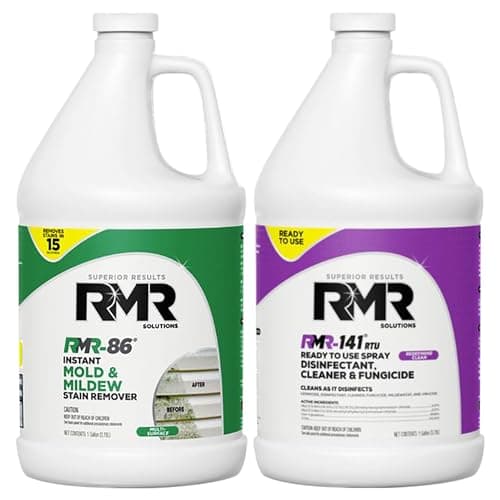
Best for: A bathroom or basement with visible dark growth, where the stain and the disinfecting are both on the list
Listing verified 13 Oct 2026
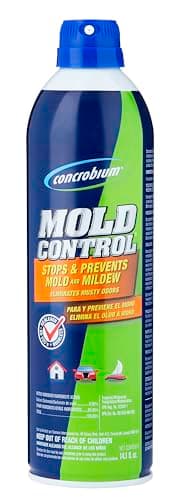
Best for: Spot treatment behind fixtures, inside cabinets and along window frames, plus the repeat misting a damp bathroom needs
Listing verified 13 Oct 2026
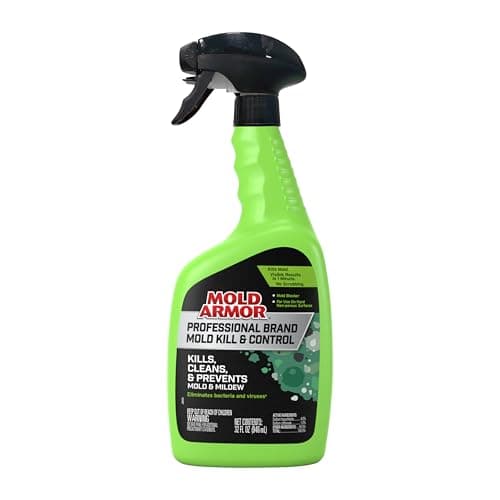
Best for: Sealed grout, laminate, a shower stall or a plastic bin where you want the contact time and rinse step spelled out
Listing verified 13 Oct 2026
How this page was made: we compare the current Amazon listings, the makers' published specs and what verified buyers report, then rank by fit for the job. Ratings, review counts and stock are read from Amazon and dated. We earn a commission on purchases through our links; it does not change the order. Reviewed by Marcus Reed, IICRC-certified Water Restoration Technician.
Full Reviews
Each pick in detail: what the listing states, what buyers report, and where it falls short.
Check price
on Amazon ↗
Listing verified 13 Oct 2026
See it on Amazon ↗Best for Wood, Drywall and Whole Rooms
Quick Verdict
The no-rinse barrier treatment for porous surfaces and whole rooms; it does not disinfect and it does not remove stains.
Key Specs
Type
Ready-to-use mold and mildew treatment
Size
1 gallon jug
Claims (stated)
Helps eliminate and prevent mold and musty odors; no bleach or harmful fumes; non-toxic ingredients
Contact time
Not a timed step: Concrobium's refill-gallon listing says to apply and allow to dry, with no scrubbing or rinsing
Coverage
Not stated on this listing; the refill-gallon listing states 800 to 1,600 sq ft per gallon
Application (per the refill-gallon listing)
Cold fogger, spray, cloth or brush
Pros
Cons
Suited to
A basement wall, attic sheathing or crawl space framing with growth spread across the whole surface, treated once and left to dry
Our take
Buy the gallon when the job is a room rather than a patch: a block wall after a leak, roof sheathing, the joists over a crawl space. Concrobium's refill-gallon listing puts a gallon at 800 to 1,600 sq ft and says to apply it by cold fogger, spray, cloth or brush and let it dry. That no-rinse step is the real difference from RMR-141. You are not keeping a surface wet for a timed period and wiping; you are leaving a film that the listing says blocks regrowth. Two cautions. The jug's title says hard surfaces, while the aerosol and 32 oz listings add drywall, wood and fabric, so try a hidden corner before you fog a room. And nothing in any Concrobium listing claims to lift a stain, so plan on RMR-86 for the mark that remains.
Affiliate link — commission at no extra cost to you
Compare elsewhere
These open a search for this model. We quote prices only where we can verify them — Amazon, Sylvane and eBay.
Check price
on Amazon ↗
Listing verified 13 Oct 2026
See it on Amazon ↗Best Disinfectant for Hard Surfaces
Quick Verdict
The disinfectant of the two: buy it for hard surfaces that need a kill, and read the label for the contact time the listing leaves out.
Key Specs
Type
Ready-to-use disinfectant, fungicide and virucide
Registration (stated)
EPA registered
Kill claims (stated)
Kills 99.9% of household bacteria; fungicidal; kills mildew and more than 141 microorganisms
Odor (stated)
Inhibits odors when used as directed
Contact time
Not in the listing bullets; RMR's bundle listings say to follow label directions for contact times
Surfaces
Hard surfaces, per RMR's bathroom bundle listing (showers, tubs, toilets, sinks, tile, grout); not recommended for food-contact areas or dishes
Pros
Cons
Suited to
Shower tile, grout, tubs, toilets and sealed concrete that need a kill and a disinfectant, not just a barrier
Our take
RMR-141 is the bottle for a surface you want disinfected, not merely treated. The listing calls it a disinfectant, fungicide and virucide, EPA registered, that kills 99.9% of household bacteria and more than 141 microorganisms, which is why it suits a bathroom, a sealed concrete floor, or hard surfaces where bacteria matter as much as mold. Two gaps in the listing matter. It gives no contact time; RMR's bundle listings tell you to follow the label, so keep the surface wet for the full period printed there. And it names no porous surfaces, while RMR's bathroom listing rules out food-contact areas and dishes. Scrub with detergent and water first, as EPA describes, because a disinfectant applied over dirt and dead growth is working through a layer it was not meant to.
Affiliate link — commission at no extra cost to you
Compare elsewhere
Check price
on Amazon ↗
Listing verified 13 Oct 2026
See it on Amazon ↗Best Two-Step Kit: Stain, Then Disinfect
Quick Verdict
Stain remover and disinfectant in one order, each gallon for its own step; the practical RMR-141 buy for a single room.
Key Specs
Contents (stated)
One gallon of RMR-86 stain remover and one gallon of RMR-141 RTU
RMR-86 job (stated)
Removes the stains black mold and mildew leave behind, with no scrubbing
RMR-141 job (stated)
Inhibits the growth of mold and mildew, eliminates odors and disinfects in one step
Kill claim (stated)
RMR-141 kills 99.9% of household and odor-causing bacteria; fungicidal
Areas named
Bathroom tiles, grout lines, under the sink, shower doors
Contact time
Not stated on the listing; follow each label
Pros
Cons
Suited to
A bathroom or basement with visible dark growth, where the stain and the disinfecting are both on the list
Our take
This is the right way to buy RMR-141 if you also have stains, which almost everyone with visible mold does. The listing pairs a gallon of RMR-86 for the discoloration with a gallon of RMR-141 RTU to disinfect, deodorize and inhibit regrowth, and it names grout lines, bathroom tiles, the cabinet under the sink and shower doors. Use the two as separate steps, never mixed, with the surface dry between them. Because the listing does not say whether the RMR-86 is Instant or Pro, and the Pro listing names sodium hypochlorite, ventilate as if it were bleach and keep anything containing ammonia out of the room, which is EPA's rule for chlorine bleach. The labels carry the contact times the bullets leave out.
Affiliate link — commission at no extra cost to you
Compare elsewhere
Check price
on Amazon ↗
Listing verified 13 Oct 2026
See it on Amazon ↗Best for Tight Spots and Small Jobs
Quick Verdict
Concrobium in a can for corners and cabinets, with the brand's own warning that it is not a stain remover printed on the listing.
Key Specs
Format
14.1 oz aerosol can
Registration (stated)
Registered with the U.S. EPA for mold control when used as directed
Claims (stated)
Destroys existing mold at the source and forms an invisible barrier that helps prevent future growth
Contains (stated)
No bleach, ammonia or volatile organic compounds; odorless
Spray (stated)
Fine mist for tight spaces, corners and hidden areas
Surfaces named
Drywall, wood, tile, grout, concrete, fabric; test an inconspicuous area first
Pros
Cons
Suited to
Spot treatment behind fixtures, inside cabinets and along window frames, plus the repeat misting a damp bathroom needs
Our take
The aerosol is Concrobium for the places a trigger spray cannot reach: the back of a vanity cabinet, the underside of a sink, the gap behind a toilet tank, the top of a window frame. Its listing describes a fine mist for tight spaces, corners and hidden areas, and this is the listing that states EPA registration for mold control when used as directed, with no bleach, ammonia or VOCs. The same listing carries the sentence every buyer should read: Mold Control is not intended for use as a stain remover. Treat it as a spot and maintenance product for mid-sized jobs, which is what the listing calls it; a whole attic needs the gallon and a fogger. Try an inconspicuous area first, which the listing also asks for.
Affiliate link — commission at no extra cost to you
Compare elsewhere
Check price
on Amazon ↗
Listing verified 13 Oct 2026
See it on Amazon ↗If Neither: a Stated 10-Minute Contact Time
Quick Verdict
The hard-surface alternative whose listing states the contact time; not a substitute for Concrobium on porous materials.
Key Specs
Type
Hard-surface mold and mildew remover that kills, cleans and prevents
Contact time (stated)
Apply, wait 10 minutes, then rinse with water or wipe with a damp sponge within 15 minutes
Prevention (stated)
Wet the surface, allow to air dry, repeat every 7 days; effective against Aspergillus niger
Surface type (stated)
Hard, non-porous surfaces
Surfaces named
Laminate, linoleum, sealed grout, stainless steel, plastic; shower stalls, garbage cans, bathroom, bedroom, basement
Prep (stated)
Test an inconspicuous area; pre-clean heavily soiled surfaces; rinse food-contact surfaces with potable water
Pros
Cons
Suited to
Sealed grout, laminate, a shower stall or a plastic bin where you want the contact time and rinse step spelled out
Our take
Mold Armor earns a place on this page for one reason: its listing prints the numbers RMR-141's does not. Apply, wait 10 minutes, rinse with water or wipe with a damp sponge within 15 minutes; to prevent regrowth, wet the surface, let it air dry and repeat every 7 days. That is what a stated contact time looks like, and it gives you a yardstick for reading any disinfectant label. The limits are just as plain. It is for hard, non-porous surfaces, named as laminate, linoleum, sealed grout, stainless steel and plastic, and heavily soiled surfaces must be pre-cleaned, which matches EPA's scrub-first advice. Nothing on the listing suggests it for wood, drywall or fabric, so it does not stand in for Concrobium on those.
Affiliate link — commission at no extra cost to you
Compare elsewhere
What to know before you buy.
Read the words each maker chose. RMR-141's listing calls it a disinfectant, fungicide and virucide, EPA registered, and says it kills 99.9% of household bacteria and more than 141 microorganisms. Concrobium's listings call it mold control, also EPA registered, and describe something different: it destroys existing mold at the source as it dries and forms an invisible barrier that helps prevent future growth, with no bleach, ammonia or VOCs. RMR-86 makes no kill claim at all. Its listing sells it to remove the discoloration black mold and mildew leave behind, and the Pro version names sodium hypochlorite as the active ingredient. So the three bottles are a disinfectant, a barrier and a stain remover. People waste money buying Concrobium to lift a stain, or RMR-86 expecting a kill, because the product names do not say which is which. The listings do, if you read past the first bullet.
A disinfectant only does what its label promises if the surface stays wet for the stated contact time. That number is on the label, and for RMR-141 it is not in the Amazon bullets; RMR's own bundle listings say to follow label directions for contact times, which is the honest answer. Mold Armor's Professional listing shows what the instruction looks like when it is printed: wait 10 minutes, then rinse or wipe within 15 minutes. Concrobium works the other way around. Its refill-gallon listing says to apply it and allow it to dry, with no scrubbing or rinsing, so the drying is the step rather than a wait before a rinse. In practice, a fan blowing on an RMR-141 surface can dry it before the label's time is up, while a fan on a Concrobium surface just finishes the job. Plan the ventilation around whichever label you are holding.
The surfaces each listing names decide most purchases. RMR's bathroom bundle lists showers, tubs, toilets, sinks, tile, grout and hard floors for RMR-141, and says it is not for food-contact areas or dishes. Mold Armor's hard-surface list is laminate, linoleum, sealed grout, stainless steel and plastic. Concrobium's 32 oz and aerosol listings name drywall, wood, composite wood, plastic, concrete, metal, brick, stone, tile, grout, fabric and furniture. EPA's guidance sits above all of these: scrub mold off hard surfaces with detergent and water and dry completely, and absorbent or porous materials such as ceiling tiles and carpet may have to be thrown away if they become moldy. A sprayed product does not change that. Drywall that stayed wet, insulation and carpet pad come out whatever bottle you own. Where a porous surface is staying, such as framing lumber or roof sheathing, Concrobium is the one whose listings name it; where the surface is sealed and hard, RMR-141 or Mold Armor is.
EPA's sequence is short and it comes before any product. Fix the plumbing leak or water problem, scrub the mold off hard surfaces with detergent and water, and dry everything completely. Only then does a spray have a clean surface to act on. From there the order is: RMR-141 on hard surfaces, kept wet for the label's contact time; RMR-86 on whatever stain remains, as its own step with the surface dry in between; Concrobium last, on a clean, dry surface, because its job is to dry into a barrier and anything you scrub or rinse afterward works against it. Never combine bottles in one sprayer, and keep ammonia products away from anything with sodium hypochlorite, which EPA warns against mixing with chlorine bleach. Wear what EPA describes: an N-95 respirator, gloves to the middle of the forearm, goggles without ventilation holes. Do not paint or caulk a moldy surface; clean it and let it dry first.
Match the bottle to the room. Shower tile, grout and a tub that keep going black: RMR-141, or Mold Armor if you want the contact time on the listing, after a detergent scrub. A sealed concrete basement floor after a sewage backup or a long-standing leak: RMR-141, because its listing covers bacteria and viruses as well as mold. Attic sheathing, crawl space joists or an unfinished basement wall where the growth is spread across the whole surface: Concrobium by the gallon, applied with a fogger or a pump sprayer and left to dry; the fogger route is covered on the Concrobium review. Drywall or trim that is staying: Concrobium, once the panel is confirmed dry and sound, with the drywall guide below for the keep-or-replace call. The dark mark after any of the above: RMR-86. A damp bathroom you want to mist on a schedule: Concrobium's aerosol listing describes ongoing maintenance, and Mold Armor's says repeat every 7 days.
Some jobs are past a spray. EPA draws the line at about 10 square feet of mold: under that you can usually handle it yourself; above it, EPA sends you to its remediation guide written for schools and commercial buildings, which is the signal to get a professional in. The same applies when there has been a lot of water damage, when you suspect growth behind a wall or under flooring you cannot see, or when the moisture source is still running, since a barrier or a disinfectant on a wet wall buys days at most. Anyone with health concerns should consult a health professional before starting a cleanup, in EPA's words. If a hygrometer reads above 60% in the room, the dehumidifier matters more than the choice between these two bottles; EPA's target is below 60%, ideally 30 to 50%. And a surface that has been treated, dried and is still dark is a stain, not a reason to buy either product again.
Neither is better, because they are sold for different jobs. RMR-141's listing describes an EPA-registered disinfectant, fungicide and virucide for hard surfaces, with the contact time on the label. Concrobium's listings describe EPA-registered mold control that you apply and let dry, leaving a barrier against regrowth, on surfaces that include drywall, wood and fabric.
Pick RMR-141 when you need a kill on tile, grout or sealed concrete; pick Concrobium when the surface is porous or the area is a whole room. Both come after EPA's detergent scrub and a complete dry.
Concrobium's listings claim both: the aerosol listing says it destroys existing mold at the source, and the refill-gallon listing says the formula crushes mold spores as it dries and leaves an invisible barrier. The words it does not use are disinfectant and fungicide, which are RMR-141's.
What Concrobium does not do is remove a stain; its own aerosol listing says Mold Control is not intended for use as a stain remover. If the patch is still dark after treatment, that is discoloration rather than live growth, and it needs RMR-86 or a repaint once the surface is clean and dry.
YesAs separate steps on a dry surface, never mixed in one sprayer. Apply RMR-141 first and keep the surface wet for the contact time on its label, then let it dry. Treat any stain with RMR-86 and let that dry too.
Finish with Concrobium, which goes on last because its listing says it works as it dries and leaves a barrier; scrubbing or rinsing after it would remove the film you paid for. Keep each product's label at hand for ventilation and rinse instructions, since the Amazon listings for RMR-141 do not state a contact time.
RMR's own listings describe RMR-141 as bleach-free. The Polish and Protect bundle listing, which pairs RMR-141 with a soap scum remover, calls the duo bleach-free and non-abrasive, and the standalone 4-pack listing describes a positively charged disinfectant rather than naming an active ingredient.
The RMR product that does contain bleach is RMR-86 Pro, whose listing names sodium hypochlorite. Read the label on the bottle you receive for the actual active ingredient, and follow EPA's rule either way: never mix a chlorine bleach solution with anything containing ammonia.
Concrobium, yes; RMR-141, the listings do not say. Concrobium's refill-gallon listing lists a cold fogger as one of its application methods, alongside spray, cloth and brush, and Concrobium sells its own fogger for basements, attics and crawl spaces, covered in the mold fogger review.
None of the RMR-141 listings on this page mention fogging, and a disinfectant that depends on a wet contact time is a poor match for a fine mist that dries fast. Treat fogging as a Concrobium method, and remember that fogging over dirty surfaces skips EPA's scrub-and-dry step.
The Amazon listings do not say, so the label decides. RMR's bundle listings tell you to follow label directions for contact times and say RMR-141 is not recommended for food-contact areas or dishes, which is as far as they go.
For comparison, Mold Armor's hard-surface listing spells out its own routine: wait 10 minutes, then rinse with water or wipe with a damp sponge within 15 minutes, and rinse food-contact surfaces with potable water. Concrobium is the one that states no rinsing: apply it and allow it to dry.
Call (888) 840-6512. The line is answered 24 hours a day, seven days a week, and connects you with an IICRC-certified water damage restoration company that serves your area. A recorded menu picks up first: choose water damage or mold, key in your 5-digit ZIP code, and hold through the short silence while the call is passed to the company.
Describe what you can see — where the water is coming from, how long it has been there, and whether it smells — the more specific you are, the faster the right company is on the line. If the source is a pipe or an appliance, shut the main water valve first. Have four things ready and the call goes quickly: the address, when the water started, what is wet now, and whether you have filed an insurance claim.
Still not sure which of these is your situation? (888) 840-6512 · toll-free · answered 24/7
Methodology: How we source and verify data · Report an error
Free 2-day shipping
Amazon Prime members pay no shipping on restoration equipment
Dehumidifiers, air movers, and moisture meters qualify for free Prime delivery — bulk items that otherwise cost $15–$40 to ship.
Affiliate link — HearthDry earns a bounty if you sign up; costs you nothing extra.

Concrobium Mold Control is a bleach-free treatment that works as it dries and leaves a film meant to stop regrowth, but its own listing says it is not a stain remover. This review compares the spray, aerosol, gallon and fogger from their listings and published guidance, not hands-on use, and sets out the order of cleanup that lets the product do its job.
Read the comparisonRMR sells two different products under similar names: RMR-86 lifts the dark stains mold leaves behind, and RMR-141 is the EPA-registered disinfectant and fungicide. This review compares five RMR listings on their published claims, label directions and buyer ratings, not on our own use, and sets out the cleanup order EPA describes so each bottle goes on at the right point.
Read the comparisonThe three most-searched mold sprays do three DIFFERENT jobs: one erases stains, one disinfects, one kills and prevents. Using the wrong one is why 'the mold came back.' Here's which to use where — and the honest line where sprays stop working.
Read the comparisonFogging is the last step of a mold job, not the first. Here is what the two most-searched foggers actually do — one applies an EPA-registered mold-control solution, the other grounds particulates and odor — and the removal work both of them assume you've already done.
Read the comparisonAfter water damage, the right treatment helps keep mold from returning on framing and concrete once the cleanup is done. These are three products for water damage cleanup in 2026, compared on what each listing claims, bleach content and where each belongs in the cleanup.
Read the comparison