5 picks compared · prices, ratings and stock checked October 11, 2026
Our Top Pick
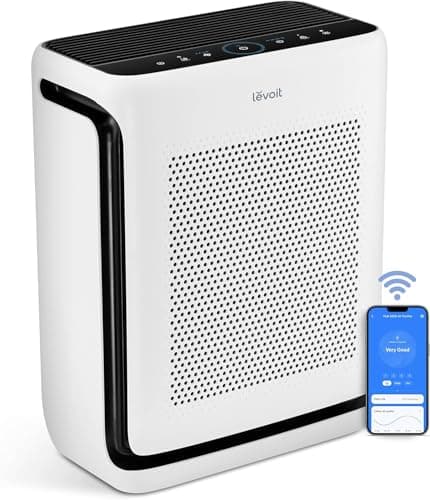
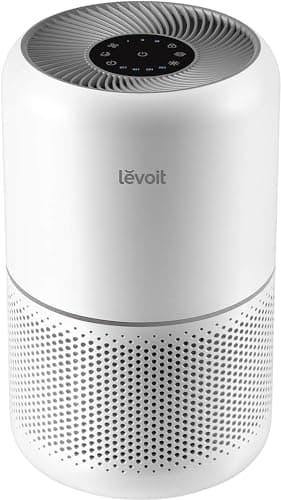
For a bedroom or office up to about 220 sq ft, the Levoit Core 300-P, with AHAM-verified airflow and a stated 99.97% filter rating. For a living room or finished basement, the Levoit Vital 200S-P, the highest verified CADR here at 250 CFM for smoke.
Yes, a HEPA air purifier helps with mold, but only with the spores floating in the air: it does not remove mold growing on a surface or dry out the moisture feeding it. For most bedrooms and offices the Levoit Core 300-P is the one to buy, rated 4.7 stars across 108,995 Amazon ratings, with an AHAM-verified CADR of 143 CFM for smoke and a stated 99.97% filter efficiency at 0.1 to 0.3 microns. Fix the water source and clean small patches of growth first; EPA notes that growth over about 10 square feet may need professional help.
Our Picks at a Glance
Every pick below is currently stocked — ratings and stock read from Amazon on 11 October 2026.
How this page was made: we compare the current Amazon listings, the makers' published specs and what verified buyers report, then rank by fit for the job. Ratings, review counts and stock are read from Amazon and dated. We earn a commission on purchases through our links; it does not change the order. Reviewed by Marcus Reed, IICRC-certified Water Restoration Technician.
Full Reviews
Each pick in detail: what the listing states, what buyers report, and where it falls short.
The best-documented small HEPA purifier here: AHAM-verified airflow, a stated 99.97% filter rating and a bedroom-sized 222 sq ft at 4.8 air changes.
Key Specs
CADR (AHAM Verifide)
143 CFM smoke, 153 CFM dust, 167 CFM pollen
Room size (stated)
4.8 air changes an hour in 222 sq ft; one an hour in 1,073 sq ft
Filter efficiency (stated)
99.97% for 0.1–0.3 μm particles, independent lab; HEPA-grade in Sleep Mode (IEST RP C001.7)
Noise (claimed)
24 dB in Sleep Mode
Motor
56 W
Controls
2/4/6/8-hour timer, check-filter indicator, display can be switched off
Pros
AHAM verified its clean air delivery rate on smoke, dust and pollen, so the airflow figure comes from a third party rather than the seller
States 99.97% filter efficiency for particles from 0.1 to 0.3 microns, measured by an independent lab
Sized honestly for a typical bedroom: 4.8 air changes an hour in 222 sq ft
Sleep Mode is quoted at 24 dB, and the display lights can be turned off at night
CARB compliant, meaning it meets California's limit on ozone emissions from air cleaners
Cons
The listing shows no air-quality sensor or auto mode, so fan speed is set by hand
Too small for an open-plan floor or a large basement; its 1,073 sq ft figure is a single air change an hour
Levoit warns that off-brand replacement filters may be unreliable or damage the unit, so plan on Levoit filters
Suited to
A bedroom or home office up to about 220 sq ft, especially for someone with a mold allergy who sleeps there
Our take
The figure that matters on any purifier for mold is how much filtered air it moves, and this one's is verified: AHAM measured 153 CFM on dust and 167 on pollen, the two test particles closest in size to mold spores. That supports the 222 sq ft room at 4.8 air changes an hour, which is the honest size of this machine; the 1,073 sq ft claim is one change an hour, too slow to help allergy symptoms. Most spores are several microns across, larger than the 0.1 to 0.3 micron range the filter is rated on, so nearly every spore that reaches the filter stays there. Put it in the bedroom, close the door and leave it running.
The verified airflow for a large room or finished basement, 250 CFM on smoke; the listing does not state the filter rating.
Key Specs
CADR (AHAM Verifide)
250 CFM smoke, 254 CFM dust, 289 CFM pollen
Coverage (claimed)
Up to 1,875 sq ft (one air change an hour at an 8 ft ceiling)
Room size by the two-thirds rule
About 375 sq ft, calculated from the smoke CADR at an 8 ft ceiling
Air intake
Standard inlet plus a U-shaped inlet aimed at pet hair and larger particles
Filter efficiency
Not stated on the listing
Certification
AHAM Verifide
Pros
The highest verified CADR on this page, about two-thirds more air than the Core 300-P on each AHAM test
Enough airflow for a living room, a finished basement or an open family room of about 375 sq ft
A second, U-shaped intake that the listing says keeps pet hair from clogging the filter
Verified by AHAM on the same three tests as the Core 300-P, so the two can be compared directly
Cons
The listing gives no filter efficiency figure and does not describe the filter as HEPA in its bullets; buy it on the verified CADR, and ask Levoit for the filter rating if that matters to you
The 1,875 sq ft headline is the same airflow spread to one air change an hour, far slower than allergy relief needs
Suited to
A living room, finished basement or open-plan space of roughly 300 to 400 sq ft
Our take
This is the machine to buy when the room is bigger than a bedroom, and the AHAM numbers show why: 254 CFM on dust and 289 on pollen, about two-thirds more than the Core 300-P on the same tests. By the two-thirds rule that suits a room of about 375 sq ft with an 8 ft ceiling. The 1,875 sq ft headline is that CADR stretched to a single air change an hour, the arithmetic sellers use to make coverage look large. In a basement, run it alongside a dehumidifier rather than instead of one: it will catch spores, but only lower humidity stops new ones being produced.
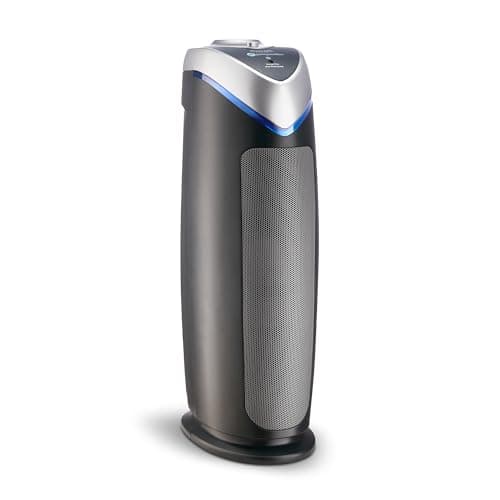
A narrow HEPA tower with a carbon stage and a Zero Ozone Verified listing, sized for a room of about 150 sq ft.
Key Specs
Filter (stated)
HEPA PURE, 99.97% of allergens as small as 0.1 microns (footnoted on the listing)
Odor stage
Activated carbon filter
Room size (stated)
153 sq ft every 12.5 minutes; 743 sq ft once an hour
UV-C
Optional UV-C light
Speeds
3, including a quiet sleep mode
Certifications
CARB Certified, ETL Certified, Zero Ozone Verified
Pros
Listed as Zero Ozone Verified and CARB Certified, which matters in a category where ozone machines are marketed for mold
An activated carbon stage for the faint musty smell that often comes with a damp room
A slim 22 in tower that takes up little floor space
Cons
No CADR is published on the listing, and its own room figure, 153 sq ft at about five air changes an hour, makes it smaller than both Levoits and the Clorox medium unit
The UV-C lamp adds a bulb to replace, and EPA's technical summary of home air cleaners found household UV lamps do little to mold spores, so treat it as optional
Suited to
A small bedroom or nursery where a narrow tower fits better than a box
Our take
GermGuardian does not publish a CADR here, but its own room figure lets you size it: 153 sq ft cleaned every 12.5 minutes is 4.8 air changes an hour, the same pace Levoit quotes for 222 sq ft. In other words it moves noticeably less air than the Core 300-P and suits a smaller room. The carbon stage is the reason to choose it over a plain HEPA unit when a faint musty smell is part of the problem, with one caveat: that smell is a gas given off by growing mold, and carbon only soaks up so much of it before the filter needs replacing. If the smell keeps coming back, the source is still active.
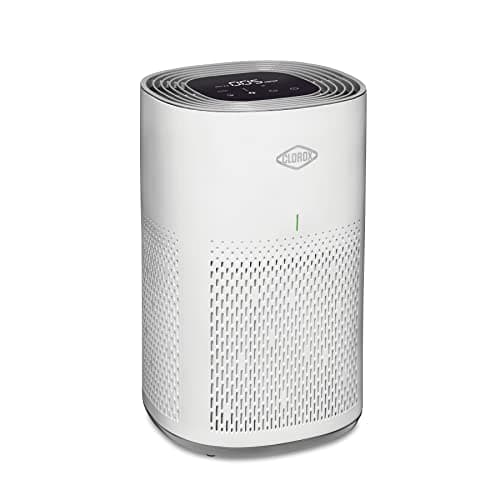
True HEPA with a PM2.5 sensor and a stated 6 to 12 month filter life, sized for about 225 sq ft.
Key Specs
Filter (stated)
True HEPA, 99.97% of particles as small as 0.1 microns
Stages
Pre-filter, True HEPA and activated carbon in one 360° cartridge
Room size (stated)
5 air changes an hour in 225 sq ft; one an hour up to 1,000 sq ft
Sensor
PM2.5 readout and color light; Auto Mode sets the fan speed
Filter life (stated)
6–12 months; indicator lights after 4,380 hours; replacement model 12030
Testing (stated)
Independent third party, LMS Technologies, 2021
Pros
The only purifier here whose listing both calls its filter True HEPA and lists a sensor-driven Auto Mode
One of only two listings here that state a filter life at all, 6 to 12 months
A 360° intake draws air from every side, so placement in the room is less fussy
At five air changes an hour in 225 sq ft it matches the Core 300-P for room size
Cons
No AHAM CADR on the listing; its room figures come from the seller's own third-party test
A PM2.5 sensor tracks fine particles rather than mold spores, many of which are larger, so Auto Mode can slow down while spores are still airborne
Suited to
A bedroom or office of about 225 sq ft where you would rather the purifier set its own speed
Our take
Clorox makes the plainest filter claim on this page, True HEPA at 99.97%, and it is the one listing that pairs it with a sensor-driven Auto Mode. The sensor is a PM2.5 counter, which follows smoke and fine dust well; many mold spores are larger than 2.5 microns, so for a mold-allergy bedroom set a fixed medium speed overnight rather than trusting Auto to stay up. The 4,380-hour filter light, six months of round-the-clock running, sits at the short end of the stated 6 to 12 month life, so treat it as the point to inspect the filter rather than an automatic replacement date.
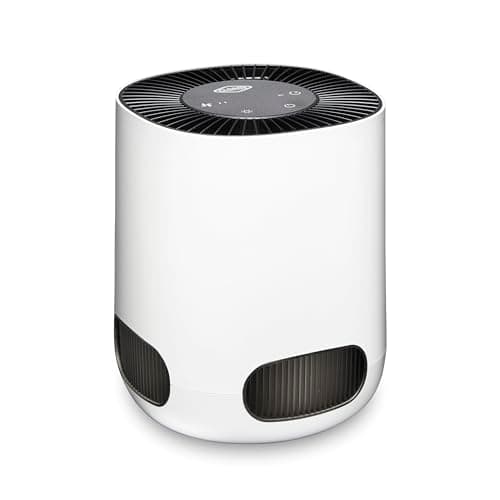
Honest about its size: True HEPA and five air changes an hour in an 80 sq ft space.
Key Specs
Filter (stated)
True HEPA, 99.97% of particles as small as 0.1 microns, plus a pre-filter
Room size (stated)
5 air changes an hour in 80 sq ft; 2 an hour up to 200 sq ft
Speeds and timer
3 speeds; 2/4/8-hour timer
Night light
Bright, dim or off
Filter life (stated)
6–12 months; replacement Clorox 12020
Test basis (stated)
Highest fan speed, closed room, 8 ft ceiling; LMS Technologies, 2022
Pros
True HEPA in a tabletop size that fits a desk, a nightstand or a shelf
States its test conditions plainly: highest fan speed, closed room, 8 ft ceiling
Shares the 6 to 12 month filter life of the larger Clorox unit
Cons
Five air changes an hour only in an 80 sq ft space; in a 200 sq ft bedroom it manages two, too slow for allergy relief
No carbon stage, so it does nothing for a musty smell
No sensor or auto mode
Suited to
A small office, dorm room or closet-sized space of about 80 to 100 sq ft, on a modest budget
Our take
Small purifiers are where room-size claims get stretched, and Clorox deserves credit for printing both numbers: five air changes an hour in 80 sq ft and two in 200 sq ft, measured on the highest speed in a closed room. Read the first figure as its real size. That makes it a desk or nightstand unit for a small office, a dorm room or a closet-sized space, not a bedroom machine. For a mold-allergy sleeper in a full-size bedroom, the Core 300-P or the Clorox medium unit is the better buy; this one earns its place where a larger box will not fit.
What an Air Purifier Does About Mold, and What It Cannot
A HEPA purifier removes mold spores from the air that passes through it. That lowers the number you breathe, which is why it helps with sneezing, congestion and asthma triggered by mold, and why it is worth running in a bedroom during and after a cleanup. It does nothing to the colony itself. Mold on drywall, in a closet or behind a bathroom tile keeps growing and releasing spores as long as it stays damp, and a purifier beside it is filtering an endless supply. EPA's guidance puts the order plainly: fix the moisture problem, then clean and dry the moldy material, and consider a professional once growth covers more than about 10 square feet. The purifier belongs after those steps, not in place of them.
HEPA Is the Filter Standard; CADR Tells You the Size
In the US a HEPA filter is one that captures 99.97% of particles at 0.3 microns, the size that slips through filters most easily. Most mold spores are several microns across, so a genuine HEPA filter traps almost every spore that reaches it. That makes the filter grade a pass-or-fail check rather than the deciding number. Treat "HEPA-type" and "HEPA-like" as fails, and read each listing's exact wording: Clorox says True HEPA, Levoit states 99.97% at 0.1 to 0.3 microns for the Core 300-P, GermGuardian says HEPA PURE, and the Vital 200S-P listing gives no figure. Once the filter passes, the clean air delivery rate decides how much it helps. AHAM tests CADR with smoke, dust and pollen; for spores, the dust and pollen figures are the closest match.
Size It by Air Changes, Not the Square-Foot Headline
AHAM's rule of thumb is a smoke CADR of at least two-thirds of the room's floor area, assuming an 8 ft ceiling, which works out to about five air changes an hour. Most listings print the honest figure next to a much bigger one. Levoit's Core 300-P quotes 4.8 air changes in 222 sq ft and one change in 1,073 sq ft; Clorox's medium unit quotes five in 225 sq ft and one in 1,000. The smaller number is the room it is built for. On the same basis GermGuardian suits about 153 sq ft, the Clorox tabletop about 80, and the Vital 200S-P, from its 250 CFM smoke CADR, about 375 sq ft. If your room is larger than that, buy the bigger machine rather than running a small one flat out.
Skip Ozone Generators and Ionizer-Only Machines
Some machines are sold for mold on the strength of ozone or ions rather than a filter. EPA does not recommend ozone generators for occupied spaces: at levels that are safe to breathe, ozone does little to clean indoor air, and ozone itself is a lung irritant. Ionizers charge particles so they cling to walls and furniture instead of being captured, and some release ozone as a by-product. Look for CARB certification instead, which means an air cleaner meets California's limit on ozone emissions; the Levoit Core 300-P and the GermGuardian both state it. UV-C lamps sit in between: harmless in a sealed unit, but of little use against spores at household strength, so the filter is still doing the work.
The Musty Smell Is a Gas, Not a Spore
The damp, earthy odor of a moldy room comes from gases that growing mold gives off, not from the spores. A HEPA filter cannot hold a gas, so a purifier with HEPA alone will clear the air of particles while the smell stays. Activated carbon adsorbs some of it, which is why the GermGuardian and the Clorox medium unit include a carbon stage, but a thin carbon layer fills up and stops working long before the HEPA layer does. Treat the smell as a measurement instead: if it fades after a cleanup and returns within days, mold is still growing somewhere, usually wherever water is getting in, and the fix is drying that spot rather than buying a stronger filter.
Where to Put It and How to Run It
Run the purifier in the room where you spend the most hours, which for most people is the bedroom, with the door closed so it is cleaning a fixed volume of air. Keep it a foot or two from walls and furniture so the intake is not starved, and leave it on continuously at a speed you can sleep through; a purifier switched off at night is not helping the person with the allergy. During a cleanup, run it in the next room over, not inside a sealed work area, which calls for a ducted air scrubber. When the filter is due, lift it out slowly, bag it straight away and put it in the outdoor trash, because it is loaded with what it caught.
The professional tier
Austin Air HealthMate Air Purifier
A larger HEPA-and-carbon purifier from Austin Air, sold through the specialist dealer Sylvane rather than through Amazon. The carbon stage is the part that matters for a musty smell. Compare its stated room coverage and filter life with the picks above before choosing; like every purifier here, it cleans the air and does nothing about mold growing on a surface.
Affiliate link — Sylvane sells to contractors and homeowners alike.
Frequently Asked Questions
Do air purifiers remove mold?
They remove spores from the air, not mold from a surface. A HEPA unit captures the spores carried through it, so fewer reach your lungs and fewer settle around the room.
Spores that have already landed on carpet, upholstery or shelves are out of its reach; a vacuum with a HEPA filter and damp wiping deal with those. The growth itself has to be cleaned off or cut out and the area dried, or it keeps replacing whatever the purifier removes.
What is the best air purifier for mold and dust?
The same HEPA purifier handles both, because dust and spores are both particles and the filter does not tell them apart. Compare machines on the dust CADR, which AHAM measures with fine particles close in size to many spores: the Levoit Core 300-P is verified at 153 CFM and the Vital 200S-P at 254.
A pre-filter, which both Clorox units list, helps in a dusty house because it catches hair and lint before they clog the HEPA layer.
Do ozone generators or ionizers kill mold?
Not in a way that makes them worth using at home. EPA advises against ozone generators in occupied spaces, and notes that even at high concentrations ozone may not reach mold growing inside porous materials such as drywall or ceiling tiles.
Ionizers do not kill mold at all; they make airborne particles stick to nearby surfaces. A sealed HEPA purifier with CARB certification takes spores out of the air without adding anything to it.
Air scrubber vs air purifier for mold: which do I need?
A purifier for a lived-in room, an air scrubber for the cleanup itself. An air scrubber is a ducted machine moving around 500 CFM that can exhaust through a window, keeping a work area under negative pressure so disturbed spores do not drift through the house.
The largest purifier on this page is verified at under 300 CFM, and all of them recirculate room air quietly beside the people in it. Use a scrubber while moldy material is being removed, then a purifier in the bedroom once the work is done.
What is the best air purifier for a moldy basement?
The Vital 200S-P is the one on this page with the airflow for a basement-sized space, at 250 CFM of verified smoke CADR. But a moldy basement is almost always a humidity problem first: EPA recommends keeping indoor humidity below 60%, ideally 30 to 50%, and basements sit above that for months at a time.
Run a dehumidifier to bring it down and keep it there, and treat the purifier as the second machine, for the spores already in the air.
How long should I run an air purifier for mold?
Continuously, for as long as the room is in use. A purifier only cleans the air while it runs, and spores keep arriving from outdoors and from any growth that remains.
After a cleanup, leave it on a medium or high speed for several days to clear what the work stirred up, then drop to a quieter speed for everyday use. Check the filter at the interval the maker gives; both Clorox units state 6 to 12 months.
Who do I call right now for water damage?
Call (888) 840-6512. The line is answered 24 hours a day, seven days a week, and connects you with an IICRC-certified water damage restoration company that serves your area. A recorded menu picks up first: choose water damage or mold, key in your 5-digit ZIP code, and hold through the short silence while the call is passed to the company.
Describe what you can see — where the water is coming from, how long it has been there, and whether it smells — the more specific you are, the faster the right company is on the line. If the source is a pipe or an appliance, shut the main water valve first. Have four things ready and the call goes quickly: the address, when the water started, what is wet now, and whether you have filed an insurance claim.
Still not sure which of these is your situation? (888) 840-6512 · toll-free · answered 24/7
Every pick is a current listing. Stock, star ratings and rating counts are read from Amazon by script and carry the date they were read.
Nothing under 4.0 stars makes the list, and the top pick needs a large rating count, so one good week of reviews cannot put it there.
Specs are quoted from the listing or the maker, with the test condition behind the number where there is one, and sized against the job rather than the room on the box.
We do not run lab or field tests. Where a spec matters, we say what it is measured under and what it cannot tell you.
Free 2-day shipping
Amazon Prime members pay no shipping on restoration equipment
Dehumidifiers, air movers, and moisture meters qualify for free Prime delivery — bulk items that otherwise cost $15–$40 to ship.