Best Mold Remover for Carpet in 2026 — What Works on Surface Mildew, and When the Carpet and Pad Have to Go

Best Mold Remover for Carpet in 2026

What Works on Surface Mildew, and When the Carpet and Pad Have to Go

5 picks compared · prices, ratings and stock checked October 12, 2026

Our Top Pick

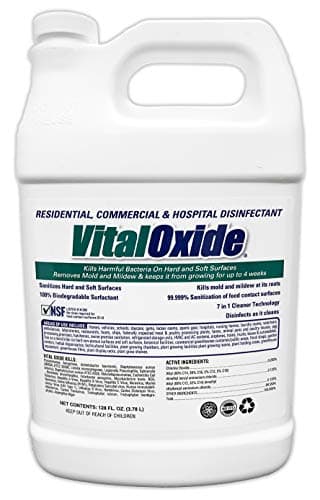
For surface mildew on a carpet that has dried out, Vital Oxide Disinfectant 1 Gallon: EPA-registered, labeled to control mold and mildew on soft surfaces, and approved by WoolSafe and the Carpet and Rug Institute per its listing. For a single small patch, the Concrobium Mold Control Aerosol 14.1 oz names fabric among its surfaces.

4.6 on Amazon · 2,086 ratings

Quick answer

For mildew on the surface of a carpet whose pad is dry, use an EPA-registered product whose label names carpet or soft surfaces, such as Vital Oxide Disinfectant 1 Gallon, rated 4.6 stars across 2,086 Amazon ratings. Its listing says it controls mold and mildew growth on soft surfaces for up to 4 weeks and carries WoolSafe and Carpet and Rug Institute approval. If the pad underneath got wet and stayed wet past 24 to 48 hours, no spray fixes it: EPA notes that carpet that becomes moldy may have to be thrown away.

Our Picks at a Glance

Every pick below is currently stocked — ratings and stock read from Amazon on 12 October 2026.

Best for a Small Patch
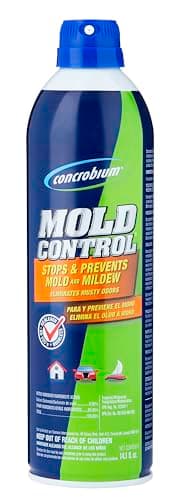
Concrobium Mold Control Aerosol 14.1 oz (EPA Registered, Bleach-Free, Fine Fogging Mist)
4.2 from 2,507 Amazon ratings · checked 12 Oct

Best for: A patch of mildew a foot or two across on a rug, along a carpet edge or under furniture

EPA registration (stated):
Registered with the EPA for mold control when used as directed
Surfaces named:
Drywall, wood, tile, grout, concrete, fabric and more; test an inconspicuous area first

Listing verified 13 Oct 2026

How this page was made: we compare the current Amazon listings, the makers' published specs and what verified buyers report, then rank by fit for the job. Ratings, review counts and stock are read from Amazon and dated. We earn a commission on purchases through our links; it does not change the order. Reviewed by Marcus Reed, IICRC-certified Water Restoration Technician.

Full Reviews

Each pick in detail: what the listing states, what buyers report, and where it falls short.

#1
Best Overall

Check price

on Amazon ↗

Listing verified 13 Oct 2026

Vital Oxide Disinfectant 1 Gallon (EPA Reg. 82972-1, Mildewstat for Soft Surfaces, WoolSafe and CRI Approved)See it on Amazon ↗

Quick Verdict

Vital Oxide Disinfectant 1 Gallon: EPA-registered mildewstat for soft surfaces with carpet-industry approvals; add a spot cleaner for stains.

Key Specs

EPA registration

82972-1

Mildew claim (stated)

Controls and inhibits mold and mildew growth for up to 4 weeks on soft surfaces

Carpet approvals (stated)

WoolSafe and CleanSeal approved; Carpet and Rug Institute approved

Format

Ready-to-use liquid, 1 gallon; a sprayer is not mentioned on the listing

Fragrance

Fragrance free

Safety (stated)

Category IV toxicity rating; no PPE needed for the product

Pros

  • The only pick whose listing names carpet-industry approvals, WoolSafe and the Carpet and Rug Institute
  • Its mildewstat claim covers soft surfaces for up to 4 weeks, which suits a basement rug sitting in damp air
  • Fragrance free, so it does not mask a musty smell that would tell you the mildew is back
  • Ready to use from the jug with no mixing, and the same listing covers hard surfaces in the room

Cons

  • Controls growth but does not claim to lift the gray or dark stain mildew leaves behind
  • The listing does not mention a sprayer, and carpet needs a light, even mist rather than a pour
  • Like any liquid, too much soaks through to the pad, so the carpet has to be dried quickly afterward

Suited to

Surface mildew on a wall-to-wall carpet or area rug that got damp but whose pad stayed dry

Our take

Two lines on this listing make it the carpet pick. One is the soft-surface mildewstat claim of up to 4 weeks, which is what you want on a rug in a basement that runs damp. The other is the WoolSafe and Carpet and Rug Institute approval, a sign the formula was assessed on carpet fibers, something no hard-surface mold spray can show. Read the limits too. It controls growth; it does not lift stains, so a gray shadow may stay until a spot cleaner deals with it. The listing says no PPE is needed for the product itself, but the mold is a different matter: EPA's guide suggests gloves, goggles and an N-95 respirator when cleaning moldy areas.

Check today's price on Amazon →

Affiliate link — commission at no extra cost to you

Compare elsewhere

These open a search for this model. We quote prices only where we can verify them — Amazon, Sylvane and eBay.

#2
Best for a Small Patch

Check price

on Amazon ↗

Listing verified 13 Oct 2026

Concrobium Mold Control Aerosol 14.1 oz (EPA Registered, Bleach-Free, Fine Fogging Mist)See it on Amazon ↗

Quick Verdict

Concrobium Mold Control Aerosol 14.1 oz: a light, bleach-free mist for a small patch, and by its own listing not a stain remover.

Key Specs

EPA registration (stated)

Registered with the EPA for mold control when used as directed

Surfaces named

Drywall, wood, tile, grout, concrete, fabric and more; test an inconspicuous area first

Format

14.1 oz aerosol with a fine fogging mist

Contains no (stated)

Bleach, ammonia or VOCs

Odor (stated)

Odorless

Stain removal (stated)

Not intended for use as a stain remover

Pros

  • The fine aerosol mist puts a thin, even layer on the pile instead of soaking it
  • Names fabric among its surfaces and tells you to test first, the right habit on dyed carpet
  • Contains no bleach, the usual cause of pale spots on colored carpet
  • Leaves a barrier that the listing says helps prevent regrowth

Cons

  • The listing says plainly that it is not a stain remover
  • 14.1 oz covers a patch, not a room
  • Carpet is not named on the listing; fabric is, so the colorfast test matters

Suited to

A patch of mildew a foot or two across on a rug, along a carpet edge or under furniture

Our take

A fogging aerosol suits carpet better than a trigger spray for one reason: it wets the surface fibers lightly without pushing liquid down into the backing and pad, where it would take days to dry. Concrobium's listing is also unusually candid. It says the product is not intended for use as a stain remover, so expect the growth to stop while any dark mark stays. That candor is useful, because it tells you the order of work: vacuum with a HEPA vacuum, mist, let it dry, then deal with the stain. EPA notes that dead mold may still cause allergic reactions in some people, which is why the vacuuming and cleanup count as much as the spray.

Check today's price on Amazon →

Affiliate link — commission at no extra cost to you

#3
Best for the Stain Left Behind

Check price

on Amazon ↗

Listing verified 13 Oct 2026

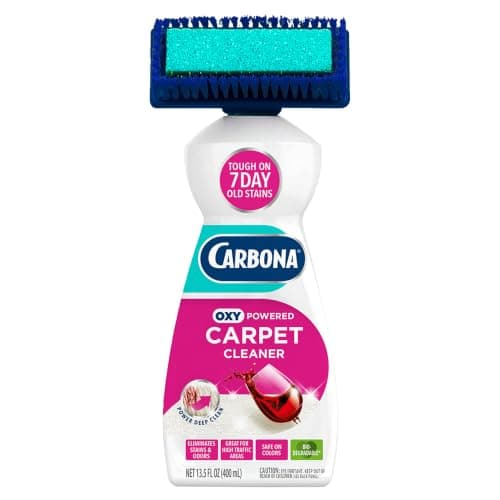
Carbona 2-in-1 Oxy-Powered Carpet Spot Cleaner, 13.5 fl oz (Built-In Sponge and Bristle Applicator)See it on Amazon ↗

Quick Verdict

Carbona 2-in-1 Oxy-Powered Carpet Spot Cleaner: oxygen spot cleaning for the stain once the mildew is treated, with no mold claim of its own.

Key Specs

Type

Oxygen-based carpet spot cleaner

Applicator

Built-in sponge and bristle head

Size

13.5 fl oz

Use (stated)

Spot cleaning only; not for use in a steam cleaner

Colorfast advice (stated)

Test in a hidden area and check once the spot is dry

Do not use on (stated)

Silk, velvet, Haitian cotton or fabrics harmed by water

Pros

  • The brush-and-sponge head works cleaner into a small spot without a separate tool
  • Oxygen-based, so it lifts stains without chlorine bleach
  • Spells out which fabrics to avoid and how to run the colorfast test

Cons

  • No mold or mildew claim; use it only after the growth has been treated and dried
  • Spot cleaning only, so it is no help across a whole room
  • Scrubbing a damp, live mildew spot can spread spores, so it comes last in the order of work

Suited to

The gray or dark mark that stays on carpet after the mildew has been killed and dried

Our take

Mold sprays and stain removers are different products, and a mildewed carpet usually needs both. Once the growth is treated and dry, what is left is a shadow in the fibers, and an oxygen-based spot cleaner is a safer next step on dyed carpet than anything with chlorine. Carbona's listing is specific about the colorfast test, telling you to check the hidden spot once it is dry, since some dye loss only shows then. It also rules out silk, velvet and fabrics harmed by water, which covers many delicate rugs. Use only as much as the stain needs and lift the excess with a clean, damp cloth, because liquid that reaches the pad undoes the rest of the cleanup.

Check today's price on Amazon →

Affiliate link — commission at no extra cost to you

#4
Best for the Musty Smell After Drying

Check price

on Amazon ↗

Listing verified 13 Oct 2026

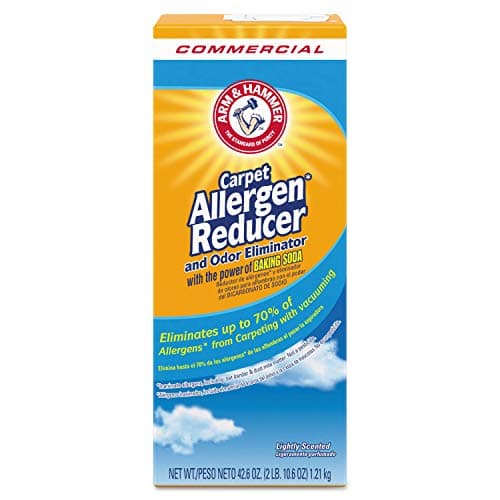
Arm & Hammer Carpet & Room Allergen Reducer & Odor Eliminator, 42.6 oz Shaker Box (Baking Soda Powder)See it on Amazon ↗

Quick Verdict

Arm & Hammer Carpet & Room Allergen Reducer & Odor Eliminator: dry baking soda for the last musty smell, and a test of whether the damp is gone.

Key Specs

Type

Dry baking soda powder

Size

42.6 oz shaker box

Claims (stated)

Eliminates odors at the source; reduces allergens in carpeting

How it works (stated)

Breaks the static charge that binds allergens to fibers so they vacuum up

Moisture added

None

Mold claim

None

Pros

  • Adds no moisture, the one treatment here that cannot wet the pad
  • Baking soda soaks up musty odor left in the fibers once the carpet is dry
  • A large shaker box covers several rooms

Cons

  • Does not kill mold or lift stains; a smell that comes back means damp or growth is still there
  • Needs a thorough vacuuming afterward, ideally with a HEPA vacuum, to pick the powder back up

Suited to

Clearing the last musty smell from a carpet that is fully dry and already treated

Our take

This is on the list because a musty smell is the most common reason people look for a carpet mold remover, and the smell is a test as much as a nuisance. Baking soda soaks up odor without adding water, so it is safe on carpet that has only just dried. Use it as a check: sprinkle, wait, vacuum, and notice what happens over the next week. If the smell comes back, something under the carpet is still damp or growing, often the pad or the subfloor, and no powder will reach it. EPA lists the underside of carpets and pads among the places hidden mold grows, so lift a corner before buying anything else.

Check today's price on Amazon →

Affiliate link — commission at no extra cost to you

#5
Best for Preventing Regrowth on Rugs

Check price

on Amazon ↗

Listing verified 13 Oct 2026

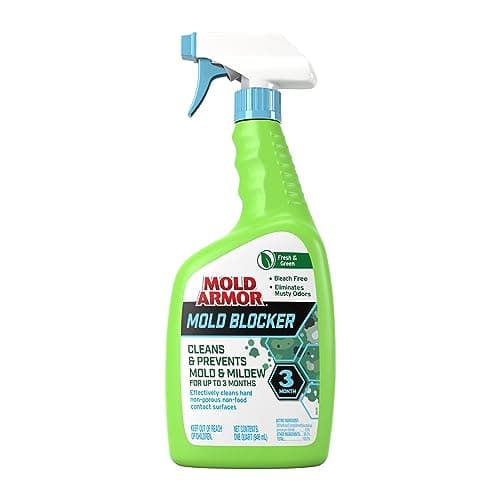
Mold Armor Mold Blocker, 32 oz (Prevention Spray for Carpets and Fabrics, Up to 3 Months)See it on Amazon ↗

Quick Verdict

Mold Armor Mold Blocker: a 3-month prevention spray that names carpets, for a cleaned rug in a damp room, not for killing growth.

Key Specs

Type

Mold prevention spray

Size

32 oz

Prevention (stated)

Prevents mold growth for up to 3 months

Surfaces named

Carpets, fabrics, upholstery, linens, draperies, bedding and furniture

Directions (stated)

Spray until wet, allow to air dry, repeat every 3 months on fabric

Kills existing mold

Not claimed

Pros

  • Names carpets outright, which most mold sprays leave off their labels
  • A 3-month interval carries a basement rug through a humid summer with one repeat
  • Covers curtains, bedding and upholstery in the same damp room

Cons

  • Prevention only; it does not claim to kill or remove growth already there
  • The directions say spray until wet, so it belongs on a carpet that can dry quickly

Suited to

A clean, dry rug or carpet in a basement or closet that keeps turning musty

Our take

A blocker comes after the cleanup, not instead of it. Mold Armor's listing describes an invisible barrier that prevents growth for up to 3 months on fabric, and it names carpets outright. The catch on carpet is the direction to spray until wet. Wet carpet is the problem you are trying to prevent, so apply it on a dry day with a fan blowing across the floor and the dehumidifier running, and treat the face of the pile rather than soaking it. A spray buys time; humidity decides the outcome. EPA advises keeping indoor humidity below 60%, ideally 30% to 50%, and a rug on a basement slab above that range will grow mildew again whatever is sprayed on it.

Check today's price on Amazon →

Affiliate link — commission at no extra cost to you

Buyer's Guide

What to know before you buy.

Surface Mildew or a Wet Pad: Decide Before You Buy

Every product on this page assumes the problem is on top. Surface mildew shows as a white, gray or greenish fuzz on the pile, usually in a damp basement, a closet, or under furniture where air does not move, and the backing below is dry. A leak or flood is different. Lift a corner and press a paper towel on the pad: if it comes up damp, smells sour, or the pad is stained, the growth is underneath, where no spray reaches. EPA says absorbent or porous materials such as carpet may have to be thrown away if they become moldy, because mold fills the spaces inside them and may be impossible to remove completely. EPA also lists the underside of carpets and pads among the places hidden mold grows. Check underneath first, then shop.

What Each Kind of Carpet Product Actually Does

Carpet mold products do four different jobs, and most listings do only one. An EPA-registered mold control product, such as Vital Oxide or Concrobium, is labeled to stop growth; look for the registration and for the word carpet, fabric or soft surfaces. An oxygen spot cleaner such as Carbona lifts the stain mildew leaves but does not claim to kill anything. Baking soda powder deals with odor only. A prevention spray such as Mold Armor Mold Blocker slows regrowth on a clean, dry rug. Skip hard-surface sprays, even good ones: Mold Armor's Kill and Control spray and Moldex Mold Killer both state hard, nonporous surfaces on their listings. Keep chlorine bleach off carpet too. EPA does not recommend biocides such as bleach as a routine part of mold cleanup, and bleach can pale dyed fibers for good.

Test for Colorfastness, Then Use Less Than You Think

Before treating a visible spot, test the product somewhere hidden: inside a closet, under a sofa, or on an offcut if you kept one. Apply a little, wait the time on the label, then press a damp white cloth on the area. Color on the cloth, or a pale ring once it dries, means stop. Carbona's listing makes the point that some changes only show once the spot is dry, so look again the next day. Wool, silk and natural-fiber rugs need extra care, and an expensive or heirloom rug is worth a specialist; EPA suggests consulting one when an item is costly or has sentimental value. When the test passes, mist rather than pour. The aim is to wet the top of the pile, not the backing, because liquid that reaches the pad starts the problem over.

The Cleaning Order: Vacuum Dry, Treat Lightly, Dry Fast

Order matters more than product. Open a window, put on gloves, goggles and an N-95 respirator as EPA's guide suggests for mold cleanup, and vacuum the dry carpet first, ideally with a HEPA vacuum, so loose spores go before anything gets wet. Then treat by the product's own directions and dwell time. Blot or extract the excess with a wet/dry vacuum; do not scrub hard, which spreads growth. Then dry fast. EPA says that if wet materials are dried within 24 to 48 hours after a leak or spill, in most cases mold will not grow, and the same clock runs on a carpet you have just treated. Point a fan across the surface, run a dehumidifier with the door closed, and keep people off it until a paper towel pressed into the pile comes up dry.

When the Carpet Has to Go: Who Should Not Buy a Spray

Skip the remover and plan on replacement if the carpet was soaked by a flood, a sewer backup or a toilet overflow; EPA says damage from sewage or other contaminated water calls for a professional with experience cleaning buildings damaged that way. The same goes when the carpet stayed wet for days after a leak, when the pad is wet, stained or sour, or when growth covers more than about 10 square feet, the line EPA draws for a routine homeowner cleanup. Pad is inexpensive to replace and hard to dry in place. Anyone with asthma or mold allergies is better off leaving this cleanup to someone else, and EPA advises consulting a health professional first if you have health concerns. These cases need the carpet and pad pulled, the subfloor dried and checked, and, for an insurance claim, photos before anything is thrown out.

Keeping Mildew From Coming Back

Carpet mildew is a humidity problem first. EPA advises keeping indoor humidity below 60%, ideally 30% to 50%, and a basement carpet over a concrete slab often sits well above that in summer, because the slab is cool and damp air condenses at floor level. A hygrometer set on the floor tells you more than one on a shelf. Run a dehumidifier with a hose to a drain so it never stops with a full bucket. Pull furniture a few inches off the walls so air reaches the carpet edges. On a basement slab, a rug with a solid rubber backing can hold moisture against the concrete, so a breathable rug pad is the safer choice. After shampooing any carpet, dry it the same day with fans and the dehumidifier, since a clean carpet that dries slowly is where a lot of mildew starts.

Frequently Asked Questions

What kills mold in carpet?

An EPA-registered mold control product labeled for carpet or soft surfaces, such as Vital Oxide Disinfectant or Concrobium Mold Control, kills or controls surface growth.

Check the label for carpet, fabric or soft surfaces, because many mold sprays are for hard surfaces only. Killing it is half the job: EPA notes dead mold can still cause allergic reactions, so vacuum it out afterward and get the carpet dry within a day or two.

Can moldy carpet be saved?

SometimesIf the mildew is on the surface and the pad underneath is dry. A rug or carpet that went musty from damp air can usually be treated, cleaned and dried.

Carpet that stayed wet after a leak, has mold in the backing or pad, or was soaked by sewage usually cannot, and EPA says moldy carpet may have to be thrown away. Lift a corner and check the pad before spending anything on products.

Does vinegar kill mold in carpet?

Vinegar can kill some surface mold, but it is a weak choice for carpet. It is acidic, it can affect some dyes, and spraying it adds the moisture mold needs, while it does nothing for growth in the pad.

If you try it, test a hidden spot first, mist lightly, and dry the area within hours. An EPA-registered product labeled for soft surfaces is the more predictable option.

Can you steam clean mold out of carpet?

Steam or hot-water extraction can clean a carpet after the mold is treated, but it is not a fix on its own. These machines put a lot of water into the pile, and if the carpet does not dry within a day, they can make mildew worse.

Vacuum first, treat the growth, then extract, and run fans and a dehumidifier until the base of the pile is dry. Carbona's spot cleaner, for one, is not for use in a steam cleaner.

How do you get a mildew smell out of carpet?

Find out first whether the smell comes from the surface or from below. Dry the room, treat the carpet with a soft-surface mold product, let it dry, then sprinkle baking soda such as Arm & Hammer Carpet & Room Allergen Reducer & Odor Eliminator and vacuum it up.

If the smell returns within a week, the pad or subfloor is still damp, and only lifting the carpet will show it. Holding the room under 50% humidity stops a cleaned carpet turning musty again.

Is mold in carpet dangerous?

For most healthy people a small patch of carpet mildew is a cleanup job rather than an emergency, but it should not be left. EPA says inhaling or touching mold can cause allergic reactions in sensitive people, and asthma attacks in people with asthma who are allergic to mold.

Carpet adds to the exposure because every footstep lifts spores into the air. Large areas, sewage-related growth or anyone with health concerns call for professional help.

Who do I call right now for water damage?

Call (888) 840-6512. The line is answered 24 hours a day, seven days a week, and connects you with an IICRC-certified water damage restoration company that serves your area. A recorded menu picks up first: choose water damage or mold, key in your 5-digit ZIP code, and hold through the short silence while the call is passed to the company.

Describe what you can see — where the water is coming from, how long it has been there, and whether it smells — the more specific you are, the faster the right company is on the line. If the source is a pipe or an appliance, shut the main water valve first. Have four things ready and the call goes quickly: the address, when the water started, what is wet now, and whether you have filed an insurance claim.

Still not sure which of these is your situation? (888) 840-6512 · toll-free · answered 24/7

Sources

  1. EPA — Mold Cleanup in Your Home
  2. EPA — A Brief Guide to Mold, Moisture, and Your Home

Methodology: How we source and verify data · Report an error

How we chose these picks

  • Every pick is a current listing. Stock, star ratings and rating counts are read from Amazon by script and carry the date they were read.
  • Nothing under 4.0 stars makes the list, and the top pick needs a large rating count, so one good week of reviews cannot put it there.
  • Specs are quoted from the listing or the maker, with the test condition behind the number where there is one, and sized against the job rather than the room on the box.
  • We do not run lab or field tests. Where a spec matters, we say what it is measured under and what it cannot tell you.

Free 2-day shipping

Amazon Prime members pay no shipping on restoration equipment

Dehumidifiers, air movers, and moisture meters qualify for free Prime delivery — bulk items that otherwise cost $15–$40 to ship.

Try Prime free →

Affiliate link — HearthDry earns a bounty if you sign up; costs you nothing extra.

Also Worth Comparing

Best Mold Remover Sprays in 2026 — RMR-86, Mold Armor & Concrobium Compared

The three most-searched mold sprays do three DIFFERENT jobs: one erases stains, one disinfects, one kills and prevents. Using the wrong one is why 'the mold came back.' Here's which to use where — and the honest line where sprays stop working.

Read the comparison

Best Mildew and Mold Remover for Clothes and Fabric in 2026 — What Goes in the Wash, and What Belongs on the Patio

Mildew on clothes comes out mostly in the wash and the dry, so the product you buy is for the mark it leaves, and it has to suit the fabric: color-safe for clothes, a bleach cleaner only for outdoor fabrics labeled for it. These picks cover washable clothes, patio cushions, the washer gasket behind musty towels and the damp closet that started it.

Read the comparison

Best Wet/Dry Vacuums for Water Damage in 2026 — Standing Water Removal

Before you run a dehumidifier, you need to remove standing water. These are the best wet/dry vacuums for water damage — compared on capacity, suction, and filtration.

Read the comparison

Best Dehumidifier for Mold and Musty Smells in 2026 — Picked to Hold a Room Below 50%

A dehumidifier stops mold by taking away the damp it needs, and the musty smell usually leaves with the damp. It does not kill mold that is already growing, so these picks are judged on the job they can do: holding a basement, a room or a closet below 50% humidity, day after day.

Read the comparison

Best Air Movers (Airmovers) for Water Damage Drying in 2026

Air movers dry wet carpet, walls and floors by keeping a fast stream of air on the wet surface. These are three air movers for residential water damage, plus a high-velocity floor fan to use beside them.

Read the comparison