
Quick answer
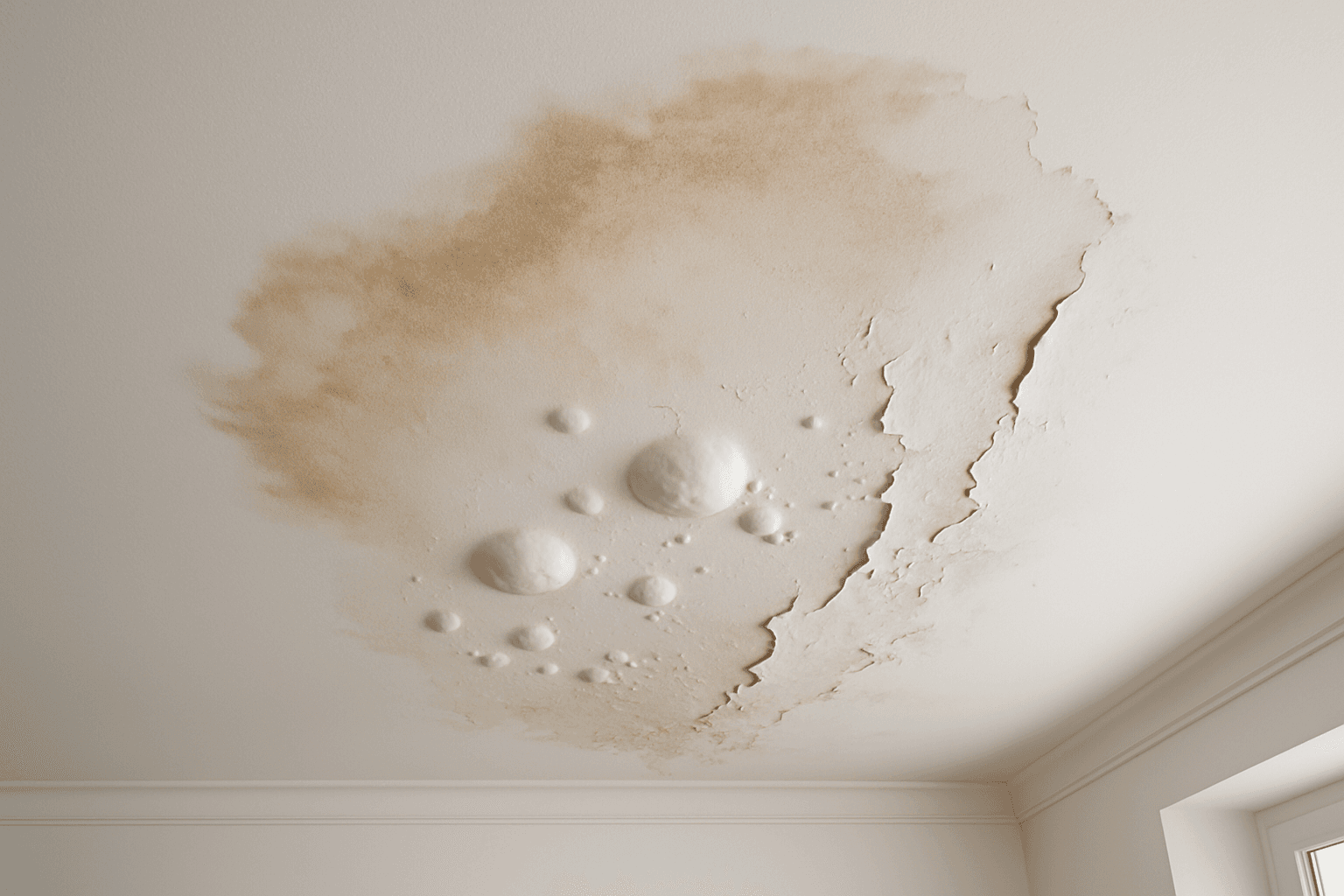
Mold on a bathroom ceiling has two causes with two fixes. Uniform dark speckling spread across the ceiling — heaviest above the shower and in corners — is condensation mold: steam condensing on a cold surface. Clean it with detergent and water, then fix the humidity with an exhaust fan sized at 1 CFM per square foot (50 CFM minimum) run for 20 minutes after every shower. A stain with a defined edge, a ring pattern, or a soft, sagging spot is water coming from above — a roof, an upstairs bathroom, or a pipe — and no cleaning holds until that leak is found. Over about 10 square feet of growth, or any mold on drywall that has gone soft, EPA guidance points to professional remediation. Call (888) 840-6512 to reach a certified water damage restoration company in your area; the line is answered 24/7.
Press 1 for water damage or 2 for mold, then your 5-digit ZIP. The line goes quiet for about half a minute while it connects — that is normal, stay on.
Written & reviewed by Marcus ReedIICRC WRT
Reviewed August 29, 2026· Next review Feb 2027
Two Ceilings, Two Problems
Mold on a bathroom ceiling is one of the most-searched mold problems in American homes, and most of the advice online treats it as a single thing. It is two things. Condensation mold — the dark speckling that spreads across the ceiling above the shower — is a ventilation problem wearing a mold costume. Leak mold — a stain with an edge, a ring, or a soft spot — is water arriving from above, and it does not care how well you clean. Telling them apart takes a minute and decides everything that follows.
How to Tell Which One You Have
| What you see | What it means | What fixes it |
|---|---|---|
| Fine dark speckling spread widely, heaviest above the shower and in corners | Condensation mold on the paint film | Clean + ventilation |
| Growth concentrated along the ceiling–wall joint and in the corners farthest from the fan | Cold spots where steam condenses first | Clean + ventilation + insulation check |
| A stain with a defined edge, a tan or brown ring, or a drip mark | Water leaking from above | Find the leak first |
| Soft, sagging, or bubbling drywall | Saturated ceiling material | Leak repair + material replacement |
| Mold returning within weeks of cleaning, in the same spot | Active moisture source above | Leak — not a cleaning problem |
The corner test is the quickest: condensation lands where the ceiling is coldest, so it clusters in exterior corners and along the joint with exterior walls. A leak lands where the water is, which is usually a single spot with a boundary. If you are unsure, press gently. Condensation mold sits on firm, painted drywall; leak damage feels soft.
Condensation Mold: Why the Ceiling Grows It
A shower puts a lot of water vapor into a small room. When that warm, saturated air touches a ceiling that is colder than its dew point, the vapor condenses into a film of water — and a painted ceiling that is wet for an hour after every shower, every day, is a surface mold cannot refuse. The colony feeds on the dust and soap residue in the paint film; it does not need the drywall at all, which is why this kind of growth is shallow and cleans off.
The ceiling is cold for one of three reasons: the room has no exhaust fan, the fan is too weak or runs too briefly to clear the steam, or the ceiling above is poorly insulated so the drywall tracks the attic temperature. In winter all three get worse at once — colder ceiling, hotter showers, windows shut.
Cleaning It Off (Under 10 Square Feet)
EPA's guidance for mold on hard surfaces is plain: scrub with detergent and water, then dry completely. For a painted ceiling that is exactly right. Gloves, an N95, eye protection, the fan on or a window open, and a stiff sponge. Work in small sections, do not soak the ceiling, and let it dry a full day before painting. Bleach is not required for painted surfaces — EPA does not recommend biocides as a routine part of mold cleanup — and on a ceiling it mostly drips into your eyes. If the speckling covers more than about 10 square feet, the same guidance suggests professional help, and the who-to-call guide explains which professional.
Then the step everyone skips: mold-resistant primer before repainting. Paint applied straight over a cleaned ceiling re-stains within a season because the surface still carries spores and the same daily wetting. Primer designed for damp rooms is the difference between a fix and a repeat.
Talk to a water damage pro now
Answered 24/7 · Toll-free · answered 24/7 · no obligation
(888) 840-6512- Describe the damage & give your ZIP
- You're routed to the on-call local crew
- They quote — you decide, no obligation
The Fix That Holds: Sizing the Fan
Cleaning removes the colony. Only ventilation removes the cause, and most bathroom fans are too small, run too briefly, or vent into the attic — which moves the mold problem upstairs, where attic mold is far more expensive to deal with.
The Home Ventilating Institute's sizing rule for bathrooms under 100 square feet: 1 CFM per square foot of floor area, minimum 50 CFM. An 8 × 10 bathroom needs 80 CFM. Bathrooms over 100 square feet add 50 CFM for each toilet, shower, or tub. Then three details that matter as much as the number:
- Duct outdoors, never into the attic. Check where the duct goes — a surprising number end at the insulation.
- Run it 20 minutes after the shower ends. That is how long a wet ceiling takes to dry. A $20 timer switch makes it automatic; a humidity-sensing switch does it without thought.
- Hold indoor humidity under 50%. EPA's range for controlling mold is 30–50% relative humidity, and a $10 hygrometer tells you whether the fan is winning. A whole-house humidity problem shows up on windows too — mold on window sills has the same root cause.
Where the ceiling is cold because the insulation above it is thin or missing, add insulation — a ceiling that stays closer to room temperature simply condenses less.
Leak Mold: Find the Water First
A stain with an edge means water is arriving from above, and the list of sources is short: a roof leak, a bathroom or plumbing line on the floor above, an HVAC condensate line, or a fan duct sweating in a cold attic and dripping back onto the drywall. The ceiling water damage guide walks through tracing the source. Do not clean and repaint over it — the growth on the surface is the least of what a leak is doing, because the drywall, the framing, and the insulation above are wet, and mold inside a ceiling cavity can be far larger than the patch showing through.
Once the leak is fixed, the ceiling material decides the next step. Drywall that was wet for more than about 48 hours, or that has gone soft, is replaced rather than cleaned — the drywall decision lays out the cut-or-keep rule. If the water event was sudden — a burst supply line upstairs — the resulting mold work is often insurable; how mold and insurance interact covers what qualifies.
When It Is a Professional's Job
- Growth over about 10 square feet (EPA's threshold for professional remediation)
- Any soft, sagging, or stained drywall — a leak, not condensation
- Mold that returns within weeks of a proper cleaning and ventilation fix
- A musty smell with little visible growth, suggesting a colony inside the ceiling cavity
- Anyone in the home with asthma, allergies, or a compromised immune system reacting to the room
Professional remediation of a bathroom ceiling runs on scope — the mold remediation cost guide shows what small contained jobs and open-the-ceiling jobs typically cost — and an independent inspection is worth its price only when the source is genuinely unknown.
Bottom Line
Speckled across the ceiling: condensation. Clean it with detergent and water, prime, repaint, and fix the fan — 1 CFM per square foot, ducted outside, run 20 minutes after every shower. A stain with an edge or a soft spot: a leak, and nothing holds until the water is found. The bathroom ceiling is the easiest mold problem in the house to solve permanently and the easiest to solve wrong, and the whole difference is whether you fix the moisture or just the paint.
Reading to confirm what you already suspect?
Confirm it in two minutes instead — the pro on this line answers questions about YOUR situation all day: what it is, what it should cost, whether you even need service. If you want, they'll set the appointment on the same call.
Toll-free · no obligation · asking costs nothing
Frequently Asked Questions
Why does mold keep coming back on my bathroom ceiling?
Because the moisture that grew it is still arriving. Condensation mold returns as long as shower steam meets a cold ceiling with nowhere to go — which means the exhaust fan is missing, undersized, vented into the attic instead of outdoors, or switched off too soon.
Cleaning removes the colony; only ventilation removes the cause. Run the fan for 20 minutes after each shower and hold indoor humidity under 50% and the ceiling stops feeding growth.
Is black mold on a bathroom ceiling dangerous?
Color does not identify a species — the dark speckling typical of bathroom ceilings is usually common Cladosporium or Aspergillus growing on the paint film, not Stachybotrys.
Any mold can irritate airways, especially for people with asthma or allergies, so clean it with protection (gloves, N95, ventilation) rather than ignoring it. What makes ceiling mold a real concern is not its color but its cause: growth fed by a leak inside the ceiling can be far larger than the patch you see.
Can I just paint over mold on the ceiling?
NoPaint seals the colony in place with its moisture, and it grows back through the new coat within months — usually faster, because the paint film holds humidity against it.
Clean first, let the ceiling dry fully, then use a mold-resistant primer before repainting. Painting is the finish, not the fix.
What size exhaust fan does a bathroom need?
The Home Ventilating Institute's rule for bathrooms under 100 square feet is 1 CFM of fan capacity per square foot of floor area, with a 50 CFM minimum. An 8 by 10 foot bathroom needs at least 80 CFM.
Larger bathrooms add 50 CFM per toilet, shower, or tub. Just as important as the number: the duct must run outdoors, not into the attic, and the fan needs to run about 20 minutes after the shower ends.
Who do I call right now for water damage?
Call (888) 840-6512. The line is answered 24 hours a day, seven days a week, and connects you with an IICRC-certified water damage restoration company that serves your area. A recorded menu picks up first: choose water damage or mold, key in your 5-digit ZIP code, and hold through the short silence while the call is passed to the company.
Describe what you can see — where the water is coming from, how long it has been there, and whether it smells — the more specific you are, the faster the right company is on the line. If the source is a pipe or an appliance, shut the main water valve first. Have four things ready and the call goes quickly: the address, when the water started, what is wet now, and whether you have filed an insurance claim.
Still not sure which of these is your situation? (888) 840-6512 · toll-free · answered 24/7
Sources
- EPA — Mold Cleanup in Your Home
- EPA — A Brief Guide to Mold, Moisture and Your Home
- Home Ventilating Institute — Bathroom Ventilation Sizing
Methodology: How we source and verify data · Report an error
Disclaimer: HearthDry is an independent educational resource. This article is for informational purposes only and does not constitute professional, legal, or insurance advice. Consult licensed professionals before making decisions about your property or insurance claims.
Free 2-day shipping
Amazon Prime members pay no shipping on restoration equipment
Dehumidifiers, air movers, and moisture meters qualify for free Prime delivery — bulk items that otherwise cost $15–$40 to ship.
Affiliate link — HearthDry earns a bounty if you sign up; costs you nothing extra.
Equipment
What each machine actually does
Removes the moisture the structure is still giving off — the machine that decides how long drying takes
See the picks →Moves air across wet surfaces so the dehumidifier has something to take out of the air
See the picks →Finds water behind walls and under floors, and tells you when a material is actually dry
See the picks →Alerts you the moment a leak starts — the cheapest thing on this list and the only preventive one
See the picks →Those pages carry affiliate links. As an Amazon Associate, HearthDry earns from qualifying purchases; it costs you nothing extra.
Our Amazon storefront →Advertisement
