Quick answer
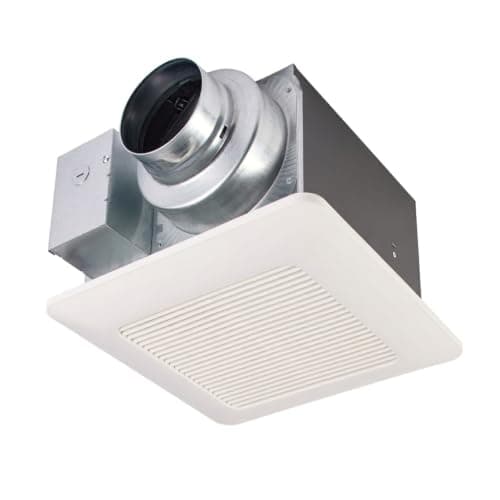
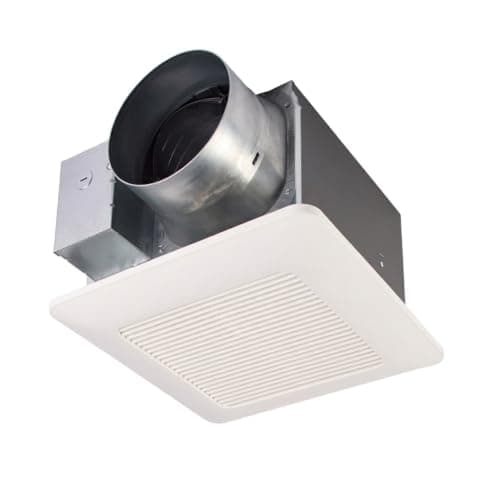
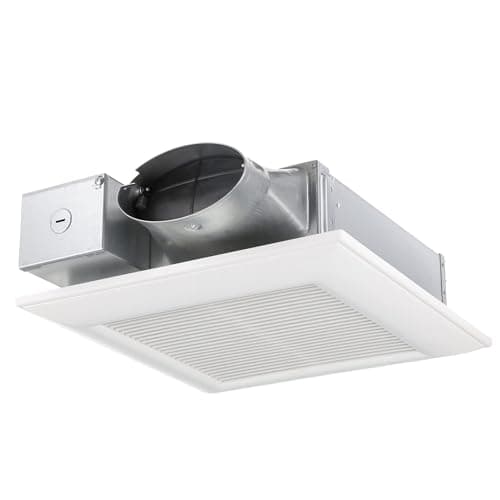
The best bathroom exhaust fan moves at least 1 CFM per square foot of floor, is quiet enough that people leave it running, and is ducted outdoors; for most bathrooms up to 100 sq ft, that is the Panasonic FV-0510VS1 WhisperValue Bath Fan, rated 4.6 stars across 1,645 Amazon ratings. Its listing gives 50, 80 or 100 CFM at under 0.3, 0.4 and 0.9 sones. If you cannot reach the ceiling from an attic, buy a room-side retrofit fan instead, and if the fan gets forgotten, buy one with a humidity sensor. Run any fan for 20 minutes after each shower.
Buyer's Guide
What to know before you buy.
Why the Fan Comes Before Any Mold Product
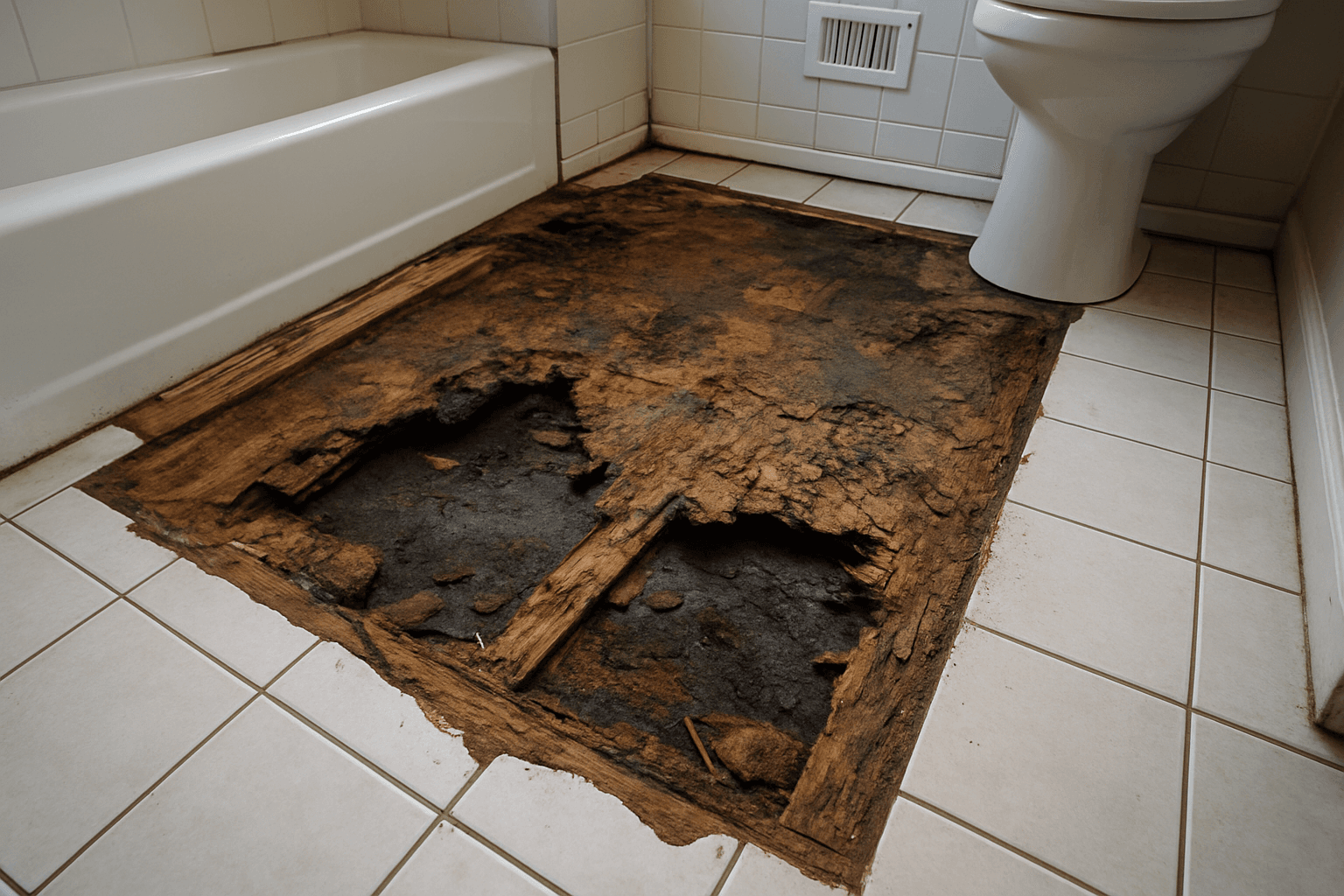
Bathroom mold grows where shower steam condenses on a cool ceiling, grout line or window and the room never dries between showers. Sprays and primers deal with growth that is already there; the exhaust fan removes the moisture that feeds it. The EPA's mold guide advises running the bathroom fan or opening a window while showering, and keeping indoor humidity below 60 percent, ideally between 30 and 50 percent. A fan that is too small, too loud to leave on, or ducted into the attic fails that test even if it runs every day. That is why this page judges fans on airflow, stated noise and the ducting they need rather than on lights or extras. If the ceiling has already grown mold, fix the fan first and clean afterwards, or the growth tends to come back.
Sizing a Fan by CFM
Fan airflow is rated in cubic feet per minute (CFM). A common rule, from Home Ventilating Institute guidance, is 1 CFM per square foot of floor for bathrooms up to about 100 sq ft, with 50 CFM as the minimum. A 5 by 8 ft bathroom is 40 sq ft, so 50 CFM is enough; an 8 by 10 ft bathroom needs at least 80 CFM. Above 100 sq ft, the same guidance adds 50 CFM for each toilet, shower and tub, and 100 CFM for a jetted tub. Ceilings above 8 ft, long duct runs and several bends all argue for the next size up, because a fan's rated airflow is measured against a modest, fixed amount of duct resistance, and a long flexible duct with bends delivers less than the box says. Fans with an airflow selector let you choose at installation.
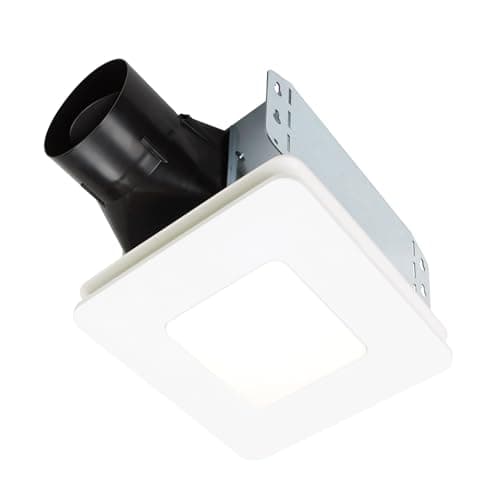
Sones: Reading the Noise Figure
Fan noise is rated in sones, and lower is quieter. The scale follows perceived loudness, so a 2 sone fan sounds about twice as loud as a 1 sone fan. For a sense of scale, Broan-NuTone lists its own basic 50 CFM replacement motor at 4.0 sones, while the Panasonic WhisperCeiling fans on this page list under 0.3 and the Broan-NuTone retrofit and Tech Drive fans list 1.5. Noise matters for mold, not just comfort, because people switch off a droning fan long before the room has dried. Compare only the figures a maker states, and check which speed they apply to: a fan with several settings may quote the quietest one. Where a listing gives no sone figure at all, treat the noise as unknown rather than assuming it is quiet.
Duct It Outside, Never Into the Attic
Where the air goes matters as much as how much the fan moves. Model building codes require bathroom exhaust to discharge outdoors through a roof or wall cap, not into an attic, soffit or crawl space. A fan that ends in the attic puts the shower's moisture onto cold roof sheathing, where it condenses, and that is a common cause of attic mold. Through a cold attic, use an insulated duct, keep the run short and slope it toward the outlet, so condensation drains outside instead of dripping back through the grille. Match the duct to the fan: 4 in is common, while the large Panasonic here takes 6 in. Make sure the outside cap has a damper that closes when the fan is off, so cold air and insects stay out.
Humidity Sensors, Timers and the 20-Minute Habit
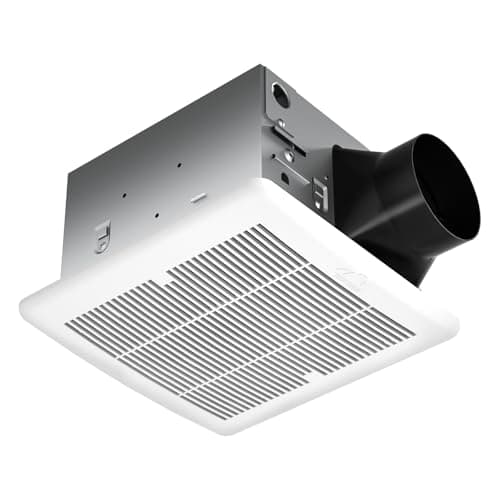
Steam lingers after the water stops, so the common advice is to run a bathroom fan for about 20 minutes after each shower. Few people manage that with a plain on-off switch. There are two fixes. A humidity-sensing fan, such as the Tech Drive model here, turns itself on when the room passes a set level, 60% on its listing. A timer switch does the same job for a fan without a sensor, keeping it running after the light goes off. A hygrometer, a small humidity meter, shows whether the room drops back below 50% within about half an hour of a shower. If it does not, the fan is undersized, the duct is restricted, or the door has no gap beneath it to let replacement air in.
Who Should Not Buy a New Fan, and Replacing One Safely
A new fan is the wrong purchase in three cases. If the mold comes from a leak, fix the leak, because a fan does not dry a wet wall. If the old duct ends in the attic, the duct is the job, and a new fan on the same duct changes nothing. In a basement bathroom with no route outdoors, a dehumidifier handles moisture a fan cannot vent. Otherwise, take the old grille off, measure the housing and note the duct size before buying. A room-side retrofit fan must fit the existing opening, while a deep-housing fan needs an open attic. Any replacement involves wiring: switch off the breaker, not only the wall switch, and hire a licensed electrician if you are unsure, especially for a fan over a tub or shower.
Free 2-day shipping
Amazon Prime members pay no shipping on restoration equipment
Dehumidifiers, air movers, and moisture meters qualify for free Prime delivery — bulk items that otherwise cost $15–$40 to ship.
Affiliate link — HearthDry earns a bounty if you sign up; costs you nothing extra.