
Quick answer
Attic mold remediation is the cleaning of mold from roof sheathing, rafters and trusses — usually by dry-ice or soda blasting, or HEPA-sanding and wire-brushing on smaller areas — inside a containment, with contaminated insulation removed, the wood dried and often sealed with an encapsulant, and the cause fixed. That cause is more often ventilation than a leak: bathroom or dryer fans exhausting into the attic, soffit vents blocked by insulation, air leaks carrying warm moist house air up to cold sheathing where it condenses in winter. Expect roughly $2,000–$6,000 for a typical attic with surface growth, $6,000–$12,000 or more where insulation is replaced and the whole deck is blasted, plus the ventilation and air-sealing work. Attic mold rarely affects the living space directly, but it is a common home-inspection finding that stalls sales, and it shortens the life of the roof deck. Call (888) 840-6512 to reach a certified water damage restoration company in your area; the line is answered 24/7.
Press 1 for water damage or 2 for mold, then your 5-digit ZIP. The line goes quiet for about half a minute while it connects — that is normal, stay on.
Written & reviewed by Marcus ReedIICRC WRT
Reviewed August 30, 2026· Next review Feb 2027
The Attic Is Usually Making Its Own Water
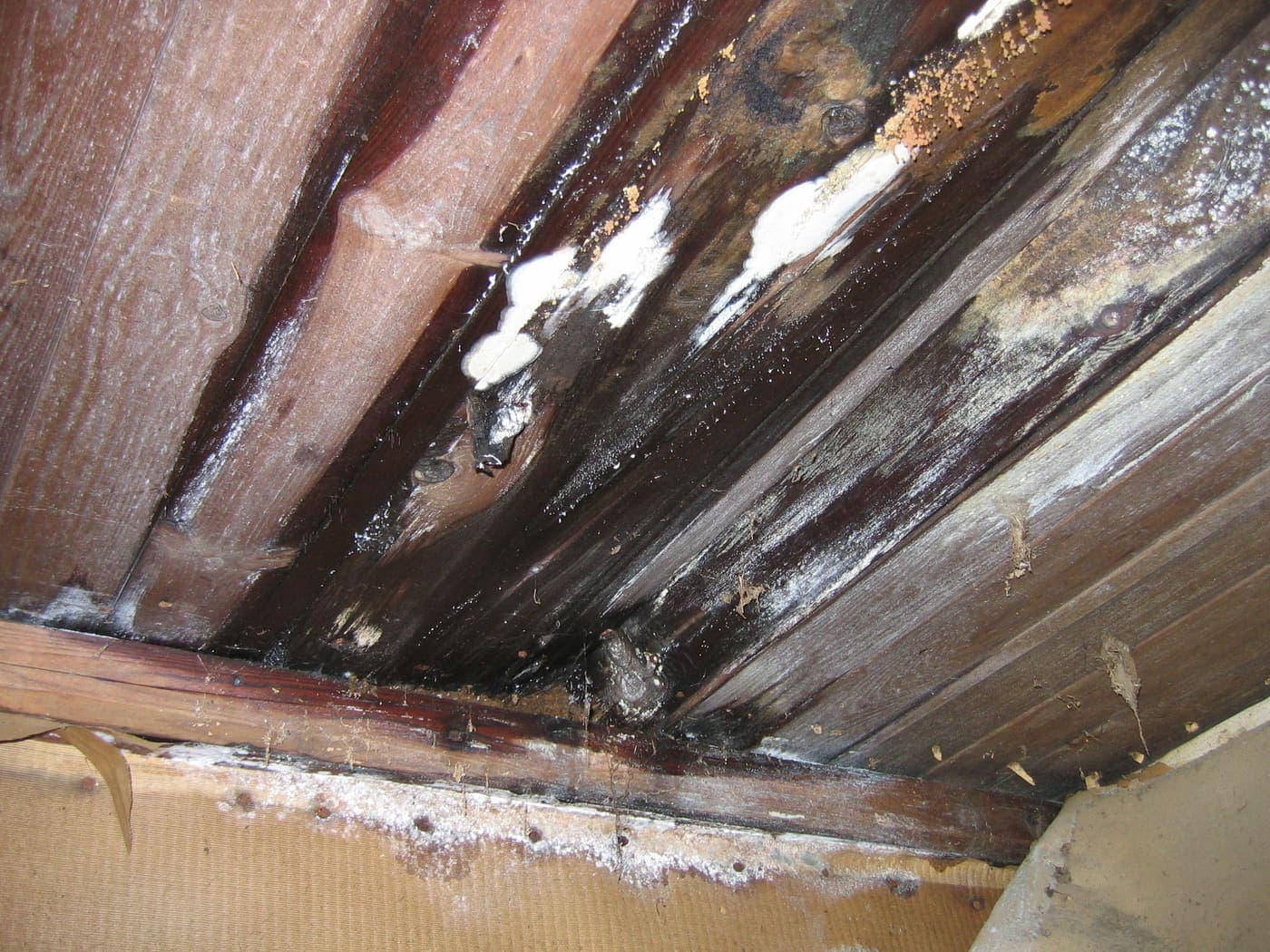
Homeowners find attic mold two ways: a home inspector's report before a sale, or a look up the hatch after a roof problem. Either way the instinct is to blame the roof. Sometimes it is right — a roof leak feeds mold in a predictable pattern, concentrated below the failure. But the more common attic mold is spread evenly across the underside of the sheathing, worst on the north slope and near the eaves, with no leak anywhere. That is condensation.
Warm house air carries moisture. In winter it rises through every gap in the ceiling plane — recessed lights, the attic hatch, plumbing and wiring penetrations, top plates — and meets roof sheathing that is close to outdoor temperature. The moisture condenses on the wood, the wood stays damp for weeks, and mold grows. Two things make it much worse: exhaust fans that end in the attic (bathroom, kitchen, dryer — each one pumps gallons of water vapor a week into the space), and soffit vents buried under insulation, which means the attic has no way to exhaust what arrives.
That is why attic remediation has two parts, and the cleaning is the smaller one.
What the Remediation Involves
- 1Assessment. Where the growth is and how far it extends; whether it is condensation, a leak, or both; where the exhaust fans terminate; whether soffit and ridge vents are open; moisture readings in the sheathing. The scope is written by room of the attic and square feet of deck.
- 2Containment. The attic is isolated from the house — hatch sealed, a HEPA air scrubber exhausting outdoors so the attic sits under negative pressure. On a large job the crew works from the hatch with a decon zone below it.
- 3Insulation. Blown or batt insulation with growth on it, or that has been wetted, is removed by vacuum truck and bagged. Clean insulation on a condensation job is sometimes left and covered; on a leak job it usually goes. This is the step that swings the price most.
- 4Cleaning the wood. Three methods, by extent: HEPA-vacuuming plus wire-brushing or sanding for small areas; dry-ice blasting for whole-deck staining — it strips the growth from sheathing and rafters without water or grit and leaves nothing to clean up; soda blasting where dry ice is unavailable, with the residue vacuumed. Chemical "treatments" alone are not cleaning; they leave the growth in place.
- 5HEPA vacuuming of every surface, including the top of the ceiling drywall and the framing bays.
- 6Drying and sealing. The sheathing is dried to normal moisture content (under about 16%) and, on most jobs, coated with a mold-resistant encapsulant — a sealer that also makes future inspection easier, because new growth shows on a white surface.
- 7The moisture fix. Fans rerouted to exhaust through the roof or a gable wall with insulated duct; soffit vents cleared with baffles installed; ridge or gable ventilation added where it is missing; the ceiling plane air-sealed at the worst leaks; a roof leak repaired if there was one. Without this step the deck is growing mold again by the second winter.
- 8Verification. A visual check and, on any job tied to a sale, independent post-remediation sampling. New insulation goes in after clearance.
The general remediation process explains the standards these steps come from.
Talk to a water damage pro now
Answered 24/7 · Toll-free · answered 24/7 · no obligation
(888) 840-6512- Describe the damage & give your ZIP
- You're routed to the on-call local crew
- They quote — you decide, no obligation
What It Costs
| Job | Typical range | Notes |
|---|---|---|
| Small area — one section of deck, brushing or sanding | $800 – $2,000 | Cause must already be fixed |
| Typical attic, whole-deck blasting, insulation left in place | $2,000 – $6,000 | Most condensation jobs |
| Whole deck plus insulation removal and replacement | $6,000 – $12,000+ | Wet or contaminated insulation, leak jobs |
| Encapsulant coating | $500 – $2,000 added | Usually included in blasting quotes |
| Reroute bath/dryer fans, clear soffits, add baffles | $300 – $1,500 | The part that keeps it gone |
| Ridge vent or gable vent installation | $400 – $1,500 | Roofer |
Attic work is priced by square footage of deck and by access — a walk-up attic with 6 feet of clearance is a different job from a truss attic with 3. The mold remediation cost guide covers the general drivers, and the cost-by-scale breakdown puts an attic next to a basement, a crawl space and a whole-house job so you can see which one your quote resembles. Insurance rarely participates in condensation mold (it is a maintenance condition); mold following a sudden roof failure or a covered storm event may be covered within the policy's mold sublimit.
Selling a House With Attic Mold
Attic mold is one of the most frequent home-inspection findings, and the word alone can cost a sale. What resolves it: a remediation with a written scope and invoice, an independent verification report, and — this is what separates a smooth negotiation from a stalled one — evidence the cause is fixed: photos of fans now terminating outside, soffit baffles in, moisture readings on the sheathing. A seller who cleans the deck and leaves the dryer venting into the attic has bought a repeat problem for the buyer, and a sharp inspector will say so.
Doing It Yourself
A small area on accessible framing is a homeowner job: fix the cause first, then detergent and water, a stiff brush, an N95 or better, eye protection, and time for the wood to dry. Do not spray bleach on the deck — it is mostly water, it wets the wood, and it does not reach mold in the grain. Whole-deck staining, any growth on the insulation, and any attic you cannot move through safely is a call to a professional remediation contractor — ask specifically about attic experience and blasting equipment, because a crew set up for bathrooms and basements is the wrong crew for this.
Reading to confirm what you already suspect?
Confirm it in two minutes instead — the pro on this line answers questions about YOUR situation all day: what it is, what it should cost, whether you even need service. If you want, they'll set the appointment on the same call.
Toll-free · no obligation · asking costs nothing
Frequently Asked Questions
How much does attic mold remediation cost?
Most attic mold jobs run $2,500–$7,500. The low end is growth on the sheathing and rafters cleaned by blasting or HEPA-sanding with the existing insulation left in place; the top end is insulation removed and replaced and the whole deck treated, and a very large or hard-to-reach attic can pass it.
Add the ventilation fixes — rerouting bath fans, opening soffits, adding a ridge vent — which are the part that prevents a repeat. Pricing scales with square footage and how hard the attic is to work in.
Why is there mold in my attic if the roof doesn't leak?
Because warm, moist air from the house is reaching cold roof sheathing and condensing on it — the same reason a cold drink sweats.
The usual routes are bathroom, kitchen or dryer exhaust fans that end in the attic instead of outside, air leaks around ceiling fixtures, attic hatches and top plates, and soffit vents buried in insulation so the attic cannot exhaust the moisture. It shows as even, dark staining across the underside of the deck, heaviest on the north side and near the eaves.
Can I remove attic mold myself?
Small areas on accessible framing can be cleaned with detergent and water, a stiff brush and an N95, once the moisture source is fixed.
Whole-deck staining, growth on the insulation, anything with a dryer or bath fan involved, or an attic you cannot move through safely is a professional job — the containment, the blasting equipment and the working conditions (heat, joists, low clearance) are why.
Does attic mold affect a home sale?
Frequently. It is one of the most common home-inspection findings, buyers read 'mold' as a health and roof problem, and lenders and insurers can ask for remediation before closing.
A remediation with a written scope, an invoice and an independent post-remediation verification is what resolves it in a negotiation; a seller who also fixes the ventilation and can show it has a much easier conversation.
Is attic mold dangerous to the people living below?
Less than mold inside the living space, because attic air is mostly separate from the house — but not entirely: leaky ceilings, HVAC equipment or ducts in the attic, and attic hatches move air down.
CDC's at-risk groups (asthma, mold allergy, weakened immunity) are the reason to fix it promptly; the roof deck's structural life is the reason to fix it at all.
Who do I call right now for water damage?
Call (888) 840-6512. The line is answered 24 hours a day, seven days a week, and connects you with an IICRC-certified water damage restoration company that serves your area. A recorded menu picks up first: choose water damage or mold, key in your 5-digit ZIP code, and hold through the short silence while the call is passed to the company.
Describe what you can see — where the water is coming from, how long it has been there, and whether it smells — the more specific you are, the faster the right company is on the line. If the source is a pipe or an appliance, shut the main water valve first. Have four things ready and the call goes quickly: the address, when the water started, what is wet now, and whether you have filed an insurance claim.
Still not sure which of these is your situation? (888) 840-6512 · toll-free · answered 24/7
Sources
- EPA — A Brief Guide to Mold, Moisture and Your Home
- EPA — Mold Remediation in Schools and Commercial Buildings
- U.S. Department of Energy — Attic ventilation and moisture (Energy Saver)
- IICRC — Standards (ANSI/IICRC S520 Mold Remediation, S500 Water Damage Restoration)
- CDC — Basic Facts About Mold and Dampness
Methodology: How we source and verify data · Report an error
Disclaimer: HearthDry is an independent educational resource. This article is for informational purposes only and does not constitute professional, legal, or insurance advice. Consult licensed professionals before making decisions about your property or insurance claims.
Free 2-day shipping
Amazon Prime members pay no shipping on restoration equipment
Dehumidifiers, air movers, and moisture meters qualify for free Prime delivery — bulk items that otherwise cost $15–$40 to ship.
Affiliate link — HearthDry earns a bounty if you sign up; costs you nothing extra.
Equipment
What each machine actually does
Removes the moisture the structure is still giving off — the machine that decides how long drying takes
See the picks →Moves air across wet surfaces so the dehumidifier has something to take out of the air
See the picks →Finds water behind walls and under floors, and tells you when a material is actually dry
See the picks →Alerts you the moment a leak starts — the cheapest thing on this list and the only preventive one
See the picks →Those pages carry affiliate links. As an Amazon Associate, HearthDry earns from qualifying purchases; it costs you nothing extra.
Our Amazon storefront →Advertisement
