
Quick answer
A professional mold remediation follows a fixed order: an assessment that finds the moisture source and maps the affected area; containment (plastic sheeting and negative air pressure) so spores don't spread through the house; removal of mold-damaged porous materials such as drywall, insulation and carpet pad, bagged inside the containment; HEPA vacuuming and damp-wiping of everything that stays; drying the structure to normal moisture levels; and a final verification — a visual inspection and, for larger jobs, independent air or surface sampling — before containment comes down. The moisture fix (the leak, the humidity, the drainage) is part of the job, not an optional extra; without it the mold returns. Small jobs take a day or two, a typical room three to five, and a large or hidden problem a week or more. Call (888) 840-6512 to reach a certified water damage restoration company in your area; the line is answered 24/7.
Press 1 for water damage or 2 for mold, then your 5-digit ZIP. The line goes quiet for about half a minute while it connects — that is normal, stay on.
Written & reviewed by Marcus ReedIICRC WRT
Reviewed August 30, 2026· Next review Feb 2027
Why the Order Matters
Mold remediation is not "cleaning mold." It is a sequence, and the sequence exists because each step protects the next one: containment stops the removal step from seeding spores through the house, drying stops the cleaned area from regrowing, and verification proves the whole thing worked. A company that skips a step — most often containment or verification — is selling a cheaper job that costs more the second time.
The steps below follow the ANSI/IICRC S520 standard and the EPA's remediation guidance, which is what a credentialed crew is trained on. Use them as a checklist when you read a quote.
Step 1 — Assessment and the Moisture Map
The job starts with two questions: *where is the mold, and what is feeding it?* A proper assessment includes a visual inspection of the affected area and the spaces connected to it, moisture readings in the surrounding materials (drywall, framing, subfloor), and a look for the source — a leak, condensation, a roof or window failure, high indoor humidity, or the residue of a past water event that dried too slowly.
The output should be a written scope: which rooms, which materials, how many square feet, and what the source is. If you are hiring a remediation company directly, remember the one rule of the mold industry — the assessor that scopes the job should not be the company that profits from doing it. For anything beyond a small, obvious patch, an independent inspector writes the scope and the remediator bids against it.
Step 2 — Fix the Water
Every standard puts this first for a reason: mold is a moisture symptom. A plumber stops the leak, a roofer fixes the flashing, a waterproofer deals with the foundation, a dehumidifier or ventilation fix handles humidity. Remediation may run in parallel, but it must not finish before the source is fixed — mold removed while the wall is still wet is mold that comes back on the new drywall.
Ask directly: *who is fixing the source, and when?* A remediation company that does not want to answer is telling you something.
Step 3 — Containment and Negative Air
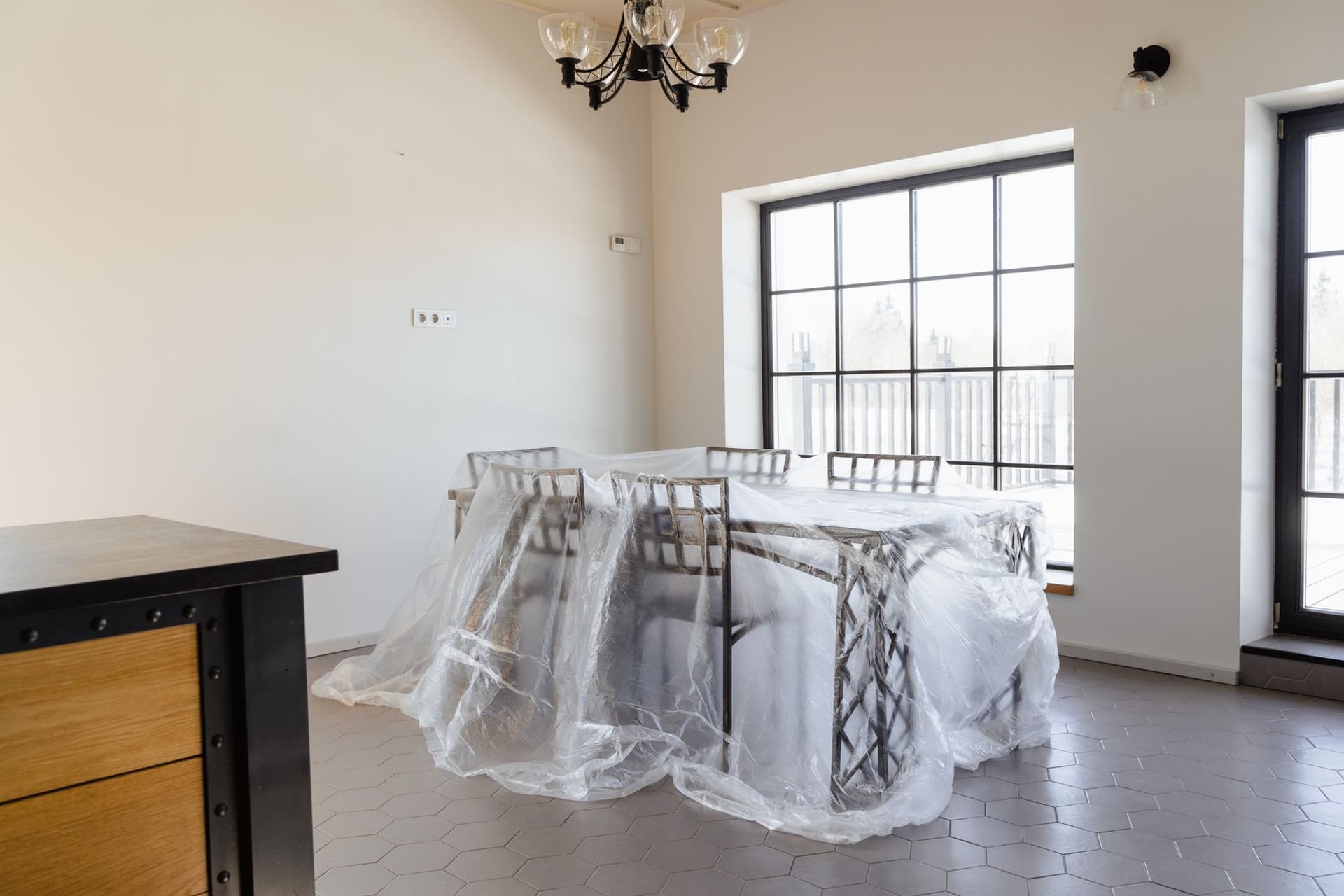
The work area is sealed with plastic sheeting (usually 6-mil polyethylene) taped over doorways and vents, and an air scrubber with a HEPA filter exhausts air out of the room — usually through a window or a duct to the outside — so the room sits under negative pressure. Air moves into the containment, not out of it. This is what keeps a remediation from spreading spores into the rest of the house.
What it looks like: plastic walls, a zippered entry, an air scrubber humming, HVAC supply and return registers in the area sealed off. What a skipped containment looks like: a crew tearing out moldy drywall in an open room with a box fan. That is not remediation; it is distribution.
Step 4 — Removal
Porous materials with mold growth are removed, not cleaned — drywall, insulation, ceiling tile, carpet and pad, and often the paper facing on affected areas. They are bagged inside the containment before they leave the room. Semi-porous wood (studs, joists, subfloor) is usually kept and cleaned by HEPA vacuuming, wire brushing or sanding, or media blasting on larger jobs; structural wood is only replaced if it is rotted, which is a moisture problem, not a mold problem.
Removal is also where the scope gets honest. Mold behind a wall does not respect the square footage on the quote, and a professional stops and tells you when the problem is bigger than assessed rather than quietly closing it back up. For the drywall decision specifically, see when mold on drywall means clean vs. replace.
Talk to a water damage pro now
Answered 24/7 · Toll-free · answered 24/7 · no obligation
(888) 840-6512- Describe the damage & give your ZIP
- You're routed to the on-call local crew
- They quote — you decide, no obligation
Step 5 — HEPA Cleaning
After removal, everything that stays inside the containment is HEPA-vacuumed and damp-wiped: framing, subfloor, the backs of remaining surfaces, contents that were in the room. Air scrubbers keep running. The goal is to remove settled spores and fragments, which is what HEPA vacuuming does and what fogging, "sanitizing" sprays and ozone treatments do not — those leave the material behind. Antimicrobial coatings have a place on cleaned wood in some scopes, but a coating over uncleaned material is paint over a problem.
Step 6 — Drying
The structure is dried back to normal moisture content — typically under about 16% moisture content in framing wood, and a drywall reading in line with a known-dry wall elsewhere in the house — using air movers and dehumidifiers, with readings logged. Drying can run during removal and cleaning; it has to be finished before rebuild. Closing a wall over wet framing is how the next remediation starts.
Step 7 — Verification, Then Rebuild
Before containment comes down, the area is inspected: no visible growth, no dust or debris, no musty odor, moisture readings normal. On larger jobs — and on any job where health, a sale or an insurance claim is involved — an independent post-remediation verification adds air or surface sampling compared against outdoor and unaffected indoor samples. The report is what a buyer, an insurer or a tenant will ask to see.
Only then do the repairs happen: new drywall, insulation, paint, flooring. Some remediation companies rebuild; many hand off to a general contractor. Either way, rebuild is a separate line on the quote.
What a Proper Job Looks Like on the Quote
| On the quote | What it means |
|---|---|
| Moisture source named, with who fixes it | The company understands mold is a symptom |
| Containment and negative air / HEPA scrubbers listed | Spores stay in the room |
| Materials to be removed, by room and square footage | The scope is real, not "treat affected areas" |
| HEPA vacuuming and detailed cleaning | Spores are removed, not fogged |
| Drying with documented readings | The wall is dry before it is closed |
| Post-remediation verification by an independent party | You get proof, not a promise |
| Rebuild priced separately | Nothing is hidden inside "remediation" |
A quote that says "treat and seal affected areas" for a flat price, with no containment and no verification, is describing a spray-and-paint. It will look finished. It will not be.
Timelines and Cost, Briefly
A small contained job (one wall, a closet, under a sink) is often one to two days. A typical bedroom, bathroom or finished basement room is three to five days including drying. A large or hidden problem — multiple rooms, HVAC, a crawl space, a long-standing leak — runs a week or more, and rebuild adds to that. How long mold remediation takes breaks this down by job type. For pricing, the mold remediation cost guide covers what drives the number and where the ranges fall; whether insurance contributes depends on what caused the mold, covered in does homeowners insurance cover mold.
When to Call a Professional
The EPA's rule of thumb: growth under about 10 square feet on a surface you can clean is a homeowner job; larger areas, mold inside walls or ceilings, mold in the HVAC system, sewage-related growth, or anyone in the household with asthma, allergies or a weakened immune system means a professional. If you are not sure how big it is — if there is a musty smell and nothing visible, or a stain that keeps coming back — an inspection first is cheaper than a remediation that has to be repeated.
Reading to confirm what you already suspect?
Confirm it in two minutes instead — the pro on this line answers questions about YOUR situation all day: what it is, what it should cost, whether you even need service. If you want, they'll set the appointment on the same call.
Toll-free · no obligation · asking costs nothing
Frequently Asked Questions
What are the steps of mold remediation?
Assessment and moisture diagnosis, containment with negative air, removal of contaminated porous materials, HEPA vacuuming and detailed cleaning of remaining surfaces, drying to normal moisture levels, and final verification (visual plus, on larger jobs, independent sampling).
Repairs — new drywall, paint, flooring — come after clearance, not before.
Does mold remediation include fixing the leak?
Fixing the moisture source is the first requirement of every credible standard (EPA, IICRC S520) — but it is often done by a separate trade.
A remediation company will usually dry the structure and may handle simple sources; a plumbing leak, roof leak or foundation drainage issue typically needs a plumber, roofer or waterproofer. Ask who is fixing the source before remediation starts, because mold that is removed while the leak continues comes back.
Do I have to leave the house during mold remediation?
Usually notFor a contained job in one area — the containment and negative air exist so the rest of the house stays usable.
Consider staying elsewhere if the work area is a bedroom or kitchen you cannot avoid, if a household member has asthma, a mold allergy or a weakened immune system, or if the work involves a large area or the HVAC system.
How do I know mold remediation was done right?
The moisture source is fixed and readings are back to normal; every visibly affected porous material is gone, not painted over; there is no musty odor inside the containment after it has been closed for a day; and — for anything beyond a small job — an independent inspector (not the remediator) has done a post-remediation verification.
Ask for the written scope before the job and the verification report after it.
Can I just spray bleach on it instead?
Bleach cleans surface stains on hard, non-porous materials; it does not reach mold rooted in drywall, wood or insulation, and it does nothing about the moisture that grows it.
EPA guidance does not recommend bleach as a routine mold cleaner. For growth over about 10 square feet, or anything inside walls or HVAC, the process on this page is what works.
Why is HEPA vacuuming part of mold remediation?
Removing the moldy drywall takes out the growth; HEPA vacuuming takes out what the growth left behind — spores and fragments settled on framing, subfloor, and every surface inside the containment.
A HEPA filter captures particles down to 0.3 microns, which mold spores (typically 2–10 microns) are well above; a household or shop vacuum without a HEPA filter blows them straight back into the room. It is done after removal and before the containment comes down, and it is the step that fogging, ozone and 'sanitizing' sprays are sold as replacing. They do not replace it.
Who do I call right now for water damage?
Call (888) 840-6512. The line is answered 24 hours a day, seven days a week, and connects you with an IICRC-certified water damage restoration company that serves your area. A recorded menu picks up first: choose water damage or mold, key in your 5-digit ZIP code, and hold through the short silence while the call is passed to the company.
Describe what you can see — where the water is coming from, how long it has been there, and whether it smells — the more specific you are, the faster the right company is on the line. If the source is a pipe or an appliance, shut the main water valve first. Have four things ready and the call goes quickly: the address, when the water started, what is wet now, and whether you have filed an insurance claim.
Still not sure which of these is your situation? (888) 840-6512 · toll-free · answered 24/7
Sources
- EPA — Mold Cleanup in Your Home
- EPA — Mold Remediation in Schools and Commercial Buildings (the containment and PPE framework pros follow)
- IICRC — Standards (ANSI/IICRC S520 Mold Remediation, S500 Water Damage Restoration)
- NYC Health — Guidelines on Assessment and Remediation of Fungi in Indoor Environments
- CDC — Basic Facts About Mold and Dampness
Methodology: How we source and verify data · Report an error
Disclaimer: HearthDry is an independent educational resource. This article is for informational purposes only and does not constitute professional, legal, or insurance advice. Consult licensed professionals before making decisions about your property or insurance claims.
Free 2-day shipping
Amazon Prime members pay no shipping on restoration equipment
Dehumidifiers, air movers, and moisture meters qualify for free Prime delivery — bulk items that otherwise cost $15–$40 to ship.
Affiliate link — HearthDry earns a bounty if you sign up; costs you nothing extra.
Equipment
What each machine actually does
Removes the moisture the structure is still giving off — the machine that decides how long drying takes
See the picks →Moves air across wet surfaces so the dehumidifier has something to take out of the air
See the picks →Finds water behind walls and under floors, and tells you when a material is actually dry
See the picks →Alerts you the moment a leak starts — the cheapest thing on this list and the only preventive one
See the picks →Those pages carry affiliate links. As an Amazon Associate, HearthDry earns from qualifying purchases; it costs you nothing extra.
Our Amazon storefront →Advertisement
