Dehumidifier vs Humidifier in 2026 — Which One Your Air Needs, and the Ones Worth Buying

Dehumidifier vs Humidifier in 2026

Which One Your Air Needs, and the Ones Worth Buying

4 picks compared · prices, ratings and stock checked October 11, 2026

Our Top Pick

For a damp room reading over 60%, buy the AEOCKY RHEA-001 dehumidifier. For a heated room in winter reading under 30%, buy the Levoit Classic 160 humidifier and keep a hygrometer beside it.

4.5 on Amazon · 7,123 ratings

Quick answer

A dehumidifier removes water from air that is too humid and a humidifier adds water to air that is too dry, so the right one depends on a hygrometer reading measured against EPA's 30–50% relative humidity range. Above 50–60%, with a musty smell, damp walls or condensation, buy a dehumidifier: the AEOCKY RHEA-001 is the pick, rated 4.5 stars across 7,123 Amazon ratings. Below 30% in a heated winter home, with dry skin and static shocks, buy a humidifier such as the Levoit Classic 160. Never run a humidifier in a room that is already damp.

Our Picks at a Glance

Every pick below is currently stocked — ratings and stock read from Amazon on 11 October 2026.

How this page was made: we compare the current Amazon listings, the makers' published specs and what verified buyers report, then rank by fit for the job. Ratings, review counts and stock are read from Amazon and dated. We earn a commission on purchases through our links; it does not change the order. Reviewed by Marcus Reed, IICRC-certified Water Restoration Technician.

Full Reviews

Each pick in detail: what the listing states, what buyers report, and where it falls short.

#1
Best Dehumidifier

Check price

on Amazon ↗

Listing verified 13 Oct 2026

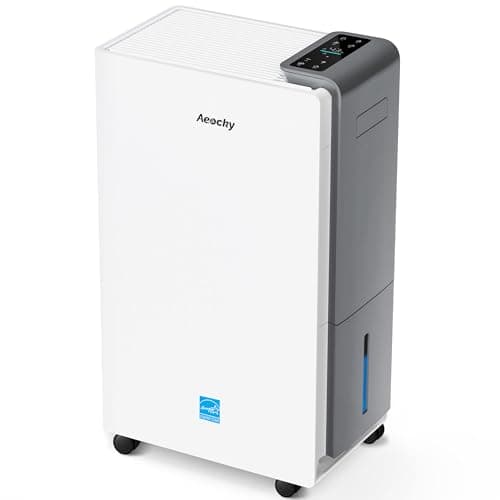
AEOCKY RHEA-001 Compressor Dehumidifier (56 Pints at 86°F, 80% RH)See it on Amazon ↗

Quick Verdict

The dehumidifier to buy when the hygrometer reads above 60%: Most Efficient 2025 and a realistic 56-pint figure.

Key Specs

Type

Compressor dehumidifier

Capacity (stated)

56 pints/day at 86°F, 80% RH; 80 pints/day at 95°F, 95% RH

Coverage (claimed)

Up to 5,500 sq ft

Efficiency

Listed as ENERGY STAR Most Efficient 2025

Noise (claimed)

44 dB at the lowest fan speed

Size and weight

14.45 x 8.66 x 24.09 in; 31 lb

Pros

  • Real dehumidifying capacity: the stated 56 pints a day at 86°F and 80% RH is measured at conditions close to a damp summer basement
  • Listed as ENERGY STAR Most Efficient 2025, which matters on a machine that may run for whole seasons
  • Picks up where it left off after a power cut
  • Defrost sensors are stated for running in cooler rooms

Cons

  • At 31 lb and about 24 in tall it is sized for a basement or a large damp room, not a nightstand
  • The listing bullets do not state the tank size or whether a drain hose comes in the box
  • The product page is heavy on superlatives; the certification and the two capacity figures are what to buy on

Suited to

Any room that reads above 60% on a hygrometer, smells musty, or shows condensation on cold pipes and walls

Our take

This is the half of the comparison that fixes damp. A compressor dehumidifier pulls room air across a refrigerated coil, the water condenses out and drains away, and the air returns drier and slightly warmer. EPA's moisture guide lists dehumidifiers among the ways to keep indoor humidity below 60%, because mold needs that moisture and a humidifier would only add more. Compare on the 56-pint figure at 86°F and 80% RH; the 80-pint headline is measured at 95°F and 95%. Confirm how it drains before you buy, since the bullets leave the tank size out, and set it to hold 45–50% rather than running it flat out.

Check today's price on Amazon →

Affiliate link — commission at no extra cost to you

Compare elsewhere

These open a search for this model. We quote prices only where we can verify them — Amazon, Sylvane and eBay.

#2
Best Humidifier

Check price

on Amazon ↗

Listing verified 13 Oct 2026

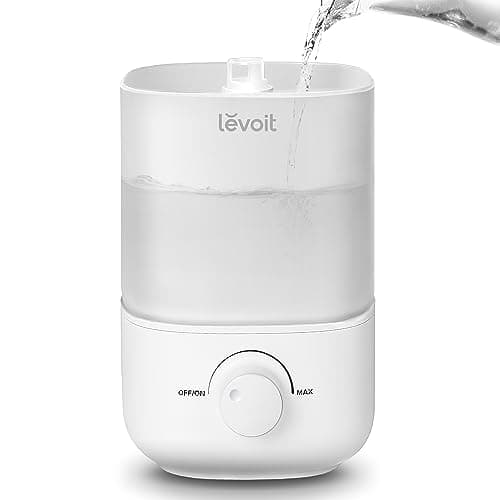
Levoit Classic 160 Cool Mist Humidifier (2.5 L Top-Fill Tank)See it on Amazon ↗

Quick Verdict

The humidifier to buy for a dry bedroom: easy to fill and clean and quiet, paired with a hygrometer because it has no humidistat.

Key Specs

Type

Ultrasonic cool mist

Tank

2.5 L, top-fill

Run time (stated)

Up to 25 hours on low

Noise (claimed)

As low as 25 dB, with all lights off

Controls

One knob for mist output; 360° nozzle

Safety

Shuts off when the tank is empty or removed; red refill light

Pros

  • The most-rated humidifier among the picks here, and carries Amazon's Choice
  • A top-fill tank with a wide opening, which makes the cleaning every humidifier needs much easier to keep up
  • Shuts itself off when the tank runs dry or is lifted off the base
  • Quiet enough for a bedroom, as low as 25 dB by the listing's figure

Cons

  • No humidistat is stated, so it keeps adding moisture until you turn it down; a separate hygrometer is essential
  • As an ultrasonic unit it turns tap-water minerals into fine white dust unless you fill it with distilled water
  • A 2.5 L tank suits a bedroom rather than a whole floor

Suited to

A bedroom or nursery that drops below 30% humidity once the heating comes on

Our take

A humidifier is the right purchase only when a hygrometer says the air is too dry, typically below 30% in a heated house in winter, where dry skin, static shocks and gaps opening in wood floors are the usual signs. The Classic 160 earns its place on the basics: a top-fill tank with an opening wide enough to scrub, an automatic shut-off and a long buyer record. What it lacks is a built-in humidistat, so it cannot stop itself at 45%. Put a hygrometer across the room, turn the mist down once it reads 40–45%, and empty and dry the tank rather than topping up old water.

Check today's price on Amazon →

Affiliate link — commission at no extra cost to you

#3
Best With a Humidity Setting

Check price

on Amazon ↗

Listing verified 13 Oct 2026

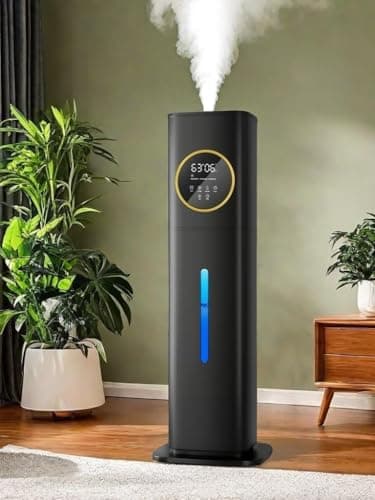
Lacidoll 8L Cool Mist Humidifier With Humidity Setting (45–95% RH)See it on Amazon ↗

Best With a Humidity Setting

Lacidoll 8L Cool Mist Humidifier With Humidity Setting (45–95% RH)

4.3(1,483 reviews)

Quick Verdict

The humidifier that can hold a set humidity: set it to 45%, its lowest, and confirm with a hygrometer.

Key Specs

Type

Ultrasonic cool mist

Tank

2.1 gal (8 L), top-fill

Mist output (stated)

300 mL/h

Coverage (claimed)

500–800 sq ft

Run time (stated)

Up to 48 hours

Humidity control

Set point from 45% to 95% RH with an auto-adjusting sensor; 3 mist speeds

Pros

  • A built-in humidity setting lets it stop adding moisture at the level you choose, and its lowest setting, 45%, sits inside EPA's 30–50% range
  • The largest tank and highest stated mist output among the humidifiers here, for a living room or an open plan
  • Filter-free, with a tank that opens fully for cleaning

Cons

  • The set point goes as high as 95%, a level no room should ever be held at; leave it at 45%
  • Its sensor reads the air right beside the mist, so a separate hygrometer across the room is still worth having
  • A shorter buyer record than the Levoit or the Vicks

Suited to

A larger dry room, or anyone who wants the machine itself to stop at a set humidity

Our take

The one feature that makes a humidifier safer in a house with any mold history is a humidistat, because it stops the mist when the room reaches the set level instead of relying on you to notice. Lacidoll states one, adjustable from 45% to 95%. Use the bottom of that range: 45% is comfortable in winter and stays inside EPA's guidance, while anything above 50% starts putting moisture on cold window glass and exterior walls. The stated 300 mL an hour and 2.1 gallon tank suit a living room. Check the room with a separate hygrometer for the first week, since the unit judges humidity from right next to its own output.

Check today's price on Amazon →

Affiliate link — commission at no extra cost to you

#4
Best Warm-Mist (Steam)

Check price

on Amazon ↗

Listing verified 13 Oct 2026

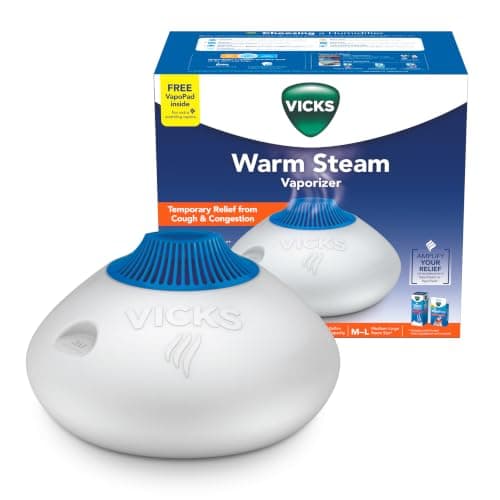
Vicks V150 Warm Steam Vaporizer (1.5 Gallon Tank)See it on Amazon ↗

Best Warm-Mist (Steam)

Vicks V150 Warm Steam Vaporizer (1.5 Gallon Tank)

4.2(14,814 reviews)

Quick Verdict

Warm steam with no white dust, for a room where it can sit safely out of reach.

Key Specs

Type

Warm steam vaporizer

Tank

1.5 gal

Room size (stated)

Medium and large rooms; square footage not stated

Extras

Night light; works with Vicks VapoPads and VapoSteam

Cleaning

Wide tank opening

Humidistat

Not stated on the listing

Pros

  • Boils the water to make steam, so it does not spray tap-water minerals into the room the way ultrasonic units can
  • A model on sale since 2008 with a deep buyer record
  • A wide tank opening for cleaning and refilling

Cons

  • Hot water and steam are a burn risk; it needs a stable surface out of reach of children and pets
  • Neither a humidistat nor a run time is stated
  • Heating water uses more electricity than vibrating it into mist

Suited to

Anyone who wants to avoid white mineral dust and can place the unit safely out of reach

Our take

A steam vaporizer heats water into vapor, which changes two things compared with an ultrasonic unit. Minerals stay behind in the unit rather than settling as white dust on furniture, and general guidance on humidifier types treats steam units as less likely to spread what grows in the tank. The trade-offs are heat and electricity: the water and steam are hot enough to scald, so it belongs on a stable surface away from children, and boiling costs more to run. With no humidistat stated, the same rule applies as for the Levoit: watch a hygrometer and turn it off at 45%.

Check today's price on Amazon →

Affiliate link — commission at no extra cost to you

Buyer's Guide

What to know before you buy.

What Each Machine Actually Does

A dehumidifier and a humidifier do opposite jobs. A dehumidifier draws room air across a cold coil, water condenses out of it into a tank or a drain hose, and drier air goes back into the room; a compressor unit like the AEOCKY removes pints of water a day. A humidifier does the reverse, turning water from its tank into mist or steam so the air holds more of it. Neither one filters dust or kills mold, and neither changes the room temperature much. The only real question is which way your air is wrong, and that is a measurement, not a guess.

Measure First: The Hygrometer Decides

A digital hygrometer is the first purchase, before either machine. Put it in the room that bothers you, away from windows, the kitchen and the shower, and read it at different times of day for a week. EPA advises keeping indoor humidity below 60%, ideally between 30% and 50%. If the reading sits above 50–60%, a dehumidifier is the answer; if it sits below 30%, a humidifier is. Between those numbers the air is fine, and neither machine will fix whatever you are noticing. Many houses need both at different times: a dehumidifier in the basement through summer and a humidifier in a bedroom in the coldest weeks of a heated winter.

Signs the Air Is Too Humid

A damp house usually tells you before a hygrometer does. A musty smell in a basement or closet, condensation on cold water pipes, clothes that never feel quite dry, sticking doors, peeling paint and mildew on grout or the backs of furniture are the classic signs. They are worst in summer and in rooms below ground, where cool walls meet warm, moist air. Above about 60% relative humidity, mold can grow on dust, drywall and wood without any leak at all. That is dehumidifier territory, and putting a humidifier in a room like this makes every one of those problems worse.

Signs the Air Is Too Dry

Dry air is a winter problem in heated homes, especially in cold climates where outdoor air holds little moisture to begin with. Static shocks from door handles, dry or itchy skin, cracked lips, a scratchy throat in the morning, gaps opening between floorboards and cracks in wooden furniture or instruments all point to humidity below about 30%. A humidifier that brings a bedroom up to around 40% relieves most of that. It does not need to go higher: in freezing weather, a room above 40–45% starts condensing on window glass, which is the first step toward a moldy sill and frame.

Choosing a Humidifier: Humidistat, Mist Type and Size

Two things matter more than brand. The first is a humidistat, a built-in setting that stops the mist at a chosen humidity; the Lacidoll has one, starting at 45%, while the Levoit and Vicks listings do not state one, so they rely on you and a hygrometer. The second is the mist type. Ultrasonic cool-mist units vibrate water into a fine spray, which is quiet and efficient but carries tap-water minerals out as white dust, so distilled water is worth buying. Steam units boil the water and leave minerals behind, at the cost of more electricity and water hot enough to burn. Match the tank to the room: 2.5 L suits a bedroom, 2.1 gallons a living room.

Clean a Humidifier or It Becomes the Problem

Standing water in a humidifier tank is a growth medium, and whatever grows there is blown into the room with the mist. EPA advises cleaning home humidifiers regularly to prevent microbial growth, following the maker's instructions. In practice that means emptying the tank every day instead of topping it up, letting it dry, and scrubbing the tank and base every few days during the season with whatever method the manual allows. A musty or sour smell when it runs, a pink or dark film at the waterline, or cloudy water means cleaning is overdue. At the end of winter, clean it, dry it completely and store it empty.

Frequently Asked Questions

Which is better, a dehumidifier or a humidifier?

Neither is better in general; they fix opposite problems, and the wrong one makes things worse. A dehumidifier is the better buy when indoor humidity runs above 50–60%, which is common in basements and humid summers.

A humidifier is the better buy when it falls below 30%, which is common in heated homes in winter. For anyone dealing with damp, a musty smell or past water damage, the dehumidifier is almost always the one that is needed.

Do I need a humidifier or a dehumidifier?

Measure before buying. Leave a digital hygrometer in the room for a few days: a reading above 60% calls for a dehumidifier, one below 30% calls for a humidifier, and anything from 30% to 50% means the air is already in the range EPA recommends.

Without a hygrometer, condensation, mildew and a musty smell point to too much moisture, while static, dry skin and cracking wood point to too little.

Humidifier vs dehumidifier for mold: which one helps?

The dehumidifier. Mold needs moisture, and keeping indoor humidity below 60%, ideally 30–50%, is one of the main ways EPA says to control it. A humidifier works against that, and a neglected one can grow mold and bacteria in its own tank.

A dehumidifier does not remove mold that is already growing, though: visible growth has to be cleaned up or removed and the moisture source fixed, or it comes back.

Can I use a humidifier and a dehumidifier in the same house?

YesAnd many houses need both, in different rooms or different seasons.

A common pattern is a dehumidifier running in the basement from spring through fall and a humidifier in a bedroom through the heating season. What makes no sense is running both in the same room at the same time, where they cancel each other out and waste electricity. A hygrometer in each room shows which machine belongs where.

Is a humidifier or a dehumidifier better for a bedroom?

It dependsOn the season and the reading.

In winter a heated bedroom often drops below 30%, and a quiet humidifier such as the Levoit Classic 160, turned down once the room reaches about 40%, eases dry skin and a dry throat. In summer, or in a basement bedroom, humidity above 60% calls for a dehumidifier instead, and a small, quiet unit sized for one room is usually enough.

Can a humidifier cause mold?

YesIn two ways. Run without a humidistat or a hygrometer, it can push a room past 50%, and moisture then condenses on the coldest surfaces, such as window glass, exterior walls and closet corners, where mold starts.

And a tank that is not emptied and cleaned grows its own film of mold and bacteria, which the mist carries into the room. A humidity setting around 45% and a regular cleaning habit prevent both.

Who do I call right now for water damage?

Call (888) 840-6512. The line is answered 24 hours a day, seven days a week, and connects you with an IICRC-certified water damage restoration company that serves your area. A recorded menu picks up first: choose water damage or mold, key in your 5-digit ZIP code, and hold through the short silence while the call is passed to the company.

Describe what you can see — where the water is coming from, how long it has been there, and whether it smells — the more specific you are, the faster the right company is on the line. If the source is a pipe or an appliance, shut the main water valve first. Have four things ready and the call goes quickly: the address, when the water started, what is wet now, and whether you have filed an insurance claim.

Still not sure which of these is your situation? (888) 840-6512 · toll-free · answered 24/7

Sources

  1. EPA — A Brief Guide to Mold, Moisture, and Your Home
  2. ENERGY STAR — Dehumidifiers

Methodology: How we source and verify data · Report an error

How we chose these picks

  • Every pick is a current listing. Stock, star ratings and rating counts are read from Amazon by script and carry the date they were read.
  • Nothing under 4.0 stars makes the list, and the top pick needs a large rating count, so one good week of reviews cannot put it there.
  • Specs are quoted from the listing or the maker, with the test condition behind the number where there is one, and sized against the job rather than the room on the box.
  • We do not run lab or field tests. Where a spec matters, we say what it is measured under and what it cannot tell you.

Free 2-day shipping

Amazon Prime members pay no shipping on restoration equipment

Dehumidifiers, air movers, and moisture meters qualify for free Prime delivery — bulk items that otherwise cost $15–$40 to ship.

Try Prime free →

Affiliate link — HearthDry earns a bounty if you sign up; costs you nothing extra.

Also Worth Comparing

Dehumidifier vs Air Purifier in 2026 — Which Problem Each One Solves, and Which to Buy

A dehumidifier and an air purifier sit side by side in every store, but they fix different things: one takes water out of the air and the other takes particles out. For damp rooms, musty smells and mold the dehumidifier comes first; for dust, pollen and allergies in air that is already dry enough, the purifier does.

Read the comparison

Best Dehumidifier for a Bedroom or Apartment in 2026 — Quiet Small-Room Units Compared

A bedroom dehumidifier has to be quiet enough to sleep beside, and five of the six picks here are thermoelectric units that remove ounces of water a day rather than pints. That is enough for a stuffy bedroom, closet or studio apartment; for a room with wet windows every morning, the sixth pick is a small compressor unit rated in pints.

Read the comparison

Best Dehumidifier for Basement Use in 2026 — Drain Hose, Built-In Pump and Honest Pint Ratings

Most basement dehumidifier disappointment comes from two numbers nobody reads properly: the pint rating, measured at warm test conditions a 60°F basement never reaches, and the drainage method. Five units are compared here on those two points first, from a garden-hose drain to a built-in pump with a stated 15 ft lift.

Read the comparison

Best Moisture Meters for Homeowners in 2026 — Water Damage Detection

A moisture meter tells you what your eyes can't see — wet drywall, soggy subfloor, and moisture in framing. These are the four best moisture meters for homeowners dealing with water damage.

Read the comparison

Best Air Purifiers for Mold in 2026 — HEPA Units Compared on Verified Airflow

An air purifier is the right tool for airborne spores and the allergy symptoms they cause, and the wrong one for the colony and the damp that feeds it. These five HEPA units are compared on the figures that decide how much air they really clean: verified CADR, the stated filter rating and the room size at about five air changes an hour.

Read the comparison

Best Hygrometers for Home in 2026 — Indoor Humidity Monitors That Tell You When a Room Is Too Damp

A hygrometer is the small, inexpensive instrument that tells you whether a room needs a dehumidifier, a humidifier or nothing at all. These picks are judged on the accuracy each listing states, how easily you can read them, and whether they can warn you about a damp basement before you smell it.

Read the comparison